-01.svg)

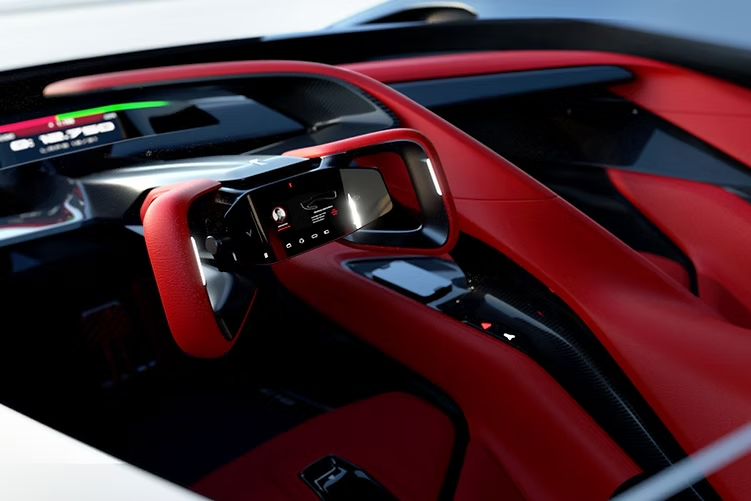
Like an F-35 fighter jet, the canopy is forward-hinged, but here it’s removable to offer the choice between coupé and speedster body styles. The cabin is narrow, and compartmentalised with red leather elements wrapping around the driver’s seat, reminiscent of the waterfall centre console of the current C8 road car. The driver has a small steering wheel ahead of them, with a digital display in the centre. Lap times are shown on a carbon-shrouded instrument cluster on the dashboard, and there’s even a wireless charging pad in the centre of the cabin.
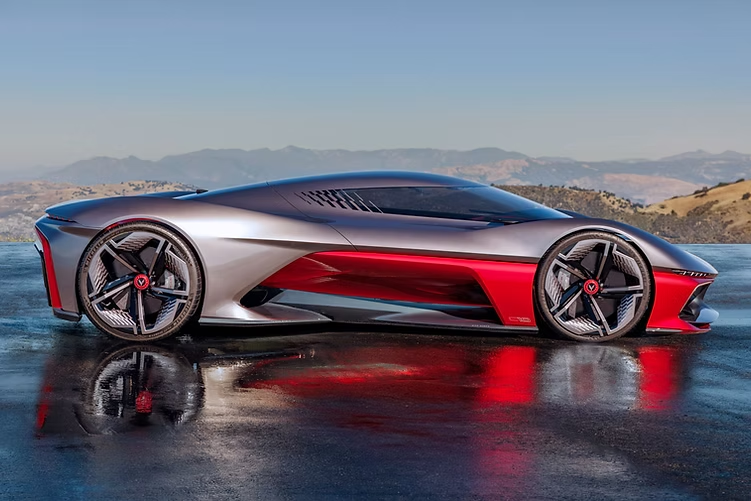
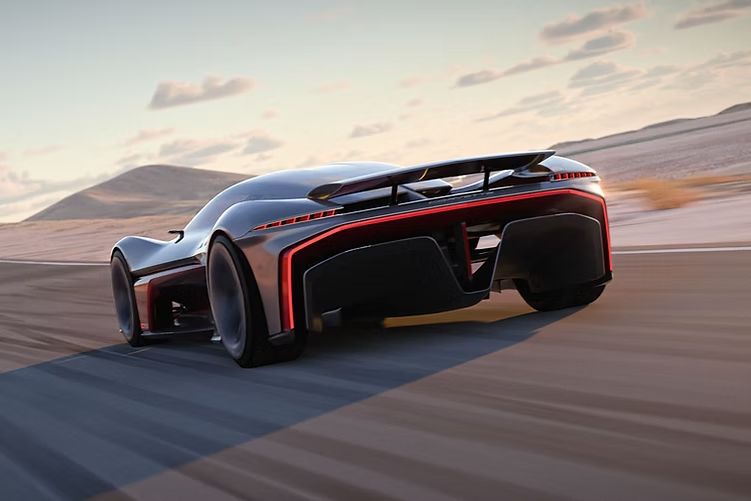
Externally, a large front air intake features a prominent carbon fibre wing, splitting the airflow and sending it underneath the car, or around the tapered carbon fibre tub, through the exposed air channel visible between the axles. This leads to a C8-inspired intake ahead of the rear wheel arches. Two prominent diffusers are framed by red trim, and narrow LED lights, while an active rear wing rises from the deck to enhance downforce, or act as an air brake.
No performance stats have been revealed, but given the inclusion of aerodynamic braking, near-foot-wide Michelin Pilot Sport 4S tyres shrouding the staggered 21” and 22” wheels, we expect it’s been designed to house at least two motors developing well north of 1000bhp.
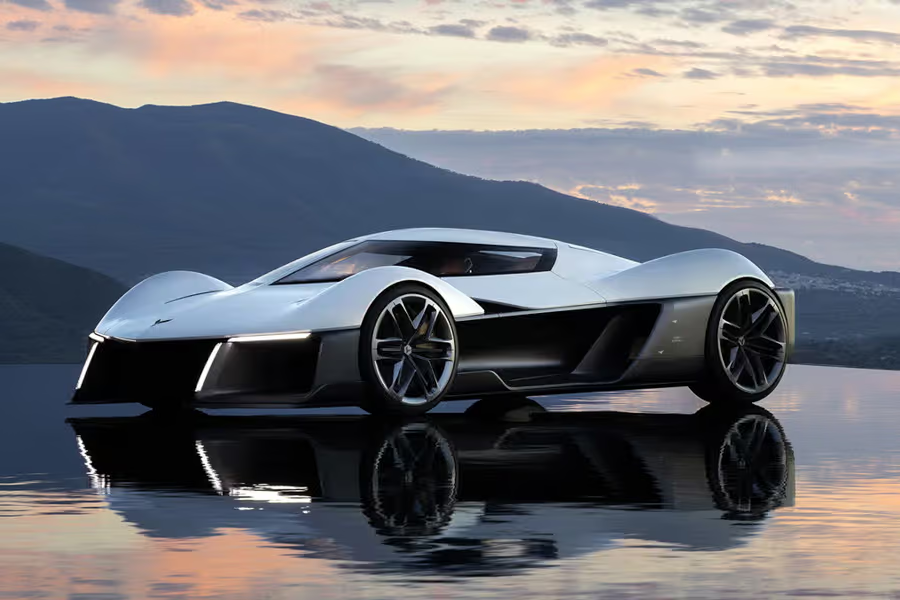
Just like the British-designed Corvette concept shown earlier this year, the aim is to present ideas for a future model, rather than previewing the C9 which is expected to launch in a few years time. However, “C10” is clearly visible on the floor, and can be made out beneath the headrests.
Given that the codename expected to be used for a car launching in the late 2030s is illuminated, this is clearly no accidental inclusion. The third and final forward-looking Corvette concept is set to be revealed later on this year.



.svg)

