-01.svg)

Its exit is an immediate ninety left that climbs sharply before cresting into an undulating, military march. Left-right, left-right, the car hooking into the rolling camber as if diving down a toboggan run. A right that can be taken faster than the eyes permit comes next, then it’s hard on the brakes as another ninety left bookends the short, frantic section. It’s a tight, tree-lined nugget of a road with no margin for error. Only the best cars survive unflustered.
There hasn’t been the room to exceed the limit of grip, and no need to try. As the road briefly turns single-track, I ease off, convinced there’s no better companion for a road like this than a punchy little hot hatch. The British Isles suit a compact performance car better than any other realm, and the roads through the Forest of Bowland feel tailored to fit. The fells and moors of East Lancashire might lack the billing of their Lake District and Yorkshire Dales neighbours, but that means the National Parks hoover up all the tourists, leaving the roads blissfully free of traffic. It was across this ground TVR signed off its Blackpool Bruisers.
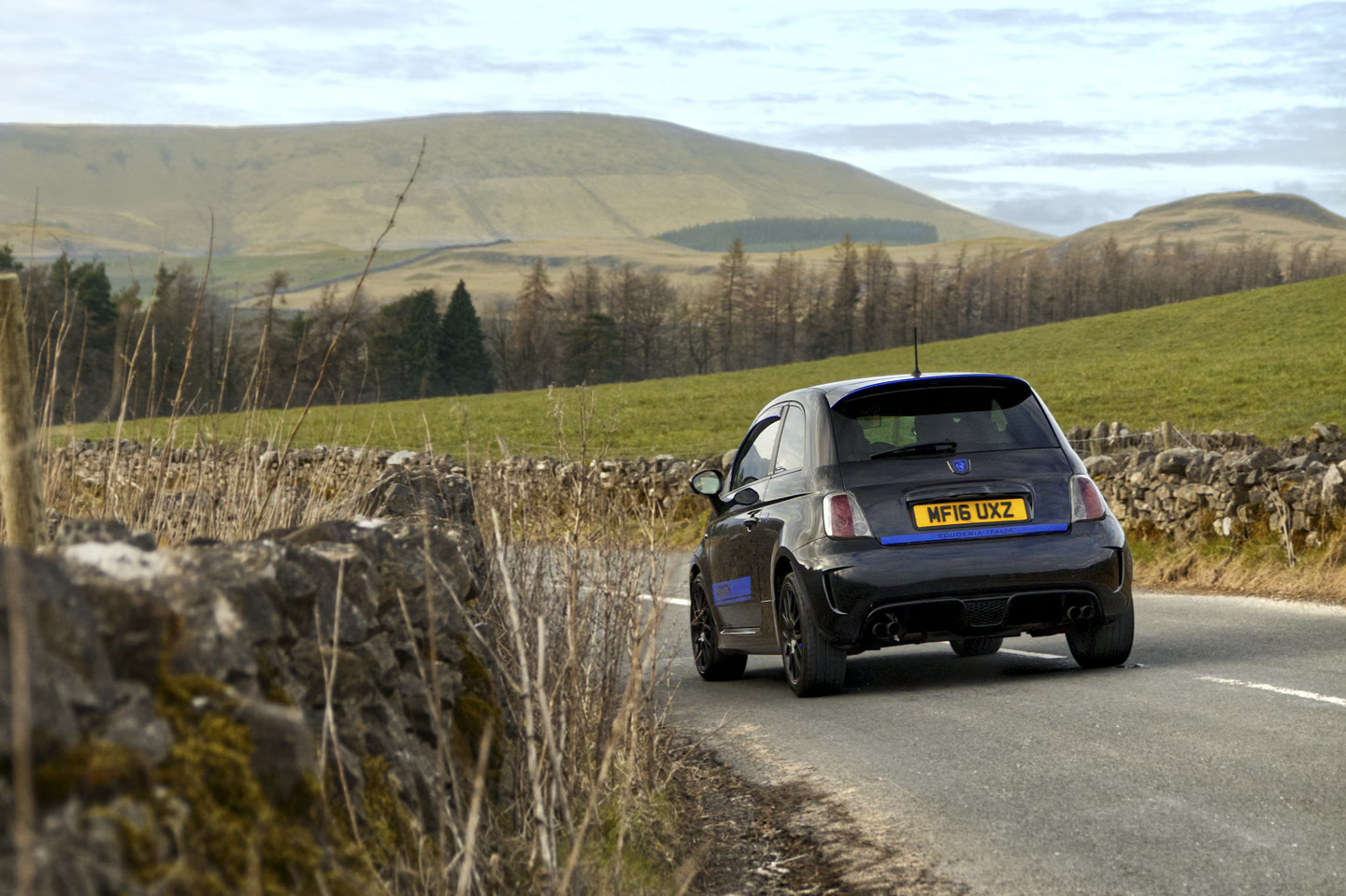
More time here is spent on a balanced throttle than at full chat, and more time is spent carving a line through the twists and turns than dealing with torque steer, a property noted only by its absence. The Abarth may only have a 1.4-litre turbocharged inline-four, but it delivers strong low-down torque, and this particular example goes further still, sporting a remap to a claimed 180bhp. It’s good for a 0–60 dash in the low sevens with a clean launch, but the roll-on performance feels stronger, enhanced by the keen throttle response, Fiat’s lax attitude to NVH and the proximity of the dry stone walls. The healthy mid-range comes in handy squirting between the bends – you’ll need to lean on it if you have any intention of making serious progress.
But what really steals the show is the raucous Monza exhaust. Under load it’s borderline offensive, a dry timbre suggesting the cats have gone walkabout, and on the overrun it snaps and crackles with such enthusiasm you’ll find yourself lifting off purely to hear it again.
That said, it’s not enough to distract from the driving position. As stylish as the Scorpion-embossed seats appear, the base sits too high whatever your build, the padding is too firm and the bolstering minimal – in the Abarth, you perch rather than sit. At six feet tall I’m no beanpole, but even after fiddling with several driving positions I still can’t get settled, not helped by a lack of reach adjustment on the steering column. The frustrations don’t end there – the pedals are awkwardly positioned, with the throttle sitting above the brake, so any attempt at heel-and-toe is a non-starter.
Compensation is offered in the form of the pleasingly chunky steering wheel and gear shifter, the latter with a light and slick action matched by a dip it ’n’ rip it clutch. Engaging Sport mode is compulsory, if only because it causes the large TFT display to come over all crimson, forcing the blue efficiency readout to exit stage left in favour of live telemetry that includes a G-meter and throttle positioning. Add in the oversized digital speedo and a periscopic boost gauge that whips around its circumference, and the Abarth’s cabin could rival an amusement arcade from the ’80s. Huge fun.
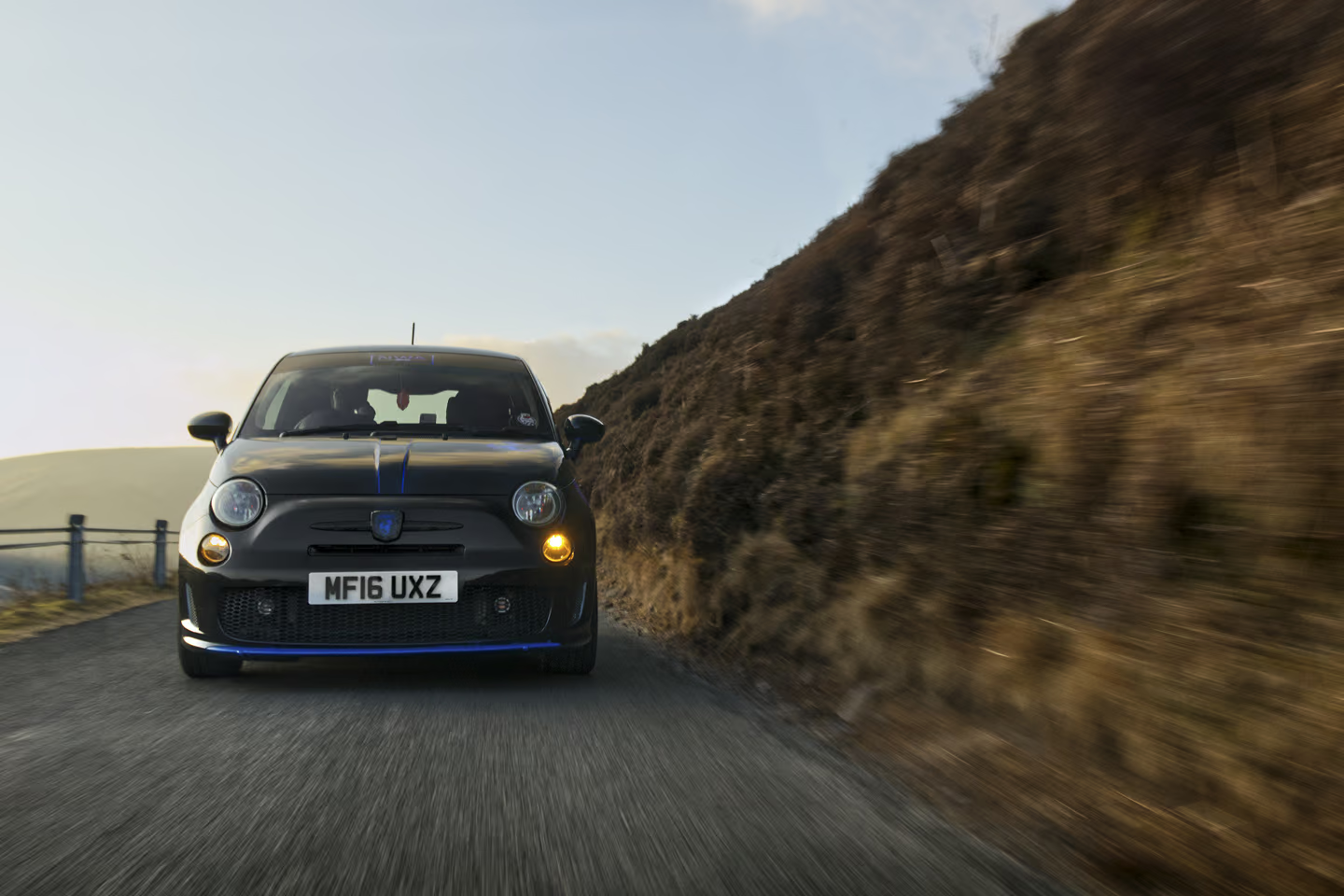
Approaching Whitewell, two tight chicanes are fired at the 595 in quick succession, the open sightlines letting me explore its playful side. Grip is high and the body stays flat, the front gently pushing wide under duress. Provoke it with an aggressive lift, and the rear axle remains obedient rather than mischievous, meaning you don’t need the snap reflexes of a Venus flytrap to gather things up.
Frustratingly, the electrically assisted steering feels under-geared for a car of this size and intent, meaning I’m consistently applying additional lock after turning in. The feedback I crave isn’t there either, though the winter tyres sensibly fitted here won’t be helping matters. On the exit of the second chicane, the frequency of bumps in the tarmac increases enough to warrant backing off – I don’t fancy being pole-vaulted into the river below, ricocheting off the trees.
I take it as a sign to stop at the Inn at Whitewell for a walk around the car, and if it wasn’t for the ongoing pandemic, I’d indulge in one of their sumptuously thick hot chocolates. The Fiat 500 has been with us since 2007, but the Abarth still screams fun and personality from every angle, doubling down on retro details without becoming kitsch or a parody of itself. It’s a look you’ll either love or loathe, but one that isn’t shy about gathering attention. Under the skin, though, sits a widened version of Fiat’s ‘Mini’ platform, which made its debut underpinning the 2003 Panda. Well past its sell-by date, then, but it does at least confer one advantage – a featherweight sub-1,100kg kerb weight.
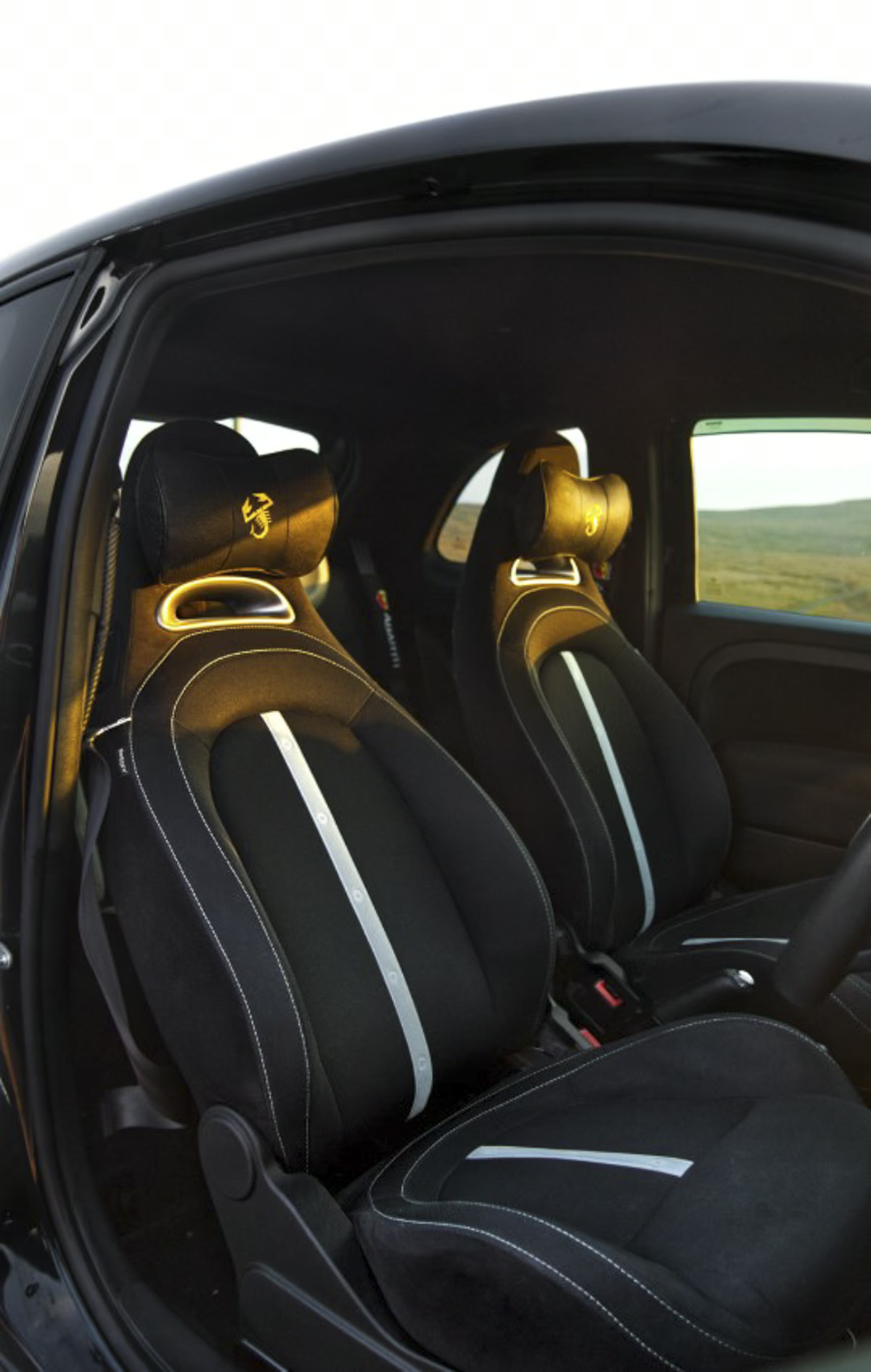
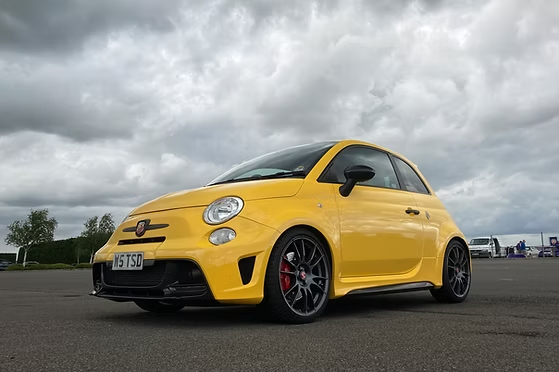
To keep things fresh over its extended production run, Turin churned through special editions – including the one of 250 Trofeo Edition we’re driving today. Any attempt to keep up with the model range and its intricacies requires a MENSA membership; the T-Jet alone stretches from 133bhp to near-190 in the ultra-rare, two-seat Biposto. And that’s before we get into Koni dampers and limited-slip differentials.
Back to the task at hand, the road chases the meandering River Hodder upstream, its constant bends giving the area its name. Dunsop Bridge registers as a blur before the torrent of water narrows to a tributary through the slim Trough of Bowland Pass. What makes a driver fast here is local knowledge and strong, sheep-avoiding brakes, which the Trofeo thankfully possesses.
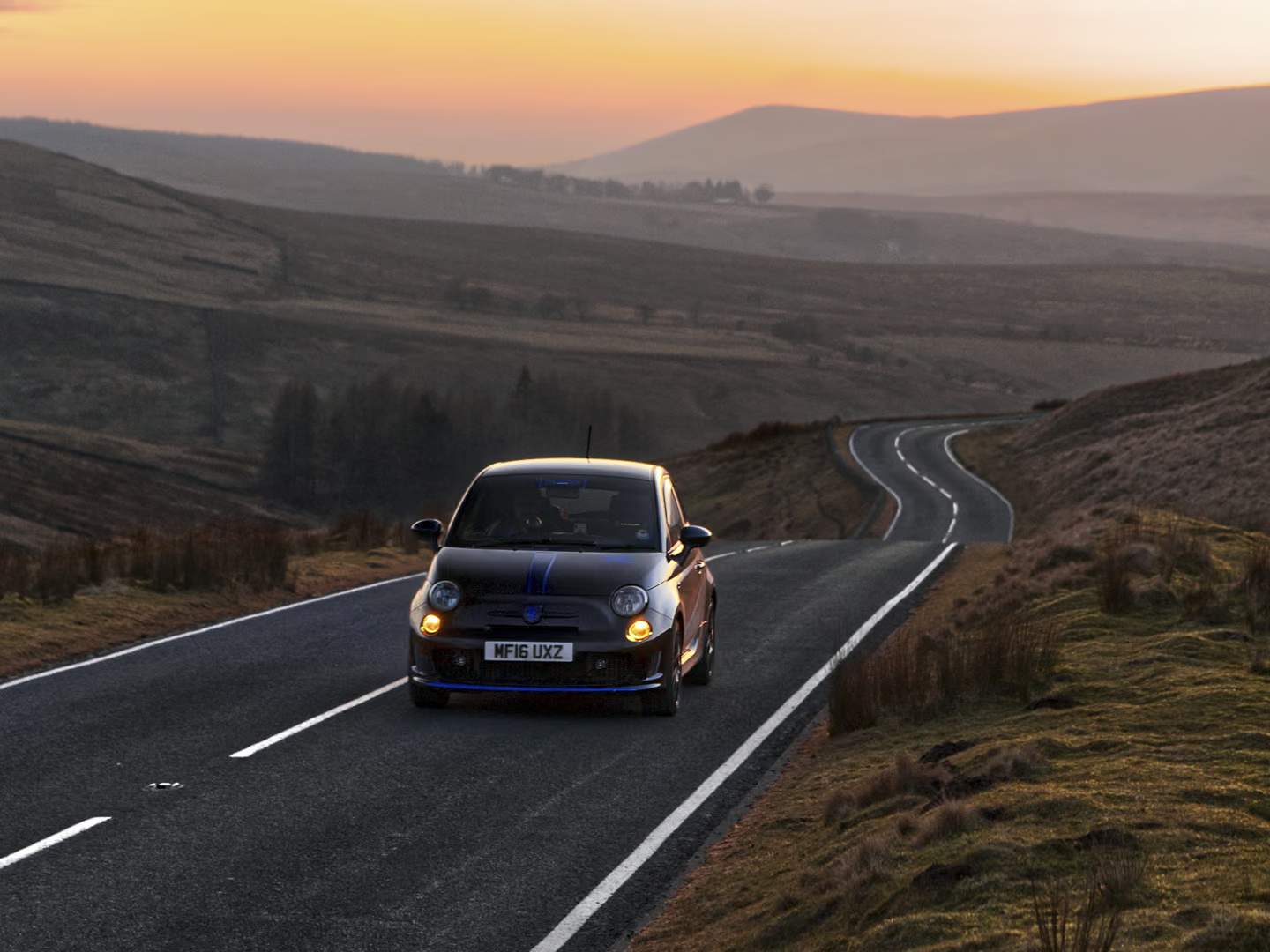
Leaving the mutton behind, we rattle off the final cattle grid and emerge onto the moorland, nothing but rolling fells filling the windscreen. It seems the road is as grateful as I am to shed the claustrophobia, widening and upping the pace with a series of long sweepers, but still finding the time to make you blink with the occasional blind crest. The stretch highlights the benefits of the remap: power holds firm to the 6300rpm redline, and whilst there is no dramatic crescendo when you encroach on the limiter, mercifully the performance doesn’t tail off or get overwhelmed by the incline.
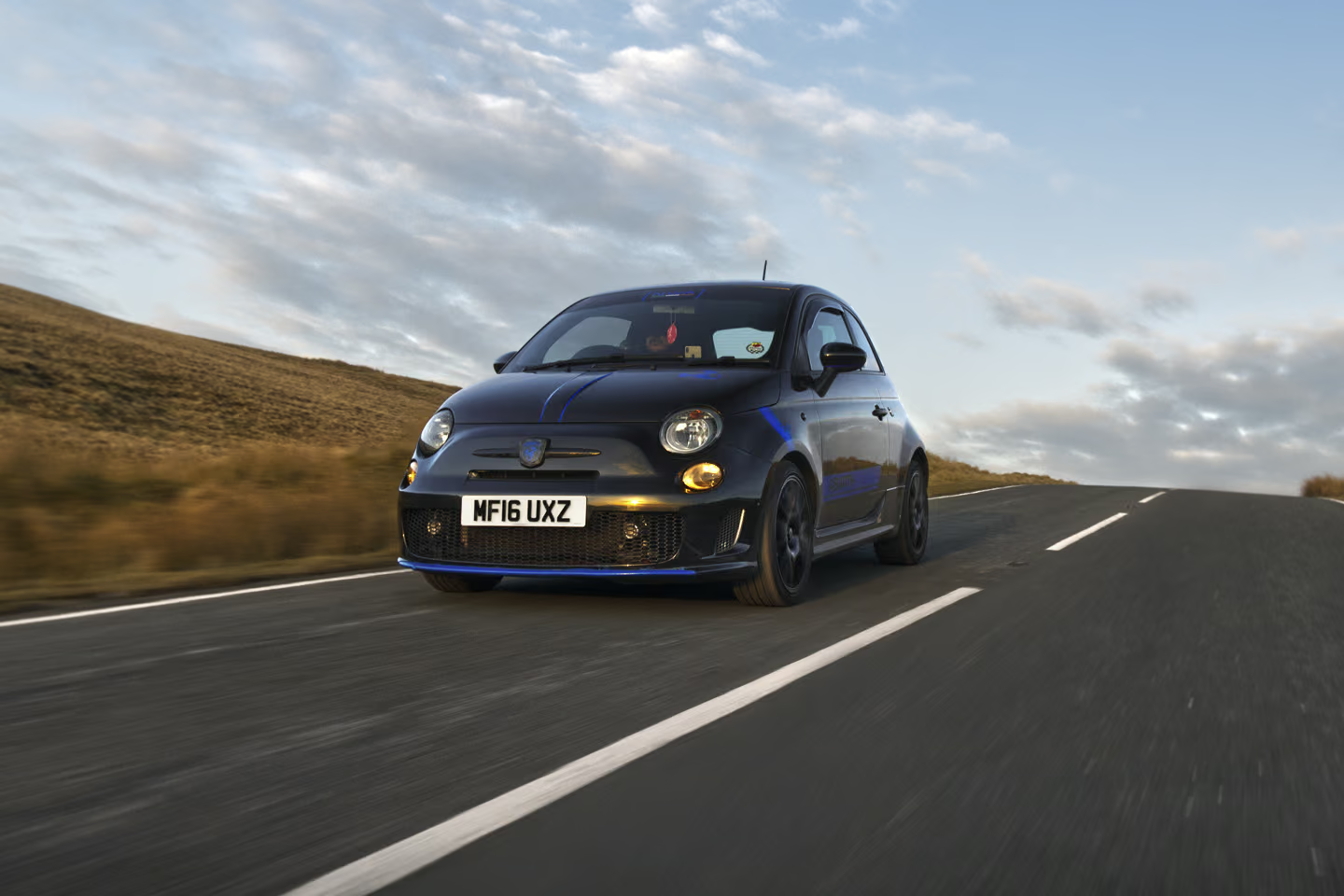
Dropping back down to the hedgerows, we give the Torque Transfer Control system a thorough workout as it tries its best to imitate a limited-slip differential. The damping, meanwhile, never stops fidgeting even over the smoother surfaces, and Bowland likes its tarmac on the weathered side. It doesn’t ruin the fun, if anything the bouncy castle ride quality feels a part of the experience. It’s also something that feels baked into the platform – a set of aftermarket coilovers would let the car breathe better with the surface and allow you to carry more speed. But there is only so much you can do with a 2.3-metre wheelbase.
After deciding on fish and chips in Higher Bentham, another important decision presents itself: carry on into the Yorkshire Dales towards Ingleton or turn south and scale the fells from the eastern front. Opting for the latter is the right call – save for a pack of ambitious ramblers, we have the place to ourselves. I have to check the Group N fantasy at times, mindful of the scars left behind by the overly enthusiastic caught out by the road and its appetite for a chunk of sump.
A reminder of the remote feeling is a complete lack of phone coverage – this is not a place to unwittingly become part of the scenery. We don’t cross paths with another car in the entire twelve-mile stretch to Slaidburn, another quaint sandstone village lifted straight off the cover of a shortbread biscuit tin. Before long, the road begins to behave and contort in a familiar manner – it’s the one we turned off a couple of hours ago. Another five miles along this route would see us return to our original detour point, but the B6478 is calling. One last chance for the Monza to sing.
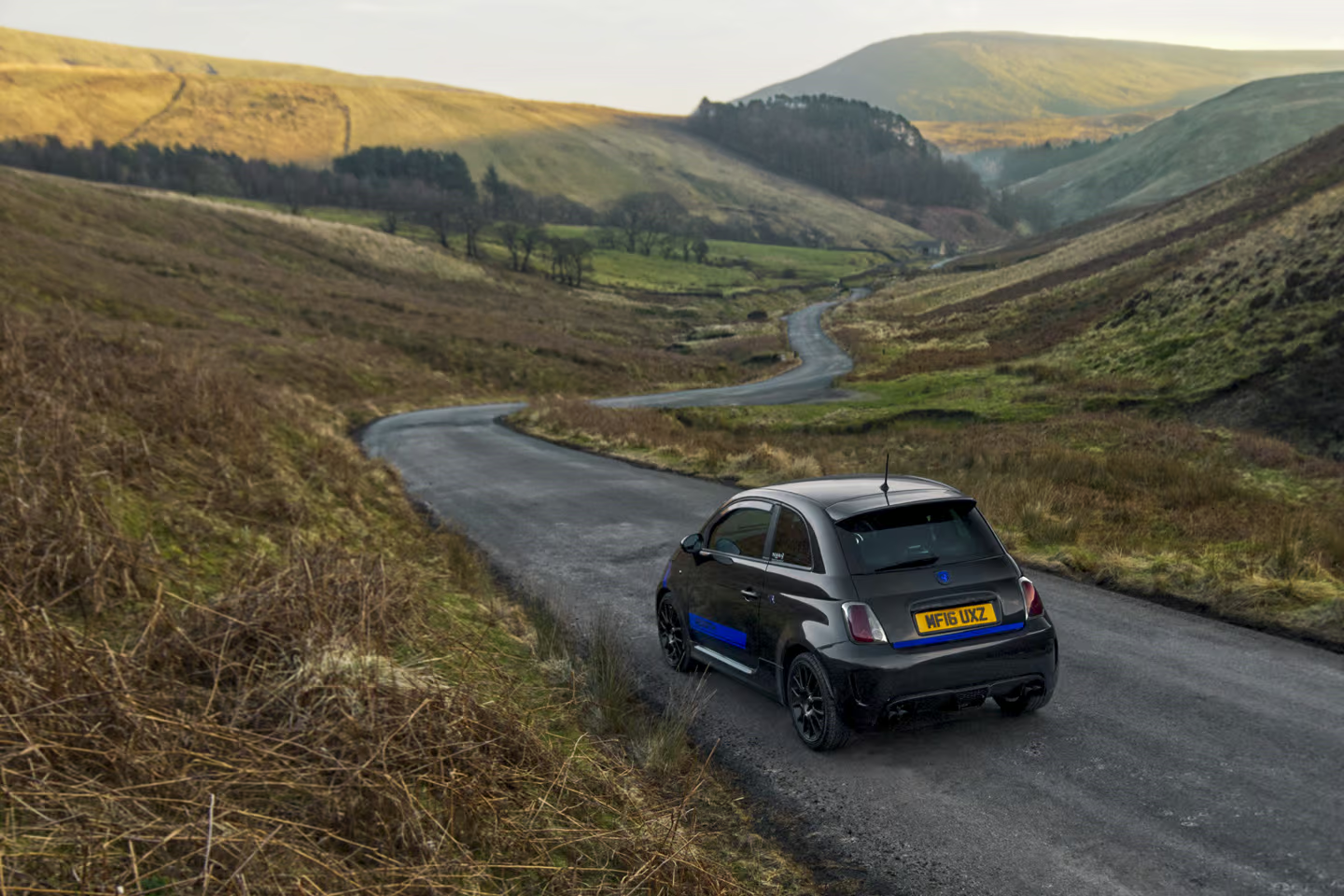
We call time in the shadow of Pendle Hill, a spot famous for sacrificing witches. I’d love to tell you Abarth has been conjuring up all the magic today, but I’m not entirely convinced, because it’s clear the Trofeo is a flawed car. Too much rests on the shoulders of the Monza: the steering isn’t sharp enough, the handling is too one-dimensional and the ride is choppy. Step back, and the ergonomic compromises are just as hard to overlook.
Serious drivers who want to combine charm and thrills will be much better served by the R53-generation supercharged Mini Cooper S. It’s a far superior car dynamically, looks just as good, and has an equally distinctive soundtrack and pogo-stick ride quality.
But in the real world, the Abarth is both more reliable and economical, and I defy anyone not to enjoy a small car with a ‘chuck me at the next corner a little harder I double dare you’ personality on these roads. Despite my misgivings, if it wasn’t for the abundance of nocturnal wildlife emerging from the hedgerows, I’d be spinning the tyres on my way back across the fells.
No, the Abarth 595 Trofeo Edition is not a car that’ll win plaudits in a group test against rivals and neither will it score highly in an objective assessment. But it will win your heart, and if you believe modern cars are becoming too fast, too aloof, too damn capable – a Trofeo might just be the tonic you need. It allows you to access its full performance without the need to sacrifice your sanity every time you climb behind the wheel, even if you might have to sacrifice your back.




.svg)

