-01.svg)
-2.webp)
The first rung on the ladder might be the window ledge. Naturally, it's caked in dust, but the model of the Lamborghini Diablo upon it is immaculately clean. Poking out of the VHS player you’ll find a copy of Clarkson Unleashed on Cars, while jutting out of the games console will be SEGA’s Colin McRae Rally. Next, scan the desk in the corner. It isn’t dominated by school textbooks or homework, but is home to a collection of dog-eared car magazines, plus a set of Top Trumps.
Finally, you reach the pinnacle: the framed poster above the bed. The car pictured is the absolute centre of this kid’s universe. What are you seeing from your childhood? The McLaren F1? The Aston Martin Vantage? Or maybe it’s a Speed Yellow 993 Turbo or Scarlet Ferrari F355.
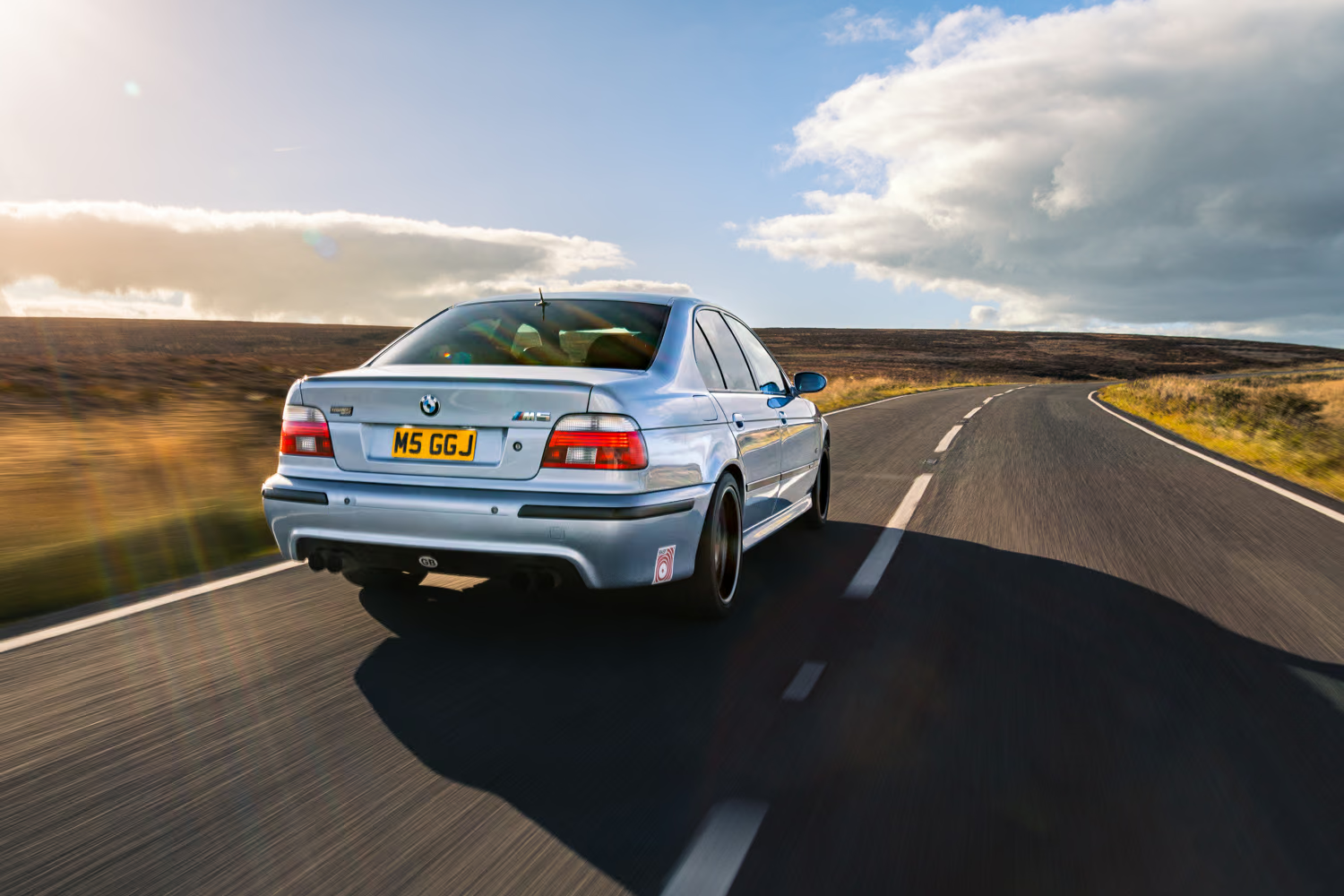
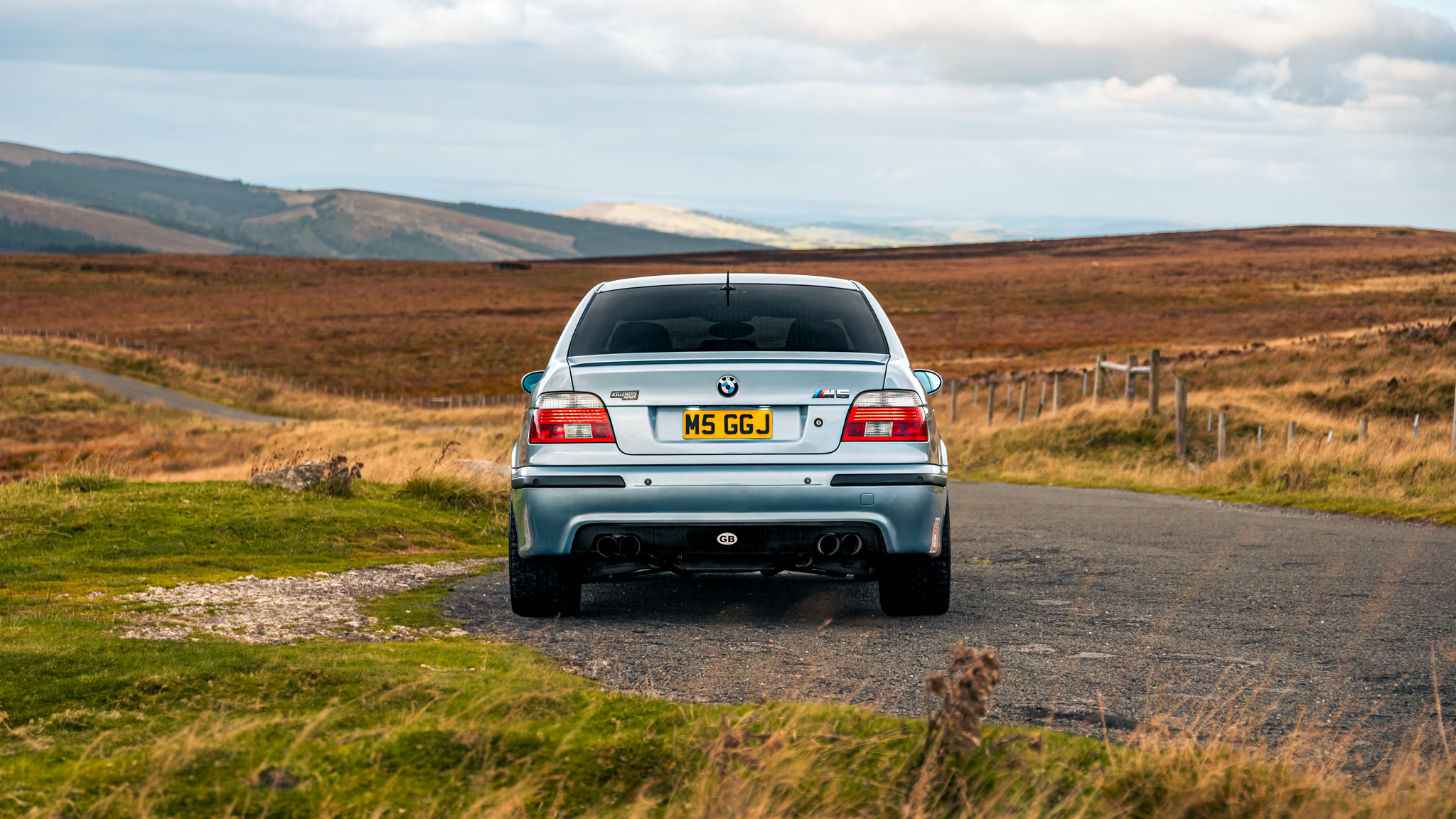
For me, the car in that poster was the E39 BMW M5 in Avus Blue. So – what was it about the E39 that deserved the ultimate accolade in my teenage bedroom? Two things stood out: first, it was the ridiculous output of 400bhp from the new 5.0 litre V8 – a figure that seemed absurd back in 1998. Second – the thing that really made me lose my collective shit – was the four exhausts nestled within the back bumper. Four exhausts…on a sober executive saloon? This was unheard of. At the time, four exhausts was the exclusive reserve of the Italian supercar aristocracy; yet here was this Bavarian family box elbowing its way into their Polo club. From that moment on, the M5 owned me.
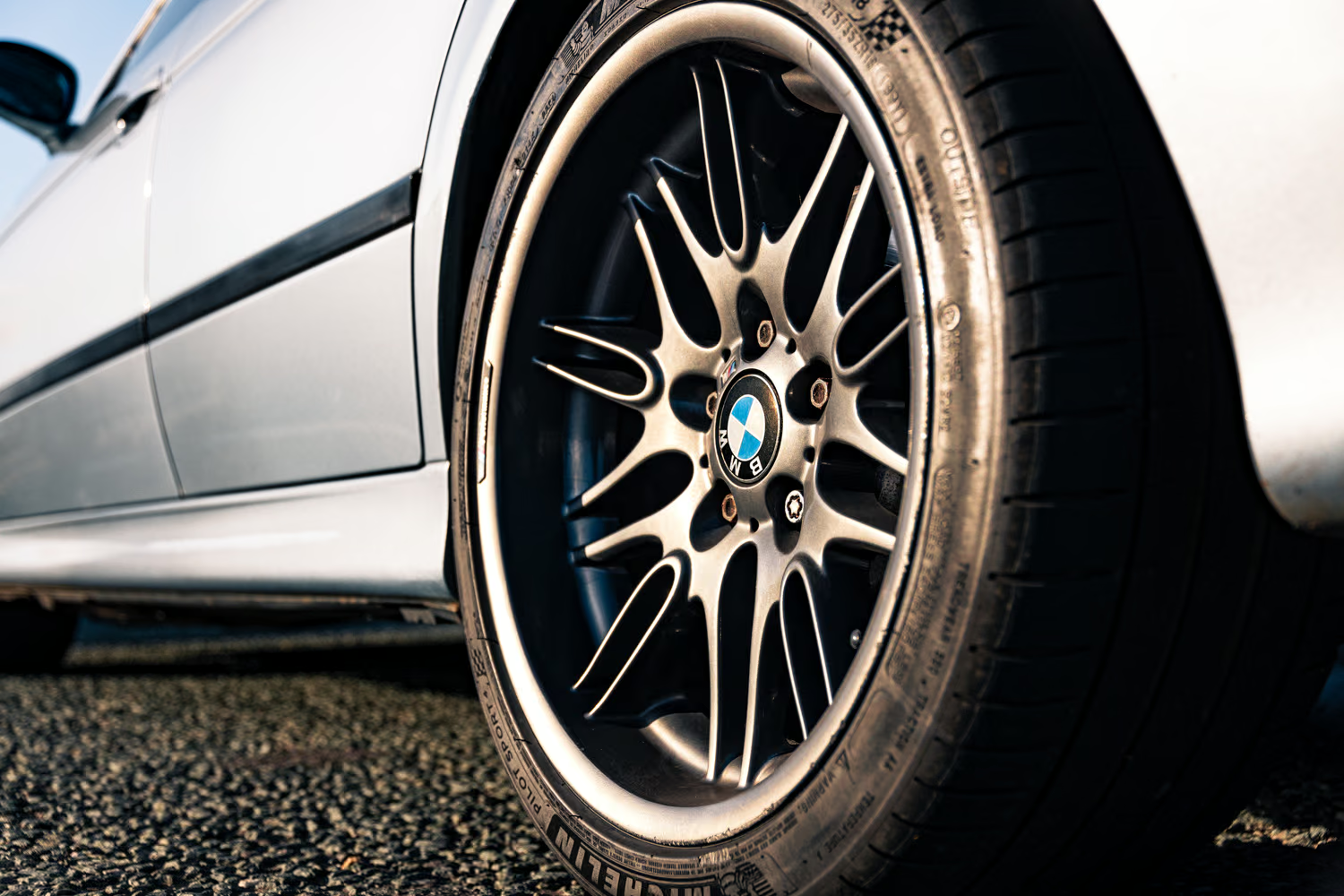
It helped that the E39 simmered with discreet menace. All the clues were present and correct: a discreet chin spoiler, sculpted M mirrors, massaged arches and a lip spoiler on the boot so discreet it was almost apologetic. But it was the stance of the car that truly set it apart. A perfect judgement of ride height, arch clearance and rake – all set off by those achingly desirable, deep-dish alloy wheels finished in ‘chrome shadow’.
Those in the know could spot the M5 from 100 yards away. To everyone else, it remained anonymous – just another five-series company car.
Then, the first road tests started rolling off the printing presses. The praise was universal. The prose giddy about how the M Division had discovered its mojo again after the E36 M3 and the characterful-but-flawed M roadster and clown shoe. It mattered that magazines like Autocar and EVO raved about the M5’s driver focus – singling out the persistence with a manual gearbox and a locking differential when all others chose a torque converter and a one tyre fire. A fuss was also made about the great lengths the M Division took to reduce unsprung mass with the widespread use of aluminium in the front suspension arms and the multi-link rear setup. Then came Tiff Needell on the lockstops in the pouring rain on BBC 2 at 8pm.
Honestly, if I had been Barbara Broccoli, I would’ve delayed the production of Tomorrow Never Dies by twelve months. Why did Bond drive a 750iL in TND when this thing was in the pipeline? Still, at least we got treated to Clive Owen chauffeuring Madonna around at speed in those fantastic – and fantastically expensive – short film commercials. Best Bond there never was, driving the best Bond-car there never was?
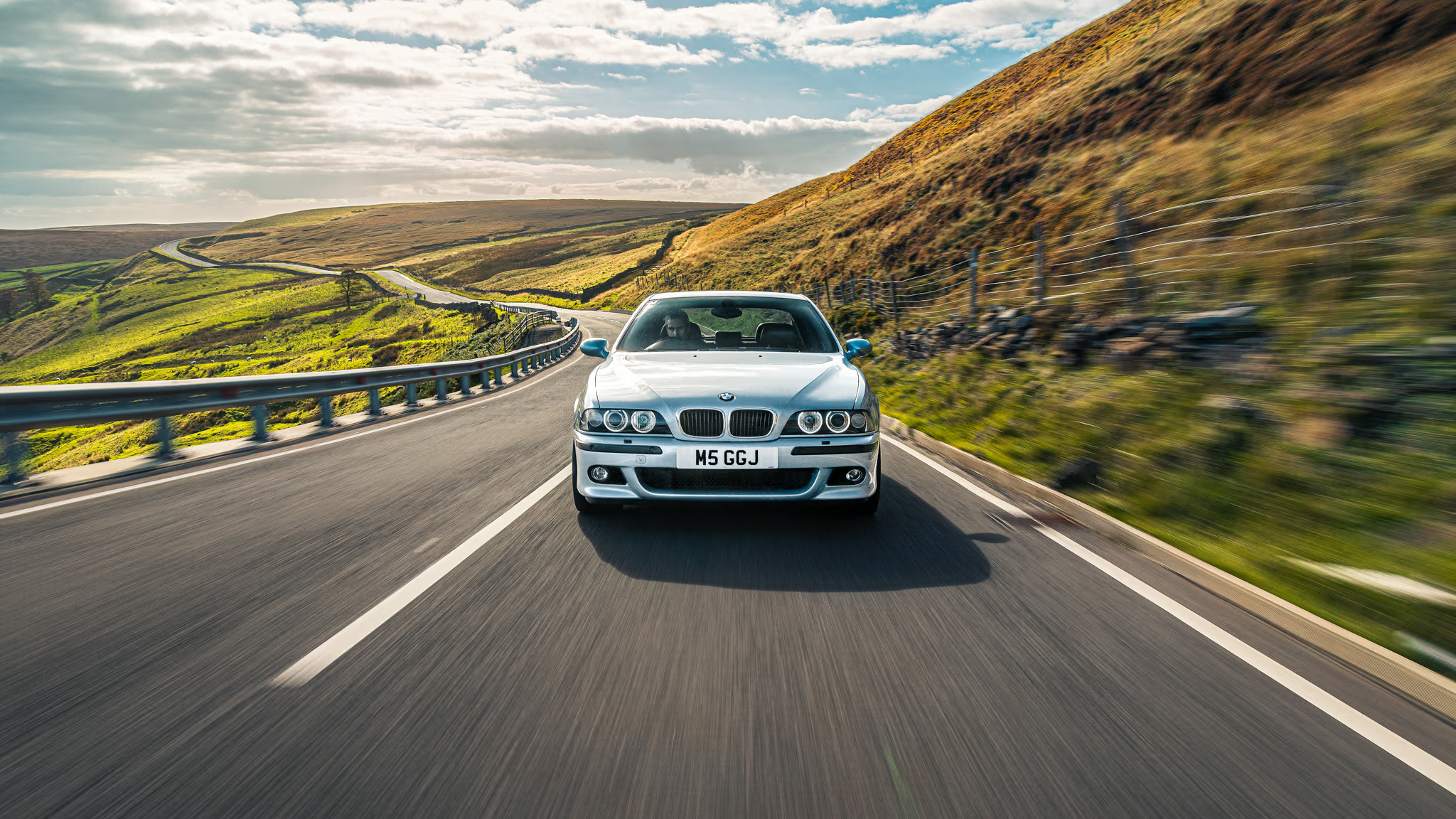
Am I getting ahead of myself? Yes I love this car, but we’re 800 words in and the bloody thing hasn’t even turned a wheel. I’m in the driver’s seat and the excitement is reaching fever pitch. The key residing in my clenched hand is starting to leave an indentation and the driver's window is reflecting the sort of wide-eyed, gurning smile you only get in the front row at Creamfields.
So why am I stalling? I’m insured. My favourite roads are clear and twisty. I know them well enough to anticipate where the car will shine, and where it’ll be tested. And, speaking of shining, God has set the sun just-so. There’s even a cooling breeze. Everything is textbook.
It’s simple: the F-E-A-R has me. The never-meet-your-heroes sort. What if I fail to discover the magic? What if those on-paper numbers that blew my mind 25 years ago are found wanting in an era of instant turbo torque and whip-crack paddleshift transmissions? What if the suspension is tired and the roadholding is underwhelming? What if the box steering offers the same concise feedback as a Boris Johnson Prime Minister’s Question Time? Maybe it’s a case of imposter syndrome - can I trust myself to be objective?
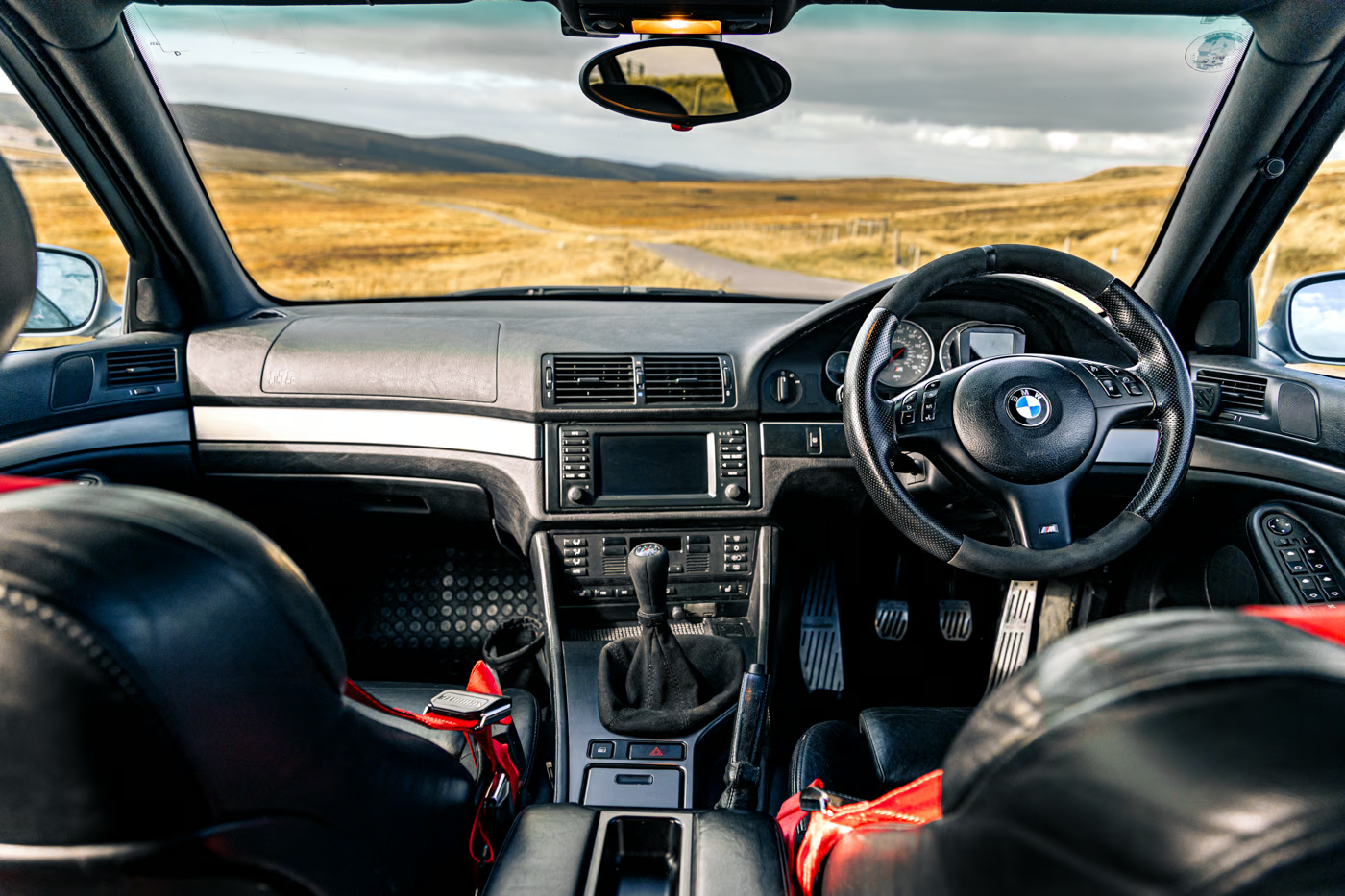
Bollocks to the nerves – let’s get on with it. The S62 fires up instantly. No flare of revs – just a welcoming, bass-rich idle. I stall again - not of the engine and clutch variety - but to drink in those little interior M details. The illuminated gear knob; the tricolour stitching on the thick-rimmed wheel; the flash of the M tricolour again on the leather seats; the embossed headrests. Front and centre stage are the grey-faced dials, with an oil temperature gauge in place of an mpg counter. Playing ‘Spot the M Badge’ is a good way to kill time while you wait for those famous orange lights on the rev counter to extinguish as the V8 limbers up for duty.
Any fears about the 5.0L V8 being lazy immediately dissipate. This is a proper M unit – free-revving and turbine smooth. Peak power is developed at 6,600rpm – only 400rpm shy of the redline. That is a mere 300rpm south of where the legendary, M1-derived straight six of the preceding M5 made its 340bhp. The compensation for those lost 300 revolutions? 369 lb-ft of torque developed at 3,800rpm – an increase of 74lb/ft, delivered almost 1,000rpm sooner. So the V8 thrives on to revs, but it also has the muscle to hustle its 1,795kg mass. Something the E34 was criticised for – especially in comparison to the deranged, twin-turbocharged Lotus Carlton.
The new engine – codenamed S62 – was based upon the 4.4 litre V8 in the 540i, which made 286bhp and was good enough for a 6 second 0-60 mph run. The M Division added 2 mm to the bore (now 94mm) and increased the stroke to 89mm. Then they upped the compression ratio to 11.0:1, added individual throttle bodies to each cylinder, ‘double VANOS’ variable valve timing and hollowed out the camshafts for improved throttle response.
-2.avif)
Like the 540i, the block and head remained cast aluminium, but underneath the sump was switched for a semi-dry unit, with two additional scavenging pumps which activate during hard cornering. The S62 also features an air intake system for each bank of cylinders, monitored by dual mass air flow sensors and – at the time – the world’s most powerful ECU, specially developed by Siemens.
The results were hugely impressive. The E39 M5 can rip to 60 mph from standstill in just 4.7s – passing 100mph just over six seconds later. During development, rumours were rife of derestricted cars hitting 186mph in testing. The new M5 was king of the performance hill.
And it still translates today. That first full bore dosage of the S62 is instantly addictive. There isn’t a massive jerk factor – that sudden change in the rate of acceleration that takes your breath away – it's more the satisfying way in which the M5 keeps massaging you into the seat deep into three figures. There doesn’t seem to be any let up in the accumulation of speed: third feels just as fast as second, fourth just as fast as third, fifth...oops, I’ve found the limiter.
In period, the S62 did get some minor criticism for a muted soundtrack, but I’ve no doubt that the eagle-eyed among you will have noticed the additional acoustics of this car – namely, twin Eventuri carbon intakes and an aftermarket Kelleners exhaust. It sounds wonderful: burbling at low speed; howling with the taps open – especially over 5,000rpm.
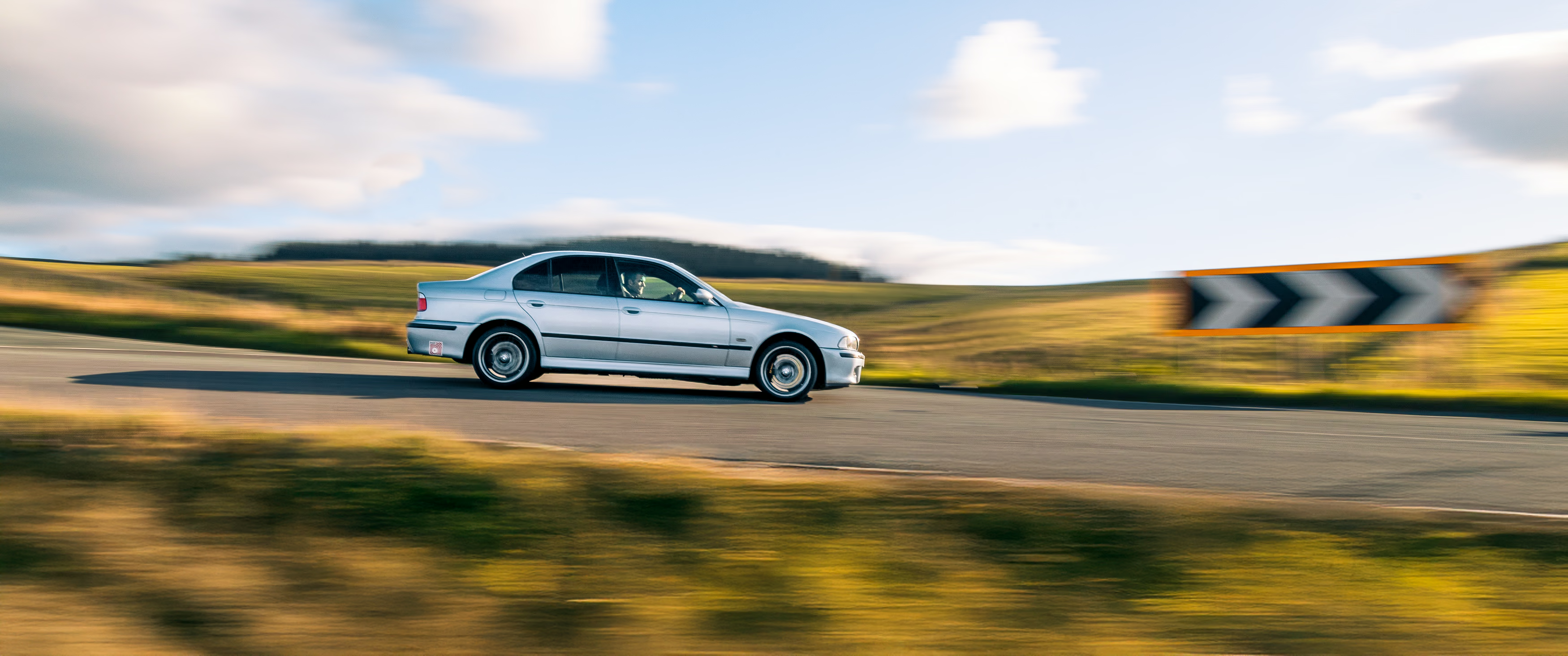
But it’s when you start to push the M5 into a series of turns that it truly shines. Initially, you’ll notice mild understeer is the default stance as you build the pace, but that is more of a gentle warning, a safety net. As soon as you get comfortable with this, you’ll prod the DSC and find the hooligan within, indulging in little slides while exiting well-sighted, 2nd gear corners – grateful for the long travel of the throttle pedal.
Now the M5 begins to display an athleticism that defies its size. The front of the car reacts in the exact same manner of your inputs. Saw at the wheel, demanding rapid direction changes, and you’ll get full commitment; caress the wheel and the M5 will glide around a corner like it's auditioning for Swan Lake. It’ll roll in the same manner too. Everything about the M5 happens with a progression that matches your aggression. You can really feel that late ‘90s BMW M philosophy at work – start by engineering a benign handling balance whilst sliding beyond the limit of grip, then work backwards. Because, if a car behaves at that point, you’ll end up with a lovely driving experience within the limit of adhesion.
Despite its near two tonne mass, the E39 feels a more natural and forgiving car to provoke via the back axle than the other, hugely-lauded period M car: the E46 M3.
That's because the V8 offers 100lb/ft more torque – deployed through only fractionally wider tyres – meaning you can get the tail sliding at much lower, more manageable speeds. And, once you do, when it comes to gathering it back up, the longer wheelbase soothes out the transition or, in my case, masks any ham-fistedness.
Running in tandem all along, the damping and body control has been nothing short of witchcraft – making a mockery of the current obsession with adaptive damping. Interestingly, the E34 M5 offered optional two-stage adaptive dampers in its later 3.8 litre format, but they never made it onto the E39 – the car simply didn’t need them. It would be very hard to find a better-judged damping compromise on any car.
.avif)
That’s because this M5 was born in an era of high technology but little marketing peer pressure. Nurburgring or Top Gear power laps didn’t figure in the sales brochure. Yes – there's the Sport button which sharpens the throttle and adds weight to the steering, and there are buttons on the steering wheel – but they relate to the stereo volume and cruise control.
That aside, the E39 retained what went before: slim A pillars; a naturally aspirated engine; drive to the rear; three pedals in the footwell. All your interaction points with the car are simple, intuitive and analogue. There is no giant iPad sticking out of the fascia, with 500 different screens to swipe through just to tweak the climate control; no infinite number of configurations for the damping, throttle, brake-by-wire or steering. Turn the key, do some big skids and smile. Or drive to the Italian lakes in supreme comfort in one hit.
Let’s not get carried away though. The M5 isn’t perfect. Despite the fanfare of the six-speed manual, it doesn’t offer one of the great gearshifts. The throw is slick, but a little too vague across the gate in that typical BMW fashion. Still, it’s not enough to rue BMW's lack of an automatic option – there was always Alpina for that.
The steering comes in for criticism too: reassuring heft? Yes. Direct? Yes. Feelsome? No. Okay, it isn’t quite as elusive as our former Prime Minister, and it doesn’t dent your confidence in the car, but the fact remains that you feel understeer building more through the seat of your pants than your fingertips. The gripe centres around the initial turn of the wheel to just off centre – if the steering wheel was a clock and 12:00 was straight ahead, there is a dead zone between 10:30 and 1:30. After that, the complaint pretty much dissipates.

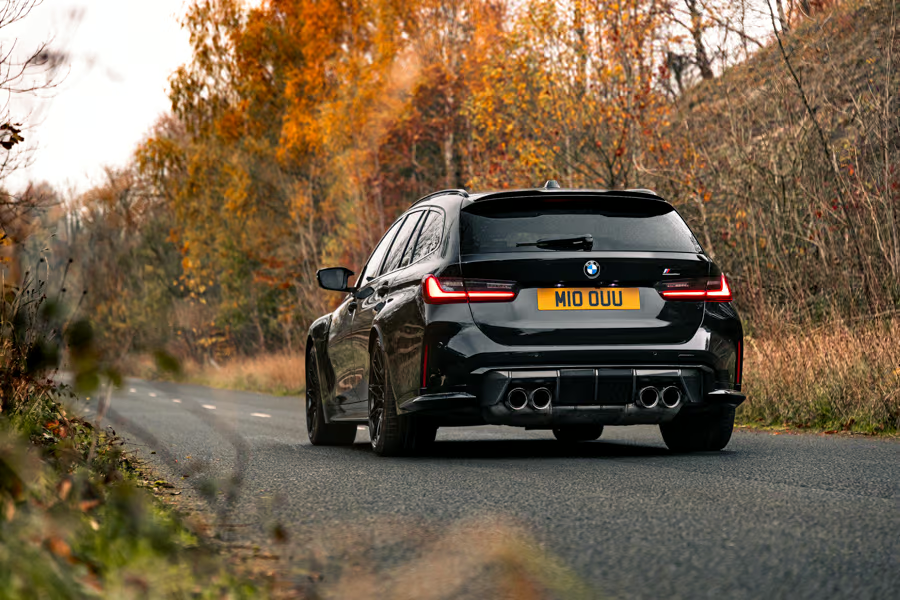
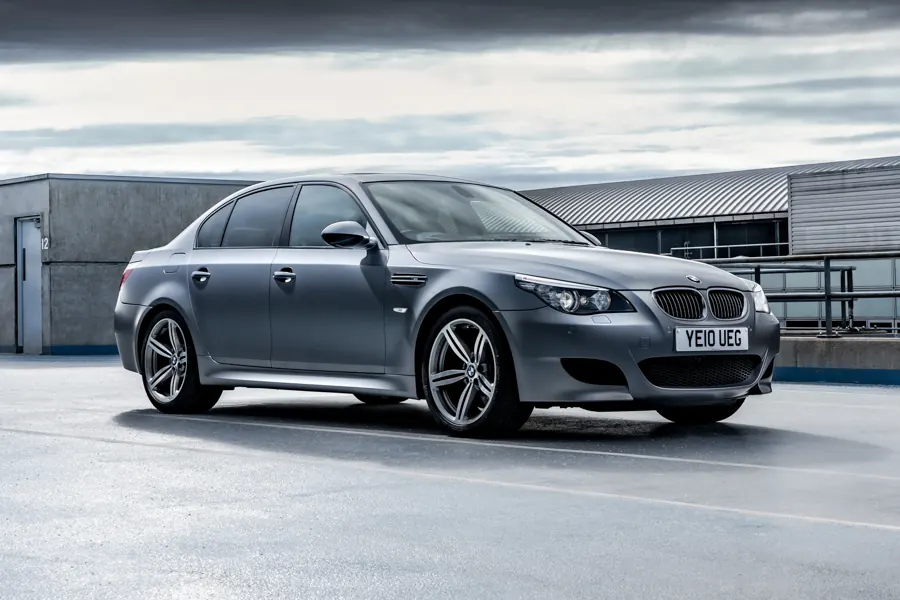
The E39 M5 also has something else to answer for. That 400bhp output can be traced as the root cause of the German horsepower wars of the early 2000s – a one-upmanship battle that still rages today. Audi responded to the pummelling the E39 handed out to the 340bhp S6 by slapping two turbochargers onto its 4.2L V8 – creating the 444bhp RS6. AMG went even further by supercharging the E55’s 5.5L V8 to make 475bhp – a leap of 120 horsepower. BMW answered with the V10-equipped, 507 bhp E60 M5 – capable of 205mph sans limiter. Today, the output of the M5 starts with a six and the 0-60 time begins with a two.
Somewhere along the way, the tactility got lost as the throttle response became diluted, the footwell lost a pedal, the steering switched to EPAS, and the front axle also had to deploy power – rather than be a mere pathfinder. The huge output of the modern super saloon also means the elegance has gone from the styling, thanks to the need for excessive cooling. The front of the current Audi RS6 contains more aggression than Eminem’s entire back catalogue. And, for all their seamless gear changes, multimode dampers and programmable driving modes, I don’t think any of the current crop of super saloons are more comfortable than the E39. For sure, some of them are certainly more thrilling, but I doubt they are as satisfying.
Interestingly, the E39 almost never happened. At the time, the BMW board felt the 540i was a quick enough flagship. But the purists were steadfast in their demand for a proper M5. Those same purists went berserk when the grapevine started divulging harrowing details, such as the discontinuation of the straight six, the loss of rack and pinion steering and – heaven forbid – the fact the E39 would be built on the regular production line, not hand-assembled in Garching. Thankfully, their fears – and mine today – were wholly misplaced.



_edited.avif)

.svg)

