-01.svg)
.avif)
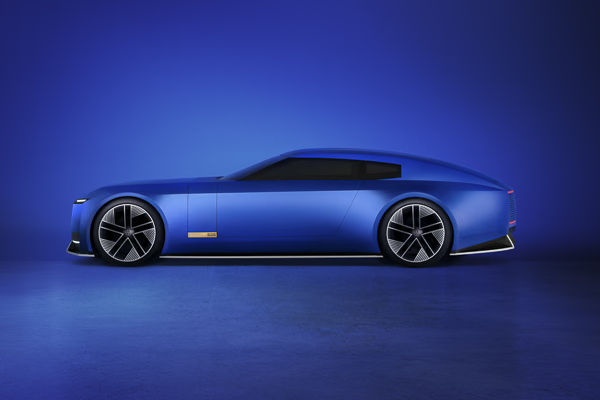
The biggest influence comes from the 1930 Speed Six, with a coachbuilt coupé body by Gurney Nutting. The car became known as the “Blue Train” after then-company chairman Woolf Barnato took on ‘Le Train Bleu’ in a race from the south of France to the north, arriving back in London before the train reached Calais. The transcontinental race was actually completed by a saloon-bodied Speed Six, as the coupé was still being built. However, the streamlined grand tourer became associated with Barnato’s high-speed run, and has lent its proportions and fastback roofline to the EXP15.
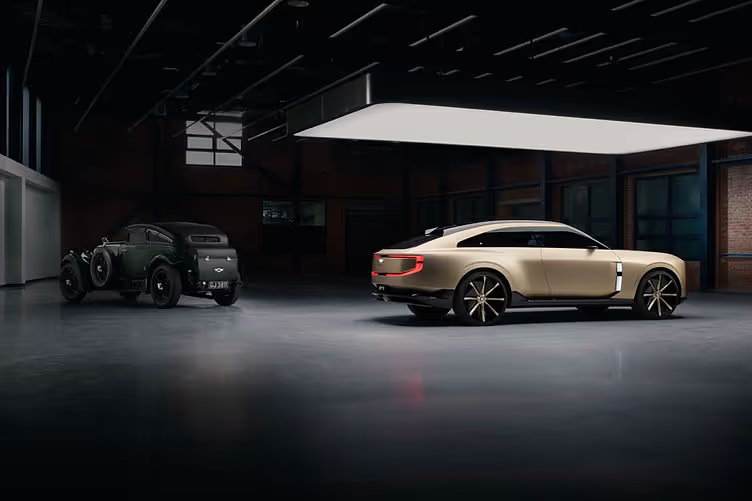
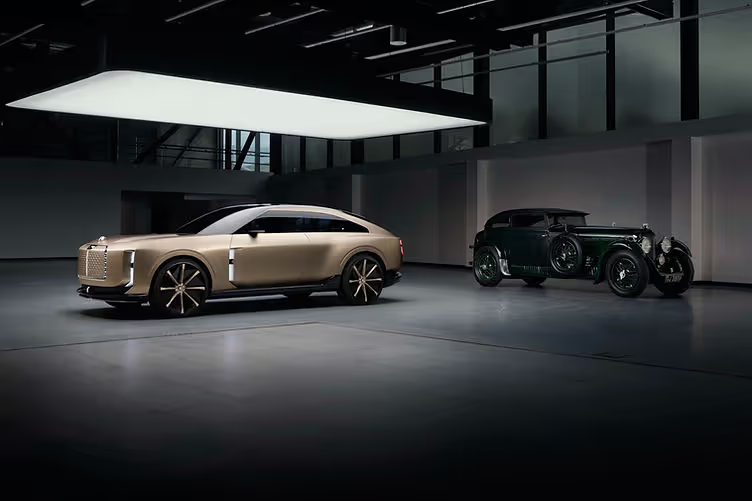
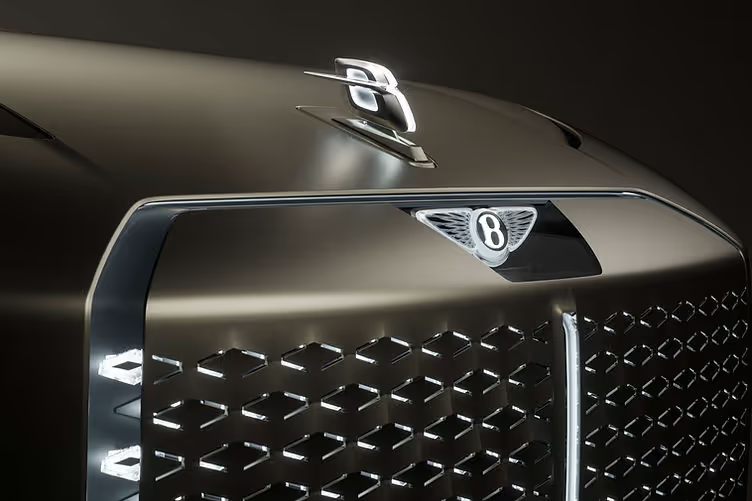
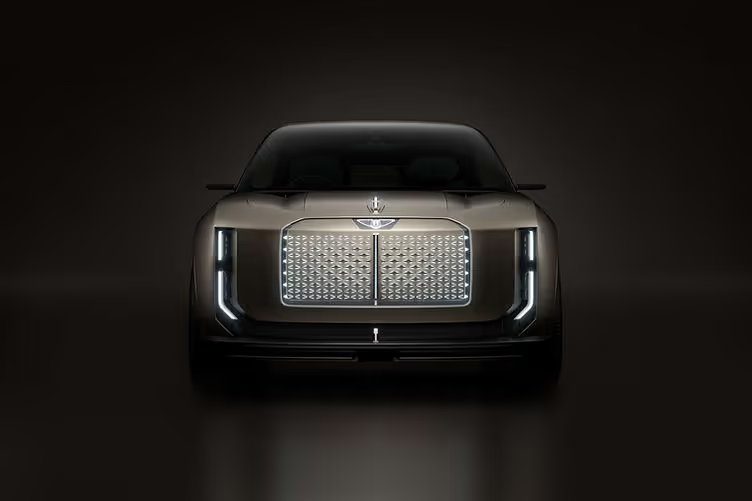
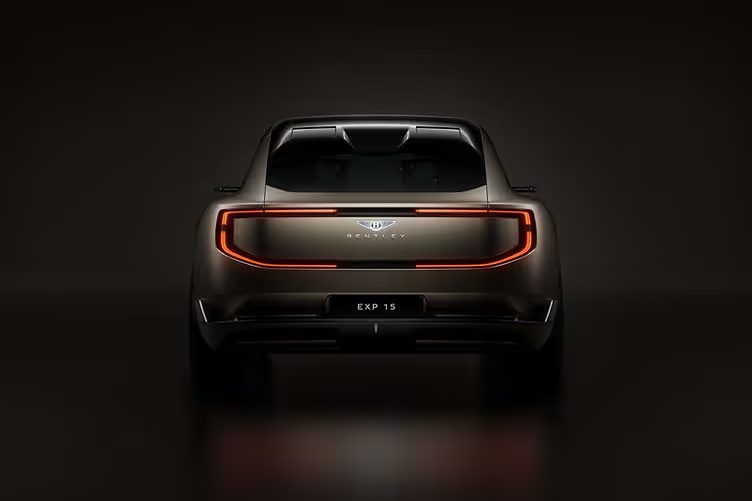
Given the historical draw, one may wonder where the styling hallmarks have gone at first glance. But the unconventionally styled fastback uses heritage-inspired minimalism to let the surfaces and proportions do the talking. Four-segment lights remain - they’re just stacked rather than horizontal - and the large square grille maintains its pride of place in the centre of the bonnet. At the rear, the oval outline of modern Bentley tail lights remains, but now one shape envelops the boot lid, and orbits a body-coloured insert.
A flying-B badge of honour sits above the winged-B, both of which have been redesigned for the next stage of the company’s history, and are of course illuminated. Large wheels fill the arches, and the rear haunches still swell out from the bodywork, framed by their distinctive character line.
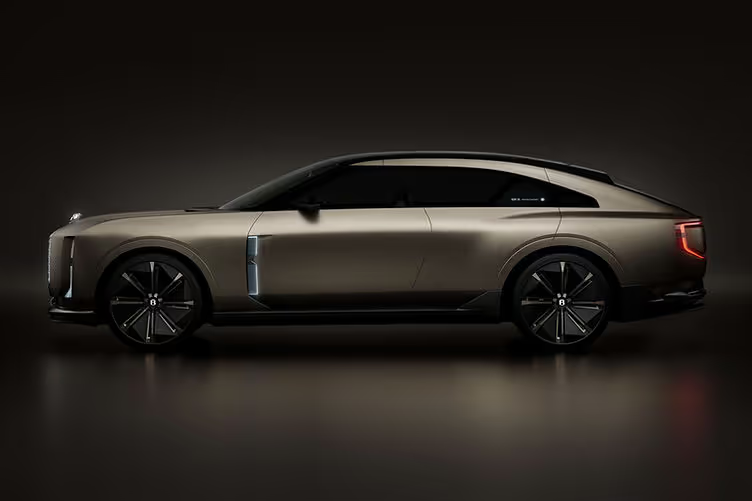
Beyond the bodywork, the Pallas Gold paintwork has been developed with autonomous driving in mind. The ultra-thin aluminium pigments don’t reduce the signal quality of the car’s driving assistance radars, allowing the covers to be painted and concealed. The highly reflective hue also makes it easily detectable by Lidar-equipped vehicles.
Just like the Jaguar Type 00, the EXP 15 has all the brand hallmarks which are easily found upon closer inspection. That said, the form it takes is a little unconventional for a modern Bentley, as the concept is a three-seater featuring a split-opening fastback tailgate, and asymmetric doors like a Hyundai Veloster.
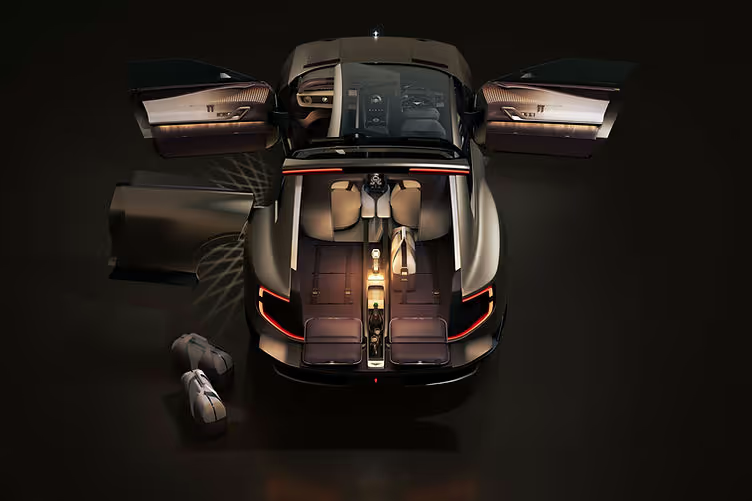
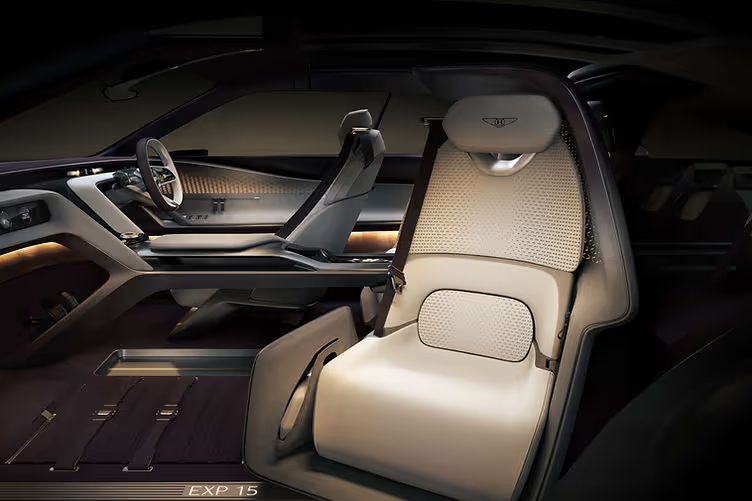
One aperture provides access to the driver’s and passenger’s seats on the right-hand side, while the opposite side features a pair of coach doors, and a lone electrically adjustable seat. This can slide from the front to the rear as desired, either offering acres of legroom, or a front-row view of the road ahead.
Neither this interesting layout, nor the sliding fridge and reading lamp, are expected to make production, but the classic two-compartment dashboard design, 3D-quilting effect for the door trims, and precisely knurled switchgear all look like things we’ll see in future models. Reflecting increasing demand for leather-free interiors, the cabin makes use of silk and wool textiles to cover the seats and surfaces.
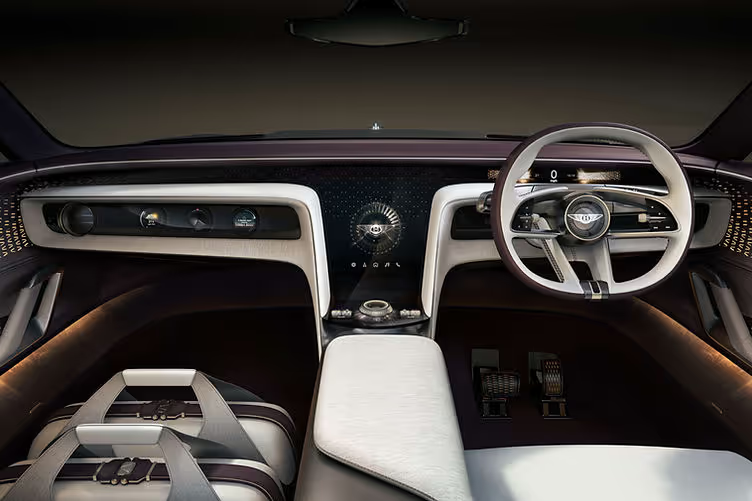
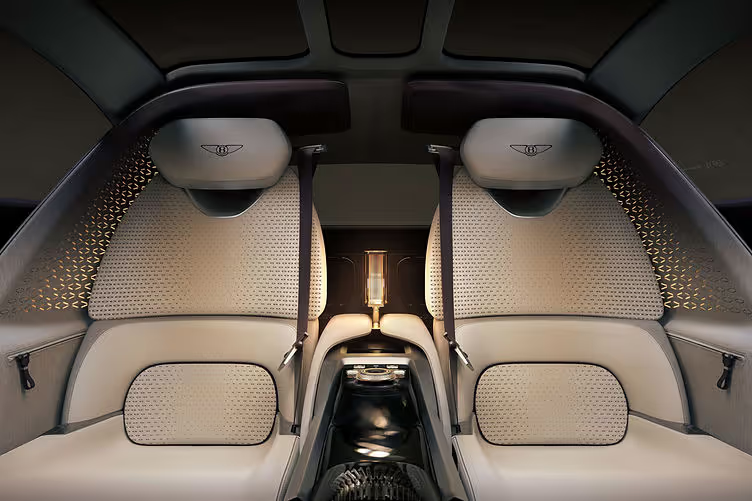
With so much attention paid to the design and finish, the lack of information about the drivetrain beyond confirming a fully-electric all-wheel drive setup suggests the concept exists to gauge reaction from potential customers, rather than foreshadowing a new model. As Bentley’s Director of Design Robin Page said: “Some customers want a classic ‘three-box’ sedan shape, others a ‘one-box’ design, and others again something more elevated.”
This aligns with Bentley’s previous confirmation that their first production EV will be a high-riding saloon, but the final form seems open to fine-tuning. We expect the final form to be a hybrid of the three favoured styles of the customer base, and feature a fastback-style tailgate which brings practicality and aerodynamic bonuses compared to a traditional saloon. In 2026, we’ll see how much influence the EXP 15 has had on Bentley’s first fully-electric model.



.svg)

