NEWS
Toyota Launches TR010 Le Mans Hypercar
Ken Pearson
By
Images by
Toyota Racing
Published
7 Jan 2026
Toyota Launches TR010 Le Mans Hypercar

Competing in the FIA World Endurance Championship from 2026, the updated hybrid coupé aims to return Toyota to winning ways at Le Mans.
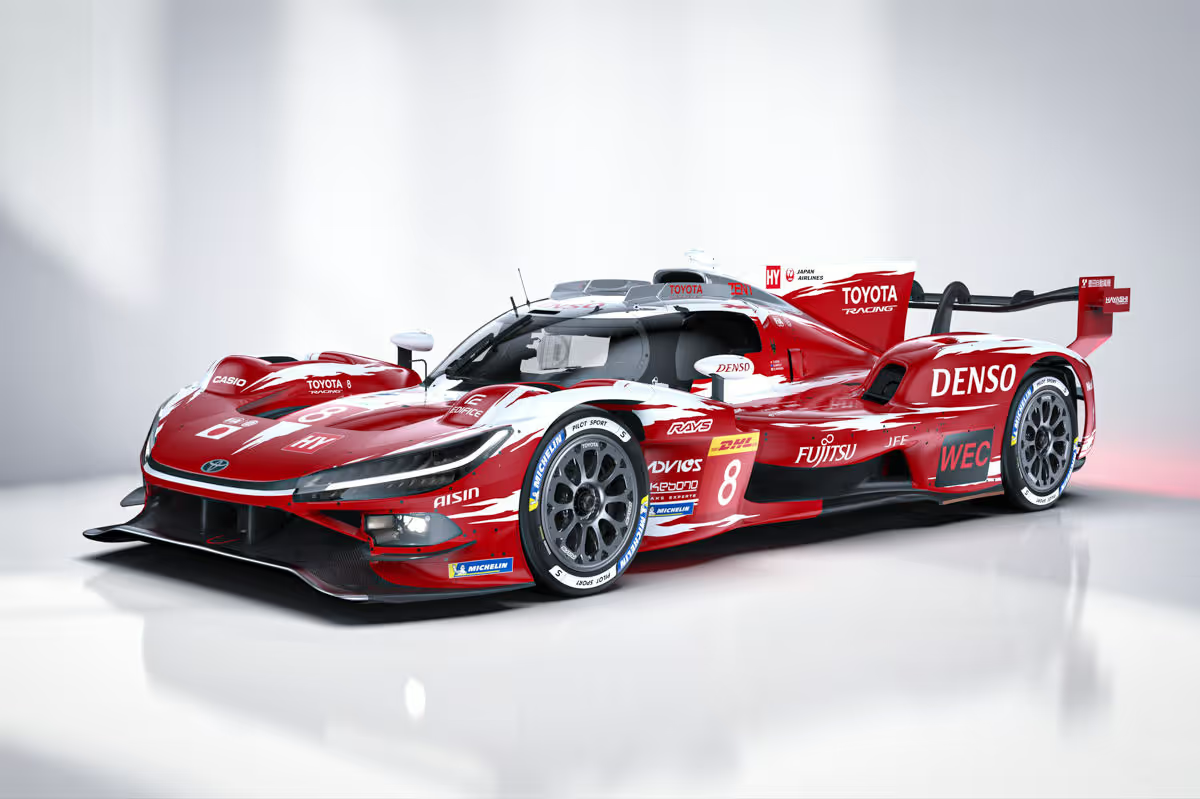
While it bears a new name and heavily modified bodywork, the Toyota TR010 Hybrid is the racing equivalent of a mid-life facelift, using “Evo jokers” to improve an existing platform within its homologation period. Succeeding the GR010 hypercar which has been in competition since 2021, the TR010 Hybrid refines the aerodynamics package, and brings the racer’s styling closer to the road car range.
The swooping nose section is shared with multiple Toyotas, from the Prius to the GR GT. Split headlights include high-level LEDs, and a secondary cluster closer to the ground, maximising visibility when racing at night. The new front end splits the airflow, sending it underneath the car, or over the bodywork and towards the radiators within the redesigned sidepods.
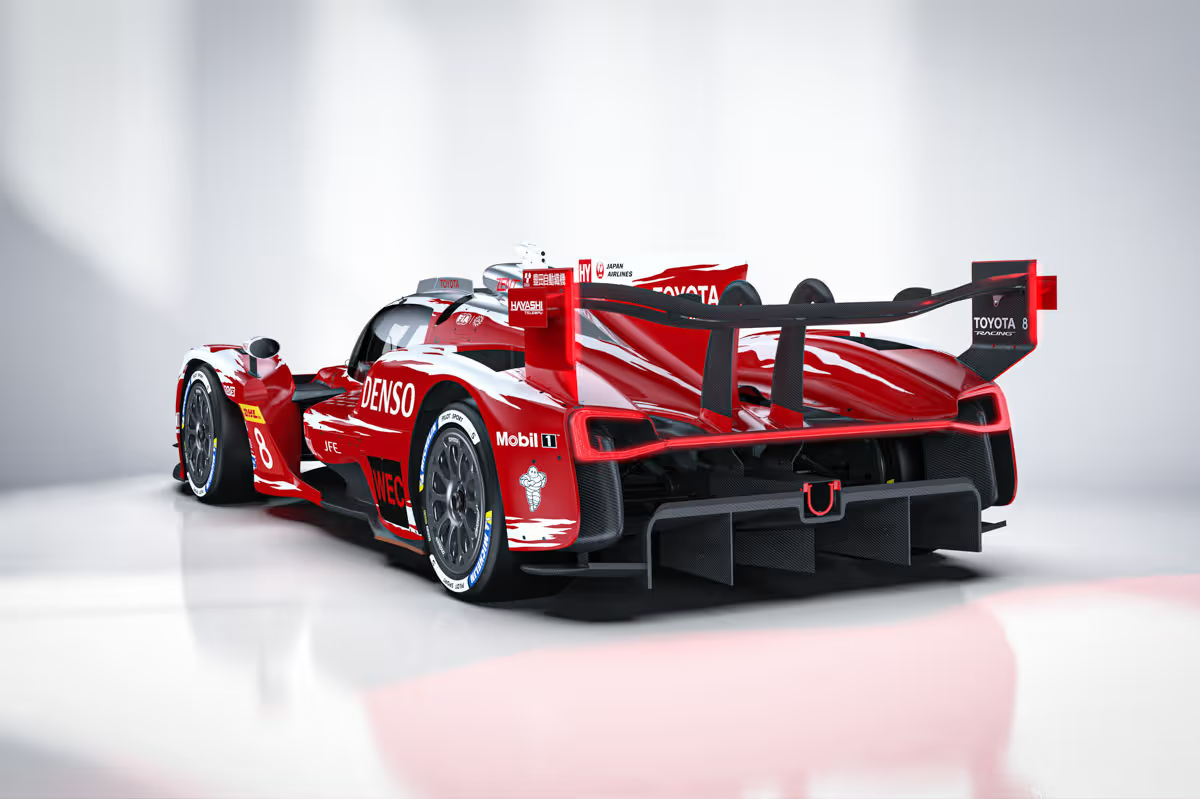
While small modifications to the front wheel cowlings take a keen eye to spot, the biggest aerodynamic upgrade is found at the rear. Towering above the GR Yaris-style light bar, the new wing features a lower centre section, rising towards the edges. Winglets feature beyond the endplates, creating additional downforce at speed while generating less drag than a full-sized wing extension would. While popular in the LMP1 days before full-width wings were allowed, the TR010 is the first Le Mans Hypercar (LMH) car to incorporate wing extensions like these.
No details of changes beneath the skin have been revealed, and we expect the 3.5-litre twin-turbocharged V6 engine, and front-axle hybrid system to have been carried over with no modifications. The TR010 will offer part-time all-wheel drive under acceleration, with the technical regulations mandating a maximum powertrain output of 671bhp. The new challenger will wear a livery inspired by the GT One of 1998, with a red and white colour scheme replacing the matte black of the past two years.
Announced simultaneously was the reorganisation of Toyota’s racing divisions, with the Cologne-based operation behind the WEC effort now being known as Toyota Racing GmbH. The Gazoo Racing brand will be retained, but will serve as the umbrella company for all of Toyota’s racing exploits. World Rally Championship cars will continue to be entered by Gazoo Racing.
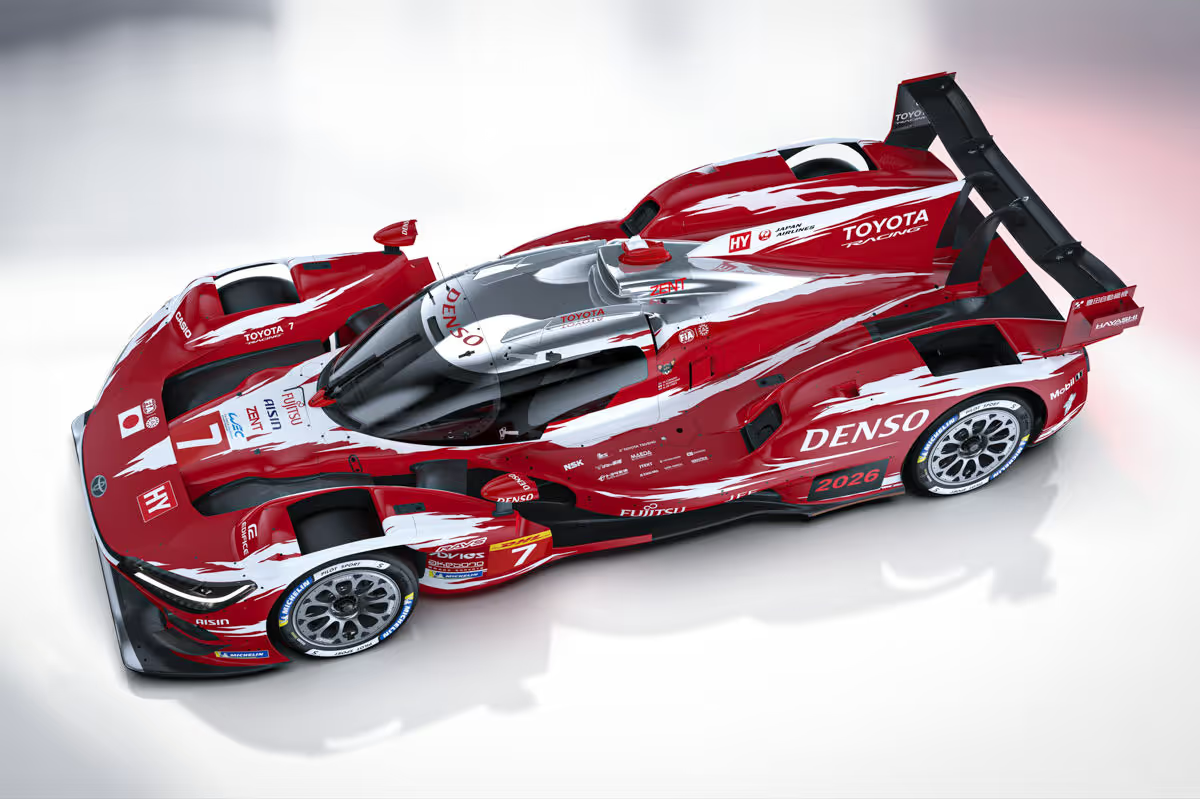
Toyota’s new Hypercar will make its competitive debut at the opening round of the 2026 FIA WEC season, the Qatar 1812km at the Lusail Circuit. The #7 car will be driven by Mike Conway, Nyck de Vries, and Kamui Kobayashi, while the #8 will have Sébastien Buemi, Brendon Haryley, and Ryo Hirakawa at the wheel. The TR010 won’t be the only updated model on the grid, as revised racers from Alpine, BMW, and Cadillac are also set to join the Hypercar class.
The 2025 campaign was less fruitful than Toyota expected, with newer rivals outperforming the once indomitable GR010 at almost every track. With extensive updates creating the TR010, the team will be setting their sights firmly on returning to the top step of the Le Mans podium, and building on the fifteen WEC titles they’ve claimed since 2014.
Author
Photography by:
Toyota Racing
Published on:
7 January 2026
Our Print Magazine
LATEST ARTICLES
About the Author

Ken Pearson
Deputy Editor
Resident Mercedes expert, affordable drivers' car champion and EV sympathiser. Can often be found on the other end of an argument with Craig with regards to powertrains and styling, bringing balance to the force.
Related Articles
NEVER MISS AN ARTICLE

Competing in the FIA World Endurance Championship from 2026, the updated hybrid coupé aims to return Toyota to winning ways at Le Mans.
Toyota Racing
7 January 2026
Competing in the FIA World Endurance Championship from 2026, the updated hybrid coupé aims to return Toyota to winning ways at Le Mans.
First published
7 January 2026
Last updated
7 January 2026
Photography
Toyota Racing
W
While it bears a new name and heavily modified bodywork, the Toyota TR010 Hybrid is the racing equivalent of a mid-life facelift, using “Evo jokers” to improve an existing platform within its homologation period. Succeeding the GR010 hypercar which has been in competition since 2021, the TR010 Hybrid refines the aerodynamics package, and brings the racer’s styling closer to the road car range.
The swooping nose section is shared with multiple Toyotas, from the Prius to the GR GT. Split headlights include high-level LEDs, and a secondary cluster closer to the ground, maximising visibility when racing at night. The new front end splits the airflow, sending it underneath the car, or over the bodywork and towards the radiators within the redesigned sidepods.

While small modifications to the front wheel cowlings take a keen eye to spot, the biggest aerodynamic upgrade is found at the rear. Towering above the GR Yaris-style light bar, the new wing features a lower centre section, rising towards the edges. Winglets feature beyond the endplates, creating additional downforce at speed while generating less drag than a full-sized wing extension would. While popular in the LMP1 days before full-width wings were allowed, the TR010 is the first Le Mans Hypercar (LMH) car to incorporate wing extensions like these.
No details of changes beneath the skin have been revealed, and we expect the 3.5-litre twin-turbocharged V6 engine, and front-axle hybrid system to have been carried over with no modifications. The TR010 will offer part-time all-wheel drive under acceleration, with the technical regulations mandating a maximum powertrain output of 671bhp. The new challenger will wear a livery inspired by the GT One of 1998, with a red and white colour scheme replacing the matte black of the past two years.
Announced simultaneously was the reorganisation of Toyota’s racing divisions, with the Cologne-based operation behind the WEC effort now being known as Toyota Racing GmbH. The Gazoo Racing brand will be retained, but will serve as the umbrella company for all of Toyota’s racing exploits. World Rally Championship cars will continue to be entered by Gazoo Racing.

Toyota’s new Hypercar will make its competitive debut at the opening round of the 2026 FIA WEC season, the Qatar 1812km at the Lusail Circuit. The #7 car will be driven by Mike Conway, Nyck de Vries, and Kamui Kobayashi, while the #8 will have Sébastien Buemi, Brendon Haryley, and Ryo Hirakawa at the wheel. The TR010 won’t be the only updated model on the grid, as revised racers from Alpine, BMW, and Cadillac are also set to join the Hypercar class.
The 2025 campaign was less fruitful than Toyota expected, with newer rivals outperforming the once indomitable GR010 at almost every track. With extensive updates creating the TR010, the team will be setting their sights firmly on returning to the top step of the Le Mans podium, and building on the fifteen WEC titles they’ve claimed since 2014.