-01.svg)

That’s quite fast for a convertible roof, but the car it’s attached to is even faster, courtesy of a 4.4-litre twin turbocharged V8. In addition to the 400cc-increase over the base M177 unit, the engine gains a new crankshaft, connecting rods, forged pistons, a bespoke ECU, head gaskets, 75mm downpipes, enlarged turbos, and a bespoke titanium exhaust. With the revised components, the engine sends 785bhp and 774lb-ft (1,050Nm) of torque to all four wheels via a 9-speed transmission.
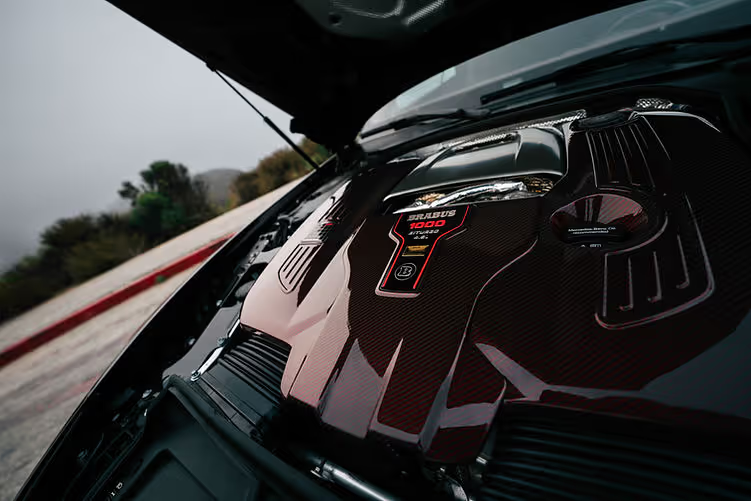
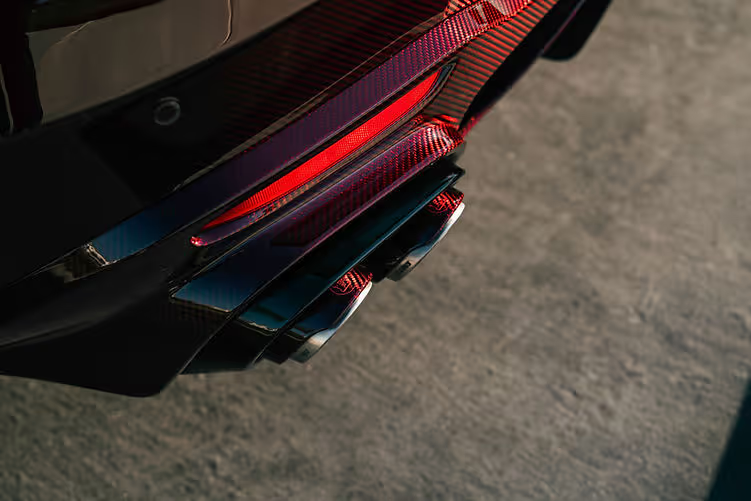
While hardly lacking in performance on its own, the engine is supplemented by a performance-focused plug-in hybrid system with a two-speed electric motor mounted on the rear axle. Offering up 201bhp and (320Nm) torque, the motor draws power from a 6.1kWh capacity battery with liquid-cooled cells that are kept at a constant 45 degrees celsius. This can return up to 7.5 miles of electric-only range when working in isolation, or boost the total output up to 986bhp, and 1,195lb-ft (1,620Nm).
From a standing start, the Rocket GTC passes 62mph in 2.6 seconds, and 124mph in 9.5 seconds. There’s no word on how long it takes to reach its 196mph top speed, but we suspect it won’t be much longer than the 23.5 seconds required to pass 186mph - or three miles per minute - from rest.
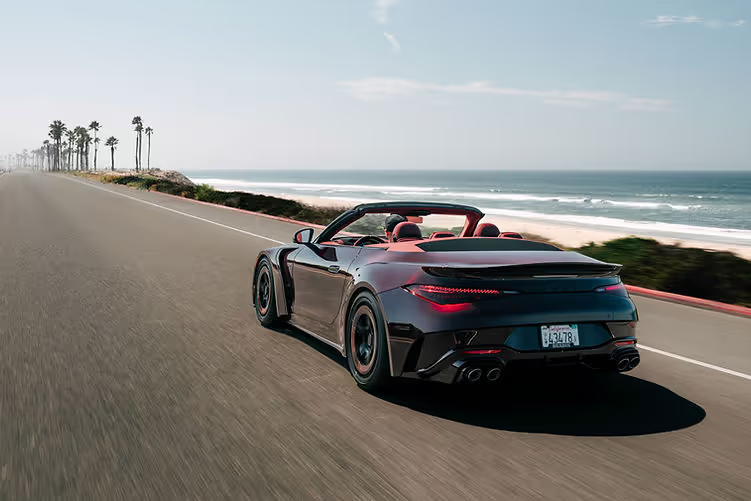
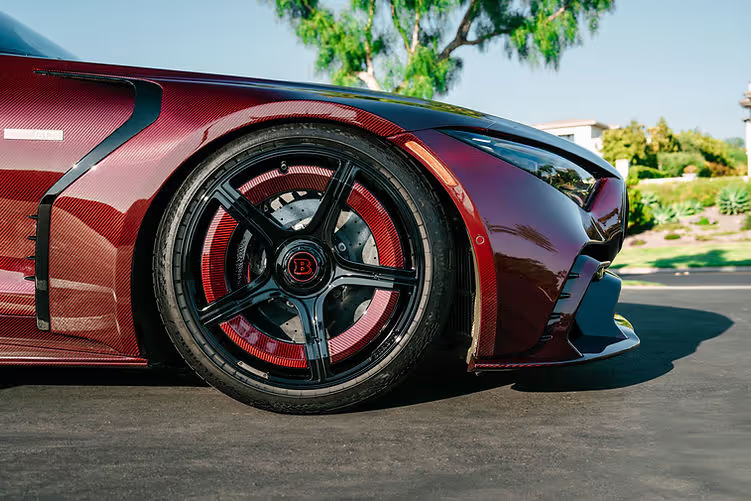
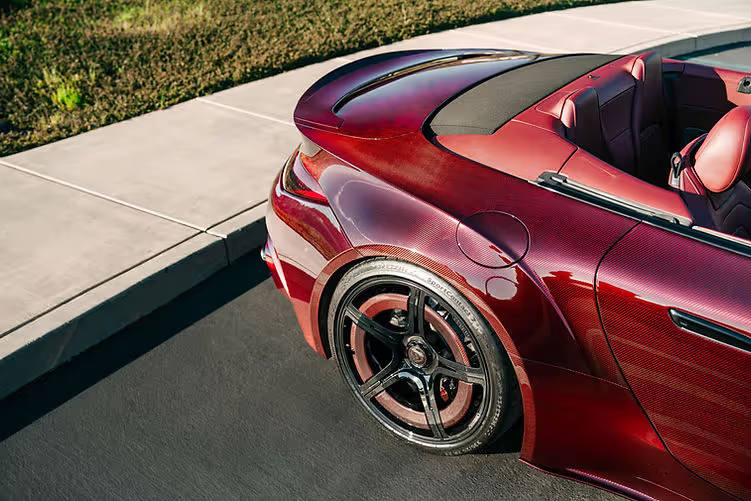
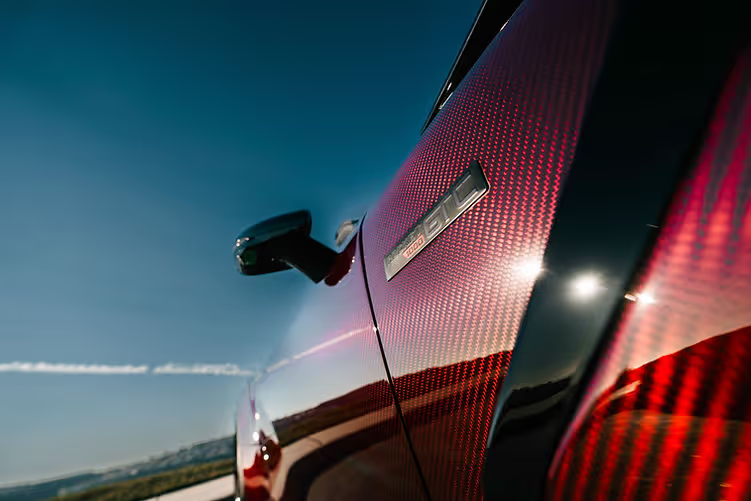
Despite the familiar silhouette, the only exterior elements shared with the SL are the front and rear lights, rear reflectors, lower window trim, windscreen surround, door handles, and parking sensors. Every other panel is custom made from exposed red carbon fibre, with the widebody kit allowing for additional cooling, and optimised airflow around the GTC. The kevlar-lined wheel arches are home to staggered 21” and 22” centre-locking Monoblock P wheels, each with five black spokes and a carbon fibre aerodynamic disc colour-matched to the bodywork. The Continental SportContact 7 tyres measure 275/35 and 335/25 at the front and rear respectively.
A pronounced character line frames the rear arches by accentuating the swollen rear axle, and forms the fixed rear spoiler that replaces the active wing of the SL. Rather than being a solid lip, an air slot opens up at the base of the aerofoil, improving downforce and balancing the aerodynamic grip generated by the diffuser beneath it, and the enlarged front splitter at the nose of the car.
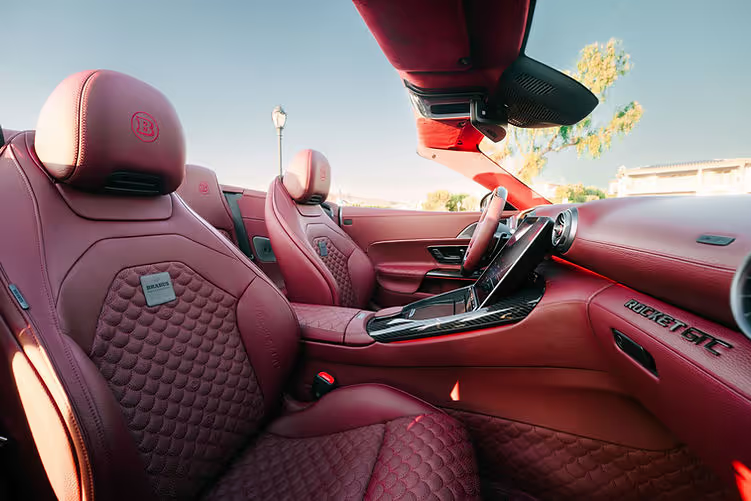
Inside, the single-colour theme of the Deep Red GTC continues, with almost every surface finished in red leather and suede. The seats show Brabus’s shell-pattern stitching, while the headrests show the double-B logo, and the model name is stamped into the side bolsters of the front seats. A plaque is mounted on the backrests, signed by Brabus CEO Constantin Buschmann. Carbon fibre is found on the door pulls, steering wheel, and centre console, while the turbine-style air vents, seat adjustment switches, and speaker grilles for the Burmester surround-sound system are presented in dark grey.
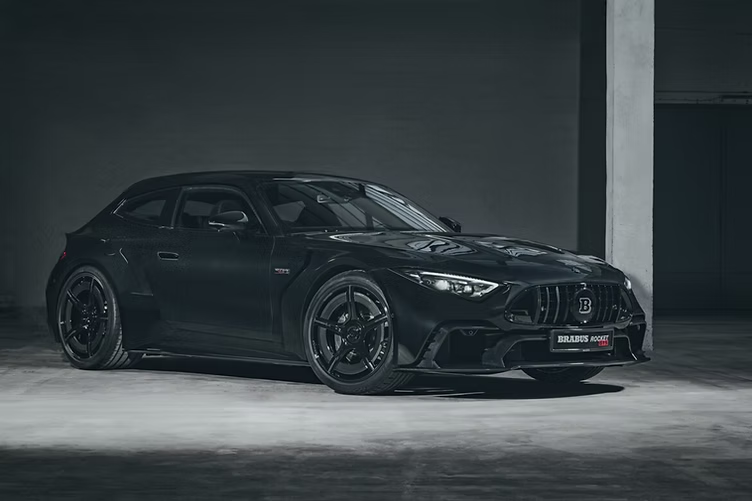
The Brabus Rocket GTC can be customised to suit the precise tastes of each customer, and the model pictured is priced at over £591,000 before taxes, making it over triple the price of the Mercedes-AMG SL 63 S E Performance (plug-in hybrid) 4MATIC+ Premium Plus which is readily available in the UK. But while the name may have compressed, the performance and stature has expanded to create an exclusive hyper-hybrid roadster wearing a precisely tailored carbon fibre suit. Order books are open now, and while no limits on production have been mentioned, there’s no such thing as a common Brabus Rocket.


-2.avif)

.svg)

