-01.svg)

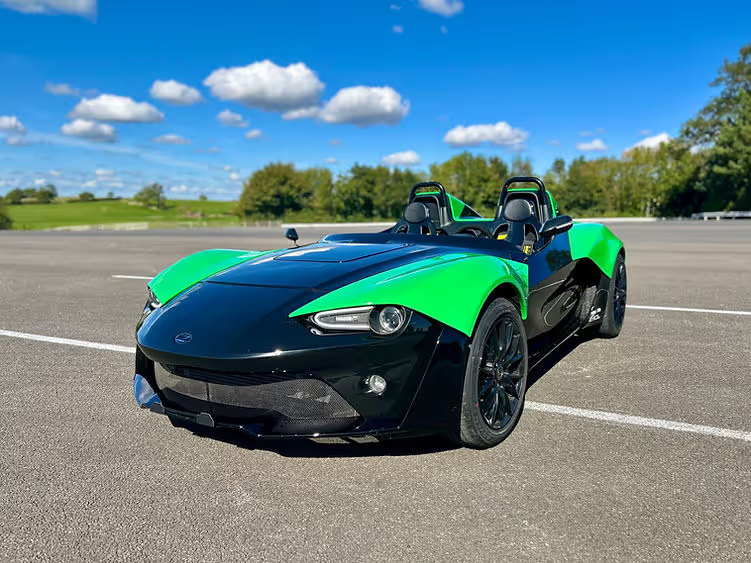
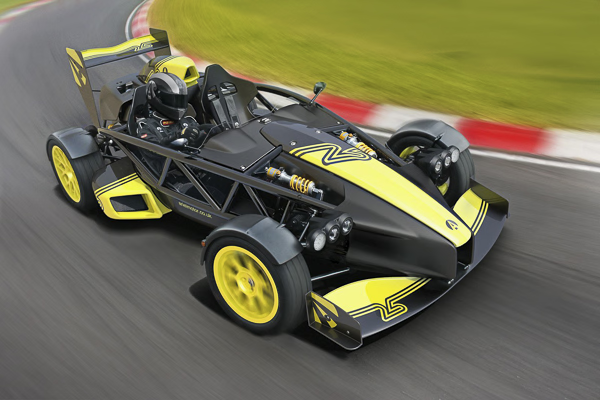
Where the 250bhp E10 S launched at £29,995 in 2015, the returning RZ will command £140,000. For that outlay, buyers will receive a thoroughly re-engineered car packing 380bhp from a Volvo-sourced 2.0-litre turbocharged unit. With a kerb weight of 780kg, that equates to a substantial 500bhp per tonne, positioning Zenos squarely against established players such as Ariel's Atom 4R.
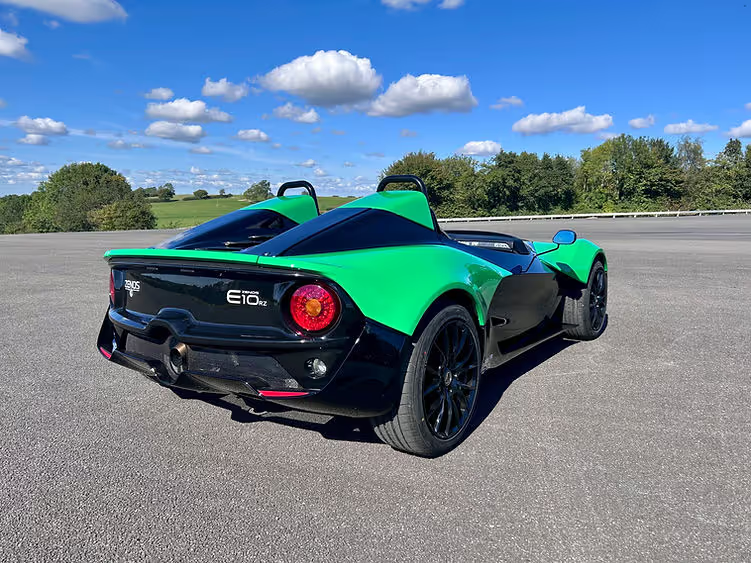
The original company's failure makes this ambitious repositioning a fascinating gamble. AC Cars, having acquired Zenos' assets in 2017, spent the intervening years focusing on Cobra revivals before finally deciding the E10 deserved another chance.
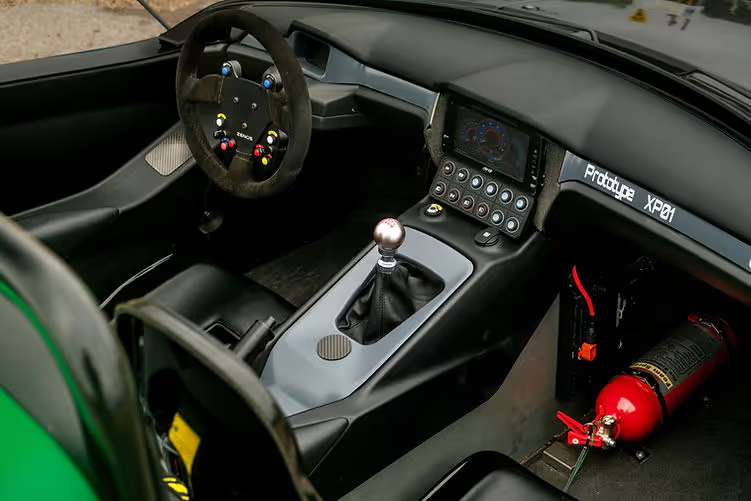
Of course, there is far more to the revived E10 than its power output; the technical development has been extensive. The aluminium spine chassis retains its carbon fibre tub but gains widened tracks and a marginally lower centre of gravity. Pushrod front suspension with inboard dampers reduces unsprung mass, whilst conventional coil-overs handle rear duties. Zenos has extensively reworked the Volvo engine, with new CAN bus control, induction system and intercooler to extract 376lb-ft of torque (510Nm) alongside the headline power figure.
A second variant, the E10 R2, follows mid-year with a 2.3-litre turbocharged engine producing 325bhp for approximately £120,000.
Production begins early 2026 with fewer than 30 cars expected in the first year – a deliberately exclusive approach contrasting sharply with the original company's volume aspirations. Both models feature hand-laid carbon bodywork with updated lighting clusters and revised cabin architecture including new instrumentation and switchgear.
The challenge facing Zenos lies in convincing buyers to pay Atom money for a resurrected marque with lightly evolved styling, limited production volumes and an uncertain dealer network. Whether Zenos has read the market right – or simply priced itself out of it – will become clear when the first RZs hit the road in 2026.



.svg)

