-01.svg)

Yet it's fun I've been craving. I refuse to believe it's gone forever. Sure, there are track days, but the weather hasn't been ideal for the Cup 2s on my car of late, and it's not a cheap game to get into either. I used to love driving when big brother wasn't casting his beady eye down on me. The feeling of jumping in the car and being able to go anywhere, finding twisty back roads to push your car on, concentrating so hard on keeping it on the straight and narrow that all your troubles and stresses disappeared. It was a form of therapy for me, and I'm sure many others as well.
So what a breath of fresh air it was getting behind the wheel of a Jimny recently, thanks to Premier Automotive in Rochdale. I sat in the car and this freeing sense of being able to go anywhere – roads or no roads – suddenly seemed present. The last time I felt this was driving off the ferry on the Isle of Man, hitting the mountain minutes later. With no speed limit to worry about, you felt like you owned the road. The Jimny isn't dissimilar, for different reasons of course, but nobody is more surprised than me.
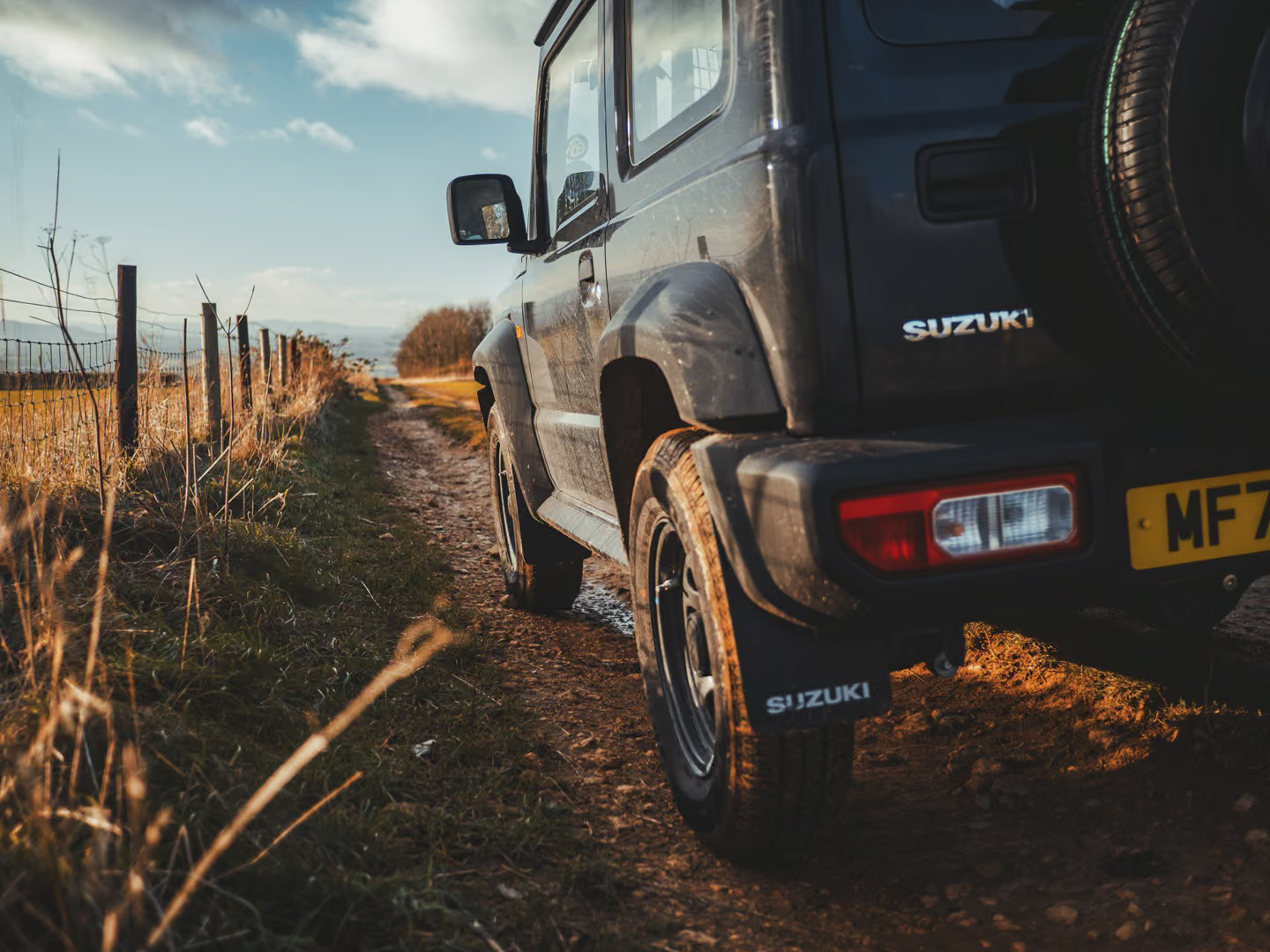
The first thing you notice approaching the Jimny is its diminutive size: 3.65m long, 1.65m wide and 1.7m tall. Length-wise that's under 1 metre longer than a Smart car, and over 1.5 metres shorter than most cars in this sector, making it easy to park, yet somehow still relatively spacious inside. The doors feel light but solid when you open them, and you climb into the cabin with ease – it's not up in the sky like a Defender, although the driving position is still commanding. Once you're in, the materials aren't as bad as you'd expect. They aren't luxurious, but they're better than something like a Dacia Duster at similar money.
The 'Zook' feels like a proper off-roader rather than an SUV. This one only has two seats – emissions were so bad Suzuki couldn't afford to keep paying EU fines and rebadged it as an LCV. Overall it's the same car as the four-seater, but with a larger load area thanks to the missing rear bench, a steel bulkhead and a different road tax band: £275/year at the time of writing. It needs insuring as a van, which I found cheaper than a car quote.
"I only needed to engage four-wheel drive if things got slippy..."
You start the car by physically turning a key, and the 1.5-litre petrol engine quietly fires up, purring at idle. It feels civilised, but there's a rough-and-ready undercurrent – that old-school, back-to-basics character the car exudes. The clutch is light and city-car-like, whilst the long gear lever reassuringly clicks into each of the five gears with a solid feel.
Setting off from a standstill requires a good amount of revs – I stalled it more than once, though you get used to this. It's an unusual choice of engine; you'd expect something with more low-down grunt (130Nm and 100bhp), but let's not forget this car is under £20,000. If you're a VAT-registered business, you'll save 20% on that too. The budget-friendly powerplant is suitable, and dare I say it adds character to the whole experience. This isn't a dynamic car, and too much power could overwhelm the chassis and steering, although being a cult Japanese car aftermarket supercharger and turbocharger kits are naturally available.
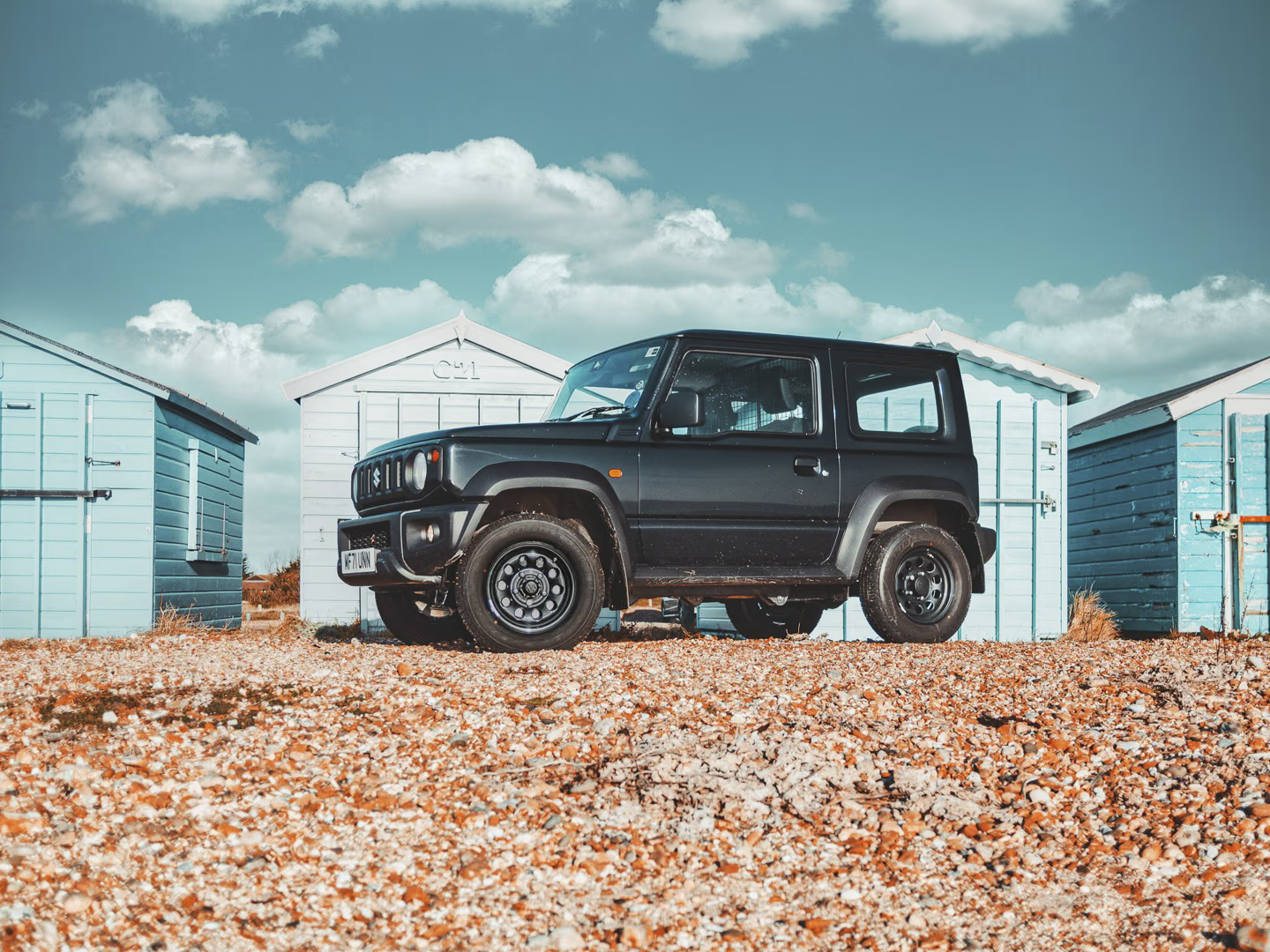
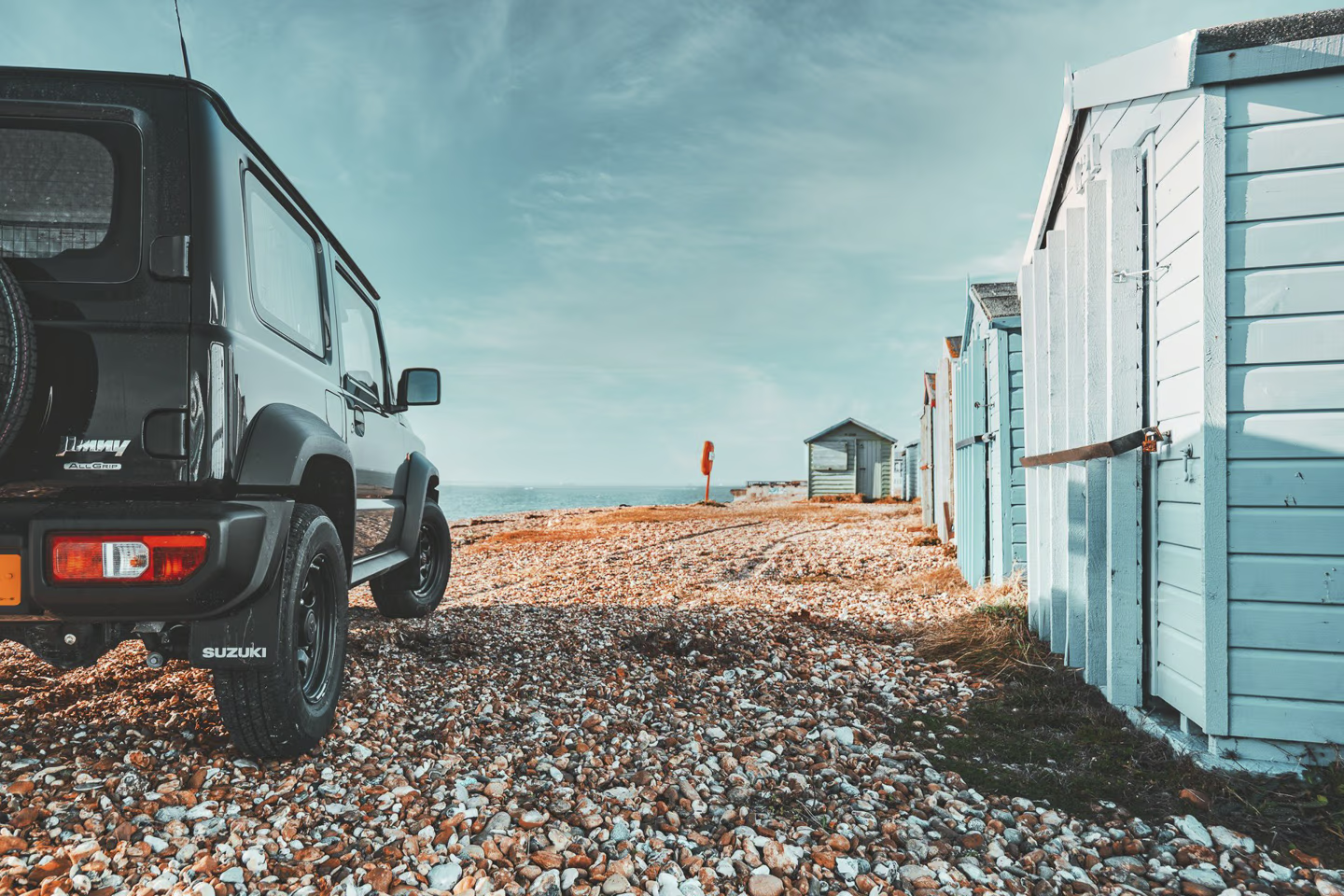
Once you're moving, the engine needs encouragement to add any pace. The suspension is soft and compliant, and the brakes are surprisingly strong thanks to the low 1,000kg kerb weight. It's when you come across a corner that things get interesting. There's substantial body roll, and the steering wheel turns a good 10 degrees before it transfers any steering angle to the road below. To me though, this is exactly what I expected, and what I'd hoped for. I hate things to be perfect, and driving around these 'issues' gave me the most smiles during my time with the car. You have to concentrate when driving again. It's not quite Derek Bell on the Mulsanne Straight in a 917, but you have to have your wits about you. We're all so used to modern lounges on wheels that I welcome a vehicle this visceral and demanding on a day-to-day basis.
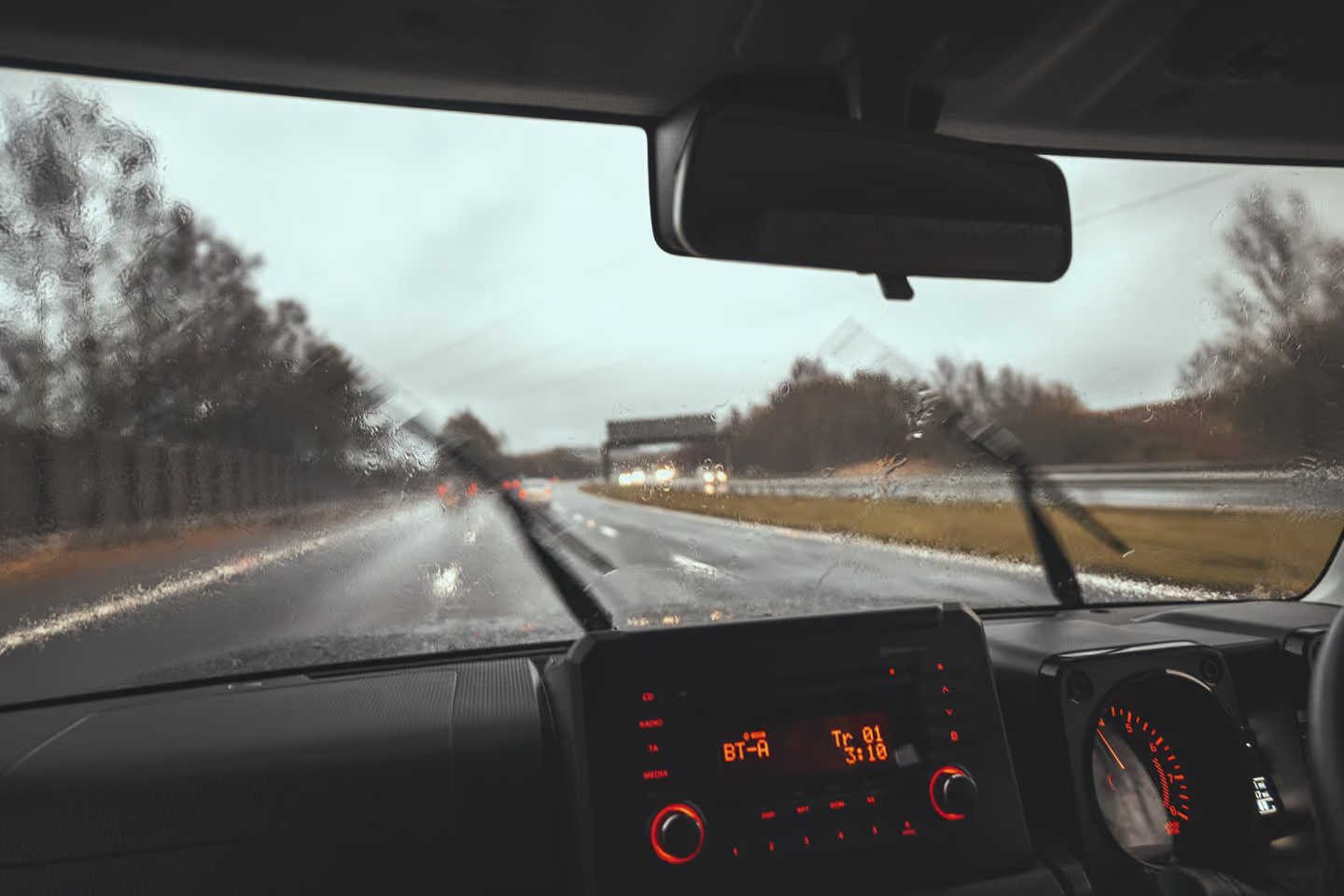
The car features a rugged ladder-frame chassis, meaning on-road manners do suffer slightly. There are jitters when you hit bumps, and the cabin is relatively loud, but the car is usable even at motorway speeds. On this matter, I drove it to Mexico and found it stable at 90mph.
" It has fun pumping through its fuel system, and it has to be a future classic – cars like this don't exist anymore..."
However, it's off-road where things get really fun. This is where the Jimny shines, egging on the adventurer inside you to go wherever your eyes direct you. It's freeing, and interesting. It's fun because not many other cars can go where the Jimny goes, and I tried out multiple types of surfaces to see what the car would allow me to do.
The first thing that impressed me taking the car off-road was the performance with the standard 195-section Bridgestone Dueler all-terrain tyres on the 15" wheels. These are more on-road than off-road biased, so I expected the car would limit me on loose surfaces, especially as it's two-wheel drive unless you engage one of the 4×4 modes (high or low). Yet I only needed to engage four-wheel drive if things got slippy. With a careful right foot, I didn't come across any scenario that stopped me, but I did notice that the ratios of the low-range 4×4 mode could be jarring and would make the Jimny skip slightly at times. Nothing that wouldn't be manageable, but if you intend to off-road most of the time, it may be worth looking into reduction gears.
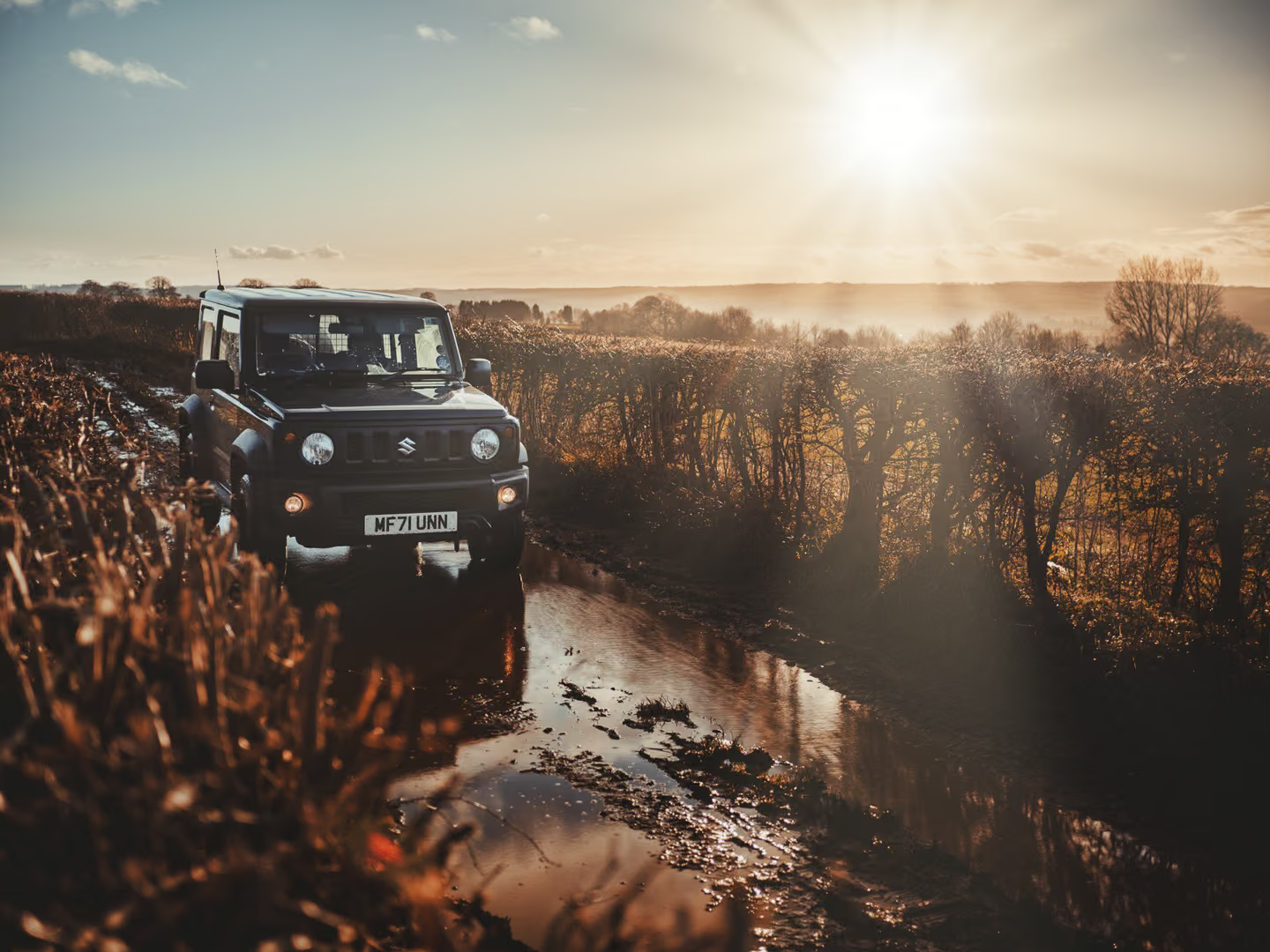
There's no central diff on the Suzuki, so you need to be mindful of transmission wind-up – tension that builds in the transmission whilst four-wheel drive is engaged on surfaces with varying grip levels. Basically, only use 4×4 high or low if you're on surfaces that require it. Slippy and gravel roads are ideal, but if you drive in four high/low on dry tarmac, you'll end up causing damage at some point.
The 'Zuki' drives Green Lanes like a walk in the park. Its small size, reasonable ride height and four-wheel traction all help to get you from A to B with ease. Of course there are many companies out there offering modifications for the car already – front and rear locking diffs, lift kits, LEDs brighter than the sun – but in reality, for 99% of the time, the standard car will be more than enough for the majority of owners.
The nice thing about this vehicle is that you feel you can use it to its ability. It's not an £80k car with lots of electronics, it's a £20k car with everything you need, but nothing you don't. That steel body will hammer back out if you dent it, and the components won't cost much to replace if you damage anything. It has reasonable safety kit including forward-collision warning, lane-keep assist and auto high beams, but other than air conditioning, cruise control and electric windows, that's not far off everything featured in terms of tech. It's simple, no-frills motoring, and with that comes worry-free fun.
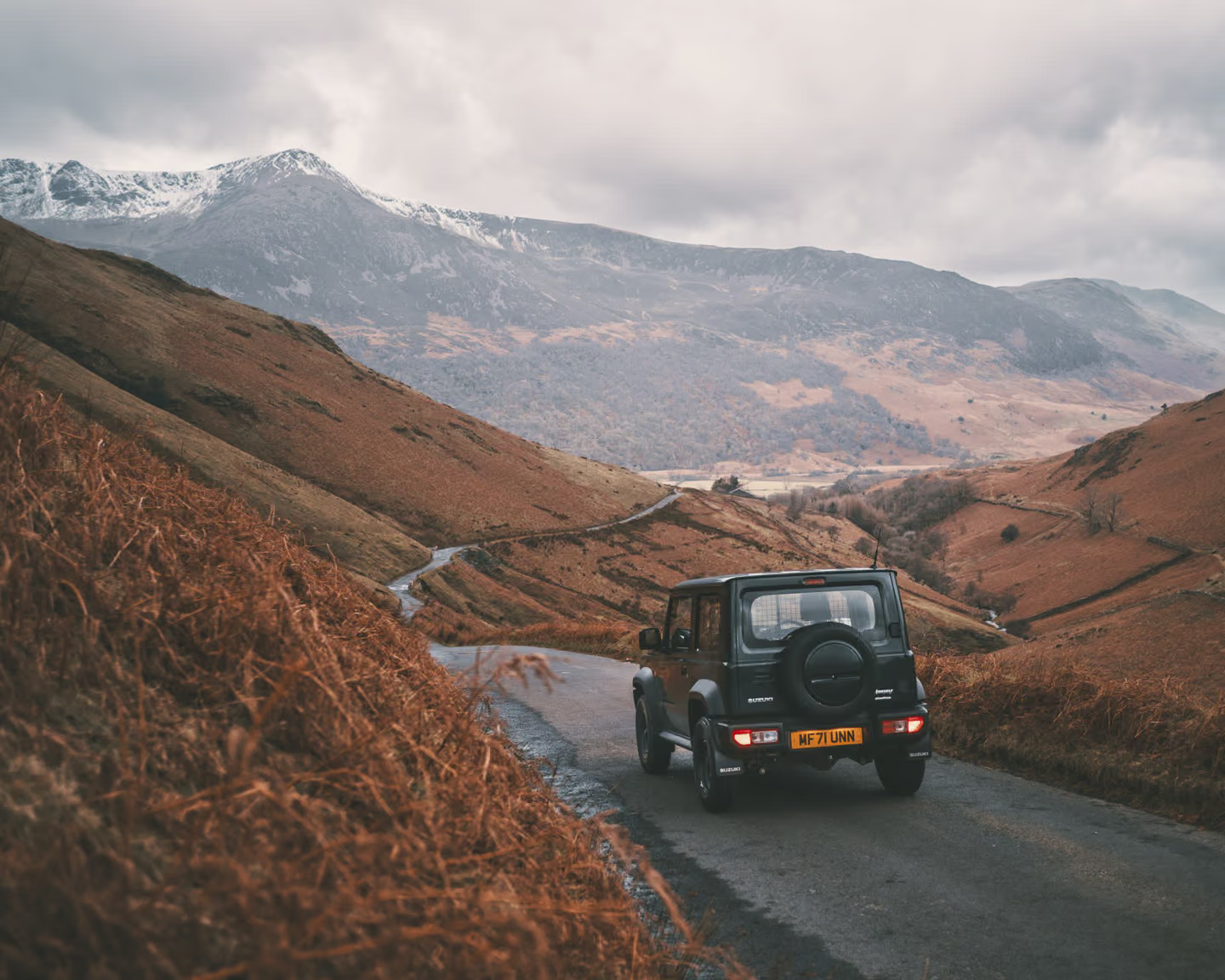
There's that word again, 'fun'. It's cliched but honestly, that's what this car is all about. It reminds me of the cars I had when I was younger, but with some modern advantages, and the ability to go anywhere I please, within reason of course.
However, not everything is rosy, and there are a few downsides to the Suzuki Jimny. Firstly there's that performance, or should I say lack of, especially uphill. There's only a small amount of technology in the car, halogen headlamps and steel wheels rather than alloys. The upright screen is surely going to attract stone chips, and the tiny 40-litre tank is going to mean you become good friends with your local petrol station attendant.
None of this matters though. In fact, Suzuki should be applauded for building such a fun, back-to-basics car and going against the grain. The need to rev the car and drive it through the gears is exciting, as well as meaning you're unlikely to be speeding through any cameras due to the level of power on offer. The lack of tech means there's less to go wrong. The halogen bulbs can be swapped for H4 LEDs. The steel wheels can be hammered back into shape if they're bent by rough terrain. The large, upright windscreen allows for excellent visibility, adding to the superb awareness of what's around you thanks to the boxy shape.
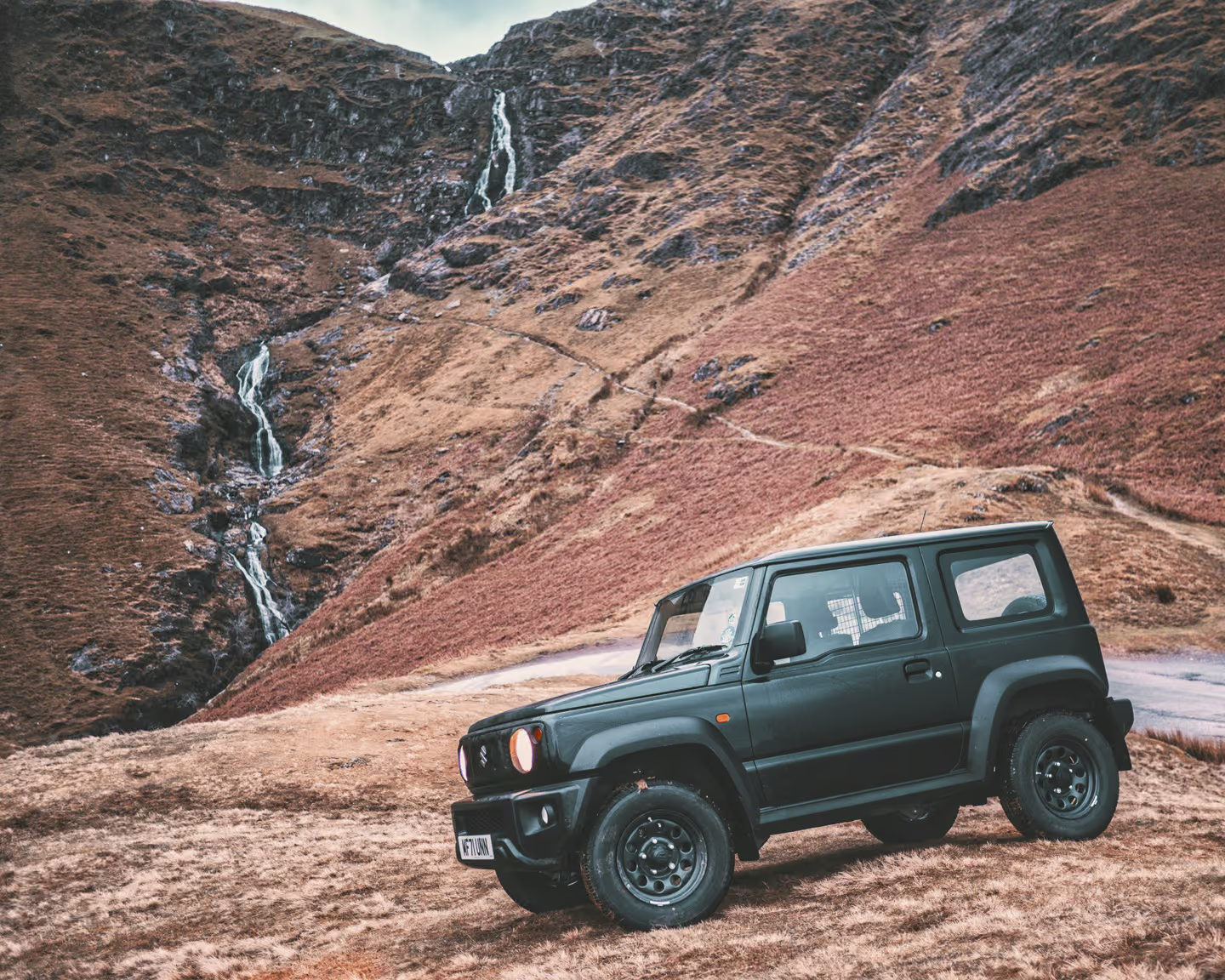
The fuel tank though is the only genuine issue. The car was achieving around 36mpg throughout my 1,300-mile trip, and this meant quite a few fuel stops due to the long distances – I'd only achieve around 260 miles between fill-ups. There is an aftermarket 80-litre tank available, and of course you could always add a lightweight roof rack and look at carrying extra fuel in Jerry cans for big trips. Be aware of the grey area surrounding this though; extraneous fuel can be deemed 'hazardous' depending on the police officer that pulls you over.
When my test drive ended I was sad, so much so that I ordered a Jimny for my business. It's the perfect daily for me and I now find myself excited, feeling a new car chapter in my life is waiting to start. The Jimny is a glorious car when you look at it for what it is. It has fun pumping through its fuel system, and it has to be a future classic – cars like this don't exist anymore. It's class-leading because there's nothing else in its class, and with only 500 per year hitting UK shores, it's a rare car that stands out. There aren't many cars you can say that about these days, especially at a price point of under £20,000 on the road.
I'm not saying it'll replace your sports car, but in this transitional period from now until combustion cars are banned in 2030, it's a great way to find that buzz on the road you've probably been missing for a while.



.svg)

