-01.svg)

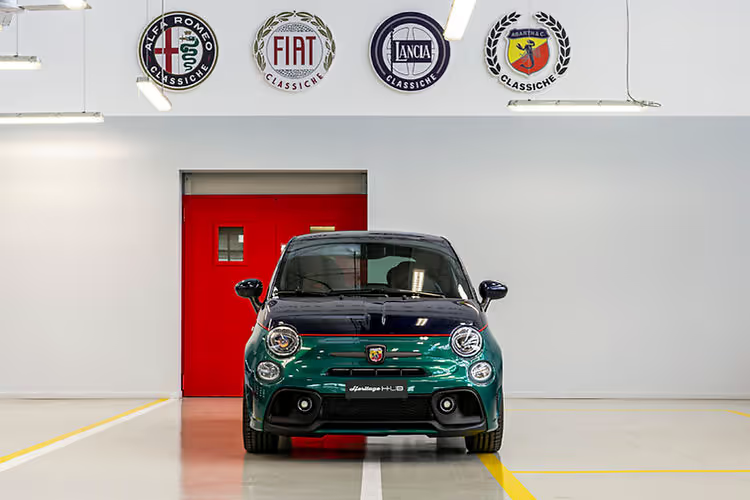
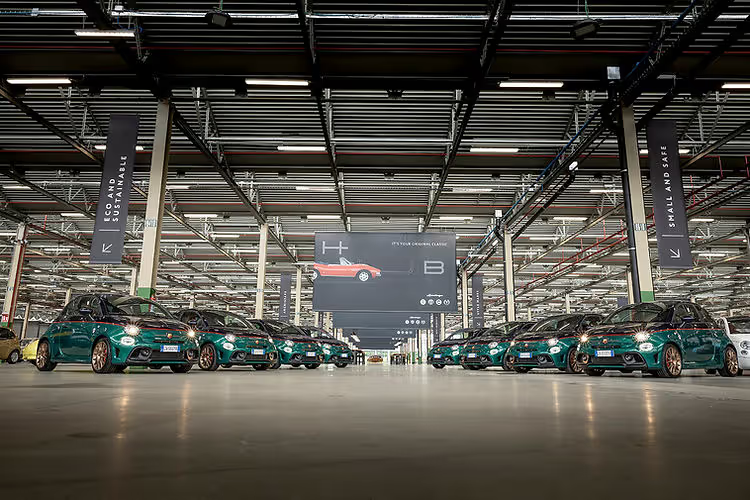
The last eight cars to run down the production line have been set aside for a special farewell project. Called the Abarth 695 Club Italia, the project is named after its creative collaborators, Club Italia, a preservation society for Italian automobiles established in 1985. Also involved is Stellantis’ Officine Classiche arm – usually responsible for restoring classic Alfa Romeos, Fiats, Lancias and Abarths.
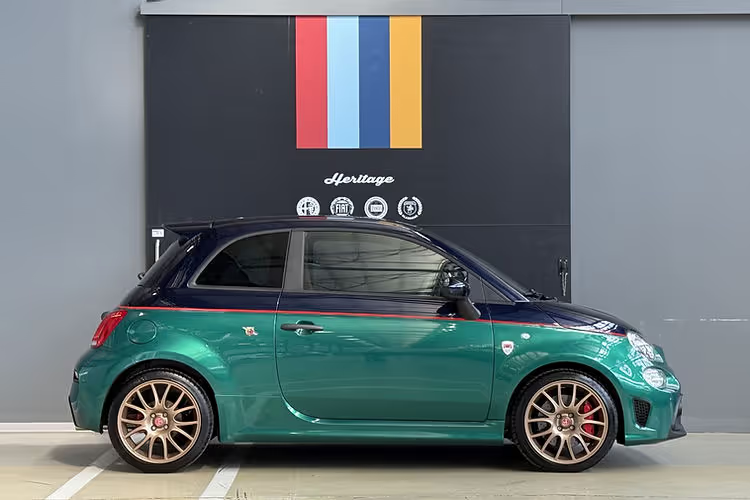
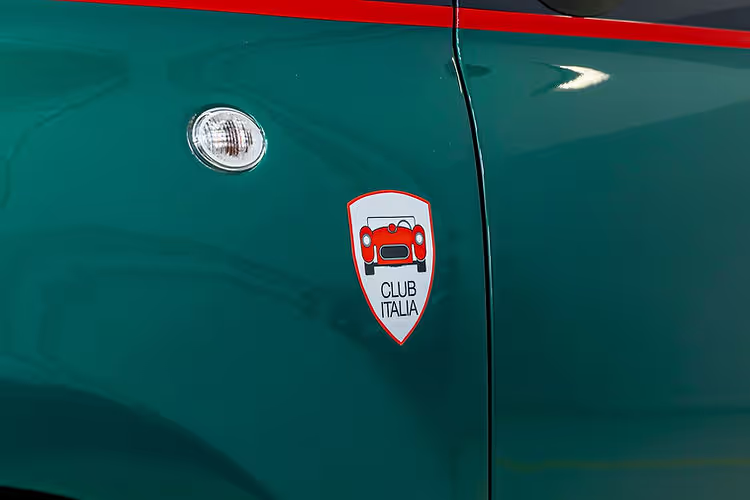
The Club Italia first catches the eye with its distinctive two-tone livery. Between the metallic blue and green sections resides a thin red pinstripe, reflecting the club’s signature tricolore branding. Bronze 17” alloy wheels, matching mirror caps, and Club Italia shields finish off the exterior.
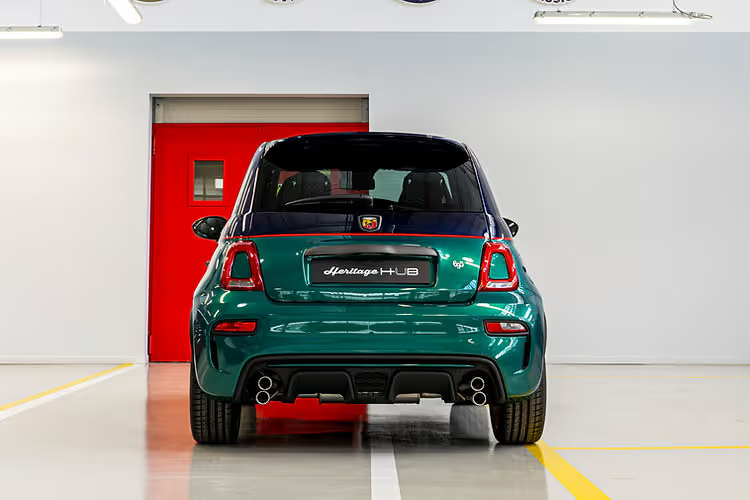
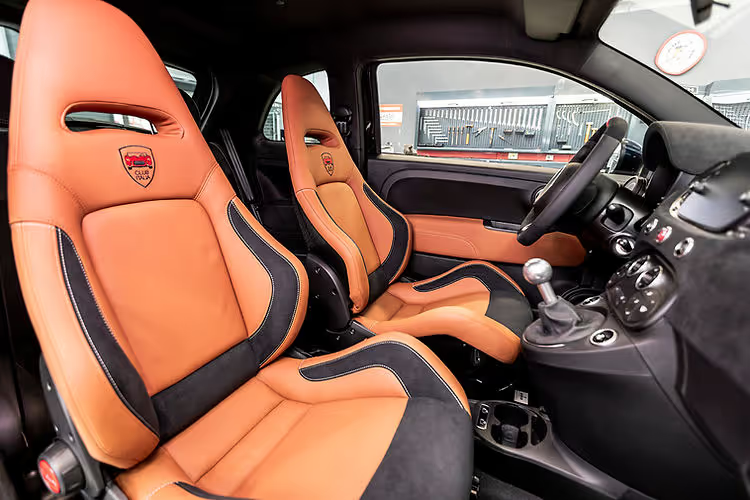
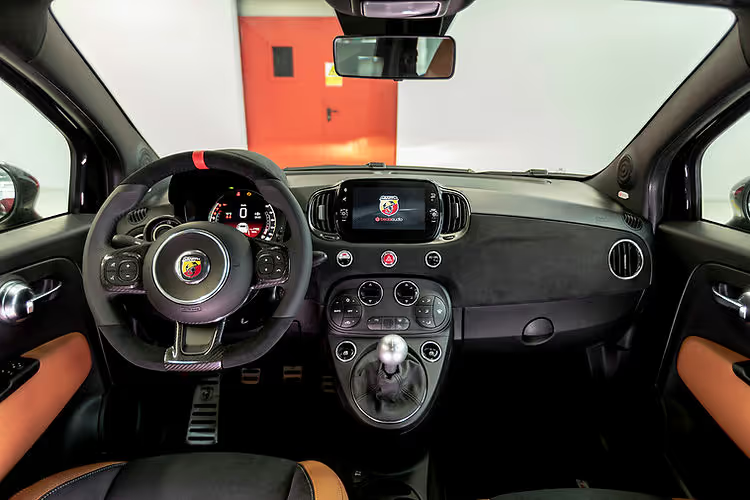
Inside, Officine Classiche have stitched special Tobacco leather for the bucket seats, retrimmed the steering wheel in leather and alcantara, fitted carbon fibre inserts, and flocked the dashboard. Both the Sport button and headrests have been customised with the club's logo. Each car will also come with an interior and engine bay plaque denoting its one of eight status.
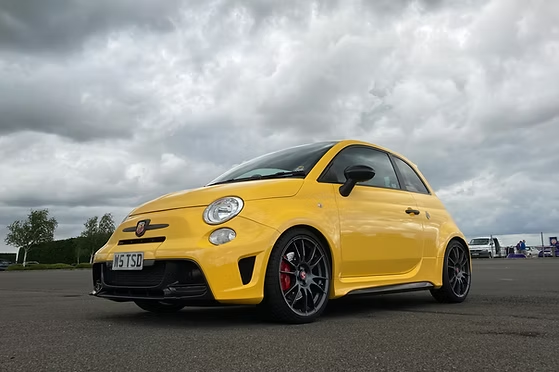
Given Officine Classiche’s work does not come cheap, it is a shame the Club Italia doesn’t include any mechanical upgrades – the spec is the same 178bhp from a 1.4-litre turbocharged four-pot as the regular 695. Standard kit includes the Record Monza exhaust system, Koni FSD dampers, and Brembo brakes. 0-60mph takes 6.7 seconds, and a 140mph top speed.
This isn’t the first time Club Italia have collaborated with Turin on a special project -– the two have a long history. Most well-known are the 1992 Lancia Delta Integrale Club Italia and 1996 Fiat Barchetta Club Italia. More recent projects include the Alfa Romeo 4C and Maserati MC20. The Club has also turned its hand to motorcycles and watches over the years.
No price has been revealed, and it doesn’t need to be, for all eight cars have been allocated to members of Club Italia. The 500-series Abarth might never have been at the sharp end of hot hatches, but it always carried an abundance of character and style. For that, we bid it a fond farewell.
As Roberto Giolito, Head of Stellantis Heritage states: “When passion, culture, and expertise come together, we can create models which are capable of standing the test of time…while always keeping the excellence and passion of Italian automobile tradition alive.” Giolito also added there is more to come from Stellantis Heritage in the near future.



.svg)

