-01.svg)
_edited_edited.avif)
Both cars are launching under a new sister company – Gordon Murray Special Vehicles – established to take on one-off commissions, and to produce limited-edition specials as well as heritage-inspired continuations.
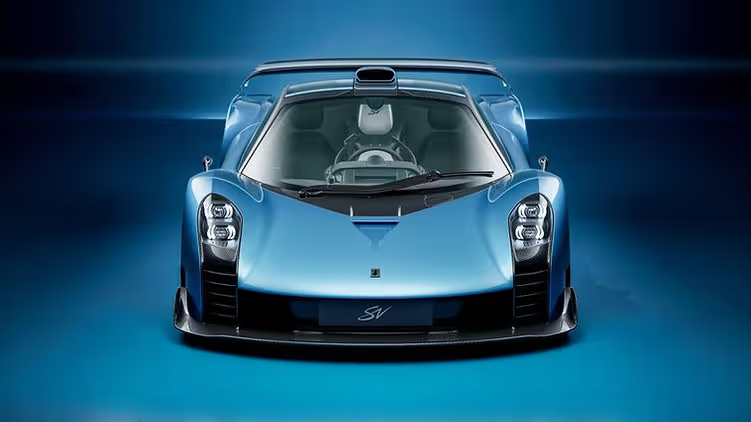
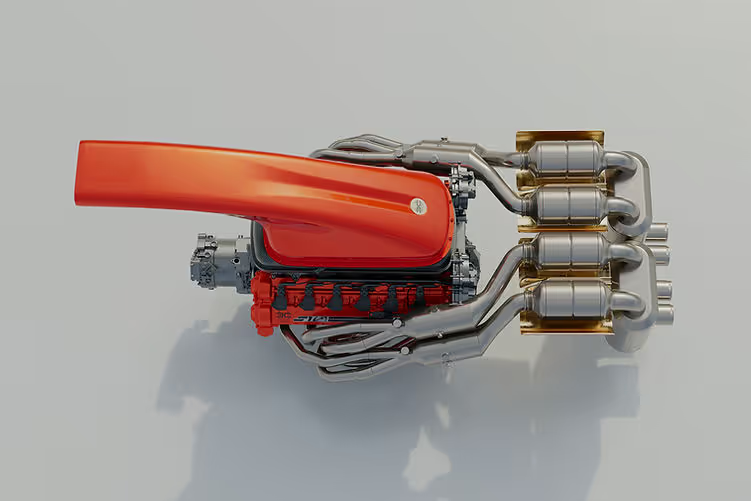
Let’s start with the S1 LM. Based on a simplified T.50 architecture, it drops the divisive rear fan and oil cooler to make room for a new 4.3-litre version of the Cosworth V12, producing more than 700PS. Still revving to a stratospheric 12,100rpm, the enlarged engine uses lighter internals and a higher compression ratio to boost power, torque and responsiveness.


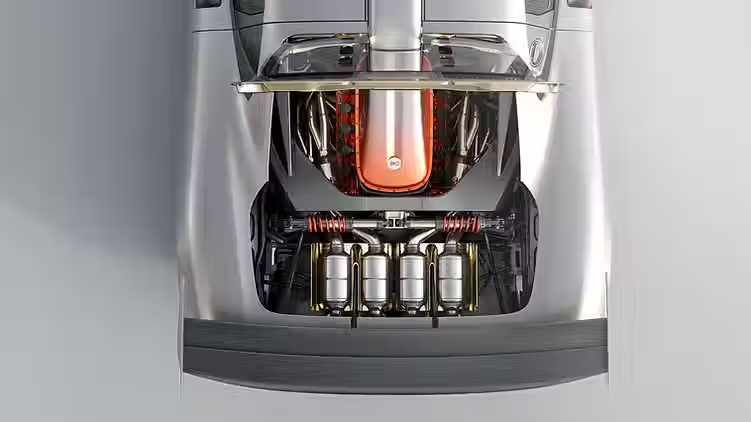
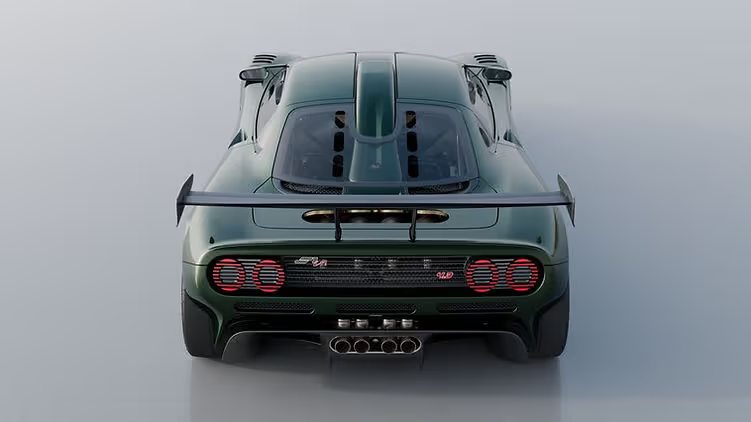
It’s not just the styling that pays tribute to the 1995 Le Mans-winner. A new inconel exhaust is wrapped in 18-karat gold foil and exits through four centrally mounted tips, while the S1’s aero package echoes the F1’s high-downforce kit.
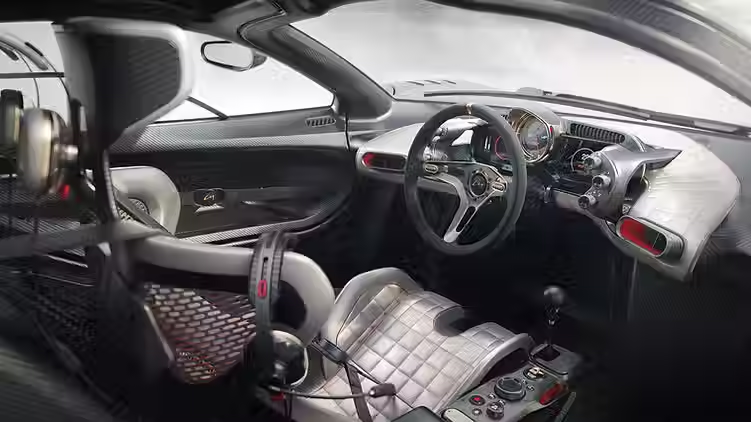
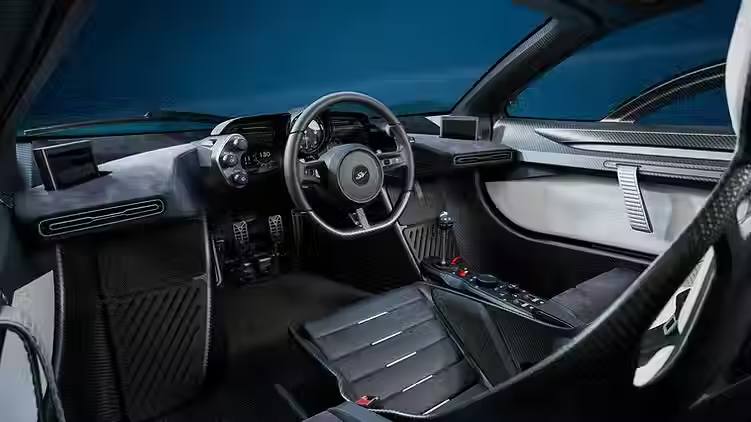
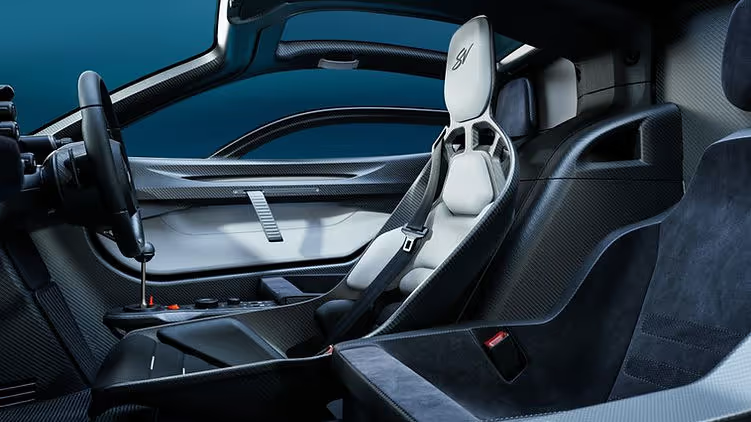
Where the T.50 is a road supercar first and foremost, the S1 sports a more hardcore character. Solid engine mounts remove any filter to the V12, sacrificing refinement in the name of handling prowess – which makes those passenger headsets more than just a callback to the F1 LM. The suspension is bespoke to the S1 LM, featuring new geometry, a lower ride height and unique damper settings aligned with track driving. That focus extends to the tyres, where Michelin Cup 2s replace the T.50’s Pilot Sport 4S. The manual gearbox has been reworked as well, with a refined linkage said to deliver shorter, rifle-bolt throws.
The cockpit is equally uncompromising, the central driving position facing a pared-back fascia. In keeping with its spiritual forebear, just five S1 LMs will be built – all commissioned by a single investor for an undisclosed sum.


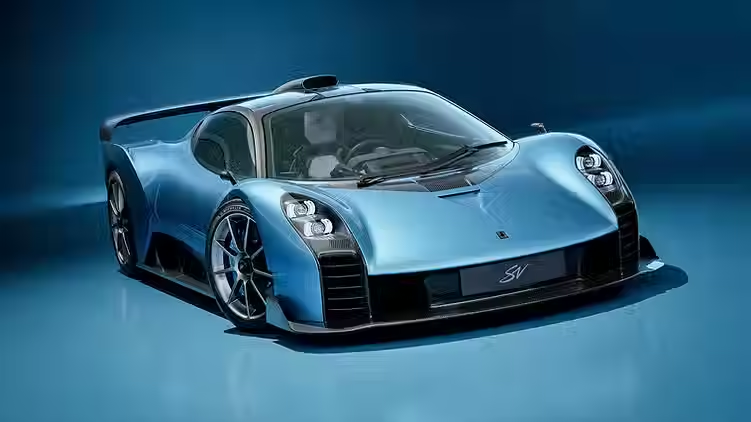
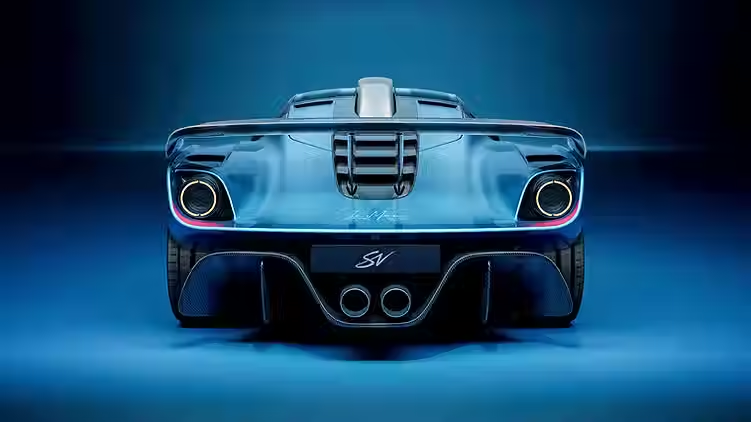
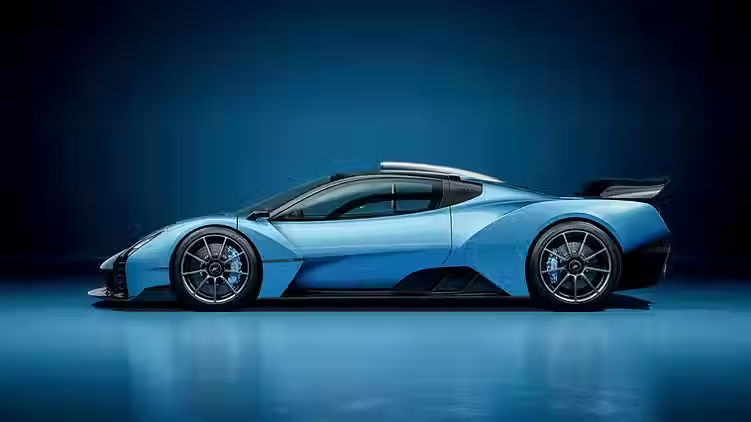
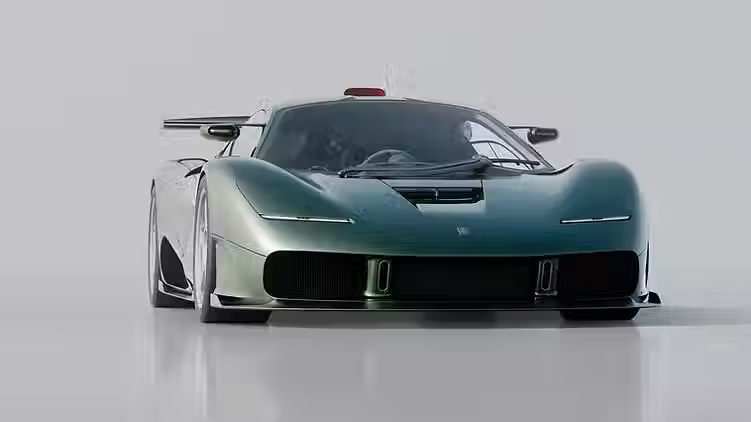
Unlike the S1 LM, the Le Mans GTR takes its cues from multiple sources – among them the Porsche 917, Alfa Romeo Tipo 33/3 and Matra-Simca MS660. For the GTR, the T.50’s V12 and manual gearbox are carried over unchanged, but almost every other element has been reworked to channel the low-drag, ground-effect aerodynamics that defined the longtail era.
The new bodywork includes deeper side skirts, an enlarged front splitter, a twin-channel rear diffuser and a full-width rear wing, giving the GTR enough downforce to also forgo the rear fan. The weight distribution has been fettled to balance the elongated bodywork, which also incorporates larger side intakes to improve cooling performance and track endurance.
It’s not just the exterior where the Le Mans GTR strikes its own path – the interior has been reimagined too. The dashboard, switches and dials, seat cushioning and pedals all get a new motorsport-derived look. Understandably, given the undisclosed price, the interior finish is entirely customisable. Just 24 GTRs will be built, all accounted for, one for each hour of the famous race.
Murray is clearly enthused by the possibilities of GMSV – “I love timeless design. I never want us to join the race to make the most outrageous-looking supercar at the expense of balance, beauty and proportion.
“Longtail racing cars perfectly combine aerodynamic benefit and aesthetic balance. I’ve always loved their mix of considered engineering and flowing design... racers I’ve admired since I began designing cars"
With both cars already sold out, one thing is certain – this is only the beginning for GMSV.



.avif)

.svg)

