-01.svg)
.avif)
The 968 was an evolution of the 944 and took up the baton in 1992. Despite Porsche claiming the 968 was 80% new and a fresh look taking cues from the 928, sales were slow. Its high list price and poor press reception didn't help, and the ageing platform it was based on (first seen in the 924 of 1976) was no longer competitive. The boom in affordable sports cars had left Porsche in a pickle.
The BMW M3 had moved upmarket in six-cylinder E36 guise and the Japanese had muscled in on Porsche's territory with the likes of the Nissan 300ZX, Mazda RX-7 and Toyota Supra. In top-spec turbo guise, all three comfortably exceeded the 968's 240bhp for less money, making the four-cylinder Porsche look undernourished.
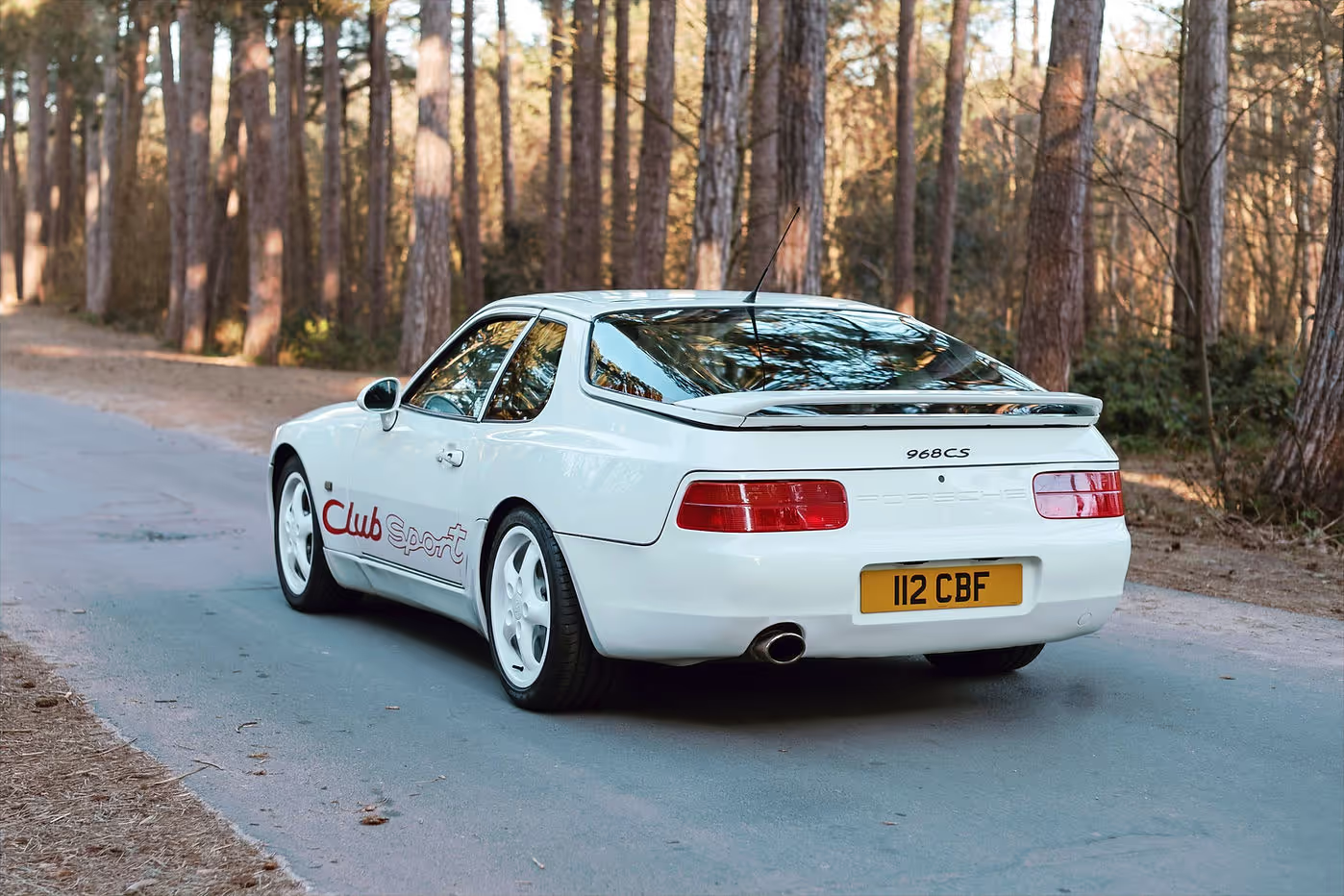
Money was very tight at Porsche but the 968 still had a few years of production left to run. In an attempt to reconnect with customers and prove that Porsche could still make a great driver's car out of the 968, the Club Sport was developed. By taking a regular 968 and putting it on a diet, sharpening its chassis, and adding a few colour-coded touches, it transformed the mediocre 968 into the car it should always have been.
This time, the reviews were overwhelmingly positive. The Club Sport took Performance Car magazine's coveted Car of The Year title, fending off the likes of the box-fresh Supra, Lotus Esprit S2, Lancia Delta Integrale, TVR Griffith and Ferrari 348 Spider in their annual showdown. Autocar also awarded it their 'Best Handling Car' title. The CS was unveiled at the Paris Motor Show in October 1992 and built between 1993 and 1995 for the UK, European, Japanese and Australian markets.
Production numbers are a source of some debate. A total of 1,923 cars are often cited (856 for 1993, 536 for 1994 and 531 for 1995), though the PCA 968 Register records 1,538 cars built on the CS chassis, of which 1,232 were registered as Club Sports and the remaining 306 as 968 Sports. Either way, 179 right-hand-drive examples came to the UK.
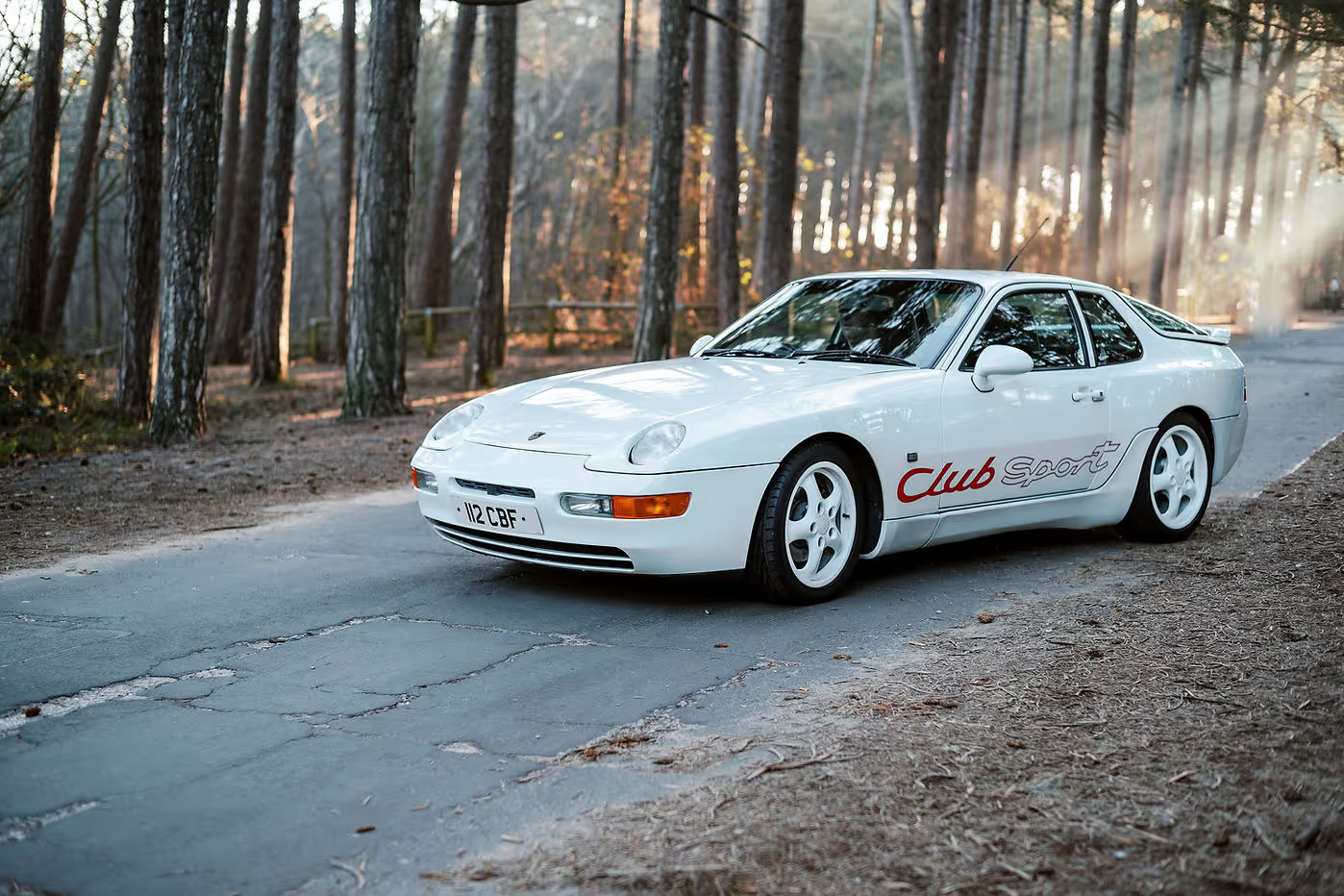
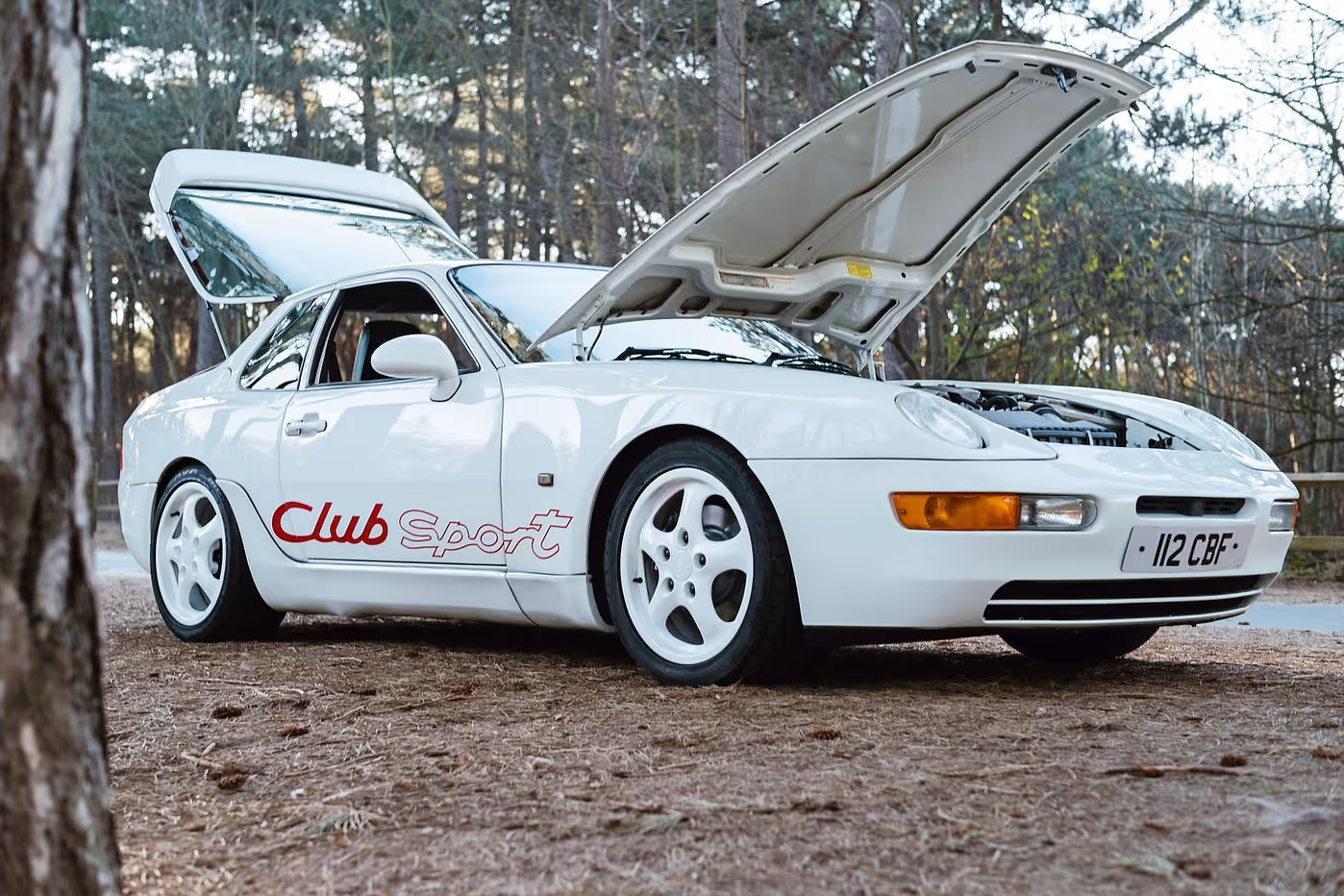
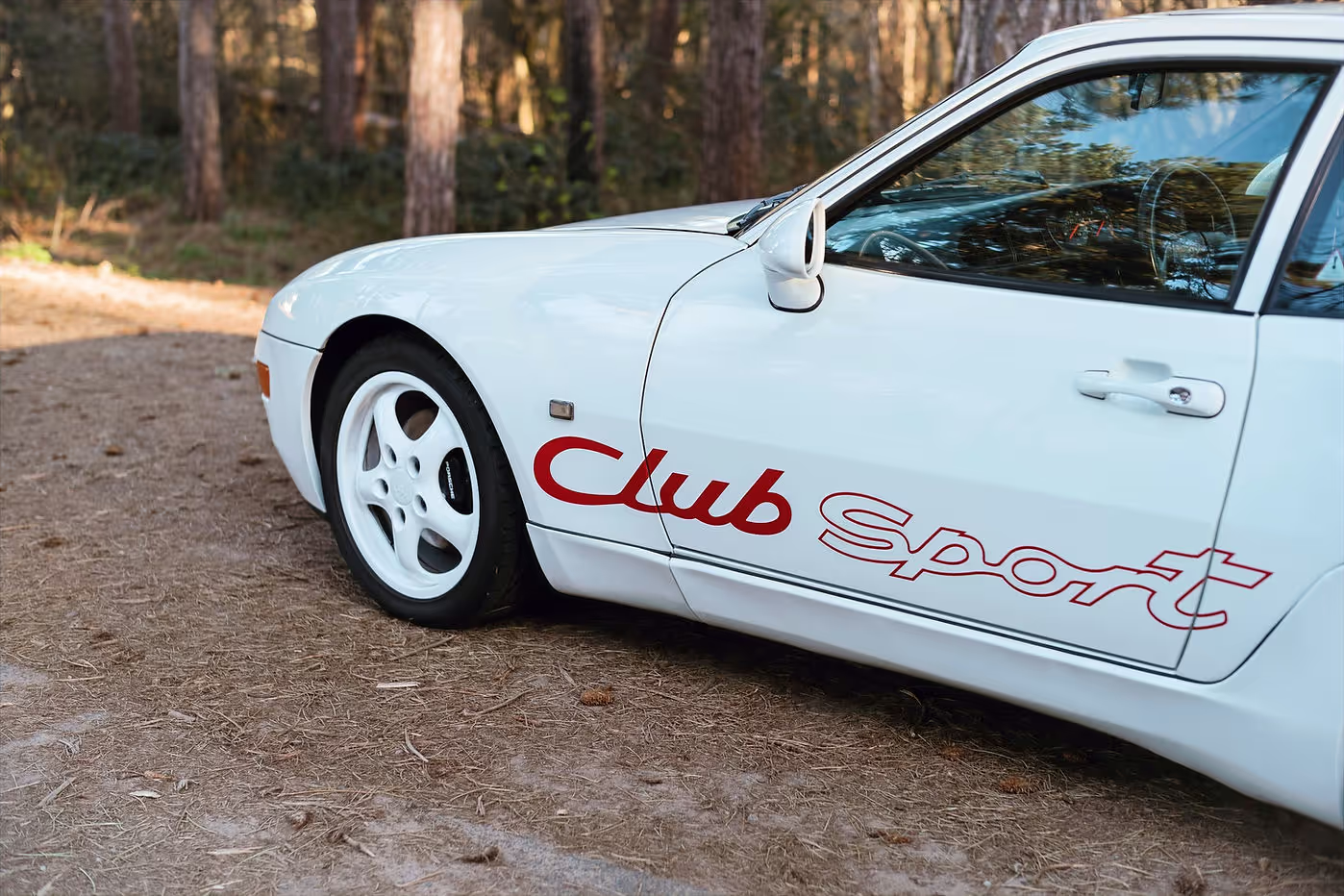
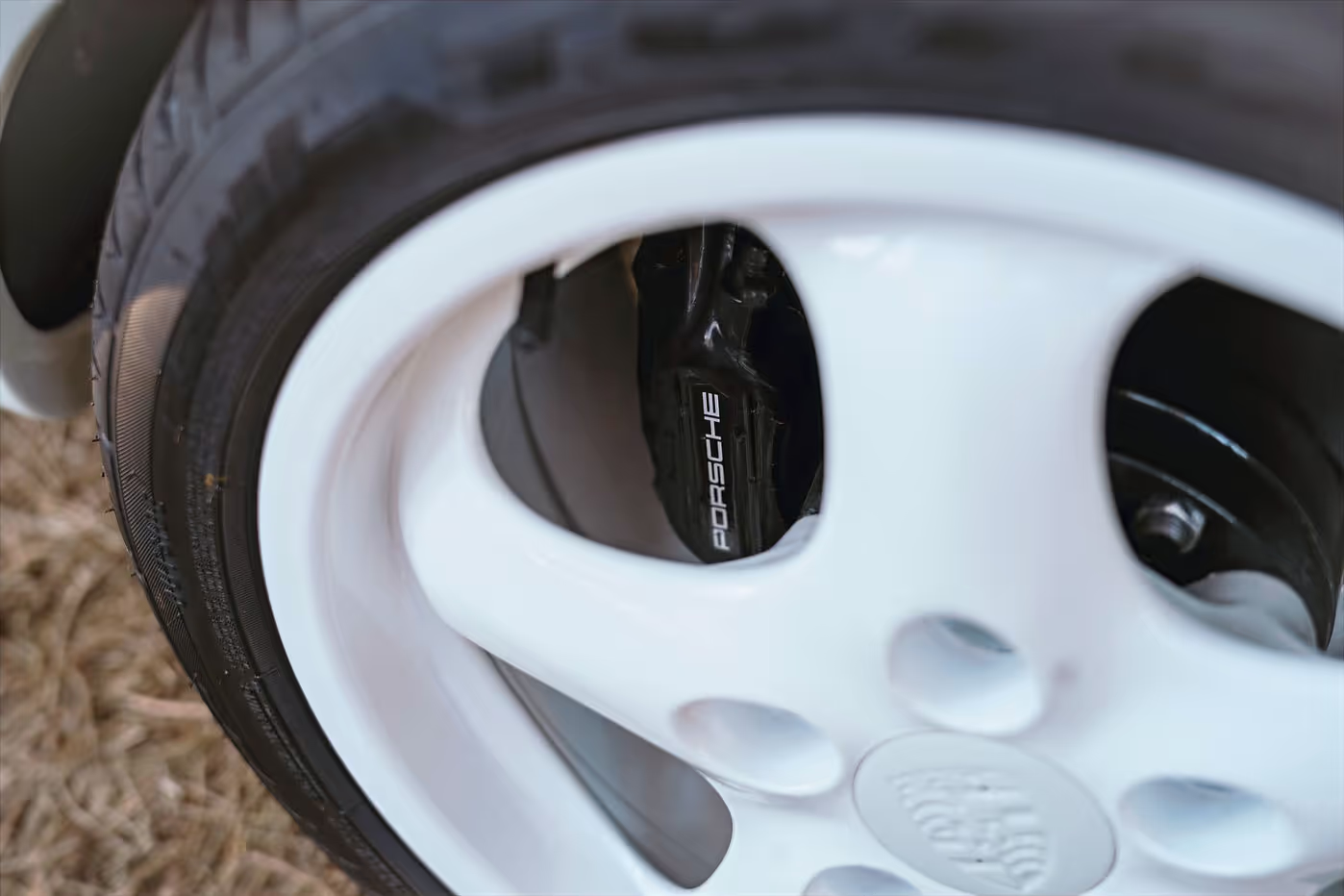
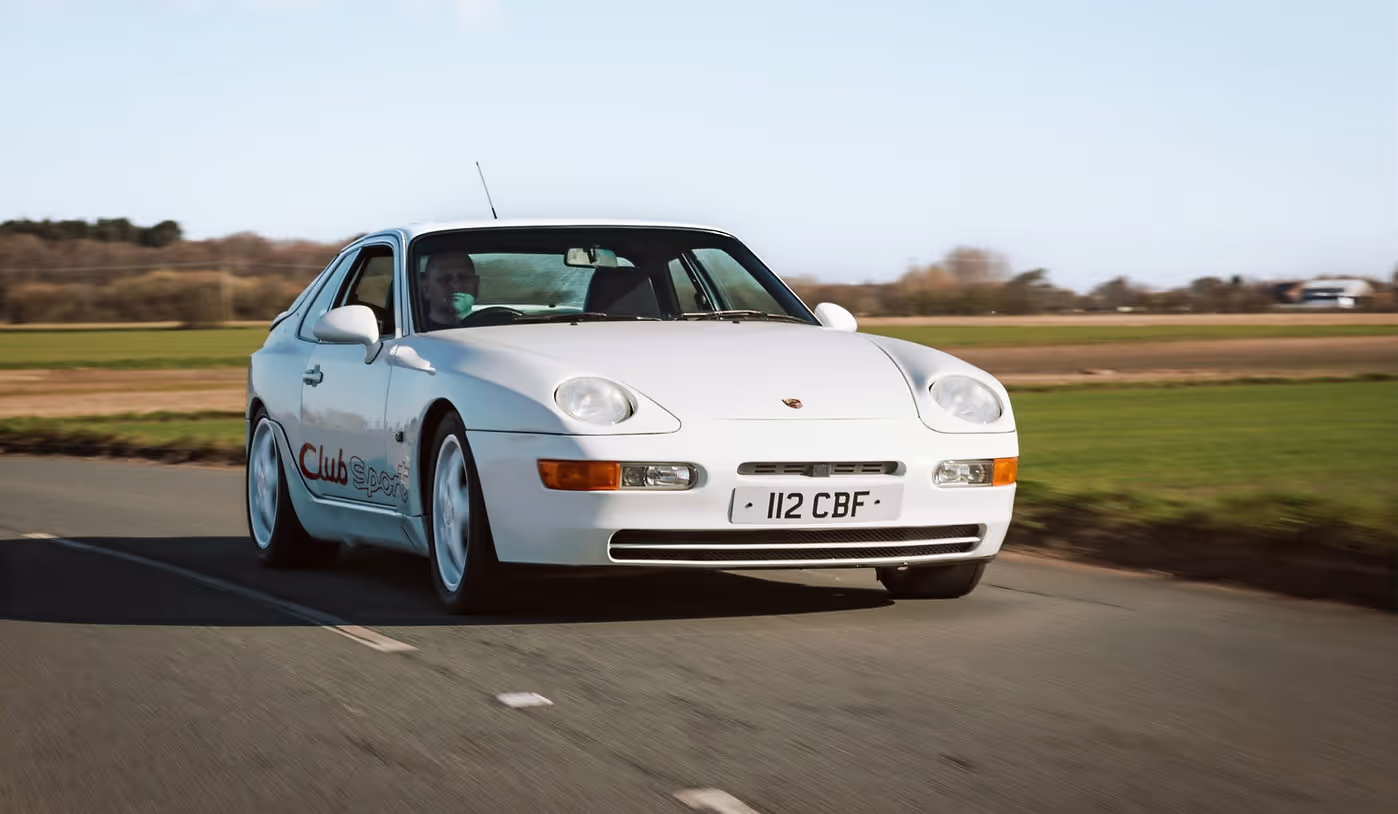
Five colours were available: Black, Maritime Blue, Guards Red, Grand Prix White and Speed Yellow. PTS (paint to sample) colours were also available for those with deeper pockets. As standard, the car came with colour-coded 17-inch Cup Design wheels, while the bold 'Club Sport' side decals, often assumed to be factory-applied, were actually a creation of Porsche's UK importer.
Technical Highlights
Porsche officially claimed a 50kg weight saving over the standard 968 to create the Club Sport. In reality, the reduction was closer to 100kg when measured against a UK-spec car with its standard Lux pack. Porsche is believed to have downplayed the figure to avoid the need to re-apply for type approval.
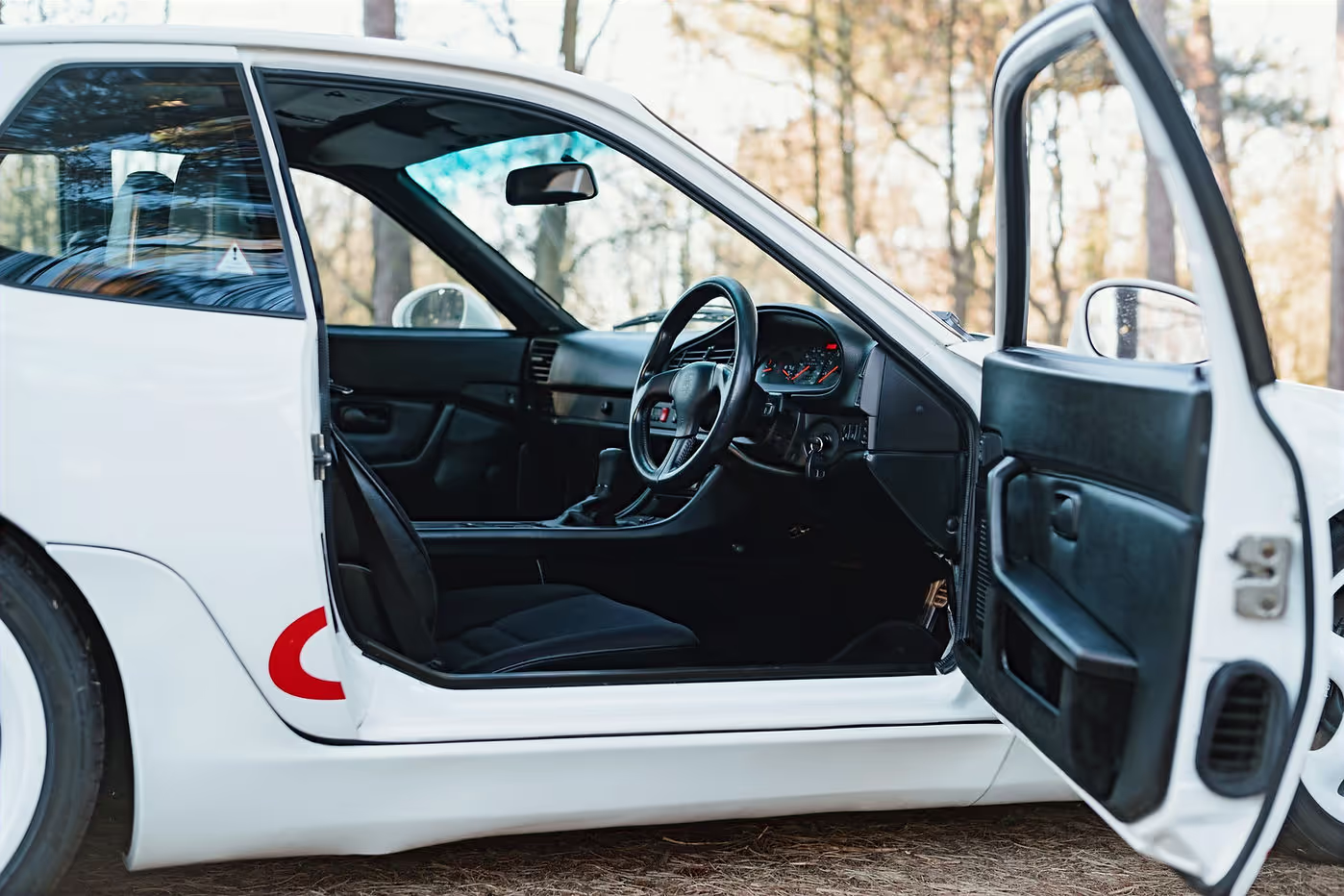
The approach was characteristically pragmatic. With little money for the project, Porsche decided that removing anything it deemed unnecessary was the way forward, rather than engineering bespoke lightweight components. The interior was stripped back to the bare essentials: a pair of fixed-back Recaro bucket seats (with colour-coded hard backs to match the exterior), a unique three-spoke sports steering wheel, and not much else. Never mind the air conditioning and stereo; even the alarm, central locking and electric windows were culled. Heated washer jets were swapped for non-heated items, the rear screen lost its wiper, sound deadening was reduced, and the engine bay lost its plastic covers and one of its two radiator cooling fans. All of this allowed Porsche to fit a smaller battery and lighter wiring loom, bringing the official kerb weight down to 1,320kg. Unlike today's trend of charging more for less, the Club Sport was actually cheaper than the standard car.
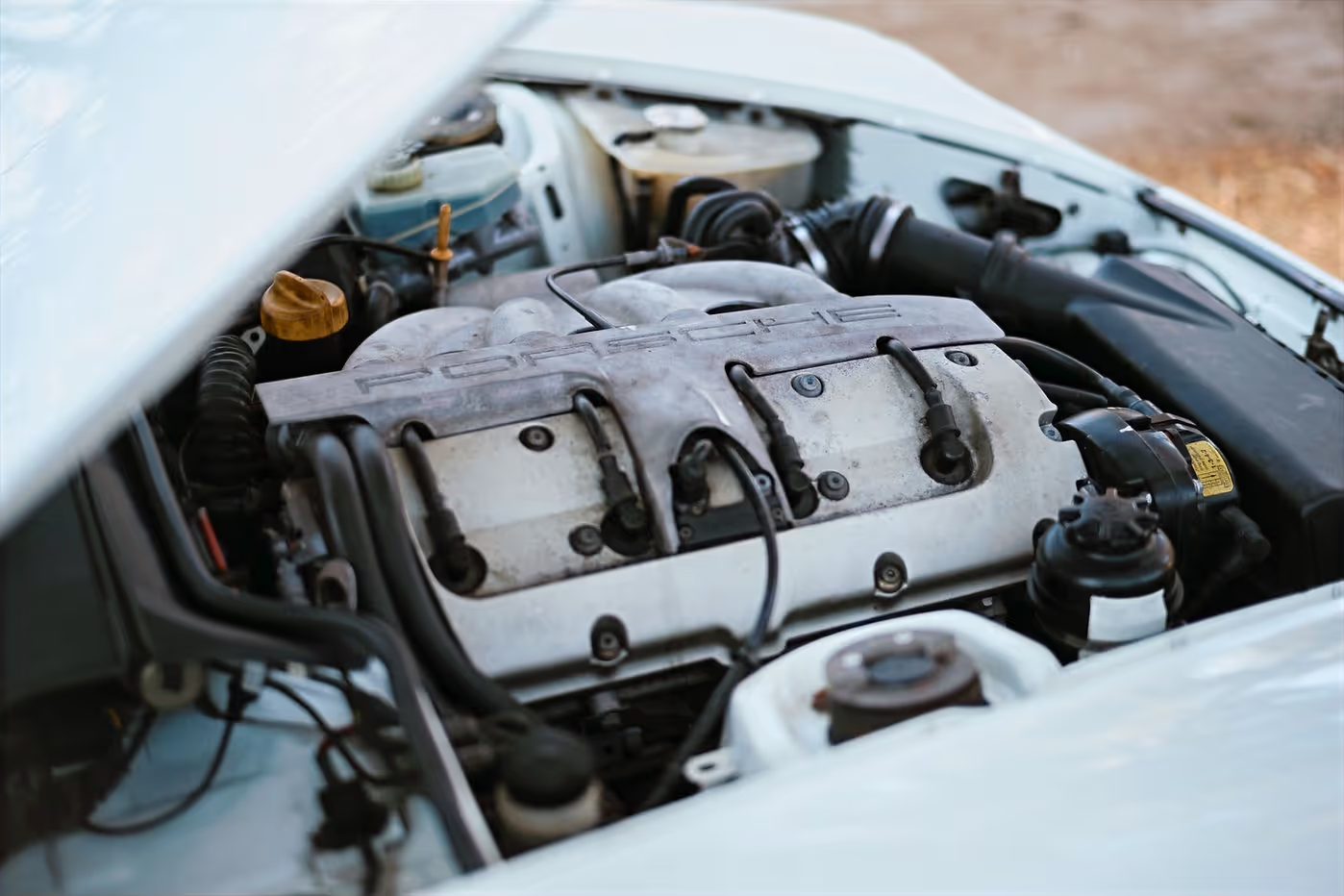
The M44/43 three-litre inline-four engine was carried over untouched from the standard 968, putting out 236bhp and 225 lb-ft. This was an evolution of the 944 S2's 3.0-litre unit (which shared its bore spacing concept with the 928's V8), and featured Porsche's VarioCam variable valve timing system, which gave a broader spread of low-down torque while maintaining power at higher rpm. The VarioCam system debuted on the 968 and would later feature on the 993's flat-six. Thanks to the weight reduction, Porsche officially quoted a 0–62mph time of 6.1 seconds (down from 6.5) and a top speed of 158mph (up from 157mph), though independent testing suggested the real figures were closer to 5.8 seconds and 162mph. A six-speed manual gearbox, new for the 968, replaced the 944's five-speed unit.
The transaxle layout, with the gearbox mounted at the rear axle, gave a near-perfect 50:50 weight distribution. The CS ran 20mm lower than a standard 968 as standard, with stiffer dampers and 17-inch wheels (17 x 7.5 front, 17 x 9 rear) wrapped in wider rubber: 225 front and 255 rear, up from the standard car's 205 and 225. Braking was handled by Brembo four-piston calipers all round with ventilated discs (297mm front, 300mm rear) and Bosch ABS.
The real transformation, though, came with the options list. The M030 sport suspension pack added stiffer springs, uprated dampers, thicker anti-roll bars and larger cross-drilled brake discs. A 40% locking Torsen differential was also available under option code M220. Neither was standard on the Club Sport, despite common assumption, and their presence makes a significant difference to both the driving experience and the car's value today.
What to Look For
There were three option packs available for the CS. The most desirable is the M030 sport suspension pack, followed by the comfort pack (which added standard 968 seats, electric windows and electric mirrors) and the security pack (central locking, alarm and locking wheel nuts).
Porsche also allowed buyers to option back in a stereo, air conditioning, sunroof and more, so don't be surprised if you see a supposedly stripped-out Club Sport with a few of the luxuries restored. Many UK cars were specified with a sunroof because the air conditioning had been deleted. Non-sunroof cars offer greater structural rigidity and are increasingly sought after, so it's worth knowing which you're looking at. Handily, an option sticker should be found inside the boot detailing what the car left the factory with. For 1994 model year cars, Maritime Blue was superseded by Riviera Blue, and a redesigned soft-spoke Cup Design wheel replaced the original items.
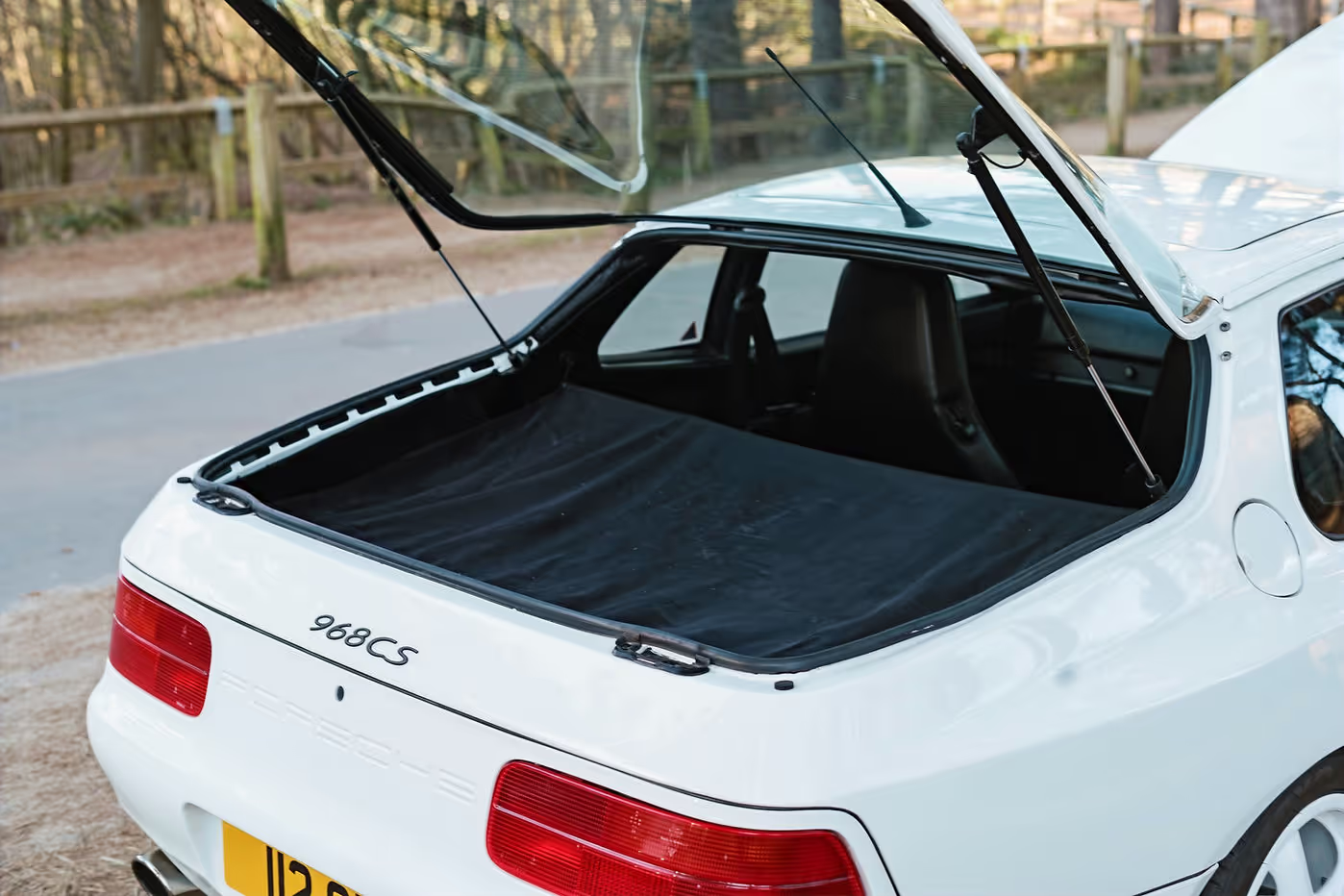
Be wary of cars listed as a Club Sport that are actually a 968 Sport. The Sport was a UK-only model, essentially a CS chassis with standard equipment added back in under a Lux pack, and all 306 built came to Britain. An easy way to tell: the Club Sport will have no rear seats, with a large rigid parcel shelf covering the area instead. A Sport will have rear seats and no shelf. If in any doubt, contact Porsche Heritage with the VIN and they will be able to confirm exactly what the car is from the original build sheet.
Should the car be fitted with air conditioning, give the system a thorough workout when inspecting. A simple re-gas may not be enough if the condenser or compressor has failed, potentially adding £750–£1,000 to your bill. It's also worth noting that the change from R12 to R134A refrigerant happened for the 1993 model year, so ensure any AC work has been done to the correct specification.
All CS examples are now over 30 years old and as such, you should buy on condition and history. Regular servicing, evidence of a recent timing belt service and a clean MOT history are non-negotiable. The timing belt is the single most critical maintenance item on the M44 engine. It's an interference design, meaning if the belt fails, the results are catastrophic. It should be replaced every four to five years or 40,000 miles, along with the water pump, tensioners and rollers. If there's no proof of recent work, factor in around £700 for a belt and water pump service.
The VarioCam chain sprockets are the other area to watch. These connect the intake and exhaust camshafts and are the one component where the M44 engine has a known weakness. Ask for documentation of a recent inspection, and listen for any unusual rattling on start-up that doesn't quickly settle.
Top-end rebuilds tend to be required around the 120,000-mile mark and a full rebuild at around 150,000. Higher-mileage cars can also suffer from worn transaxle bearings (specifically the crown wheel and pinion), which is a costly repair, so a thorough service history matters even more on cars that have covered serious distance. Tired suspension components are almost a given at this age, so budget accordingly.
Some cars will have seen plenty of track action and may be fitted with aftermarket upgrades like bigger brakes, coilover suspension and different anti-roll bars. This isn't necessarily an issue, but if you plan to return the car to standard specification, hunting down original parts can be time-consuming and dear. Clues that all is not well with the suspension include a clunking noise or front-wheel shake when driving (suggesting either a lower control arm or anti-roll bar drop-link issue), while loose, vague handling points to worn or leaking shock absorbers. Get under the car to assess the suspension, brakes and brake lines.
A worn exhaust isn't a deal breaker; expect a decent custom stainless system to cost around £400–500. Given many Club Sports are now cherished weekend cars covering lower annual mileages, check the tyres for age-related degradation, not just tread depth. It's highly recommended to buy from a specialist or have a pre-purchase inspection carried out for peace of mind.
Porsche 968 CS Market Assessment
The 968 Club Sport market has moved on considerably since this guide was first published. Values have climbed, the buying pool has thinned, and the dynamics shaping prices have become more complex.
Entry-level money now sits around £15,000–£20,000, but at that price you're firmly in project territory. High mileage, patchy histories, and likely in need of meaningful mechanical attention. Several cars have traded at auction in this bracket through 2024 and into early 2026, including a 159,000-mile example at WB & Sons and a pair through smaller regional houses. These aren't necessarily bad cars, but they need work, and they need a buyer who knows what they're getting into.
The mid-market has settled around £30,000–£45,000. This is where you'll find solid, usable Club Sports with decent provenance, reasonable mileage, and most of the right options. Cars here tend to carry a few compromises. Perhaps comfort seats optioned back in, a later respray, or a missing M030 pack. For anyone who actually wants to drive one, though, this is the sweet spot.
At the top end, the best examples are now comfortably in the £55,000–£65,000 range, with the very finest pushing towards £80,000. An RM Sotheby's sale in May 2025 achieved just under £58,000, while several strong results at international auction through 2023 and 2024 have seen headline prices break through the £80,000 barrier. It's worth noting, though, that multiple cars failed to sell at auction through late 2024 and into 2025. Buyer appetite is strong, but some sellers' expectations have run ahead of what the market will actually support without reserve.
Colour matters more than ever. Speed Yellow, Riviera Blue and Maritime Blue cars now command a 15–20% premium over Black, Guards Red or Grand Prix White equivalents in comparable condition. PTS examples, where they surface, are in another league entirely.
Options are equally important. A well-optioned CS with M030 and LSD, in a desirable colour, with a clean history and sensible mileage, is now a genuinely rare thing to find.
For buyers planning to actually use the car rather than stash it away, the standard 968 Sport arguably still makes more sense. Mechanically identical to the CS and sharing the same chassis, Sport values at auction have recently ranged from around £9,000 at the bottom to £18,000 for tidy examples. That's a significant discount to their Club Sport siblings, and in Porsche terms, almost feels like cheating.
UK supply is critically low. Of the 179 right-hand-drive Club Sports originally delivered, recent DVLA data suggests as few as 36 remain on UK roads. They rarely come to market, and when they do, the good ones tend to sell quickly through specialists like RPM Technik, Philip Raby and DK Engineering rather than lingering on classifieds. Meanwhile, US imports under the 25-year rule have started pulling cars across the Atlantic, further tightening European availability.
With 964 and 993 RS prices deep into six figures and showing no sign of retreat, the 968 Club Sport increasingly looks like one of the last genuinely analogue, track-focused Porsches that hasn't priced itself out of reach. The PCA flagged it in late 2025 as a car likely to break into low six figures for the best examples. On current trajectory, that looks less like speculation and more like a matter of when.
Owners POV - Christian Falk
"Having been passionate about cars all my life I had a love for 2 cars all my childhood which were the E30 M3 and 944 so when the 968CS came out it took over my passion. In the late 90s, I managed to find myself a good E30 M3 and in 2008 I found the best 968 CS I could find at the time. I went for miles, service and condition over colour.
"I really wanted a Riviera blue but got a 63k miles Grand Prix white lux model. The great thing about the lux is that you get creature comforts while having the CS. Lots of people see the interior and say it's a sport but the rear seat delete, no rear wiper and smaller alternator confirm the CS.
"Driving the car is unreal – the car is 28 years old yet has a 6-speed gearbox and could be driven every day, unlike the E30 M3 that drives like an underpowered BMW until you ring its neck to get it going. The 968CS can do 70mph in second if you feel the need but also 25mph in 6th – the car really can be everything to everyone. Caning it around the twisty roads with the fine chassis or cruising at 30mph taking in views.
"The way Porsche has set the car up needs no playing with, if you want to give it some beans it will stick to the road like glue yet sedate enough to absorb the usual bumps and undulations you come across every day. The gears seem very long yet make pace very quickly, the 6th gear can see over 150mph which is very fast for the early 90s and still a good number these days.
"With every classic car you'll have a job list, as you take a couple off another three are added. Because the 968CS was put together so well there's no need to replace anything with any aftermarket uprated parts. Just make sure the part numbers are the right ones and get them from Euro Car Parts. A full set of discs and pads can be had for around £1,000, cam belt service with water pump around £700 and a full set of OEM shocks can be had for around £400. Because it's an old and pretty basic car a decent home mechanic can do most of the work themselves and get a decent Porsche specialist to do the rest.
"Having had the car for 14/15 years I have no interest in seeing it gone because it's everything I want from a classic car and can't think of anything newer or older that could replace it!"


.avif)
_edited.avif)

.svg)

