-01.svg)

The news wasn’t unexpected – the 718s had been living on borrowed time, having dodged their anticipated exit in 2024 thanks to temporary exemptions from incoming cybersecurity regulations – but it still stings.
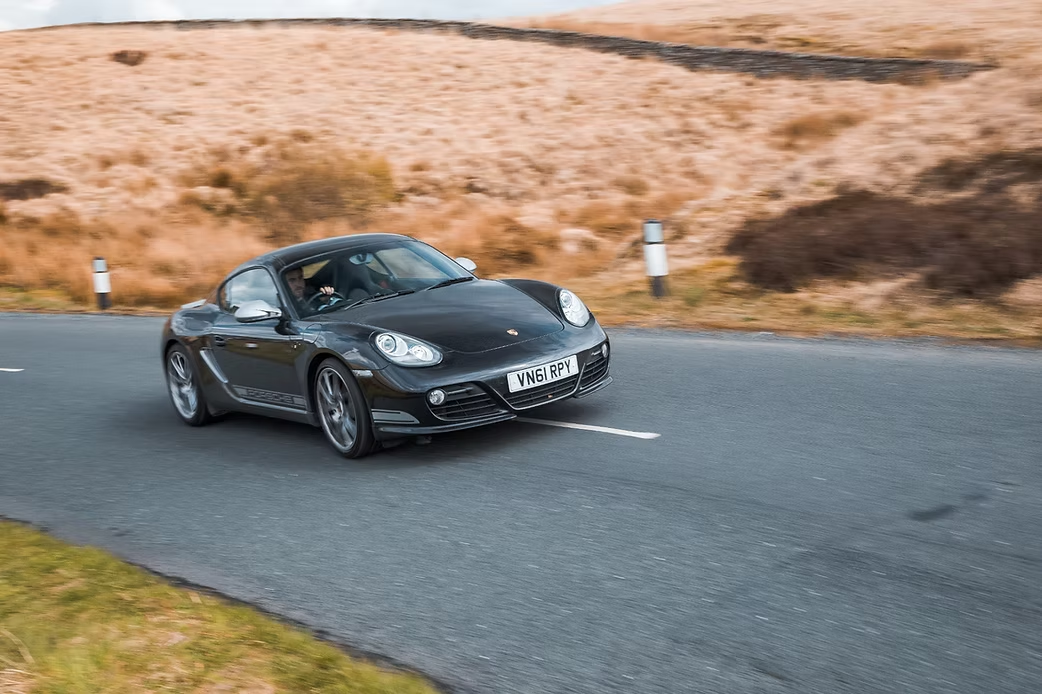
It hasn’t all been smooth sailing. Over the years Porsche sometimes left us moaning rather than mourning, but for every misstep there was a moment of brilliance. The 981 generation, introduced in 2012, was the point at which the Boxster and Cayman matured: larger in scale, stronger in performance, and with a cabin that at last felt worthy of the badge. On the road they were sharper, quicker, and more complete than ever, yet also harder to love. The switch to electrically assisted power steering brought accuracy but diluted the delicate feedback their predecessors had mastered. Then, in 2015, the GT4 changed everything.


For years, the Porsche GT department had resisted giving the Cayman its blessing, fearing it might cast too long a shadow over the 911. With the GT4, those shackles were lifted. Porsche Motorsport fettled everything that mattered – suspension, aerodynamics and gearing, then fitted a flat-six from the 911 Carrera S – resulting in not only a sharper Cayman, but one of the finest driver’s cars the brand had ever built. Evo named it their Car of the Year in 2016, while Top Gear crowned it the greatest driver’s car of all time. Most simply called it the Porsche that enthusiasts had been waiting for.
From the high of the GT4, came the low of the 718’s introduction. Essentially a heavily revised 981, the new model was praised dynamically, but there was a giant elephant in the engine room: Porsche’s decision to switch to turbocharged flat-fours brought greater efficiency and torque, but they were completely devoid of soul. The 2.0 and 2.5-litre units delivered an indecent level of performance, but purists were up in arms. Stuttgart blamed the switch on the need to comply with emissions regulations, but with the stinging criticism ringing in their ears, Porsche relented and created a new 4.0-litre flat-six for the 2019 GT4 and Spyder.
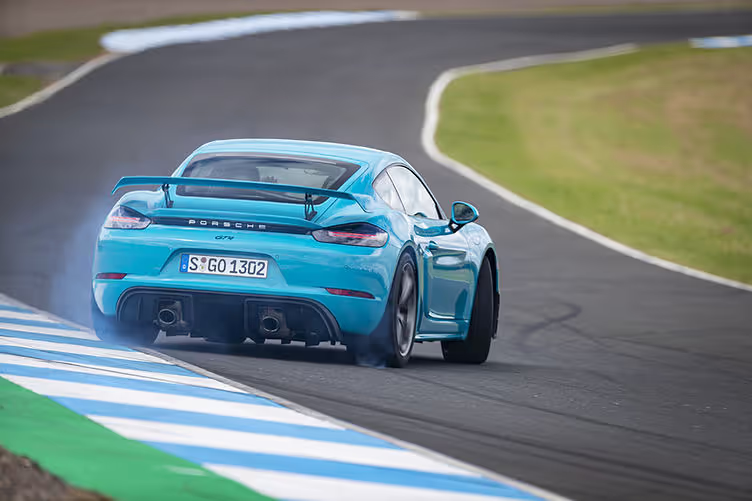
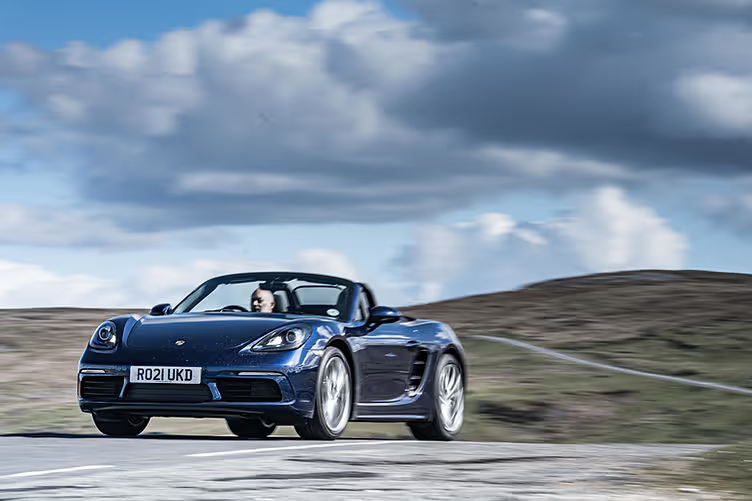
Rather than a development of the 981’s 3.6-litre unit, the new engine could trace its roots to the 3.0-litre turbocharged flat-six powering the contemporary 911 Carrera. Porsche engineers removed the turbos, increased the capacity and revised the internals to suit its 414bhp output and 8,000rpm redline. The engine then appeared in a lightly detuned form (394bhp, -200rpm) in a new GTS, which many argue remains the sweet spot of the entire lineage, blending the acoustic fireworks of the 981 with the sharper chassis of the 718. Best of all, it was available with a six-speed manual, and the 4.0 finally endowed the flat-six with enough torque to make sense of the car's infamously long gearing.
Porsche had one final gift for us all in 2022, as they took the wraps off a version of the car they were definitely never ever, swear on Andreas Preuninger life going to build - the GT4 RS. A 4.0-litre flat-six once again featured, but this time it was a bonafide Motorsport item, lifted directly from the 911 GT3 in full 500bhp, 9,000rpm spec. PDK-only, this time the GT department dialled everything up to 11, with hardcore suspension and aero, plus an ear-piercing direct feed intake tract replacing one of the rear windows. For some it was a step too far, lacking the nuance of the GT4 and quickly becoming tiresome on the road. For others, the combination of the compact dimensions and GT engine took the car to new heights.


While the 981 and 718 Boxster and Spyder have had their ups and downs over the years, they have remained the definitive sports car of the 2010’s and 2020’s. The Alpine A110 presented a serious rival when it came along in 2017, as did the Lotus Emira.
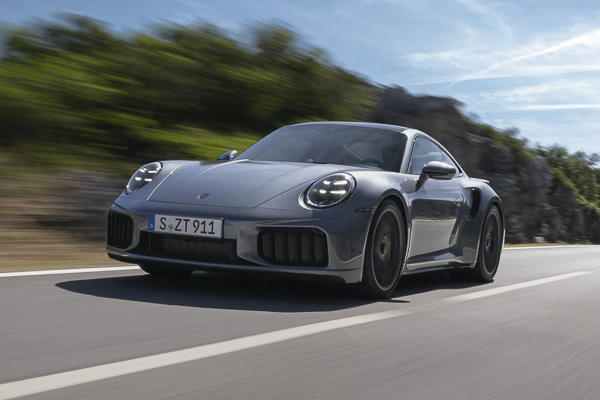
Perhaps the greatest trick the 981 and 718 pulled was to silence the “poor man’s 911” jibes once and for all. They broadened the credibility of the mid-engined Porsche not just in the eyes of enthusiasts, but in the wider public conscience. As their electric successor looms, we may come to look back on the ICE Boxster and Cayman as the high-water mark.


.avif)

.svg)

