NEWS
Encor Esprit Series-1 Restomod Revealed in Full
Craig Toone
By
Images by
Encor
Published
8 Dec 2025
Encor Esprit Series-1 Restomod Revealed in Full

Full details of the carbon-bodied, V8 powered Esprit re-imagination have been revealed. And what a looker it is.
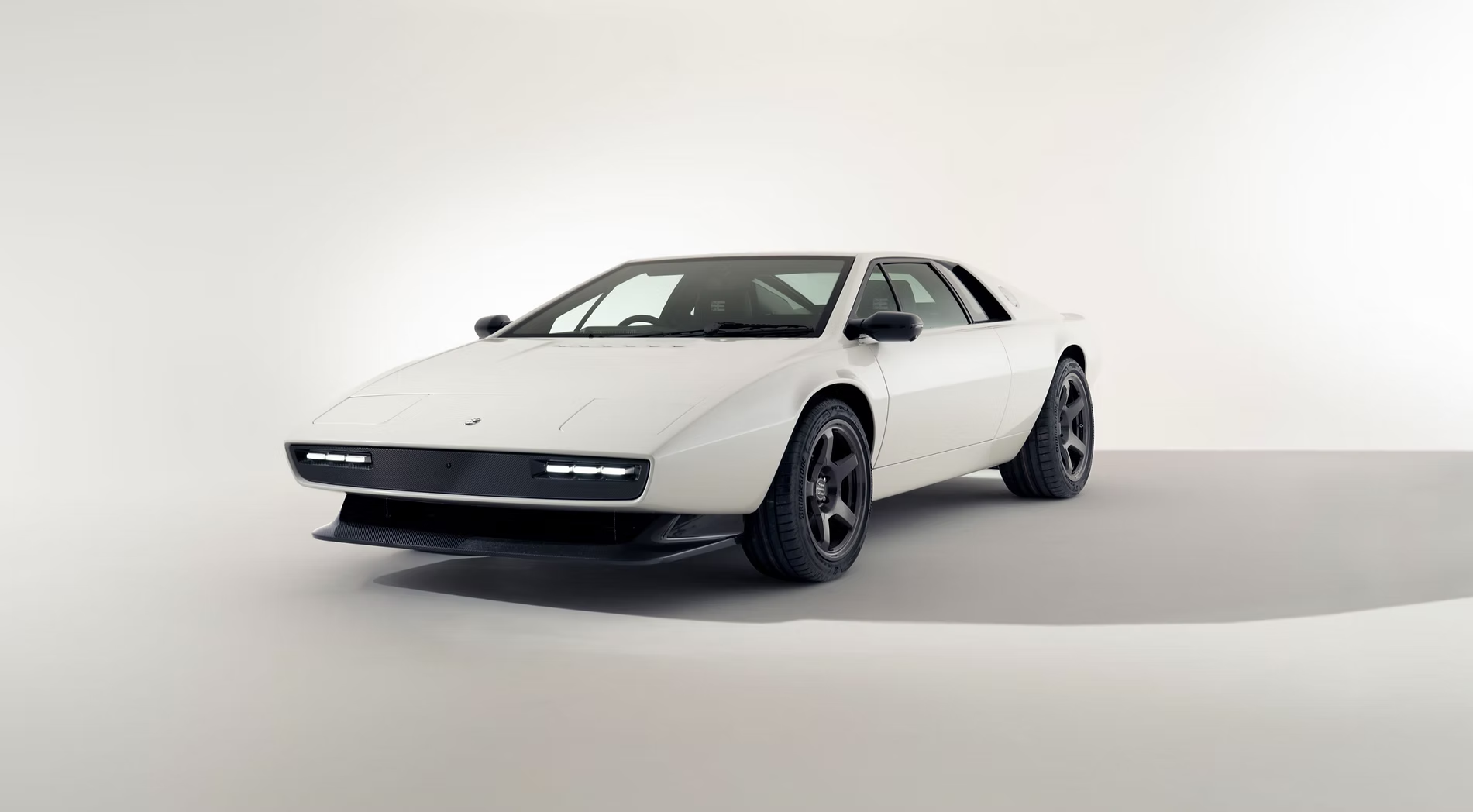
After the entree teaser, Encor has now delivered the main course with the full reveal of their Series 1 Esprit restomod.
The project is led by Daniel Durrant, former Lead Designer at Lotus for the Emira, alongside Technical Director Mike Dickison (ex-MIRA) and electronics partner Skyships Automotive, who supply the likes of Aston Martin, Gordon Murray Automotive and Koenigsegg. Encor describes the approach as "respectful enhancement" – preserving the Esprit's signature wedge form while rebuilding the car with modern materials and engineering.
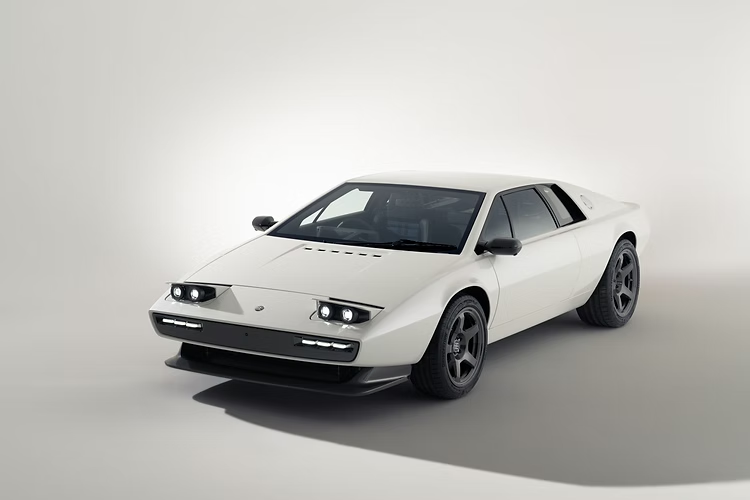
Central to this is the new carbon fibre body. While based on a late Esprit V8, the Encor adopts the Series-1’s Giugiaro lines rather than those of the Peter Stevens rework. The V8’s backbone chassis is retained for continuity of identity and registration but is stripped, blast-cleaned and refinished as a part of the process.
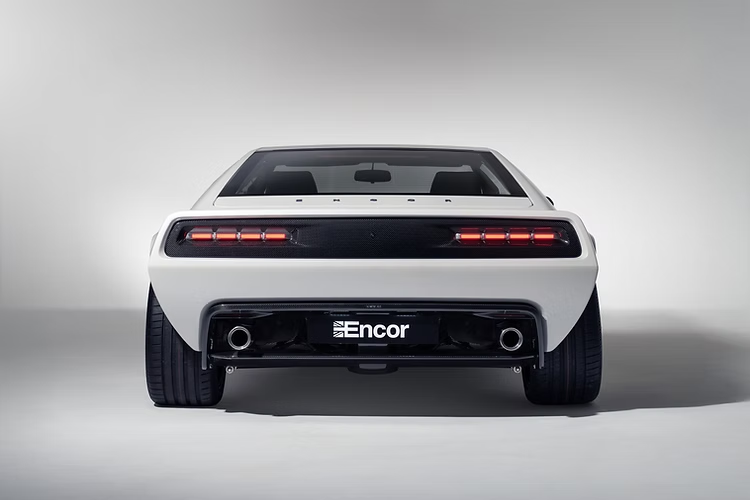
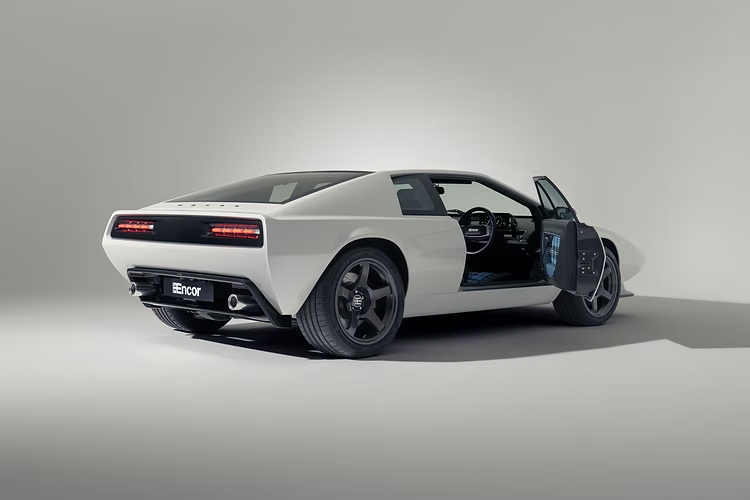
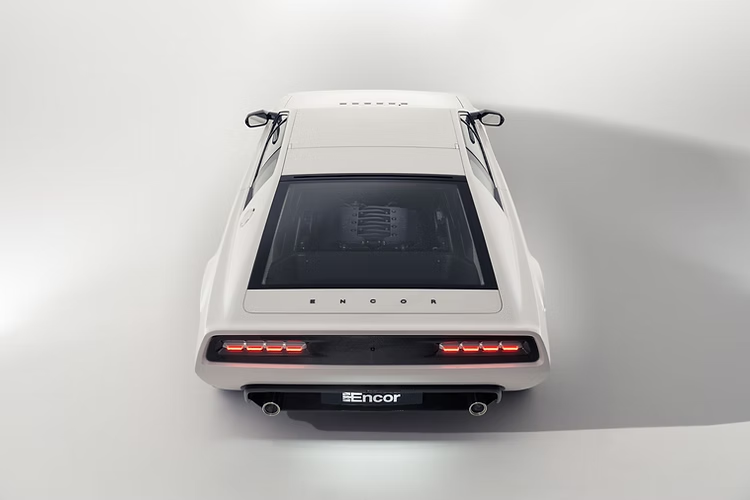
Encor began by digitally scanning an original Esprit, resurfacing and refining its geometry using modern design tools. The result is an S1 that has been through a Hollywood de-aging process with a seasoning of cyberpunk, thanks to the modernised LED lights and groundhugging stance. Switching to carbon means the distinctive two-piece mould line of the 1970s fibreglass body could be removed, replaced by a seamless whole that better captures the purity of early sketches. Detail touches include the integration of intakes into the buttresses and the relocation of the door handles. Hidden in the underbody are additional cooling ducts for the V8, while a new glass panel means the engine itself is now on full display rather than hidden behind louvres.
The finished article is said to weigh 1,200kg wet, a meaningful reduction of 180kg over the donor car. The switch to carbon also hugely increases torsional rigidity and permits Encor to deliver a level of fit and finish unheard of for a product of Hethel. The forged and billet-machined wheels also follow the brief, blending the S1’s original slot-mag design with the later Sport 350 five-spokes.
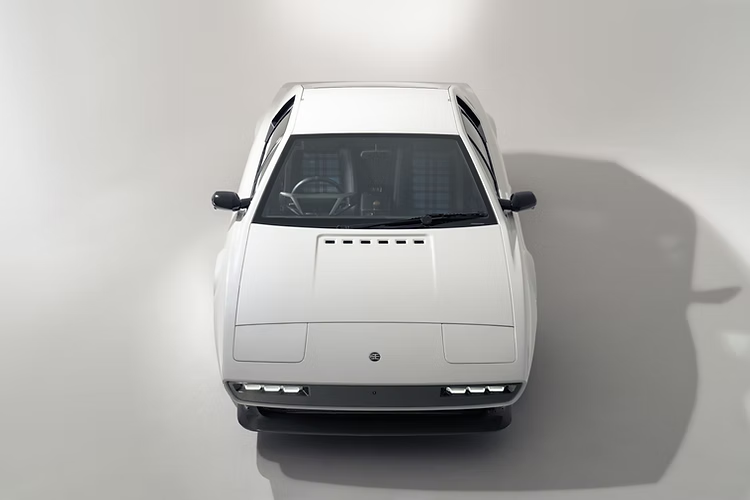
Durrant’s reverence for the source material is plain to see: “To touch a shape like this is a huge responsibility. Every line we’ve refined, every decision we’ve made, is about honouring the original’s intent.”
It's hard to argue against these words. In terms of aesthetics, Encor has delivered, emphatically.
While out of the car, the 3.5-litre twin-turbo V8 receives a comprehensive rebuild: forged pistons, upgraded injectors, remanufactured turbochargers, and an electronic throttle body. Power rises to 400bhp at 6,200rpm with 350lb-ft of torque at 5,000rpm. Encor claims 0-62mph in four seconds with a top speed approaching 175mph - conservative numbers for a car boasting 333bhp/tonne.
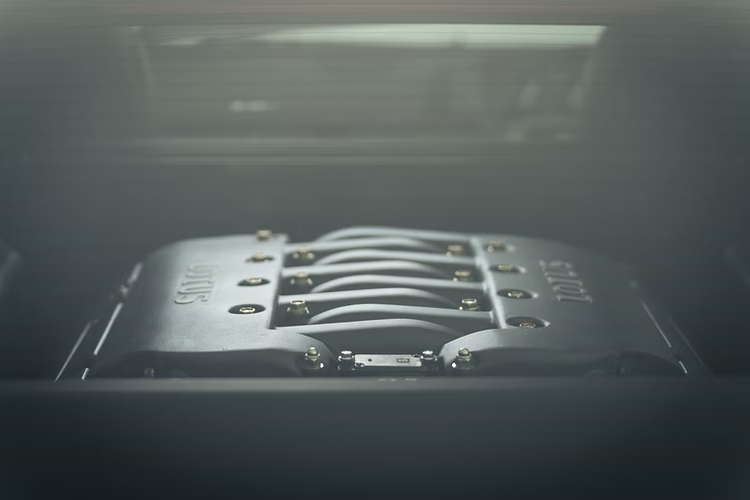
Even though the need for authenticity will have tied Encor’s hands, question marks linger over the V8 itself. Lotus's flat-plane unit was never praised for its soundtrack in period, often described as sounding like two individual fours rather than a unified eight. Powertrain charisma is a huge selling point for any restomod, and at 500k all-in the Encor will face some serious competition. A lot will be riding on the new stainless steel exhaust system to provide a convincing solution.
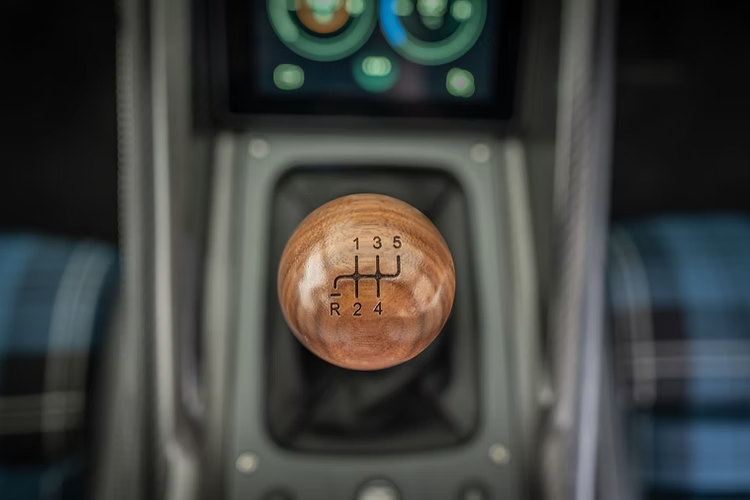
The increased output also raises inevitable questions about gearbox longevity. The Renault UN1 unit, long considered the Esprit's Achilles heel, has been comprehensively re-engineered in partnership with Quaife. A stronger input shaft, revised ratios, helical limited-slip differential, and bespoke twin-plate clutch address the original's weaknesses while improving shift quality.
Encor’s approach to the handling has been less radical, but it didn’t need to be. Suspension componentry has been upgraded to Sport 350 specification, there are AP Racing brakes and Bridgestone Potenza Sport tyres, while Encor has kept the Esprit’s hydraulic power steering, preserving the tactile feedback central to the car's character.
“Lightness and tactility guide every decision,” states Dickison. “The Series 1 drives with the purity you imagine from an analogue supercar, yet with a depth of capability the original platform could only dream of. It’s a transformation carried out with complete respect for its DNA.”
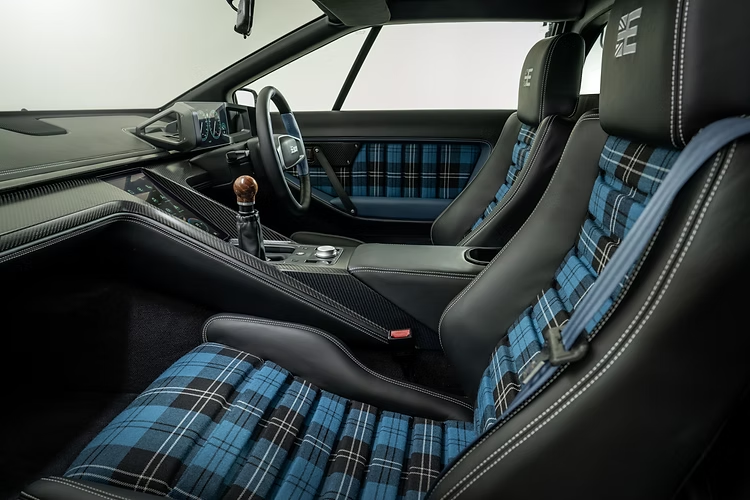
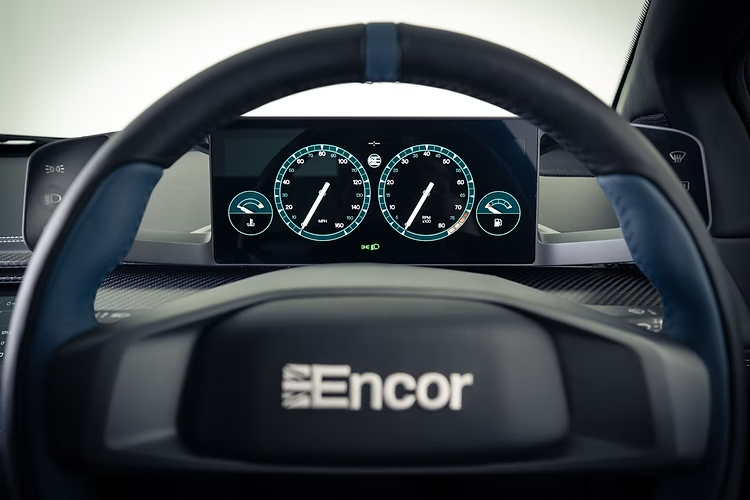
Inside, Encor has retained the Esprit's most distinctive elements - the dramatically sloped dashboard, wraparound instrument binnacle, and signature tartan accents - while rebuilding everything from the frame outward. The floating instrument cluster is the standout piece: machined from a single billet of aluminium and housing a modern digital display, it balances period-correct form with contemporary clarity. A carbon-fibre dashboard "T" houses essential controls within natural reach, while the seats have been restored, re-foamed and re-trimmed to improve support without abandoning the original ergonomics.
Skyships' electronics integration - infotainment, climate control, and a 360-degree camera system - sits discreetly within the architecture, providing modern convenience without dominating the cabin. Importantly, the firm is also a major investor in the project, meaning Encor doesn’t need to rely on significant customer deposits to generate cashflow, despite being a startup.
Production is limited to 50 cars, priced from £430,000 before donor car and local taxes. Construction takes place at Encor's Chelmsford HQ, with the first deliveries scheduled for Q2 2026.
Visually, Encor has succeeded emphatically. The seamless carbon bodywork, modernised details, and interior execution - particularly that billet aluminium instrument cluster - demonstrate genuine craftsmanship at a level the original could never achieve. Whether the driving experience matches the visual promise, particularly how that flat-plane V8 sounds through the new exhaust, remains to be proven. But in an increasingly crowded restomod marketplace, the foundation is undeniably impressive.
Prospective buyers and dreamers alike can visit Encor's website to configure their own Series 1. A lacquered carbon finish with John Player Special pinstripes is no doubt POA.
Author
Photography by:
Encor
Published on:
8 December 2025
Our Print Magazine
LATEST ARTICLES
About the Author

Craig Toone
Rush Founder
Obsessed with cars and car magazines ever since growing up in the back of a Sapphire Cosworth. Wore the racing line into the family carpet with his Matchbox toys. Can usually be found three-wheeling his Clio 182 Trophy around the Forest of Bowland, then bemoaning its running costs.
Related Articles
Carbon Bodied Evoluto 355 Restomod Aims to Blend Past and Present
Aaron Stokes
|
10 July 2024
Ordinarily when we hear of a new restomod, the RUSH team gets excited and we immediately love what we see. However, with the Evoluto 355, it hasn’t received the same warm reception. Aaron Stokes ponders if the 355 needed the restomod treatment.
NEVER MISS AN ARTICLE

Full details of the carbon-bodied, V8 powered Esprit re-imagination have been revealed. And what a looker it is.
Encor
8 December 2025
Full details of the carbon-bodied, V8 powered Esprit re-imagination have been revealed. And what a looker it is.
First published
8 December 2025
Last updated
8 December 2025
Photography
Encor
W
After the entree teaser, Encor has now delivered the main course with the full reveal of their Series 1 Esprit restomod.
The project is led by Daniel Durrant, former Lead Designer at Lotus for the Emira, alongside Technical Director Mike Dickison (ex-MIRA) and electronics partner Skyships Automotive, who supply the likes of Aston Martin, Gordon Murray Automotive and Koenigsegg. Encor describes the approach as "respectful enhancement" – preserving the Esprit's signature wedge form while rebuilding the car with modern materials and engineering.
Central to this is the new carbon fibre body. While based on a late Esprit V8, the Encor adopts the Series-1’s Giugiaro lines rather than those of the Peter Stevens rework. The V8’s backbone chassis is retained for continuity of identity and registration but is stripped, blast-cleaned and refinished as a part of the process.

Encor began by digitally scanning an original Esprit, resurfacing and refining its geometry using modern design tools. The result is an S1 that has been through a Hollywood de-aging process with a seasoning of cyberpunk, thanks to the modernised LED lights and groundhugging stance. Switching to carbon means the distinctive two-piece mould line of the 1970s fibreglass body could be removed, replaced by a seamless whole that better captures the purity of early sketches. Detail touches include the integration of intakes into the buttresses and the relocation of the door handles. Hidden in the underbody are additional cooling ducts for the V8, while a new glass panel means the engine itself is now on full display rather than hidden behind louvres.
The finished article is said to weigh 1,200kg wet, a meaningful reduction of 180kg over the donor car. The switch to carbon also hugely increases torsional rigidity and permits Encor to deliver a level of fit and finish unheard of for a product of Hethel. The forged and billet-machined wheels also follow the brief, blending the S1’s original slot-mag design with the later Sport 350 five-spokes.

Durrant’s reverence for the source material is plain to see: “To touch a shape like this is a huge responsibility. Every line we’ve refined, every decision we’ve made, is about honouring the original’s intent.”
It's hard to argue against these words. In terms of aesthetics, Encor has delivered, emphatically.
While out of the car, the 3.5-litre twin-turbo V8 receives a comprehensive rebuild: forged pistons, upgraded injectors, remanufactured turbochargers, and an electronic throttle body. Power rises to 400bhp at 6,200rpm with 350lb-ft of torque at 5,000rpm. Encor claims 0-62mph in four seconds with a top speed approaching 175mph - conservative numbers for a car boasting 333bhp/tonne.


Even though the need for authenticity will have tied Encor’s hands, question marks linger over the V8 itself. Lotus's flat-plane unit was never praised for its soundtrack in period, often described as sounding like two individual fours rather than a unified eight. Powertrain charisma is a huge selling point for any restomod, and at 500k all-in the Encor will face some serious competition. A lot will be riding on the new stainless steel exhaust system to provide a convincing solution.
The increased output also raises inevitable questions about gearbox longevity. The Renault UN1 unit, long considered the Esprit's Achilles heel, has been comprehensively re-engineered in partnership with Quaife. A stronger input shaft, revised ratios, helical limited-slip differential, and bespoke twin-plate clutch address the original's weaknesses while improving shift quality.
Encor’s approach to the handling has been less radical, but it didn’t need to be. Suspension componentry has been upgraded to Sport 350 specification, there are AP Racing brakes and Bridgestone Potenza Sport tyres, while Encor has kept the Esprit’s hydraulic power steering, preserving the tactile feedback central to the car's character.

“Lightness and tactility guide every decision,” states Dickison. “The Series 1 drives with the purity you imagine from an analogue supercar, yet with a depth of capability the original platform could only dream of. It’s a transformation carried out with complete respect for its DNA.”
Inside, Encor has retained the Esprit's most distinctive elements - the dramatically sloped dashboard, wraparound instrument binnacle, and signature tartan accents - while rebuilding everything from the frame outward. The floating instrument cluster is the standout piece: machined from a single billet of aluminium and housing a modern digital display, it balances period-correct form with contemporary clarity. A carbon-fibre dashboard "T" houses essential controls within natural reach, while the seats have been restored, re-foamed and re-trimmed to improve support without abandoning the original ergonomics.
Skyships' electronics integration - infotainment, climate control, and a 360-degree camera system - sits discreetly within the architecture, providing modern convenience without dominating the cabin. Importantly, the firm is also a major investor in the project, meaning Encor doesn’t need to rely on significant customer deposits to generate cashflow, despite being a startup.


Production is limited to 50 cars, priced from £430,000 before donor car and local taxes. Construction takes place at Encor's Chelmsford HQ, with the first deliveries scheduled for Q2 2026.
Visually, Encor has succeeded emphatically. The seamless carbon bodywork, modernised details, and interior execution - particularly that billet aluminium instrument cluster - demonstrate genuine craftsmanship at a level the original could never achieve. Whether the driving experience matches the visual promise, particularly how that flat-plane V8 sounds through the new exhaust, remains to be proven. But in an increasingly crowded restomod marketplace, the foundation is undeniably impressive.
Prospective buyers and dreamers alike can visit Encor's website to configure their own Series 1. A lacquered carbon finish with John Player Special pinstripes is no doubt POA.


Full details of the carbon-bodied, V8 powered Esprit re-imagination have been revealed. And what a looker it is.


.webp)


.webp)