-01.svg)
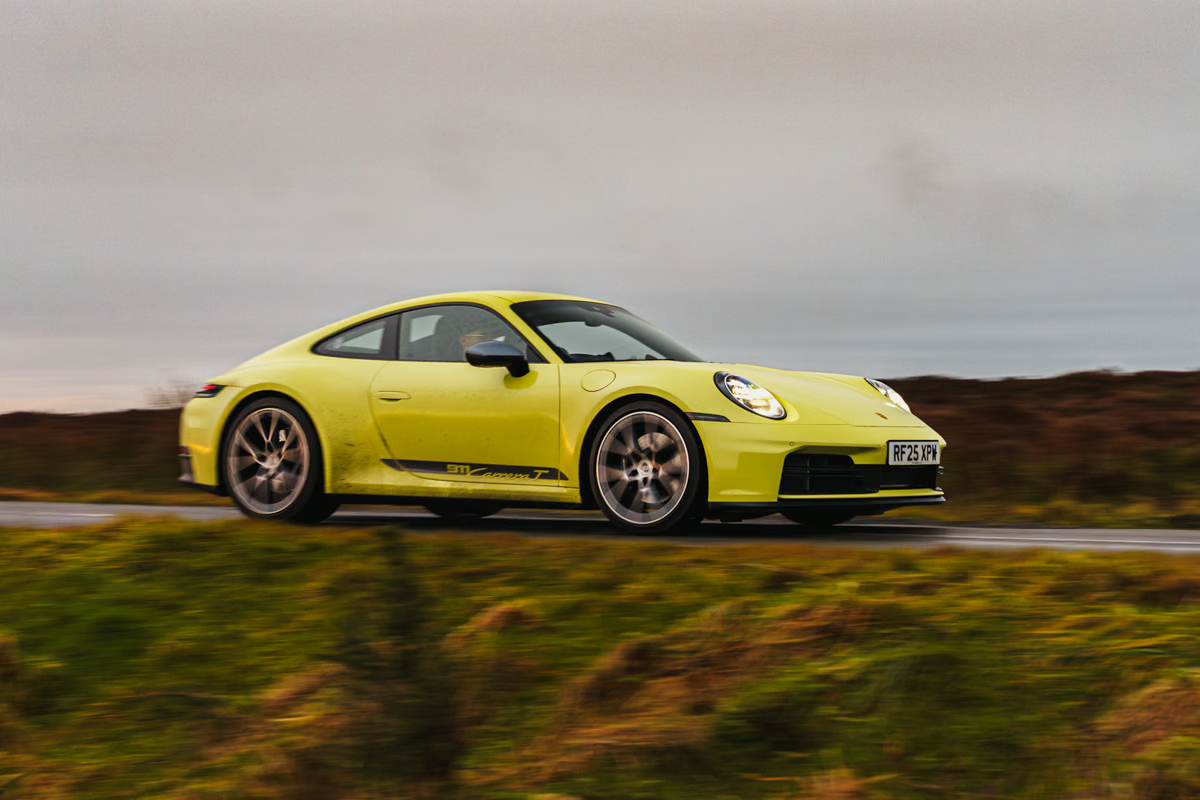
The 911 Carrera T demonstrates this better than almost any other Porsche. It is not truly lightweight, and it certainly won’t embarrass a GT3. But it is engineered just enough to make the standard Carrera feel faintly contrived, planting something in the mind of a certain kind of buyer that, left long enough, becomes impossible to shift. All the salesman has to do is ask what colour.
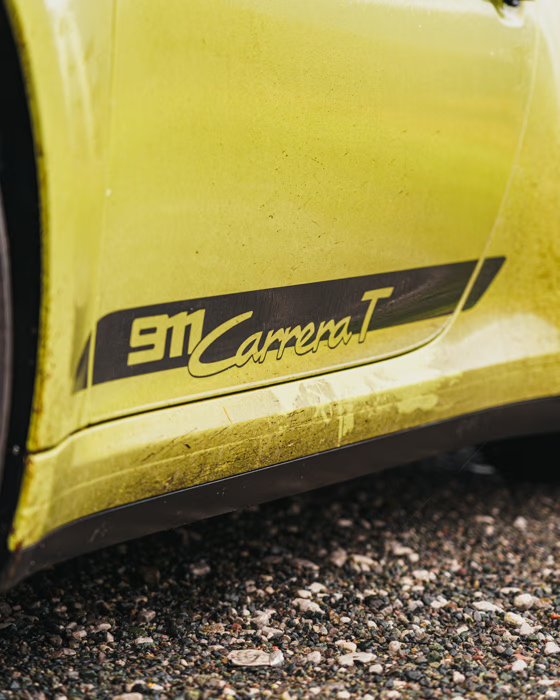
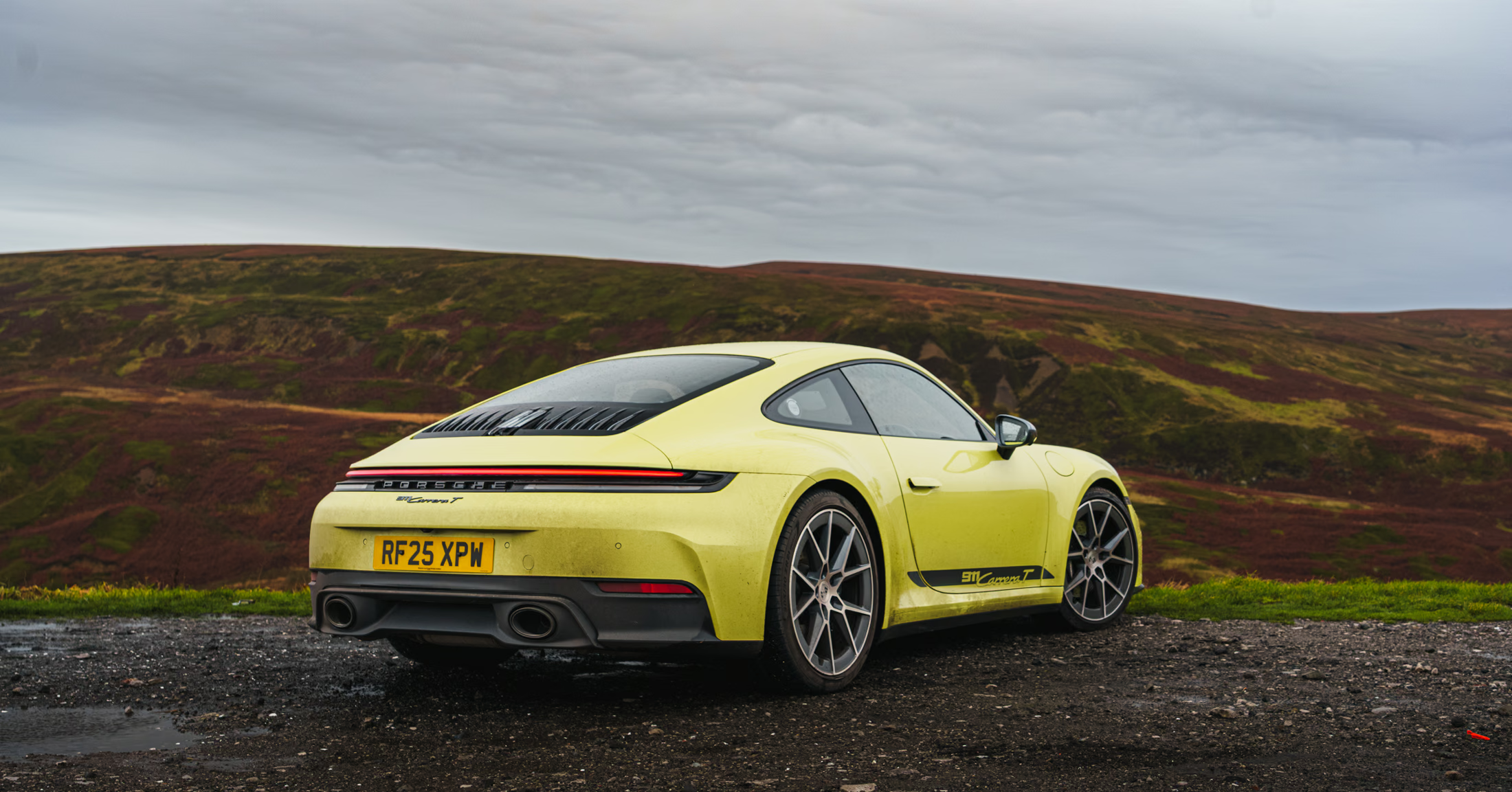
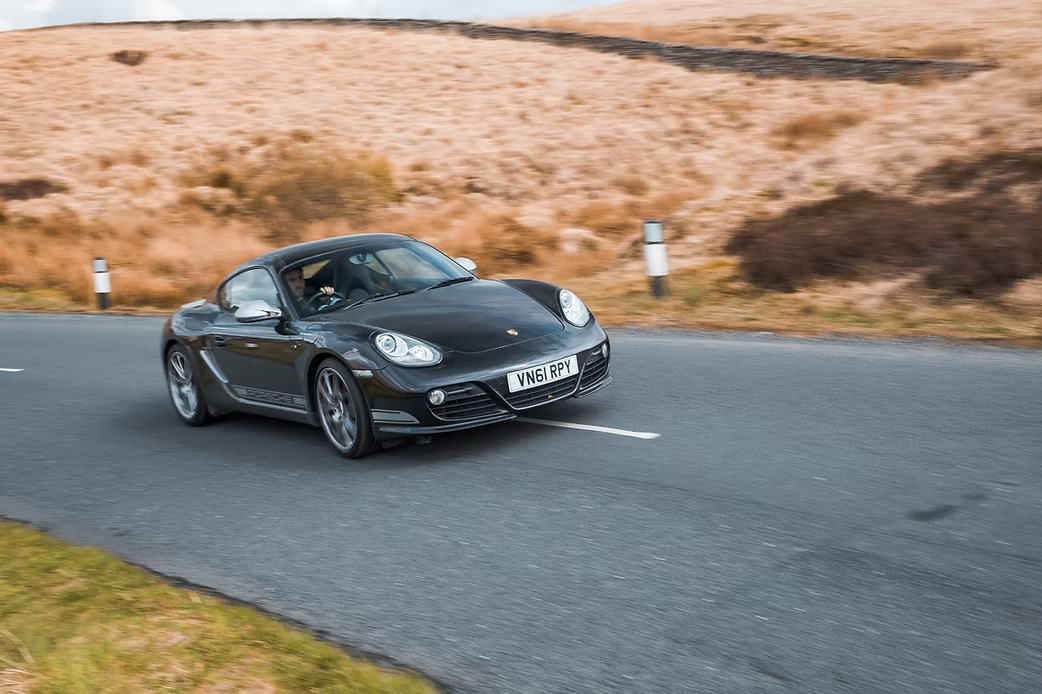
When it came to ordering my own 992.1 T, Steve at Porsche Edinburgh was instructed GT Silver, with a cloth interior, Viper Green stitching and matching seatbelts. You may notice the car in these images has more in common with the stitching than the paintwork – the stars never quite aligned when it came to capturing my car. The press fleet 992.2 was the best we could do, photographed in association with Gok’s Car Lounge. We trust you’ll forgive the substitution.
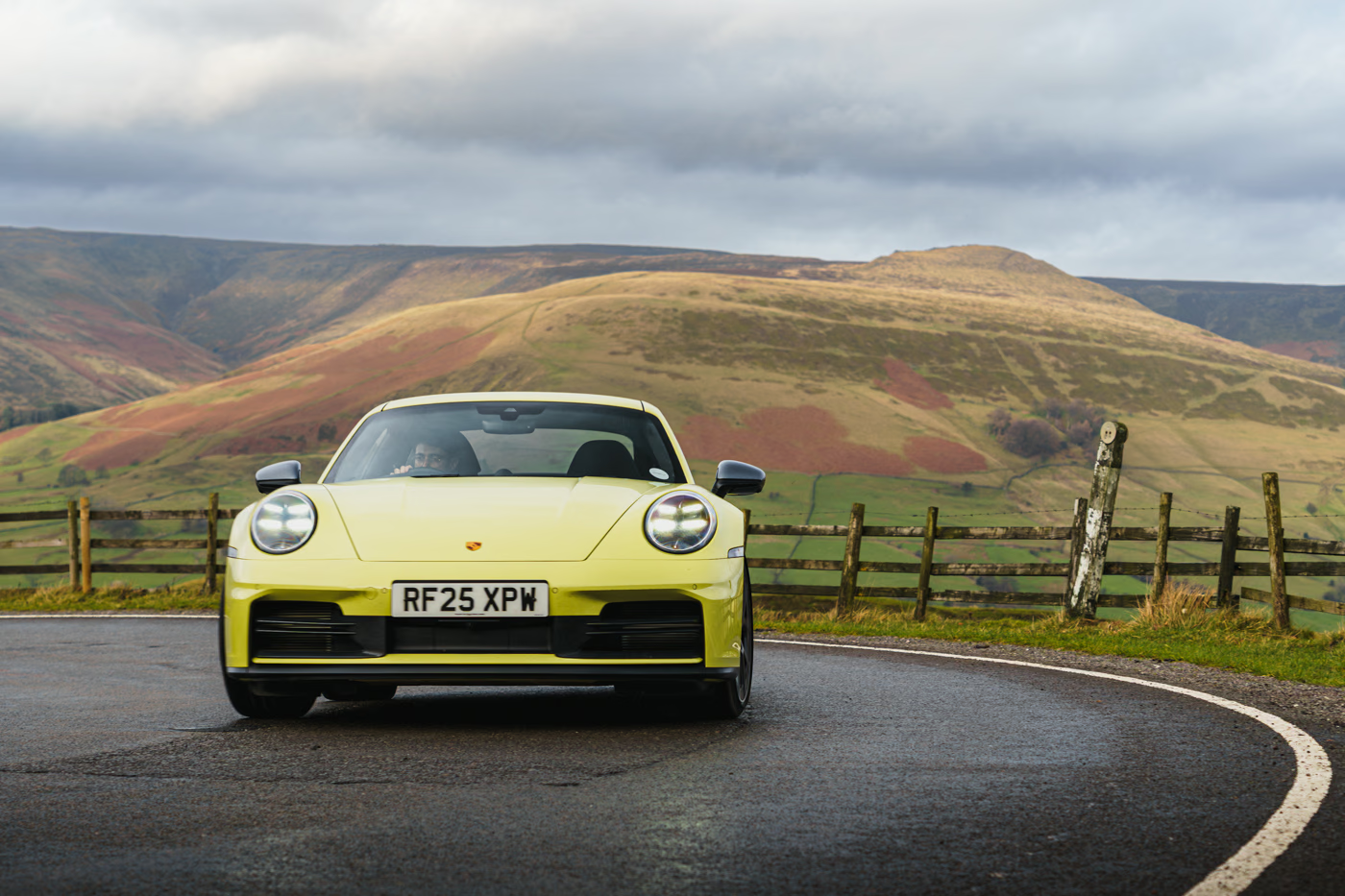
For context, my garage is not exactly short of Zuffenhausen reference points: a manual 992.2 GT3 Touring, a 992 GT3 RS, a 996.2 GT3 and a 996.1 GT2, with more 997s and 991s behind me than I can sensibly list here. The Carrera T had a high bar to live up to.
The first surprise was the soundtrack. I expected it to sound like a Carrera, because that is fundamentally what it is. But from inside the cabin it had a dry, hard-edged bark when you really opened it up. Not GT3-level, obviously, but close enough to make the connection. It sounded mega.
The second surprise was the performance. The 3.0-litre turbocharged flat-six officially makes 380bhp and 331lb ft of torque, which does not sound like a great deal in a modern 911. A current BMW M340i offers more, let alone an M3. Yet in the real world, the T always felt much stronger than the numbers suggest. Peak torque is delivered before 2000rpm is even on the dial, but the throttle response is sharp, the engine keeps pulling to a lofty 7500rpm redline, and the soundtrack does enough to make you forget there are two turbos involved.
There is an old line about Porsche quoting the lowest output from a batch of bench-tested engines. I have no idea whether it is true. What I do know is that I have never driven a new Porsche that felt anything other than faster than it should.
The ride was firm – that much is not in dispute. When the 992 T first came out, a number of journalists called it too stiff for the road. I never saw it that way. Most of my driving is on Scottish A- and B-roads – narrow, twisty, usually empty – and on that kind of road the T felt genuinely fantastic. There was very little body roll, a sharp, keyed-in front end, and that characteristic 992 precision you notice immediately if you are arriving from an older generation. It was beautifully balanced, and never once did I find myself wishing for something softer when pressing on.
If there is a criticism, it is that the ride is a little too firm and busy for this to be a true one-car daily solution. The sporty feel is fantastic when you want it, but can get tiresome in traffic or around town. Not a deal-breaker – just worth knowing.
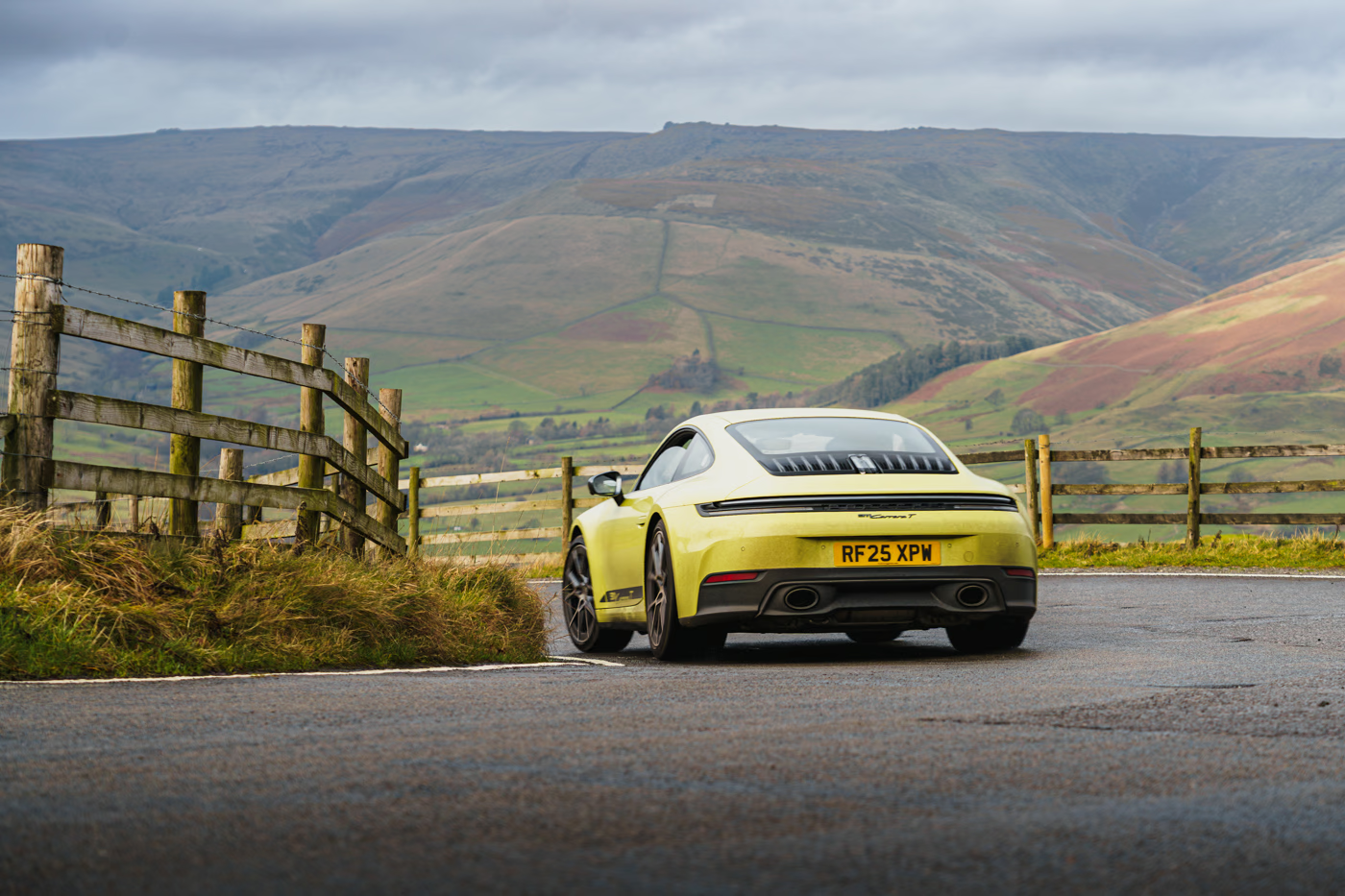
The steering deserves equal praise. I have little time for the lemmings online who insist that electric power steering is shit. That is absolute nonsense. Porsche EPAS is ninety-five per cent of what you would get from an old 996 GT3. It doesn't quite have that really intense level of granular feedback, granted, but it's beautifully wired. You know exactly what those front wheels are doing – even basic-load scenarios feel authentic, such as negotiating a roundabout. The optional Alcantara wheel was wonderfully tactile too.
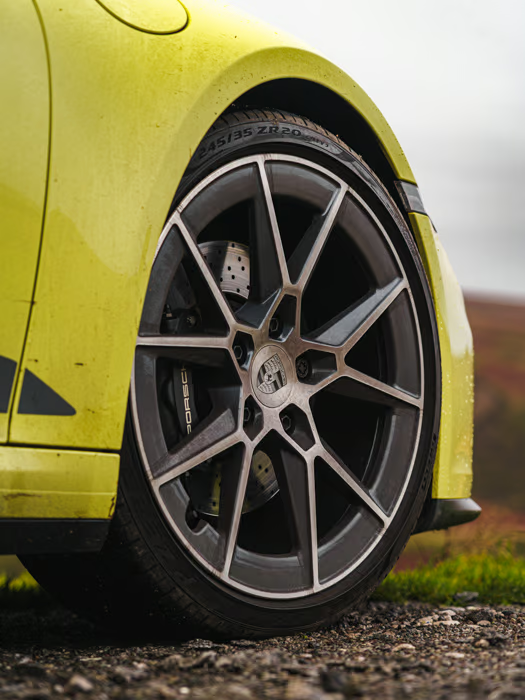
The steel brakes were a conscious choice over carbon ceramics – this was primarily a road car, and I never intended to take it on track. Prior experience with my 718 Cayman GT4 RS at Croft proved they might have shown weakness there; the step down from carbon ceramics to steel is night and day on circuit, and you feel it immediately. On the road, none of that matters. The pedal feel is progressive and confidence-inspiring, and unless you are going absolutely bananas on a racetrack, they are more than adequate.
Of course, the reason most people ordered a Carrera T in the first place had nothing to do with the brakes, and everything to do with it being the only 911 without a GT3 suffix you could specify with three pedals. Yet the gearbox was my single biggest bugbear about the car.
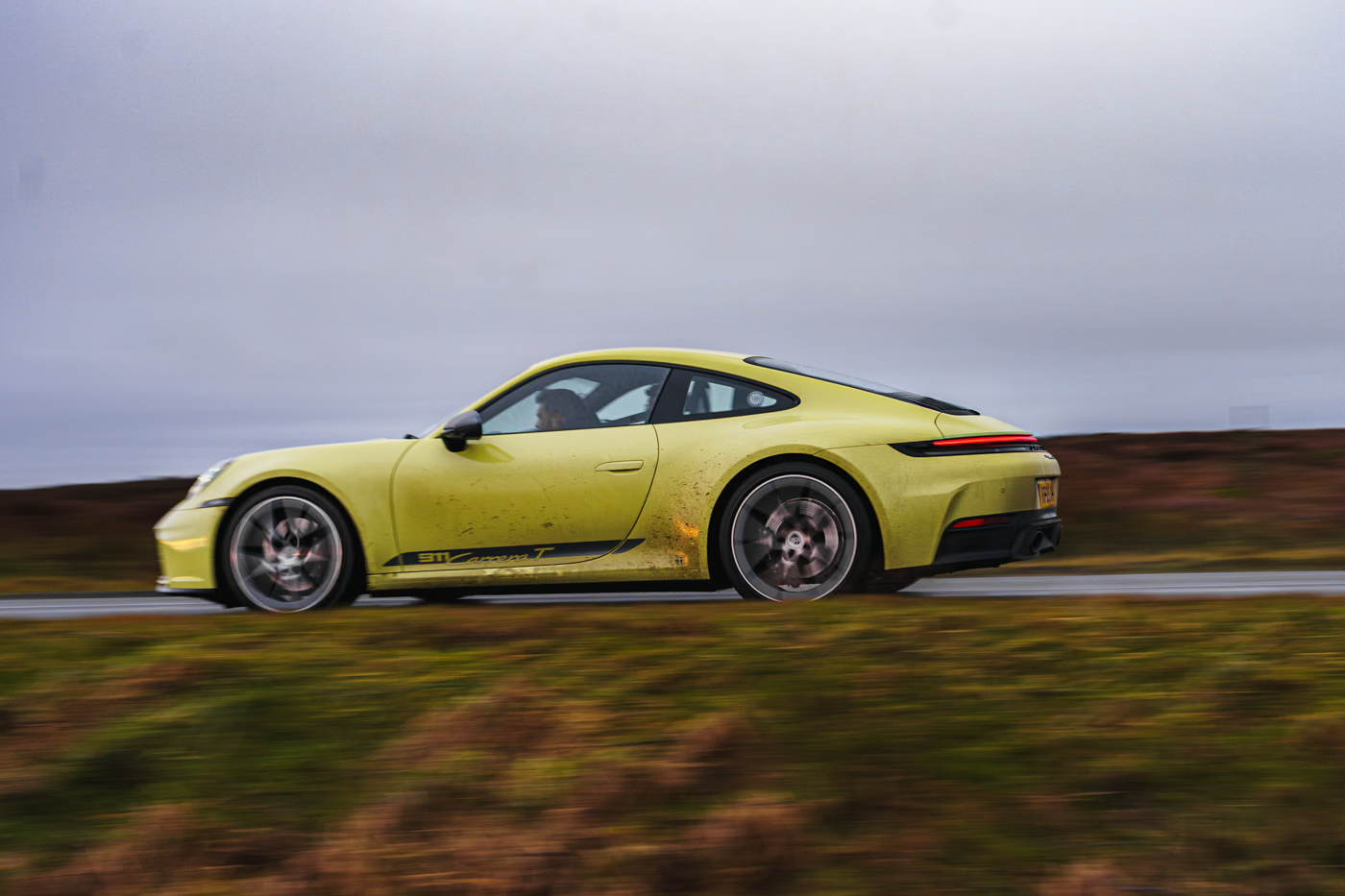
Its operation was faultless in almost every respect. The throw was short and positive, with a mechanical precision to the gate that rewarded accuracy. Light enough to use in town without becoming tiresome, weighty enough to feel like it meant something. The pedals were well-spaced, the clutch progressive and easy to modulate. In isolation, it was a genuinely lovely gearbox to use.
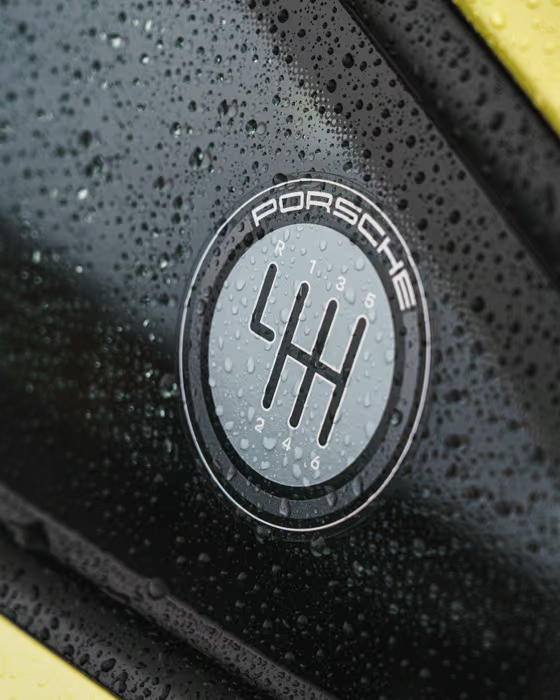
The problem was the seventh gear. It never felt anything other than a gimmick. The overdrive rationale makes sense on paper – motorway cruising, fuel economy – but in practice it felt like an afterthought, because it almost certainly was. In any six-speed Porsche, the lever springs to the middle of the gate in neutral, primed between third and fourth. Porsche appears to have taken that same mechanism, that same centring spring, and simply bolted a seventh ratio onto the top of the existing architecture without reconsidering the gate geometry to suit. Coming down from seventh, the spacing of the ratios is that tight the spring actively fights you toward the wrong ratio.
Even at the end of our time together I was still regularly catching fourth when trying to change down from seventh to sixth. There is a real knack to getting it right, but not one I particularly enjoyed. Clearly I was not alone, because Porsche reverted to six gears for the 992.2. That said, I would still take the offending article over a PDK, seven days a week and twice on Sundays.
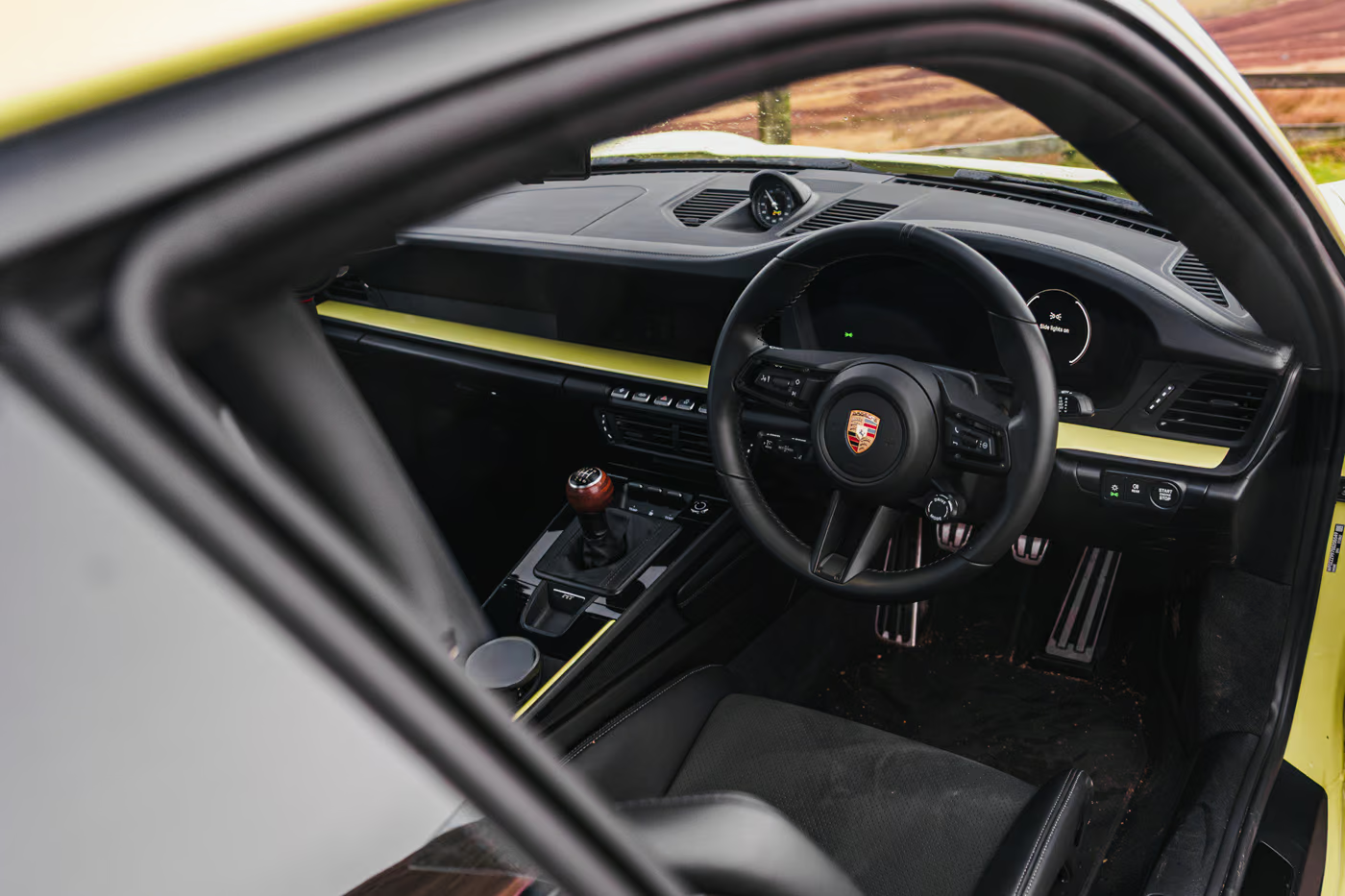
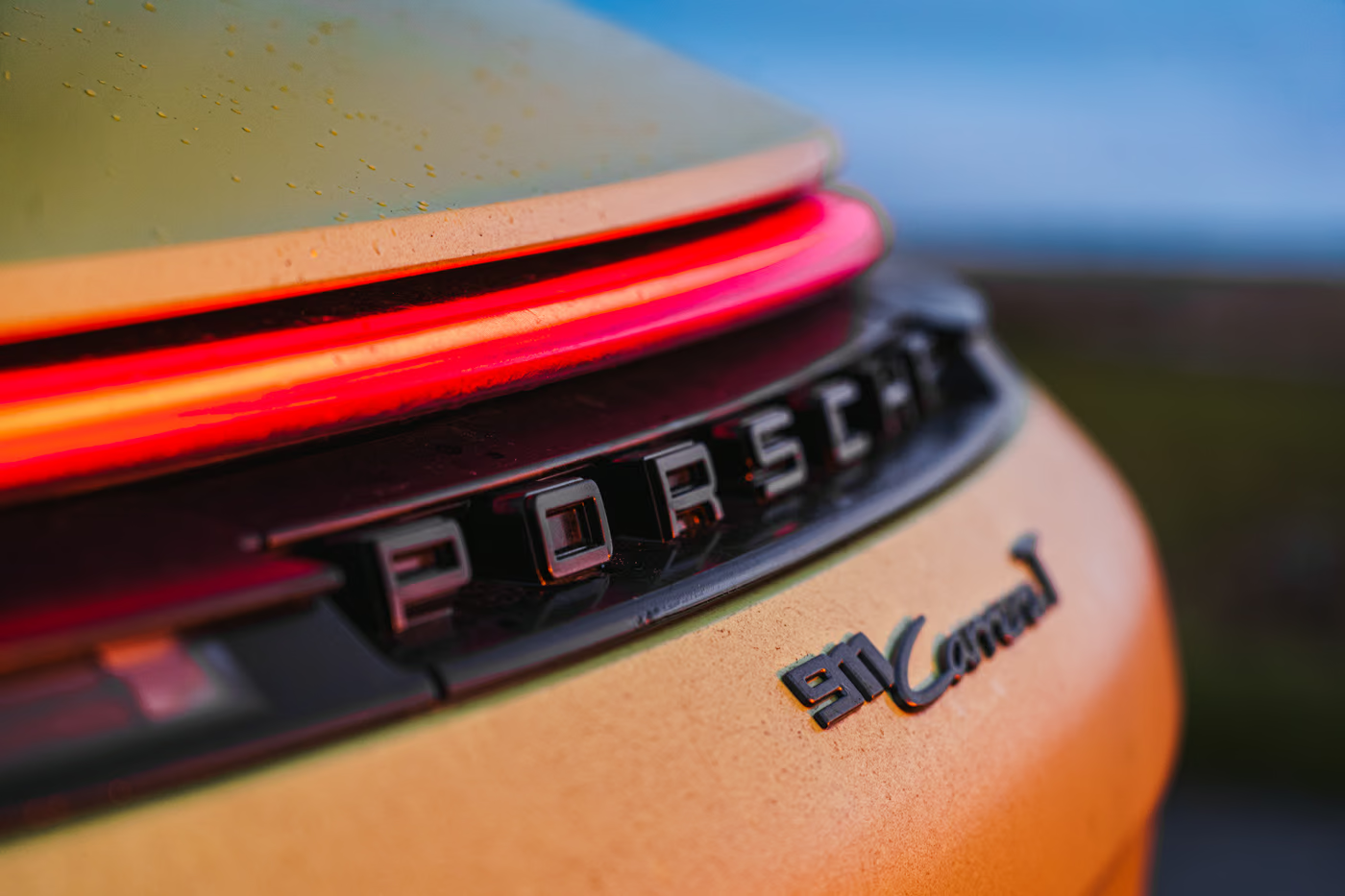
Whilst we’re nit-picking, something else the 992 initially caught flak for is its footprint. Yet the trade-off is rarely talked about – the leap forward in ergonomics. Gone are the days of rubbing shoulders with your passenger, with an abundance of luggage space and stowage to boot, yet visibility remains excellent. The aesthetics are also a huge leap forward over the 991, which never quite had the design to match a six-figure price tag.
Obviously, the first thing I do when I get in any 911 is slam the seat to the floor and pull the steering wheel out towards my chest, fixing that classic driver's driving position that always feels faintly racing. In a 992 you can get the seats really low, especially with the 18-way adjustables optioned, yet they never felt anything other than super comfortable and super supportive.
Such credentials were put to the test on a classic road trip. Scotland to the Nürburgring in a single push, collecting the editor of a certain car magazine at Leeds along the way.
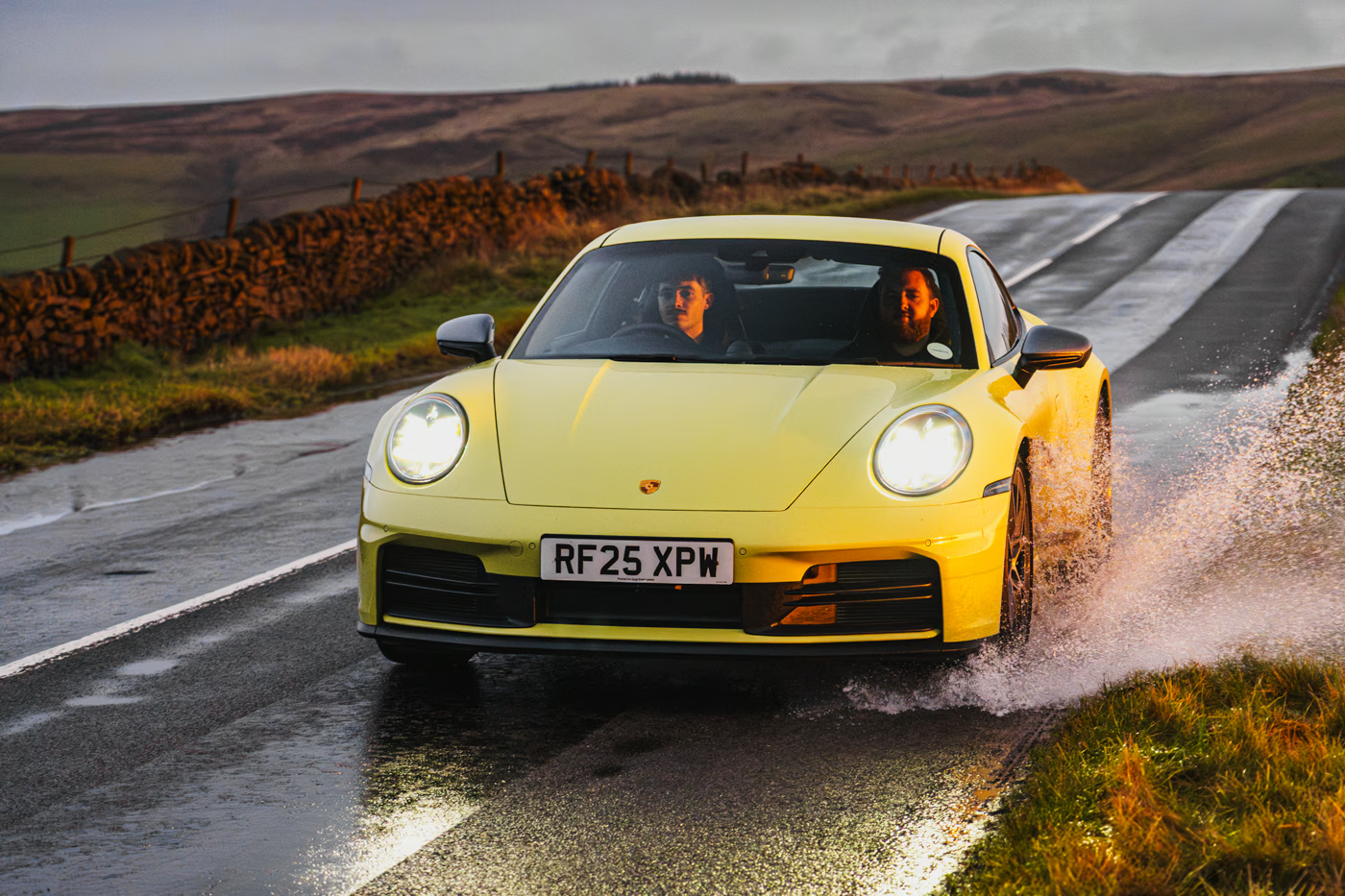
Once across the Channel, it became immediately apparent how well-suited the T was to covering ground. The firmer suspension made sense on continental roads, and even the tyre roar – forever the Achilles heel of touring in a 911 – lessened once on French soil, despite the T's sound-deadening diet.
In convoy with us was RUSH adherent Kotto in his 420bhp Jaguar XKR. Despite the big cat having the advantages of a slipstream and a single occupant, the Porsche comfortably outpaced its pursuer once we reached the autobahn. After a few rock-steady pulls beyond 175mph, our companion could no longer be seen.
It reaffirmed my belief that Porsche is beyond conservative with their numbers. I wouldn’t be surprised if the true bhp output began with a four.
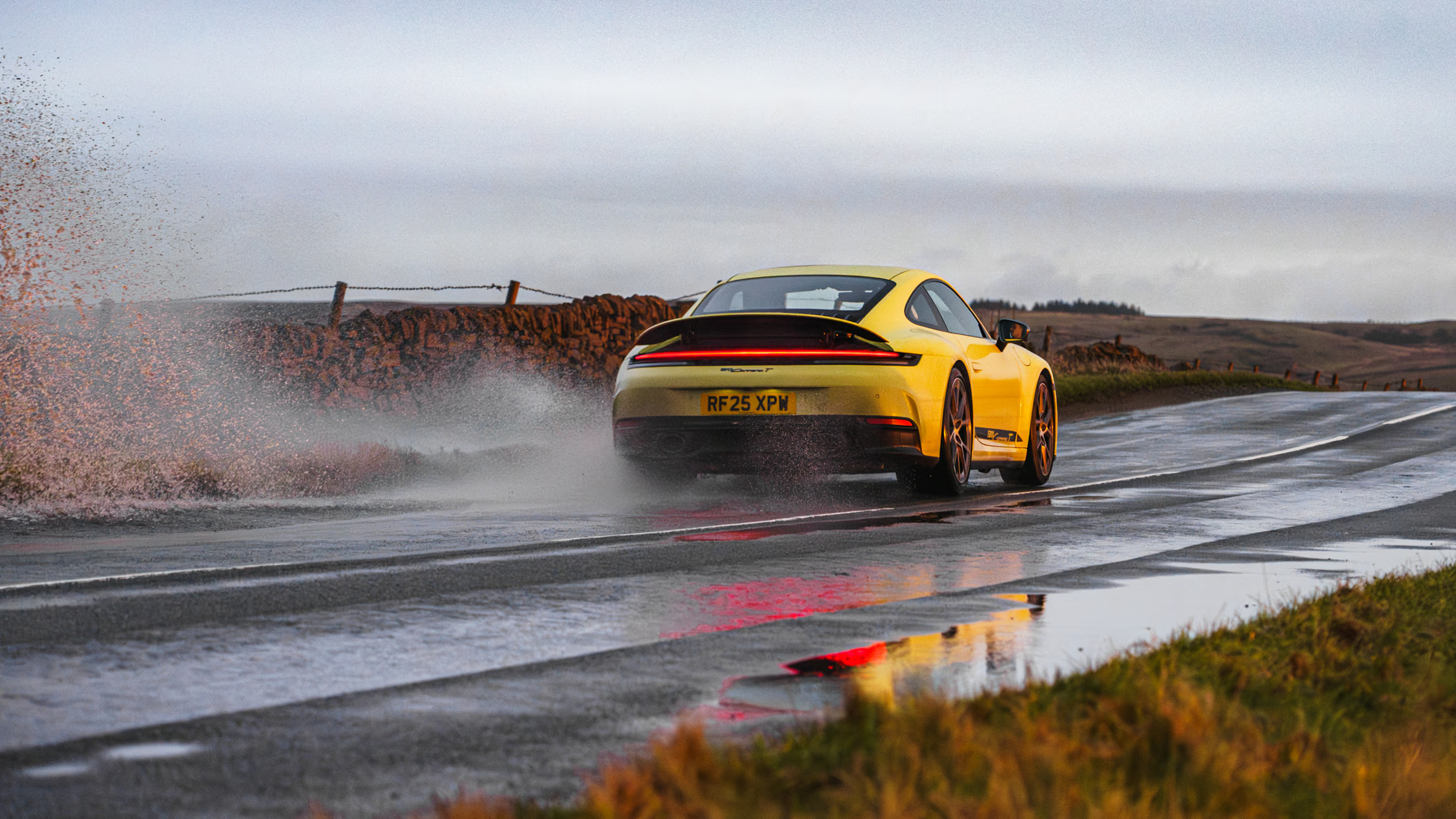
Sat in the queue for that evening's Touristenfahrten, surrounded by the usual mix of the sublime and the completely unhinged, it wasn't hard to imagine the T's nose going light over Pflanzgarten or diving into the Karussell. But that job was contracted to my Ring rat E92 M3, which resides in the capable hands of 24/7 Performance.
The Porsche was pressed back into service two days later, a mild hangover and an intense weekend lapping the circuit already weighing heavy on the eyelids. We reached Calais without fuss, but the extended pause at the Eurotunnel allowed the fatigue to truly catch up. Craig set the pace from Folkestone, but by the time we parted ways, all I wanted to do was get home as quickly as possible. The T answered the call with a blend of comfort and engagement at speed that made the final, weary leg a drive to savour rather than endure as the sun went down, that dry bark urging me on every time the needle swept past 6000rpm.
Back home, I checked the trip computer and was frankly astonished. This fully laden 182mph sportscar with two sizeable occupants aboard, air con working overtime, had managed nothing less than 34.4mpg across 1500 miles in which the speed barely dipped below three figures. I never buy cars for fuel economy. But that caught me off guard and I can easily see a more restrained driver nudging it into the forties.
It is a reminder of what Porsche has perfected with the 911 – a car that absorbs punishment without complaint and costs a fraction of its exotic rivals to maintain. Take one to a track day and the bill at the end is fuel and tyres. Take a Ferrari and come home to five figures of workshop receipts. I know, because I have done both.
With the spotlight trained so firmly on the GT cars, the humble Carrera has gradually lost its place as the 911 enthusiasts aspire to. The 992 Carrera T restores the lustre. It rewards the right kind of owner. Not the one chasing figures. The one who listens to the voice inside their head.



.svg)

