-01.svg)
.avif)
So what’s new for Rimac’s first try at a more focused version of their first car? To start, power goes up to 2,078bhp, fed by a 108kWh battery. The base Nevera “only” has 1,888bhp from its 120kWh battery. Underpowered, right? The new R also goes through a much needed weight loss regime, shedding 25kg compared to the standard Nevera. It's still not a feather weight however, weighing in at 2,265kg.
That sounds like a lot, but it’s not far off the magic 1:1 hp to kg ratio, and offers an impressive 917bhp per tonne.
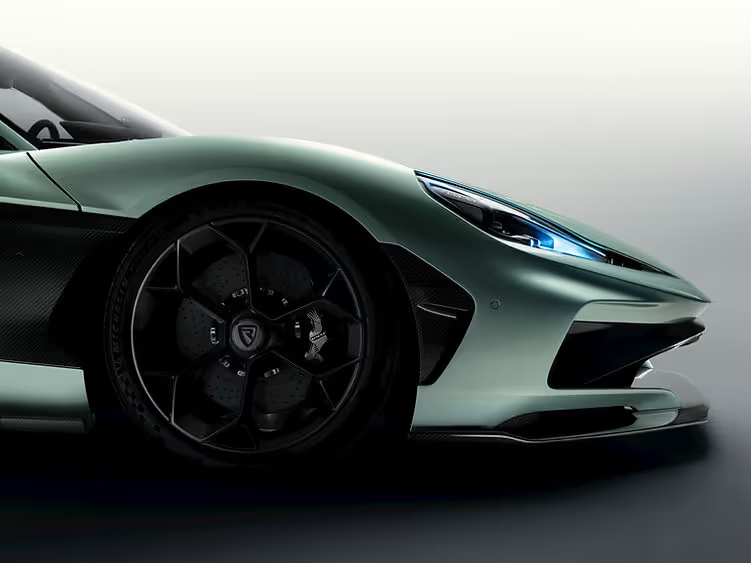
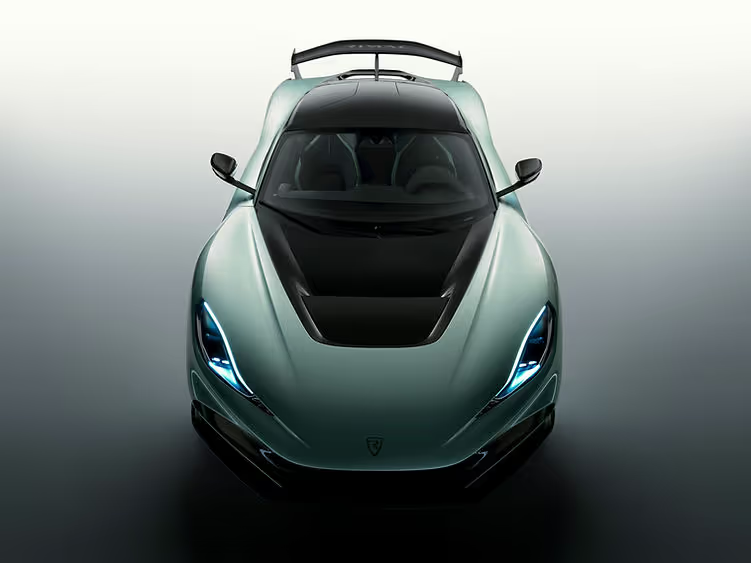
That is not all though, the chassis underneath may be the same but that did not stop Rimac from overhauling the design. The front of the car is now one complete piece all the way to the A pillars. The front end was the least intimidating factor of the Nevera in my opinion, and the R solves that. The design is now more mean and angular, with new lines around the headlights. There is also active aero to improve downforce, with a flap that can pivot to increase and decrease drag on the car. The R also gets new air intakes and a larger splitter.
The side of the car has been slightly tweaked, with a new and larger GT3 RS-like cutout behind the front wheel arch to help dissipate air from the wheel well. The wheels are staggered in size, with front 20” rims at the front and 21” at the rear, all wrapped as standard with Michelin Pilot Sport Cup 2 tyres, as opposed to the Pilot Sport 4 S on the regular Nevera.
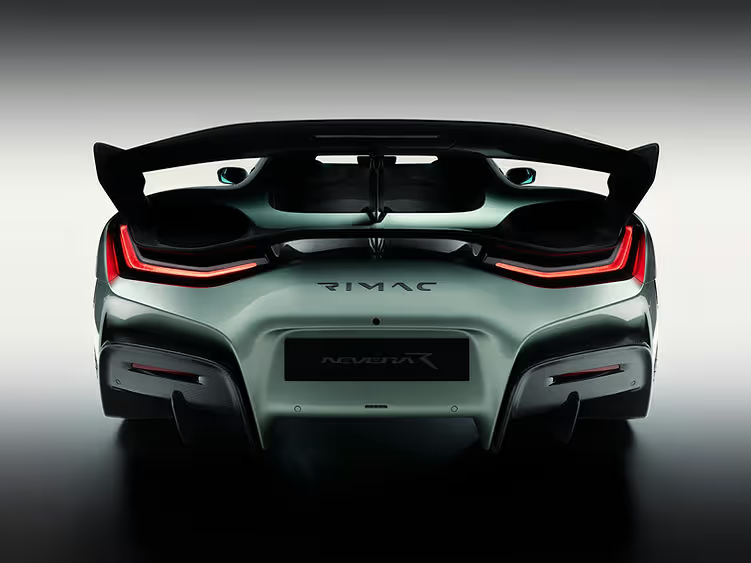
The rear of the R has also been heavily reworked, with a fixed spoiler standing out as the main design difference between the two flavours of Nevera. The diffuser has also been heavily reworked, with the R gaining more prominent Venturi tunnels to increase stability and downforce at higher speed. Combining all these improvements to downforce, the Nevera R now makes 400kg of downforce at 217mph. The extra downforce does not equate to a lower maximum speed though, as the R tops out at the same 256mph as the regular model.
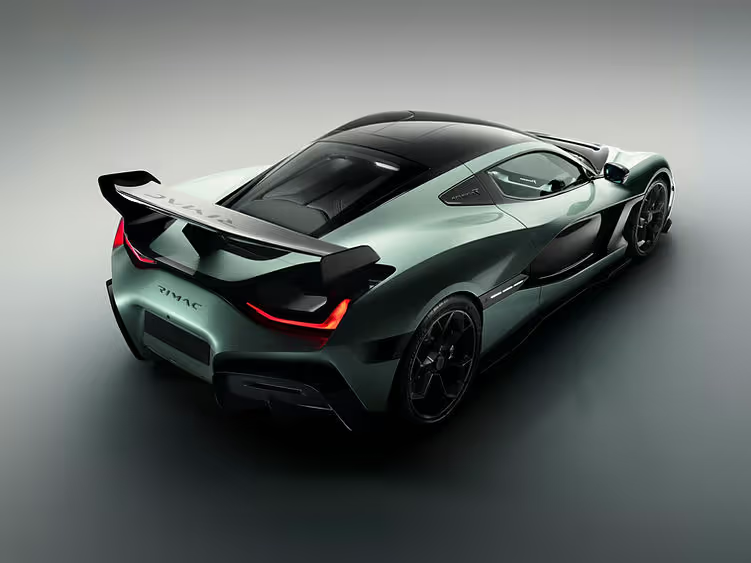
Mechanically, there is a revised torque vectoring system to maximise the newfound grip from the Cup 2 tyres, along with a drift mode for trading traction for power slides. All the improvements to the drivetrain help the Nevera R accelerate from 0-60mph in a scarcely believable 1.74 seconds. It reaches 124 mph in just 4.38 seconds, completes the quarter mile in 8.23 seconds and will hit 186 mph in 8.66 seconds. It is not all about straight line speed though, with the Nevera R being 3.8 seconds faster than the regular Nevera around the Nardo Handling circuit.
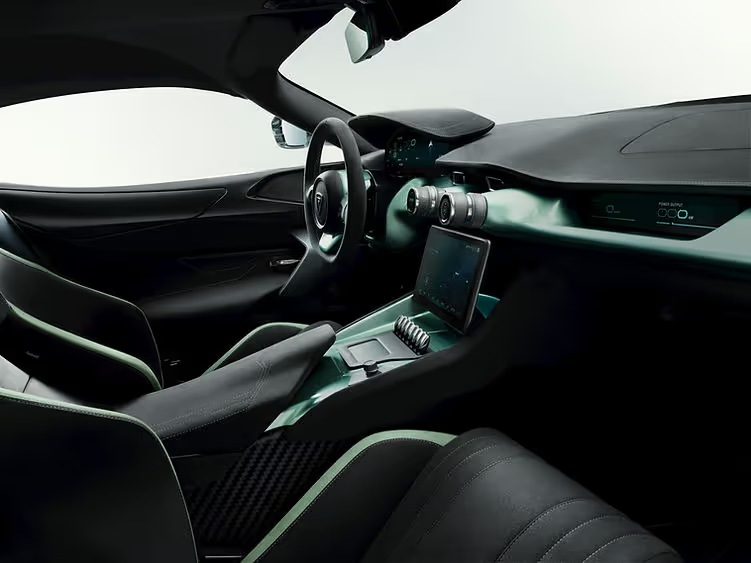
The interior of the R largely remains the same, although you now have the option to get the lower part of the dashboard in a body coloured finish. There is plenty of Alcantara and carbon fibre on show, with a passenger’s display so that they can see the car’s performance stats in real time. Only 40 of the remaining Nevera build slots will be dedicated to the R variant, and we can expect a great degree of personalisation to be seen on each one.
Touring comfortably between circuits is a must for the Nevera R and although the battery is 12kWh smaller than before, Rimac claims that the new unit is more power dense and efficient than before. While no WLTP driving range has been announced yet, we’re expecting around 280 miles off-track.
The Nevera is already an impressive hypercar with incredible performance stats, and the more focussed Nevera R turns it up to 11. With a price tag of around £2.3 million, the R would set you back an extra £300k when compared to the standard Nevera - but who's counting anyway? Rimac continues to show that hypercars can continue to perform with their style and substance, regardless of fuel type.



.svg)

