-01.svg)

Rear stability is further aided by the addition of a new anti-roll bar, which boasts a stiffness of 85 Newtons of force per millimetre of movement. The spring rates have been adjusted to match, and now require 80N/mm of movement. While the chassis has been significantly overhauled, the engine and drivetrain are unchanged, with the five-cylinder turbocharged engine continuing to develop 394bhp and 369lb-ft (500Nm). 0-62mph takes 3.8 seconds, and the RS3 Competition Limited boasts a top speed of 180mph.


The power is distributed to all four wheels via the quattro all-wheel drive system with a limited-slip differential on the rear axle. The set-up allows for mechanical torque distribution at the rear, and brake torque vectoring at the front making use of the standard-fit carbon ceramic discs. The exhaust system has been modified for use in the special model with the flaps in the pipework opening lower in the rev range than before, meaning the five-cylinder soundtrack can be enjoyed to the fullest in the Dynamic, RS Performance, and RS Torque Rear (drift) driving modes. Owing to a reduction of sound deadening material on the firewall, more intake noise enters the cabin than in the standard model.
Visual upgrades go alongside the hardware tweaks, with the RS3 Competition Limited getting a new front splitter, as well as retro RS-badging, and an enlarged grille featuring three inlets to pay homage to the Sport quattro of 1984. Elsewhere, carbon fibre is found on the grille blades, double-stacked canards, sills, door mirrors, roof-mounted spoiler, above the rear diffuser, and on the engine cover. The headlights get tinted lenses, and a new running light animation plays when the car is locked or unlocked: the LED segments illuminate in a 1-2-4-5-3 pattern, representing the firing order of the 5-cylinder engine. Neodymium gold 19” alloy wheels are found within the swelled arches, all wearing Pirelli P Zero tyres.

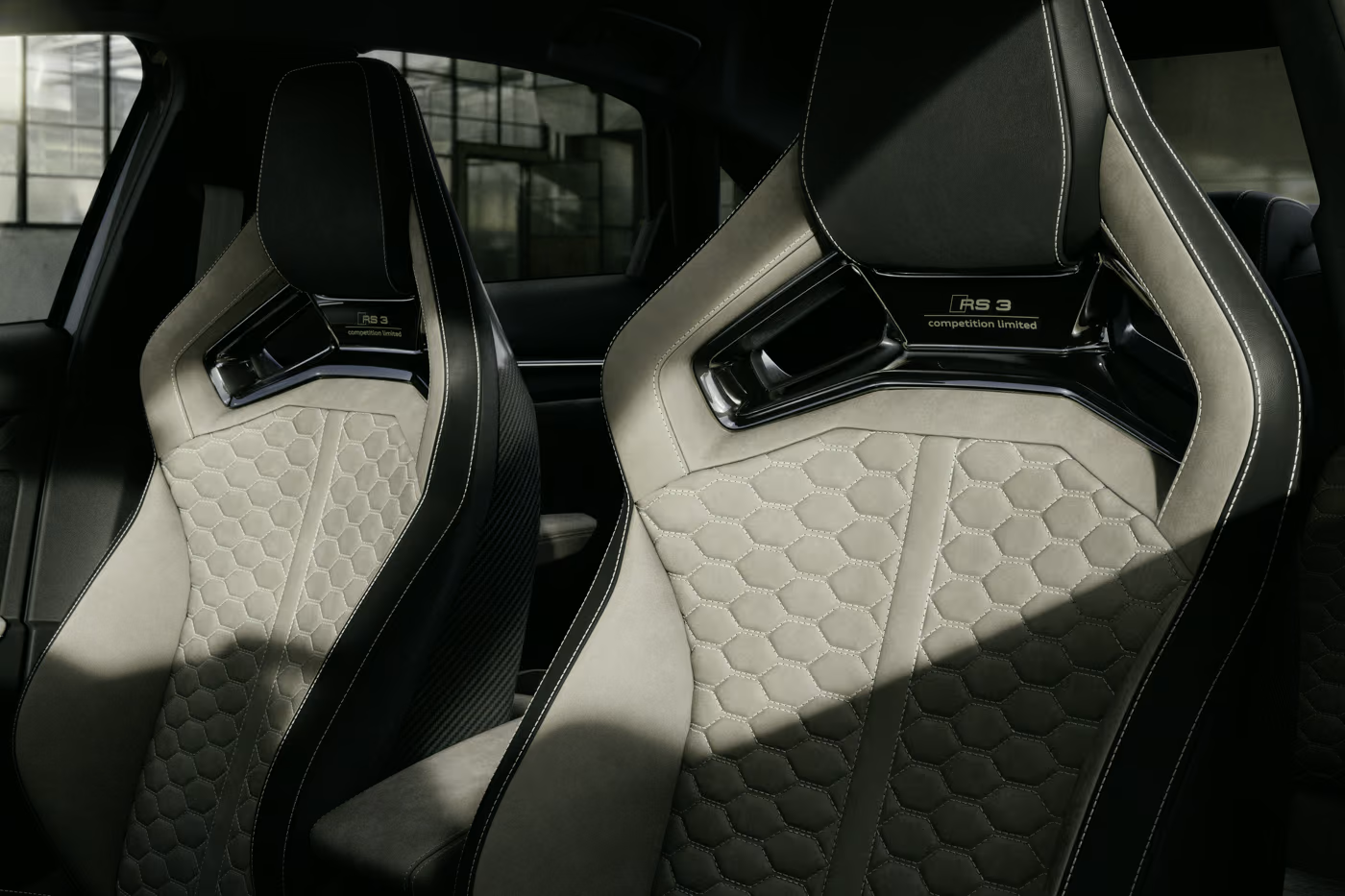
Inside, carbon-backed two-piece bucket seats are clad in black leather and Neodymium gold microfibre, with heating as standard. The dark/light colour scheme continues throughout the cabin, with ginger stitching found on the microfibre-wrapped steering wheel, and accentuating the diamond pattern on the seats. The digital interfaces also receive a makeover, with white dials harking back to the RS2 Avant. Live engine data such as output, boost pressure, and fluid temperatures can all be shown on the drivers’ display. The model name appears on the seatbacks, as well as on a numbered plaque on the centre console.
While 750 units will be available worldwide in hatch and saloon body styles, only 11 are destined for the UK - all in five-door form. Pricing begins at £92,855 with deliveries commencing in the fourth quarter of 2026. There are conflicting reports at present, with some claiming the RS3 Competition Limited to be the final five-cylinder Audi, while others suggest the engine may yet have a future - should its maker rework it to comply with incoming Euro 7 emission regulations. Wherever the truth lies, if the RS3 is a guaranteed future classic owing to its unique powertrain, the RS3 Competition Limited has collector status assured already.



.svg)

