top of page

NEWS

Donkervoort P24 RS Offers 600bhp in a 780kg Carbon Wrapper – Driver Aids Optional

Craig Toone

By 

Images by 

Donkervoort

Published

26 Jan 2026

Donkervoort P24 RS Offers 600bhp in a 780kg Carbon Wrapper – Driver Aids Optional

Donkervoort P24 RS Offers 600bhp in a 780kg Carbon Wrapper – Driver Aids Optional

Dutch manufacturer's latest featherweight track machine achieves 769bhp/tonne courtesy of a twin-turbo V6, and can generate up to 2.3G of cornering force

Dutch manufacturer's latest featherweight track machine achieves 769bhp/tonne courtesy of a twin-turbo V6, and can generate up to 2.3G of cornering force

Dutch manufacturer's latest featherweight track machine achieves 769bhp/tonne courtesy of a twin-turbo V6, and can generate up to 2.3G of cornering force

Twenty years ago, Donkervoort made a name for itself by smashing the Nürburgring Nordschleife production car record, taking the crown from the Porsche Carrera GT by more than 15 seconds with the D8 RS. Crossing the line after 7 minutes and 18.10 seconds, that car had a mere 210bhp. Donkervoort's latest, the P24 RS, offers up to 600bhp from a new twin-turbocharged V6. And it weighs 780kg dry.

Building on the success of the F22, the P24 RS gains 100bhp over its predecessor while maintaining Donkervoort's customisation philosophy. Buyers can configure the car extensively – from driver aids to aerodynamic hardware – to suit their preferences.

In its purest form, the RS relegates ABS and power steering to the options list, and also forgoes stability control, instead offering switchable engine mapping and traction control. Drivers can choose between 400, 500, or 600bhp outputs, and when fully lit, the resulting 769bhp per tonne and 590lb-ft of torque are enough to fire the P24 RS from 0-124mph in 7.4 seconds and onto a top speed in excess of 186mph. 
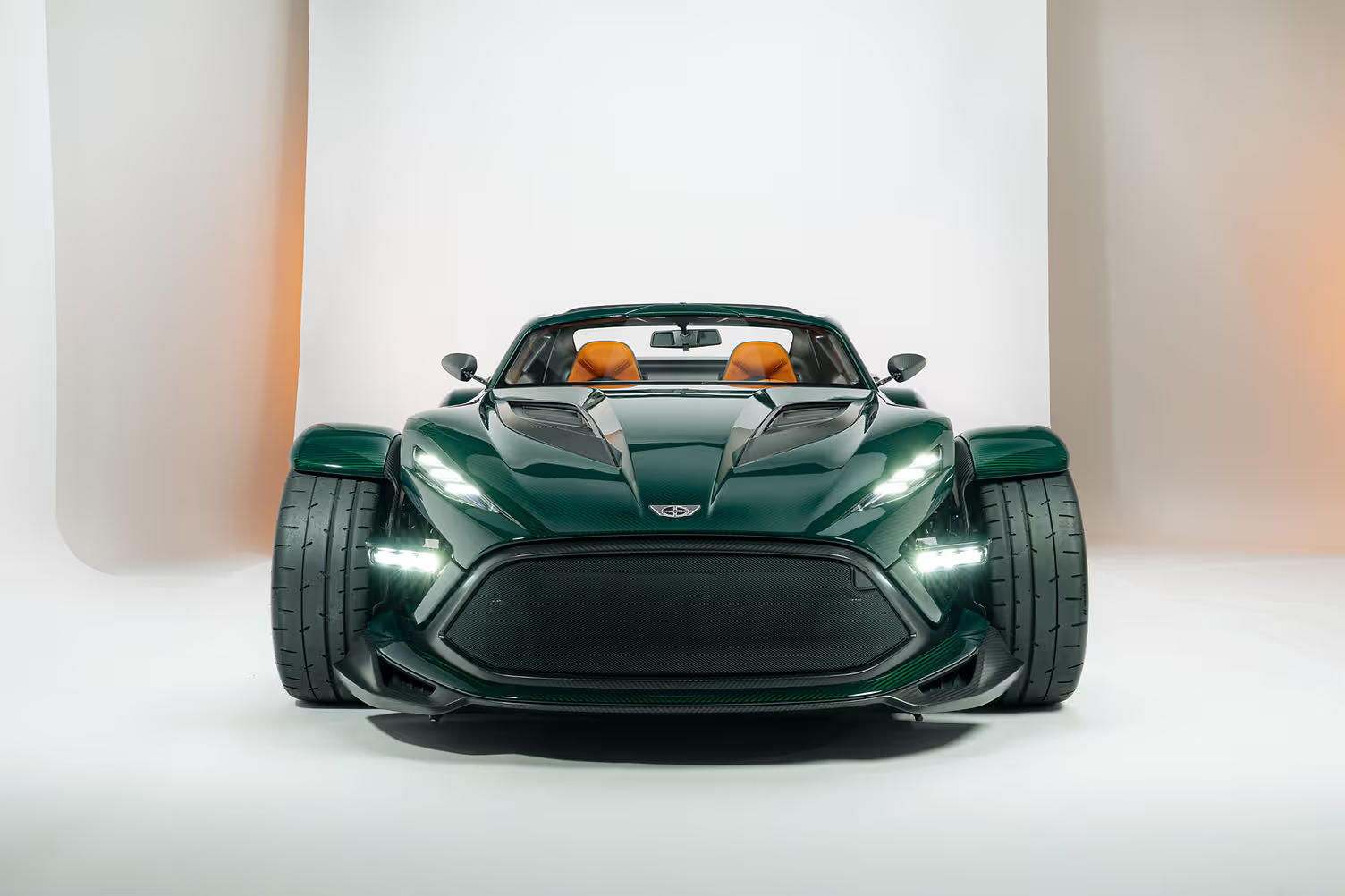

Donkervoort P24 RS front view showing exposed front wheels and swing-out Aero Blade headlights

While those figures are impressive, the most eyebrow-raising stat is the cornering performance, with the P24 RS claimed to generate up to 2.3G of lateral acceleration thanks to a combination of low mass, advanced aerodynamics, and mechanical grip. Employing double wishbones up front and a multilink arrangement at the rear, the suspension also features adaptive damping controlled from a rotary dial on the centre console. Hydraulic ride-height adjustment is available for ultimate trackday flexibility.

While we’re on the subject of G-forces, four-piston AP Racing callipers act on 330mm vented front discs to deliver 1.3G of retardation, with optional carbon-ceramic discs saving 2.1kg per corner. The wheels and tyres utilise a staggered setup – measuring 235/40 R18 front and 275/35 R19 rear – with custom Nankang CR-S tyres developed specifically for the car. 

With its long bonnet, exposed front wheels and cabin atop the rear axle, the P24 cannot hide the origin of its proportions, resulting in styling that's firmly in the Marmite category. Design boss Jordi Wiersma stated the aim was: "To make something much more modern and integrated, with elements from the past, so that the design was completely new, while also referencing our heritage.”
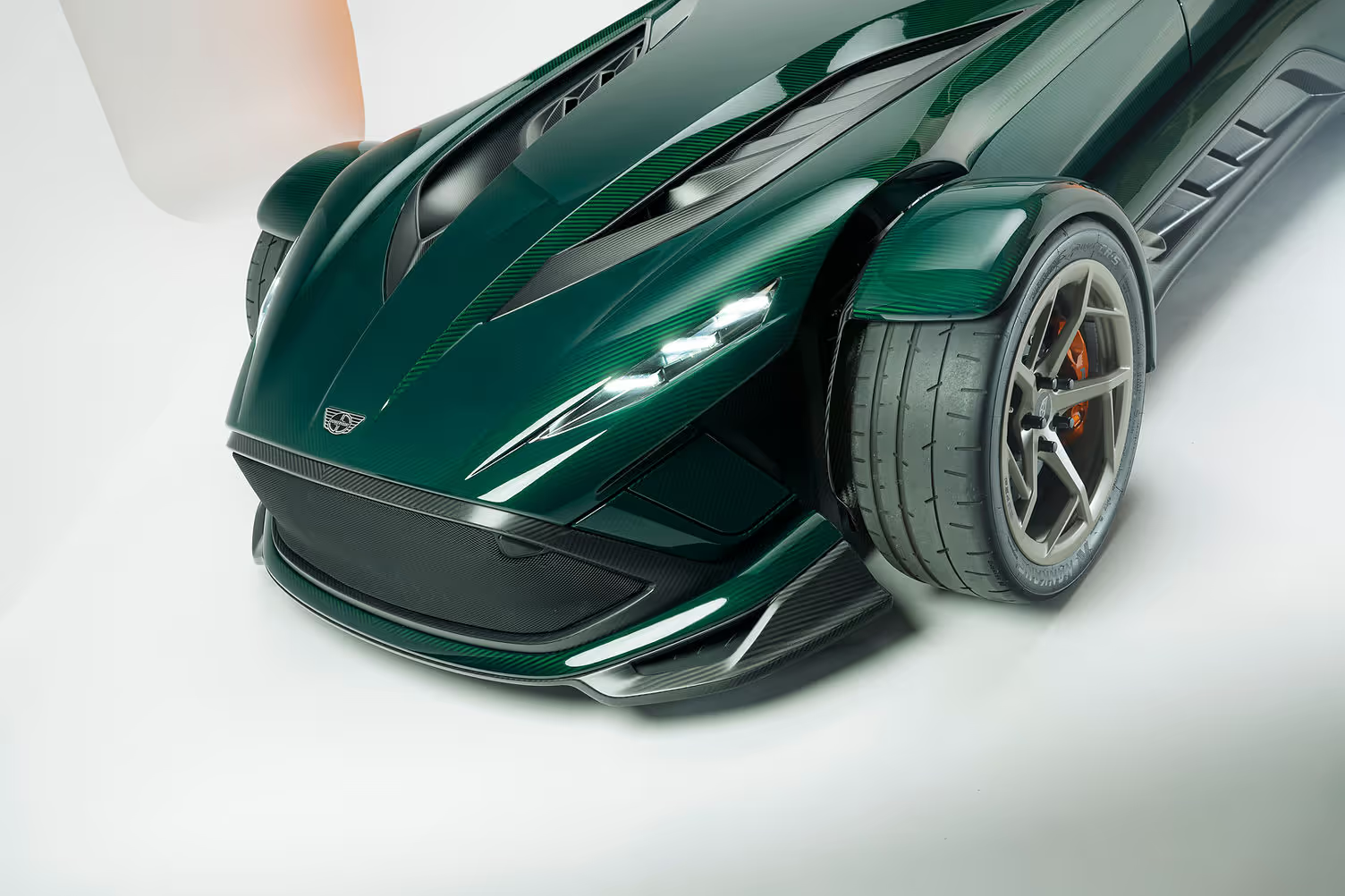

Donkervoort P24 RS front three-quarter view showing optional front wing elements and swing-out headlights

Wiersma added “There’s a reason open-wheel racing cars let drivers see the front wheels; it makes the car easier to place on the track. But open wheels pose challenges. The airflow around the wheels is very complex. We made a lot of effort to control the air wake to minimise drag and maintain enough downforce to keep the car aero balanced.”

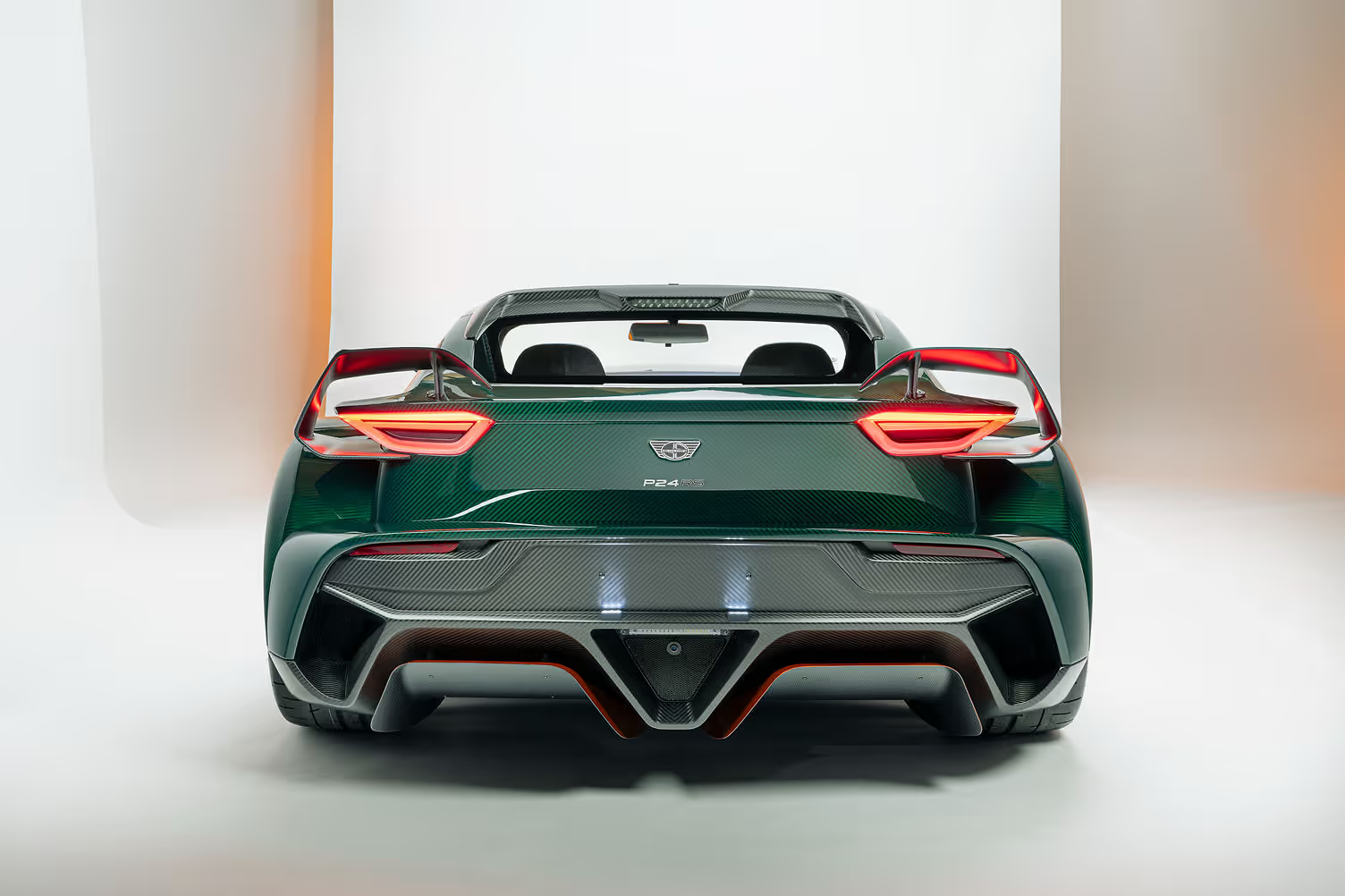
That work involved Formula 1 consultancy AirShaper to refine the P24's aerodynamics, concentrating on increasing ground-effect downforce whilst reducing drag. Contributing to this are industry-first swing-out Aero Blade headlights. These hide the main-beam units behind the grille until needed, deploying horizontally to direct airflow over suspension components. LED daytime running lights and indicators sit atop the carbon bonnet, while a removable aero kit adds 90kg of downforce at 155mph. Comprising front corner wings with titanium scuff blocks and rear corner wings positioned above a double diffuser, each element of the kit attaches via three bolts for quick removal between road and track configurations.
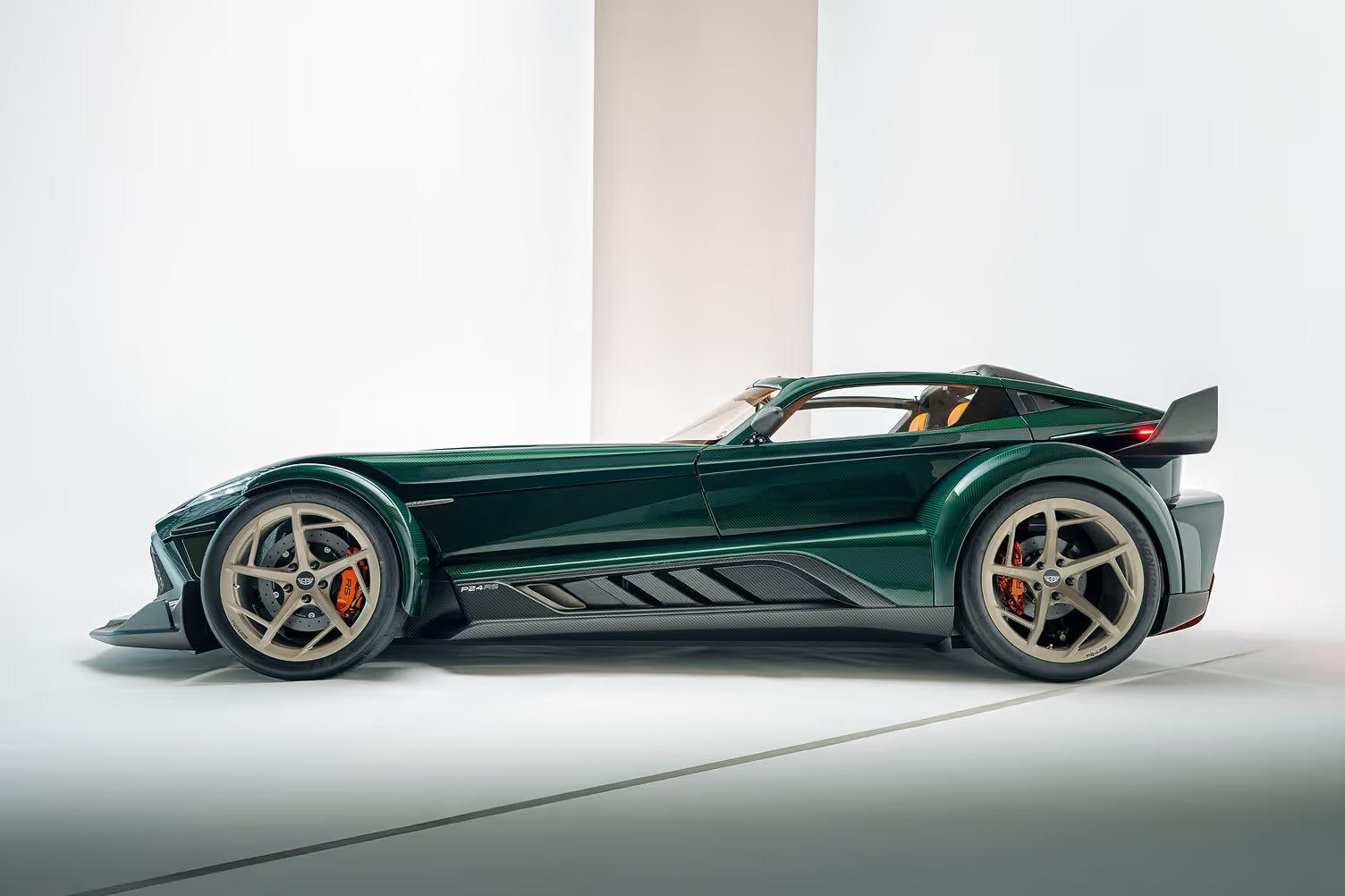
Donkervoort P24 RS side profile in green with optional aero kit and cream alloy wheels
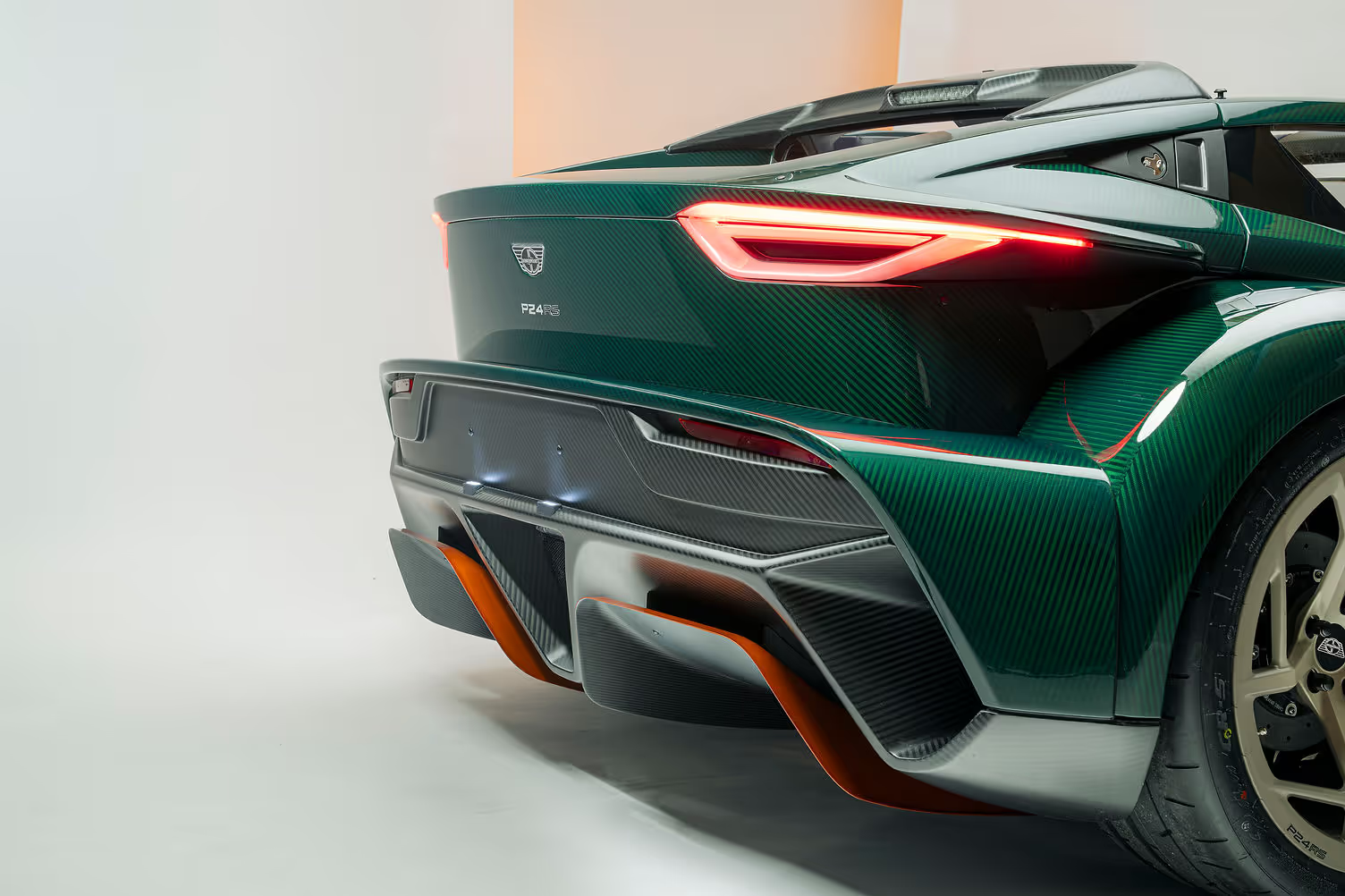
Donkervoort P24 RS rear view showing double diffuser, LED tail lights and carbon bodywork

Further motorsport influences are seen in the body and chassis, which makes extensive use of the firm’s Ex-Core technology. By lining sheets of carbon with heat expanding foam, Ex-Core can create zero-radius complex structures prohibited by conventional layup while adding strength and reducing vibration. Originally pioneered by Donkervoort, Ex-Core has spun off into its own company and counts F1 teams, WEC competitors, and hypercar manufacturers among its clientele.

For the P24 RS, Ex-Core is seen in a new front subframe that integrates the crash structure, suspension, brakes, and cooling as a complete assembly, yet weighs just 9kg. Ex-Core also forms the Twin Targa roof, doors, and structural reinforcements throughout the main aluminium spaceframe. 
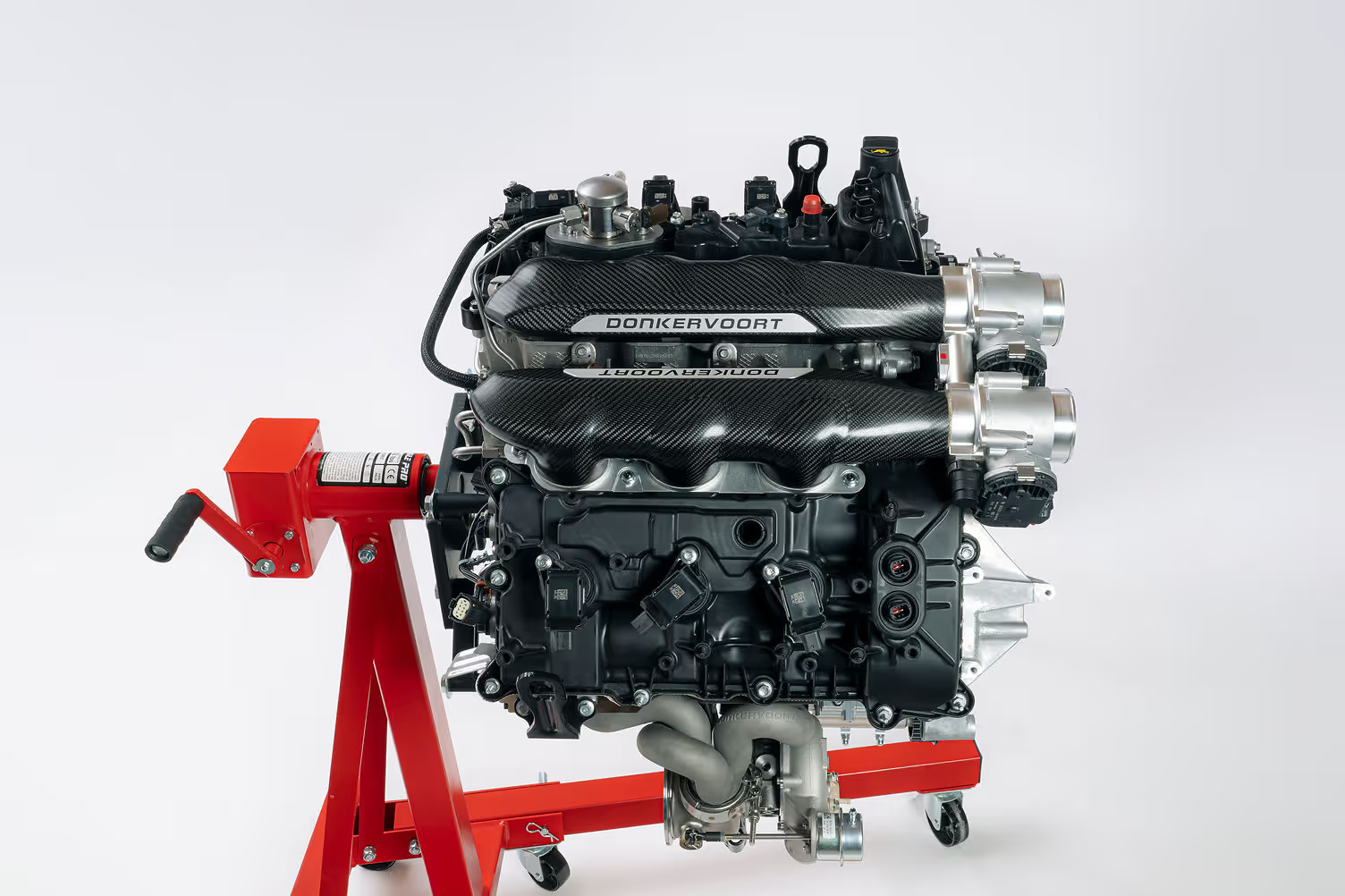

Donkervoort P24 RS twin-turbocharged 3.5-litre V6 engine showing billet turbochargers and carbon intake manifolds

Sitting within that is the new twin-turbocharged 3.5-litre Power To Choose (PTC) V6. The all-aluminium engine replaces the tuned 2.5-litre five-cylinder Audi RS3 unit used by the F22, with its origins remaining a closely guarded secret. Like the chassis, Dutch F1 suppliers are involved – in this case Van der Lee – supplying one-of-a-kind turbines machined from solid alloy billets rather than cast. The water-to-air intercoolers and exhaust manifolds are 3D printed, with the intercoolers placed between the turbochargers and throttle bodies, reducing the inlet tract by half compared to the F22, improving throttle response and cutting turbo lag. Carbon-fibre intake manifolds help keep the total weight of the engine below 170kg – not bad considering the specific output of the V6 is 172bhp per litre.

Power is sent to the rear wheels via a five-speed manual gearbox and Torsen limited-slip differential. Why the five-speed? Donkervoort claims the missing cog saves 15kg over a six-speed alternative. Naturally, being a Donkervoort, the P24's transmission still offers a choice, with switchable rev-matching.

Inside, despite the P24’s diminutive proportions, custom Recaro seats can accommodate drivers up to 2.05 metres tall even with the Twin Targa roof in situ. Clamping occupants in place are six-point harnesses approved for both racing and road use, while the removable steering wheel houses controls for lighting, indicators, wipers, horn, and instrument cluster menus.


Donkervoort P24 RS interior showing removable steering wheel with integrated controls and orange leather trim
Donkervoort P24 RS interior with custom Recaro seats, six-point harnesses and Twin Targa carbon roof

A digital instrument cluster is standard, with an optional iPad Mini bracket for multimedia functions, though buttons and dials handle primary controls. An electric handbrake sits on the centre console alongside the dials for traction control and suspension settings. Donkervoort even boasts of a luggage capacity measuring 298 litres behind the rear seats – comparable to a compact hatchback. That’s a useful advantage in a marketplace hellbent on sacrificing its ability to transport a pair of helmets in the name of active aero.

The P24 RS is priced at €298,500 before taxes and customisation. Donkervoort will hand-build 150 examples at its Lelystad facility in the Netherlands, with more than 50 already sold to customers in Europe, the US, and the Middle East. 

Denis Donkervoort said: "The less weight you carry, the less weight you have to stop, turn and accelerate, and the less fuel you use, the smaller the components can be and the more intimate the car can be for its driver. The P24 RS has impressive horsepower and speed, but it is not about any of that. It's about what driving pleasure means [to our buyers], because this is everything to us."


Donkervoort P24 RS with butterfly doors open showing interior and optional aero package
Donkervoort P24 RS rear three-quarter view with optional corner wings and titanium scuff blocks

Author

Craig Toone

Craig Toone

Rush Founder

Photography by:

Donkervoort

Published on:

26 January 2026

Our Print Magazine

LATEST ARTICLES

Add paragraph text. Click “Edit Text” to update the font, size and more. To change and reuse text themes, go to Site Styles.

Hyundai Ioniq 6 N Goes on Sale in the UK From £65,800

Craig Toone

|

27 January 2026

Add paragraph text. Click “Edit Text” to update the font, size and more. To change and reuse text themes, go to Site Styles.

Donkervoort P24 RS Offers 600bhp in a 780kg Carbon Wrapper – Driver Aids Optional

Craig Toone

|

26 January 2026

Add paragraph text. Click “Edit Text” to update the font, size and more. To change and reuse text themes, go to Site Styles.

GR Yaris Sébastien Ogier 9x World Champion Edition

Craig Toone

|

25 January 2026

Subscribe to our newsletter

Dutch manufacturer's latest featherweight track machine achieves 769bhp/tonne courtesy of a twin-turbo V6, and can generate up to 2.3G of cornering force

Craig Toone

AUTHOR

Craig Toone

Rush Founder

About the Author

Craig Toone

Craig Toone

Rush Founder

Obsessed with cars and car magazines ever since growing up in the back of a Sapphire Cosworth. Wore the racing line into the family carpet with his Matchbox toys. Can usually be found three-wheeling his Clio 182 Trophy around the Forest of Bowland, then bemoaning its running costs.

Related Articles

Porsche 911 GT3 Manthey Kit Narrows Gap to RS With 540kg of Downforce

Craig Toone

|

22 November 2025

New Morgan Supersport Unveiled

Ken Pearson

|

13 March 2025

The hand-built flagship arrives with an evolved chassis and BMW power. Ken Pearson explores the British carmaker’s most driver-centric model yet.

Corvette Z06 Arrives in the UK: Mid-Engined Track Car Targets 911 GT3

Craig Toone

|

28 February 2025

For the first time in its history, the Chevrolet Corvette Z06 is officially available in the UK with right-hand drive. The C8 corvette has been on sale in Britain since the second half of 2021, but now some of the more exotic, track-focused models are finally finding their way across the Atlantic.

Caterham Announces £80,000 Seven CSR Twenty

Aaron Stokes

|

12 November 2024

Caterham has a new limited edition of the Seven exclusively for the UK. Unlike most special editions today, the Seven CSR Twenty is more than just a fancy livery. Aaron Stokes explores what makes the CSR Twenty stand out in the Caterham lineup.

NEVER MISS AN ARTICLE

Subscribe to our newsletter

Potential Article Hero Design.png

Dutch manufacturer's latest featherweight track machine achieves 769bhp/tonne courtesy of a twin-turbo V6, and can generate up to 2.3G of cornering force

Donkervoort
26 January 2026

Dutch manufacturer's latest featherweight track machine achieves 769bhp/tonne courtesy of a twin-turbo V6, and can generate up to 2.3G of cornering force

First published

26 January 2026

Last updated

26 January 2026

Photography

Donkervoort

Craig Toone

AUTHOR

Craig Toone

Rush Founder

W

Twenty years ago, Donkervoort made a name for itself by smashing the Nürburgring Nordschleife production car record, taking the crown from the Porsche Carrera GT by more than 15 seconds with the D8 RS. Crossing the line after 7 minutes and 18.10 seconds, that car had a mere 210bhp. Donkervoort's latest, the P24 RS, offers up to 600bhp from a new twin-turbocharged V6. And it weighs 780kg dry.

Building on the success of the F22, the P24 RS gains 100bhp over its predecessor while maintaining Donkervoort's customisation philosophy. Buyers can configure the car extensively – from driver aids to aerodynamic hardware – to suit their preferences.

In its purest form, the RS relegates ABS and power steering to the options list, and also forgoes stability control, instead offering switchable engine mapping and traction control. Drivers can choose between 400, 500, or 600bhp outputs, and when fully lit, the resulting 769bhp per tonne and 590lb-ft of torque are enough to fire the P24 RS from 0-124mph in 7.4 seconds and onto a top speed in excess of 186mph. 


Donkervoort P24 RS front view showing exposed front wheels and swing-out Aero Blade headlights

While those figures are impressive, the most eyebrow-raising stat is the cornering performance, with the P24 RS claimed to generate up to 2.3G of lateral acceleration thanks to a combination of low mass, advanced aerodynamics, and mechanical grip. Employing double wishbones up front and a multilink arrangement at the rear, the suspension also features adaptive damping controlled from a rotary dial on the centre console. Hydraulic ride-height adjustment is available for ultimate trackday flexibility.

While we’re on the subject of G-forces, four-piston AP Racing callipers act on 330mm vented front discs to deliver 1.3G of retardation, with optional carbon-ceramic discs saving 2.1kg per corner. The wheels and tyres utilise a staggered setup – measuring 235/40 R18 front and 275/35 R19 rear – with custom Nankang CR-S tyres developed specifically for the car. 

With its long bonnet, exposed front wheels and cabin atop the rear axle, the P24 cannot hide the origin of its proportions, resulting in styling that's firmly in the Marmite category. Design boss Jordi Wiersma stated the aim was: "To make something much more modern and integrated, with elements from the past, so that the design was completely new, while also referencing our heritage.”


Donkervoort P24 RS front three-quarter view showing optional front wing elements and swing-out headlights

Wiersma added “There’s a reason open-wheel racing cars let drivers see the front wheels; it makes the car easier to place on the track. But open wheels pose challenges. The airflow around the wheels is very complex. We made a lot of effort to control the air wake to minimise drag and maintain enough downforce to keep the car aero balanced.”

That work involved Formula 1 consultancy AirShaper to refine the P24's aerodynamics, concentrating on increasing ground-effect downforce whilst reducing drag. Contributing to this are industry-first swing-out Aero Blade headlights. These hide the main-beam units behind the grille until needed, deploying horizontally to direct airflow over suspension components. LED daytime running lights and indicators sit atop the carbon bonnet, while a removable aero kit adds 90kg of downforce at 155mph. Comprising front corner wings with titanium scuff blocks and rear corner wings positioned above a double diffuser, each element of the kit attaches via three bolts for quick removal between road and track configurations.


Donkervoort P24 RS side profile in green with optional aero kit and cream alloy wheels
Donkervoort P24 RS rear view showing double diffuser, LED tail lights and carbon bodywork

Further motorsport influences are seen in the body and chassis, which makes extensive use of the firm’s Ex-Core technology. By lining sheets of carbon with heat expanding foam, Ex-Core can create zero-radius complex structures prohibited by conventional layup while adding strength and reducing vibration. Originally pioneered by Donkervoort, Ex-Core has spun off into its own company and counts F1 teams, WEC competitors, and hypercar manufacturers among its clientele.

For the P24 RS, Ex-Core is seen in a new front subframe that integrates the crash structure, suspension, brakes, and cooling as a complete assembly, yet weighs just 9kg. Ex-Core also forms the Twin Targa roof, doors, and structural reinforcements throughout the main aluminium spaceframe. 
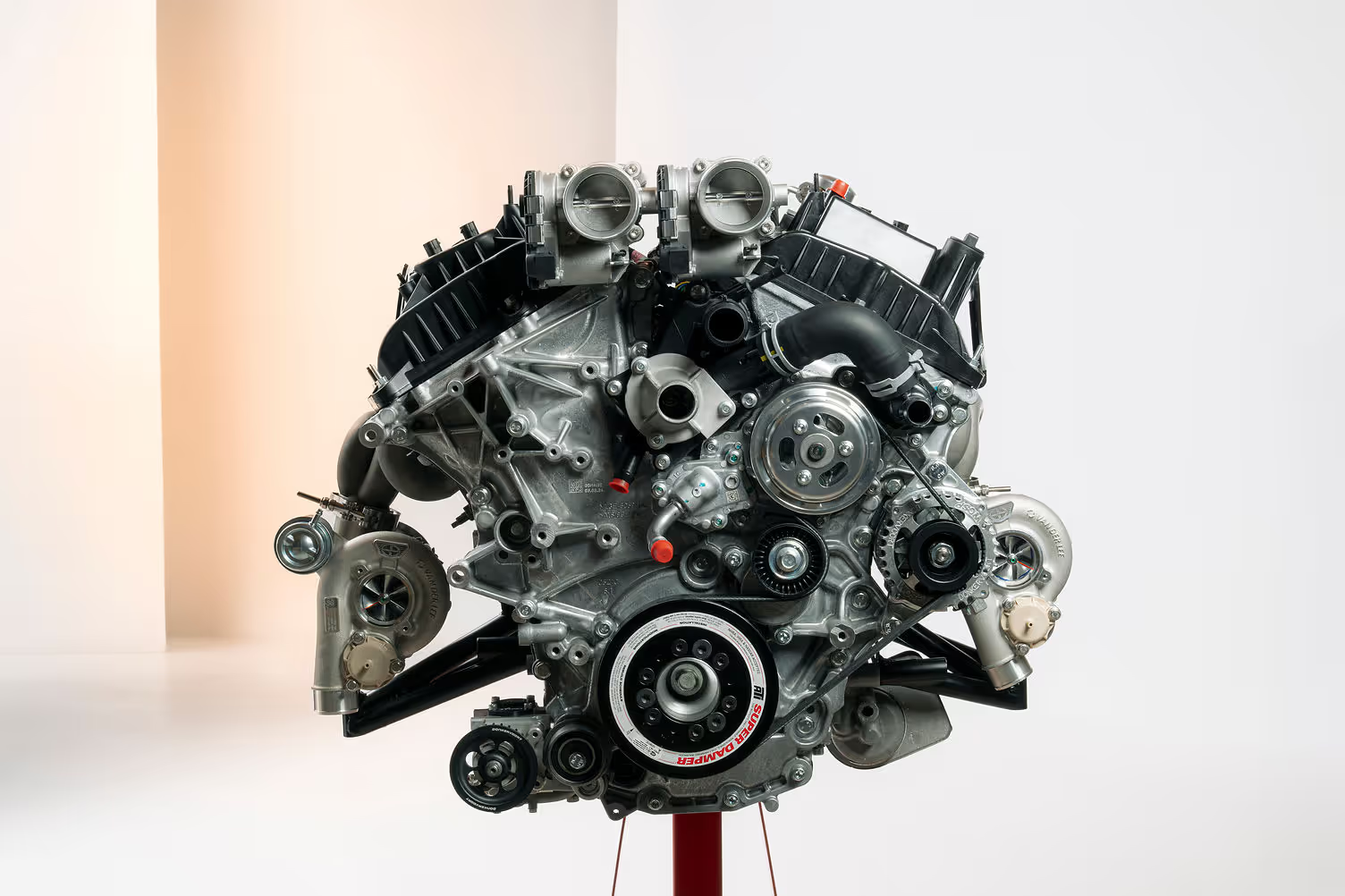

Donkervoort P24 RS twin-turbocharged 3.5-litre V6 engine showing billet turbochargers and carbon intake manifolds

Sitting within that is the new twin-turbocharged 3.5-litre Power To Choose (PTC) V6. The all-aluminium engine replaces the tuned 2.5-litre five-cylinder Audi RS3 unit used by the F22, with its origins remaining a closely guarded secret. Like the chassis, Dutch F1 suppliers are involved – in this case Van der Lee – supplying one-of-a-kind turbines machined from solid alloy billets rather than cast. The water-to-air intercoolers and exhaust manifolds are 3D printed, with the intercoolers placed between the turbochargers and throttle bodies, reducing the inlet tract by half compared to the F22, improving throttle response and cutting turbo lag. Carbon-fibre intake manifolds help keep the total weight of the engine below 170kg – not bad considering the specific output of the V6 is 172bhp per litre.

Power is sent to the rear wheels via a five-speed manual gearbox and Torsen limited-slip differential. Why the five-speed? Donkervoort claims the missing cog saves 15kg over a six-speed alternative. Naturally, being a Donkervoort, the P24's transmission still offers a choice, with switchable rev-matching.

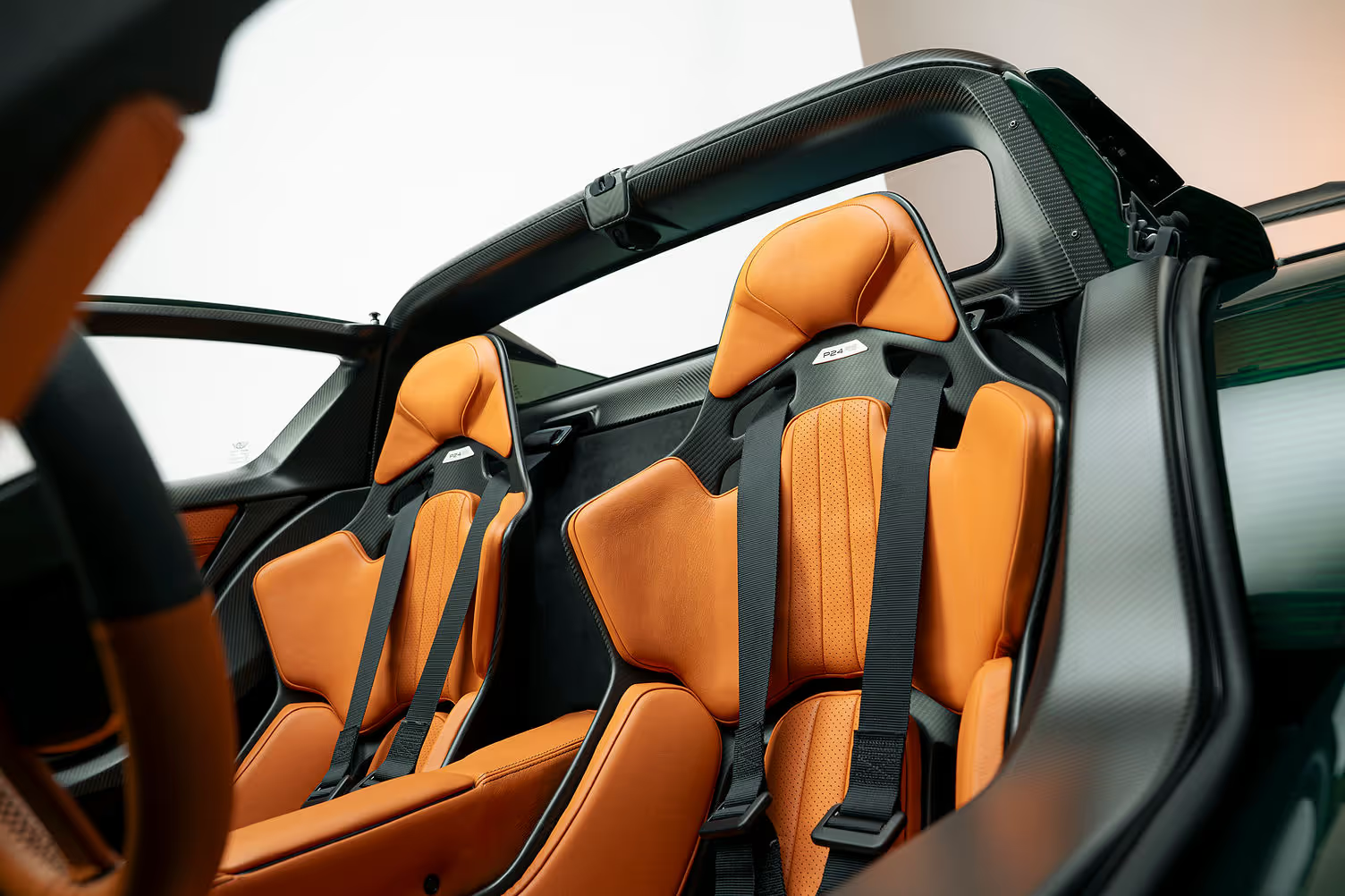
Inside, despite the P24’s diminutive proportions, custom Recaro seats can accommodate drivers up to 2.05 metres tall even with the Twin Targa roof in situ. Clamping occupants in place are six-point harnesses approved for both racing and road use, while the removable steering wheel houses controls for lighting, indicators, wipers, horn, and instrument cluster menus.
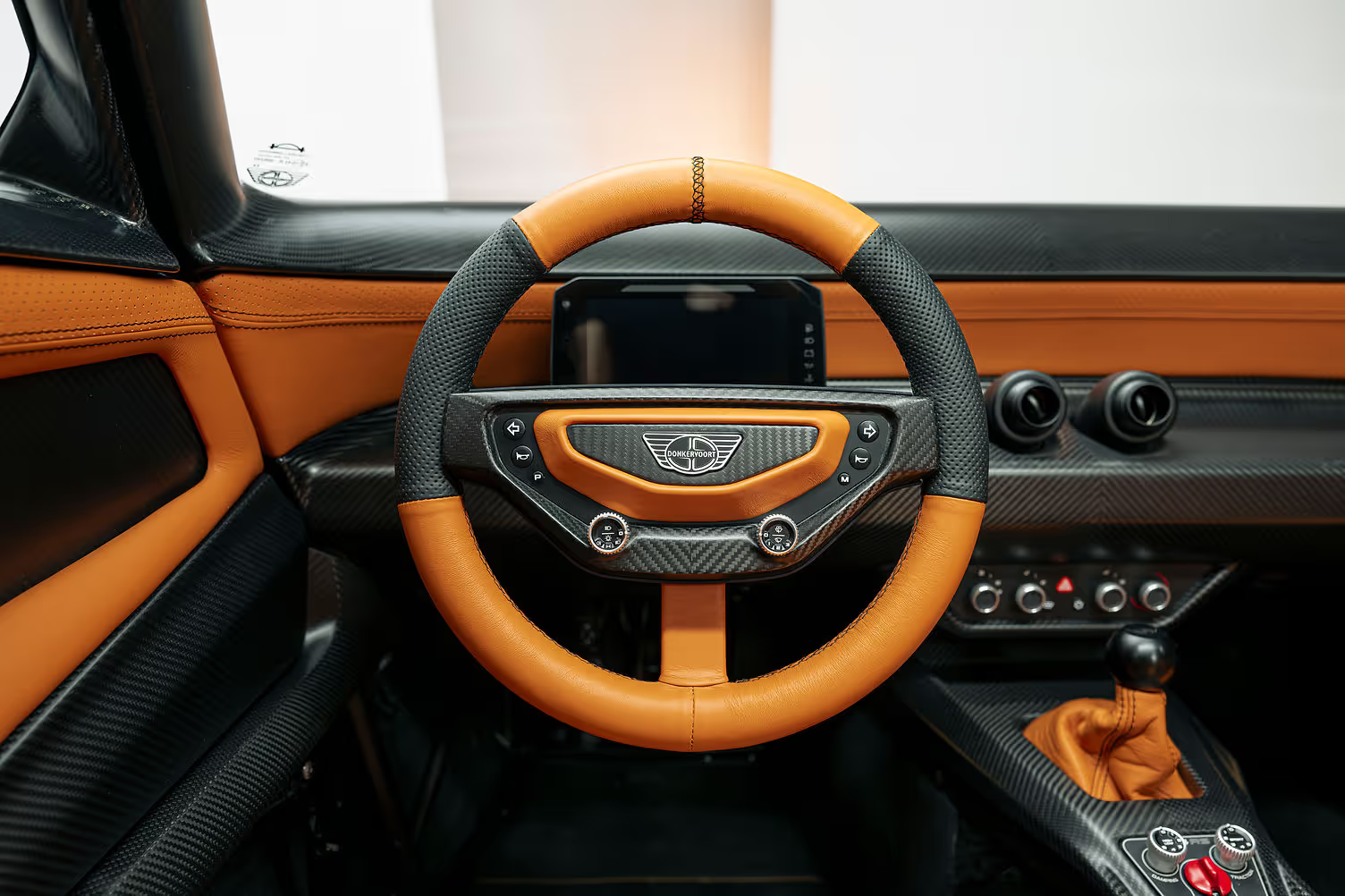
Donkervoort P24 RS interior showing removable steering wheel with integrated controls and orange leather trim
Donkervoort P24 RS interior with custom Recaro seats, six-point harnesses and Twin Targa carbon roof

A digital instrument cluster is standard, with an optional iPad Mini bracket for multimedia functions, though buttons and dials handle primary controls. An electric handbrake sits on the centre console alongside the dials for traction control and suspension settings. Donkervoort even boasts of a luggage capacity measuring 298 litres behind the rear seats – comparable to a compact hatchback. That’s a useful advantage in a marketplace hellbent on sacrificing its ability to transport a pair of helmets in the name of active aero.

The P24 RS is priced at €298,500 before taxes and customisation. Donkervoort will hand-build 150 examples at its Lelystad facility in the Netherlands, with more than 50 already sold to customers in Europe, the US, and the Middle East. 

Denis Donkervoort said: "The less weight you carry, the less weight you have to stop, turn and accelerate, and the less fuel you use, the smaller the components can be and the more intimate the car can be for its driver. The P24 RS has impressive horsepower and speed, but it is not about any of that. It's about what driving pleasure means [to our buyers], because this is everything to us."
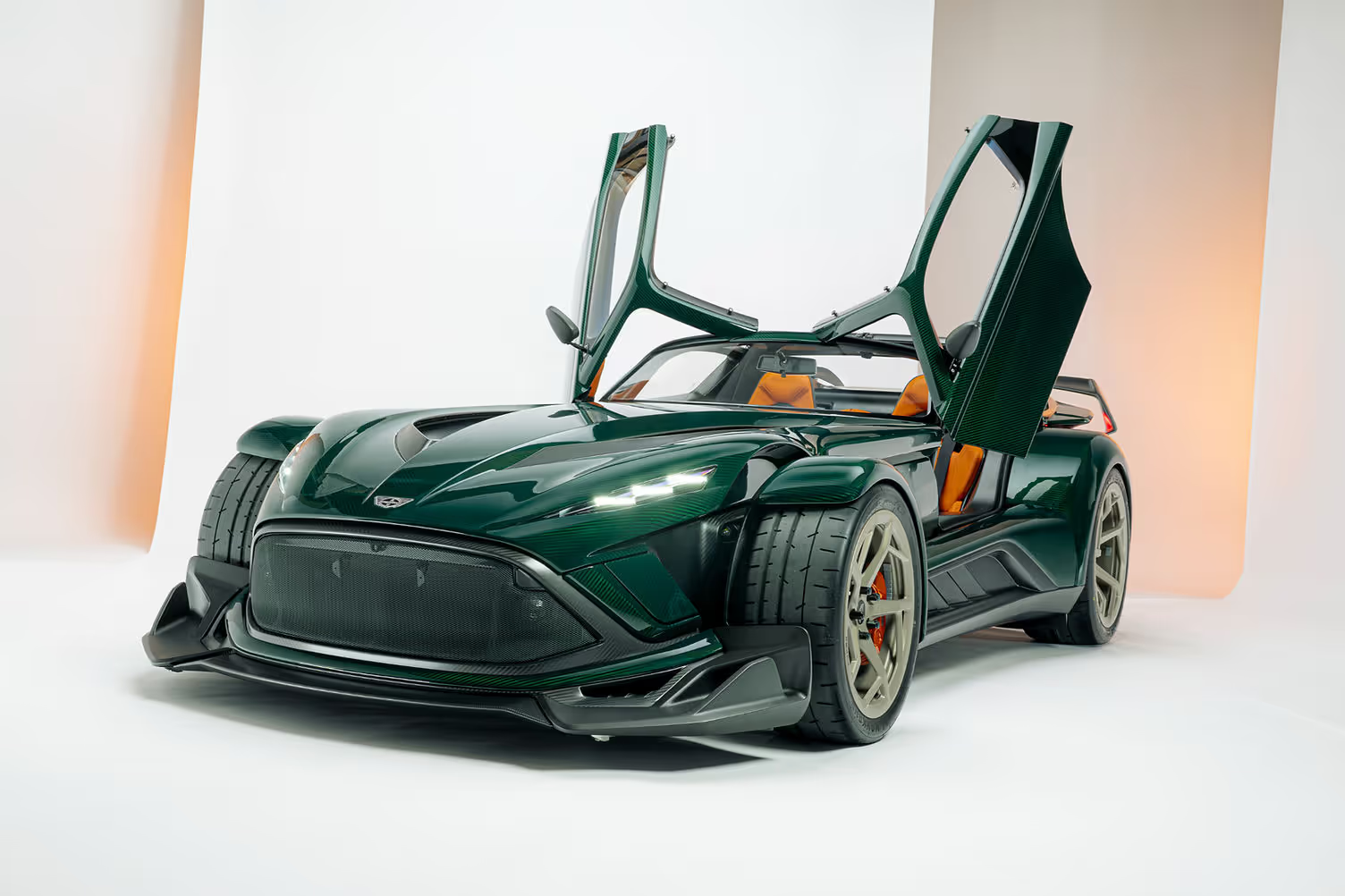
Donkervoort P24 RS with butterfly doors open showing interior and optional aero package
Donkervoort P24 RS rear three-quarter view with optional corner wings and titanium scuff blocks

Subscribe to our newsletter

Related Articles

Hyundai Ioniq 6 N Goes on Sale in the UK From £65,800
Donkervoort P24 RS Offers 600bhp in a 780kg Carbon Wrapper – Driver Aids Optional
GR Yaris Sébastien Ogier 9x World Champion Edition
Potential Article Hero Design.png

Dutch manufacturer's latest featherweight track machine achieves 769bhp/tonne courtesy of a twin-turbo V6, and can generate up to 2.3G of cornering force

Donkervoort
26 January 2026

Latest Articles

Hyundai Ioniq 6 N Goes on Sale in the UK From £65,800
Donkervoort P24 RS Offers 600bhp in a 780kg Carbon Wrapper – Driver Aids Optional
GR Yaris Sébastien Ogier 9x World Champion Edition
bottom of page