top of page

NEWS

More Details Released on the Electric M3 - A Deep Dive into the Neue Technology

Craig Toone

By 

Images by 

BMW M

Published

16 Jan 2026

More Details Released on the Electric M3 - A Deep Dive into the Neue Technology

More Details Released on the Electric M3 - A Deep Dive into the Neue Technology

BMW removes another layer of secrecy surrounding the first EV M3. Here’s everything we know, how it will affect driving dynamics, and what blanks are left to fill in.

BMW removes another layer of secrecy surrounding the first EV M3. Here’s everything we know, how it will affect driving dynamics, and what blanks are left to fill in.

BMW removes another layer of secrecy surrounding the first EV M3. Here’s everything we know, how it will affect driving dynamics, and what blanks are left to fill in.

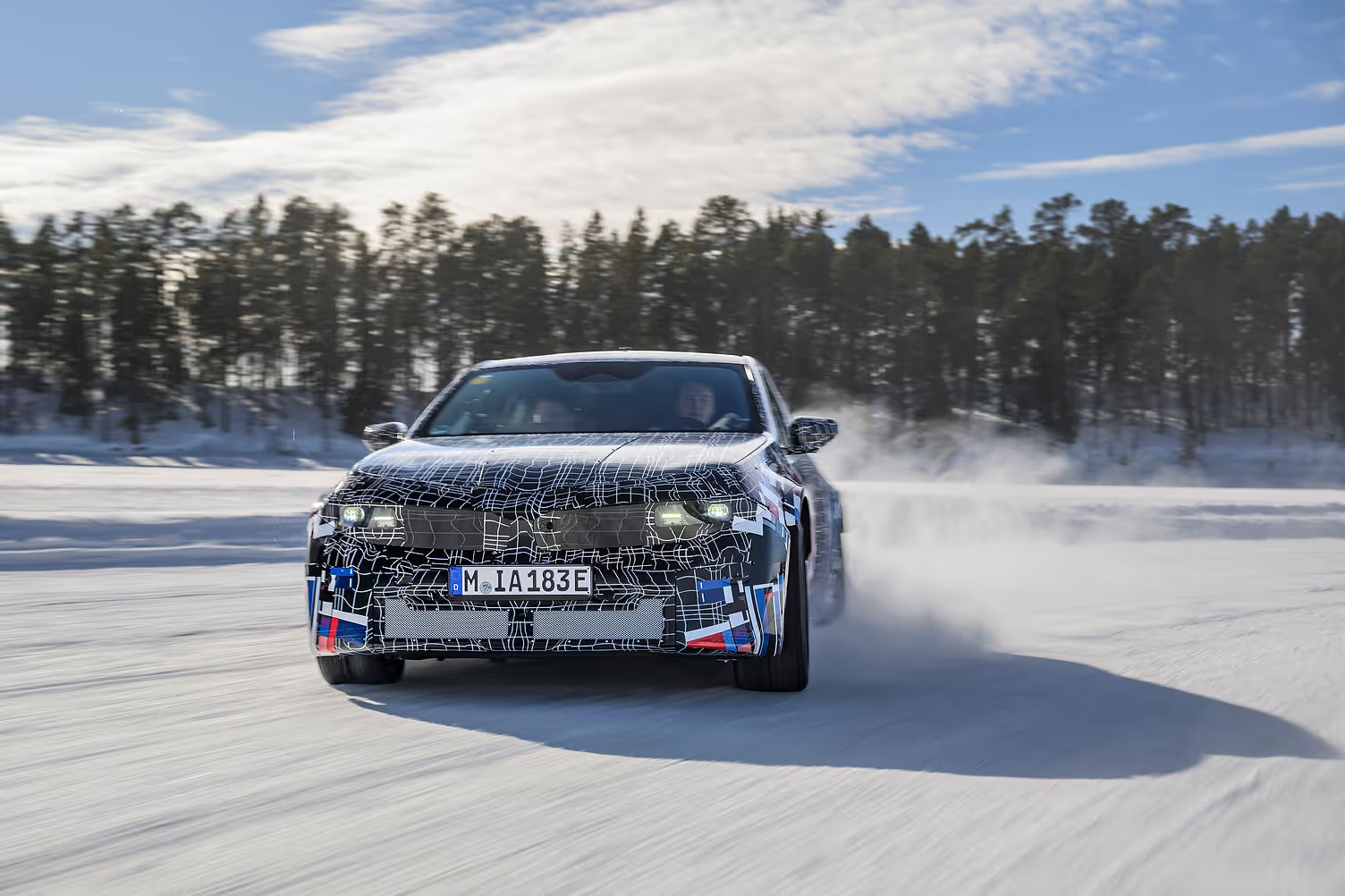
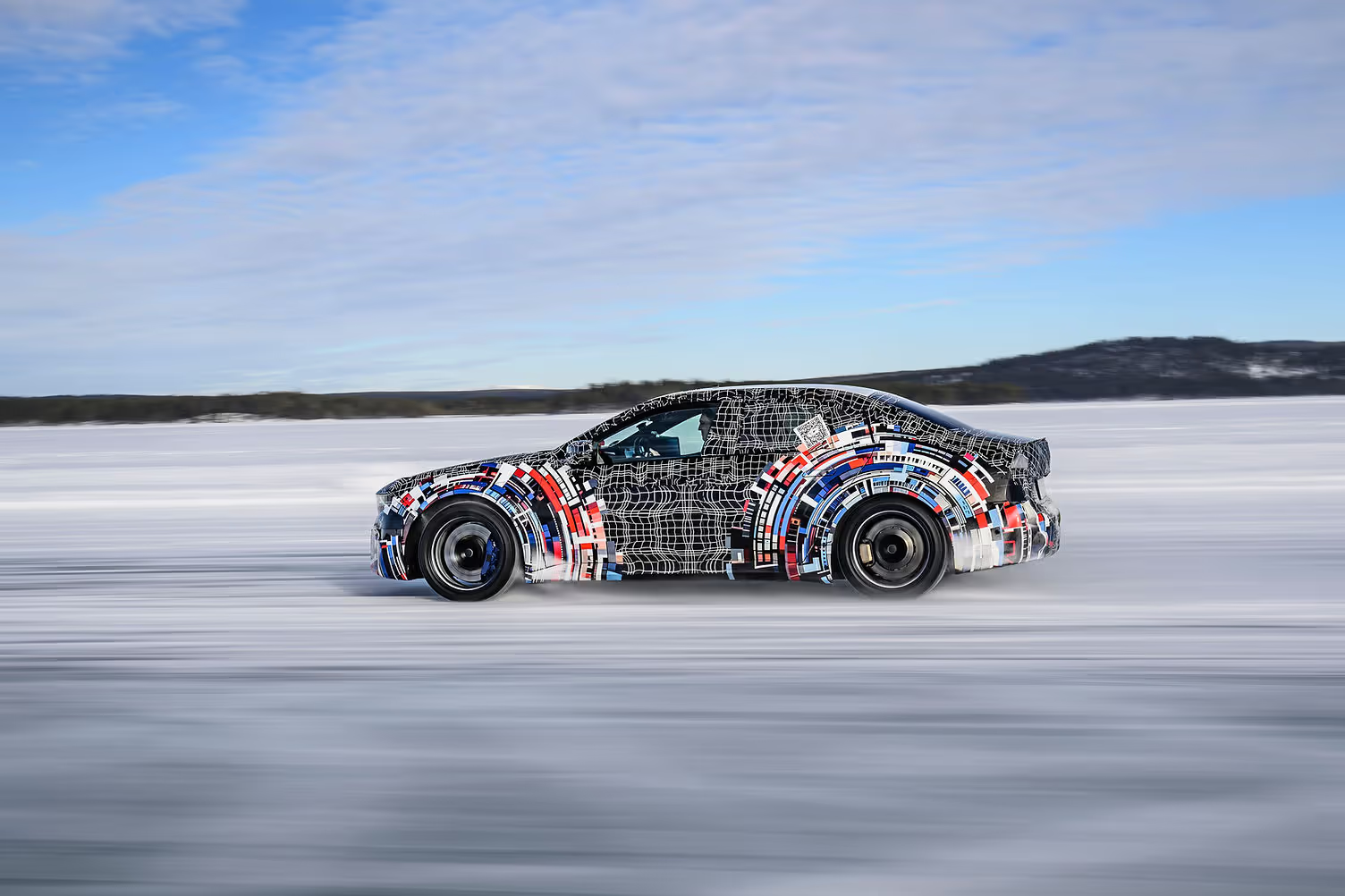
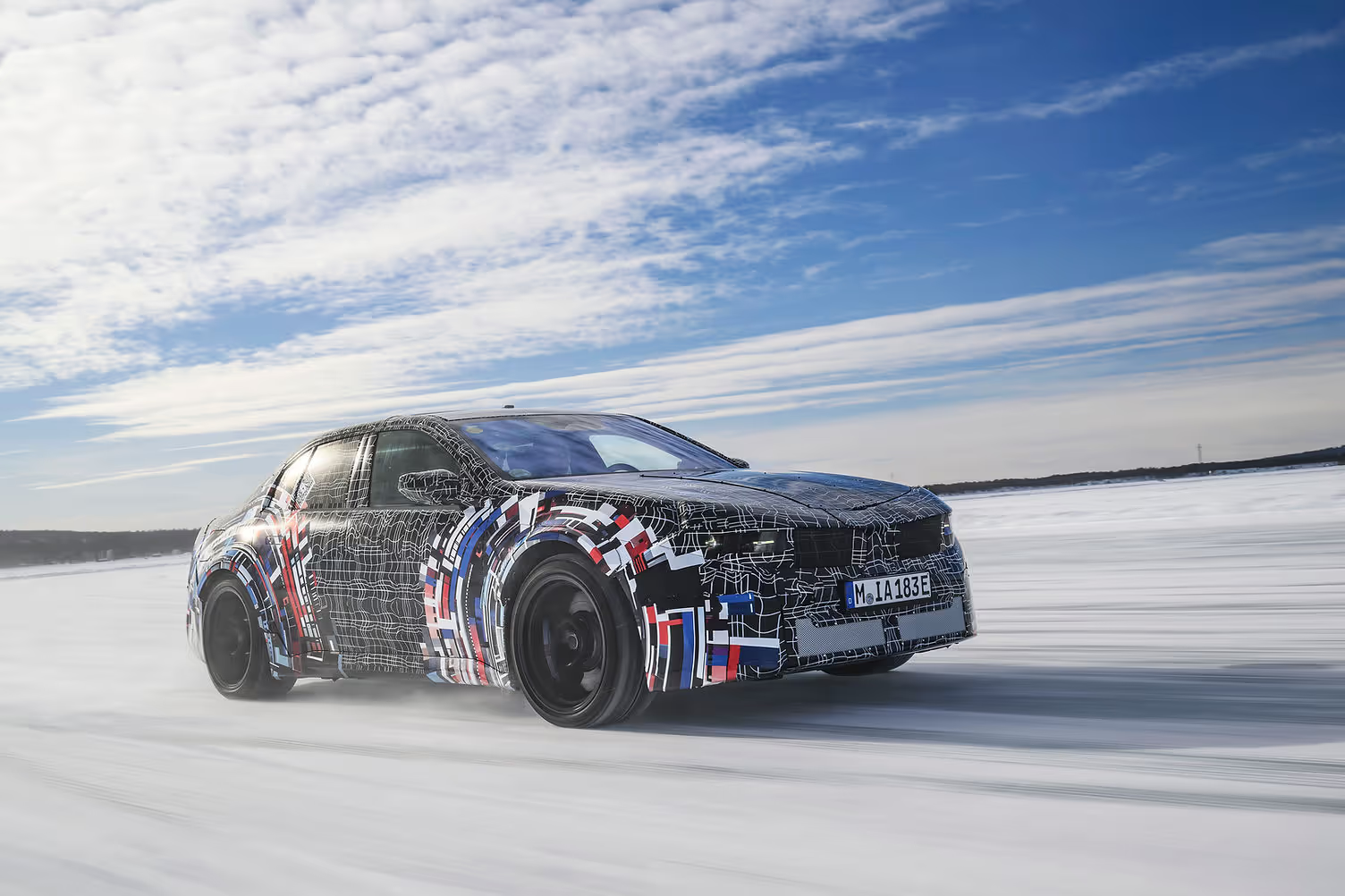
As disguised prototypes drift across frozen Arctic lakes for their final round of winter testing, BMW has released the latest drip-feed of engineering details ahead of the car’s 2027 debut. 

Munich has already confirmed the car will be based upon the Neue Klasse architecture, and will be equipped with an individual motor per wheel - dubbed BMW M eDrive - for maximum agility and response. According to inside information from BMWblog, the combined output of the quad motors is rumoured to exceed 1,000bhp - an unprecedented figure for a BMW.

But M cars have always been about how they deploy their power rather than how much they generate. M differentials, widened tracks, solidly mounted rear axles, and lightweight suspension arms are just some of the tricks in Garching’s arsenal.
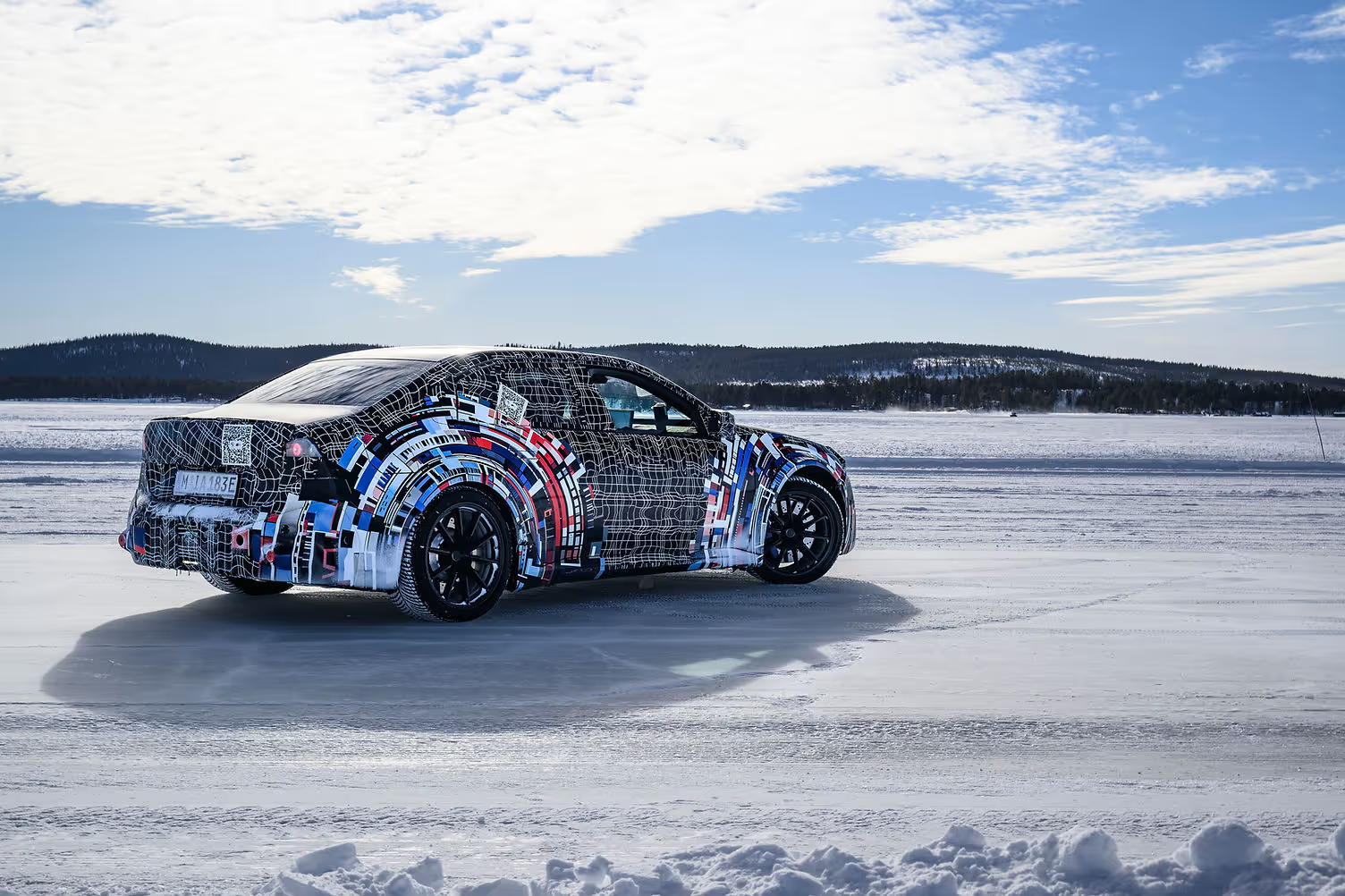
Electric M3 winter testing
BMW Heart of Joy 'superbrain' high speed processor

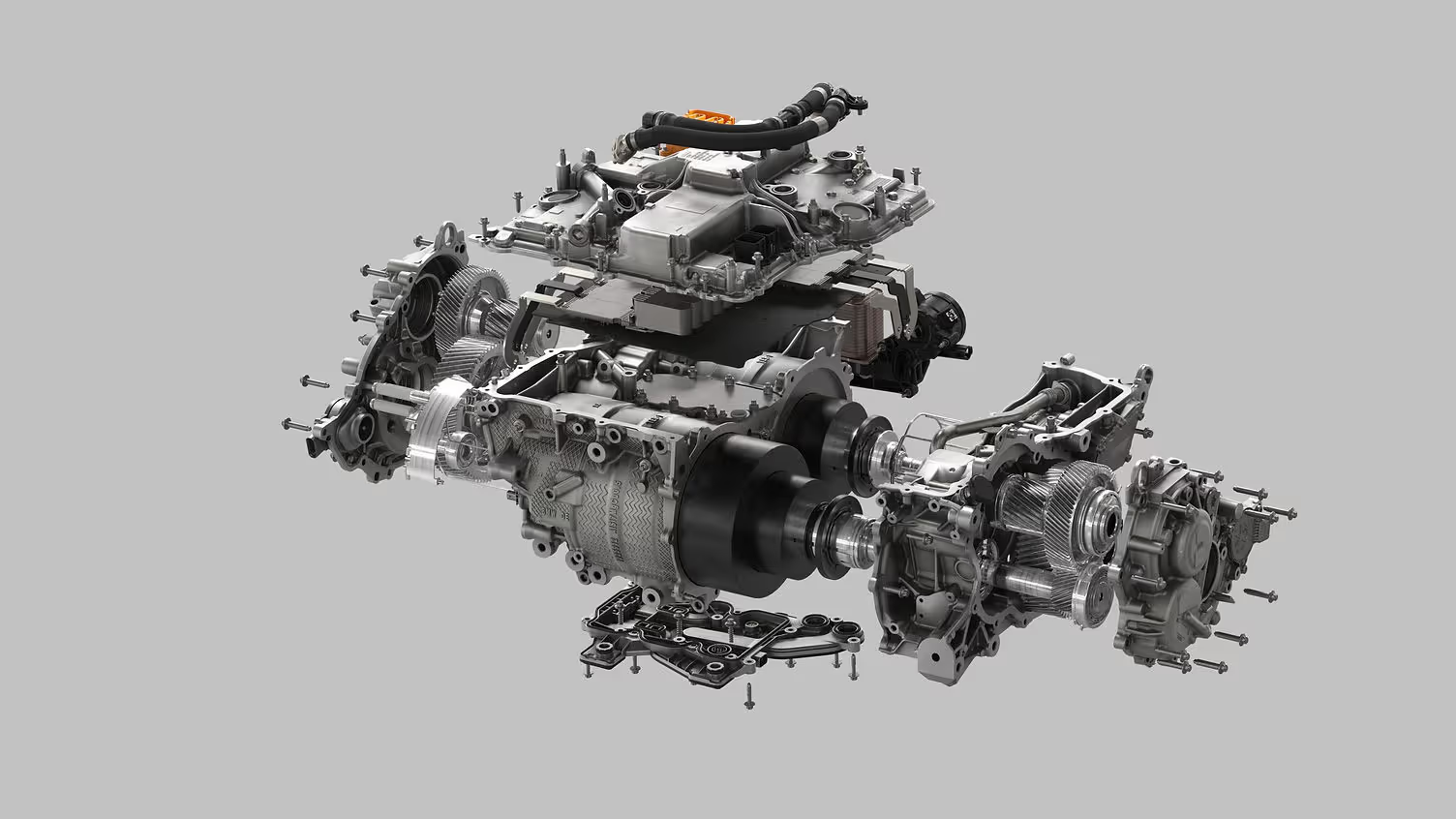
So what have engineers been working on to ensure the electric M3 lives up to the expectation of the badge? At the epicentre is BMW’s challengingly-named Heart of Joy super processor. With M-specific programming, its primary function is to consolidate all dynamic inputs - throttle, braking, steering, recuperation - into a single unit that operates ten times faster than current systems, giving it the speed to manage four independent motors in real time. 

The upshot is torque vectoring that is not only faster than a traditional mechanical locking differential, but can be applied instantaneously to each individual wheel, rather than across a single axle. The front motors can even be completely de-coupled - just like the existing M xDrive system - for tail-out heroics, or, for the most realistic benefit, to increase range when cruising. The system also integrates regenerative and friction braking, with BMW claiming 98% of normal driving braking can be handled through energy recovery alone. Combined with an EV’s inherently low CoG, the electric M3 should have exceptional agility.

The next challenge is making that agility last. M3 owners are regular trackday attendees, but EVs have historically struggled to handle sustained performance demands. Even before the tyres have given their best, battery temperatures have risen and the power output is reined-in. And even with fast charging, the downtime between sessions can be prohibitive.
Electric M3 winter testing
Engineering Deep Dive: More Details Released on the Electric M3

The M division is taking the problem seriously, with a holistic approach to charging, chemistry and cooling. First up, minimising such downtime is an 800-volt architecture for rapid charging, matching the most track-friendly EVs currently available - the Hyundai Ioniq 5 N and 6 N. But where the Hyundais support 350kW DC charging, the Neue Klasse platform offers 400kW DC. The iX3 SUV has already demonstrated the ability to add 300 miles in under ten minutes, exceeding the Ioniq 5 N’s entire 282-mile range. 

The exact distance the electric M3 can go between charges will follow once homologated, however it’s unlikely to match the iX3’s 500+ mile capability, despite packing ‘over 100kWh’ of battery capacity. While performance orientated tyres and a higher output will take some of the blame, the M division is also responsible, altering the battery to what it calls a 'Design to Power' chemistry.

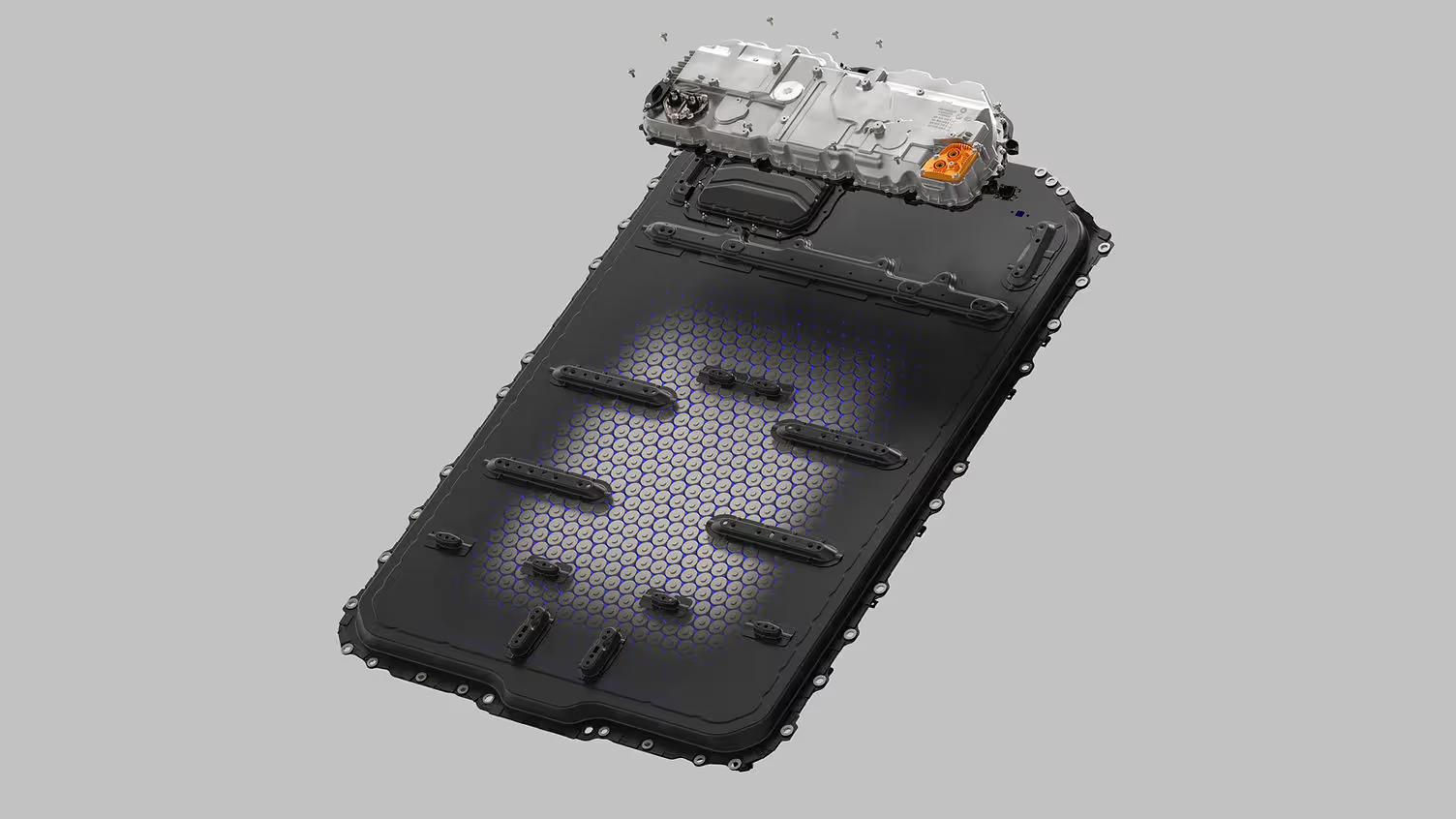
Where conventional EV batteries prioritise energy density in pursuit of maximum WLTP range, Design to Power nudges the Gen6 cylindrical cells in the direction of power density - namely, the ability to deliver and sustain high outputs without thermal degradation. 

Engineering Deep Dive: More Details Released on the Electric M3
Electric M3 winter testing

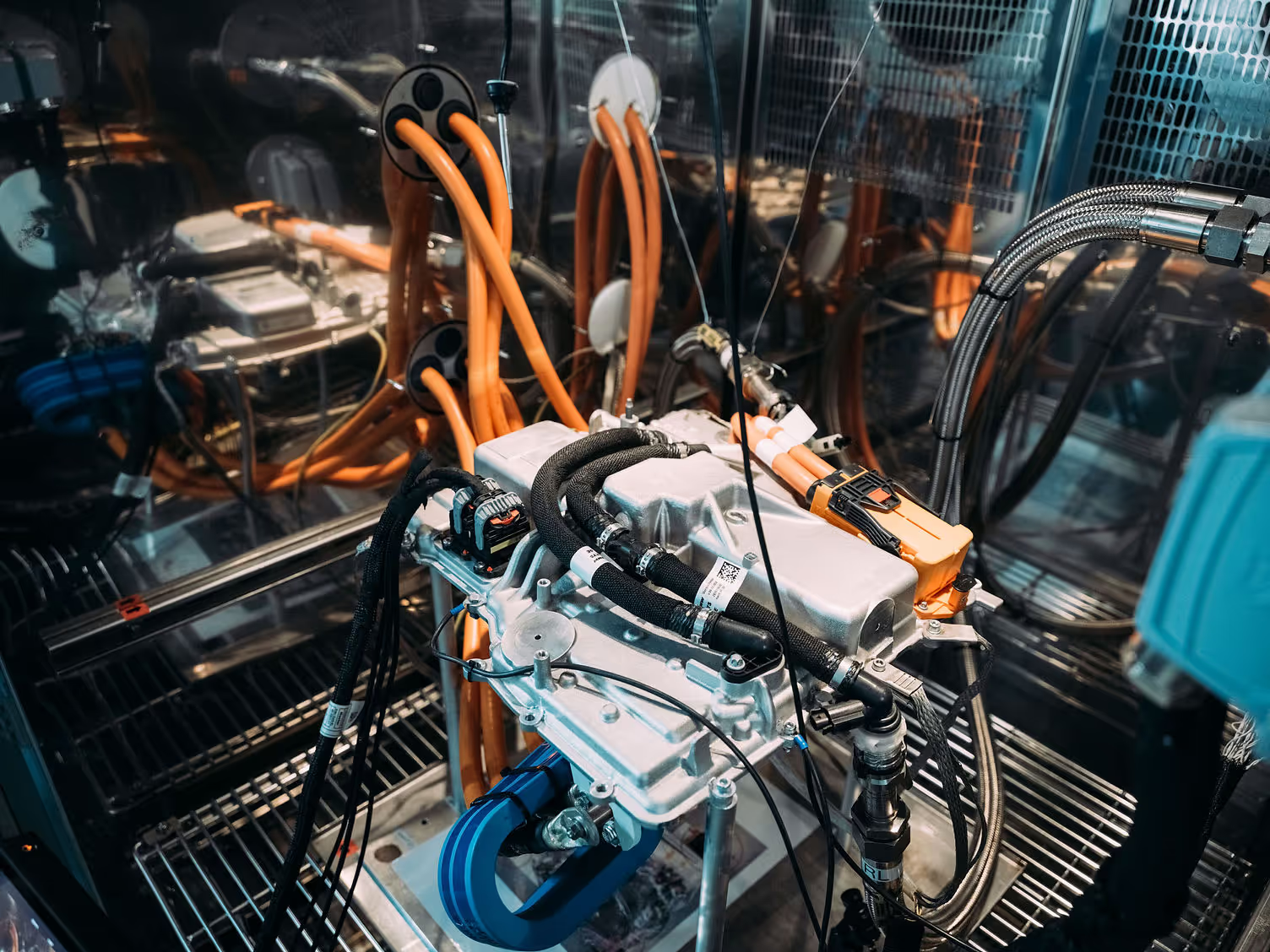
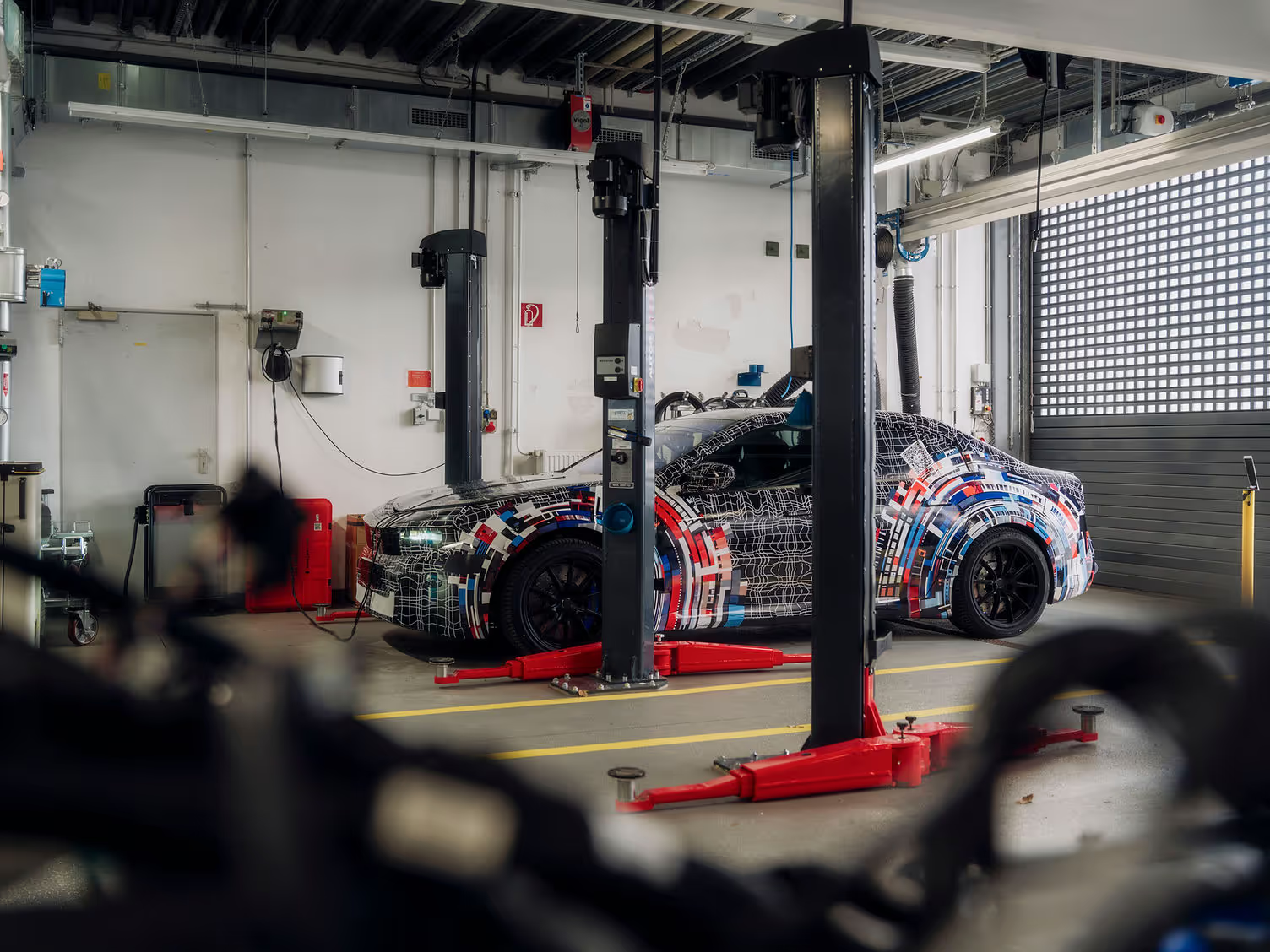
Supporting this is an uprated cooling system, with another dubiously-named element at its core: the 'Energy Master', an intelligent battery control unit positioned outside the battery pack. BMW claims this external placement permits 'more aggressive cooling strategies' without being constrained by the pack's own heat buildup. The battery housing also serves a structural role, connecting the front and rear axles to create a rigid spine through the car's centre, improving torsional rigidity, aiding handling.

BMW's answer to the emotional deficit of a performance EV is simulated gearshifts - a feature the Ioniq 5 N has already pioneered. We don’t know the number of gears and if torque manipulation will apply yet, but we anticipate when engaged, the system will operate from the paddles behind the wheel normally in charge of regen. A suite of driving modes and soundscapes will also feature, likely to include an evolution of the popular M Drift Analyser and ten stage traction control. We live in hope an option for the intake bark of an E46 CSL will be included.

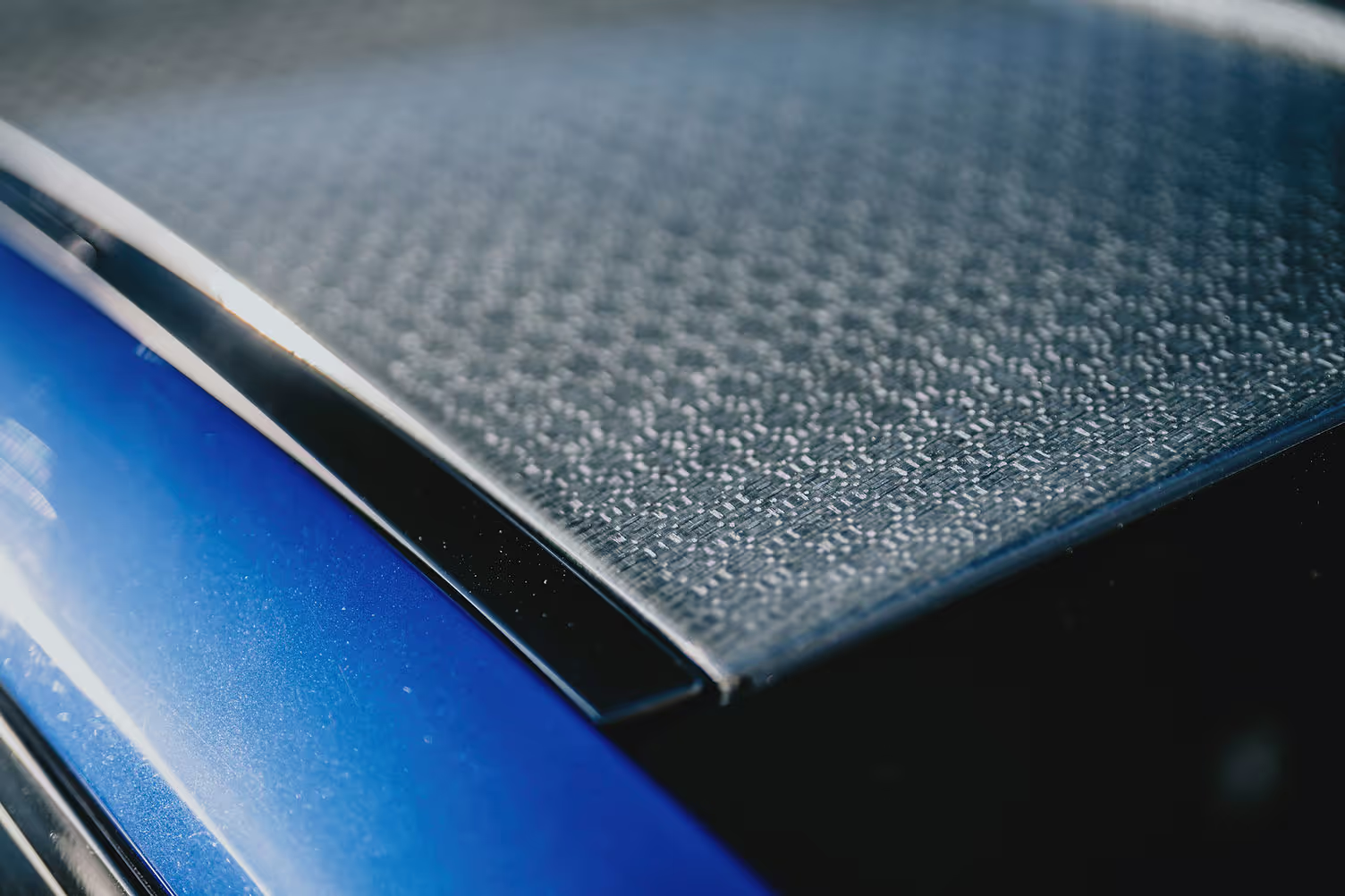
Weight also remains a genuine concern for M car fans, with criticism of the G90 M5's mass still ringing in BMW's ears. The M5 gained nearly 500kg in the transition from pure ICE to PHEV, resulting in a kerb weight of 2,435kg. Offsetting some of the inevitable gain in the fully electric M3 will be the adoption of natural fibre composite body panels, making their debut in an M production car. Equal parts green and Green Hell, BMW Motorsport has been developing and proving this material since 2019, which offers similar structural properties to carbon fibre while reducing production emissions by 40%. Obviously, BMW is remaining tight-lipped about the final kerb weight of the car for now.


Engineering Deep Dive: More Details Released on the Electric M3

While the decision to introduce an electric M3 can either be seen as brave or inevitable, BMW is hedging its bets by selling the car alongside a petrol-powered variant. Set to use an evolution of the existing M3’s S58 twin turbo straight-six - likely in conjunction with some form of mild-hybrid tech - the more familiar M3 is projected to develop at least 670-700bhp.

This raises the question as to whether the EV M3 will get its own specific nomenclature or share one. While BMW has applied for the copyrights to the name iM3, M boss Francis van Meel has moved to silence such speculation: “We would never use an i on an M, even though it would be electric... Because an M3 had a four-cylinder, six-cylinder, eight-cylinder engine; naturally aspirated, turbocharged ones. Now it’s even got an xDrive, but it always remained an M3.” Indeed, there seems little point in creating a new lineage when the EV will eventually have to take over the mantle from its ICE counterpart.

Much of BMW's engineering logic behind the electric M3 is sound, but as ever, the real challenge lies in the ability to translate such advantages into the fingertips of the driver. We'll have to wait until 2027 to find out if the M division has succeeded on that front.


Electric M3 winter testing

Author

Craig Toone

Craig Toone

Rush Founder

Photography by:

BMW M

Published on:

16 January 2026

Our Print Magazine

LATEST ARTICLES

Add paragraph text. Click “Edit Text” to update the font, size and more. To change and reuse text themes, go to Site Styles.

More Details Released on the Electric M3 - A Deep Dive into the Neue Technology

Craig Toone

|

16 January 2026

Add paragraph text. Click “Edit Text” to update the font, size and more. To change and reuse text themes, go to Site Styles.

Brussels Motor Show 2026 Report: Car Enthusiasm is Alive and Well

Ken Pearson

|

13 January 2026

Add paragraph text. Click “Edit Text” to update the font, size and more. To change and reuse text themes, go to Site Styles.

Golf GTI Edition 50 Goes on Sale in the UK for £47,995

Craig Toone

|

12 January 2026

Subscribe to our newsletter

BMW removes another layer of secrecy surrounding the first EV M3. Here’s everything we know, how it will affect driving dynamics, and what blanks are left to fill in.

Craig Toone

AUTHOR

Craig Toone

Rush Founder

About the Author

Craig Toone

Craig Toone

Rush Founder

Obsessed with cars and car magazines ever since growing up in the back of a Sapphire Cosworth. Wore the racing line into the family carpet with his Matchbox toys. Can usually be found three-wheeling his Clio 182 Trophy around the Forest of Bowland, then bemoaning its running costs.

Related Articles

Does BMW's 13,269lb-ft VDX Prototype Contain the Secrets of the Electric M3?

Craig Toone

|

17 February 2025

THE T(O)URING TEST
BMW M3 Touring Review

Craig Toone

|

5 December 2024

BMW has finally relented to demands and given us an M3 Touring. Craig Toone gets behind the wheel and puts the car to the test. Will the car live up to the hopes and dreams of M enthusiasts?

BMW iX3 50 xDrive Kicks Off Neue Klasse Era

Craig Toone

|

6 September 2025

BMW’s iX3 is the first Neue Klasse model – a landmark EV promising a return to brand values while blending radical tech. But is Munich’s confidence justified?

E60 M5 Review - Never Before, Never Again

Alex Dunlop

|

20 March 2025

The E60 M5 remains a divisive car - from it's styling, its SMG transmission and even the 507bhp V10. Alex Dunlop reviews the car through the lens of 2025 to see whether it's a relic or refreshing tonic

NEVER MISS AN ARTICLE

Subscribe to our newsletter

Potential Article Hero Design.png

BMW removes another layer of secrecy surrounding the first EV M3. Here’s everything we know, how it will affect driving dynamics, and what blanks are left to fill in.

BMW M
16 January 2026

BMW removes another layer of secrecy surrounding the first EV M3. Here’s everything we know, how it will affect driving dynamics, and what blanks are left to fill in.

First published

16 January 2026

Last updated

16 January 2026

Photography

BMW M

Craig Toone

AUTHOR

Craig Toone

Rush Founder

W

As disguised prototypes drift across frozen Arctic lakes for their final round of winter testing, BMW has released the latest drip-feed of engineering details ahead of the car’s 2027 debut. 

Munich has already confirmed the car will be based upon the Neue Klasse architecture, and will be equipped with an individual motor per wheel - dubbed BMW M eDrive - for maximum agility and response. According to inside information from BMWblog, the combined output of the quad motors is rumoured to exceed 1,000bhp - an unprecedented figure for a BMW.

But M cars have always been about how they deploy their power rather than how much they generate. M differentials, widened tracks, solidly mounted rear axles, and lightweight suspension arms are just some of the tricks in Garching’s arsenal.


Electric M3 winter testing
BMW Heart of Joy 'superbrain' high speed processor

So what have engineers been working on to ensure the electric M3 lives up to the expectation of the badge? At the epicentre is BMW’s challengingly-named Heart of Joy super processor. With M-specific programming, its primary function is to consolidate all dynamic inputs - throttle, braking, steering, recuperation - into a single unit that operates ten times faster than current systems, giving it the speed to manage four independent motors in real time. 

The upshot is torque vectoring that is not only faster than a traditional mechanical locking differential, but can be applied instantaneously to each individual wheel, rather than across a single axle. The front motors can even be completely de-coupled - just like the existing M xDrive system - for tail-out heroics, or, for the most realistic benefit, to increase range when cruising. The system also integrates regenerative and friction braking, with BMW claiming 98% of normal driving braking can be handled through energy recovery alone. Combined with an EV’s inherently low CoG, the electric M3 should have exceptional agility.

The next challenge is making that agility last. M3 owners are regular trackday attendees, but EVs have historically struggled to handle sustained performance demands. Even before the tyres have given their best, battery temperatures have risen and the power output is reined-in. And even with fast charging, the downtime between sessions can be prohibitive.


Electric M3 winter testing
Engineering Deep Dive: More Details Released on the Electric M3

The M division is taking the problem seriously, with a holistic approach to charging, chemistry and cooling. First up, minimising such downtime is an 800-volt architecture for rapid charging, matching the most track-friendly EVs currently available - the Hyundai Ioniq 5 N and 6 N. But where the Hyundais support 350kW DC charging, the Neue Klasse platform offers 400kW DC. The iX3 SUV has already demonstrated the ability to add 300 miles in under ten minutes, exceeding the Ioniq 5 N’s entire 282-mile range. 

The exact distance the electric M3 can go between charges will follow once homologated, however it’s unlikely to match the iX3’s 500+ mile capability, despite packing ‘over 100kWh’ of battery capacity. While performance orientated tyres and a higher output will take some of the blame, the M division is also responsible, altering the battery to what it calls a 'Design to Power' chemistry.

Where conventional EV batteries prioritise energy density in pursuit of maximum WLTP range, Design to Power nudges the Gen6 cylindrical cells in the direction of power density - namely, the ability to deliver and sustain high outputs without thermal degradation. 

Engineering Deep Dive: More Details Released on the Electric M3
Electric M3 winter testing

Supporting this is an uprated cooling system, with another dubiously-named element at its core: the 'Energy Master', an intelligent battery control unit positioned outside the battery pack. BMW claims this external placement permits 'more aggressive cooling strategies' without being constrained by the pack's own heat buildup. The battery housing also serves a structural role, connecting the front and rear axles to create a rigid spine through the car's centre, improving torsional rigidity, aiding handling.

BMW's answer to the emotional deficit of a performance EV is simulated gearshifts - a feature the Ioniq 5 N has already pioneered. We don’t know the number of gears and if torque manipulation will apply yet, but we anticipate when engaged, the system will operate from the paddles behind the wheel normally in charge of regen. A suite of driving modes and soundscapes will also feature, likely to include an evolution of the popular M Drift Analyser and ten stage traction control. We live in hope an option for the intake bark of an E46 CSL will be included.

Weight also remains a genuine concern for M car fans, with criticism of the G90 M5's mass still ringing in BMW's ears. The M5 gained nearly 500kg in the transition from pure ICE to PHEV, resulting in a kerb weight of 2,435kg. Offsetting some of the inevitable gain in the fully electric M3 will be the adoption of natural fibre composite body panels, making their debut in an M production car. Equal parts green and Green Hell, BMW Motorsport has been developing and proving this material since 2019, which offers similar structural properties to carbon fibre while reducing production emissions by 40%. Obviously, BMW is remaining tight-lipped about the final kerb weight of the car for now.
Engineering Deep Dive: More Details Released on the Electric M3

While the decision to introduce an electric M3 can either be seen as brave or inevitable, BMW is hedging its bets by selling the car alongside a petrol-powered variant. Set to use an evolution of the existing M3’s S58 twin turbo straight-six - likely in conjunction with some form of mild-hybrid tech - the more familiar M3 is projected to develop at least 670-700bhp.

This raises the question as to whether the EV M3 will get its own specific nomenclature or share one. While BMW has applied for the copyrights to the name iM3, M boss Francis van Meel has moved to silence such speculation: “We would never use an i on an M, even though it would be electric... Because an M3 had a four-cylinder, six-cylinder, eight-cylinder engine; naturally aspirated, turbocharged ones. Now it’s even got an xDrive, but it always remained an M3.” Indeed, there seems little point in creating a new lineage when the EV will eventually have to take over the mantle from its ICE counterpart.

Much of BMW's engineering logic behind the electric M3 is sound, but as ever, the real challenge lies in the ability to translate such advantages into the fingertips of the driver. We'll have to wait until 2027 to find out if the M division has succeeded on that front.

Electric M3 winter testing

Subscribe to our newsletter

Related Articles

More Details Released on the Electric M3 - A Deep Dive into the Neue Technology
Brussels Motor Show 2026 Report: Car Enthusiasm is Alive and Well
Golf GTI Edition 50 Goes on Sale in the UK for £47,995
Potential Article Hero Design.png

BMW removes another layer of secrecy surrounding the first EV M3. Here’s everything we know, how it will affect driving dynamics, and what blanks are left to fill in.

BMW M
16 January 2026

Latest Articles

More Details Released on the Electric M3 - A Deep Dive into the Neue Technology
Brussels Motor Show 2026 Report: Car Enthusiasm is Alive and Well
Golf GTI Edition 50 Goes on Sale in the UK for £47,995
bottom of page