-01.svg)

That donor car is fully stripped and comprehensively restored with all wear-prone components - including fixings, lights, and seals - replaced. During the process, the body is reinforced with hidden 40mm Cro-Moly tubing, creating a stiffer base for the ex-Porsche, Singer and Koenigsegg engineering team to work from.
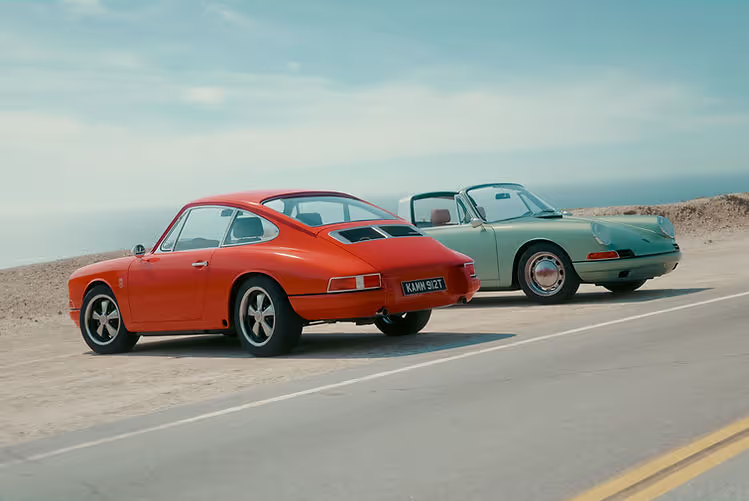
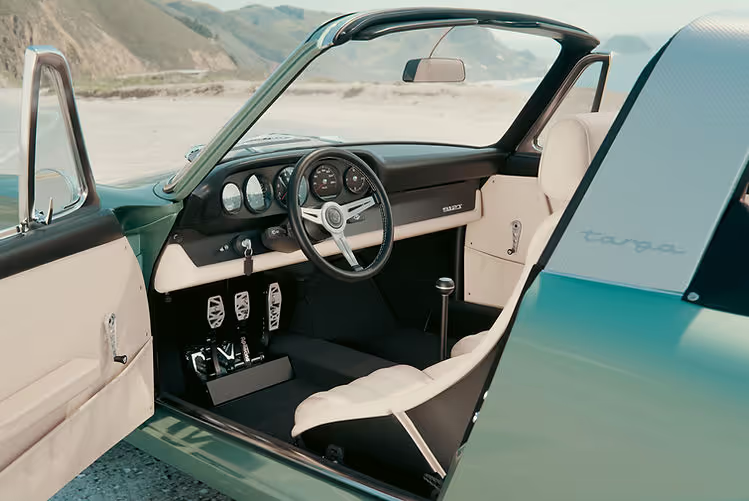
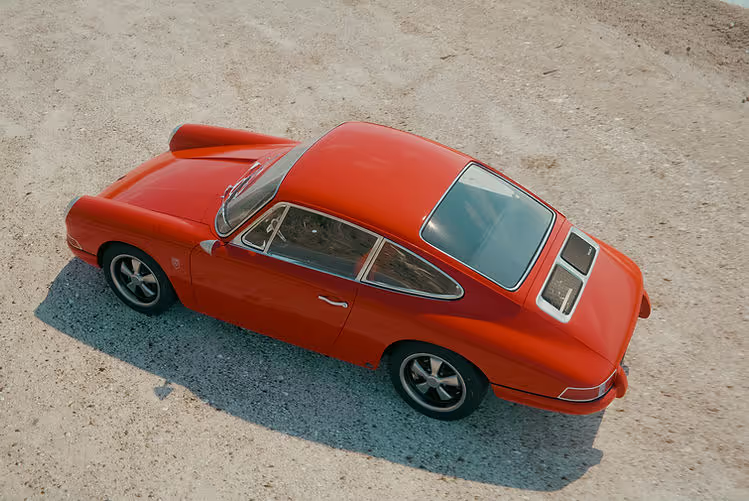
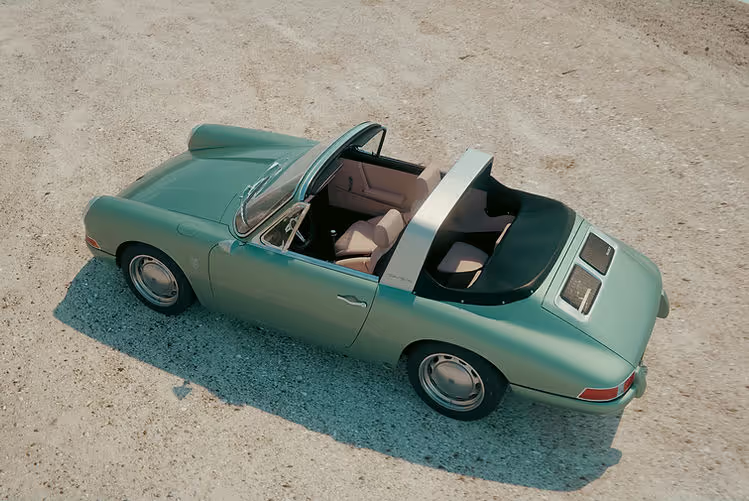
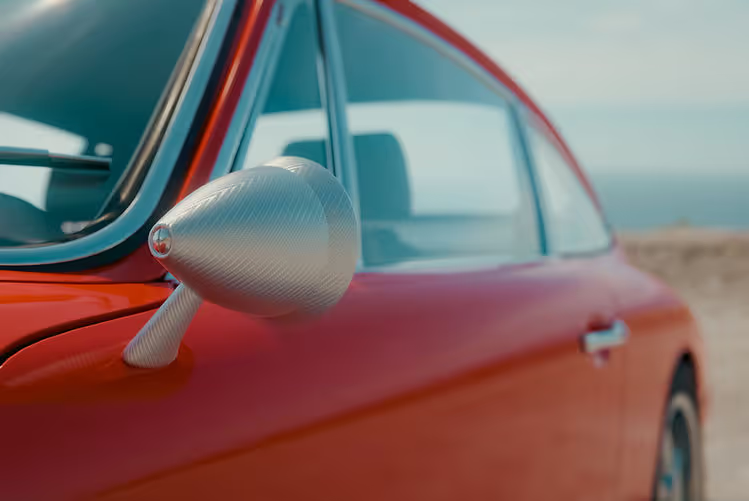
Obviously, the T stands for Touring, so while the firm’s obsessive weight reduction remains central, the diet is less hardcore than in the 912C - think more Keto than carnivore. The bodywork is almost identical, with KAMM’s in-house carbon fibre used for the wings, bonnet, boot lid, mirrors, and bumpers, however the restomodder has chosen to keep the original steel doors. Glass also replaces the polycarbonate windows used in the 912C, aligning with the car’s more refined remit. Combined with a more luxurious trim, the 912T achieves a kerb weight of 860kg - heavier than the C, but still around 100kg lighter than the original Porsche 912.
The power delivery is also more laid back, with the rebuilt 2.0-litre air-cooled ‘616’ flat-four engine producing 163bhp at 6,500rpm, compared to the 182bhp and 7,200rpm redline of the C. Tuned for greater elasticity, the torque output is only marginally down, reduced from 151lb-ft to 148lb-ft.
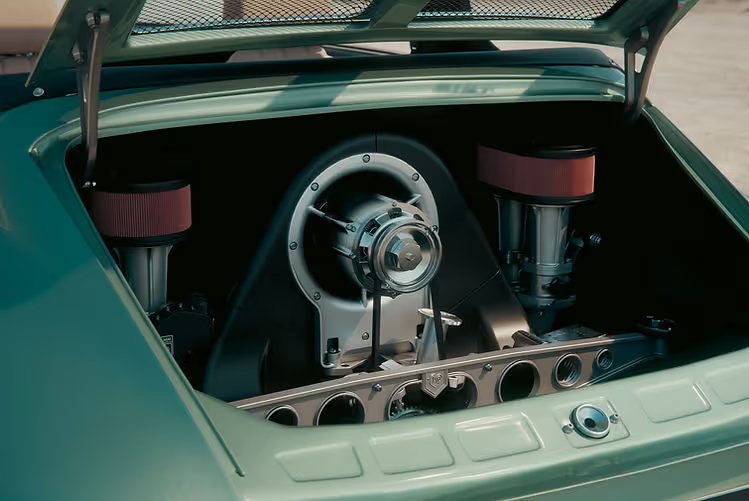
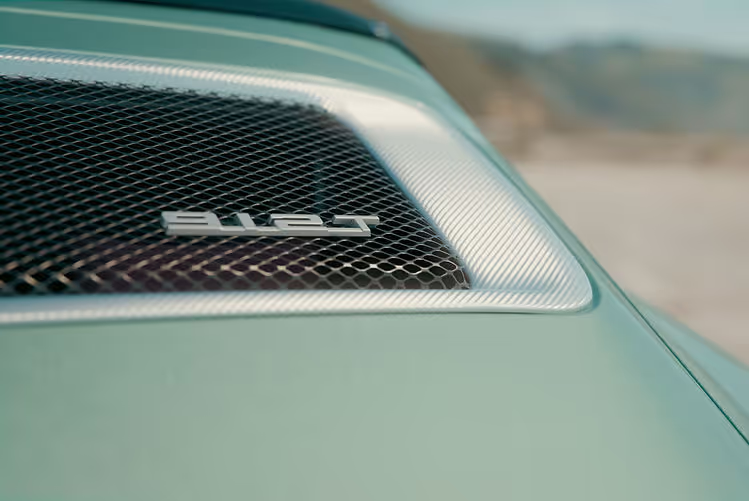
The rebuild includes tweaked cylinder heads and new pistons, and a bespoke intake system including the adoption of electric individual throttle bodies created by KAMM. Specific to the 912T, the exhaust is non-valved and is said to offer a more civilised tone compared to the unapologetic 912C. Cooling is handled by KAMM’s Carrera-style setup, and over 200 simulated engine configurations were tested before the final specification was selected.
The flat-four is mounted to a five-speed dogleg 901 gearbox with revised ratios, rebuilt in-house and paired with a bespoke hydraulic clutch and short-shifter. A ZF limited-slip differential is also standard.
As expected, the suspension is also more relaxed, foregoing the full adjustability of the C with a TracTive ‘comfort’ setup. Braking is taken care of by Brembo four-piston calipers at the front, with vented discs all round. They hide behind a choice between 15-inch Fuchs alloys or the more authentic steelies.
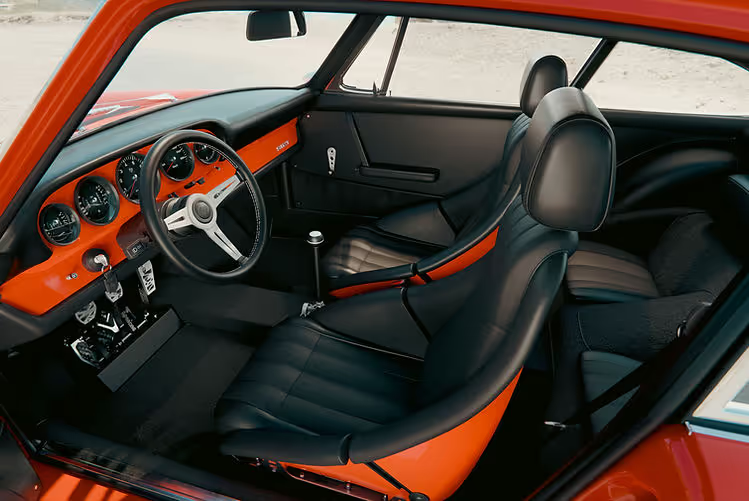
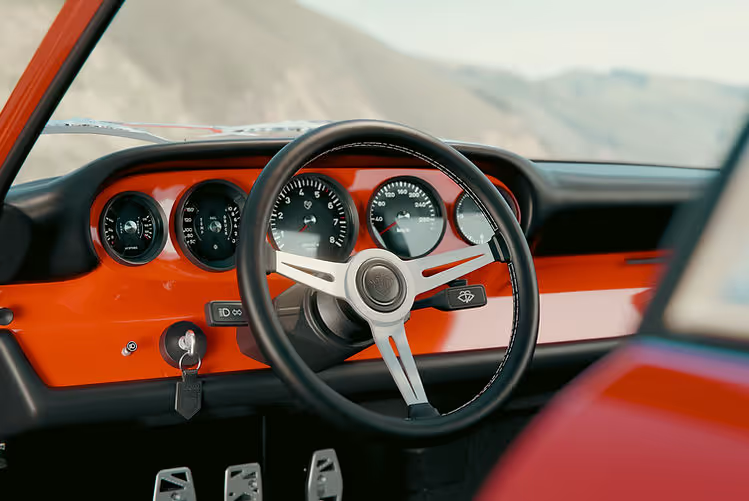
Inside, the 912T receives custom-built seats by Fusina tailored for long-distance support. A traditional five-dial Smiths gauge cluster (supplied by Caerbont) and a period-style steering wheel maintain the classic layout. Optional features include a hidden Bluetooth audio system and wireless charging. Despite the restraint visually, KAMM has completely redesigned the electrical system incorporating a new wiring loom and connector set, paired with a Power Distribution Module and proprietary ECU. This setup enables reliable electronics integration and precise engine calibration control.
Miki Kázmér, founder and CEO of KAMManufaktur, explained how the creation of the T was customer driven “The KAMM 912C is our interpretation of the iconic 912 for those who desire performance on both the road and track, but when we were asked if we could build a more relaxed, touring version, we were excited to create the 912T.
“The 912 is a timeless classic and in the 912T we have re-imagined it as a sports tourer that delivers elevated comfort without diluting the pure joy of driving.”
Production of the KAMM 912T will begin in early 2026. Each car is built to order, with pricing starting at €245,000, excluding the donor vehicle.


.avif)
.avif)

.svg)

