NEWS
Lanzante 95-59: A Coachbuilt Homage to the McLaren F1
Ken Pearson
By
Images by
Lanzante
Published
15 Jul 2025
Lanzante 95-59: A Coachbuilt Homage to the McLaren F1

Bespoke bodywork and a three-seat cabin reimagines a 750S chassis into a unique hypercar in tribute to the Le Mans winning F1 GTR.
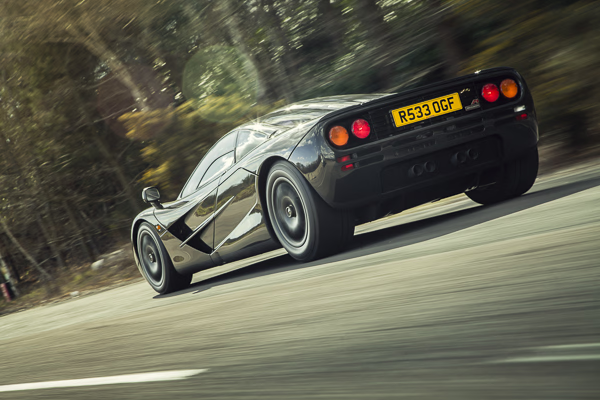
Thirty years after winning the 24 Hours of Le Mans, Lanzante is paying tribute to the car that conquered the Circuit de La Sarthe, and launched its business converting racers into road-legal machines. Called 95-59, the carbon-bodied supercar is named after the victorious year at Le Mans, and the number of the winning McLaren F1 GTR campaigned by Lanzante under the Kokusai Kaihatsu Racing name.
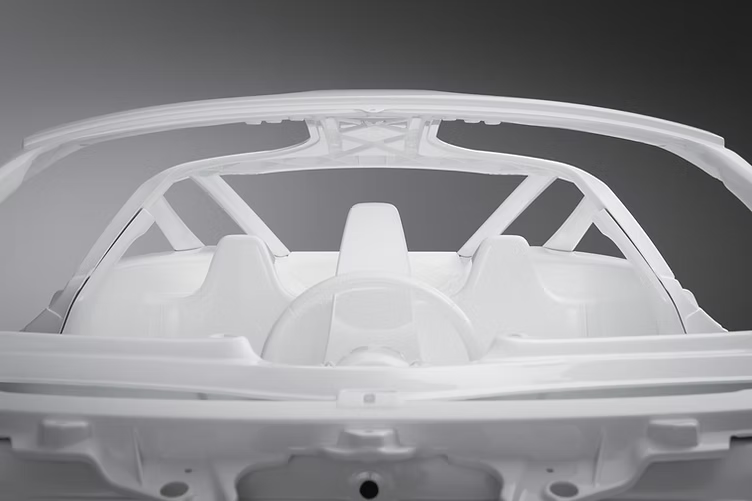
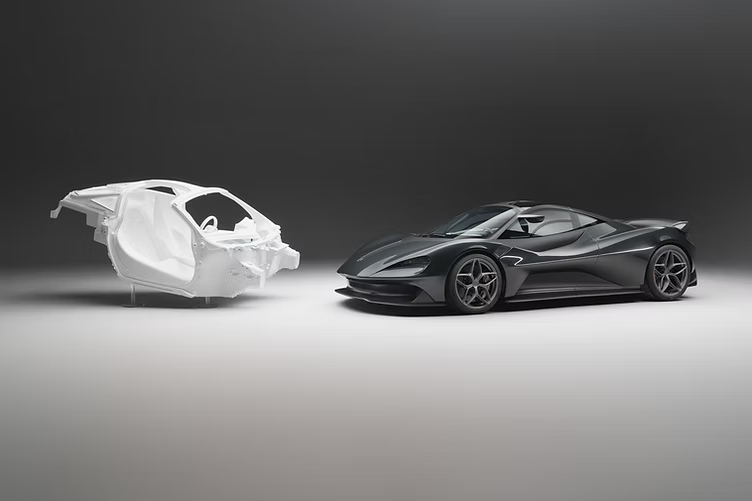
The 750S-based tribute draws heavily from the original race-winner with extensive modifications to allow for a central driving position. Like the F1, a pair of passenger seats are found at the extremities of the cabin, and these are mounted directly to the car’s carbon tub. Access is gained via enlarged butterfly doors, each with glass panels to allow plenty of light into the car.

Behind the cabin is an uprated 4.0-litre twin-turbocharged V8 that will produce over 850bhp and 649lb-ft (880Nm) of torque, sending its performance to the rear wheels via a seven-speed automatic transmission. When specified with the optional LM30 package, the already light kerb weight is cut by a further 20kg thanks to forged aluminium 19” and 20” staggered wheels, Inconel exhaust headers, titanium piping and body fixings, and gold-plated heat shielding in the engine bay – another classy nod to the project’s muse. LM30 models also gain an outline of the Circuit de La Sarthe on the driver’s headrest, a scrutineering-style chassis plaque, and additional exterior badging.
With a weight of 1,250kg and a power-to-weight ratio of 700bhp per tonne targeted, the car should easily better the 2.8-second 0-62mph time, and 206mph top speed of the car it’s based on. No changes to the suspension are reported, so we expect the car to utilise the same Proactive Chassis Control hydraulic active damping system which offers sharp handling dynamics, and high comfort levels when touring.

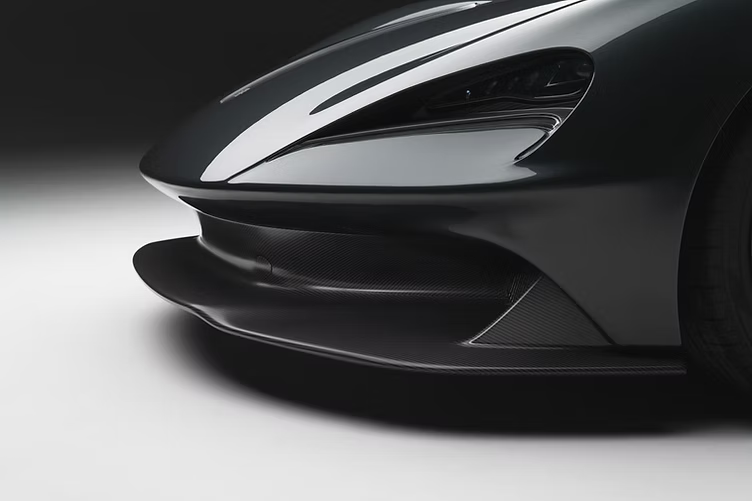
Unlike the Gordon Murray Automotive T.50, the 95-59 doesn’t base its styling on that of the McLaren F1. Instead, it’s a subtly-styled car of two halves, with the design led by Paul Howse, whose CV includes shaping the McLaren P1, and 720S. The car features a gentle, shrink-wrapped upper section underscored by prominent air-shaping elements such as the front splitter, side air channels, and pronounced rear diffuser. The teardrop-shaped cabin appears to rise from the bodywork, framed by air channels before falling gently towards the rear deck, and high-level exhaust.
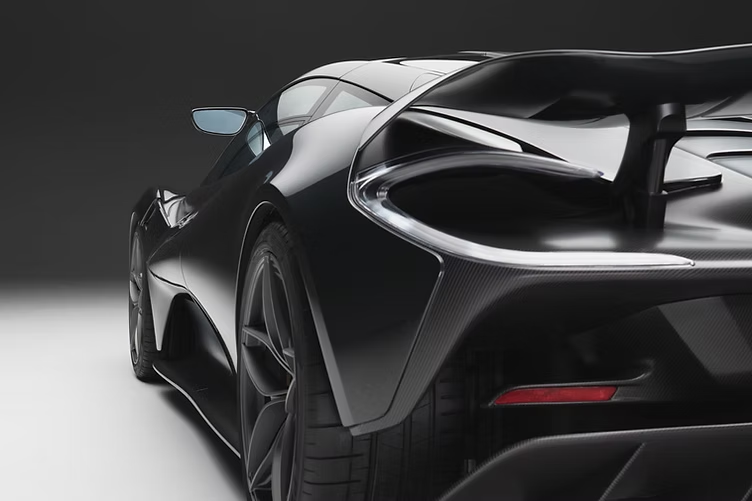
The front and rear lights are housed in the leading and trailing edges of the wheel arches respectively, with their shapes naturally guiding the eye into the centre of the car. An active rear wing will rise from the rear at speed or under heavy braking to improve stability. One final nod to history is the Uneo grey paint – the exact shade worn by the Le Mans-winning F1 GTR.
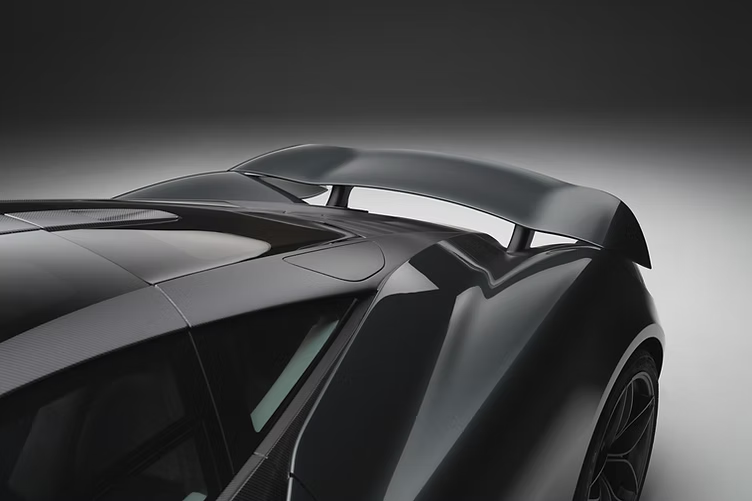
The 95-59 honours the anniversary of the famous Le Mans victory by re-imagining the ethos of the McLaren F1 in creating an immensely powerful and capable supercar, but an inherently usable one too, with grand touring capabilities baked into the carbon fibre structure.
Further details – including our first glimpse of the three-seat interior – are expected to follow as development reaches its conclusion. Production numbers are yet to be confirmed, but pricing will start at £1.3 million, including the cost of a donor car.

Author
Photography by:
Lanzante
Published on:
15 July 2025
Our Print Magazine
LATEST ARTICLES
About the Author

Ken Pearson
Deputy Editor
Resident Mercedes expert, affordable drivers' car champion and EV sympathiser. Can often be found on the other end of an argument with Craig with regards to powertrains and styling, bringing balance to the force.
Related Articles
NEVER MISS AN ARTICLE

Bespoke bodywork and a three-seat cabin reimagines a 750S chassis into a unique hypercar in tribute to the Le Mans winning F1 GTR.
Lanzante
15 July 2025
Bespoke bodywork and a three-seat cabin reimagines a 750S chassis into a unique hypercar in tribute to the Le Mans winning F1 GTR.
First published
15 July 2025
Last updated
26 October 2025
Photography
Lanzante
W
Thirty years after winning the 24 Hours of Le Mans, Lanzante is paying tribute to the car that conquered the Circuit de La Sarthe, and launched its business converting racers into road-legal machines. Called 95-59, the carbon-bodied supercar is named after the victorious year at Le Mans, and the number of the winning McLaren F1 GTR campaigned by Lanzante under the Kokusai Kaihatsu Racing name.
The 750S-based tribute draws heavily from the original race-winner with extensive modifications to allow for a central driving position. Like the F1, a pair of passenger seats are found at the extremities of the cabin, and these are mounted directly to the car’s carbon tub. Access is gained via enlarged butterfly doors, each with glass panels to allow plenty of light into the car.


Behind the cabin is an uprated 4.0-litre twin-turbocharged V8 that will produce over 850bhp and 649lb-ft (880Nm) of torque, sending its performance to the rear wheels via a seven-speed automatic transmission. When specified with the optional LM30 package, the already light kerb weight is cut by a further 20kg thanks to forged aluminium 19” and 20” staggered wheels, Inconel exhaust headers, titanium piping and body fixings, and gold-plated heat shielding in the engine bay – another classy nod to the project’s muse. LM30 models also gain an outline of the Circuit de La Sarthe on the driver’s headrest, a scrutineering-style chassis plaque, and additional exterior badging.
With a weight of 1,250kg and a power-to-weight ratio of 700bhp per tonne targeted, the car should easily better the 2.8-second 0-62mph time, and 206mph top speed of the car it’s based on. No changes to the suspension are reported, so we expect the car to utilise the same Proactive Chassis Control hydraulic active damping system which offers sharp handling dynamics, and high comfort levels when touring.


Unlike the Gordon Murray Automotive T.50, the 95-59 doesn’t base its styling on that of the McLaren F1. Instead, it’s a subtly-styled car of two halves, with the design led by Paul Howse, whose CV includes shaping the McLaren P1, and 720S. The car features a gentle, shrink-wrapped upper section underscored by prominent air-shaping elements such as the front splitter, side air channels, and pronounced rear diffuser. The teardrop-shaped cabin appears to rise from the bodywork, framed by air channels before falling gently towards the rear deck, and high-level exhaust.
The front and rear lights are housed in the leading and trailing edges of the wheel arches respectively, with their shapes naturally guiding the eye into the centre of the car. An active rear wing will rise from the rear at speed or under heavy braking to improve stability. One final nod to history is the Uneo grey paint – the exact shade worn by the Le Mans-winning F1 GTR.


The 95-59 honours the anniversary of the famous Le Mans victory by re-imagining the ethos of the McLaren F1 in creating an immensely powerful and capable supercar, but an inherently usable one too, with grand touring capabilities baked into the carbon fibre structure.
Further details – including our first glimpse of the three-seat interior – are expected to follow as development reaches its conclusion. Production numbers are yet to be confirmed, but pricing will start at £1.3 million, including the cost of a donor car.


Bespoke bodywork and a three-seat cabin reimagines a 750S chassis into a unique hypercar in tribute to the Le Mans winning F1 GTR.