-01.svg)

These days, unveiling a new model is often tense as fans and potential customers wait to see what will be powering the latest high-performance cars. For Porsche lovers, I’m happy to report that the GT3 retains the iconic flat six synonymous with the 911. Unlike previous facelifts, power remains unchanged at 503 bhp. There is, however, a slight dip in torque to 340 lb-ft (461 Nm), down from 347 lb-ft (471 Nm). The engine borrows the sharper camshafts from the GT3 RS, enhancing performance higher in the rev range as it nears that magical 9,000 rpm limiter.
To improve the driving dynamics of the GT3, Porsche has shortened the final drive by 8%, adding to driver engagement. The 0–62 mph sprint and top speed of the new GT3 depend on the gearbox you select. With the PDK twin-clutch automatic, 0–62 mph is achieved in 3.4 seconds, with a top speed of 193 mph. A manual GT3 takes half a second longer to hit 62 mph but compensates by reaching 194 mph.
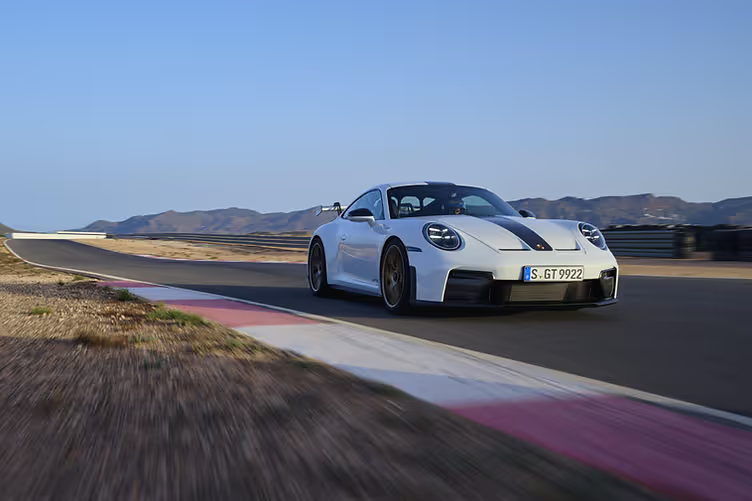
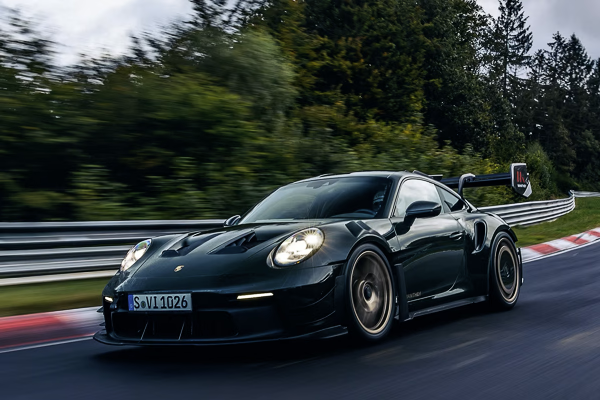
Much of Porsche’s time has been spent refining and improving the aerodynamics of the GT3. The front bumper has been adjusted to aid airflow, working with a refined spoiler lip, while underneath, modified fins help stick the car to the ground and direct air around the floor more efficiently. The redesigned matrix LED headlights contain all the light functions required on a road car, eliminating the need for additional running lights at the front and allowing for a larger air inlet area.
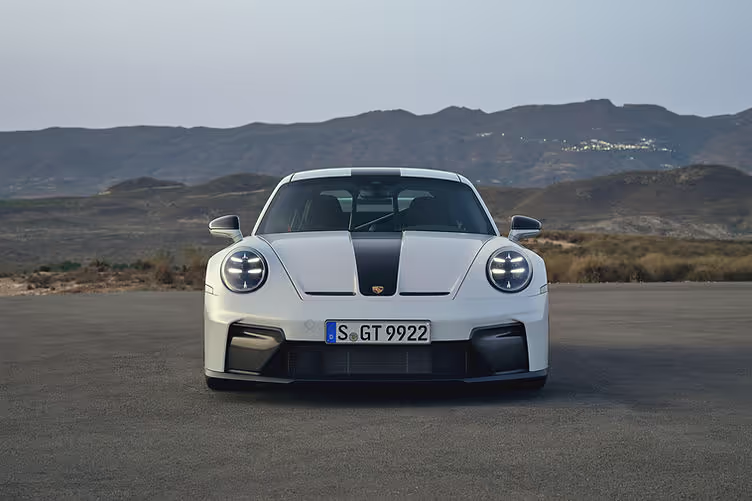

A notable improvement in underbody aerodynamics is the new teardrop-shaped trailing arms on the double-wishbone front axle. Not only do they improve downforce in the wheel arches, but they also enhance brake cooling. Porsche drew on lessons from the GT3 RS for the 992.2 GT3’s suspension setup, moving the front ball joint of the lower trailing arm further down the front axle.
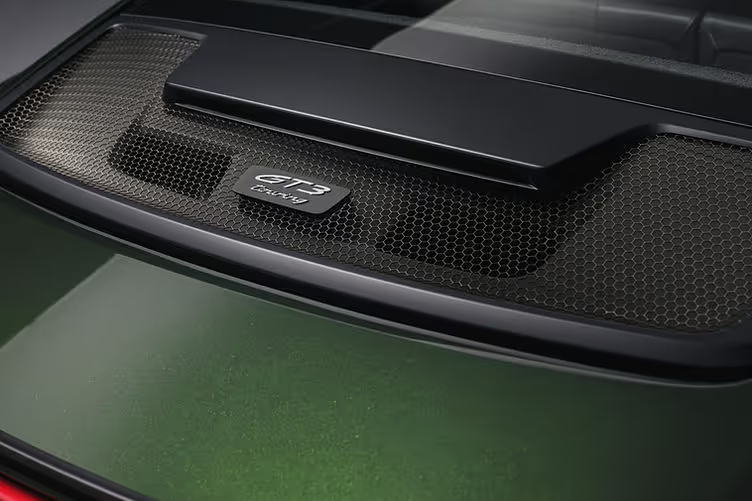
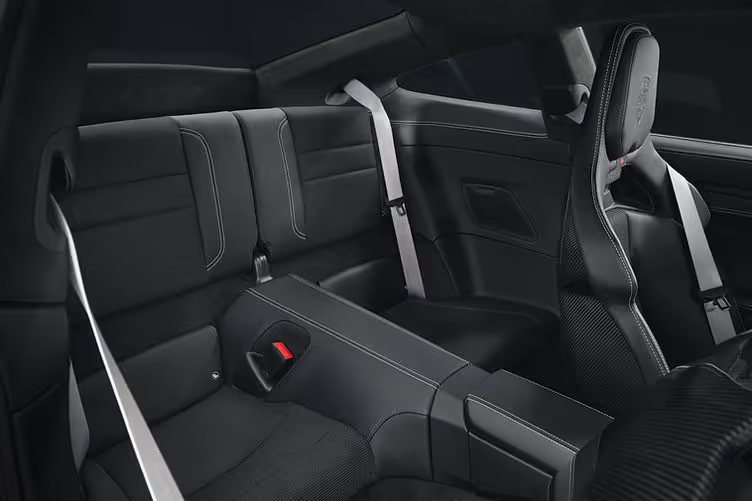
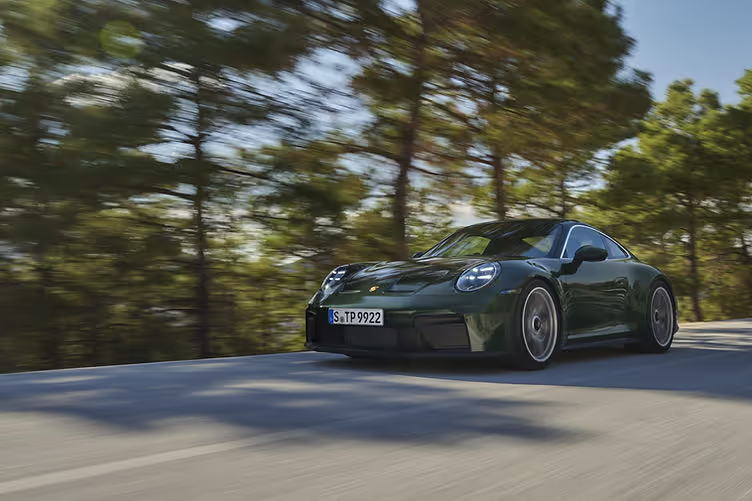
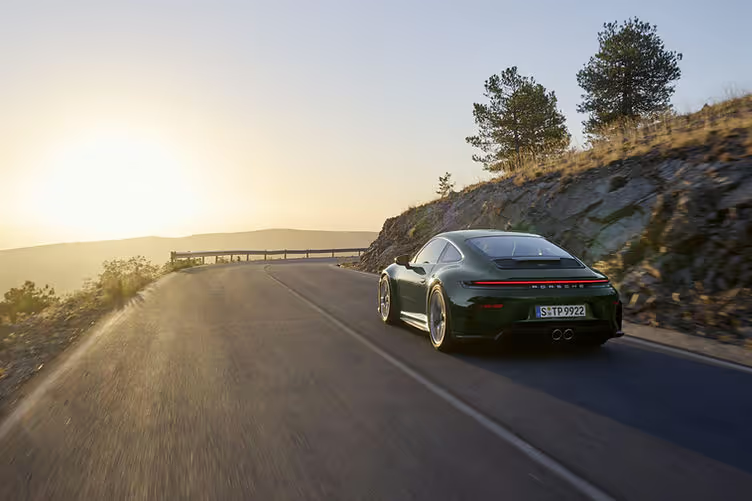
A key update is that for the first time, the GT3 Touring is available from launch. As with previous Tourings, the GT3’s rear wing has been removed, replaced by an active wing and gurney flap from the 911S/T. There had been complaints about the lack of rear seats in earlier Tourings, limiting everyday practicality — Porsche has addressed this, and rear seats are now optional with the Touring model.
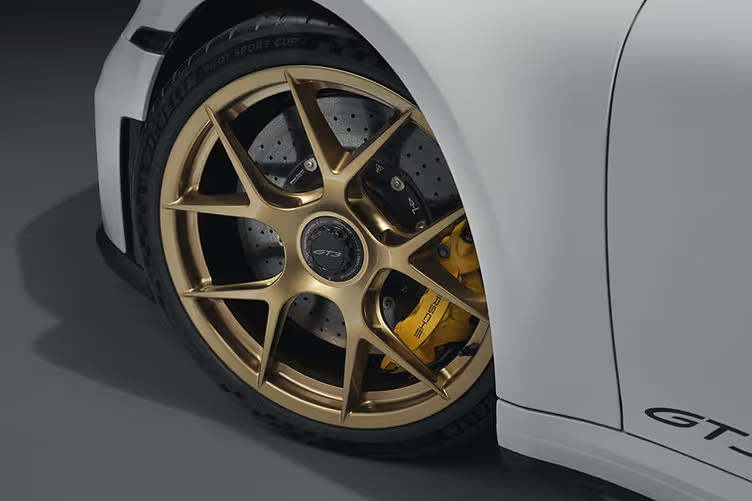
Alongside aerodynamic improvements, Porsche has also worked hard to shave more weight from the GT3. In its lightest specification, the GT3 weighs in at 1,420 kg. Porsche achieved this with new aluminium wheels, reducing unsprung mass by 1.5 kg compared to the outgoing model. For those seeking even lighter options, magnesium wheels are available with the Weissach or Leichtbau (lightweight) packs, saving an additional 9 kg.
The Weissach pack adds extensive Carbon-Fibre-Reinforced-Polymer (CFRP) components across the GT3, including the anti-roll bar, coupling rods, shear panel, roof, rear wing end plates, mirror caps, mirror triangles, and front airblades — all finished in CFRP. There’s also an optional CFRP roll cage, similar to the one in the GT3 RS, for those who desire even more.
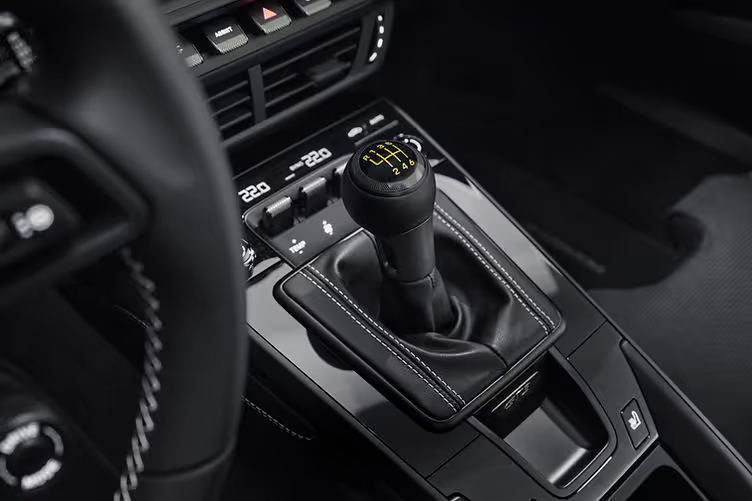
For buyers looking for a lightweight Touring, Porsche offers the Leichtbau package. This includes a painted roof to match the exterior colour, as well as CFRP stabilisers, coupling rods, and a shear panel. You also get lightweight magnesium forged wheels and lightweight door handles. Manual Tourings benefit from the same shorter gear stick found in the 911 S/T. A small Leichtbau plaque can be found inside the GT3 as a reminder of the package.

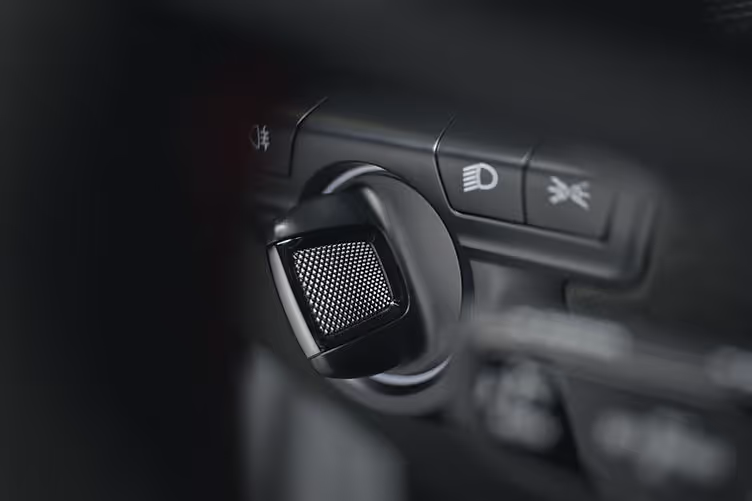
Moving inside, the most notable change is the absence of the traditional analogue rev counter. However, unlike other 992.2 911s, the GT3 retains the rotary ignition switch, a nod to Porsches of yesteryear. The interior also features new folding lightweight sports bucket seats, with an optional CFRP shell. These seats will make those late-evening summer track days even more enjoyable, providing added security. If it feels snug inside the GT3 with a helmet on, part of the headrest padding can be removed.
For those eager to get on the configurator and send their specs to their local Porsche dealer, orders open at the end of the year. Prices will start from £157,300, and with options, an on-the-road price nearing £180,000 wouldn’t be surprising. If you can, place your order soon, as we don’t yet know if this will be the final pure fossil-fuelled GT3. The next 911 is expected to feature hybridisation across most of the range, possibly extending into the GT line-up.



-3.avif)

.svg)

