-01.svg)

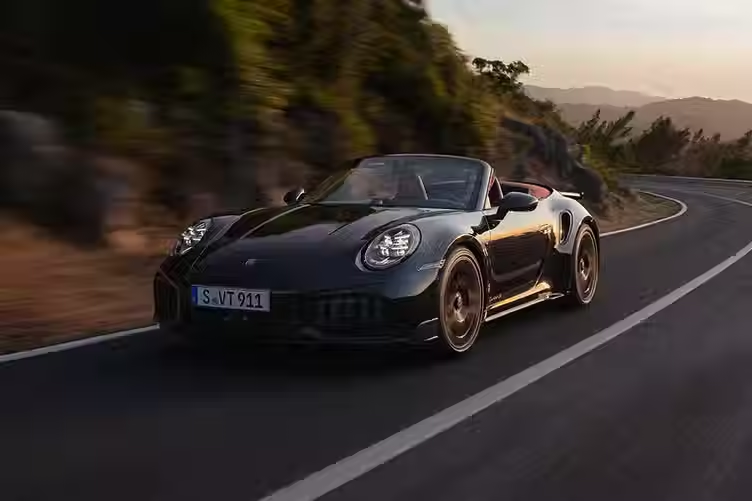
Powering the 992.2 Turbo is a 3.6-litre flat six derived from the Carrera GTS. In this setting, the engine uses a pair of electric exhaust gas turbochargers - one for each cylinder bank. Each one features a bespoke turbine and compressor, and an electric motor on the shaft to deliver maximum boost instantaneously and eliminate turbo lag. Between the engine and the 8-speed dual-clutch gearbox sits an electric motor drawing power from a 1.9kWh battery, making for a combined output of 703bhp from 6,500-7,000rpm, and a broad 590lb-ft (800Nm) plateau of torque from 2,300-6000rpm.
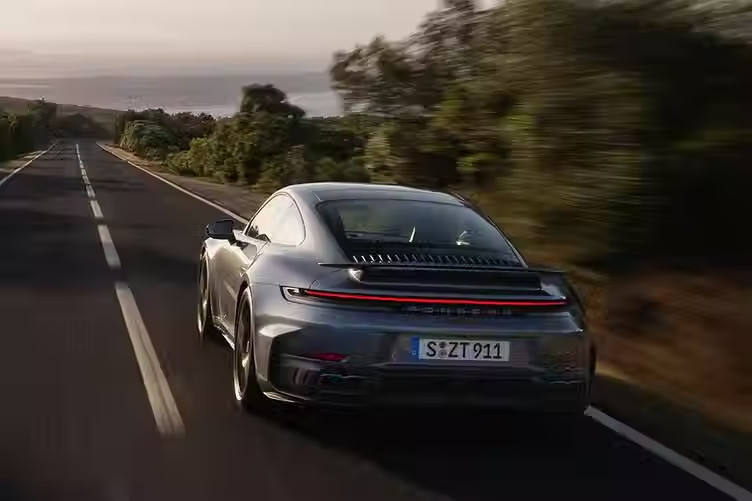
The result for the coupé is a 0-62mph time of 2.5 seconds, with 124mph flashing by after 8.4 seconds. The cabriolet takes 2.6 and 8.8 seconds to reach the same speeds from a standing start, but the top speed now stands at 200mph for both variants. Beyond the powertrain, the introduction of the 400v hybrid system has allowed electro-hydraulic adaptive suspension to be fitted. The system uses cross-connected active coupling rods which build up pressure from oil volume flow when cornering. The increased stability and newfound agility contributes to a Nürburgring Nordschleife lap time of 7:03.92 - 14 seconds quicker than the 992.1 Turbo S.
The facelifted Turbo S gets carbon ceramic brakes as standard, and these are the largest ever fitted to a 911. The front discs measure 420mm while the rears have grown to 410mm in diameter - increases of 10 and 20mm respectively. Newly developed brake pads are fitted that promise improved pedal feel and performance. The carbon brakes are shrouded by staggered 20/21” wheels, with the rear contact patch increasing by 10mm.
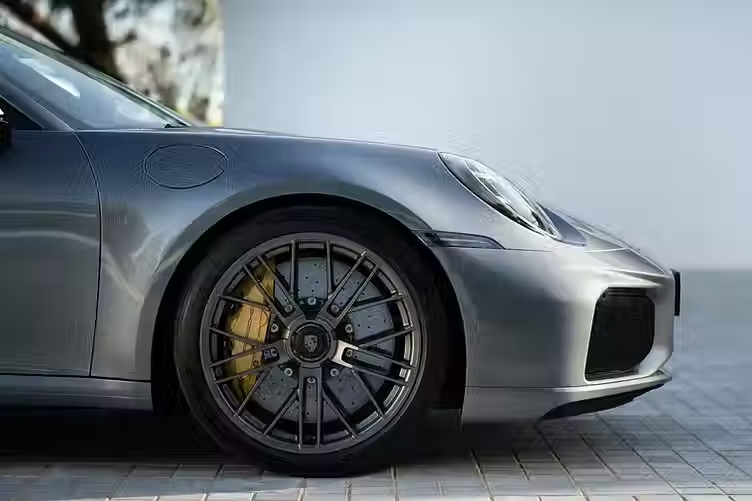
Elsewhere, active aerodynamic elements comprise grille flaps and an extendable splitter at the front, and the tilting wing at the rear. These vary their positions to improve cooling when required, reduce lift, or reduce drag when aiming for the car’s top speed. The engineering changes have resulted in a kerb weight increase of 85kg, with the coupé tipping the scales at 1,740kg, and the cabriolet weighing 1,825kg.
Subtle styling tweaks separate the new 911 Turbo S from the rest of the 992.2 range, with a unique front splitter design, and a rear bumper that accentuates the widened body. The badges, wheels, and window surrounds are all finished in Porsche’s Turbonite hue - a dark metallic grey which looks less beige in person than it does on the configurator.
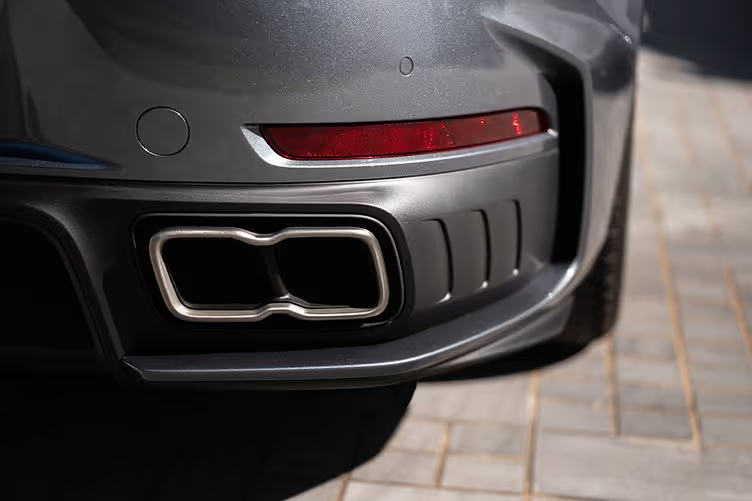
All models get Turbo S decals on the doors, and a weight-saving titanium switchable exhaust system as standard. The double-square tip design can be switched for ovals as a cost option. The car’s look can be further customised with the SportDesign packages that add canards to the front bumper, painted side sills, and a widened lower section to the rear wing, complete with upturned winglets. Also available are aerodynamically-optimised carbon fibre windscreen wiper arms which lower the car’s centre of gravity.
Inside, the analogue rev counter has been replaced with pixels on the curved five-dial display, while the mechanical stopwatch of the standard-fit Sport Chrono package sits atop the dashboard. Turbonite trim is found throughout the cabin, and physical controls for air conditioning, exhaust and drive mode settings, and more remain on the centre console.
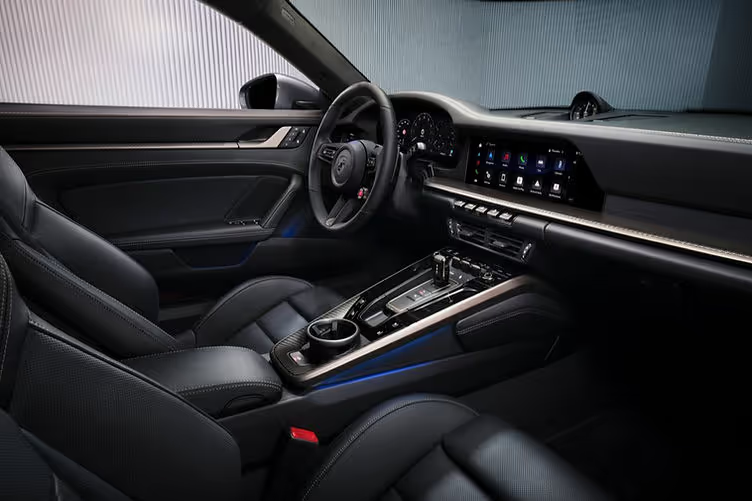
18-way electrically-adjustable seats come as standard for both bodystyles, with GT3 carbon-fibre bucket seats available as an option for the coupé. Like the GTS, the fixed-roof variant dispenses with the rear bench, but this can be added as a no-cost option.
Pricing starts from £199,100 and £209,100 for the coupé and cabriolet respectively, with order books open now. With a few option boxes ticked, our time on the configurator saw the price rise to £241,382 for a soft-top model. Deliveries of the range-topping model will commence at the start of 2026, and we expect a “non-S” Turbo model to follow next year.


-3.avif)

.svg)

