-01.svg)

Slate Auto, a new US-based company backed by Amazon founder Jeff Bezos, is attempting to break the cycle. Its debut model, the Slate Truck, does away with excess in favour of a modular, low-cost electric pickup built for practical, everyday use.
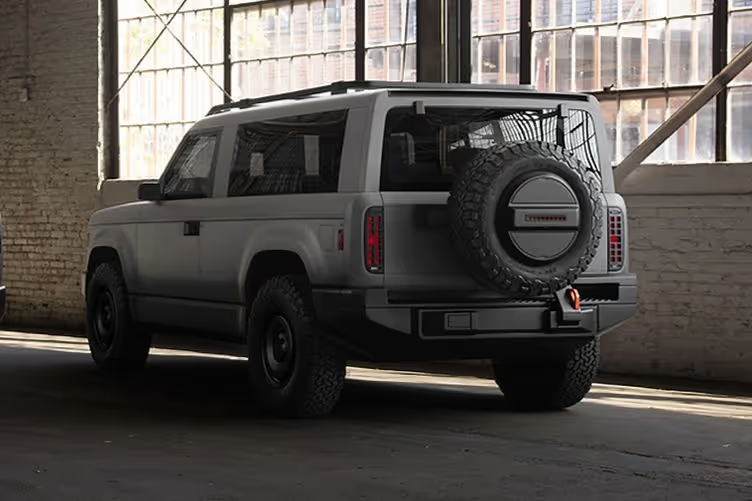
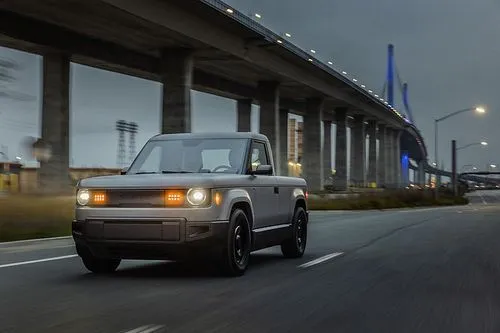
The design philosophy is immediately apparent – retro without tipping into pastiche, with more than a hint of Toyota Land Cruiser about it. Except in size. This is a compact, two-door, rear-wheel-drive utility vehicle, powered by a single electric motor delivering 201bhp and 195lb-ft of torque.
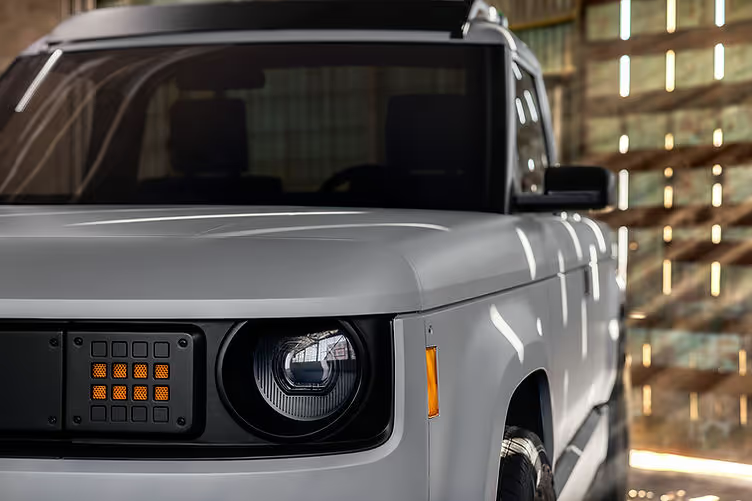
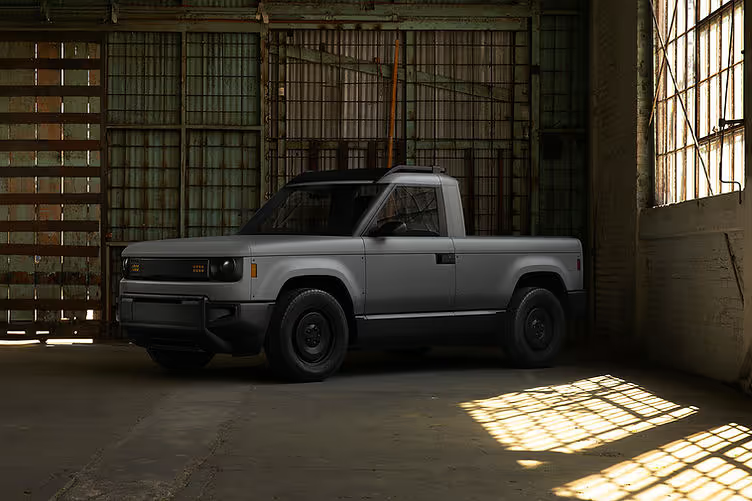
Performance figures are modest, with a 0–60mph time of eight seconds and a top speed of 90mph. But then a performance car this is not – utility is more important. Measuring just 4.43 metres in length, the Slate Truck still manages to offer a five-foot bed and a front storage compartment, thanks to the rear-drive layout. Payload capacity stands at a useful 650kg, while towing is rated at 454 kilograms.
It launches with a 52.7kWh battery, targeting an estimated range of 150 miles. A larger 84.3kWh pack is also available, extending range to around 240 miles. Both configurations support DC charging up to 120kW via an NACS connector, with Slate claiming a 20 to 80 per cent top-up in under 30 minutes.
The approach to the interior is similarly restrained. Electric windows have been replaced with manual cranks. Mirrors are adjusted by hand. There is no touchscreen or factory-installed navigation system. Instead, the dashboard features a mount and a charging point, encouraging owners to bring their own smartphone or tablet to run apps and navigation. Only a simple digital instrument cluster remains fixed, tasked with basic vehicle information and rear-view camera display duties.
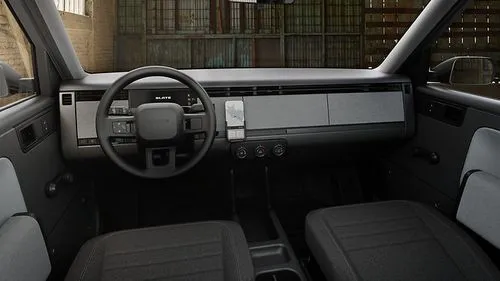
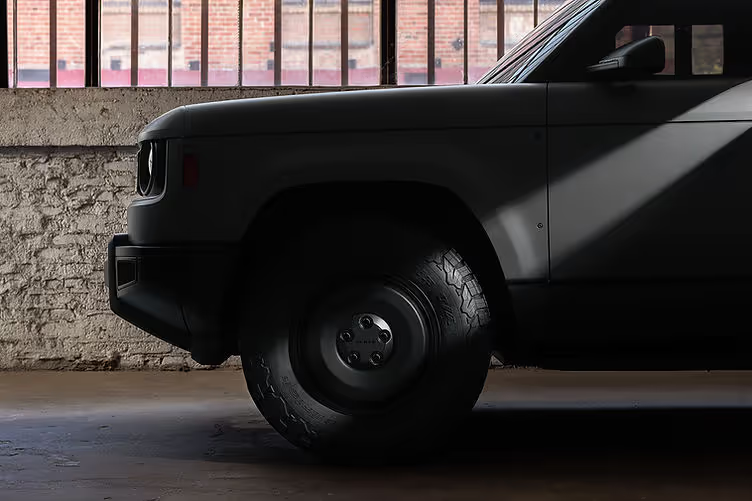
Air conditioning is included, although it too is manually operated, using three rotary controls. Forward collision warning and automatic emergency braking are standard, and Slate confirms the Truck will be fitted with up to eight airbags. Beyond these essentials, the brand has chosen to prioritise reliability, cost control and manufacturing simplicity over an extensive list of luxury options.
Rather than offering multiple trim levels, Slate plans to sell a single standardised configuration, with personalisation available through a catalogue of more than 100 accessories. Customers will be able to modify their trucks with upgraded wheels, power windows, suspension kits or cosmetic add-ons like vinyl wraps. One of the most significant options is an SUV conversion kit, which transforms the truck into a five-seat vehicle by adding a roll cage, rear bench seat, additional airbags and a new body shell. Slate has shown two variations of the SUV top so far: a boxy design and a more tapered fastback version.


The manufacturing model behind the Truck reflects this ethos of simplicity. Slate will build all vehicles in a retooled facility in America’s Midwest, focusing on efficient, low-variation production to keep costs down. While base pricing starts just below USD 27,500, buyers in the United States eligible for the federal EV tax credit will see the cost drop closer to USD 20,000. That’s £15,000 at today’s exchange rate.
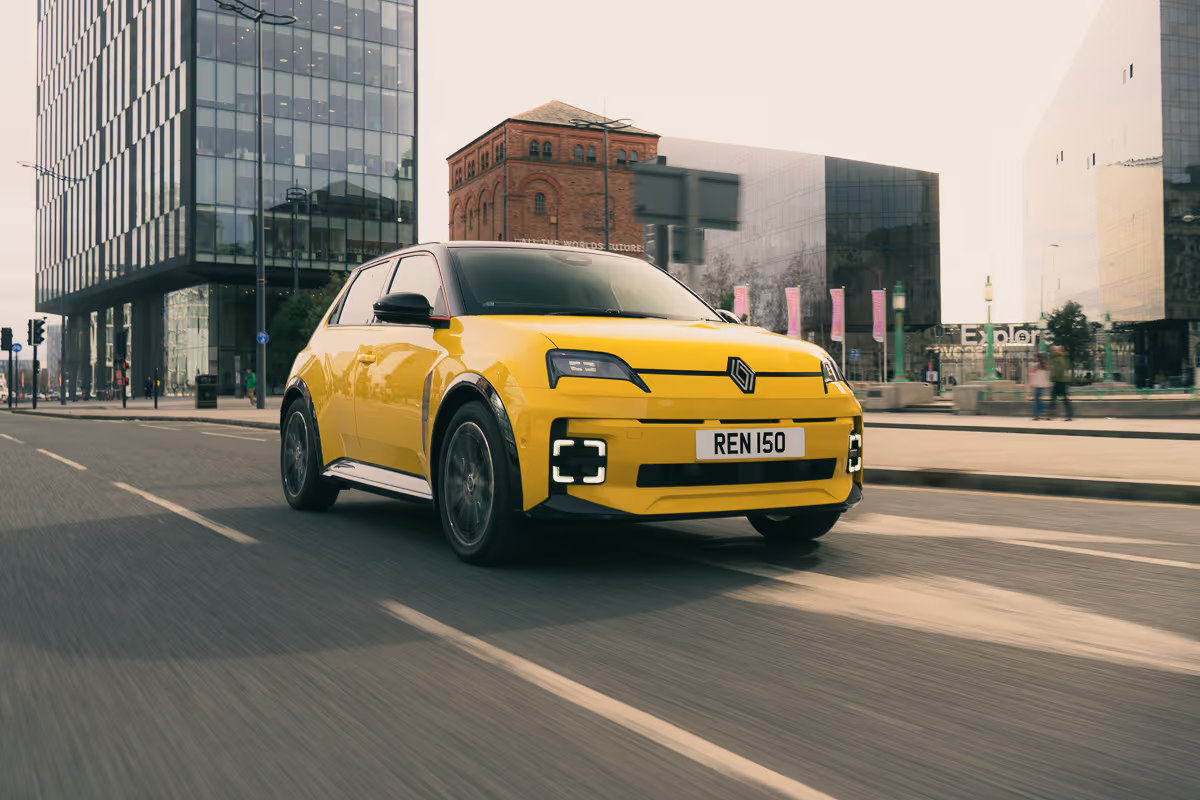
Although designed for the North American market, the Slate Truck’s “Model T” philosophy is refreshing and could have a wider impact. In Europe, demand for affordable EVs such as the Renault 5, Dacia Spring and VW’s forthcoming ID One is escalating. American cars are typically too large for European roads, but the smaller proportions and sharp styling of the Slate Truck mean it would be well received.
The question remains to be seen if Slate Auto can go the distance, with so many start-up EVs falling by the wayside. But with Amazon’s financial backing and Christine Barman – former head of electrical and electronics engineering at Stellantis North America – at the helm, Slate looks better placed than most.



.svg)

