NEWS
Bertone Runabout Resurrected and Reimagined For Production
Ken Pearson
By
Images by
Bertone
Published
29 Jan 2026
Bertone Runabout Resurrected and Reimagined For Production

Built around an Exige chassis and a 469bhp V6, the famous concept has been updated for 2026, finally making it to production after 57 years.
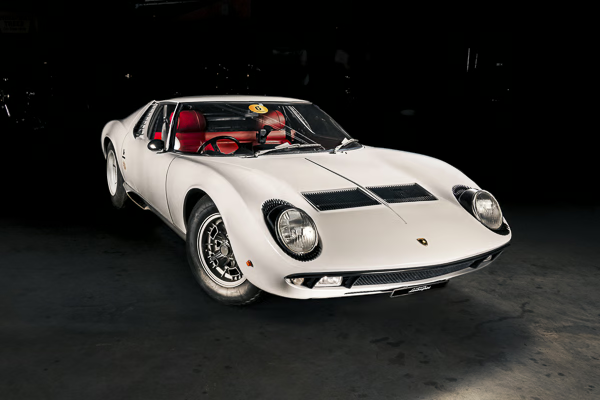
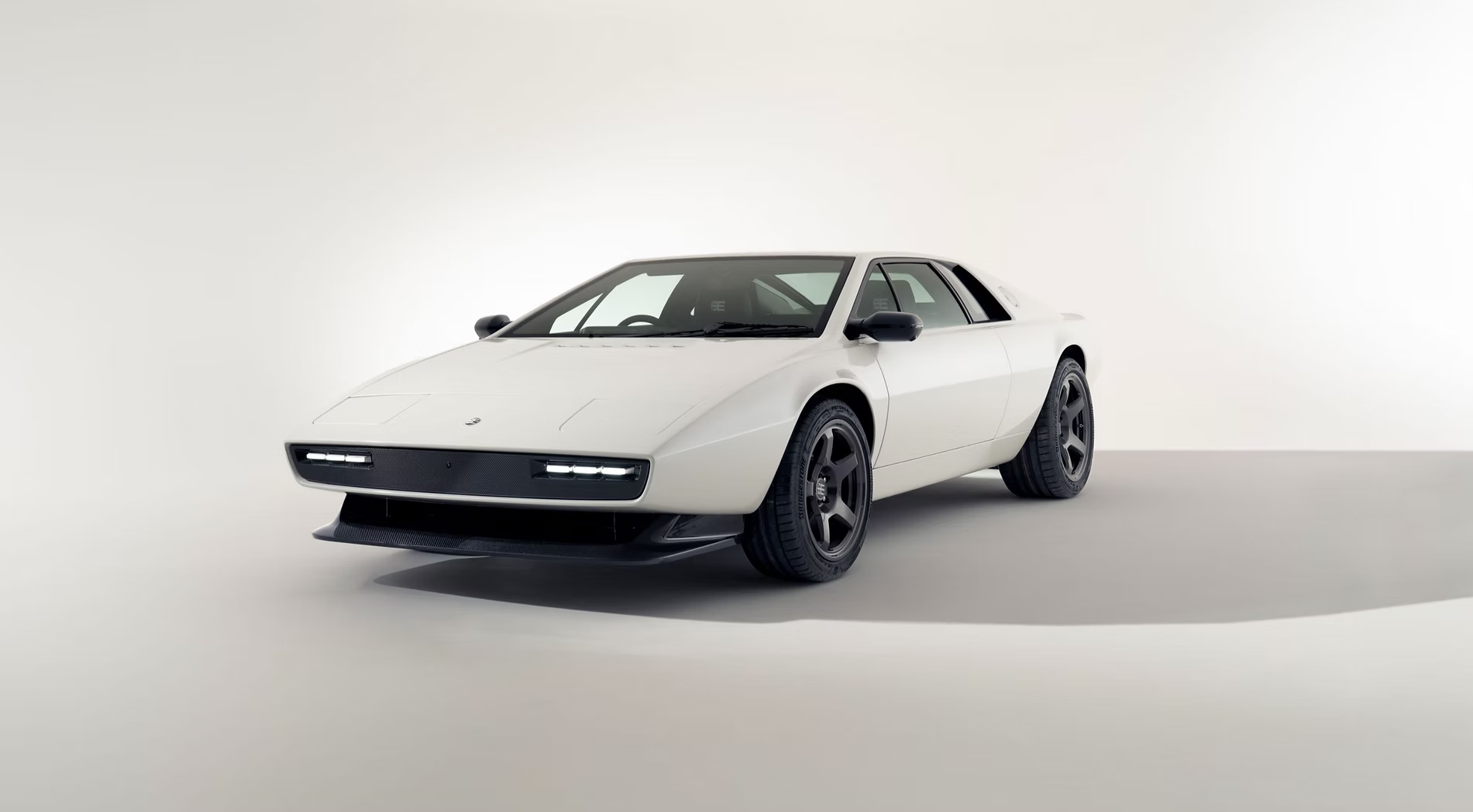
First shown in 1969, the Runabout was a marine-inspired one-off built around an Autobianchi A112 chassis. The wedge-shaped concept went on to steer the styling of the Fiat X1/9, but now Bertone has brought the model to the road in its own right. Using a brand-new Lotus Exige chassis as its base, the classic design has been comprehensively modernised, with a bespoke carbon fibre body, new interior, and a supercharged V6 powertrain.
The wedge-shape remains whether presented in roofless Barchetta, or Targa forms. Reinforcing the nautical connection, the black lower body takes the form of a boat’s hull with curved panels and ribbing. The white upper panels are separated by a red character line that gently widens as it travels the length of the Runabout. Slim pop-up LED headlights rise from the bumper when required, and an S-duct vents air through the nose, with a carbon fibre outlet tracing its path to the front bulkhead.
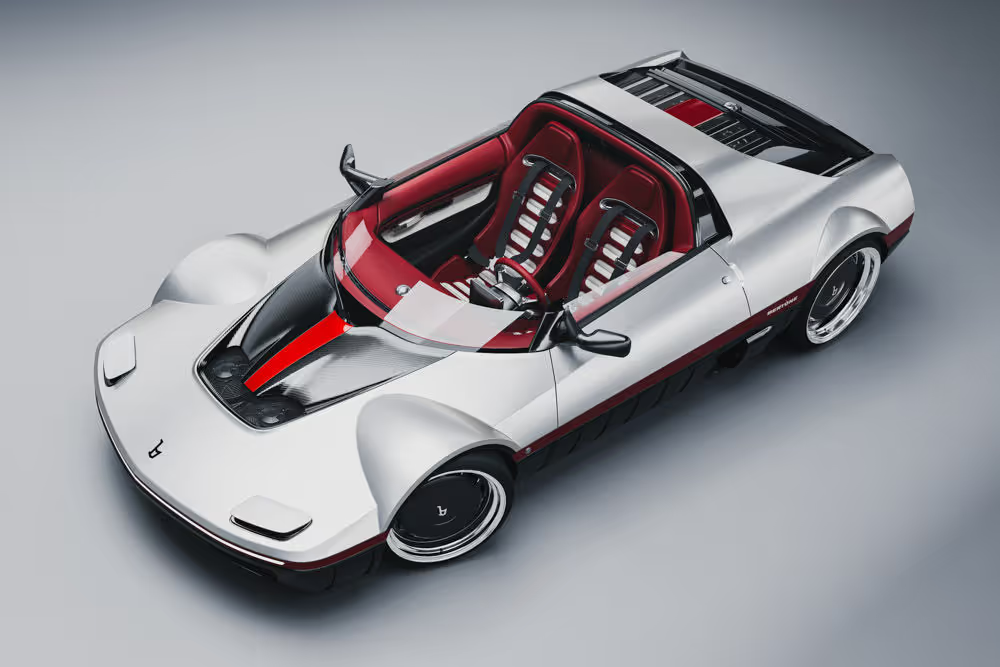

So low is the nose, that the front arches stand above the sloping bodywork, with blistered wheel wells reaching in towards the centre of the chassis, and housing double-wishbone suspension with adjustable dampers and roll-bars. The Runabout is fitted with forged aluminum wheels on both axles, with a staggered 18/19” set-up, and Michelin Pilot Sport 4S tyres.
Behind the cabin, a large roll hoop serves as an air channel, guiding air towards the short deck. An enlarged engine cover hosts four of the ten horizontal louvres that dominate the rear end, and allow the engine to dispose of excess heat. A subtle ducktail spoiler is integrated within one of the louvres, and the twin-exit exhaust is housed within the bumper itself, breathing through two of the four square openings.
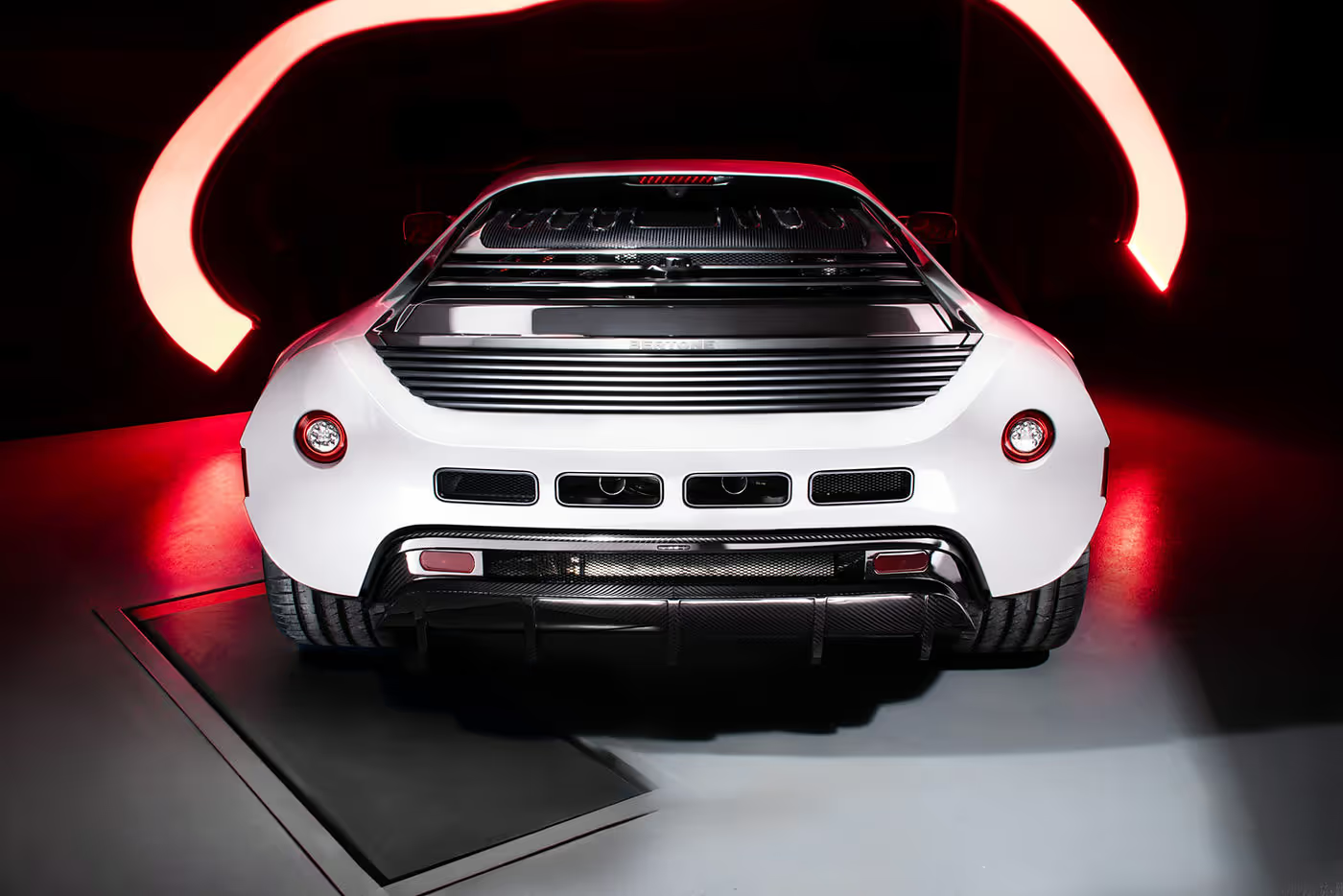

Mounted transversely within the chassis, the Toyota-sourced 3.5-litre supercharged V6 has been enhanced for use in the new Runabout. Benefiting from a carbon fibre airbox, forged aluminium crankshaft, stainless steel exhaust manifolds, and a new Eaton/Edelbrock supercharger, the powertrain now develops 469bhp and 361lb-ft (490Nm) of torque. The performance is sent to the rear wheels via a 6-speed manual gearbox, and the car accelerates from 0-62mph in 4.1 seconds. The top speed stands at 168mph, and thanks to weighing only 1,057kg, the Runabout boasts a power-to-weight ratio of 444bhp per tonne.
The Runabout’s interior majors on detailed simplicity, acting as an antidote to modern cabins that feature pillar-to-pillar displays. Instead, just one screen features ahead of the driver, showing the coolant temperature, fuel level, selected gear, revs, speed, and nothing else. Leather and machined aluminium features throughout the cabin, with the dashboard playing host to a magnetic compass in another nod to the boats that inspired the car.

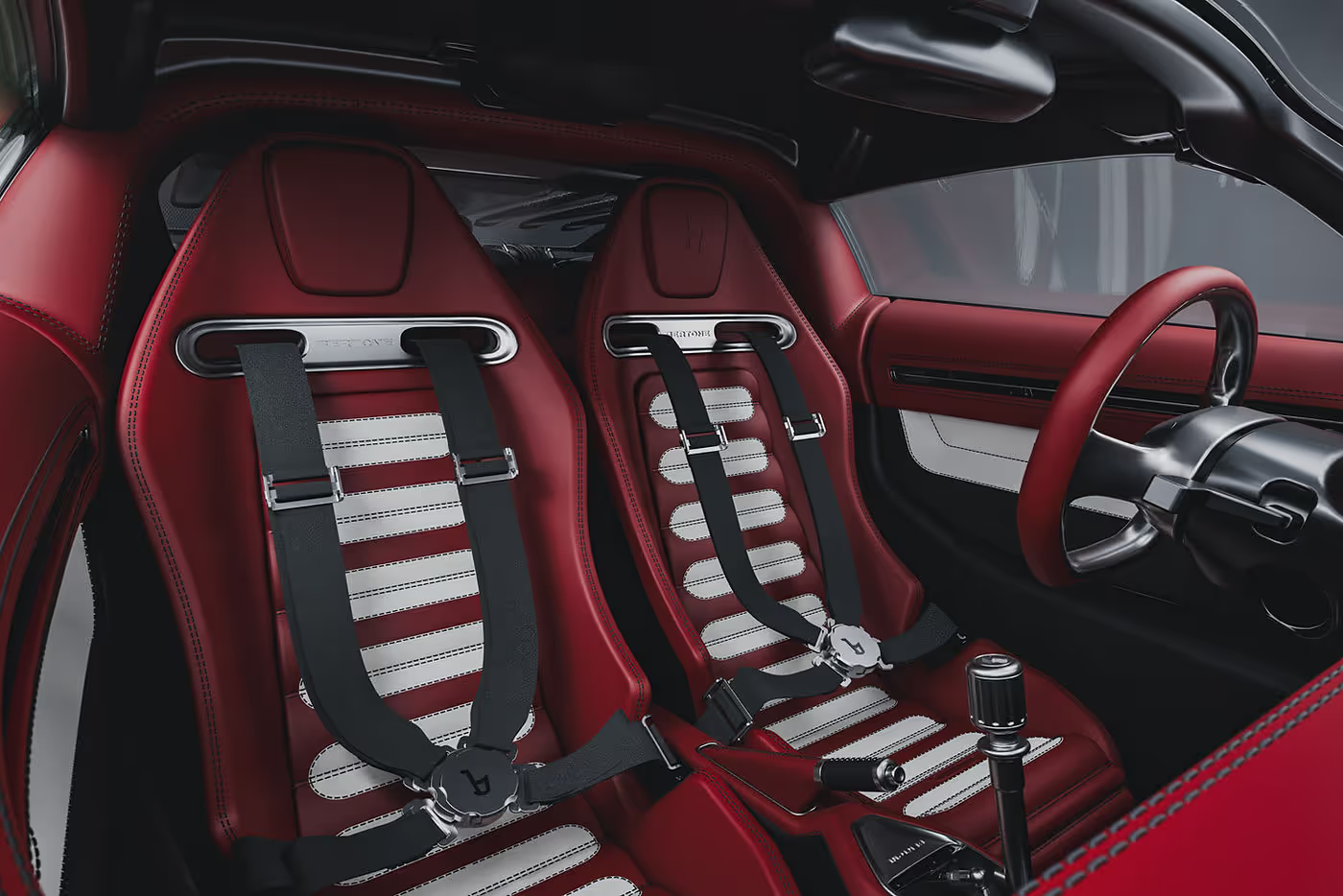
Every detail has been refined within the cabin, from the continuation of the tri-colour theme of the exterior, to the bespoke metal wiper and indicator stalks, and the new rear-view mirror housing. A pair of carbon fibre bucket seats feature four-point harnesses, adding to the visual theatre, but also hinting towards track use for those that wish to push their mobile artwork to the limits.
Only 25 examples of the coachbuilt Bertone Runabout will be made, with extensive customisation possible. Pricing starts from £337,000 before taxes and personalised options.

Author
Photography by:
Bertone
Published on:
29 January 2026
Our Print Magazine
LATEST ARTICLES
About the Author

Ken Pearson
Deputy Editor
Resident Mercedes expert, affordable drivers' car champion and EV sympathiser. Can often be found on the other end of an argument with Craig with regards to powertrains and styling, bringing balance to the force.
Related Articles
NEVER MISS AN ARTICLE

Built around an Exige chassis and a 469bhp V6, the famous concept has been updated for 2026, finally making it to production after 57 years.
Bertone
29 January 2026
Built around an Exige chassis and a 469bhp V6, the famous concept has been updated for 2026, finally making it to production after 57 years.
First published
29 January 2026
Last updated
29 January 2026
Photography
Bertone
W
First shown in 1969, the Runabout was a marine-inspired one-off built around an Autobianchi A112 chassis. The wedge-shaped concept went on to steer the styling of the Fiat X1/9, but now Bertone has brought the model to the road in its own right. Using a brand-new Lotus Exige chassis as its base, the classic design has been comprehensively modernised, with a bespoke carbon fibre body, new interior, and a supercharged V6 powertrain.
The wedge-shape remains whether presented in roofless Barchetta, or Targa forms. Reinforcing the nautical connection, the black lower body takes the form of a boat’s hull with curved panels and ribbing. The white upper panels are separated by a red character line that gently widens as it travels the length of the Runabout. Slim pop-up LED headlights rise from the bumper when required, and an S-duct vents air through the nose, with a carbon fibre outlet tracing its path to the front bulkhead.


So low is the nose, that the front arches stand above the sloping bodywork, with blistered wheel wells reaching in towards the centre of the chassis, and housing double-wishbone suspension with adjustable dampers and roll-bars. The Runabout is fitted with forged aluminum wheels on both axles, with a staggered 18/19” set-up, and Michelin Pilot Sport 4S tyres.
Behind the cabin, a large roll hoop serves as an air channel, guiding air towards the short deck. An enlarged engine cover hosts four of the ten horizontal louvres that dominate the rear end, and allow the engine to dispose of excess heat. A subtle ducktail spoiler is integrated within one of the louvres, and the twin-exit exhaust is housed within the bumper itself, breathing through two of the four square openings.


Mounted transversely within the chassis, the Toyota-sourced 3.5-litre supercharged V6 has been enhanced for use in the new Runabout. Benefiting from a carbon fibre airbox, forged aluminium crankshaft, stainless steel exhaust manifolds, and a new Eaton/Edelbrock supercharger, the powertrain now develops 469bhp and 361lb-ft (490Nm) of torque. The performance is sent to the rear wheels via a 6-speed manual gearbox, and the car accelerates from 0-62mph in 4.1 seconds. The top speed stands at 168mph, and thanks to weighing only 1,057kg, the Runabout boasts a power-to-weight ratio of 444bhp per tonne.
The Runabout’s interior majors on detailed simplicity, acting as an antidote to modern cabins that feature pillar-to-pillar displays. Instead, just one screen features ahead of the driver, showing the coolant temperature, fuel level, selected gear, revs, speed, and nothing else. Leather and machined aluminium features throughout the cabin, with the dashboard playing host to a magnetic compass in another nod to the boats that inspired the car.


Every detail has been refined within the cabin, from the continuation of the tri-colour theme of the exterior, to the bespoke metal wiper and indicator stalks, and the new rear-view mirror housing. A pair of carbon fibre bucket seats feature four-point harnesses, adding to the visual theatre, but also hinting towards track use for those that wish to push their mobile artwork to the limits.
Only 25 examples of the coachbuilt Bertone Runabout will be made, with extensive customisation possible. Pricing starts from £337,000 before taxes and personalised options.


Built around an Exige chassis and a 469bhp V6, the famous concept has been updated for 2026, finally making it to production after 57 years.