-01.svg)

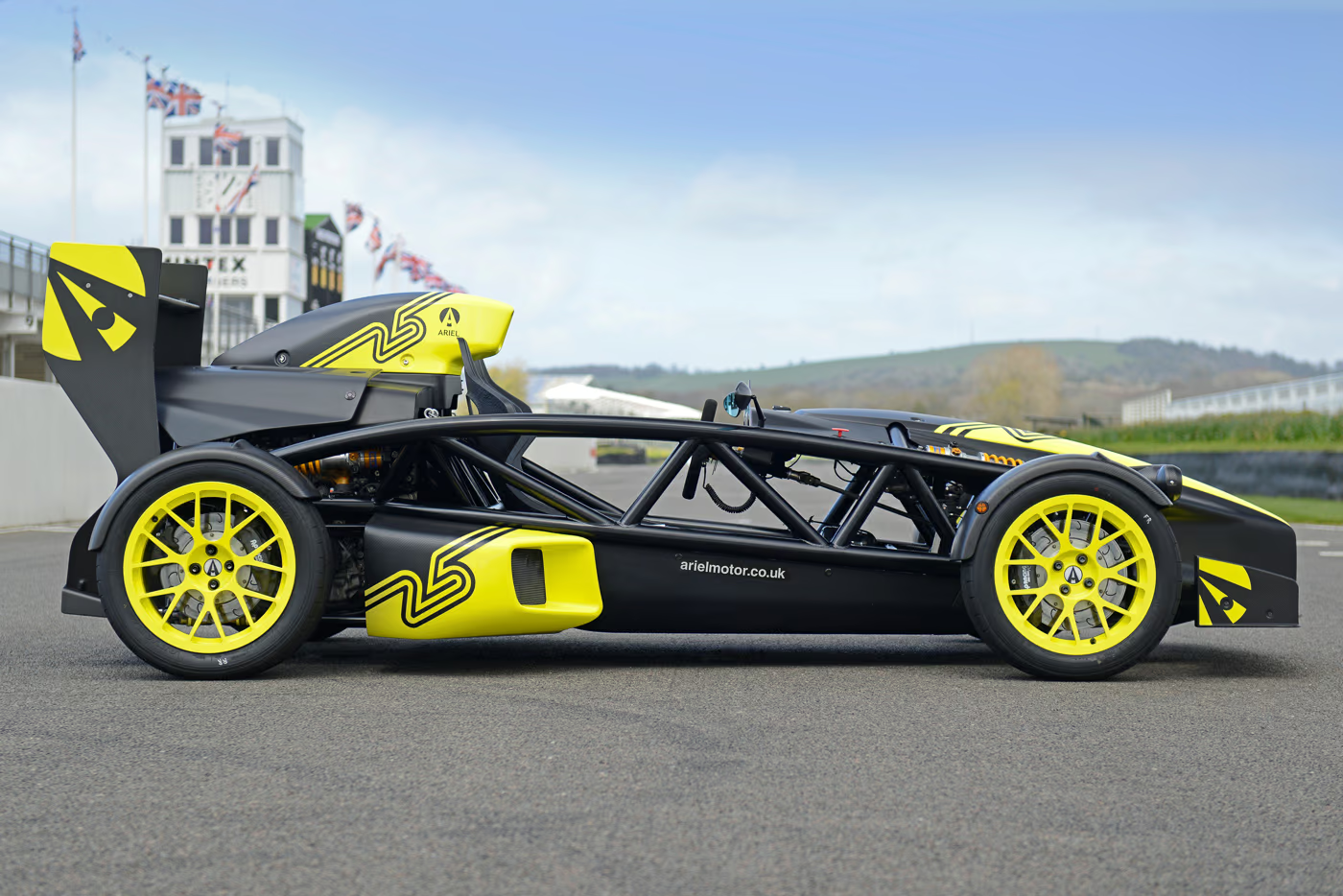
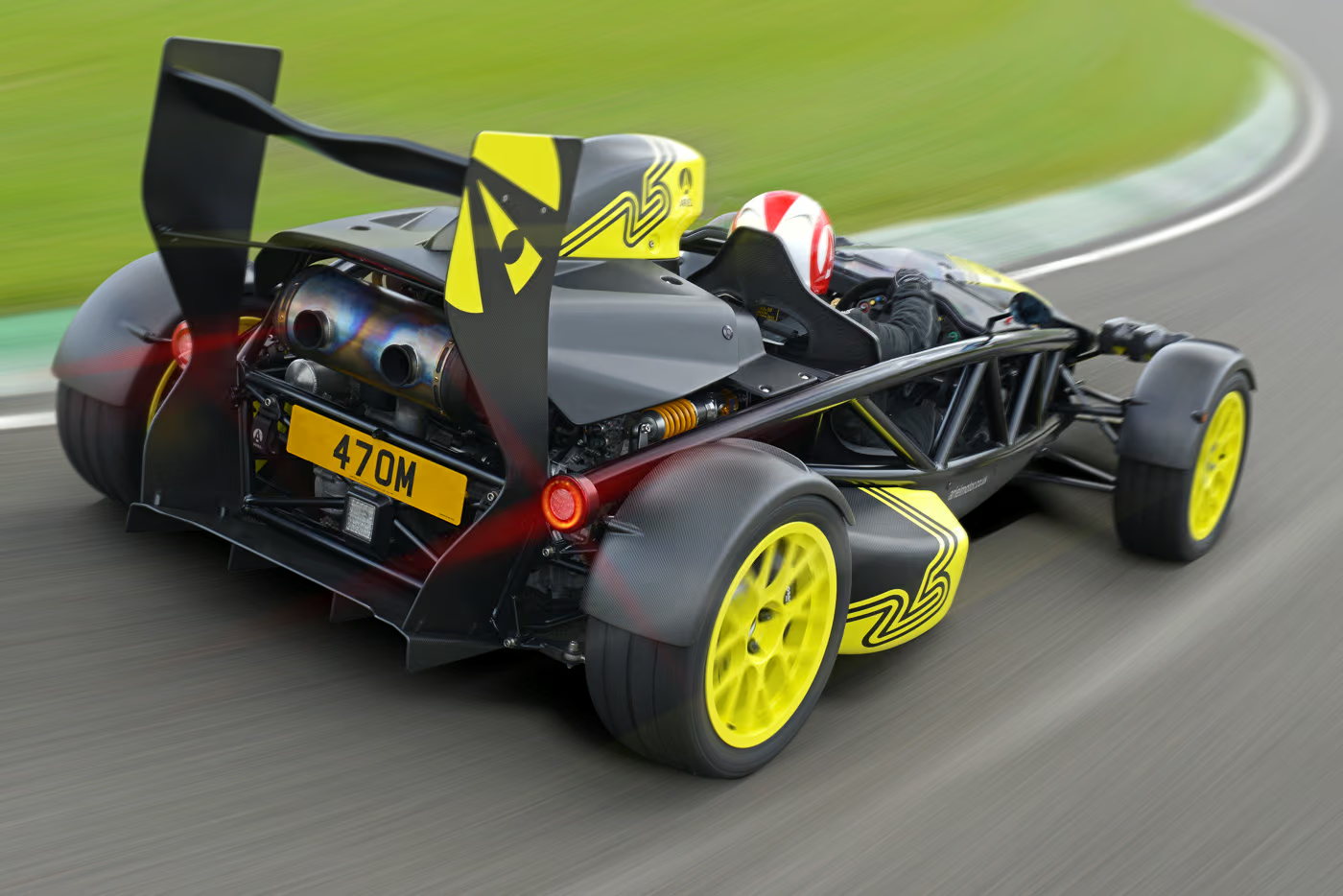
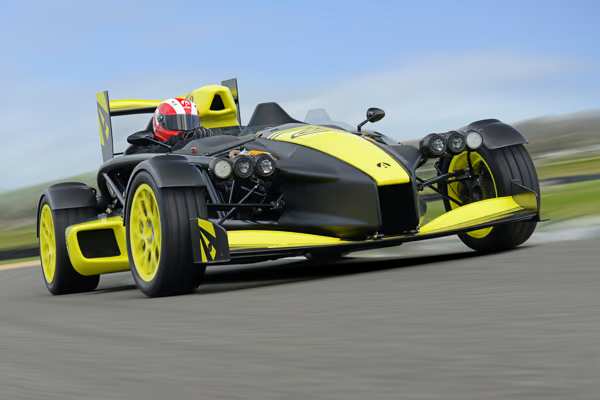
Using the already unhinged 4R as its base, Ariel has taken the Honda-sourced 2.0-litre K20C turbocharged four up another level. Beyond the basic architecture, almost nothing carries over: Ariel says each engine is rebuilt to competition specification by hand in a process that takes more than 100 hours.
To cope with a 62 per cent increase in power, closed deck sleeves replace the open-deck configuration of the standard block, and bespoke forged pistons and connecting rods are fitted. The cylinder head is ported, paired with bespoke camshafts, and equipped with an uprated valvetrain, while a competition-grade head gasket and head studs help contain the fury of a turbocharger delivering 1.7 bar of boost. All rotating components are individually measured, weight-matched, and dynamically balanced.
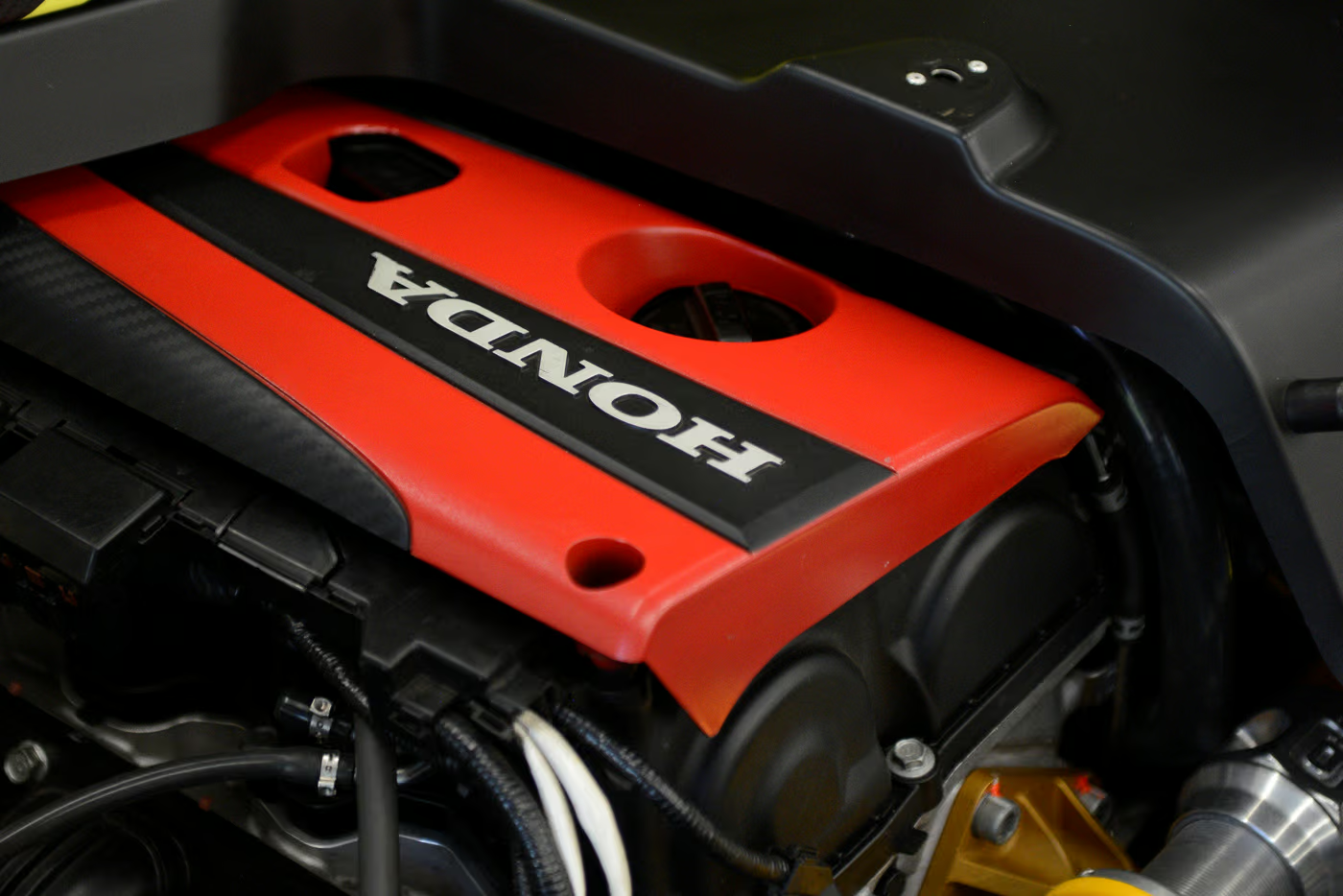
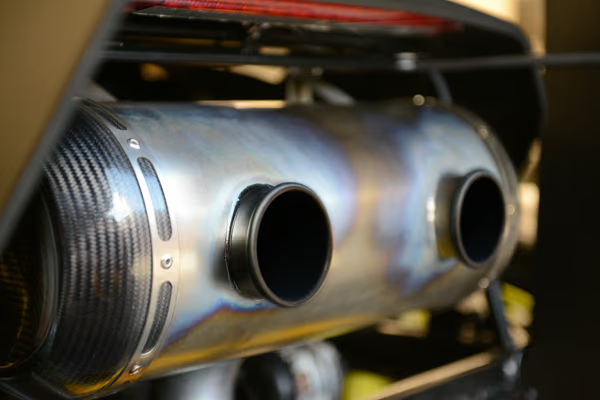
A new carbon air inlet and remote filter assembly handle induction, while a high-pressure fuel system with 1,400cc injectors supplies the fuel needed at full output. A titanium exhaust and silencer system handles the aftermath. The oiling system is also reworked for sustained circuit use, with a high-flow pump and gated circuit designed to maintain lubrication under extended cornering and heavy load. Ariel says every engine is run in and dyno-tested before installation, and each completed car leaves Crewkerne with its own dyno graph.
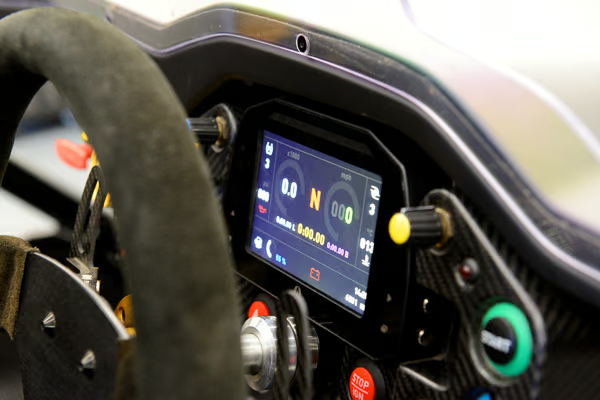
The finished article is capable of revving to 8,200rpm and delivers a torque peak of 550Nm at 5,200rpm. Drivers needn’t take the full hit all at once, with switchable maps capping output at 400, 500, and 525bhp. Power is transmitted through a Quaife six-speed sequential gearbox with pneumatic paddle shift, lightweight drive discs, and a motorsport differential. Clutchless upshifts and downshifts are standard, with automatic throttle blip on the way down; the clutch is required only for initial pull-away.
Ariel appears to be hedging its bets with the 4RR’s weight, originally forecast at 657kg but now described more cautiously as sub-700kg. Either way it’s a significant gain over the 4R’s 595kg – not that it has done much to blunt the performance, with Ariel still claiming 0–62mph in 2.4 seconds and 0–100mph in 5.1, making this the quickest and most accelerative Atom yet.
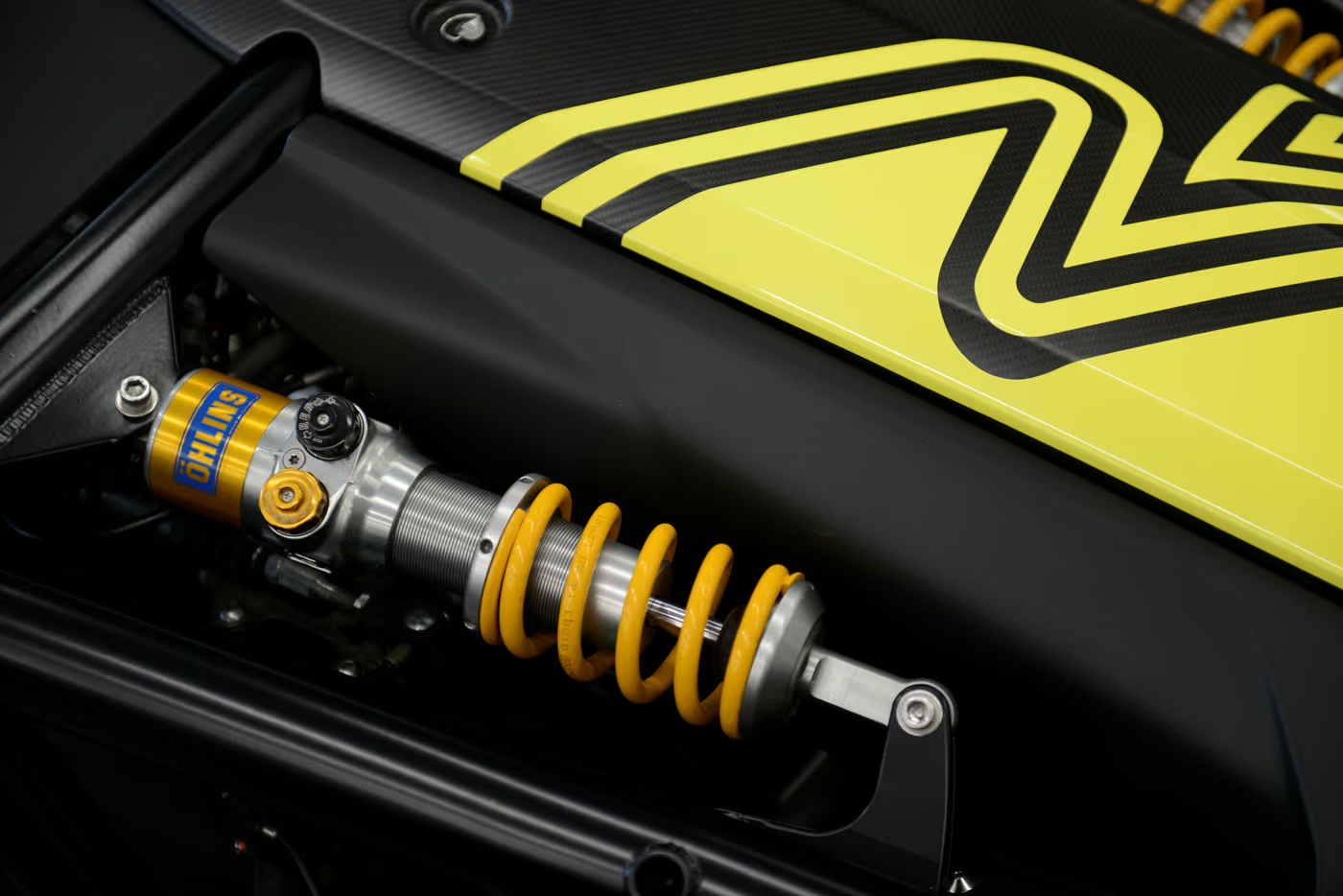
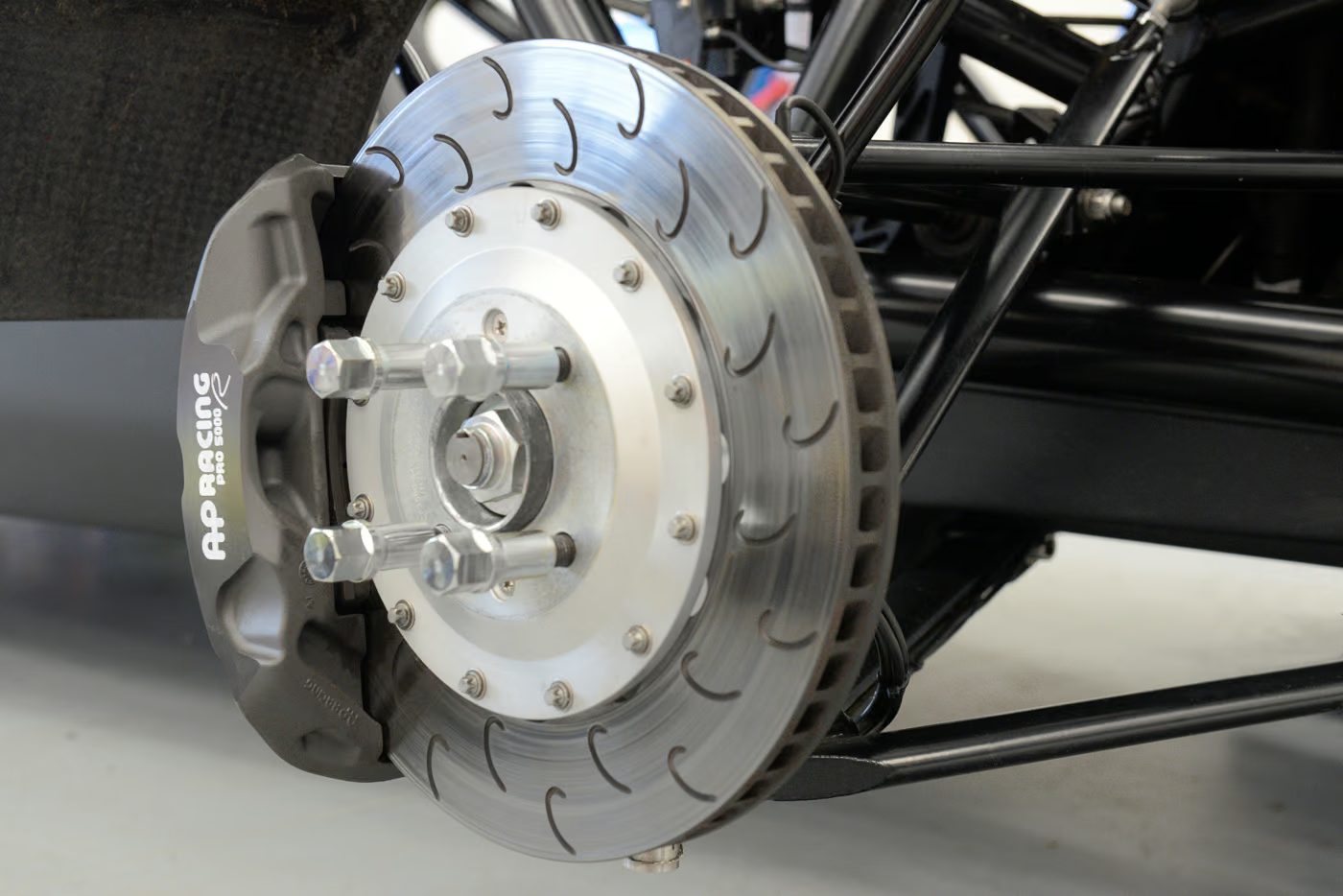
Understandably, the 4RR borrows much of its chassis and suspension architecture from the 4R, including its pushrod layout, adjustable Ohlins dampers and bronze-welded spaceframe. Upgrades include a larger 310mm AP Racing brake package with four-piston calipers, housed within forged 16-inch front and 17-inch rear wheels shod with road-legal Yokohama A052 tyres. Both traction control and ABS are fully adjustable, the latter offering 12 stages including a fully off setting. To meet the greater cooling demands, the carbon-fibre side pods are redesigned to improve airflow to both engine and gearbox.
Another figure Ariel has quietly revised is the production run, initially capped at 25 to align with the anniversary. It is now described only as “extremely limited numbers”. Each car will be fully customisable, with a plated differential, electronically controlled dampers, a motorsport-approved roll cage and even on-board air jacks available as options.
Less limited is the price. The Atom 4RR starts at £208,000 plus taxes, pushing the specialist track car into the territory of the supercars it was built to embarrass.

.svg)

