-01.svg)
.avif)
This incorporates a central fin and active rear wing to enhance high speed stability, and a 77 logo at the base of the rear window in a nod to the year of the company’s founding. Double-stacked exhaust pipes sit either side of the diffuser, and the Brabus name is incorporated into the tail light signature. A large rectangular grille dominates the front end, with thirteen upright slats flanked by a pair of large intakes.


These channel air to the 5.2-litre twin-turbocharged V12, which is uprated to produce 986bhp at 6,400rpm, and 885lb-ft (1,200Nm) of torque from 2,900-5,000rpm. Alongside the bespoke engine management software, the V12 gains new airboxes and turbochargers, revised cylinder heads, and a stainless steel quad-cat exhaust system.
The performance is sent to the rear wheels via a carbon fibre propshaft, 8-speed torque converter transmission, and electronically controlled limited-slip differential. With a dry weight of 1,774kg, the Bodo boasts a power-to-weight ratio of 553bhp per tonne, and can hit 62mph from rest in 3.0 seconds. It’ll reach 124mph after 8.5 seconds, and 186mph in 23.9 seconds. With a clear stretch of Autobahn ahead, a limited top speed of 224mph is attainable.


Despite its hypercar-baiting straight line performance, the Bodo isn’t just designed with straight lines in mind. Adaptive dampers from KW feature at each corner, with five stages of firmness selectable and a set-up unique to the Bodo. The system also features a lifting function on both axles, allowing the car to raise by 25mm when required. Continental have developed bespoke tyres for the car, with SportContact 7 Force rubber shrouding concave 21” wheels with 20 spokes apiece.
A dual-circuit braking system employs carbon ceramic brake discs measuring 410mm and 360mm in diameter on the front and rear axle respectively, with each gripped by six-piston callipers. When decelerating rapidly above 87mph, the active rear wing stands upright to act as an air brake.

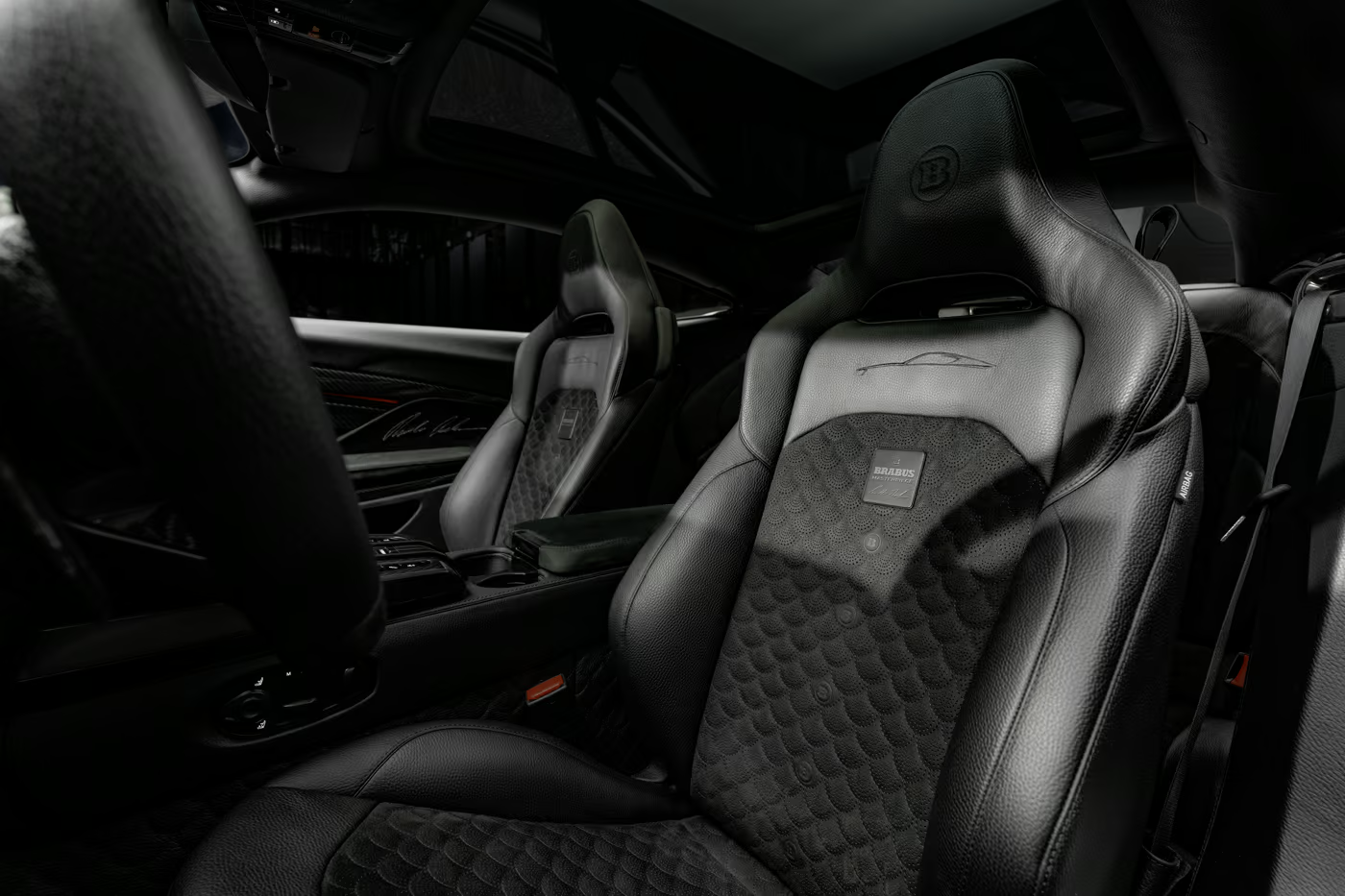
The comprehensive makeover continues inside, with the Bodo getting a re-trimmed interior with Brabus’ signature shell pattern and double-B logo on all four seats. Up front, the outline of the Bodo’s side profile is stitched into the backrests. Carbon fibre trim is found throughout the cabin, and Bodo Buschmann’s signature appears on the door cards.
Capping off the interior modifications is an uncommon one for a coachbuilt model, as Brabus have switched the Vanquish’s rectangular air vents to its own circular units. No tweaks to the dual-screen infotainment system are detailed, with both displays measuring 10.25”.
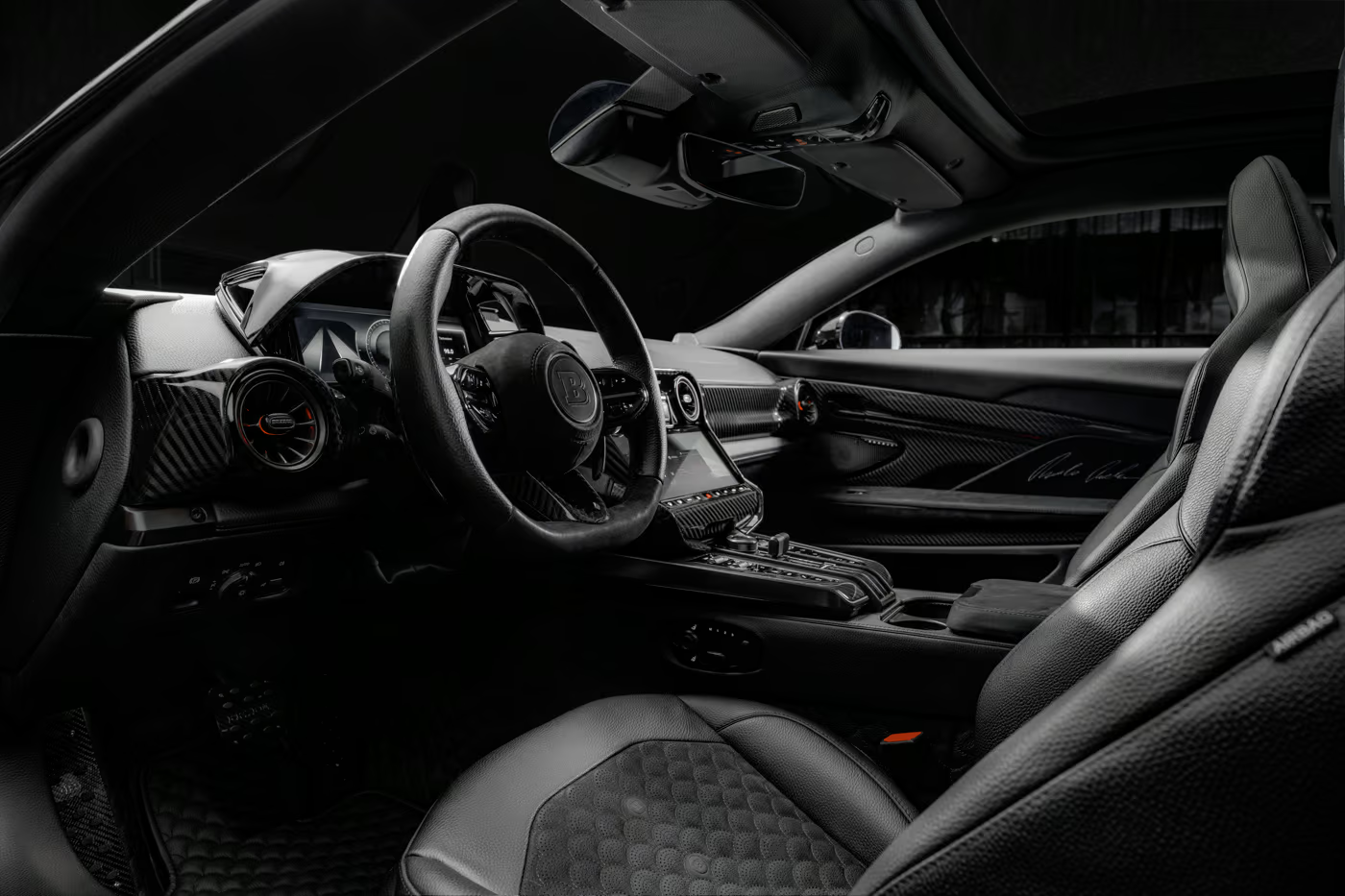

While the launch model is presented with black on every body panel and interior surface, the colour scheme and detailing can be tailored to each owner’s preferences. Only 77 examples of the Brabus Bodo coupé will be made, with production capped at 15 units per year. Pricing starts at 1,000,000€ excluding personalisation and local taxes, meaning a seven-figure price tag is guaranteed for UK-bound models.
Brabus is taking enquiries now, with production expected to start in the second half of 2026. Arriving eight years after Bodo Buschmann’s passing, the car carrying his name nails the brief of packing huge performance within an elegant GT body style. The 224mph-capable coupé is a fitting tribute.



.svg)

