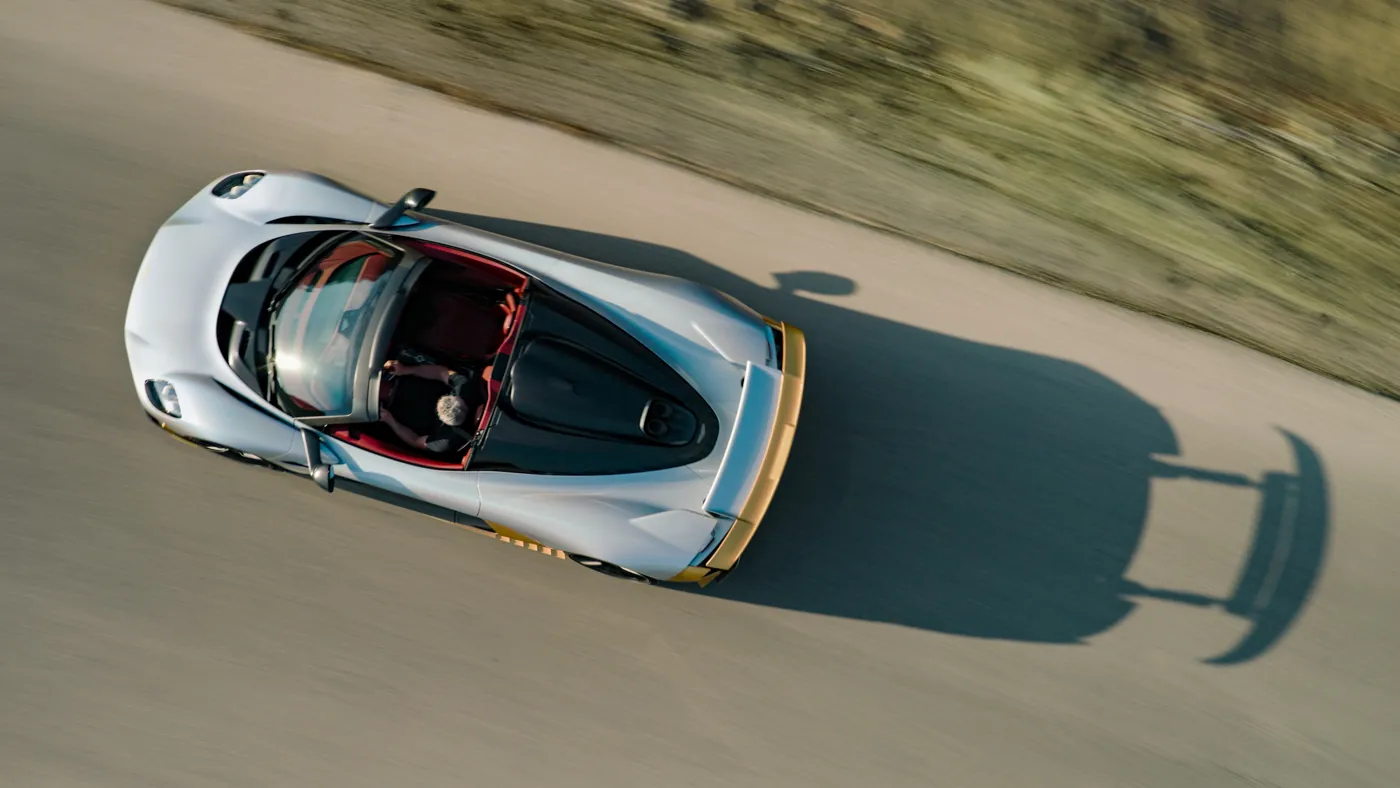
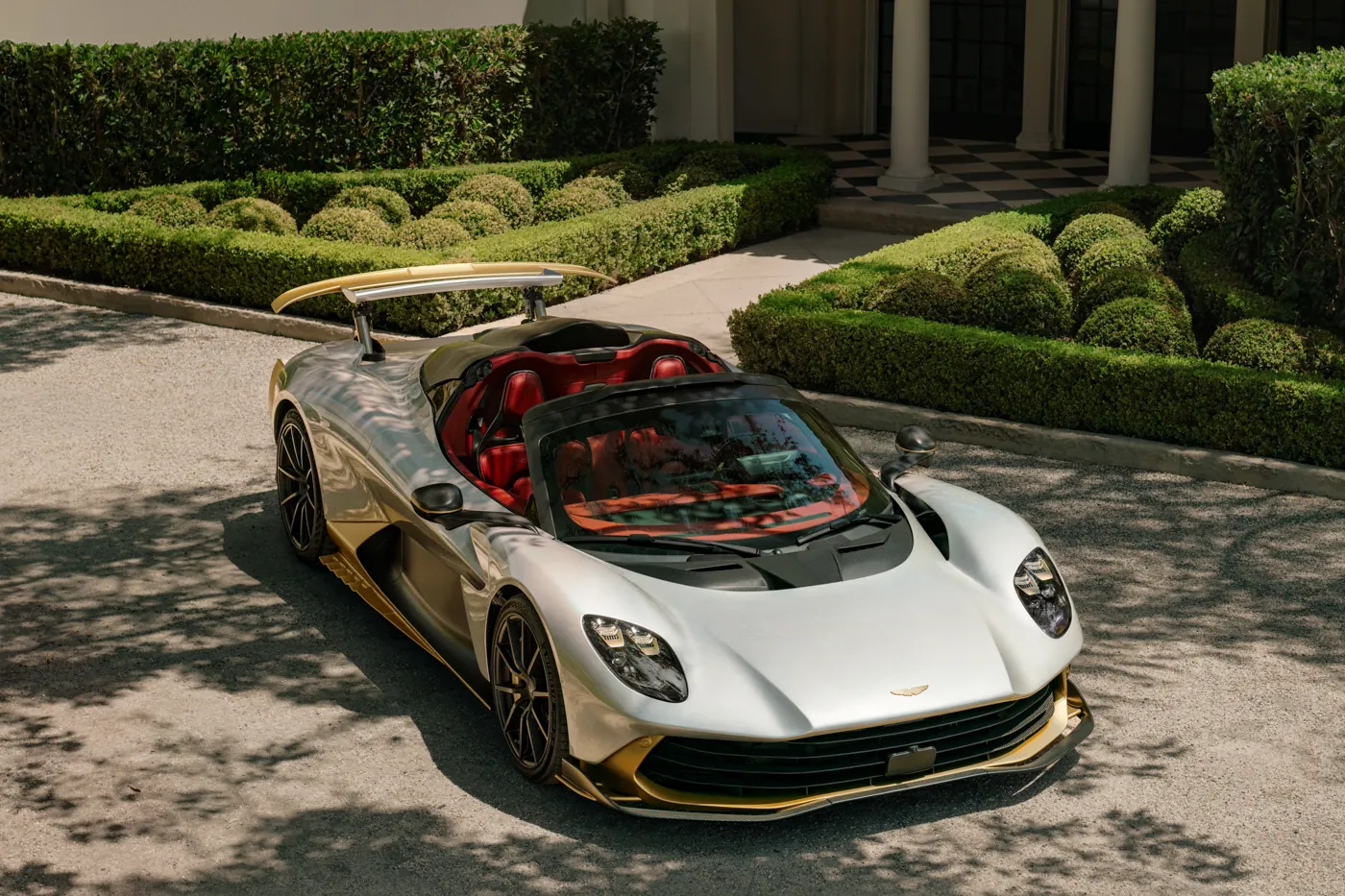
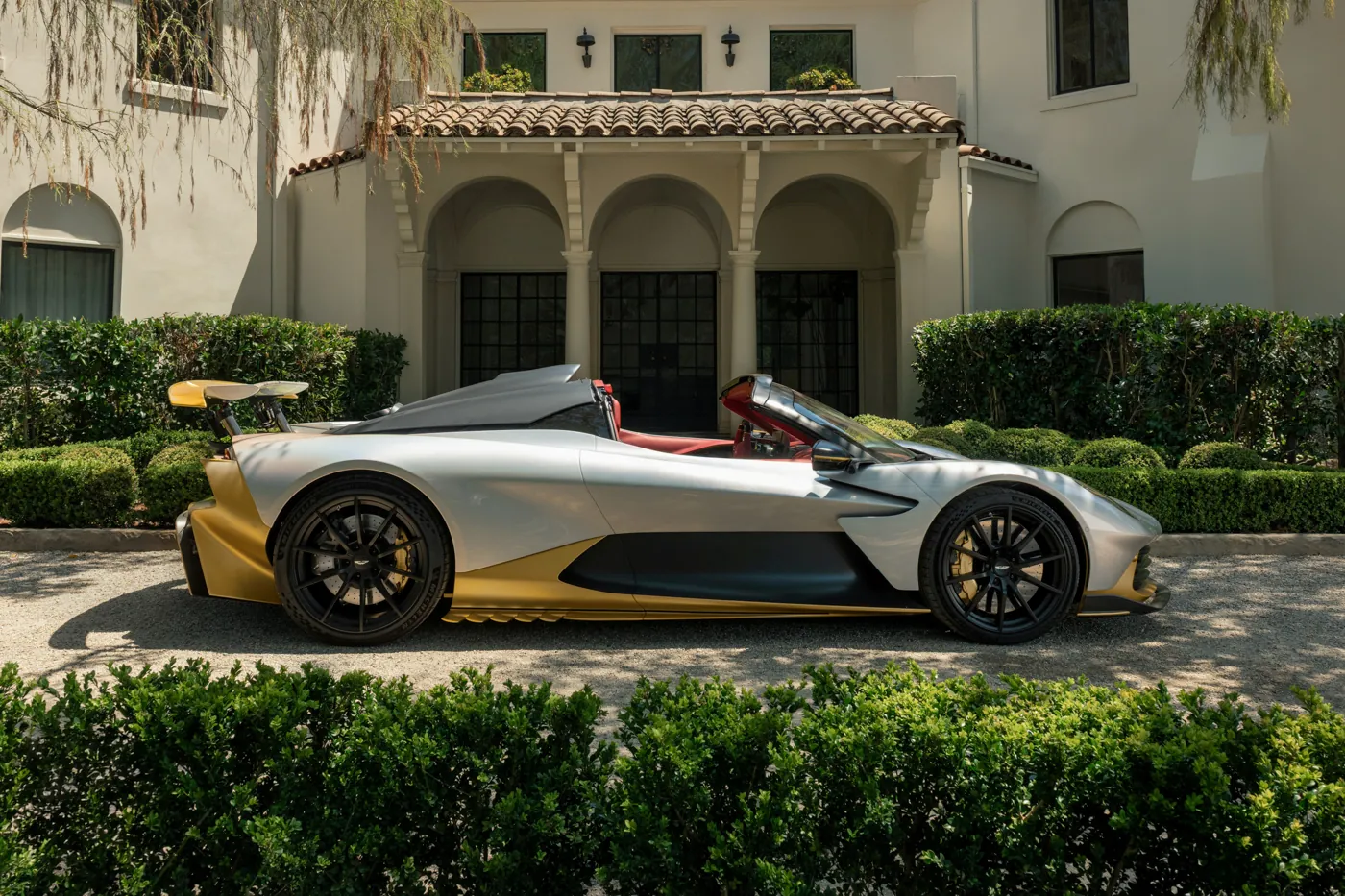
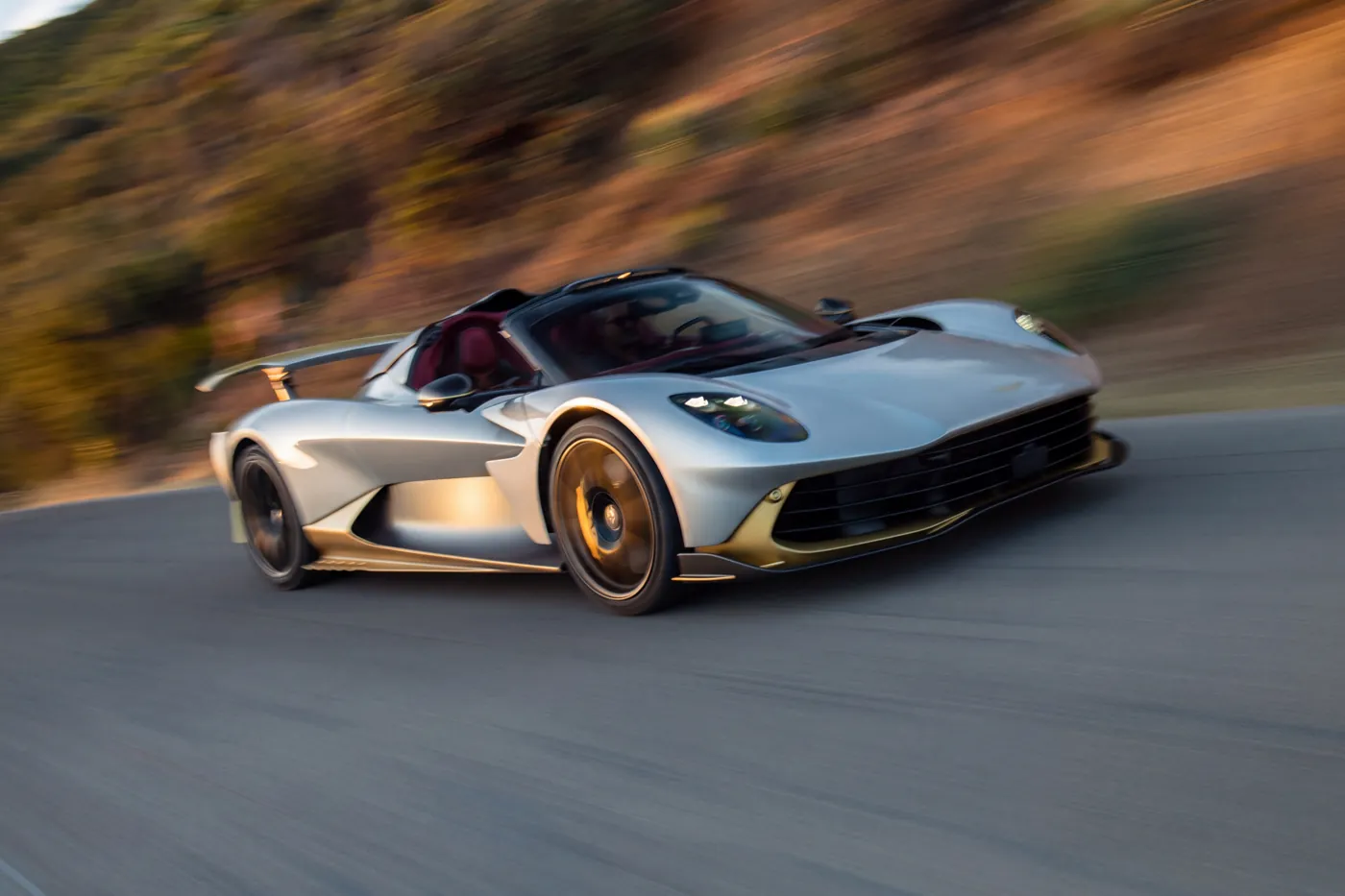
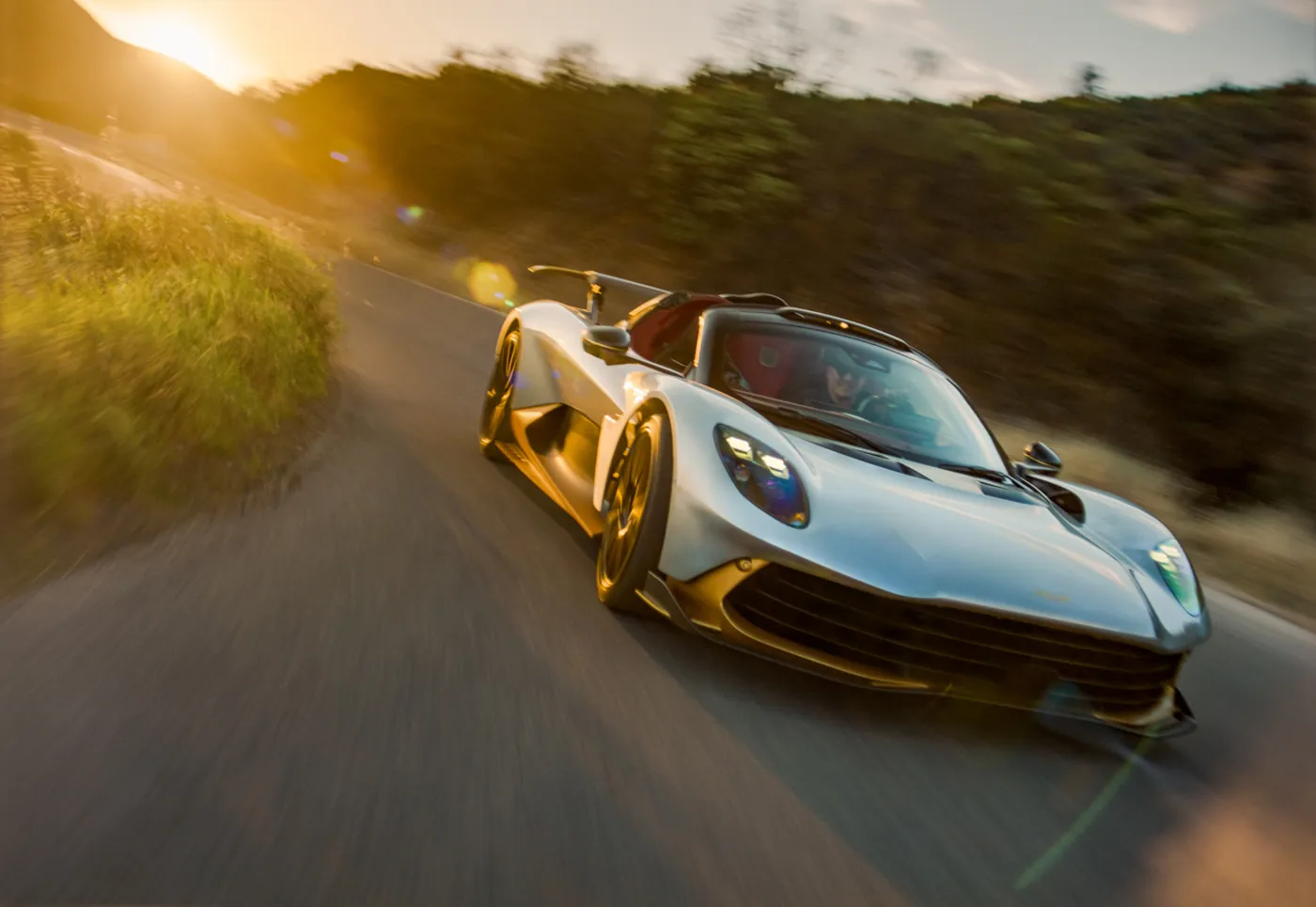
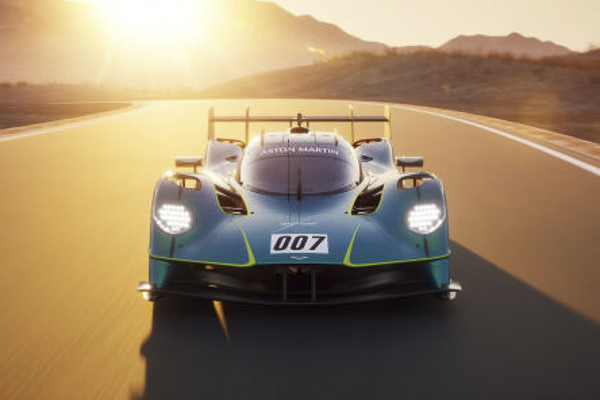
With the roof off, the Spider still reaches the same electronically limited 217mph as the coupé. That is 12mph more than the Valkyrie Spider manages sans roof. The standard fabric roof limits it to 124mph, and a rain cover is supplied for when the car is parked. For those who aren’t keen on the idea of category 5 buffeting, there’s an optional carbon-fibre panel that’s good for every last mph.
Aston has hinted the Spider’s carbon tub differs from the coupé’s, but hasn’t divulged any details. It is built the same way, combining resin transfer moulding with autoclave processes, and still designed by AMPT, the engineering consultancy of Aston’s F1 team. The Spider weighs 1680kg dry with lightweight options fitted, just 25kg more than the coupé.
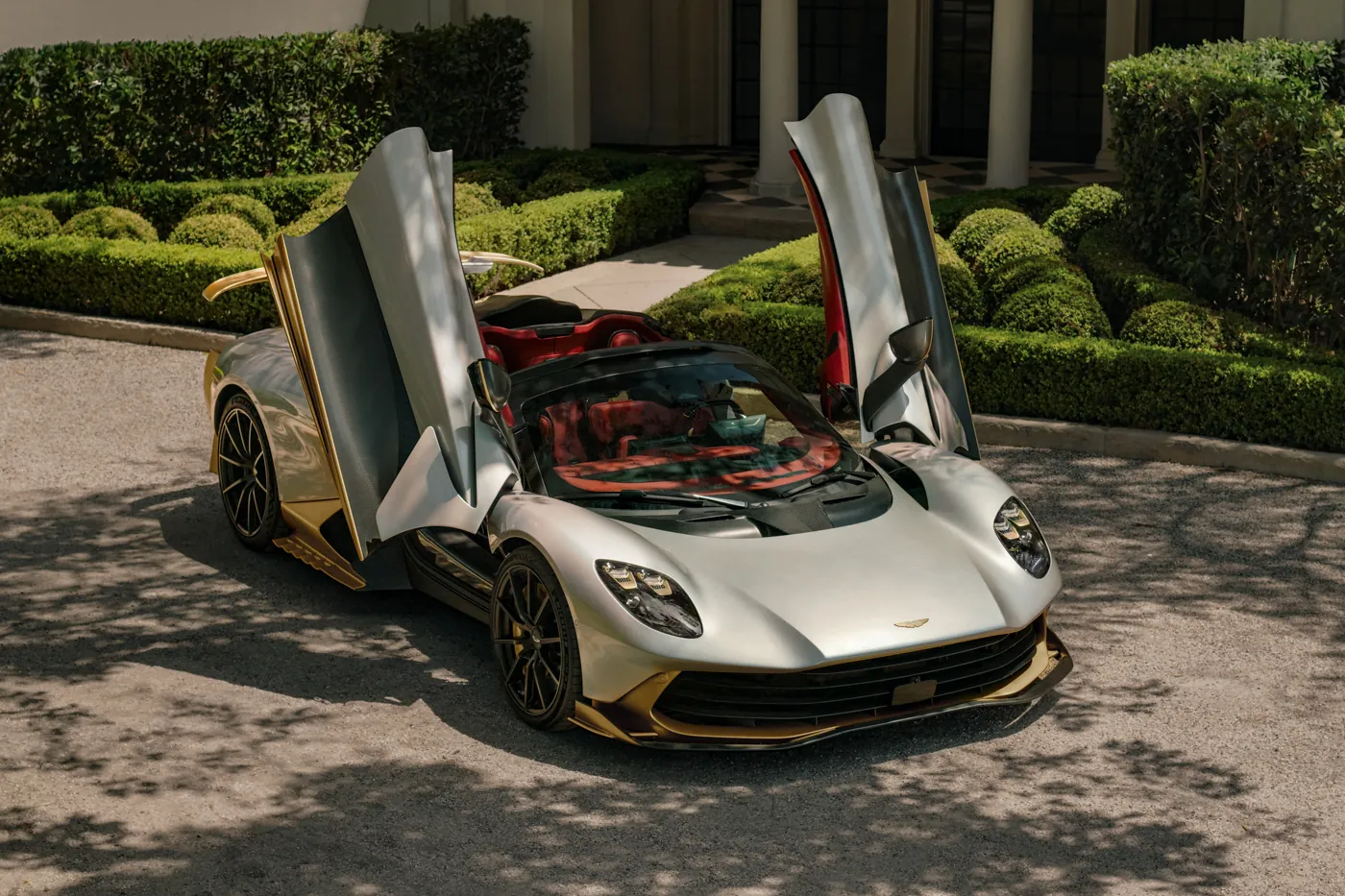
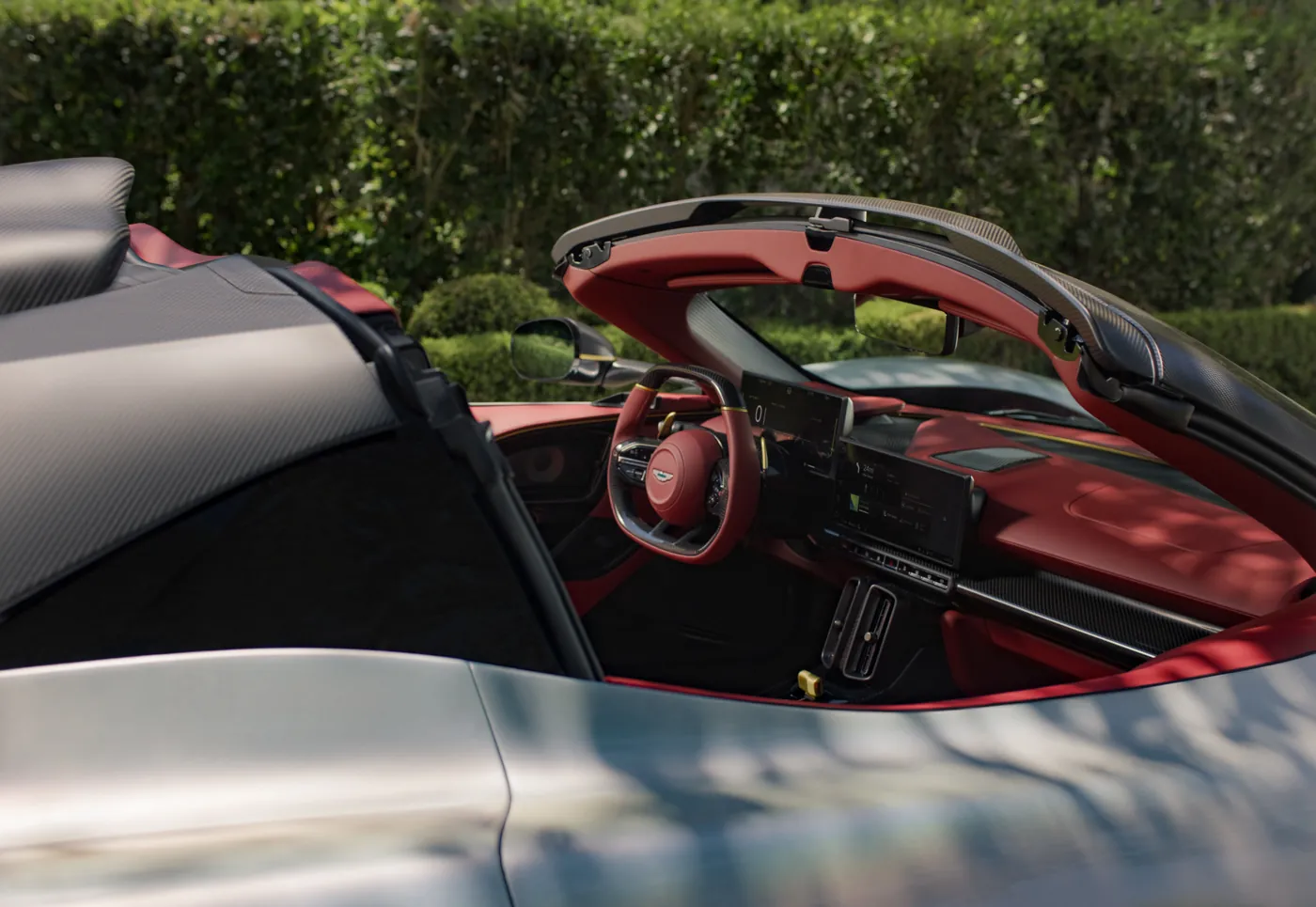
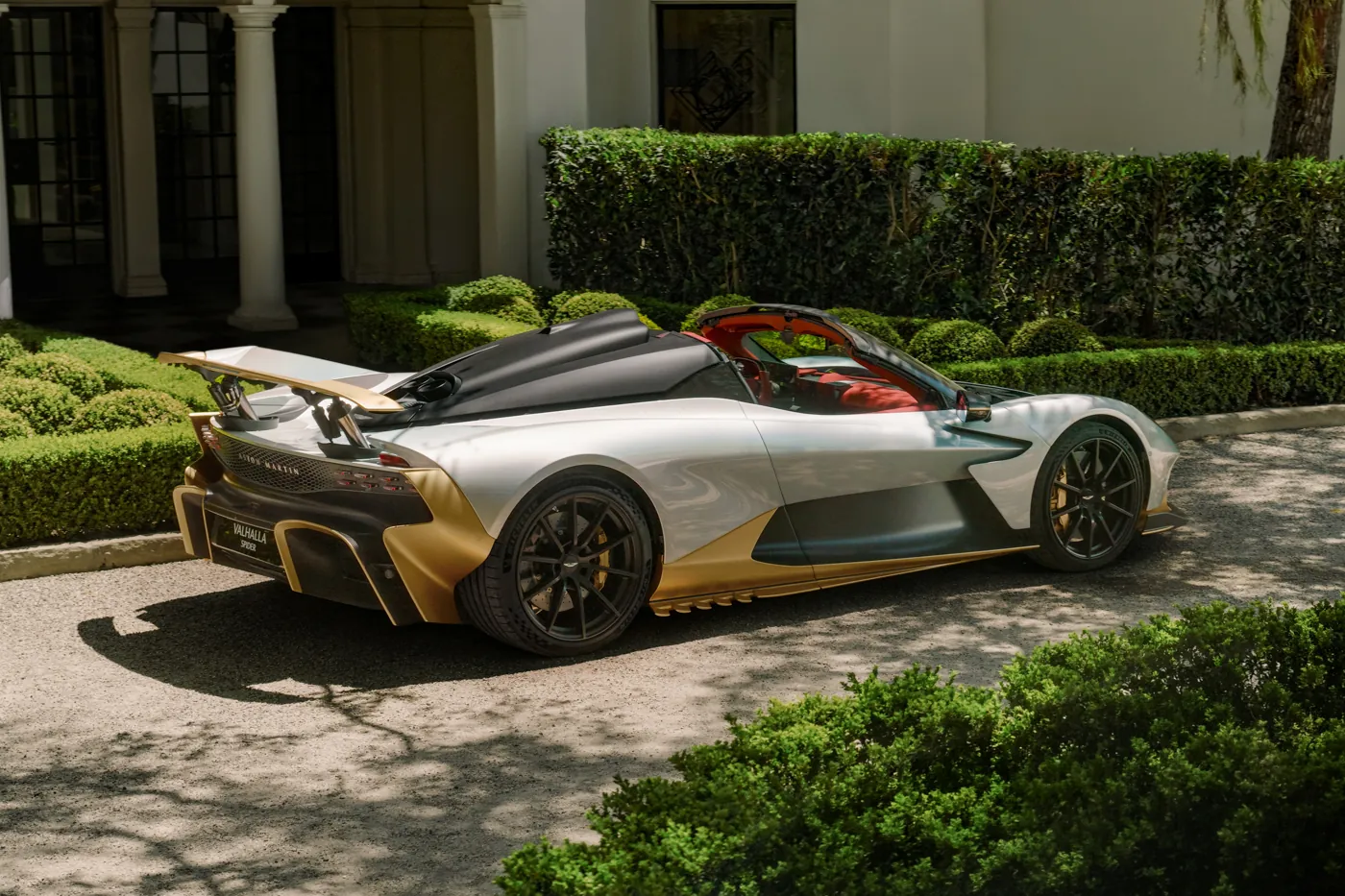
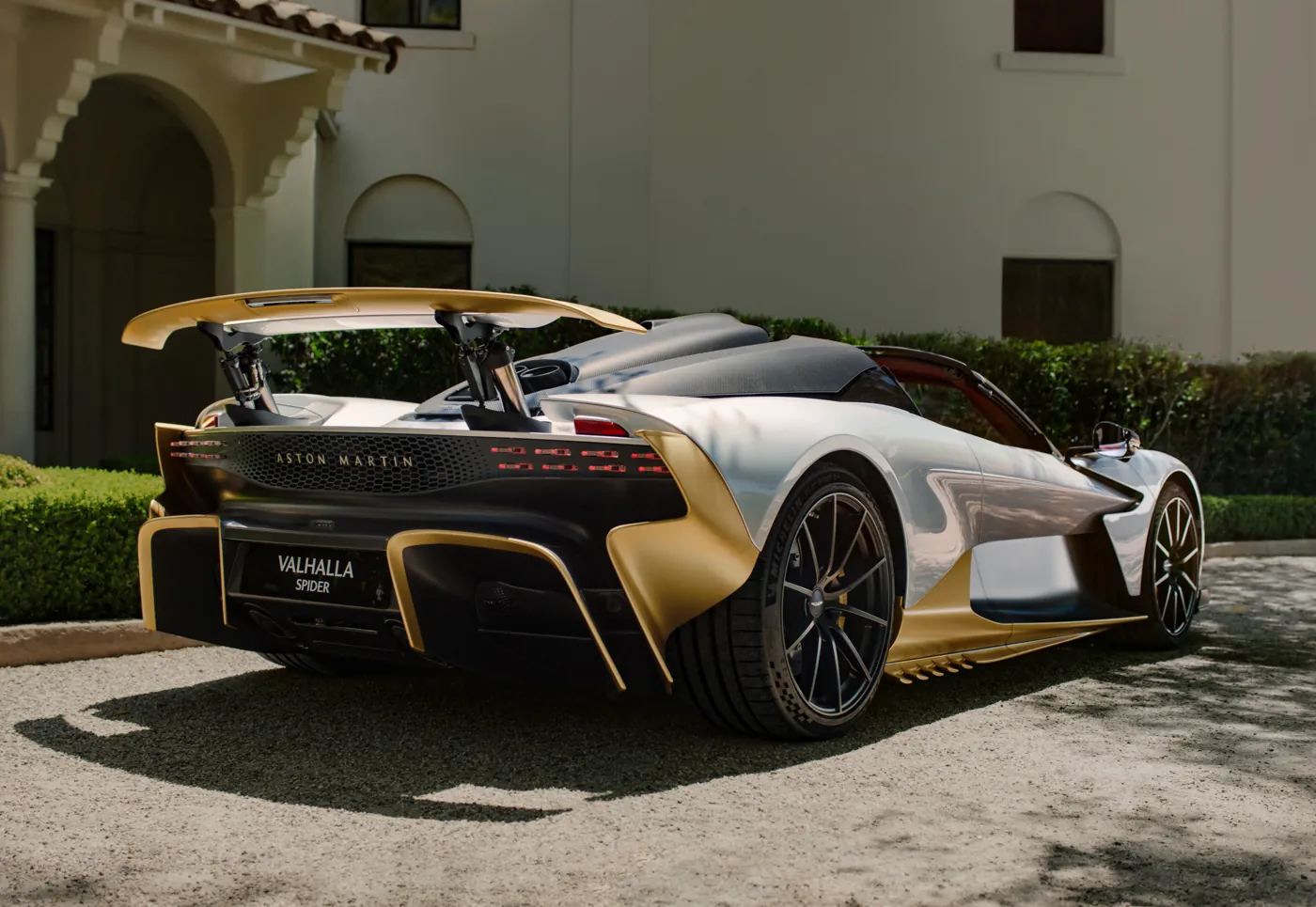
Losing the roof has cost the Valhalla some of its elegance, and the new wind deflector perched atop the windscreen is the biggest culprit. Besides lifting air over the occupants, it pulls cooling air down into the snorkel behind the cabin, which has been reprofiled and raised by 35mm. With the roof on, the deflector folds into three and stows in the sills, which now house a 15-litre compartment on each side. They aren’t big, but given the coupé has no luggage space at all, they go some way to answering its biggest criticism.
The coupé’s active aerodynamics carry over, with moveable surfaces at both ends that shift downforce between the axles or trim drag depending on the drive mode. Peak downforce is more than 600kg with the roof fitted, though no roof-off figure has been given. In terms of set-up, Aston says the only differences between the two cars lie in how those systems and the stability control are calibrated, now tuned to adapt to the airflow with the roof on or off. That leaves the pushrod front suspension, Bilstein DTX adaptive dampers and 13.7:1 steering exactly as they were.
The flat-plane-crank 4.0-litre twin-turbo V8 revs to 7000rpm and breathes out through a titanium exhaust. On its own it makes 817bhp and 640lb ft, and three electric motors bring the combined output to 1064bhp and 811lb ft. Aston predicts 0–62mph in 2.5sec.
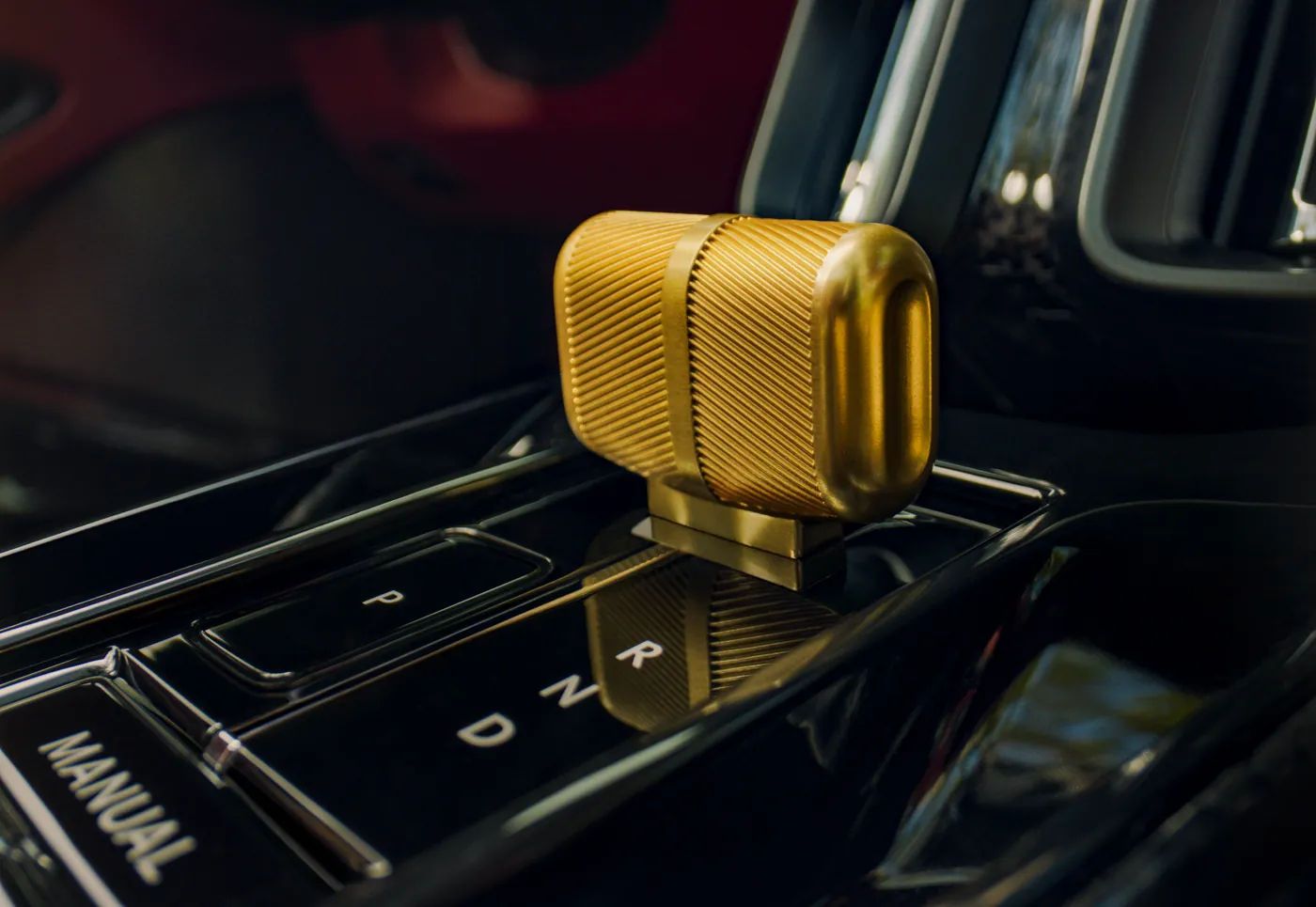
Two of those motors drive the front wheels and vector torque between them, while the third sits alongside the eight-speed dual-clutch gearbox and feeds the rear axle and its electronic limited-slip differential. The gearbox has no reverse gear; the front motors take care of that. There is no mechanical link between front and rear: an Integrated Vehicle Dynamics Control system decides what each wheel receives, across four selectable drive modes.
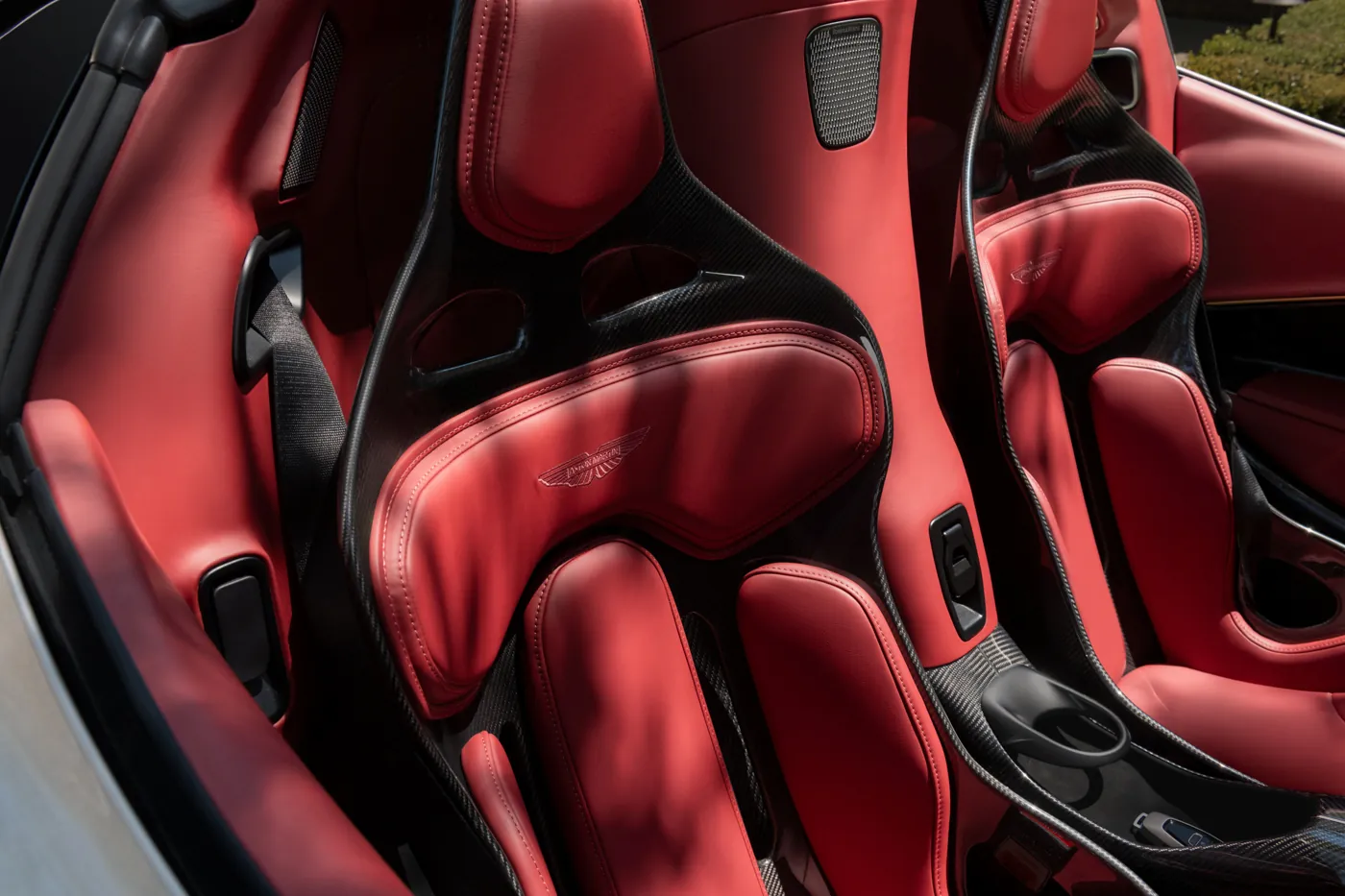
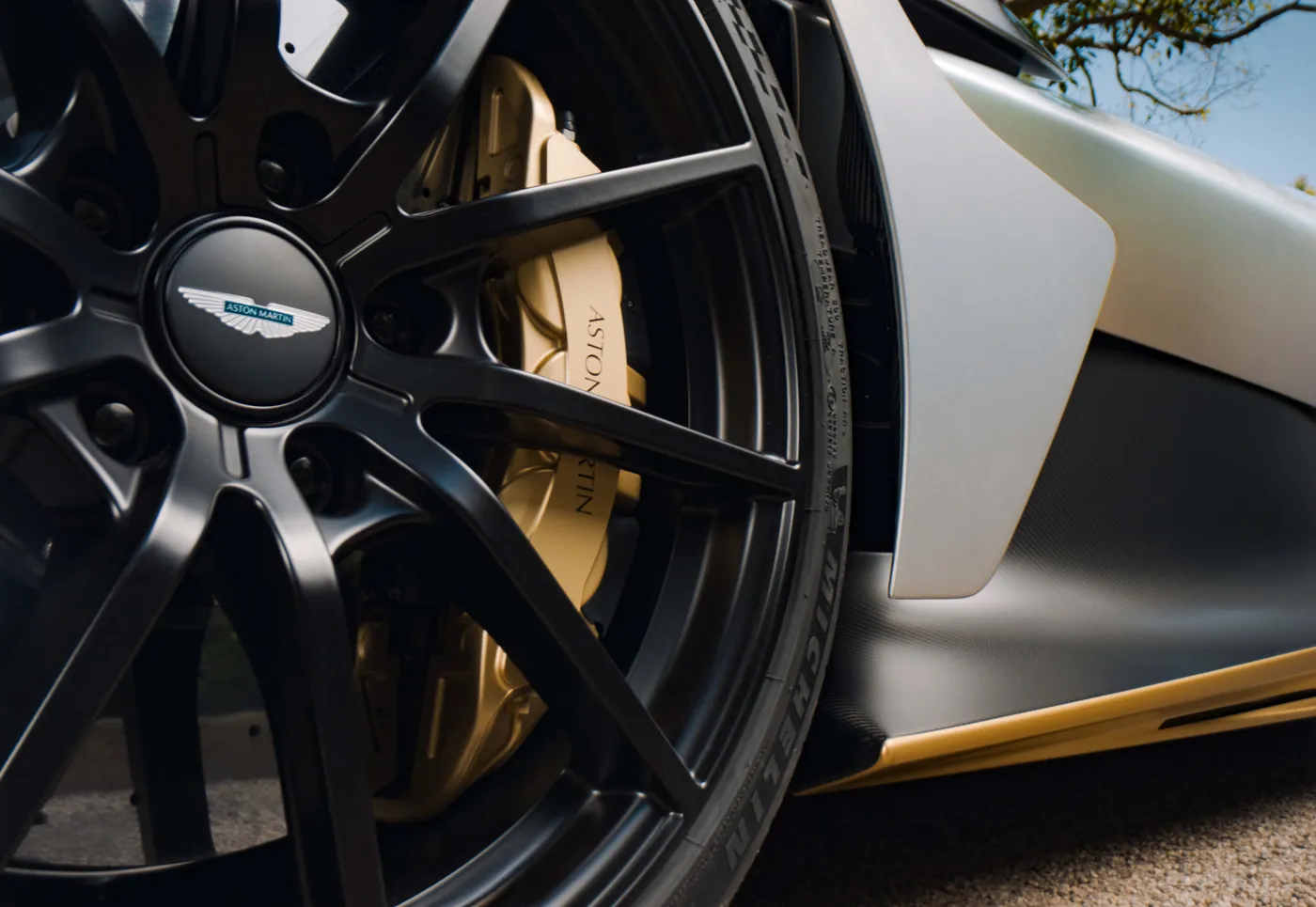
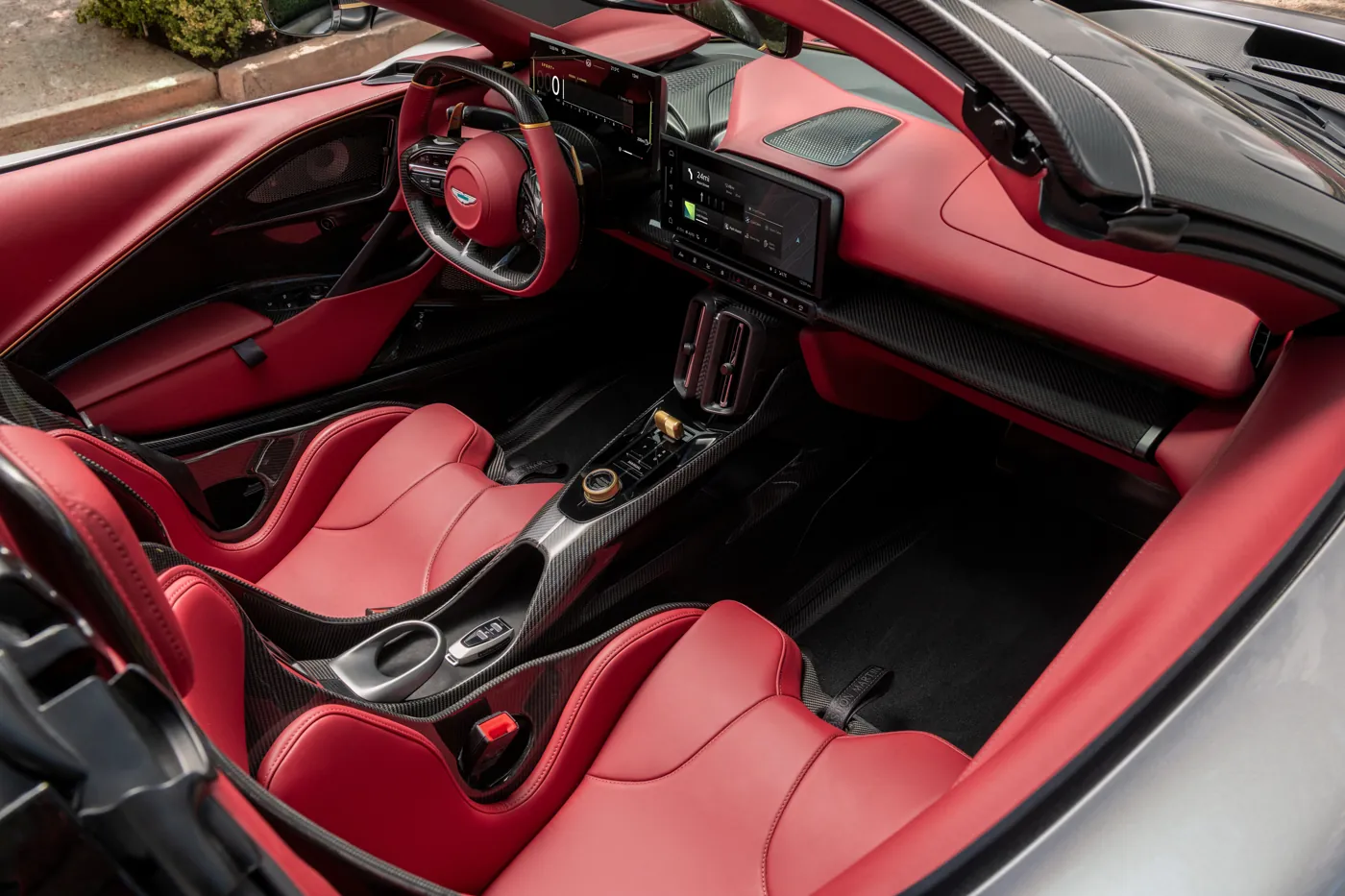
Inside, a new carbon-fibre Touring Seat is standard, though buyers can keep the coupé’s original carbon seat at no cost, or specify it with slimmer pads. The cabin is trimmed in Alcantara, with semi-aniline leather or a mix of the two on the options list, alongside forged carbon trim made with recycled content and a Bowers & Wilkins audio system. The dihedral doors are now frameless with revised kinematics, and a slightly more curved top edge to the glass makes it easier to get in and out with the roof fitted. Forged magnesium wheels on Michelin Pilot Sport Cup 2 tyres complete the options list.
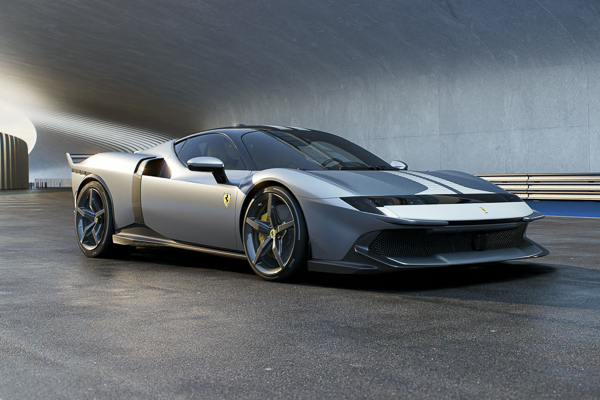
Valhalla Spider vs Ferrari 849 Testarossa Spider
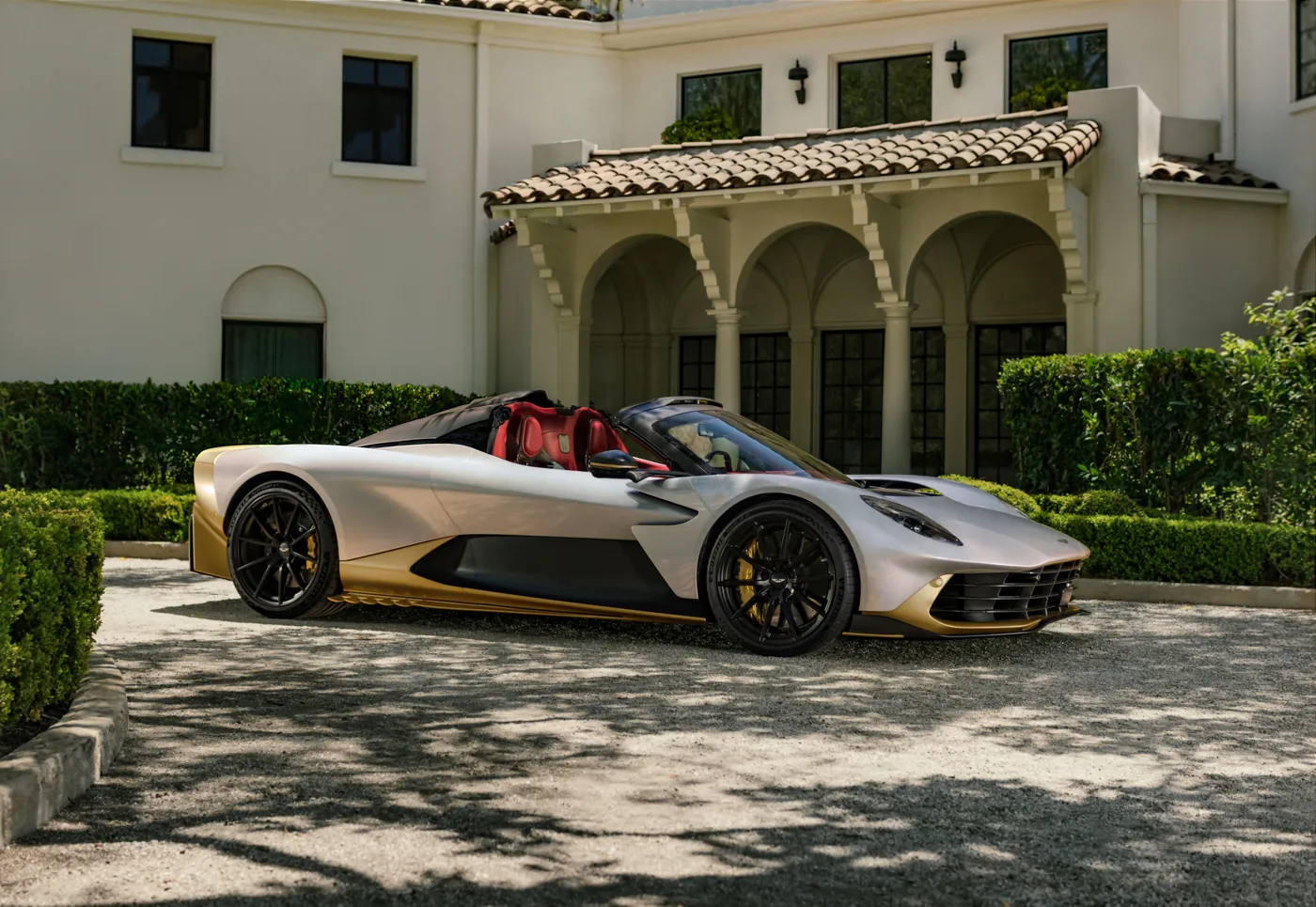
Aston has yet to announce pricing, but the coupé alone costs around £850,000 – nearly twice the £442,468 Ferrari asks for its 849 Testarossa Spider. That car makes a near-identical 1036bhp, and its folding hardtop stows in 14sec at up to 28mph. It also tops out at 205mph, and Ferrari will build as many as it can sell.
The Valhalla counters with its rarity, and with looks that – deflector and all – remain a good deal easier on the eye than the Testarossa’s. Aston hasn’t said how many Spiders it will build, but they are expected to come from within the 999-car Valhalla run rather than on top of it. The first will reach customers in the third quarter of 2027.
Aston Martin Valhalla Spider: Stats & Performance
Engine & Output
- Engine: 4.0-litre twin-turbo V8, flat-plane crank, hot-V
- Max boost: 3.0 bar
- Engine power: 817bhp
- Engine torque: 640lb ft
- Max revs: 7000rpm
- Hybrid system: 400V plug-in hybrid, three electric motors
- Combined power: 1064bhp @ 6700rpm
- Combined torque: 811lb ft
Transmission & Drivetrain
- Gearbox: Eight-speed dual-clutch with integrated electric motor
- Drivetrain: All-wheel drive, no mechanical link between axles
- Front axle: Twin-motor electric drive unit with torque vectoring
- Rear axle: Electronic limited-slip differential
- Reverse: Front electric motors
Chassis & Suspension
- Chassis: Carbon-fibre monocoque, aluminium front and rear subframes
- Front suspension: Double wishbone, pushrod-operated inboard springs and dampers
- Rear suspension: Multi-link, coil springs, anti-roll bar
- Dampers: Bilstein DTX adaptive
- Steering: Electric, 13.7:1 ratio, 2.31 turns lock to lock
Brakes, Wheels & Tyres
- Front brakes: 410 × 38mm carbon-ceramic discs, six-piston calipers
- Rear brakes: 390 × 38mm carbon-ceramic discs, four-piston calipers
- Wheels: 20-inch front, 21-inch rear forged alloy (forged magnesium optional)
- Tyres: Michelin Pilot Sport S 5 AML, 285/30 ZR20 front, 335/30 ZR21 rear
Weight & Performance
- Weight: 1680kg (dry, with lightweight options)
- Power-to-weight: 633bhp per tonne (dry)
- 0–62mph: 2.5sec (predicted)
- Top speed: 217mph (limited, roof off or hardtop fitted); 124mph (fabric roof fitted)
- Peak downforce: More than 600kg (roof fitted)