-01.svg)
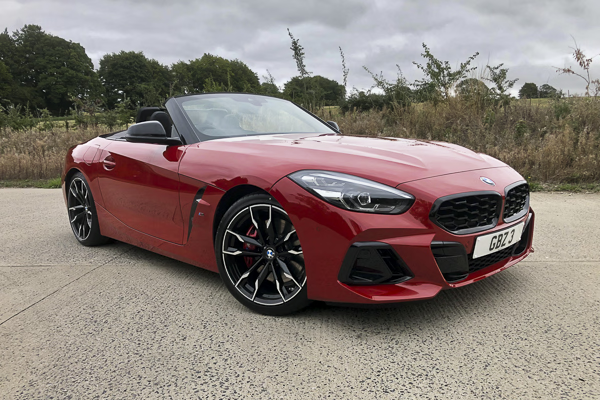

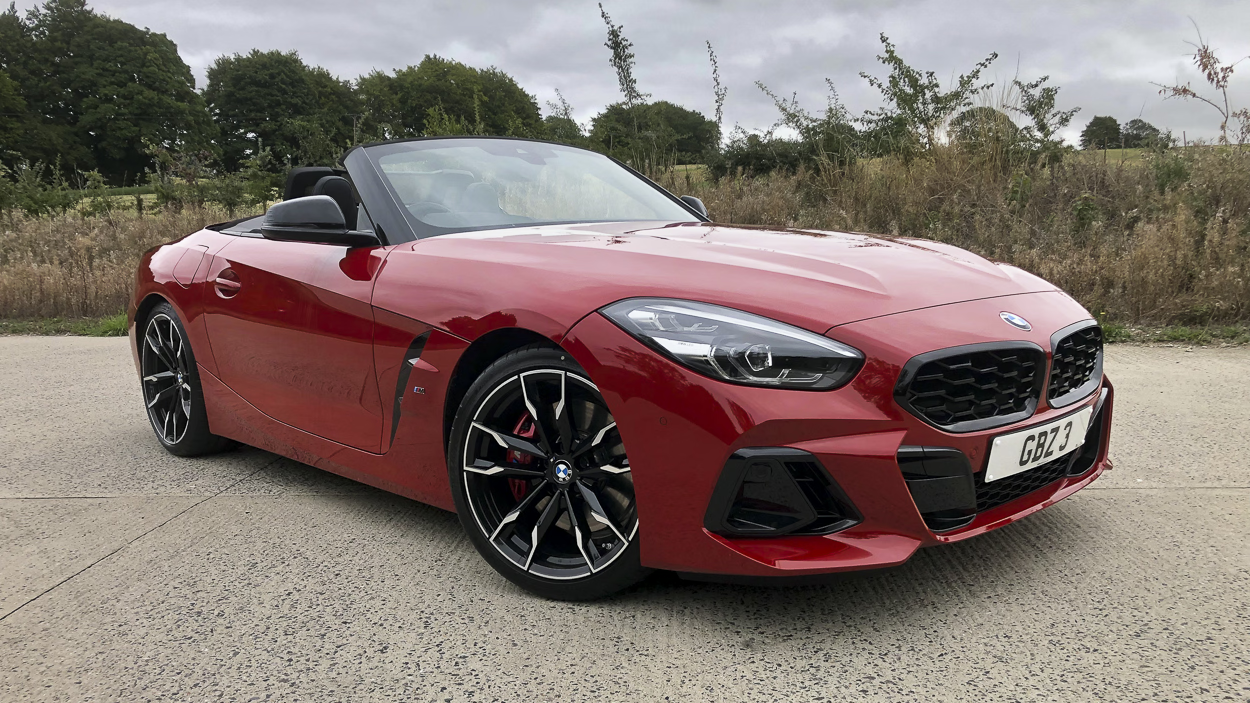
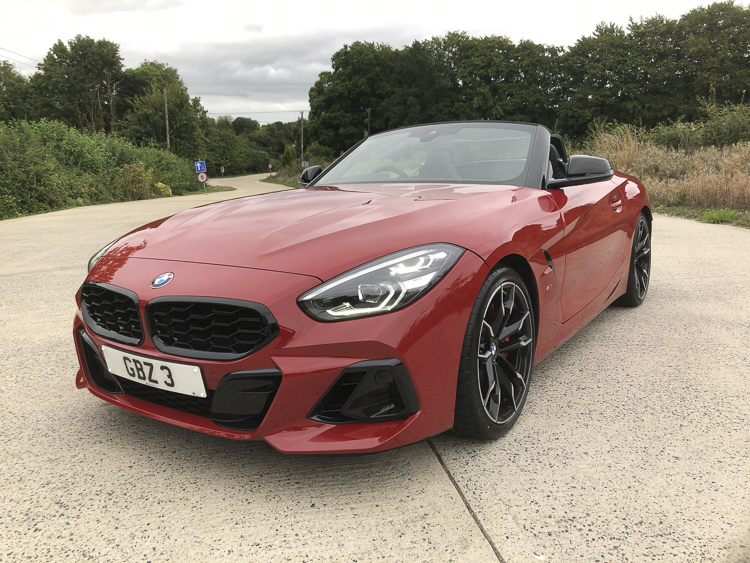
But the response must have been encouraging, because Munich has now commissioned an expansion of the range – so to speak. A gamut of eight colours is now available, including Skyscraper Grey, Thundernight Purple and San Francisco Red. Four interior upholstery options have also been added.
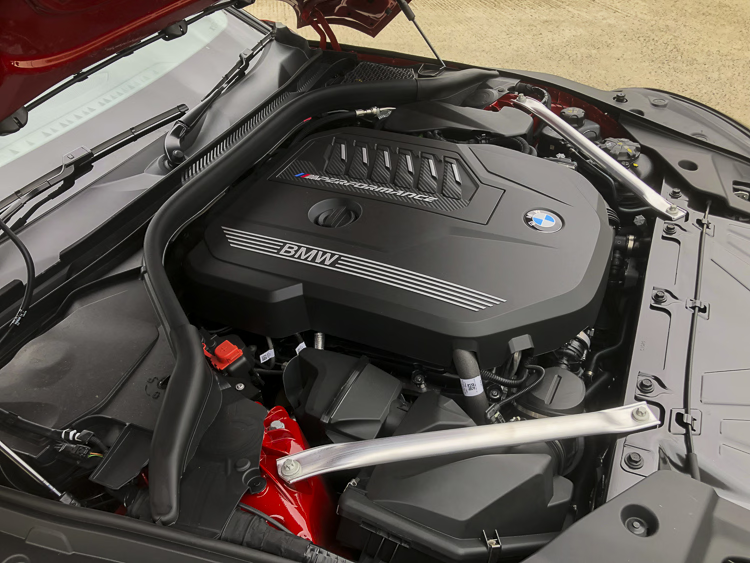
Nevertheless, the mechanicals remain the same, and that’s no bad thing at all. Up front is the venerable B58 turbocharged 3.0-litre straight-six, pumping out 335bhp between 5,000 and 6,500rpm, and more significantly, delivering 369lb-ft (500Nm) of torque from as little as 1,600rpm. Despite the yawning chasm of human-operated gearchanges, the Handschalter is still good for 0-62mph in 4.6 seconds, plus the de facto limited top speed of 155mph.
However, there is more to the Handschalter than what lies within the transmission tunnel and under the bonnet. Munich’s engineers have reconfigured the springs and dampers, alongside introducing auxiliary springs all-round to increase precision. Further changes include a new, staggered alloy wheel setup with 19-inch fronts and 20-inch rears, revised steering mapping, and tweaked settings for the differential and stability control. Promising stuff.
The good news continues on initial acquaintance. You’re greeted by classic roadster proportions: a long bonnet, a prominent wedge profile and a short, stubby rear that leave no doubt which are the driven wheels. Normally a challenge for any roadster, the Handschalter also looks respectable with its fabric roof up. The old school roadster hallmarks continue as you drop into a wonderfully low driving position – for reference I stand at 6ft 1in, and with the plush electric seat at its lowest, the base of my nose is level with the top of the steering wheel.
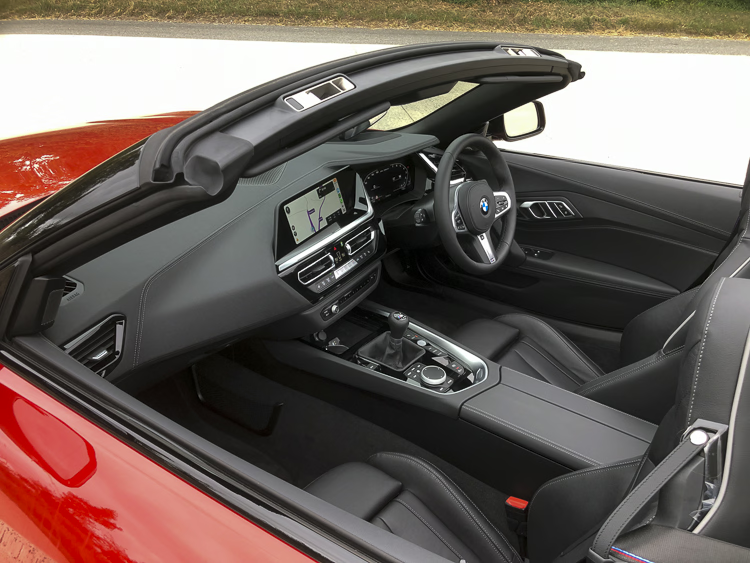
As you’d expect from a BMW, the ergonomics are fully sorted with the only gripe being if you jump in and forget to deactivate the driver-assistance systems, you’re stuck with them; the handy all-off button in the centre of the dashboard can only work its magic when stationary.
On the move, the abundance of torque never fails to raise a smile – fifth gear overtakes are almost as rapid as third, such is the strength of the mid-range. This car not only feels fast, it’s even quicker than it suggests, with the head-up display creeping upwards with alarming (and stealthy) ease. Before looking at the stats, I’d have sworn this car has the same 374bhp output as the M340i.
In order to recover some of the lost performance compared to the automatic, BMW has shortened the final drive ratio, however the gearing is still perfectly matched to the engine’s bandwidth, with third stretching to just beyond 100mph, mirroring the E46 M3. The light throw of the lever also feels familiar, hinting at the classic ‘knuckily’ feel which has typified BMW manuals over the years, but with a better-defined gate. There wasn’t a single misplaced or awkward shift throughout the day.
Not everything is integrated seamlessly – the position of the clutch pedal is a tell the car was originally conceived as auto-only. Squeezing three into a space designed for two means the pedals are offset, with the clutch essentially lining up with the middle spoke of the steering wheel. It’s a small price to pay, soon overcome with familiarity, and the pedal itself has a pleasingly weighty feel, if lacking in biting-point feedback.
As you’d also expect, the general refinement with the roof up is excellent, although there are some rather large blind spots – all the more reason to stow it. Once down, wind buffeting simply isn’t an issue, with only a slight, and quite pleasant, ruffling of the coiffure going on. The structural rigidity is impeccable, with no creaks or rattles from the bodywork or vibrating rear-view mirrors.
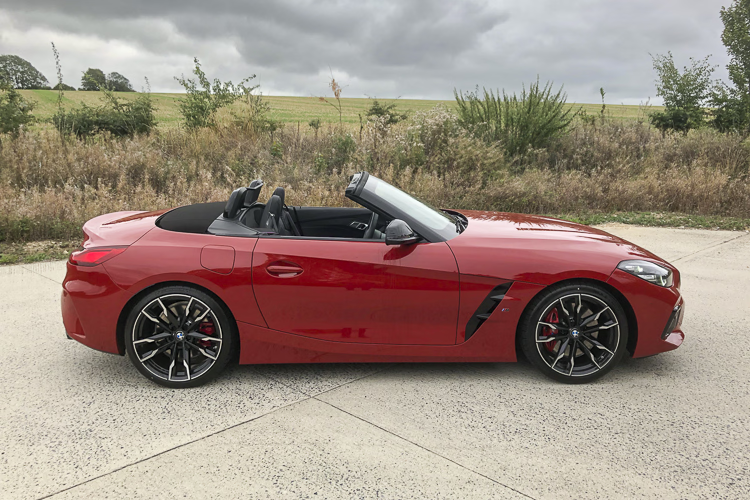
That strength bleeds into the car's composure. Early Z4s and its Supra cousin developed a reputation for transmitting unpleasant jolts from the rear axle into the cabin, but BMW has clearly been to work – only the nastiest of ridges or surface changes are felt, and they’re quickly parried. The revisions have paid dividends, because it’s much better than the 2.0-litre Z4 I’ve experienced, which had a habit of bottoming out. Compared to the first-generation Z4 3.0i or Z4 M, this car's poise is a revelation.
Composure is a thread woven into the Z4’s character. Rather than offering up a multitude of options, you get the feeling the Handschalter likes to dictate the tempo – it never really encourages limit-chasing. On paper this may read like a negative, but in reality it’s a non-issue, as the gearbox encourages a more relaxed approach that transforms the entire experience.
It may sound counterintuitive to say driving a sportscar slower makes it better, but when left to its own devices, the auto hoodwinks you into wringing out every last drop of performance. You inevitably start braking late and hard, throwing downshifts at the car, and all this is at odds with the calibration of the chassis. The slower, but more thoughtful approach of needing to pick your gear, and the more deliberate inputs allow everything to breathe and the Handschalter to find its rhythm.
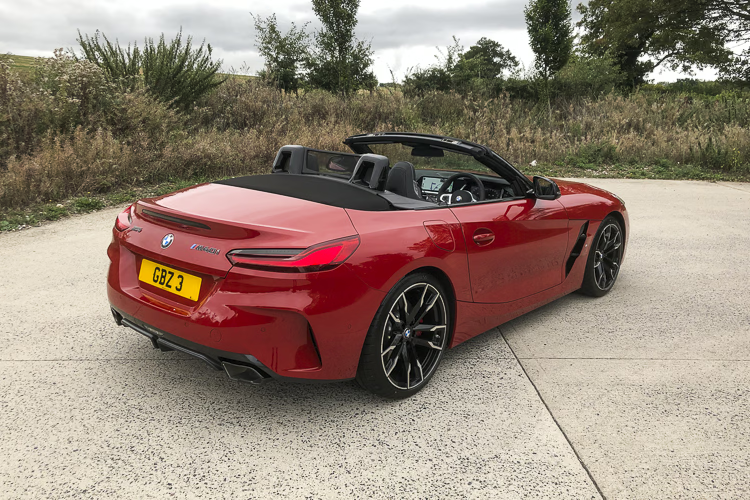
Obviously, short-shifting is immeasurably more enjoyable than in the auto too, meaning the smiles are bigger when touring as well as hustling – you’ll find yourself changing gears just for the hell of it. If you want even more involvement, you can also turn off the auto rev matching, but given the laid back nature of the optimum driving style – and excellent calibration of the system – I’m inclined to leave it on.
The brakes come in for praise too, being strong, immediate and steadfast, complete with a pedal that offers real progression. The smells wafting into the cabin as you wait at a junction after an enjoyable stretch will never fail to raise a wry smile.
Reservations? Some will certainly wish for a fraction more decibels from the creamy straight-six when pressing on – not to say it doesn’t have a voice, in fact with the roof down you’re introduced to some exciting turbo spooling and hissing suppressed when the same motor is installed in a tin top – but given the specialist target audience, a switchable exhaust to add further drama may have been a worthwhile investment. Or at least offered as an option via M Performance.
But the biggest complaint is reserved for the steering: the turn-in feels vague and soft in slower corners, and ramping up the weighting via the Sport Individual mode fails to bring any meaningful improvement. It's enough to curtail your entry speeds as you lack that final degree of confidence in the front axle. At the opposite end, traction is outstanding thanks to the 295-section rears, which let you get on the power early. Consequently, the Z4 never feels unruly.
.avif)
The aloof steering also means tight, single-track B-roads are not a natural environment for pressing on, the Z4 encouraging you to surge along in third simply enjoying the fact you’re motoring through the countryside with the roof down. In the same scenario the auto will be doing its best to shuffle into the optimal gear for efficiency, muffling the underlying soundtrack – unless you’re prepared to lock it into manual mode.
With the Handschalter, holding gears comes intuitively, giving the car a charisma previously missing. It also goes without saying BMW should be applauded for going against the grain and building a rear-drive, straight-six, manual roadster when its traditional rivals – the Mercedes SLK, Audi TT and Jaguar F-Type – are no longer in production. If it wanted to, BMW could quite easily rest on its laurels.
But before we get too excited, besides knowing the Handschalter is a car for the few, BMW is also wise enough to admit it's still not a direct rival to the Porsche Boxster. Its purpose and bandwidth remain geared towards planning and enjoying road trips, not track days. Its talents burn slowly, not brightly. For those looking to tick the former box, the Z4 M40i Handschalter has the potential to be a very satisfying long-term partner.

.avif)

.svg)

