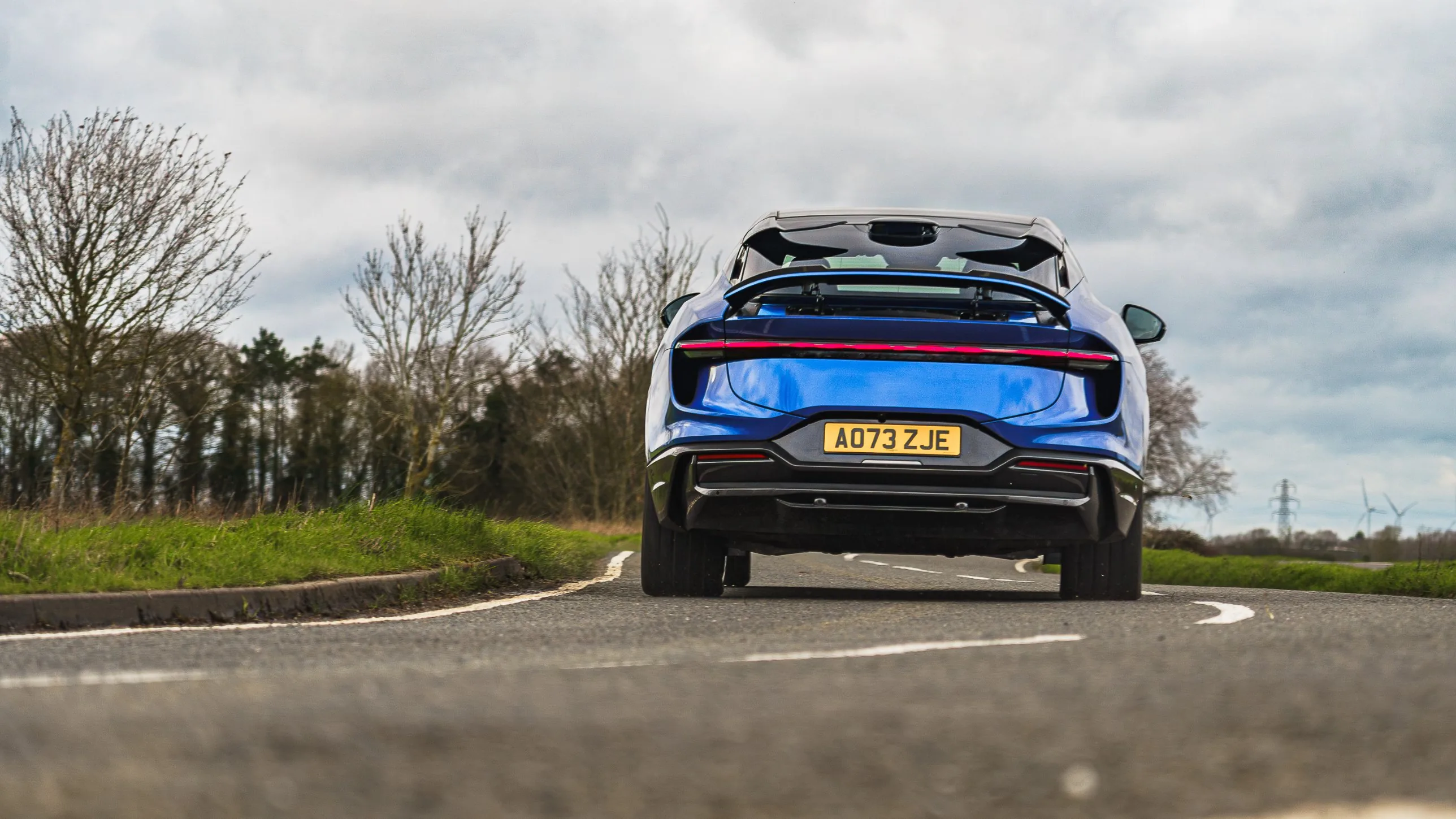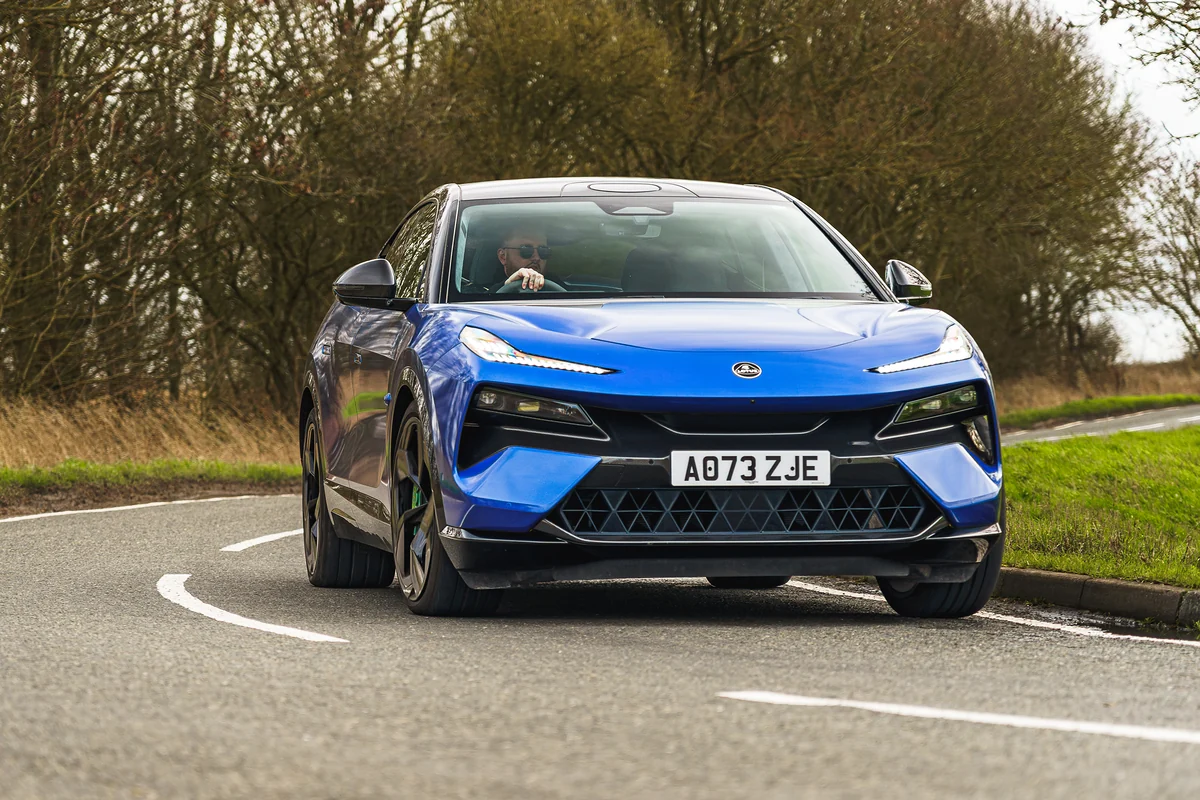
It’s also quite the departure from the models on which the brand was built, being bigger, heavier, and more luxurious than anything else in the back catalogue. The Eletre was the third model introduced under Geely’s custodianship of the Norfolk-based marque, and the second EV after the Evija hypercar. Designed to reposition Lotus as a rival to Porsche, the Eletre beat the Cayenne Electric to market by three years, but questions of how true to the brand a 2.6-tonne electric SUV can be still linger.
The Eletre is more approachable than its otherworldly shape would have you believe. It looks evil, imposing and aggressive at first glance, yet it hides some intricate details in plain sight. The running lights for instance: for many cars a simple strip light would do, but the Eletre uses no fewer than 20 individual LED prongs in each cluster. The main headlights sit within the bumper, with the six adaptive projectors only making their presence known when activated. When switched off, the tinted lenses make them blend into the bumper, seamlessly vanishing into the carbon fibre bodywork between the nose air channels.

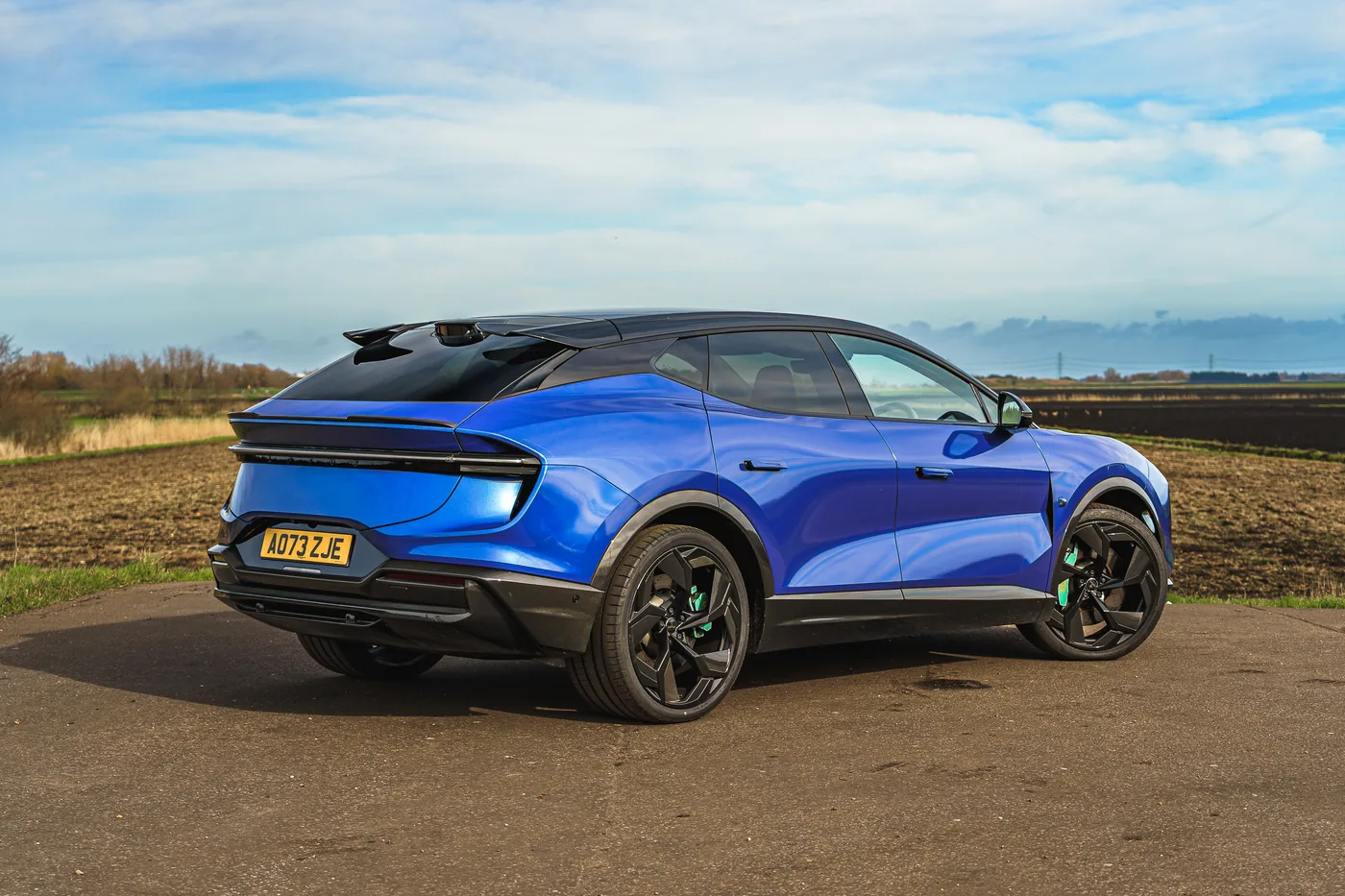
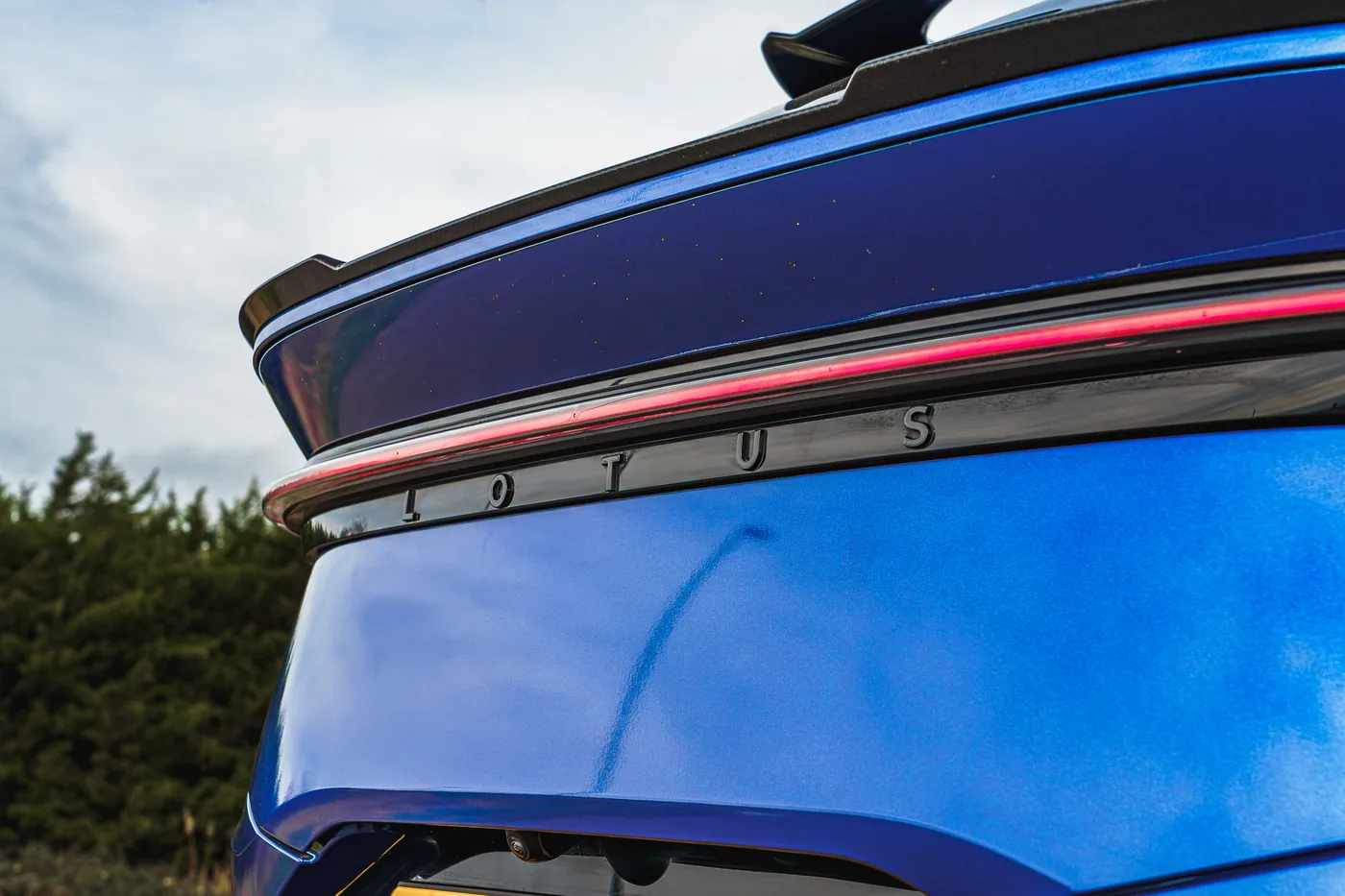
A lot of the car’s front and rear end design is not dictated by the amount of bodywork, but the lack of it. The central duct sends air over the bonnet in two directions, while the outer pair are used to reduce the turbulence caused by rotating wheels. At the rear, C-pillar ducting and large bumper vents look like they belong on a GT3 racer, but also contribute to the car’s drag coefficient of 0.26 Cd.
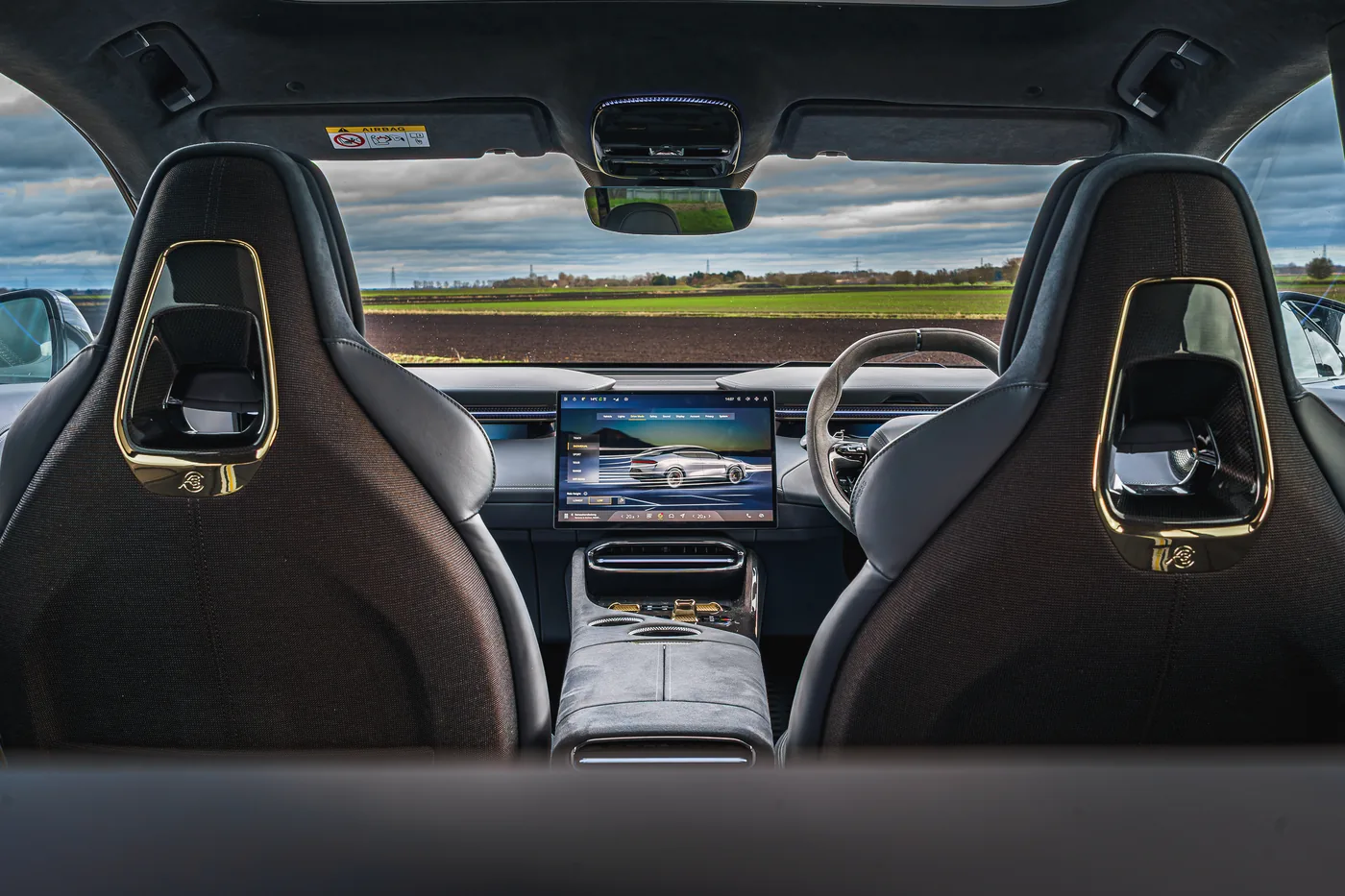
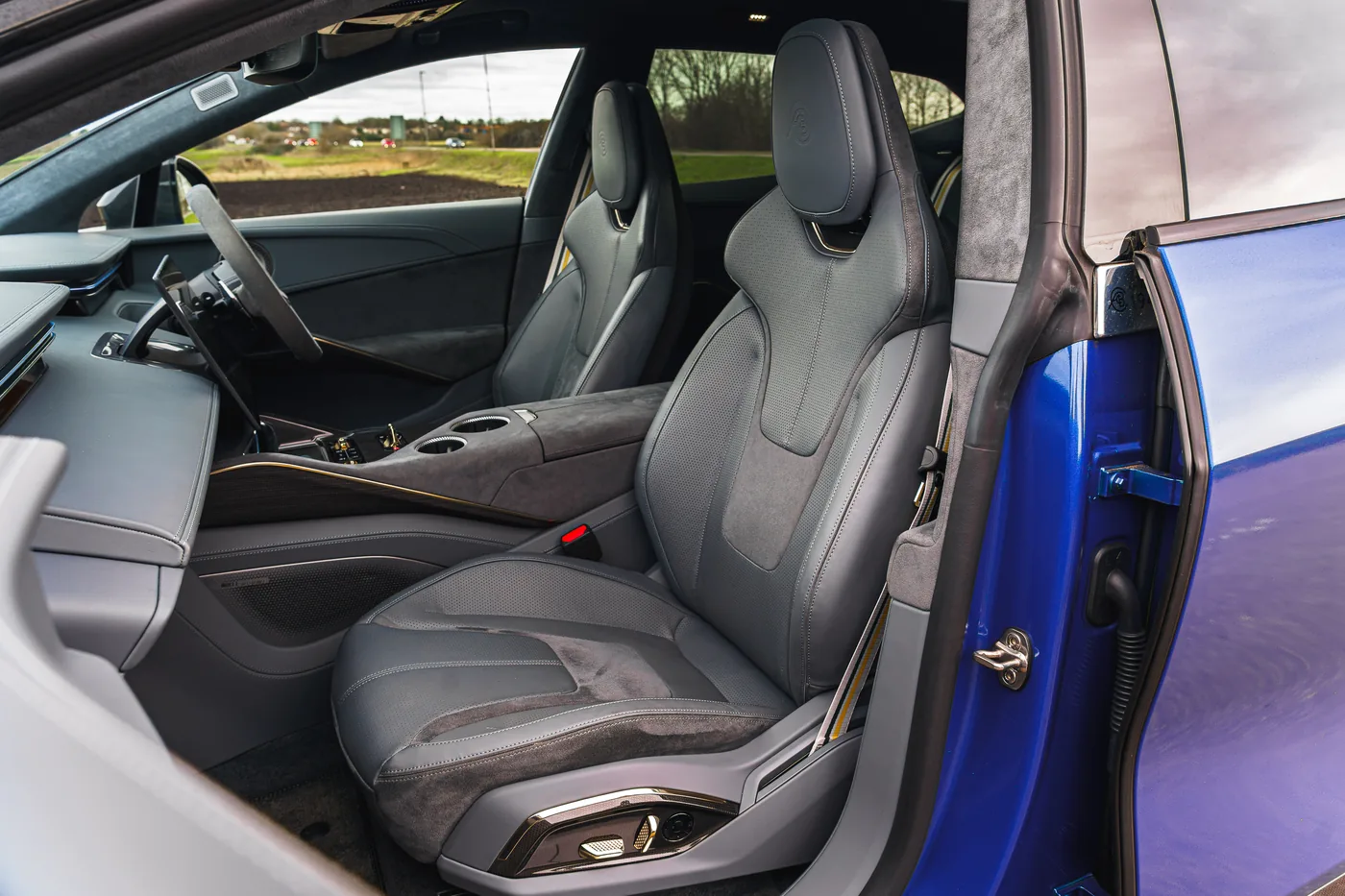
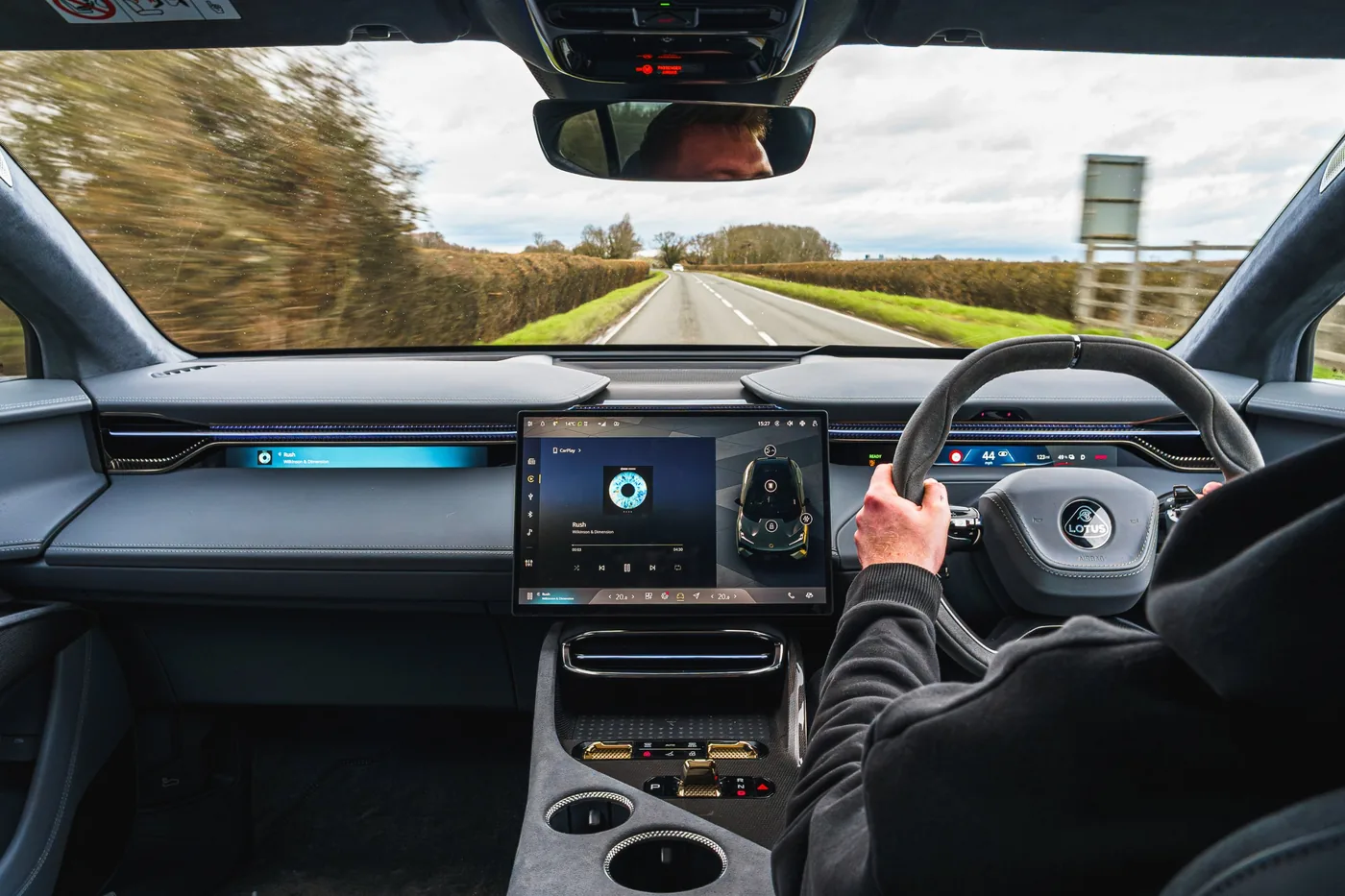
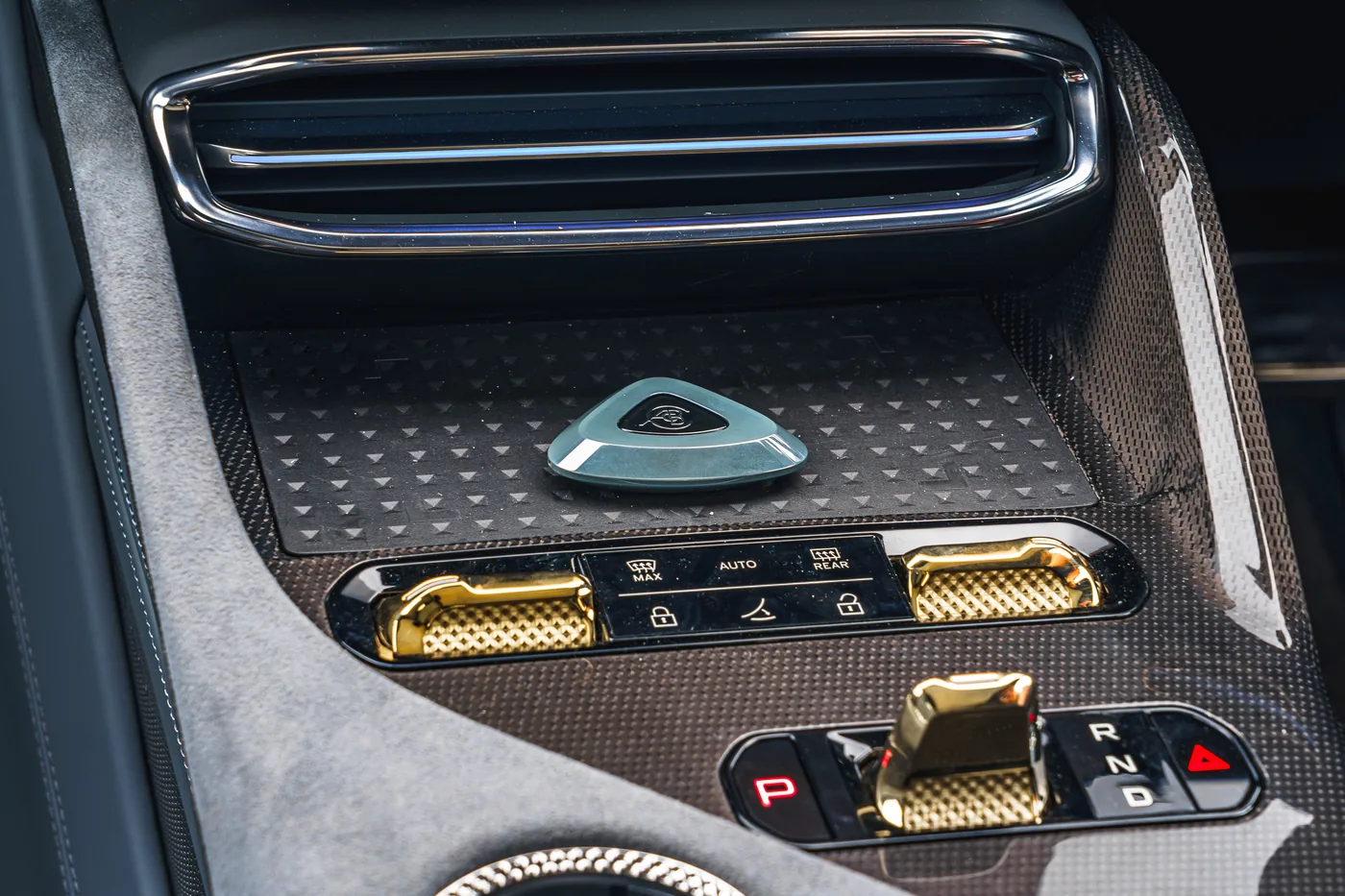
Inside, it’s a similar story with a light and airy cabin – helped by the sizeable electrically-dimming sunroof, and the light leather and microfibre upholstery and headlining of my test car. Space is plentiful, with the three metre wheelbase creating a vast interior. The slimline two-piece seats up front are comfortable and supportive, while the rear bench features electric backrest adjustment. The material quality surpasses that of its key rivals by quite some margin, with sumptuously soft leather and microfibre on almost every surface – even the sun visors. Knurled finishes for the switchgear adds a secondary layer of tactile enjoyment when adjusting the temperature, the driving and regen modes, or even operating the double-glazed windows. It’s one of the best interiors I’ve sat in all year.
Sharing components and operating procedures from the wider Geely group, there’s no starter button; just take a seat, depress the brake, select drive, and you’re off. While having to use the steering wheel buttons to adjust the door mirrors may take some getting used to, positioning the Eletre on the road is intuitive and doesn’t take long to master – despite the driving position being further forward than one may expect. Something else surprisingly easy to acclimatise to is the four-paddle arrangement behind the steering wheel, with the two on the left for cycling through regenerative braking settings, and the two on the right for adjusting the driving modes.
The R is the former flagship of the range, sharing the same 112kWh capacity battery that all fully-electric Eletres come equipped with. Naturally, the response is instant even in its most restrained setting, with the dual motors offering more than enough performance for effortless overtakes. EVs are often criticised for having binary power delivery, but that’s only if the driver treats the accelerator like a switch. Feed the pedal in a millimetre at a time and the Eletre answers in kind, building from a gentle roll to a rapid vault forwards.
The Range and Tour settings leave a lot of performance in reserve, and keep the suspension in its softest state, making for a comfortable if slightly under-damped cruiser; a dip in the road surface leaves the rear axle taking a bounce and a half to settle.
'The Eletre can cope with quick commands to alter its course. The mixture of perfectly blended regenerative and friction braking from six-piston callipers allows the big SUV to shed speed almost as quickly as it gains it'
The chassis becomes better balanced and more predictable with its suspension in Sport mode, and the powertrain is nothing short of relentless with its power delivery. The quoted 0–62mph time of 2.95 seconds is a match for the Evija hypercar. Even with the Yokohama tyres scrabbling for grip on cold tarmac in the initial – borderline violent – acceleration phase, the claim is entirely believable.
When rolling, the Eletre R makes the speedometer blur as it finds its confident high speed gait. Building momentum so quickly and maintaining it with such ease, anything below 60mph feels like walking pace; the rear motor’s second gear engages around 80mph, promising rampant acceleration up to its 165mph top speed.
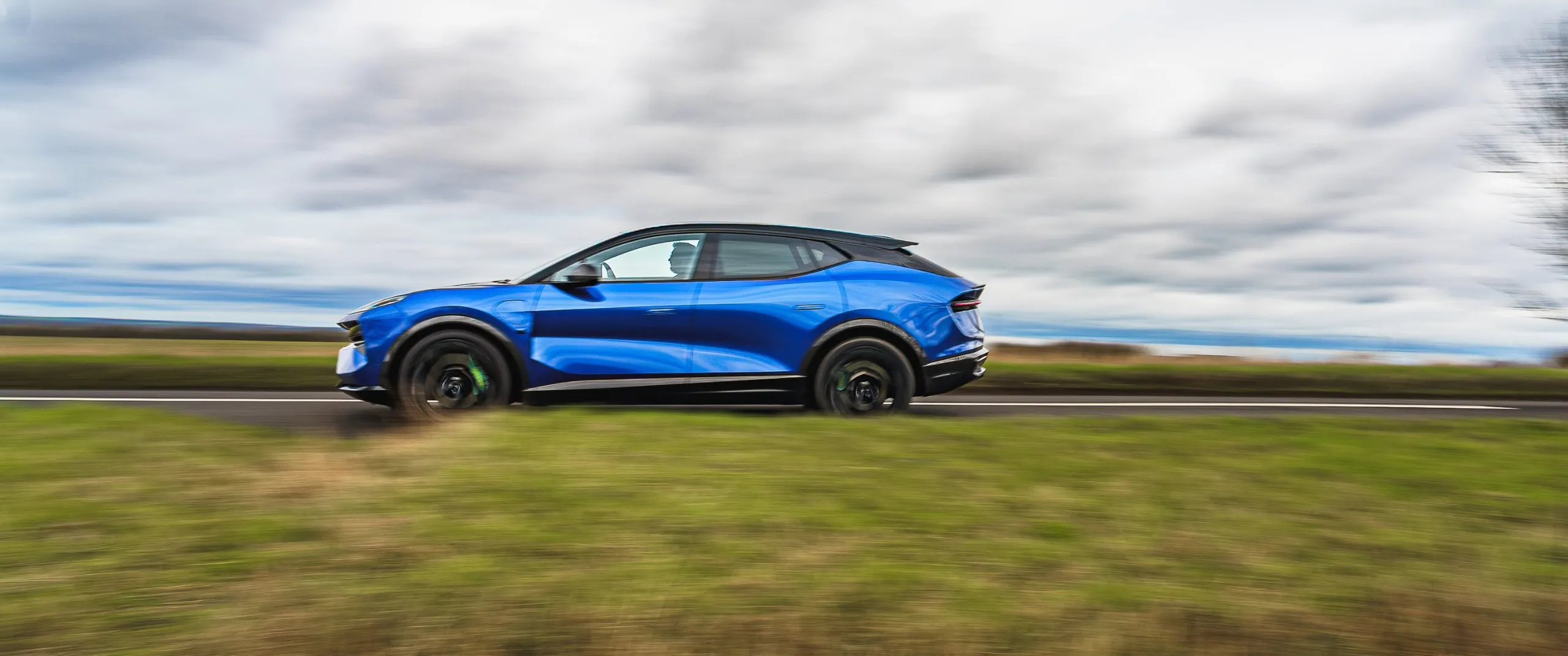
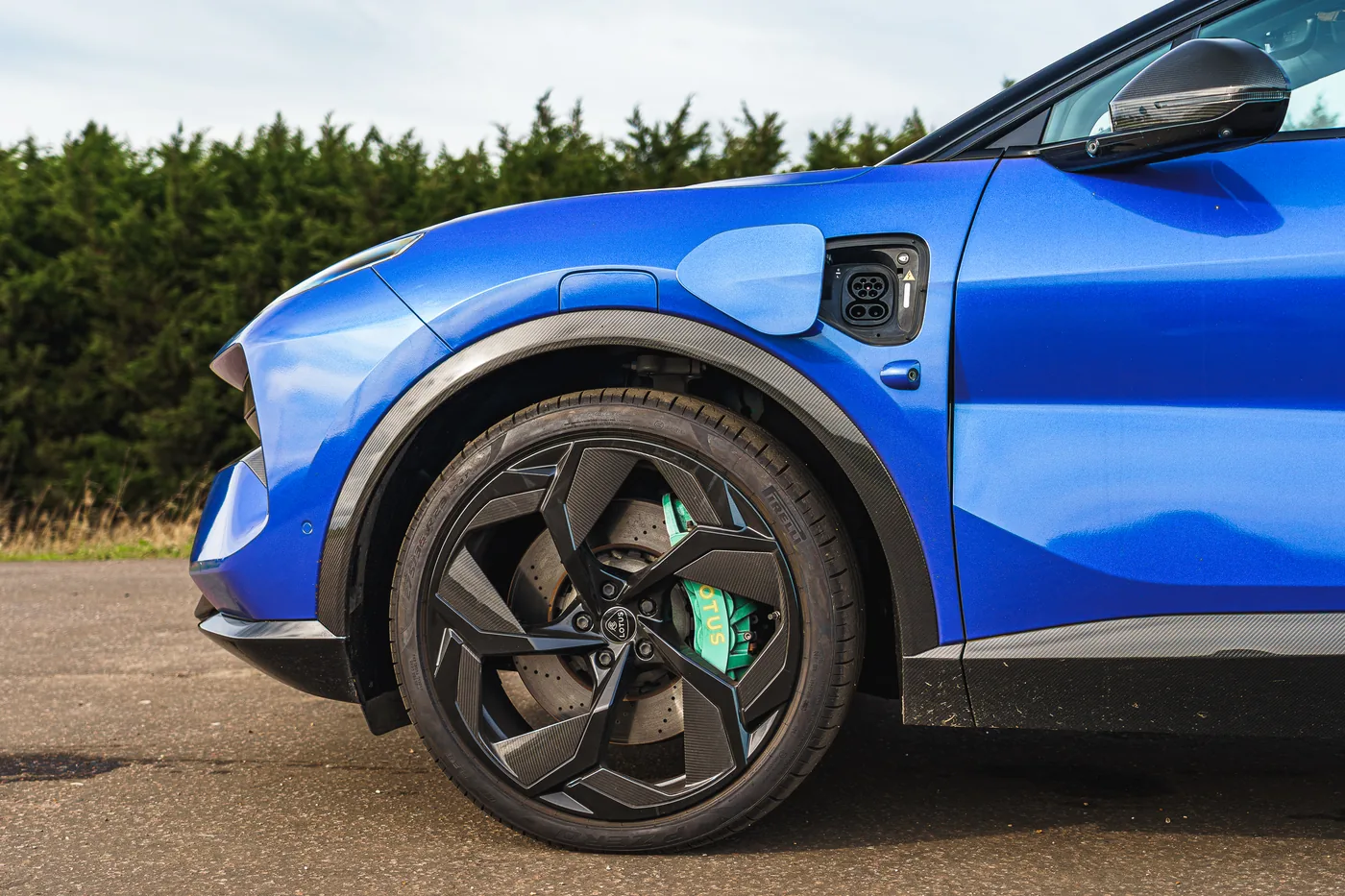
The big Lotus isn’t a one-trick pony, and takes to corners keenly with its swift steering rack. While the EPAS system never truly transmits the minutia of the road surface to my palms, it follows my instructions diligently. With the suspension in its lower and firmer settings, the body control is nothing short of impressive, removing most of the detectable float on undulating surfaces. It also rides surprisingly well in this mode, continuing to smooth out imperfections in Fenland roads despite its 23” carbon-bladed wheels being among the largest available on any new car at present.
While some EVs require a regen-led double-turn in to load up the front axle and get the battery’s mass moving in unison with the chassis, the Eletre can cope with quick commands to alter its course. The mixture of perfectly blended regenerative and friction braking from six-piston callipers allows the Eletre to shed speed almost as quickly as it gains it, before leaning on the air springs and squatting on the rear axle as the warp drive is reactivated for the run to the next corner. Conducting all of it is ZF’s cubiX software, which manages the brakes, the steering at both axles, the adaptive dampers, the active anti-roll bars and the motors as a single system rather than a committee.
It is possible to get on the power ahead of the apex, but the car best rewards progressive applications as the asphalt begins to straighten. Being less delicate with the throttle can make the rear axle step out, but the ESP system catches the big Lotus gracefully rather than scolding it for daring to even think about sliding. A few runs down long straights into mid-speed chicanes, trying both slow in/fast out and fast in/fast out, work the discs hard, yet the pedal never goes soft, even as the brakes get hot enough to grill a steak on.
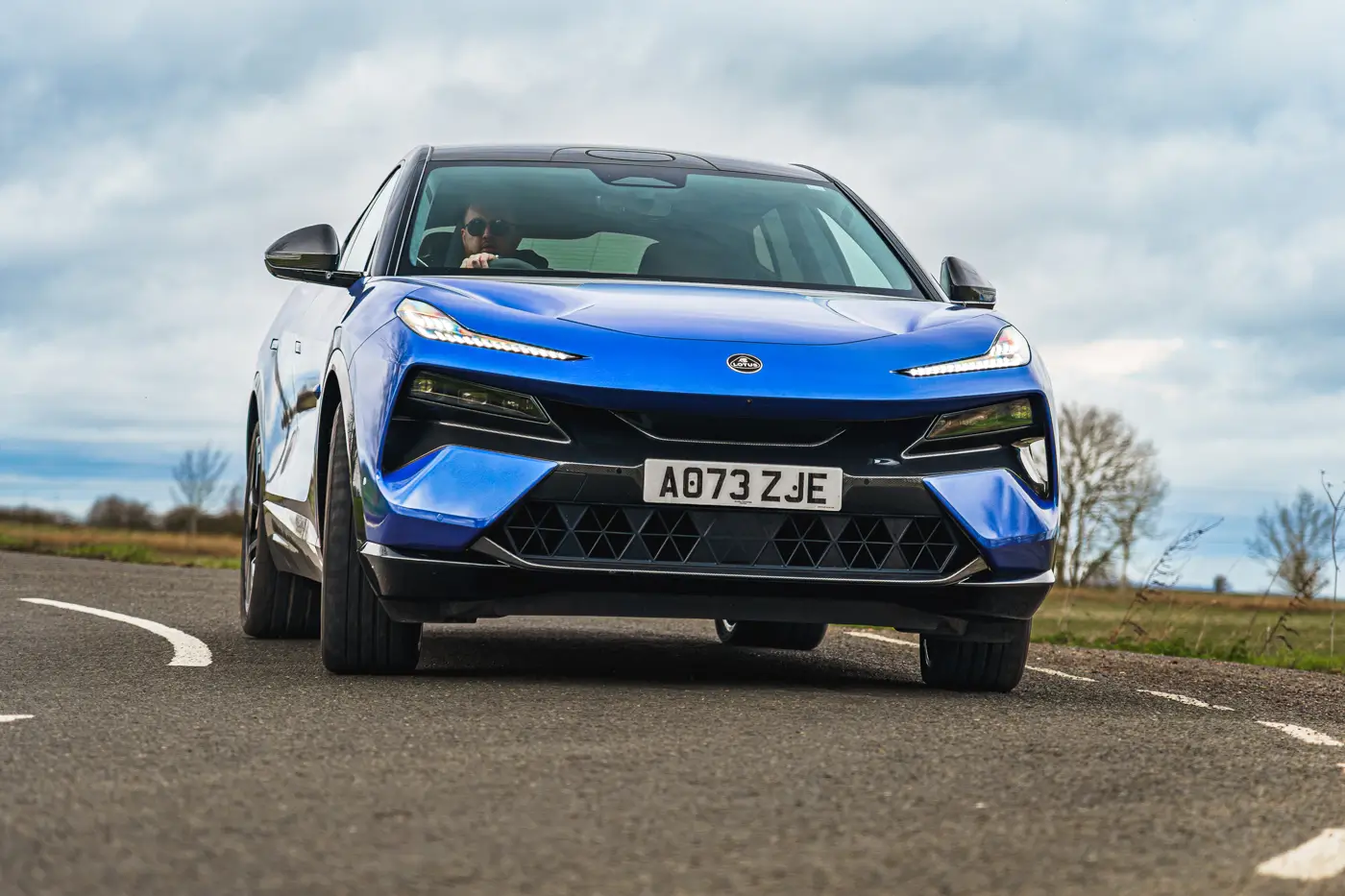
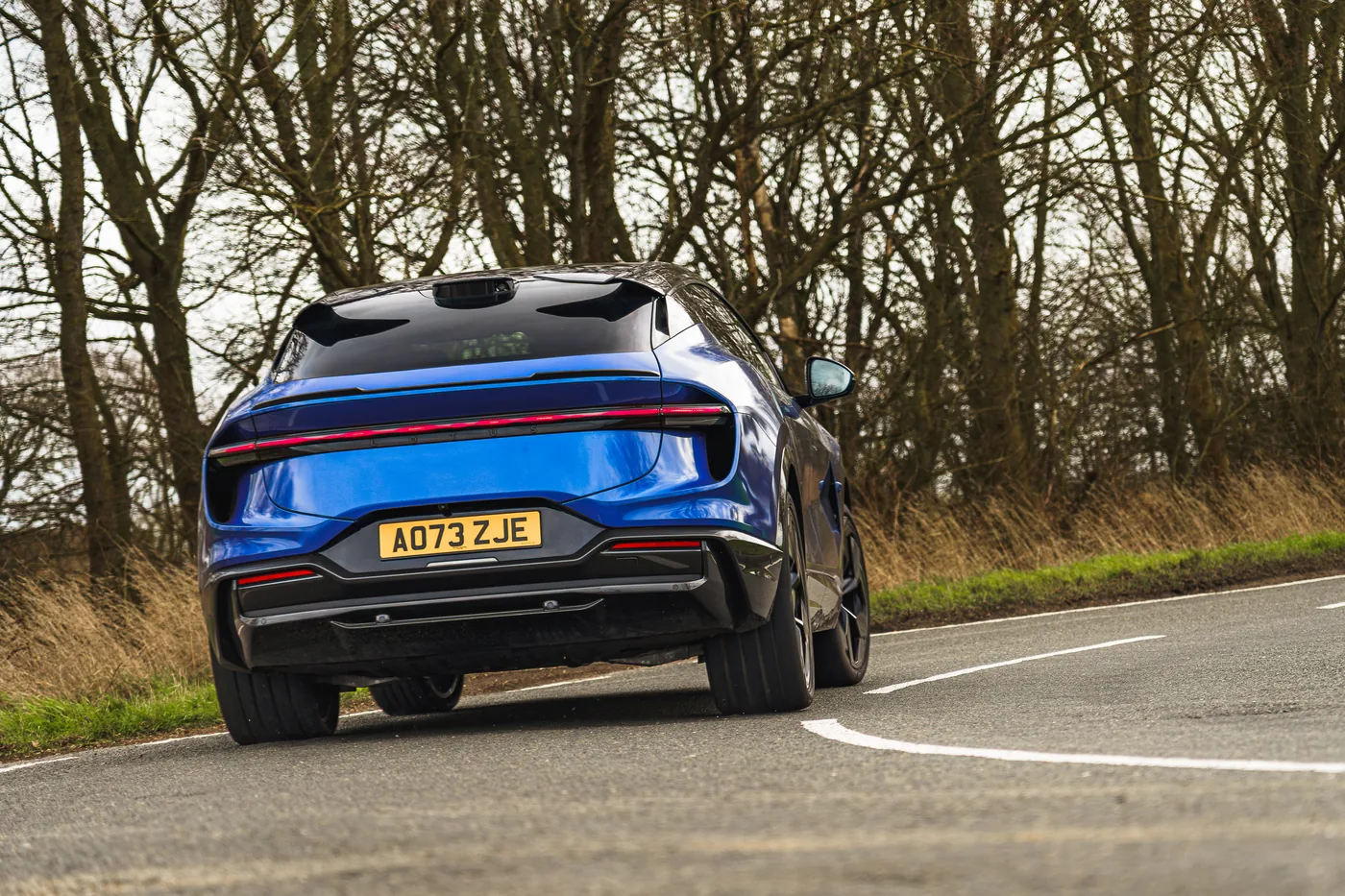
It’s definitely more suited to sweeping valley bends than endless mountain switchbacks, but to let the Eletre stretch its legs properly it needs to be taken on track. It’s the first SUV I’ve driven where the availability of such a driving mode makes complete sense.
The Eletre R can be driven briskly without much thought, but to press on requires focus and precision. It’s got the dynamic edge over the BMW iX which steers sweetly but is happiest being pedalled at sixth tenths. Likewise, the Lotus requires more manhandling than the Polestar 3 Performance which never feels short of traction even when making quick progress. With size, pricing, and performance factored in, the entry-level Eletre 600 is the more natural rival to the most potent offerings from BMW and Polestar.
In R or 900 guise, the car used to be one of the few electric SUVs offering near-hypercar power levels on the market, but now falls over 200bhp shy of the Porsche Cayenne Turbo Electric, and the forthcoming Mercedes-AMG GT SUV. While it’s no longer the most powerful car in its segment in terms of headline numbers, making use of the full 905bhp and 727lb-ft (985Nm) subjects the driver’s body to immense forces – both lateral and longitudinal – making for the most physical driving experience among its rivals tested thus far.
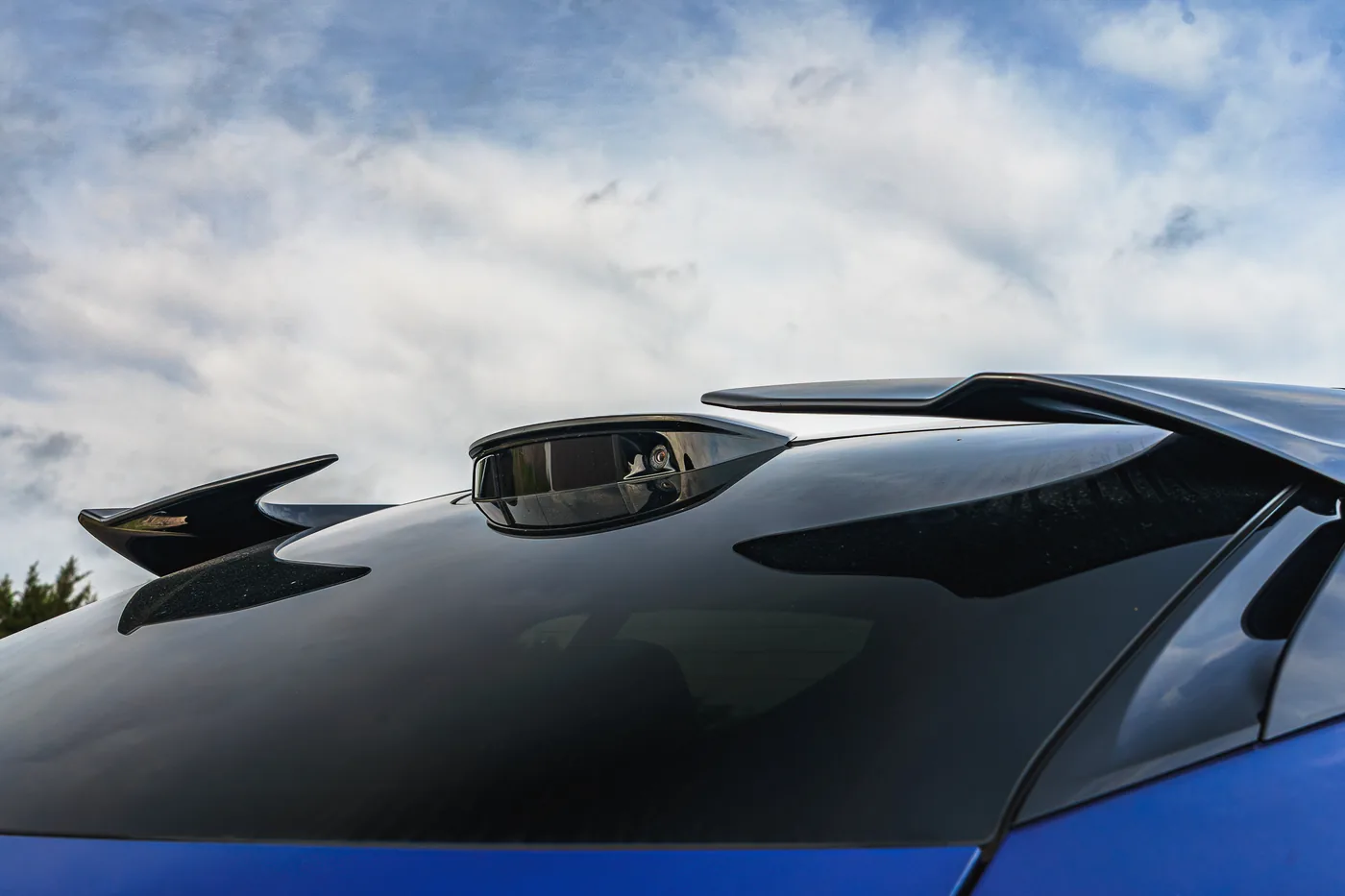
However, it isn’t always like driving a leather-trimmed rollercoaster; activating the car’s semi-autonomous driving system lets the Eletre change lanes, adjust its speed to the current limit, centre itself in the lane, and park itself with next to zero human input. The system is good, but could do with some refining to give it more of the self-assured confidence present in Mercedes-Benz and Tesla models equipped with similar technology.
With the car driving me for the final stretch, I notice I’ve barely looked at the narrow drivers display, having spent most of my time observing the data shown by the large head-up display. Having a copilot means I’ve had someone else to interact with the main 15.1” infotainment screen for me, save for when the voice assistant – who we christened Colin – piped up.
As with all Geely infotainment systems I’ve encountered, the interface is mostly slick, but could do with clearer shortcuts; a couple of hours to familiarise oneself with every menu to understand its capabilities is a must. The Eletre taking the reins gives me time to crunch some numbers, and consider the car as a whole.
The efficiency was respectable across the 152.7-mile route, with me taking the car at 95 per cent charged with an estimated range of 280 miles shown, and returning it on 47 per cent with 127 miles remaining – despite no attempts to hypermile in order to reach its claimed 280-mile WLTP range.
It’s clear the 100 per cent electric world the Eletre was designed for won’t arrive by 2030. Consequently, Lotus has already introduced a plug-in hybrid variant which uses a 2.0-litre turbocharged petrol engine, two electric motors, a 70kWh battery and a 52-litre fuel tank. Known as the Eletre X, the PHEV variant offers an extra 34bhp over the pure-EV, and a longer claimed range of up to 745 miles. It is yet to go on sale in the UK at the time of writing.
I liked the Eletre more than I expected to. It will carry five people and their luggage in serene comfort, move through the landscape without disturbing a resting moth, and drive itself for the final stretch. Yet on half throttle it could still leave an M3 in its wake, and on cold Fenland roads it handled like a car half a metre shorter and 250kg lighter than the spec sheet insists. For anyone who needs the space but still wants to drive, it does both jobs properly.