-01.svg)

Numbers-wise, the first clue is in the name. The 420 Sport is the first Emira whose output starts with a four, although the badge references PS rather than brake horsepower: 421PS translating to 416bhp, with 500Nm converting to 369lb ft. Behind those figures is the AMG-sourced 2.0-litre turbocharged four-cylinder, though Lotus has not simply lifted the A45’s powertrain wholesale: it remains a Lotus development of the A35 engine, with the additional 16bhp over the Turbo SE coming through a revised ECU map and improved cooling. As before, it is paired with an eight-speed dual-clutch transmission and sends power to the rear wheels. Lotus says 0–60mph takes 3.7 seconds, 0–99mph 8.4 seconds and top speed is 186mph.
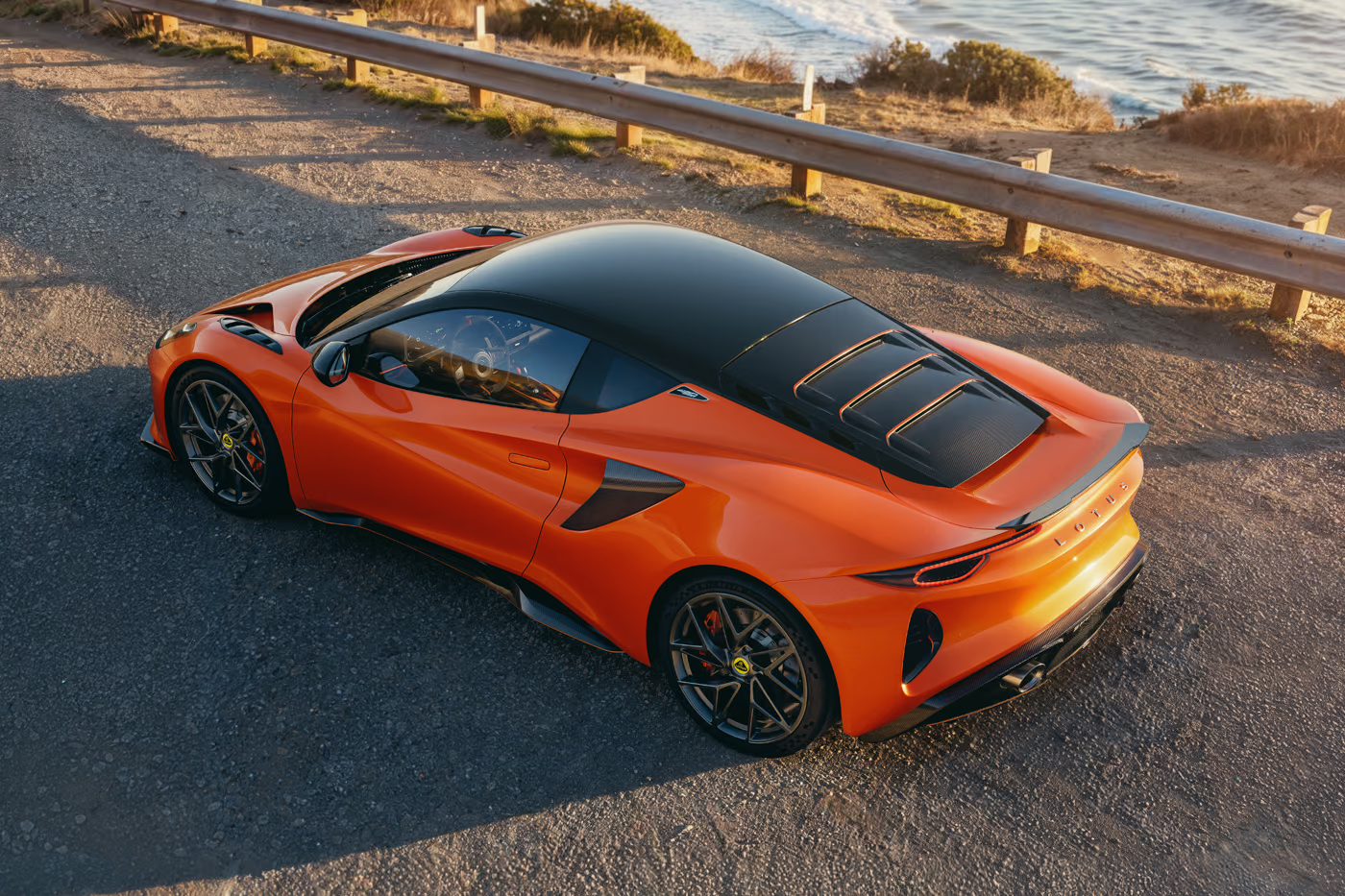
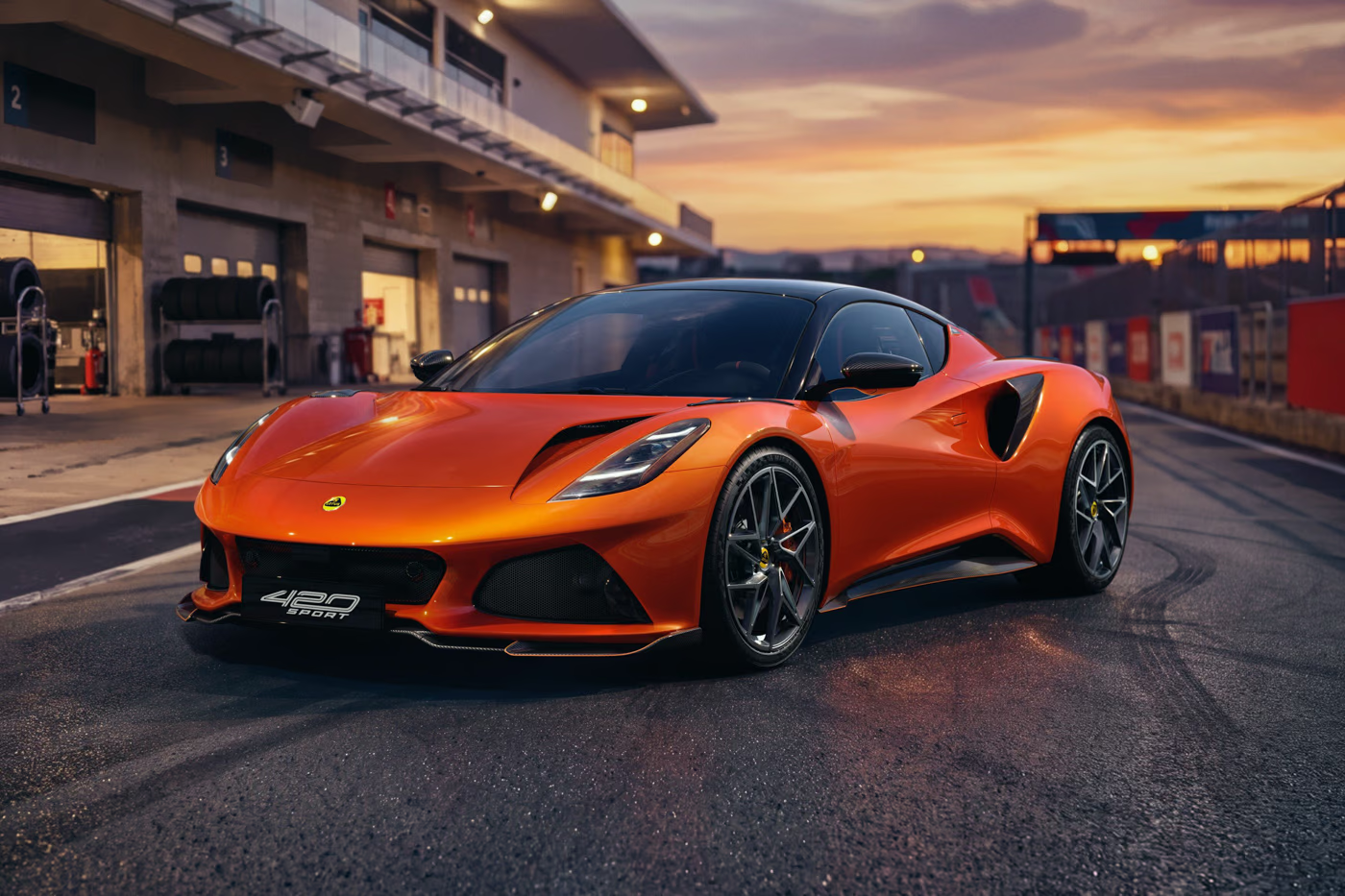
Although the Emira 420 Sport stops short of becoming a full-blown track car, its aerodynamic revisions carry genuine substance. A new front splitter, revised front vents, extended side sills, larger air intakes, a lip spoiler and a louvred tailgate increase airflow to the outboard radiators by 15 per cent and the central radiator by 14 per cent, with brake cooling also improved by 10 per cent. Exhaust valve airflow is up by 30 per cent too, yet the drag coefficient remains unchanged at 0.37. The 420 Sport isn’t all business, however, with the louvred tailgate providing a direct nod to the Esprit Turbo.
A must-have option is the Lightweight Handling Pack. It comprises a titanium exhaust, lithium-ion battery and carbon fibre components, removing 25kg from the kerb weight and adding it to the downforce total. The pack also introduces two-way adjustable Multimatic dampers for compression and rebound. The underlying DSSV technology varies its resistance according to the speed and displacement of piston movement, handling small, high-frequency road inputs differently from larger body movements through a corner. It remains a passive system with no electronics or lag, which feels very Lotus. Ride height drops 5mm over the standard Emira, with revised geometry to suit, while Michelin Pilot Sport Cup 2 tyres complete the package.
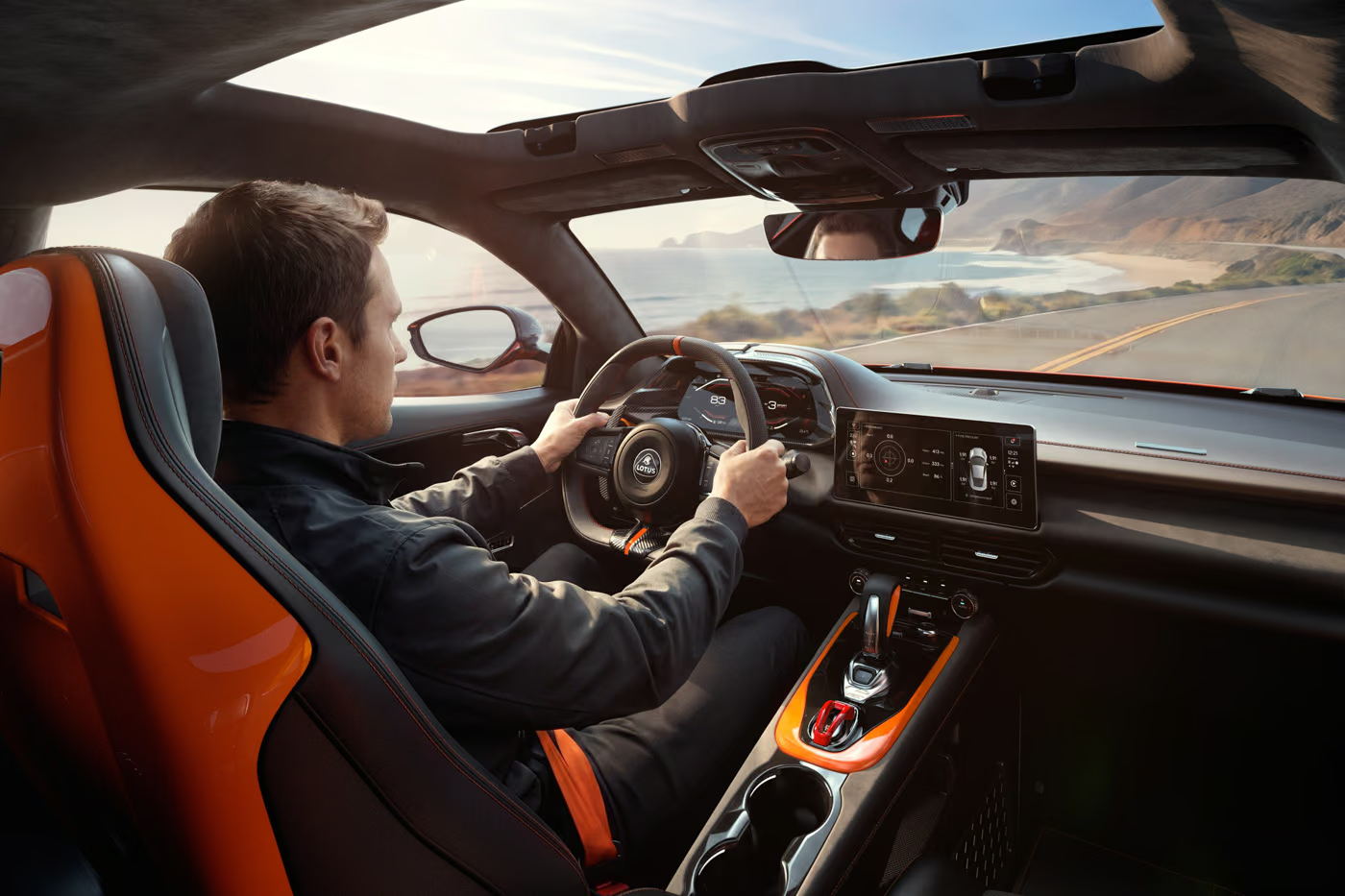
Inside, new carbon fibre gearshift paddles with revised haptics are the most notable change, with 12-way adjustable seats standard. The biggest differentiators come via the options list: a Carbon Fibre Pack sharpens the driver display surround, steering wheel centre spoke and seat back logo surrounds, while a Hand Painted Pack adds signature Tangelo Orange highlights to the cabin. Lotus is also using the 420 Sport to introduce the option of a tinted glass roof panel across the Emira range, which stows behind the seats in a protective bag. Lotus claims structural integrity and dynamic performance are unaffected.
As Lotus readies its next chapter, the Emira’s original billing as the last petrol Lotus sports car has been overtaken by events. Lotus has already confirmed a new V8-powered hybrid supercar, while the Emira itself is expected to evolve into a second-generation car using a Horse Powertrain-supplied turbocharged six-cylinder producing more than 500bhp, almost certainly with hybrid assistance. The 420 Sport, then, arrives as something more significant than a new range-topper – on paper, it has the ingredients to be peak Mk1 Emira.
As Gavin Kershaw, Lotus’s long-serving Director of Attributes, puts it: “Adjustable dampers, increased downforce, sharper responses, reduced roll – every detail obsessively engineered to put the driver more in control.”
Lotus’s timing could hardly be better. The Cayman GTS has been withdrawn from sale, its successor remains unresolved, and the axe is set to fall on the Alpine A110.
The Emira 420 Sport is available to order now, with first UK deliveries expected from August 2026 and prices starting at £105,900. That’s a £13,400 premium over the Turbo SE in Racing Line trim and £6,400 above the V6 Racing Line, before the Lightweight Handling Pack is ticked. Add carbon and paint options, and this will comfortably be the most expensive Emira yet.
.avif)



.svg)

