-01.svg)

Whether the engine is a new in-house design or supplied from another manufacturer remains to be seen, but the smart money is on the latter option. Mercedes-AMG already supplies the 2.0-litre four-cylinder engine for the Emira, and a hybridised derivative of the GT Black Series’ V8 for use in the Aston Martin Valhalla. An evolution of that engine is close to being announced by AMG, and critically it will be Euro 7 compliant. We expect the Type 135 to feature an all-wheel drive set-up with the V8 driving the rear wheels, and at least one electric motor powering the front axle.
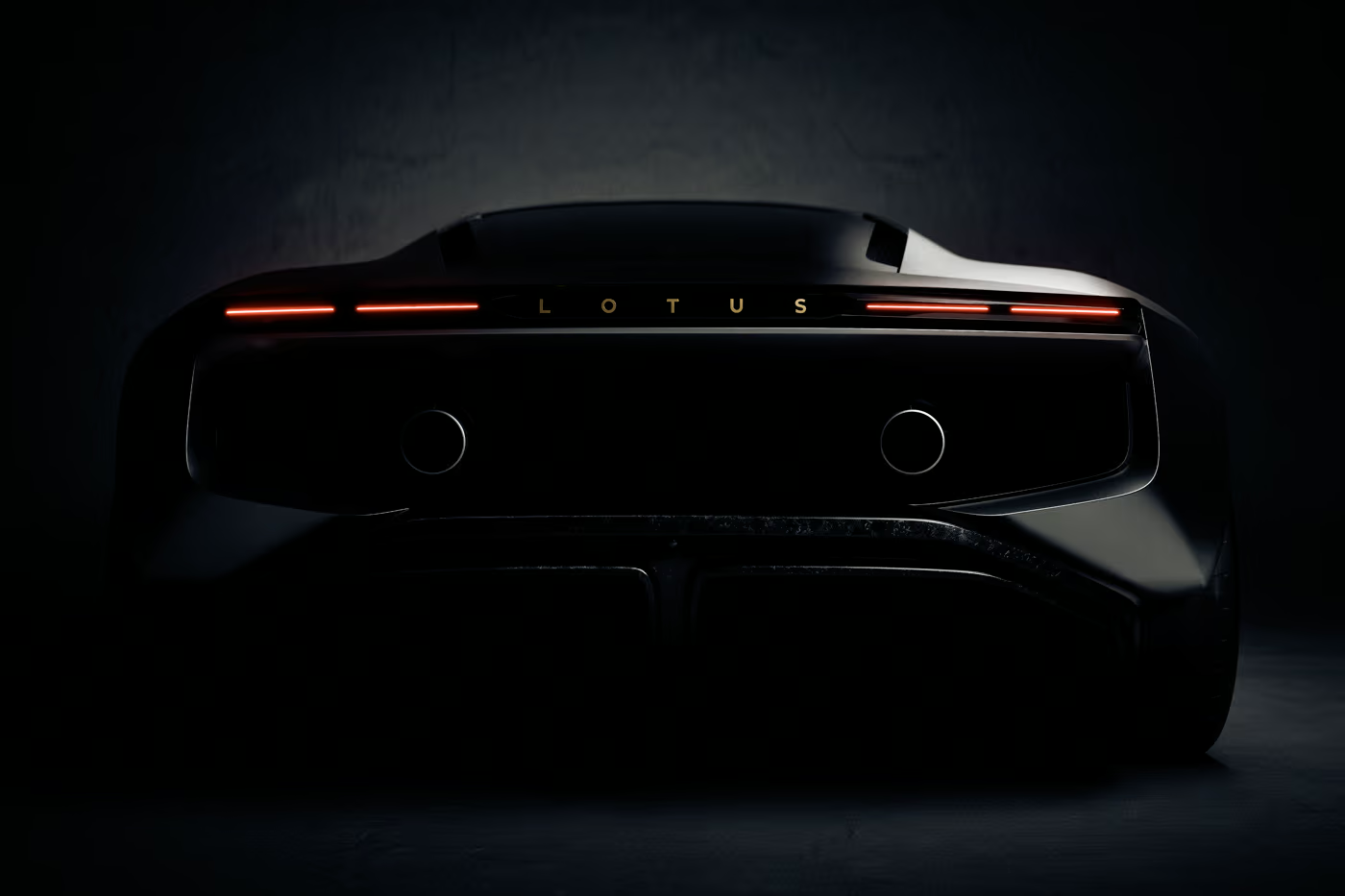
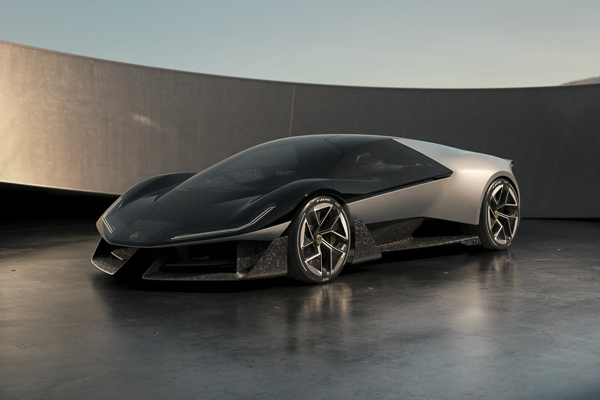
Taking multiple design cues from the Theory 1 concept of 2024, the new supercar should feature a wedge-shaped silhouette with plenty of visible air channels, but a matching three-seat layout and rear-opening doors are unlikely to reach production. Production of the new model will begin in 2028 with Lotus CEO Feng Qinfeng describing Hethel as the "best option" for production of the brand's sports cars, in a statement quashing rumours of the plant's closure.


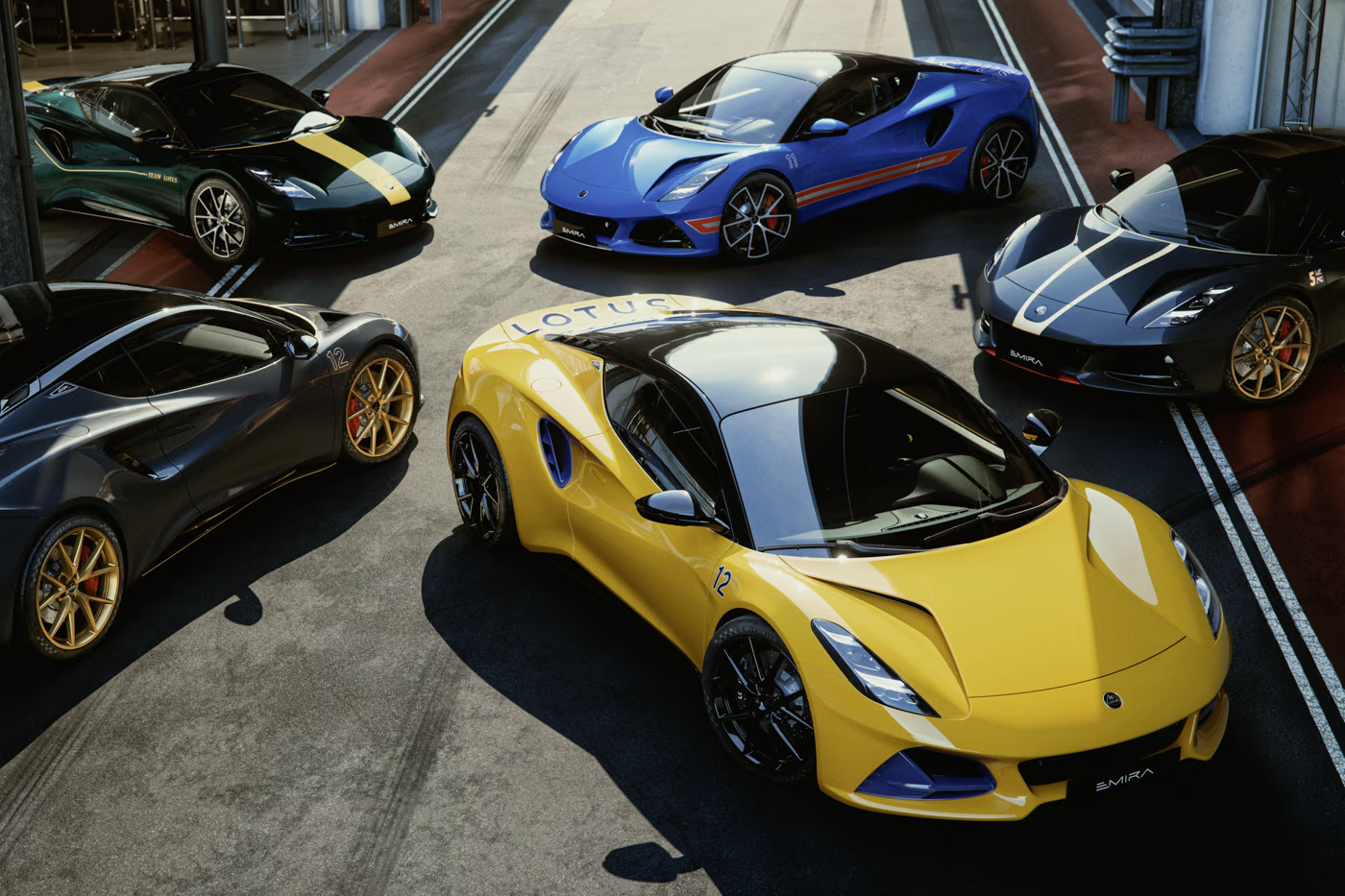
The Type 135 will sit at the top of a revitalised product portfolio, announced as part of Lotus’ Focus 2030 initiative. This sees a shift from the previously announced electric-only strategy, cementing the place of hybrid and petrol powertrains alongside EVs, and guaranteeing the future of the Emira. Once prematurely mourned as being the brand’s last piston-engined sports car, the compact coupé will see a more powerful and lighter variant introduced this year alongside a new hybrid variant.
Plug-in hybrid options are coming - the first of which is the Eletre X this summer. The petrol-electric variant of the hyper-SUV features a 2.0-litre engine and a pair of electric motors making 939bhp and 690lb-ft (935Nm) of torque combined. Claimed to offer a combined range of over 746 miles, the powertrain is due to make its way to the Emeya saloon in the near-future as well. Pure EVs will remain a part of the portfolio, and Lotus predicts these will make up 40% of its electrified car sales with hybrids accounting for the other 60%. A rival to the Porsche Macan Electric dubbed Type 134 was due to be revealed in late 2025, but this is conspicuous by its absence from the strategy.
Another place where Lotus has changed its track is on annual sales volumes. In 2022 they targeted 100,000 deliveries per year by 2028, but now their sights are set on a gradual ramp up from 6,520 cars to 30,000. Rather than chasing volumes, Lotus is looking to the broadened powertrain offerings and enhanced customisation options to boost profitability in the coming years, meaning we can expect more special editions leaning on the brand’s racing heritage and an expansion of the Chapman personalisation programme.

Corporate restructuring has been a recurring story over the past few years, and this will continue in 2026 with Lotus UK and Lotus Technology being amalgamated. The revised company will feature unified management and reduced complexities associated with running two parallel businesses.
Question marks surrounding Lotus’ long term future have also been blown out of the water, with Daniel Li - Chairman of Lotus Technology and Executive Vice Chairman of parent company Geely - saying: “Geely has believed in Lotus from the beginning, and that belief has not wavered. We are committed to giving Lotus the resources it deserves to compete at the highest level. What Lotus brings is irreplaceable, and Focus 2030 is proof that we take that responsibility seriously”.
Hethel’s role in the future of the brand has been solidified, with design and engineering operations remaining in Norfolk, while R&D will continue in China. The first product born from the new strategy will be seen in the coming weeks when an uprated Emira variant is launched. Afterwards, all eyes will be looking towards 2028 for the return of the Lotus supercar.




.svg)

