NEWS, SHORT SHIFT
Peter Falk: Key Engineer Behind Porsche's Greatest Era
Craig Toone
By
Images by
Porsche Newsroom
Published
29 Jan 2026
Peter Falk: Key Engineer Behind Porsche's Greatest Era
.jpeg)
The meticulous race director and engineer behind Porsche's Group C dominance, and some of its greatest road cars, passed away on 23rd January, aged 93. Yet despite such achievements, Falk always shunned the spotlight.
Seven overall victories at Le Mans. Eleven world championship titles. Two Paris-Dakar wins. Numbers that would define any racing career, yet Peter Falk – the racing director responsible for delivering them – remains largely unknown outside of Porsche's inner circle.
"I've always said that I don't count at all but my team has to be good," Falk once explained. "And that's the most important thing." In an era defined by outsized personalities and individual glory, Falk ran Porsche's Group C programme on the opposite principle. Under Falk, the team came first. Always.
Peter Falk passed away on 23rd January at the age of 93, closing a remarkable career and life that stretched from Porsche's earliest competition efforts to the cars that secured its future. Born in Athens in 1932, the son of an archaeologist, he studied mechanical engineering before joining the company in 1959 as one of only ten employees in vehicle testing.
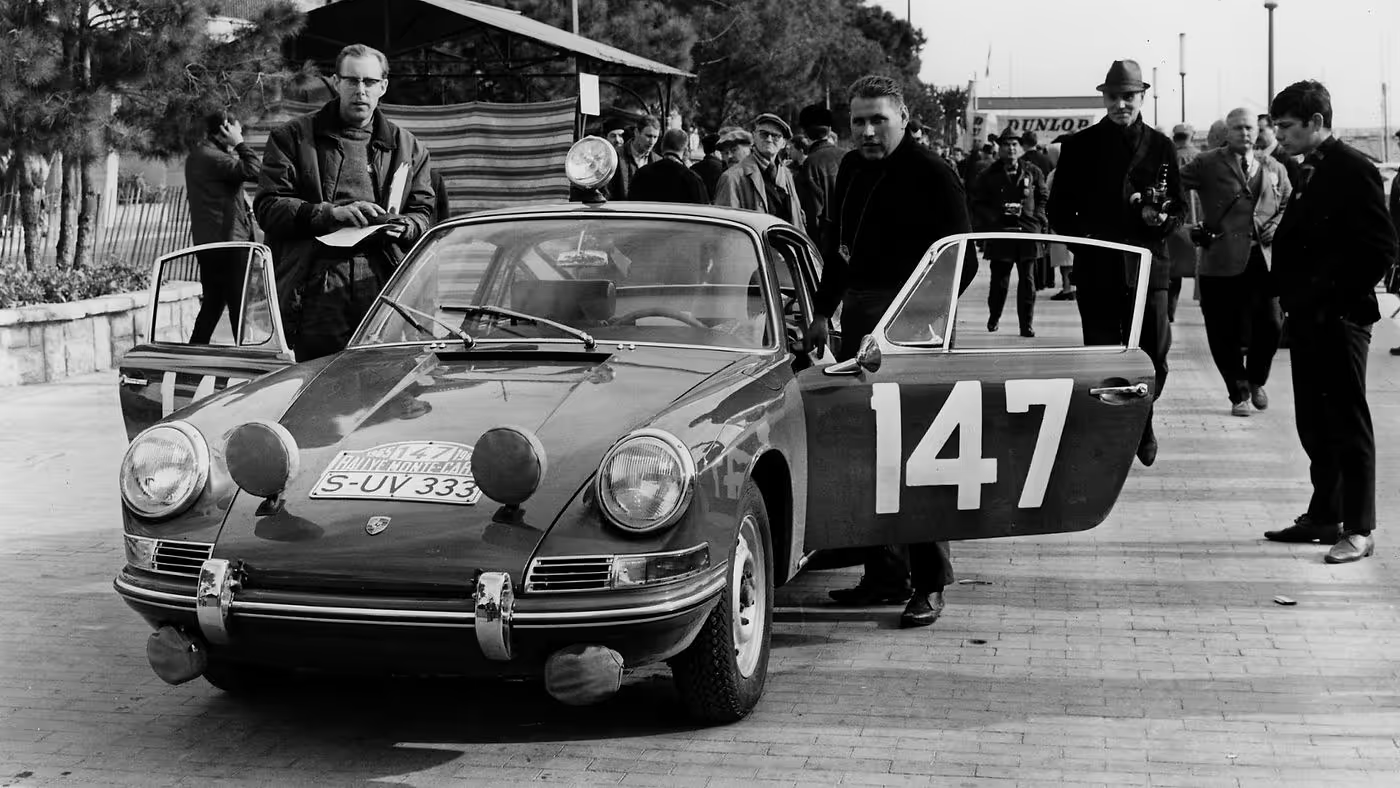
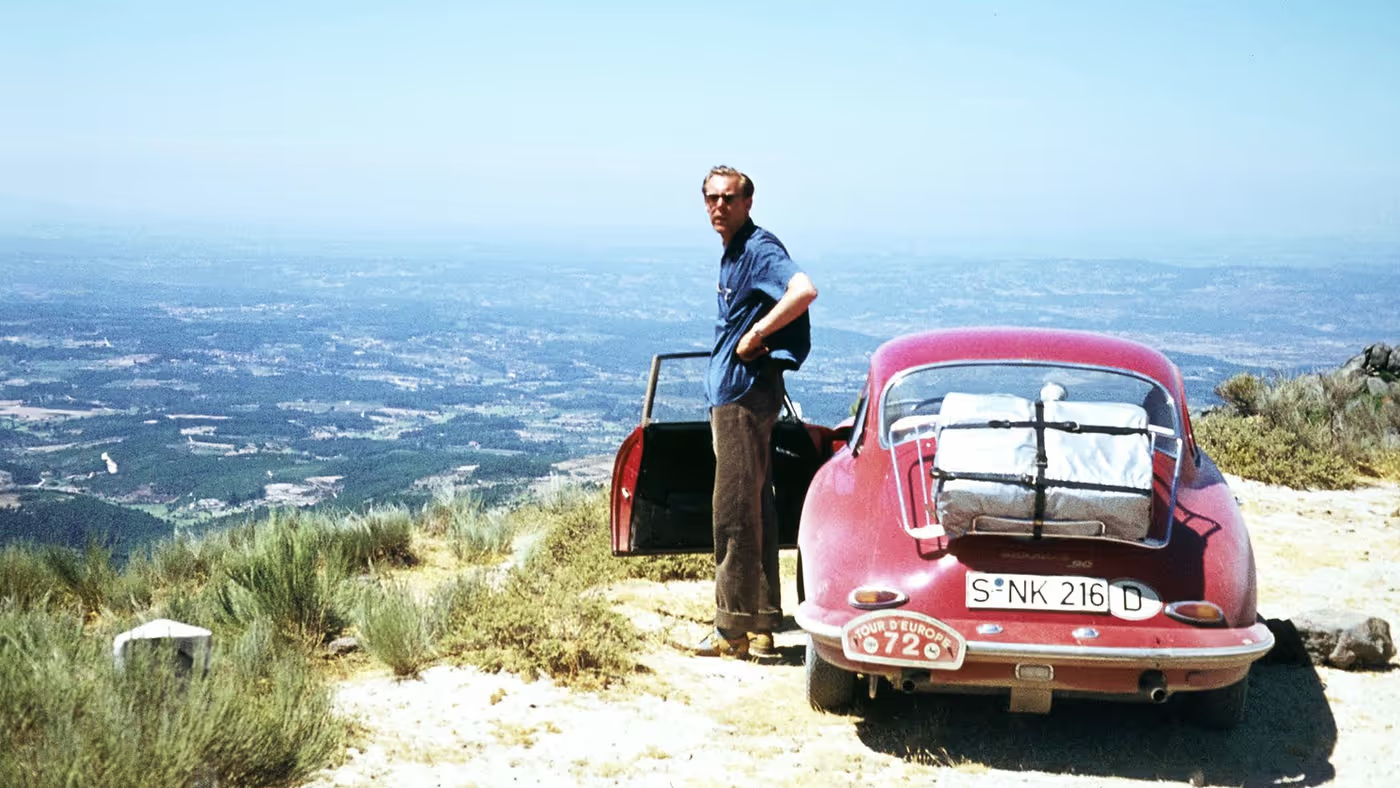
By 1964, Falk had moved to pre-development and race support, helping bring the 911 to life both as a road car and competition machine. At the 1965 Monte Carlo Rally, he sat as co-driver next to Herbert Linge in the first international motorsport outing for a Porsche 911. The pair finished fifth overall – one of only 22 teams to reach the finish from 237 starters. The cars had no intercom system, so Falk improvised a solution: "I spoke into a thick plastic tube that went straight into Herbert's helmet," he later recalled. "This speaking tube worked perfectly."
As Head of Testing for the 911, 924, and 928 model lines through the 1970s, Falk shaped Porsche's technical approach during the transaxle era, when the company's future direction remained uncertain and the 911's survival was far from guaranteed. He was instrumental in developing the 911 Turbo during this period – a car that would ultimately help secure the model's future.
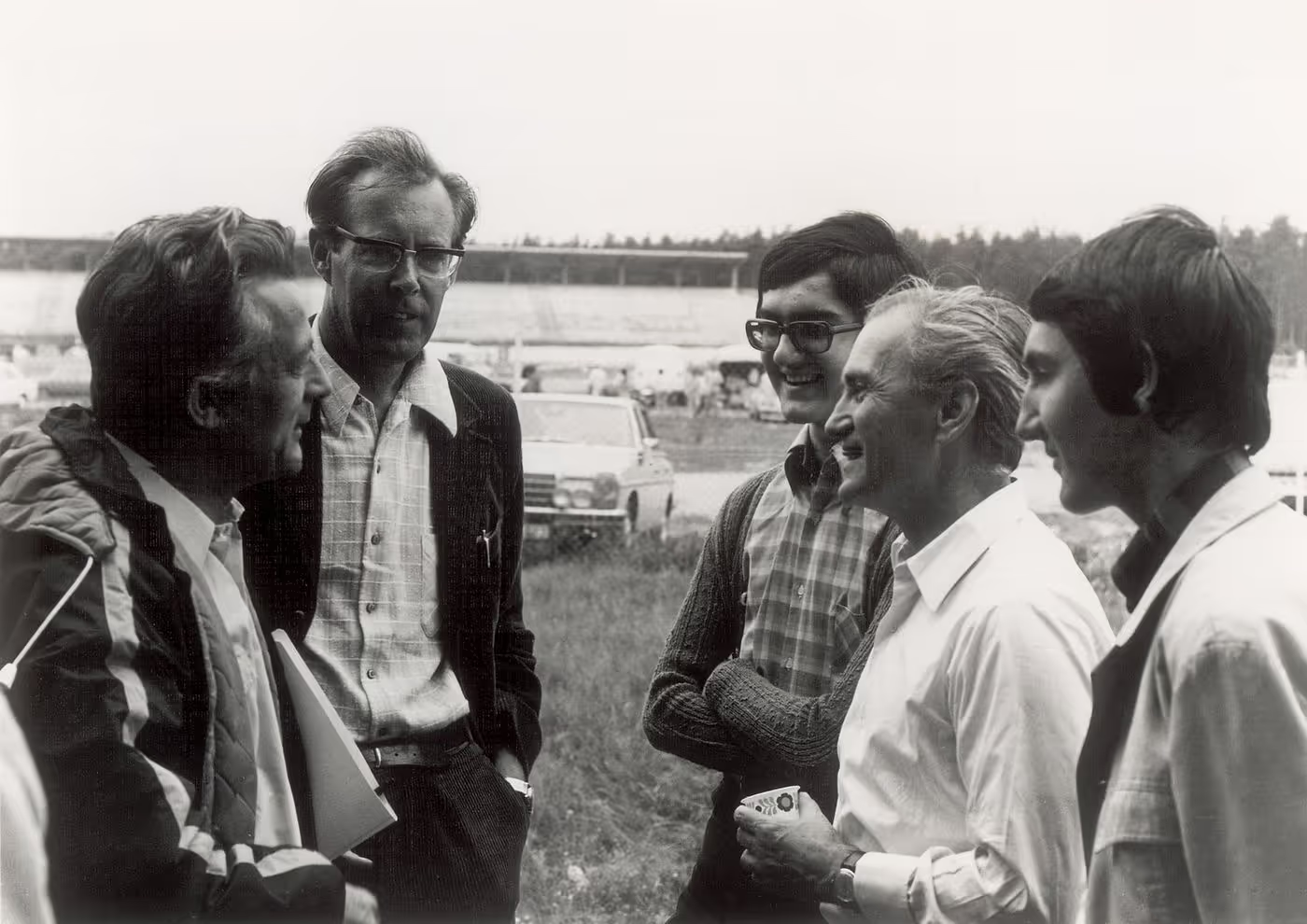
Years later, he recalled the challenge with characteristic directness: "Making the 911 Turbo drivable for skilled everyday drivers was an enjoyable challenge, although there were initially a few hairy moments for us, as the chassis was somewhat overwhelmed by the power and weight of the car." The production version used brakes derived from the 917 racing car, a decision that required persuasion. Approval came at the launch of the 928, at a bar in the south of France. Falk recalled the conversation with Porsche's CEO Ernst Fuhrmann: "In spring 1977 I was able to convince Dr Fuhrmann to use the brake system from the 917 racing car in the roadgoing 911 Turbo 3.3. Fuhrmann was initially not a fan, saying: 'Why brake at all? We want people to drive.' After three whiskys we finally got his approval."
In 1981, that credibility proved decisive. New CEO Peter Schutz discovered the racing team planned to enter Le Mans with modified 924s – cars with no realistic chance of winning. Schutz was blunt: Porsche would win or wouldn't attend at all. The challenge landed on Falk's desk, and his solution was equal parts resurrection and innovation.

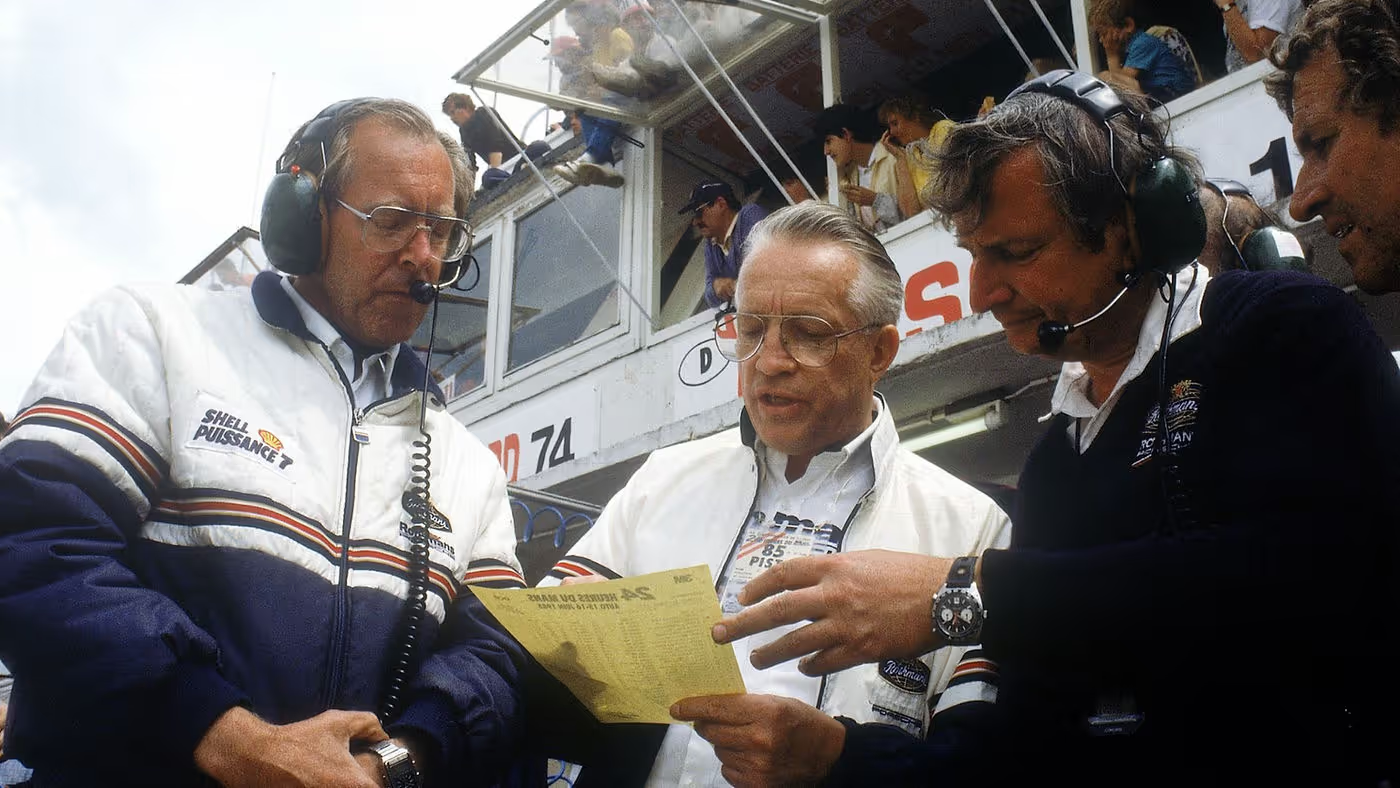

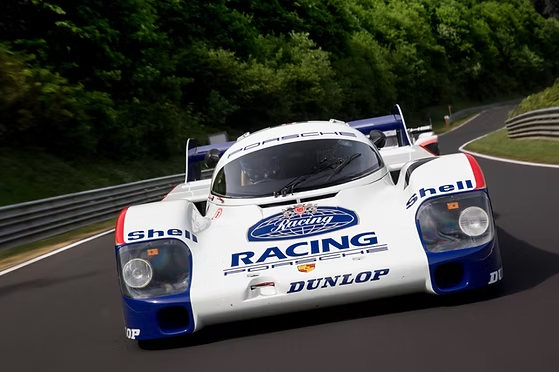
Porsche had developed a 2.7-litre engine for North American CART racing, a programme that never materialised. Falk suggested installing it in the 936, the car that had won Le Mans in 1976 and '77 but now sat in the museum. The engineers converted the engine from methanol to petrol, pulled the 936 from display, and sent Jacky Ickx and Derek Bell to Le Mans. They won. "It opened the way for us in Europe in Group C with the 956 and the 962," Falk later said.
That 956 programme defined his approach to race management. Norbert Singer, the engineer Falk had hired in 1970 and who led the technical development, remembered his racing director's style clearly: "He gave us a free hand in the development of the 956/962, let us turn our ideas into reality, and always trusted us. Only much later did I realise how special that was."
When Singer's team needed guidance on building an aluminium monocoque for the 956, having never worked with the technique, Falk sent them to aerospace company Dornier. The resulting chassis achieved 80 per cent higher rigidity than the 936's tubular spaceframe. The 956 and 962 went on to dominate Group C racing throughout the 1980s, winning at Le Mans, Daytona, and in the World Endurance Championship with metronomic consistency.

But Falk's attention wasn't limited to circuit racing. "I was always a rally fan, someone who isn't only able to drive on nice asphalt roads," he explained. "It was always important to me that a car performs well off the road too." Together with Roland Kussmaul, he developed the 911 Carrera 3.2 4×4 for the Paris-Dakar Rally in less than a year. The car won the event in 1984 and 1986 – victories that mattered deeply to Falk personally. For someone who'd begun his competition career as a rally co-driver in the 1950s, bringing Porsche success in the desert represented a satisfying full circle.
The drivers who worked under him also recognised what made him effective. Walter Röhrl, the two-time World Rally Champion, recalled competing alongside Falk in the 1997 Ennstal Classic: "I'm a great admirer of Peter Falk, his calm and prudence. I couldn't conceive that someone could prepare for something in such extreme detail. He had his computer with him and basically told me every 100 metres that I was going a bit too fast or too slow – and this over a distance of 500 kilometres."

For Hans-Joachim Stuck, who joined Porsche's works team in 1985, Falk's influence ran deeper: "Peter Falk taught me so much about respect and discipline. Without him, my life in motorsport would have been very different."
The Group C era concluded with Porsche's withdrawal from endurance racing at the end of the 1980s, but Falk's influence on the company continued. From 1989, he served as head of chassis development. The 996 and Boxster – cars he oversaw in the pre-development stage – would prove crucial to Porsche's financial recovery in the late 1990s. Falk's technical judgment shaped Porsche's modern era as profoundly as it had defined the Group C years, though he ensured others received the recognition.
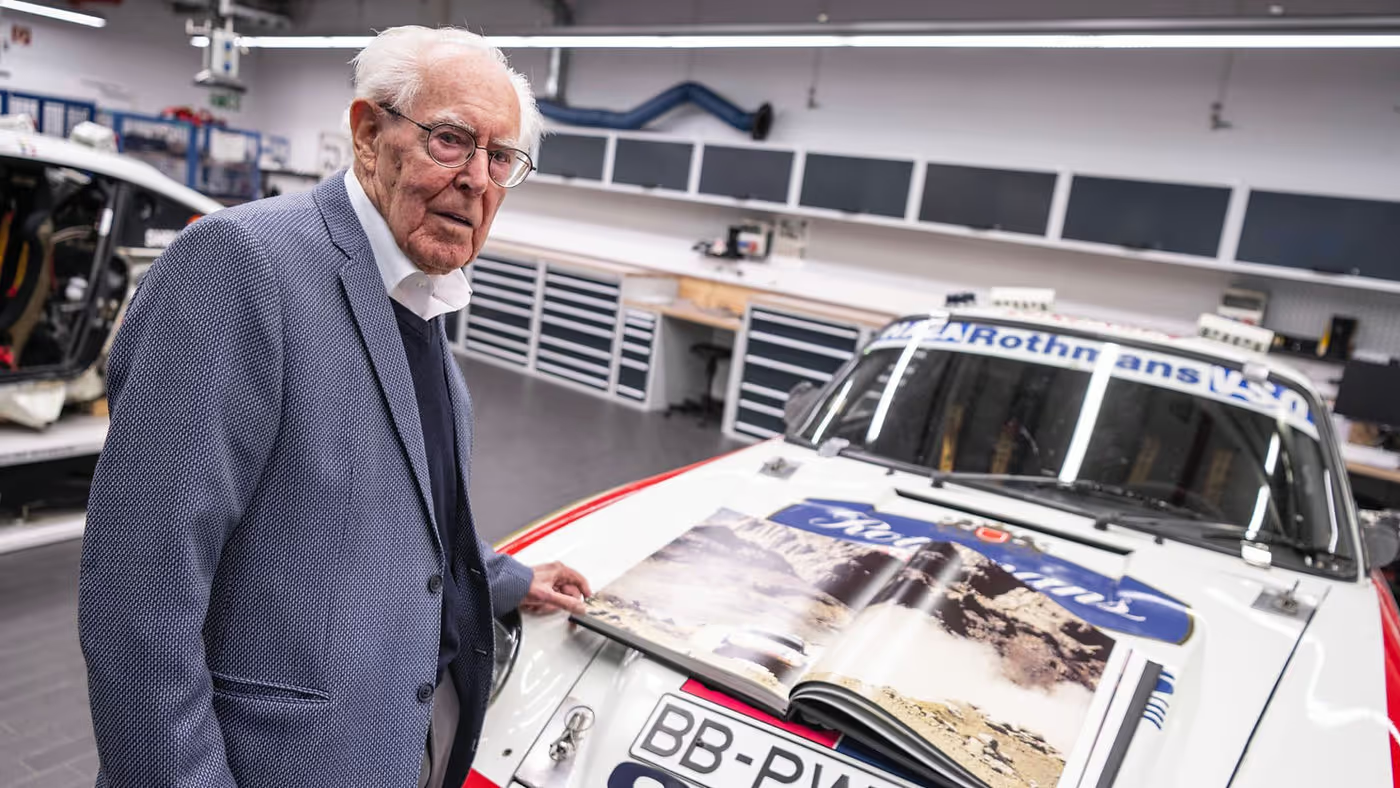
He retired in 1993 but remained connected to the company, working with the Porsche Heritage and Museum team. Even into his nineties, Falk attended classic car events, still passionate about the machinery and the people who made it competitive. He leaves behind his wife Ruth, a daughter, and a grandson.
Author
Photography by:
Porsche Newsroom
Published on:
29 January 2026
Our Print Magazine
LATEST ARTICLES
About the Author

Craig Toone
Rush Founder
Obsessed with cars and car magazines ever since growing up in the back of a Sapphire Cosworth. Wore the racing line into the family carpet with his Matchbox toys. Can usually be found three-wheeling his Clio 182 Trophy around the Forest of Bowland, then bemoaning its running costs.
Related Articles
Sabine Schmitz Tribute; Celebrating the Life of the 'Queen of the Nürburgring'
Craig Toone
|
18 March 2021
Our small tribute to the legendary racing driver and larger-than-life television personality, who sadly passed away on the 16th of March 2021 after a hard-fought, private battle with cancer. She is deeply missed.
NEVER MISS AN ARTICLE

The meticulous race director and engineer behind Porsche's Group C dominance, and some of its greatest road cars, passed away on 23rd January, aged 93. Yet despite such achievements, Falk always shunned the spotlight.
Porsche Newsroom
29 January 2026
The meticulous race director and engineer behind Porsche's Group C dominance, and some of its greatest road cars, passed away on 23rd January, aged 93. Yet despite such achievements, Falk always shunned the spotlight.
First published
29 January 2026
Last updated
29 January 2026
Photography
Porsche Newsroom
W
Seven overall victories at Le Mans. Eleven world championship titles. Two Paris-Dakar wins. Numbers that would define any racing career, yet Peter Falk – the racing director responsible for delivering them – remains largely unknown outside of Porsche's inner circle.
"I've always said that I don't count at all but my team has to be good," Falk once explained. "And that's the most important thing." In an era defined by outsized personalities and individual glory, Falk ran Porsche's Group C programme on the opposite principle. Under Falk, the team came first. Always.
Peter Falk passed away on 23rd January at the age of 93, closing a remarkable career and life that stretched from Porsche's earliest competition efforts to the cars that secured its future. Born in Athens in 1932, the son of an archaeologist, he studied mechanical engineering before joining the company in 1959 as one of only ten employees in vehicle testing.

By 1964, Falk had moved to pre-development and race support, helping bring the 911 to life both as a road car and competition machine. At the 1965 Monte Carlo Rally, he sat as co-driver next to Herbert Linge in the first international motorsport outing for a Porsche 911. The pair finished fifth overall – one of only 22 teams to reach the finish from 237 starters. The cars had no intercom system, so Falk improvised a solution: "I spoke into a thick plastic tube that went straight into Herbert's helmet," he later recalled. "This speaking tube worked perfectly."
As Head of Testing for the 911, 924, and 928 model lines through the 1970s, Falk shaped Porsche's technical approach during the transaxle era, when the company's future direction remained uncertain and the 911's survival was far from guaranteed. He was instrumental in developing the 911 Turbo during this period – a car that would ultimately help secure the model's future.


Years later, he recalled the challenge with characteristic directness: "Making the 911 Turbo drivable for skilled everyday drivers was an enjoyable challenge, although there were initially a few hairy moments for us, as the chassis was somewhat overwhelmed by the power and weight of the car." The production version used brakes derived from the 917 racing car, a decision that required persuasion. Approval came at the launch of the 928, at a bar in the south of France. Falk recalled the conversation with Porsche's CEO Ernst Fuhrmann: "In spring 1977 I was able to convince Dr Fuhrmann to use the brake system from the 917 racing car in the roadgoing 911 Turbo 3.3. Fuhrmann was initially not a fan, saying: 'Why brake at all? We want people to drive.' After three whiskys we finally got his approval."
In 1981, that credibility proved decisive. New CEO Peter Schutz discovered the racing team planned to enter Le Mans with modified 924s – cars with no realistic chance of winning. Schutz was blunt: Porsche would win or wouldn't attend at all. The challenge landed on Falk's desk, and his solution was equal parts resurrection and innovation.


Porsche had developed a 2.7-litre engine for North American CART racing, a programme that never materialised. Falk suggested installing it in the 936, the car that had won Le Mans in 1976 and '77 but now sat in the museum. The engineers converted the engine from methanol to petrol, pulled the 936 from display, and sent Jacky Ickx and Derek Bell to Le Mans. They won. "It opened the way for us in Europe in Group C with the 956 and the 962," Falk later said.
That 956 programme defined his approach to race management. Norbert Singer, the engineer Falk had hired in 1970 and who led the technical development, remembered his racing director's style clearly: "He gave us a free hand in the development of the 956/962, let us turn our ideas into reality, and always trusted us. Only much later did I realise how special that was."
When Singer's team needed guidance on building an aluminium monocoque for the 956, having never worked with the technique, Falk sent them to aerospace company Dornier. The resulting chassis achieved 80 per cent higher rigidity than the 936's tubular spaceframe. The 956 and 962 went on to dominate Group C racing throughout the 1980s, winning at Le Mans, Daytona, and in the World Endurance Championship with metronomic consistency.

But Falk's attention wasn't limited to circuit racing. "I was always a rally fan, someone who isn't only able to drive on nice asphalt roads," he explained. "It was always important to me that a car performs well off the road too." Together with Roland Kussmaul, he developed the 911 Carrera 3.2 4×4 for the Paris-Dakar Rally in less than a year. The car won the event in 1984 and 1986 – victories that mattered deeply to Falk personally. For someone who'd begun his competition career as a rally co-driver in the 1950s, bringing Porsche success in the desert represented a satisfying full circle.
The drivers who worked under him also recognised what made him effective. Walter Röhrl, the two-time World Rally Champion, recalled competing alongside Falk in the 1997 Ennstal Classic: "I'm a great admirer of Peter Falk, his calm and prudence. I couldn't conceive that someone could prepare for something in such extreme detail. He had his computer with him and basically told me every 100 metres that I was going a bit too fast or too slow – and this over a distance of 500 kilometres."

For Hans-Joachim Stuck, who joined Porsche's works team in 1985, Falk's influence ran deeper: "Peter Falk taught me so much about respect and discipline. Without him, my life in motorsport would have been very different."
The Group C era concluded with Porsche's withdrawal from endurance racing at the end of the 1980s, but Falk's influence on the company continued. From 1989, he served as head of chassis development. The 996 and Boxster – cars he oversaw in the pre-development stage – would prove crucial to Porsche's financial recovery in the late 1990s. Falk's technical judgment shaped Porsche's modern era as profoundly as it had defined the Group C years, though he ensured others received the recognition.
He retired in 1993 but remained connected to the company, working with the Porsche Heritage and Museum team. Even into his nineties, Falk attended classic car events, still passionate about the machinery and the people who made it competitive. He leaves behind his wife Ruth, a daughter, and a grandson.


The meticulous race director and engineer behind Porsche's Group C dominance, and some of its greatest road cars, passed away on 23rd January, aged 93. Yet despite such achievements, Falk always shunned the spotlight.


.jpg)