NEWS
Updated 2026 Cadillac V-Series.R Prepares for IMSA and WEC Competition
Ken Pearson
By
Images by
IMSA
Published
18 Jan 2026
Updated 2026 Cadillac V-Series.R Prepares for IMSA and WEC Competition

Revised aerodynamics aim to improve performance at Daytona and Le Mans.
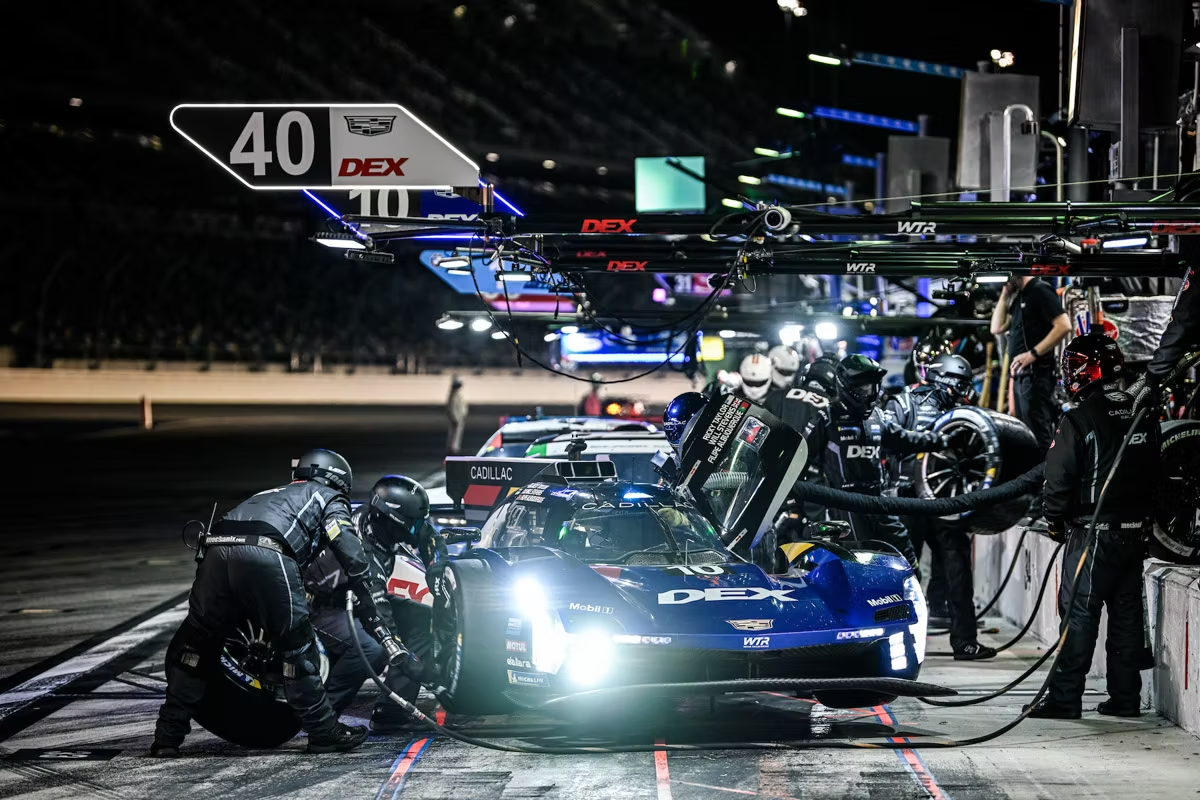
Since its competition debut in 2023, the Cadillac V-Series.R has won the hearts and eardrums of fans worldwide, but has only claimed victory seven times to date. Granted, overall victories at races like the 12 Hours of Sebring, Petit Le Mans, and the 6 Hours of Sao Paolo are nothing to be sniffed at, but the V-Series.R has fallen short at the two races it was built to win: the 24 Hours of Daytona and Le Mans.
The car has excelled at shorter tracks with higher downforce requirements - like Road Atlanta, Laguna Seca, and Long Beach - but longer, higher speed circuits have been a challenge in race trim. For 2026, Cadillac has updated its LMDh-spec prototype with a revised aerodynamic package.


The focus has been on cutting drag and trimming away excess downforce, with the front end now devoid of diveplanes, but gaining a reprofiled splitter. Closer inspection reveals a narrower opening beneath the bumper, and the removal of diagonal vanes within the nose air inlet. The winglets extending from each wheel arch have also been removed.
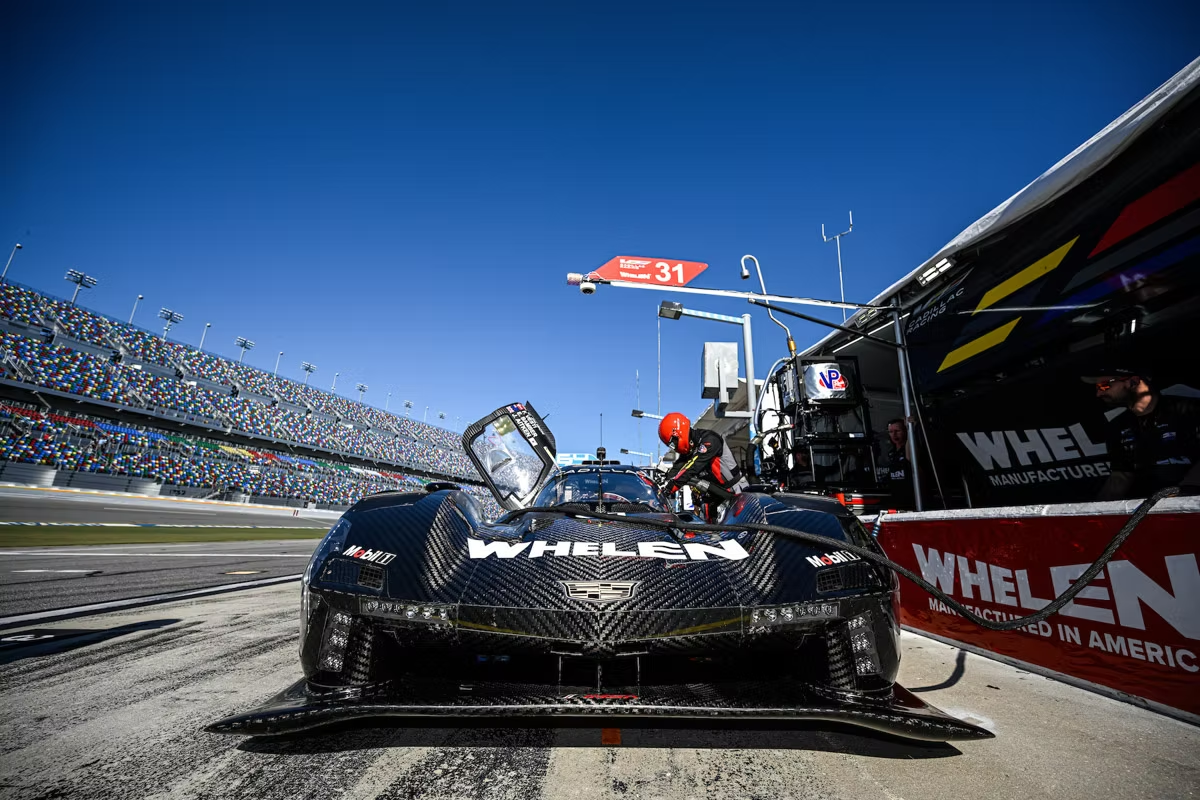
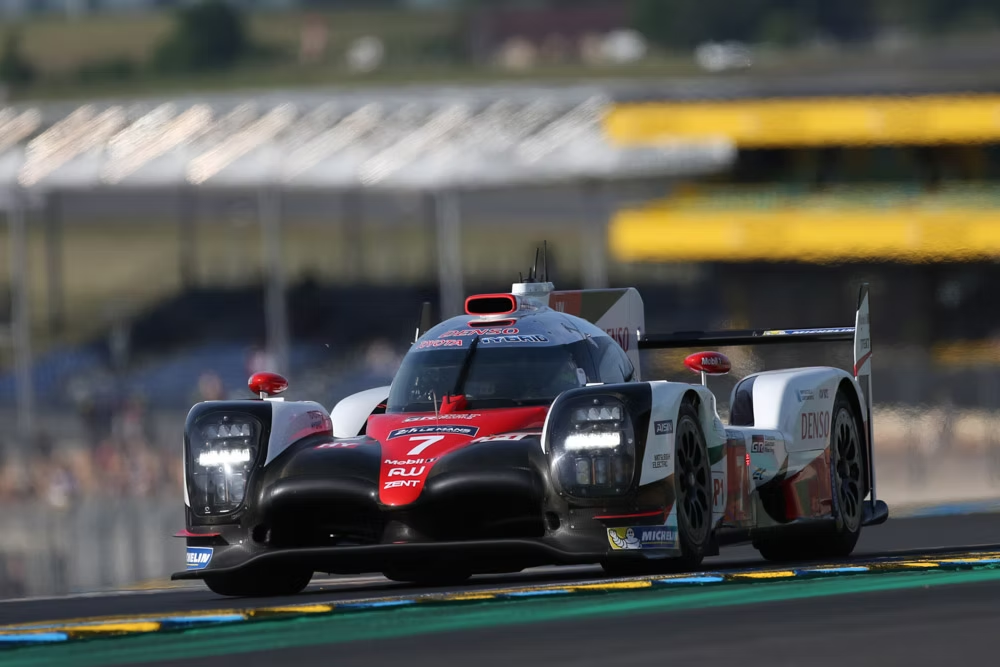
At the rear, the wing has been reshaped, and gains a dual-profile aerofoil similar to the new Toyota TR010 LMH. The central section is relatively flat, with the angle of attack increasing towards the edges. Unlike the Toyota, the Cadillac’s new wing is narrower than before, sitting well within the maximum 2,000mm width permitted by the regulations.
Other than the switch to a Brembo braking system, no further changes have been detailed by Cadillac, and the car retains its ground-shaking 5.5-litre naturally aspirated V8. Following the LMDh ruleset, this is connected to a Bosch-supplied hybrid system on the rear axle, and the total system output is capped at 671bhp by the regulations.


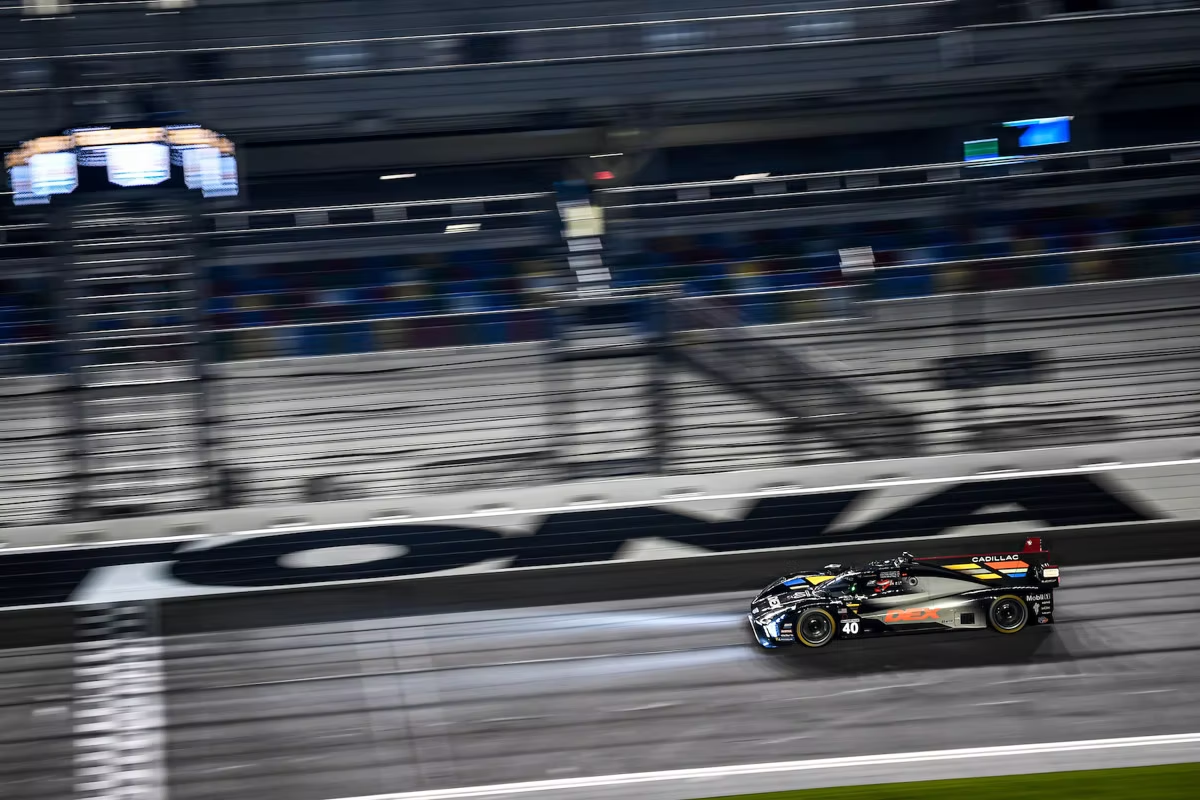
The V-Series.R scored a front row lock-out in qualifying for the 2025 24 Hours of Le Mans, but a top speed deficit meant that its race pace was lacking. Daytona is another track where top speed is the top priority, and one where its predecessor - the DPi-V.R - scored five consecutive overall victories from 2017-2021.
The updated V-Series.R will turn its wheels in anger for the first time at the IMSA season-opening Rolex 24 at Daytona, with entries from Action Express and Wayne Taylor Racing in the GTP class. The car will then take on the WEC Hypercar category beginning at the Qatar 1812km in March, with Hertz Team Jota fielding their pair of revised prototypes on the world stage. The record books of the biggest endurance races in the world will soon show if the updates have paid off.

Author
Photography by:
IMSA
Published on:
18 January 2026
Our Print Magazine
LATEST ARTICLES
About the Author

Ken Pearson
Deputy Editor
Resident Mercedes expert, affordable drivers' car champion and EV sympathiser. Can often be found on the other end of an argument with Craig with regards to powertrains and styling, bringing balance to the force.
Related Articles
NEVER MISS AN ARTICLE
W
Since its competition debut in 2023, the Cadillac V-Series.R has won the hearts and eardrums of fans worldwide, but has only claimed victory seven times to date. Granted, overall victories at races like the 12 Hours of Sebring, Petit Le Mans, and the 6 Hours of Sao Paolo are nothing to be sniffed at, but the V-Series.R has fallen short at the two races it was built to win: the 24 Hours of Daytona and Le Mans.
The car has excelled at shorter tracks with higher downforce requirements - like Road Atlanta, Laguna Seca, and Long Beach - but longer, higher speed circuits have been a challenge in race trim. For 2026, Cadillac has updated its LMDh-spec prototype with a revised aerodynamic package.


The focus has been on cutting drag and trimming away excess downforce, with the front end now devoid of diveplanes, but gaining a reprofiled splitter. Closer inspection reveals a narrower opening beneath the bumper, and the removal of diagonal vanes within the nose air inlet. The winglets extending from each wheel arch have also been removed.
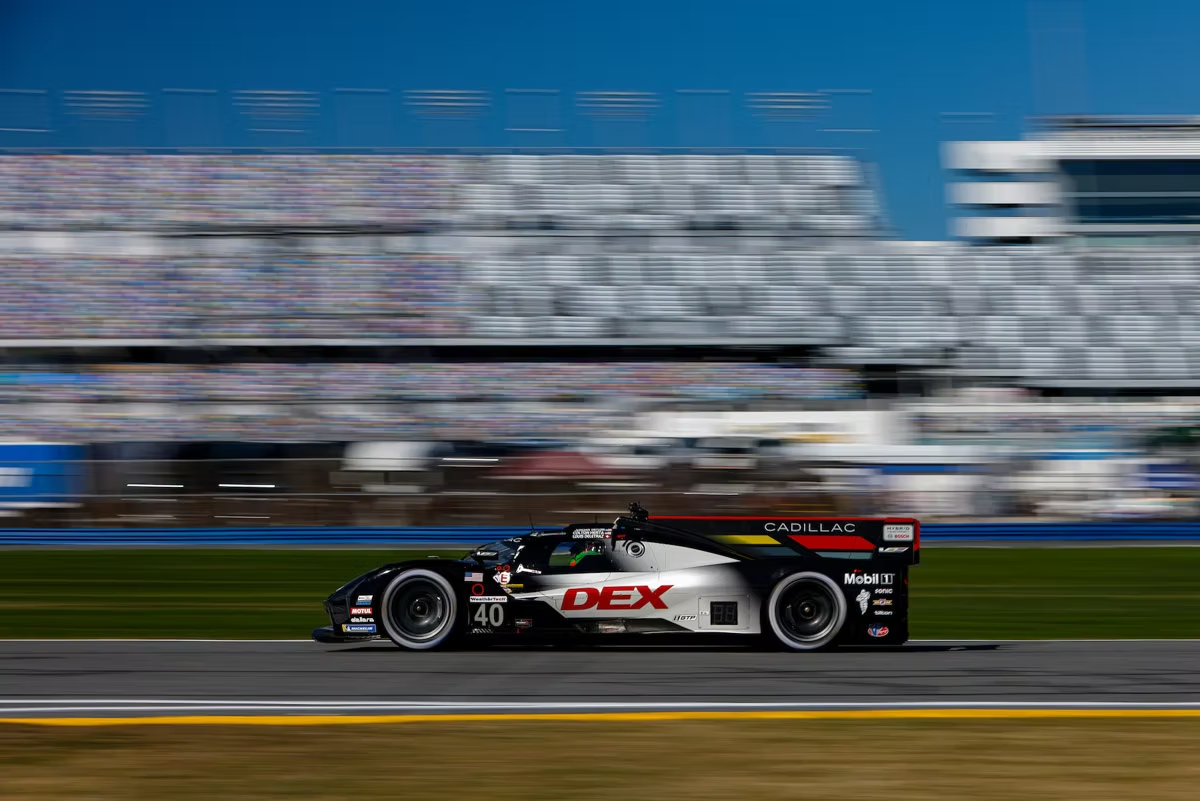
At the rear, the wing has been reshaped, and gains a dual-profile aerofoil similar to the new Toyota TR010 LMH. The central section is relatively flat, with the angle of attack increasing towards the edges. Unlike the Toyota, the Cadillac’s new wing is narrower than before, sitting well within the maximum 2,000mm width permitted by the regulations.
Other than the switch to a Brembo braking system, no further changes have been detailed by Cadillac, and the car retains its ground-shaking 5.5-litre naturally aspirated V8. Following the LMDh ruleset, this is connected to a Bosch-supplied hybrid system on the rear axle, and the total system output is capped at 671bhp by the regulations.


The V-Series.R scored a front row lock-out in qualifying for the 2025 24 Hours of Le Mans, but a top speed deficit meant that its race pace was lacking. Daytona is another track where top speed is the top priority, and one where its predecessor - the DPi-V.R - scored five consecutive overall victories from 2017-2021.
The updated V-Series.R will turn its wheels in anger for the first time at the IMSA season-opening Rolex 24 at Daytona, with entries from Action Express and Wayne Taylor Racing in the GTP class. The car will then take on the WEC Hypercar category beginning at the Qatar 1812km in March, with Hertz Team Jota fielding their pair of revised prototypes on the world stage. The record books of the biggest endurance races in the world will soon show if the updates have paid off.