-01.svg)

In 2016, Toyota came agonisingly close to claiming their first victory at Le Mans. The pair of TS050s took control of the race, and looked on course to score a historic win for the brand. However, with two laps left to run, the #5 of Kazuki Nakajima, Sebastien Buemi, and Anthony Davidson lost power owing to a turbo-intercooler linking failure, before coming to a complete stop at the start/finish line. The #2 Porsche 919 of Neel Jani, Marc Lieb, and Romain Dumas had settled for second, but emerged victorious in dramatic circumstances.
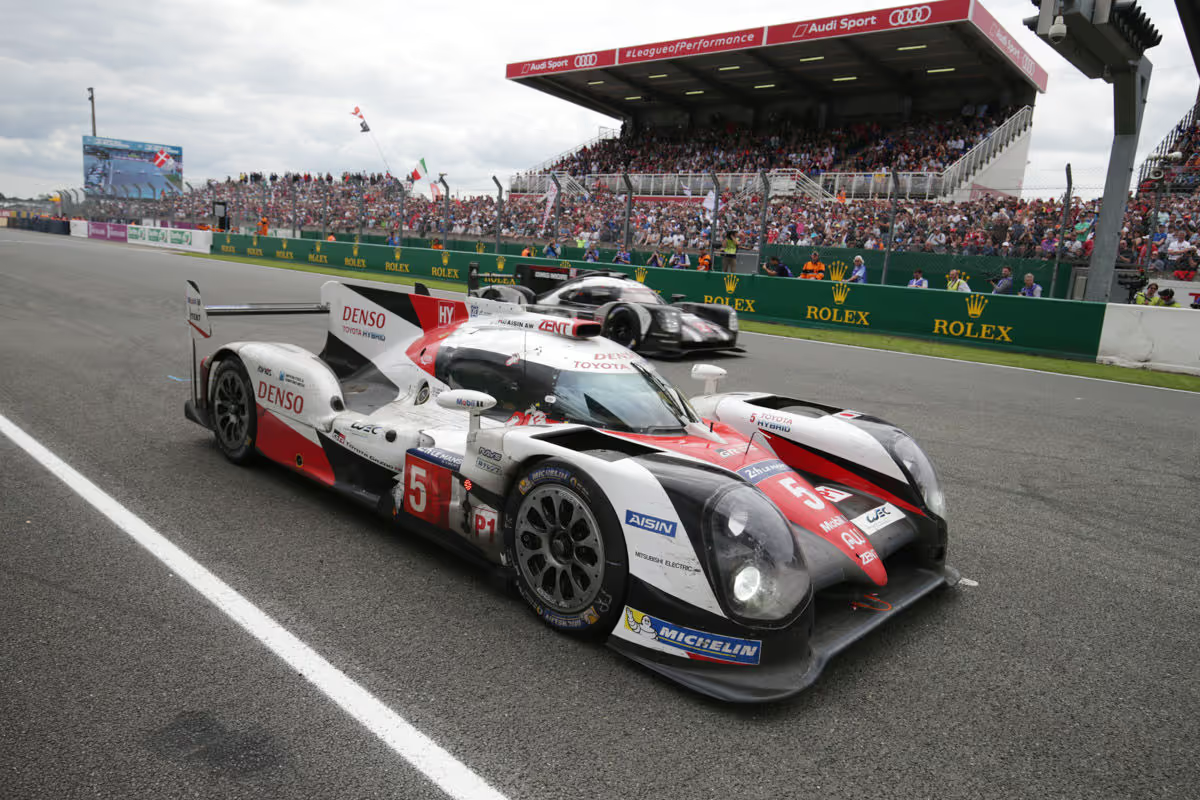
The team personnel were stunned. The fans were shocked whether trackside or at home. My jaw has remained on the floor since. The fairytale became a nightmare, the 70-second lead with six minutes left to run evaporated, and the record books would have Porsche sealing their 18th overall win. To add insult to injury, the #5 Toyota was not classified as a finisher due to an incomplete final lap. The sister #6 car was promoted to second place overall, but once again, Toyota came close but left with no cigar. In the following hours then-Toyota chairman Akio Toyoda vowed that his team would return to the Circuit de La Sarthe.
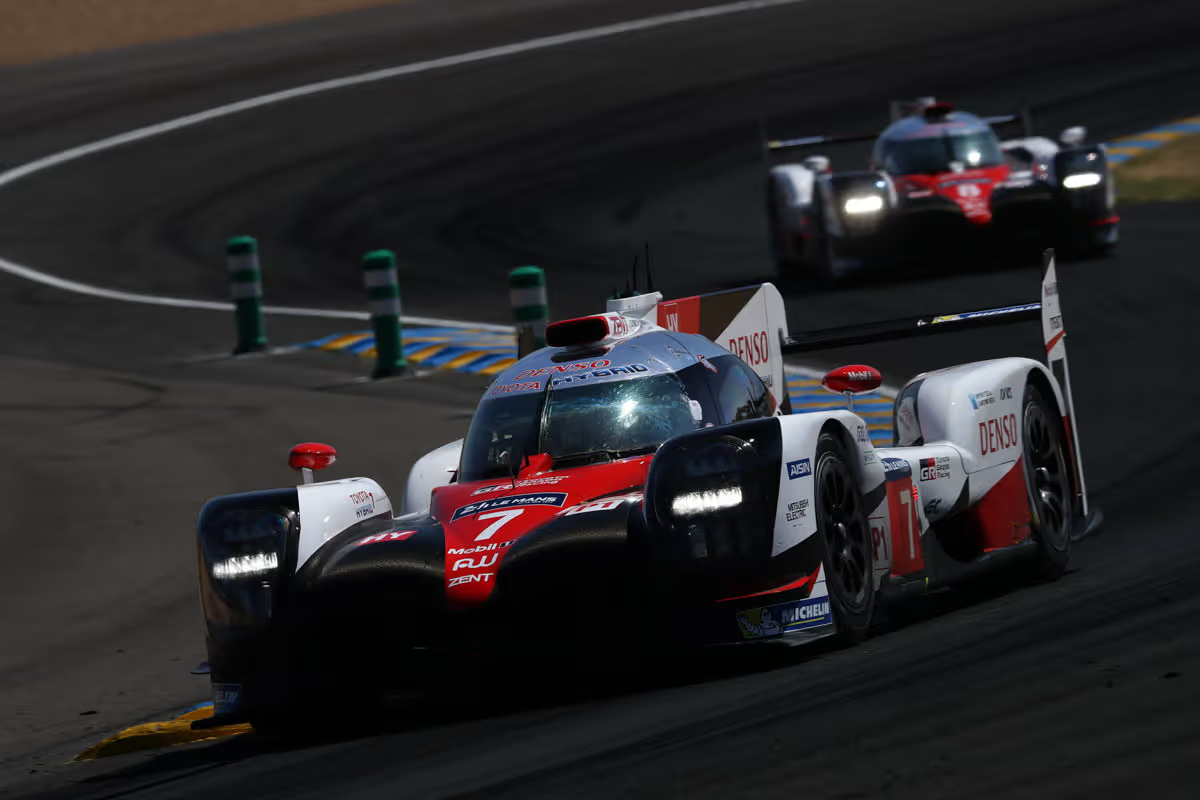
The 2017 season saw Audi leave LMP1 competition, but Porsche and Toyota remained - each bringing heavily evolved variants of their hybrid coupés to the World Endurance Championship (WEC). The TS050 was powered by a 2.4-litre twin-turbocharged V6 that sent 493bhp to the rear wheels, and supplemented by an electric motor providing part-time all-wheel drive and doubling the power output to 986bhp. With a minimum weight of 875kg and downforce levels to rival a Formula 1 car, the final years of LMP1 completion saw race and qualifying lap times fall by considerable margins.
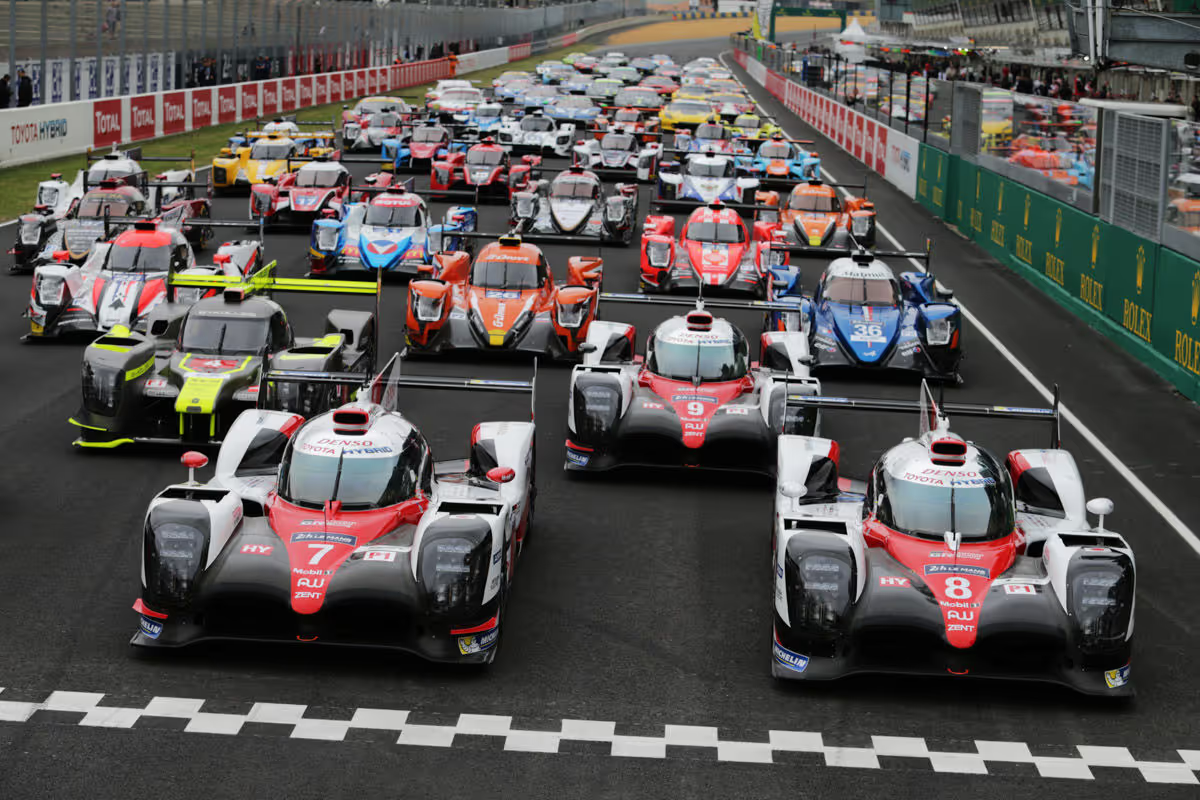
Toyota arrived at the Circuit de La Sarthe having won the first two rounds of the WEC season, and posting the fastest time at the Le Mans test day. On the Wednesday ahead of the race, the first of three qualifying sessions got underway, with all 61 cars across four classes – LMP1, LMP2, GTE Pro and GTE Am sharing the tarmac. The #2 Porsche 919 set an early benchmark with a 3:19.710 second lap, but a clear track allowed the #7 Toyota to show its pace, recording a 3:18.793 and taking provisional pole. The time was two seconds shy of the outright record set by Neel Jani in a Porsche 919 two years prior, but by the end of the second qualifying session on Thursday night, the timing sheets would show a new fastest time.
With teammate Mike Conway having shaved 0.142 seconds off the #7’s best lap already, Kamui Kobayashi took the wheel, and was the first car to return to the track following a red flag stoppage. Equipped with new medium compound Michelins, and with a clear track ahead of him, Kobayashi began the now legendary lap. With only one Ford GT to avoid on pit exit, the TS050 ran unimpeded from the Dunlop Chicane and through the Forest Esses, exiting the first sector after just 31.182 seconds. The Mulsanne Straight beckoned, and a tailwind helped push the car to a peak of 208.7mph. Making short work of the first chicane, a perfectly placed Porsche 911 RSR offered the TS050 a useful slipstream on the second segment of the straight, with the car back on the racing line for the entrance to the second chicane.
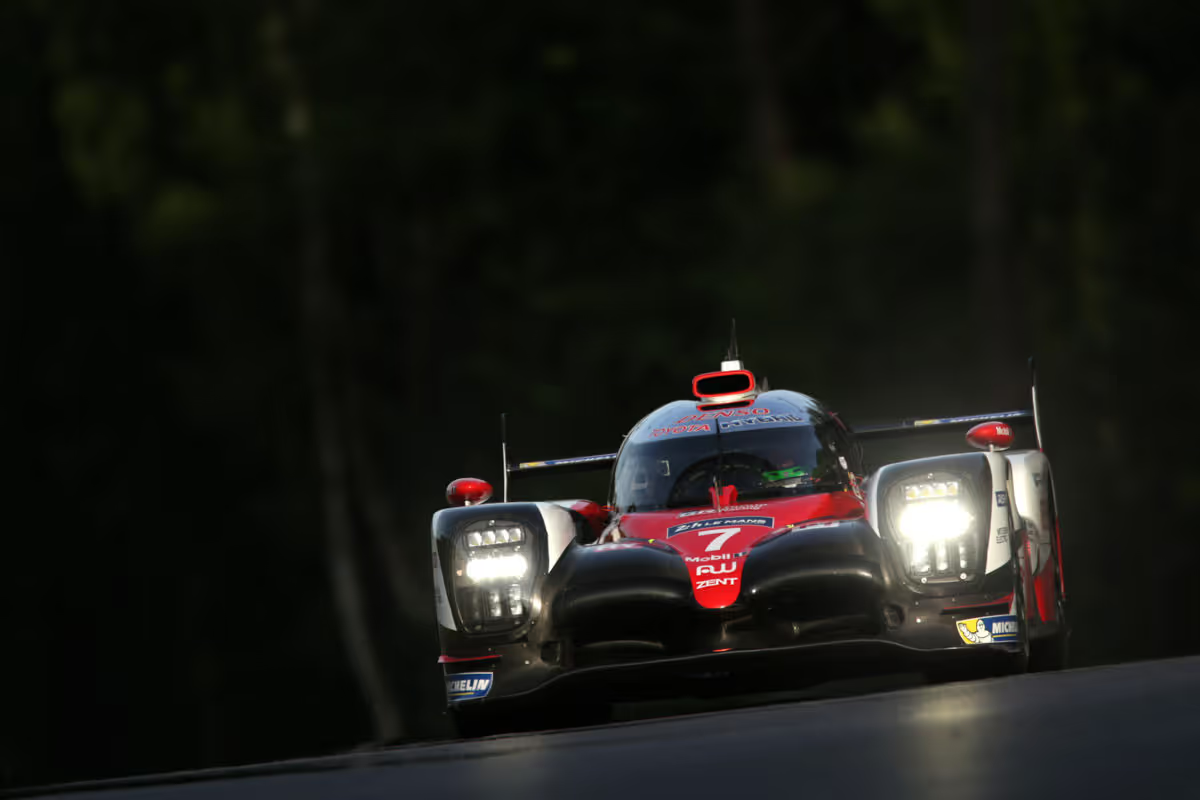
Another GTE entrant – this time a Ferrari 458 – provided a tow as Kobayashi accelerated through 186mph, and shot down to Mulsanne Corner. The timing line for the second sector was broken, and another fastest time was shown: 1:14.595 for the 3-mile journey from Tertre Rouge. With just under half a lap to complete, the TS050 had the asphalt all to itself from here. Kobayashi sprinted through the circuit’s two slowest corners – Indianapolis and Arnage – before heading towards the Porsche Curves, and into a headwind. This aided the car’s aerodynamics by boosting downforce at the part of the track where it mattered most, keeping it glued to the track as it navigated the quadruple S-bends.
With a clear run to the start/finish line, Kobayashi set another fastest sector time of 1:29.014, and in doing so, shattered the outright lap record at the Circuit de La Sarthe. He took just 3:14.791 to complete his 8.482-mile tour of the French countryside, at an average speed of 156.5mph.
The lap not only bettered the previous LMP1 benchmark – set by Neel Jani in 2015 driving a Porsche 919 – by 2.096 seconds, but it surpassed a record that stood for 32 years. In 1985, Hans-Joachim Stuck qualified his Porsche 962C with a time of 3:14.8 seconds, and became the first driver to average 155mph (250km/h) at the circuit. At the time, the Mulsanne Straight was uninterrupted by chicanes, and allowed the Group C machinery to surpass 230mph as they went flat out for three miles.
The onboard footage of Kobayashi’s record-setting lap is spellbinding, with his relentless pace being highlighted as his hybrid Toyota makes Porsches and Ferraris appear to be going backwards as he passes them. Approaching corners, Kobayashi lifts off early – partly to recover energy for the hybrid system, but also to stay on the right side of the technical regulations for LMP1 cars at the time, which strictly governed how much energy – electrical and petrol – could be used per hour, and per lap.
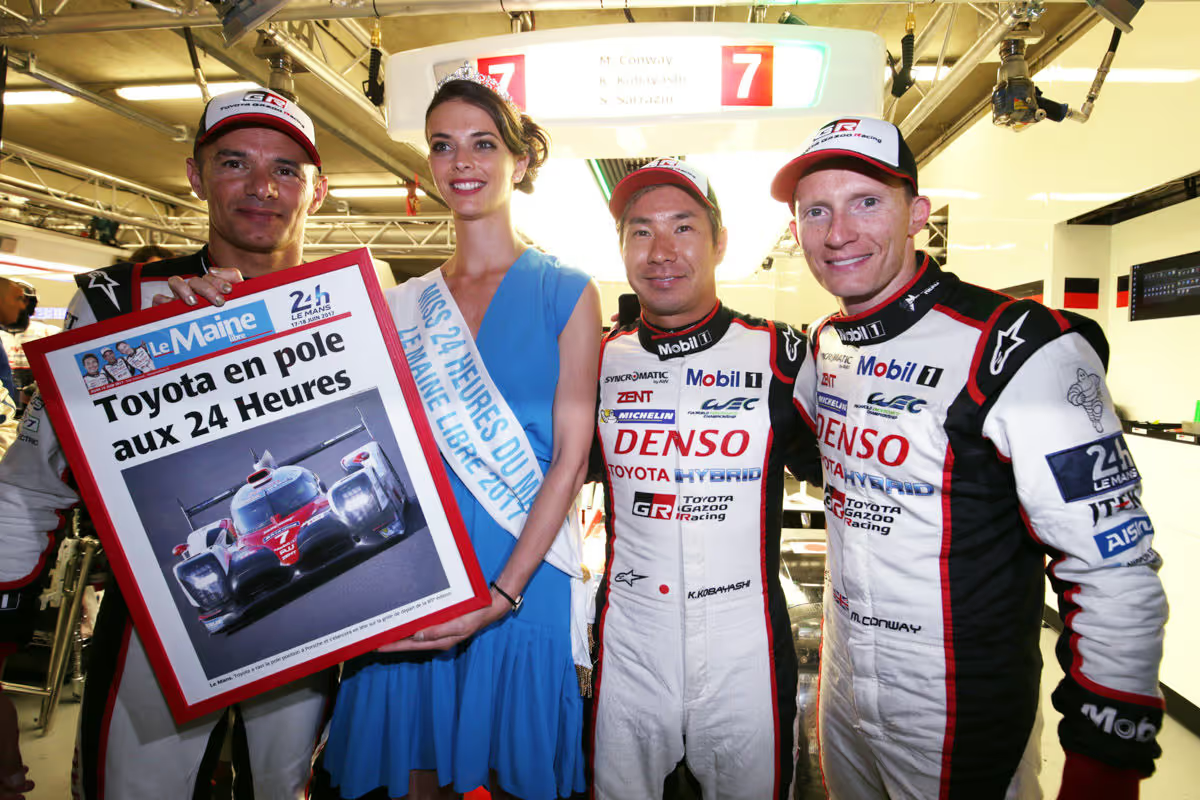
Kamui Kobayashi absolutely nailed his lap, keeping his TS050 perfectly placed through every corner and along every straight. The stars aligned with slower traffic appearing at the fastest parts of the track, and there being no cars ahead of him in the slowest sections. The gamble to let the car run in clean air absolutely paid off, with the wind blowing in the right directions, and the track temperature remaining hot even as the air temperature reduced in the evening.
However, the race wouldn’t go Toyota’s way. The #7 led the first portion of the race, before retiring due to a clutch failure in the night. Shortly after, the sister #9 suffered a puncture, and the flailing tyre damaged the gearbox and oil lines, and caused a fire. The #8 TS050 would be the only Toyota to finish the race, taking the chequered flag in eights place, nine laps down on the victorious #2 Porsche 919. Toyota would finally take their first overall victory in 2018.
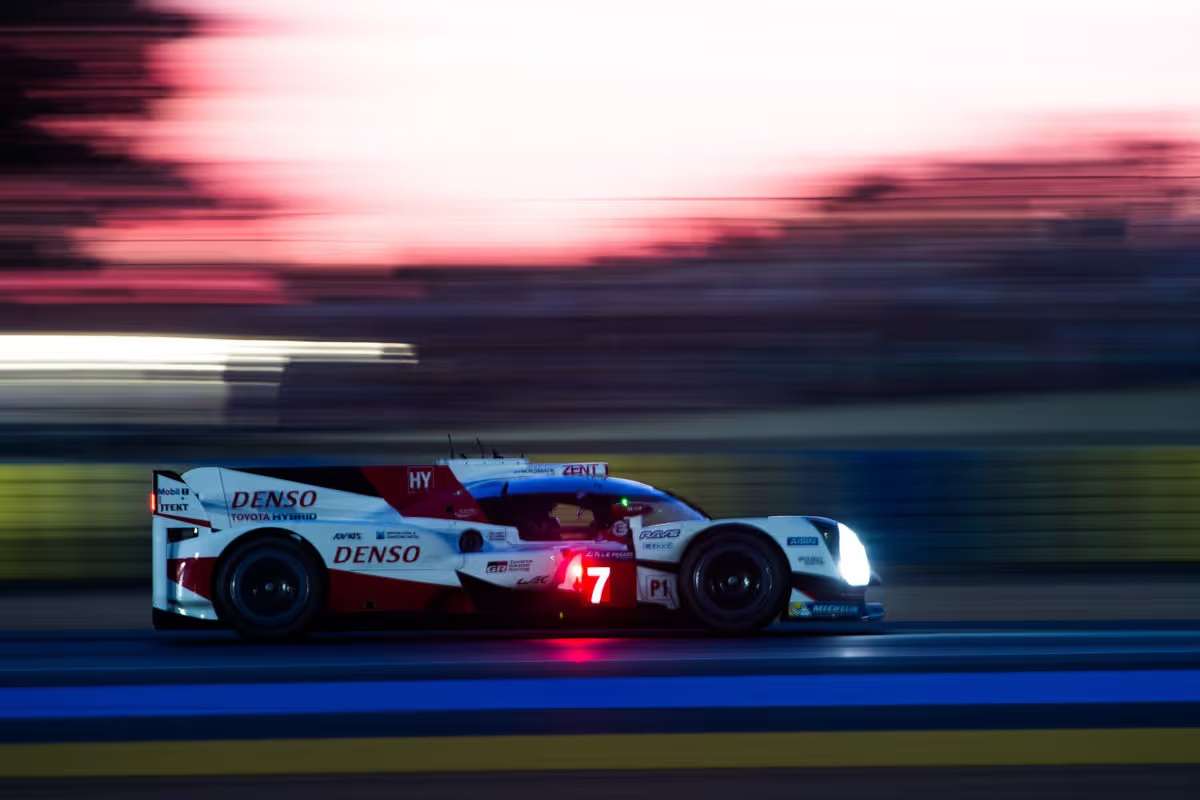
While there has been some debate as to whether an extra tenth or hundredth of a second could’ve been shaved off the time, there can be no debate that Kobayashi’s 2017 qualifying lap is one of the greatest ever seen at Le Mans. The record looks set to stand for the foreseeable future, as the LMP1 rule set was succeeded by the slower – but significantly more cost-effective – Hypercar class in 2022.
Now, there’s more competition than ever in the top class at Le Mans, with more manufacturers competing on a closer playing field. Regardless, of the millions of laps completed at the Circuit de La Sarthe, one which took just 3:14.788 remains etched into the history books, with legendary status assured.



.svg)

