-01.svg)
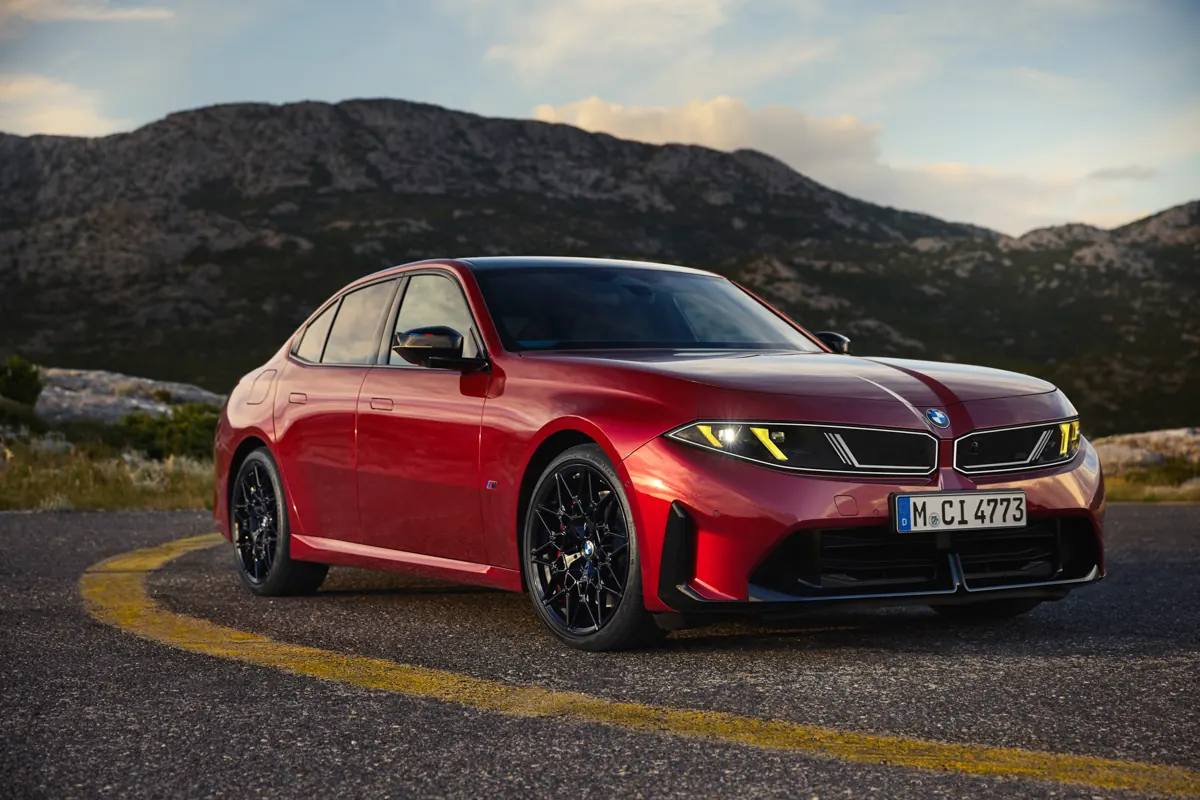
Two variants introduce the car to the UK: the rear-wheel-drive 320 and the M350 xDrive, which replaces the M340i as the six-cylinder flagship. Naturally, it’s the latter we’re most interested in. The B58 straight-six and 48V mild-hybrid system carry over in revised form, with the engine contributing 420bhp and an electric motor integrated into the eight-speed gearbox taking combined output to 437bhp. That’s 50bhp up on its predecessor and more than a standard F80 M3. Torque increases by a more modest 30lb ft, to 428lb ft (580Nm).
For the first time on an M Performance 3 Series, xDrive can shut off drive to the front axle, sending all of that power to the rear wheels. Dubbed Drift Moment, the feature will not arrive until 2027, as an over-the-air update that also covers cars already delivered. You'll need to be employing all four driveshafts to achieve the claimed 0–62mph time of 4.1 seconds, two tenths quicker than before. Top speed, as ever, is limited to 155mph.
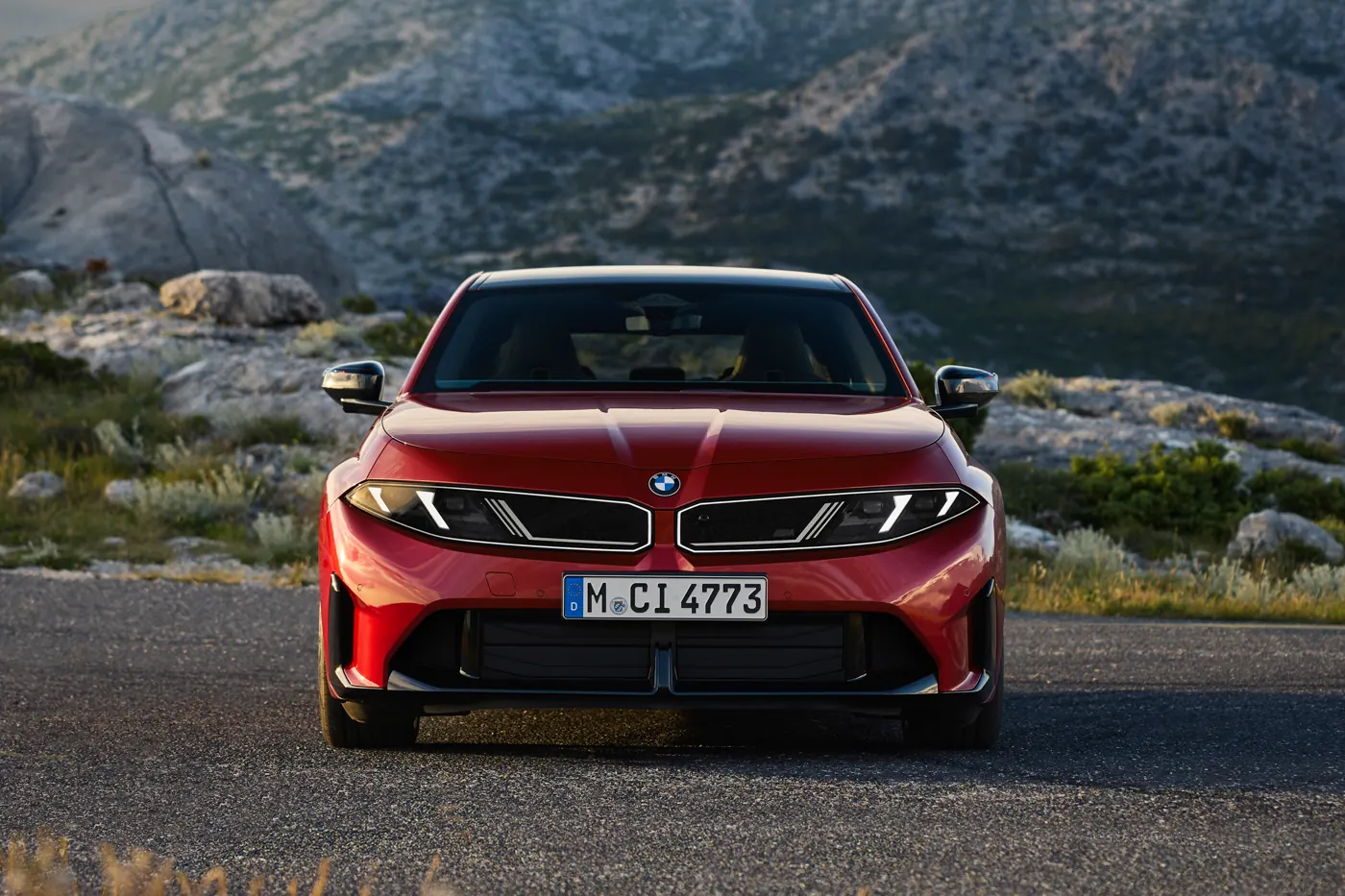
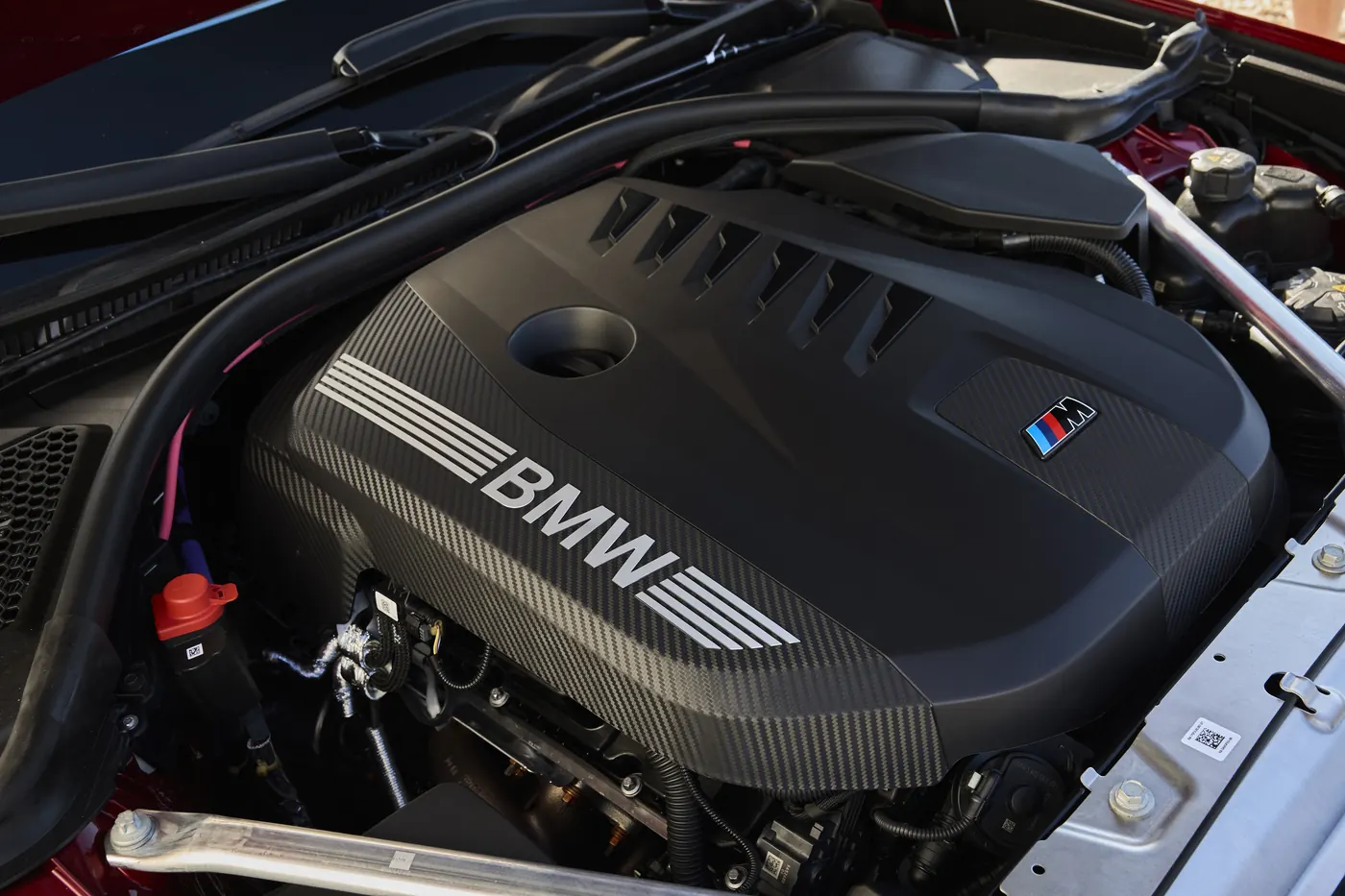
Despite appearances, the G50 does not share the i3's Neue Klasse platform. It sits on a heavily reworked version of the outgoing car's CLAR architecture, with a wheelbase 9mm longer than its predecessor's and 37mm shorter than the i3's. Dynamically, the eighth-generation 3 Series gains a stiffer front axle carrier and a shear panel between the front suspension towers and bulkhead, while revised geometry brings more trail and slightly less camber, paired with softer springs. At the rear, the five-link axle benefits from a stiffer camber arm and reinforced bodywork around the suspension top mounts.
BMW says the changes sharpen steering response and body control, and that the 3 Series keeps its near-50:50 weight distribution. Passive stroke-dependent dampers, which firm up deeper into their travel, are standard on the 320, with adaptive suspension on the options list.
The M350 goes further, with its own spring, camber and anti-roll bar settings, an M Sport differential on the rear axle and four-piston fixed front calipers. Adaptive M suspension and variable sport steering are both standard. Both cars run BMW Driving Stack, the ICE counterpart to the i3's Heart of Joy, bringing powertrain and stability control together in one system. On the M350, that also includes xDrive. BMW claims it cuts latency, improving response times.
Like the M350, the 320 uses a carried-over engine, in its case a 2.0-litre turbo four that gains 48V mild-hybrid assistance for the first time. Power and torque rise to 208bhp and 243lb ft, up 27bhp and 22lb ft on the outgoing 320i, though the 0–62mph time holds at 7.4 seconds. Blame a juicy 1680kg DIN weight, rising to 1860kg on the six-pot.
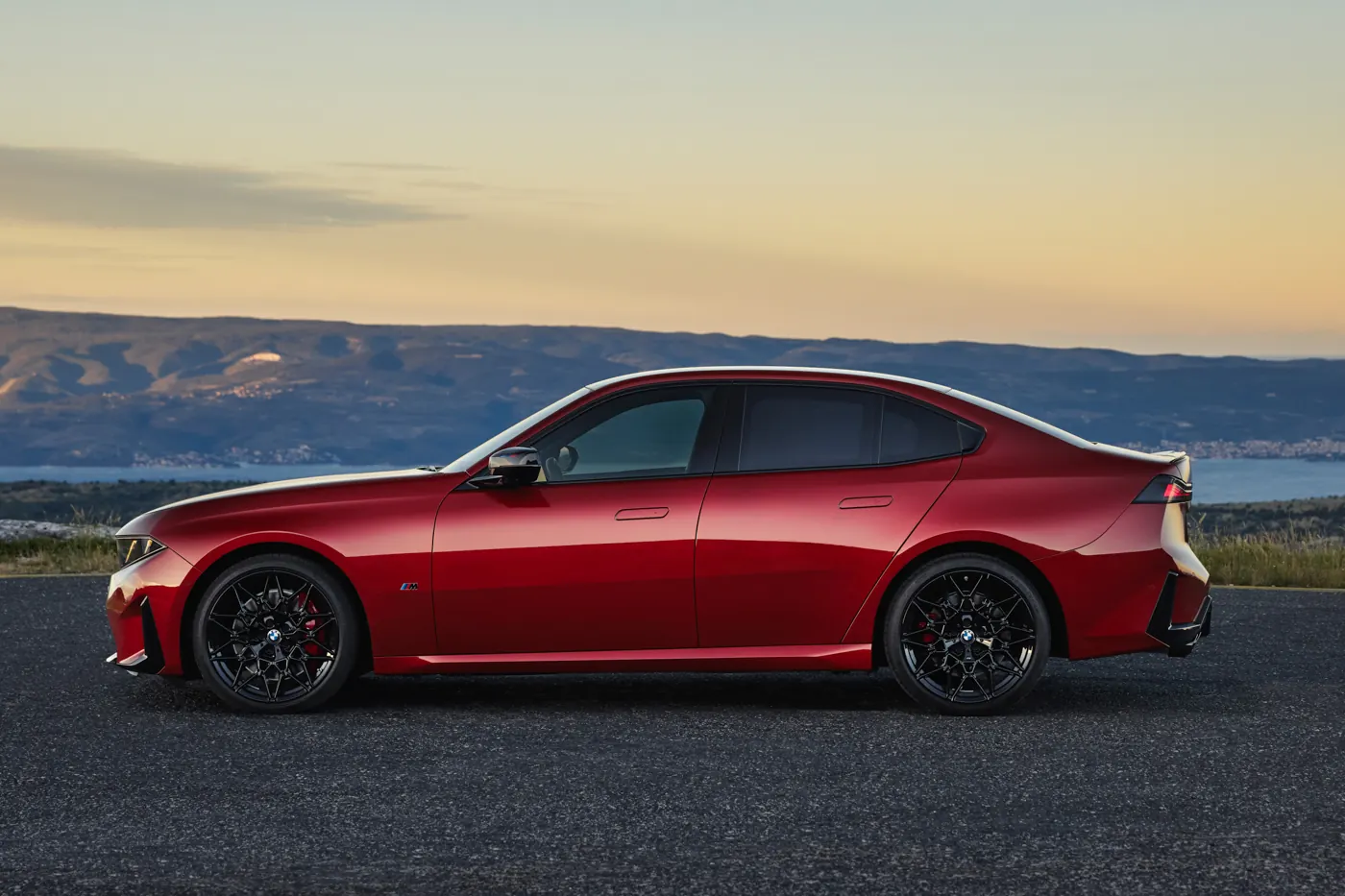
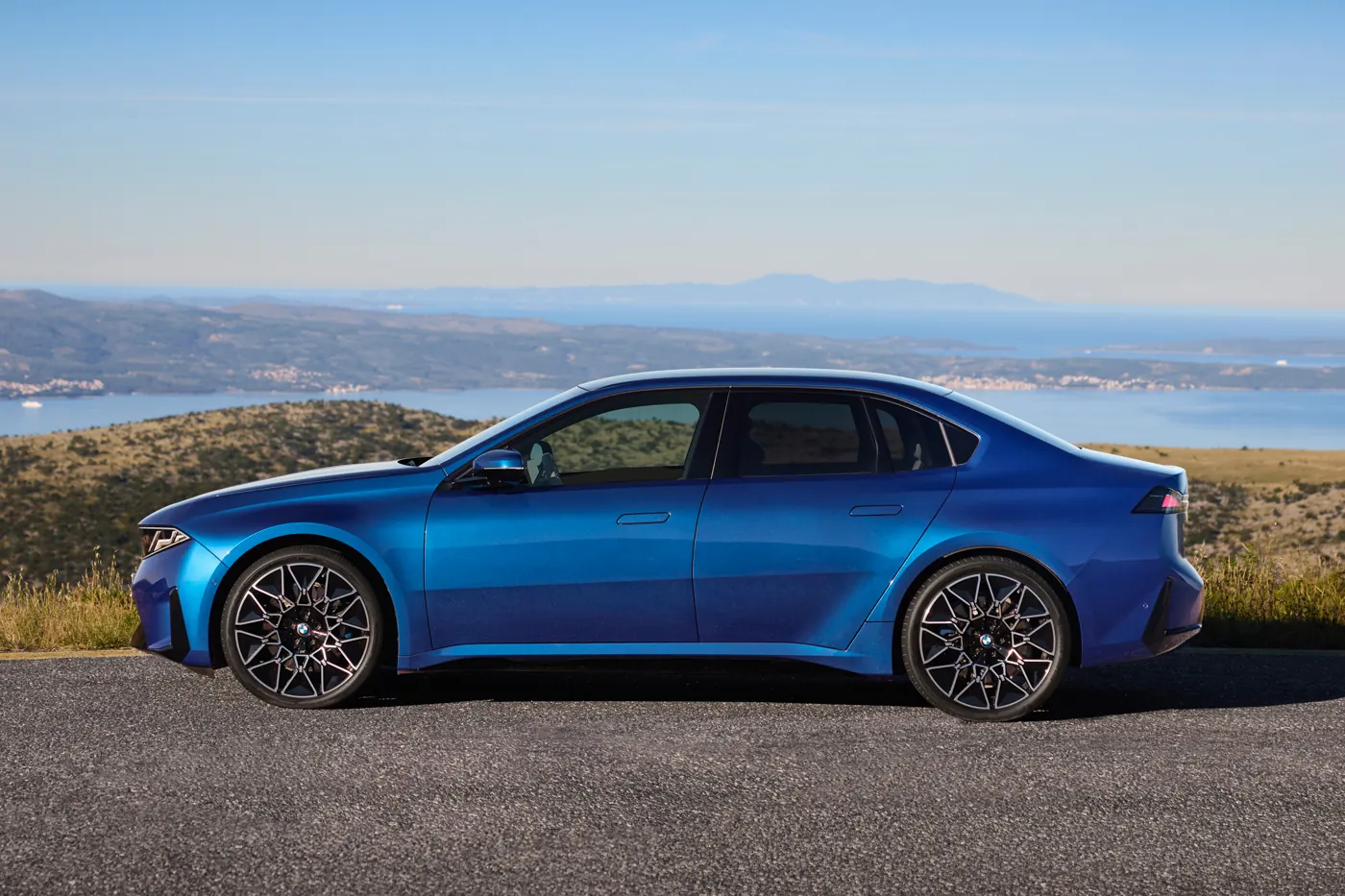
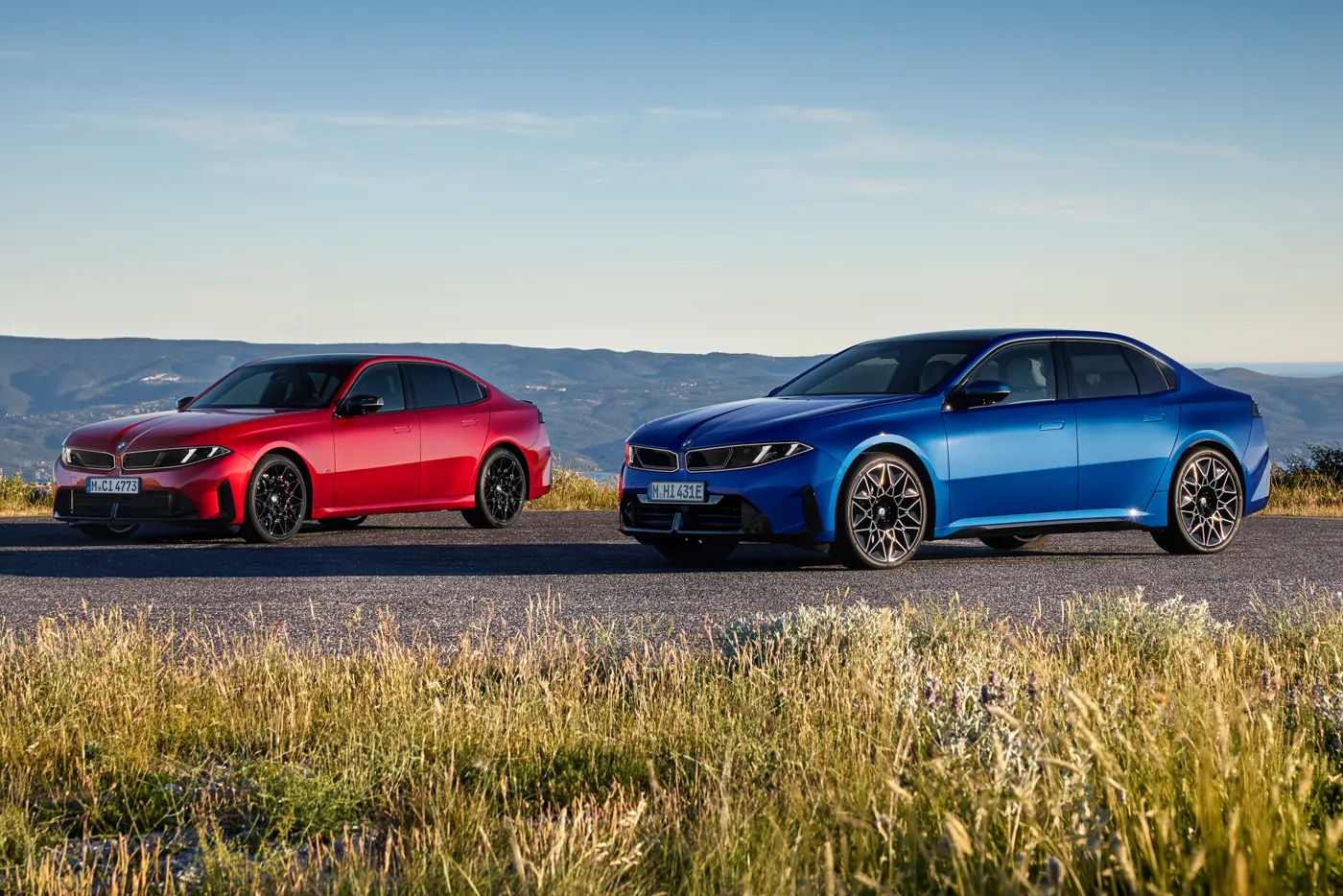
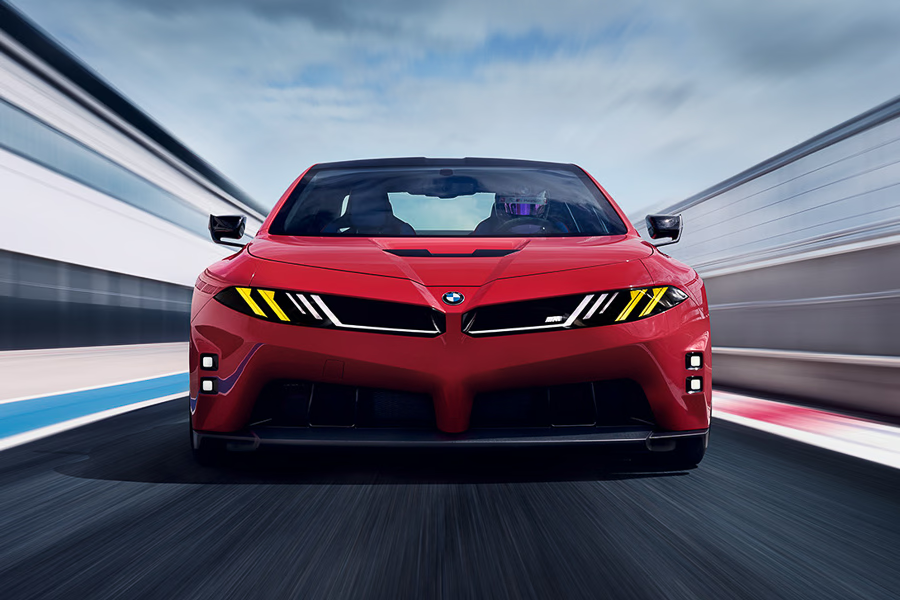
Still, that makes the G50 more than 300kg lighter than the i3 it resembles. The Neue Klasse design language carries over almost wholesale, but the proportions differ: the G50 is within 5mm of the i3's length, yet it sits 25mm lower and 15mm narrower, and its wheelbase is 37mm shorter. Small as those numbers look on paper, their cumulative effect is significant – where the i3 pushes its wheels out towards the corners, the petrol car sets its cabin further back behind a longer bonnet, giving it a lower, more conventional saloon stance than its electric sibling.
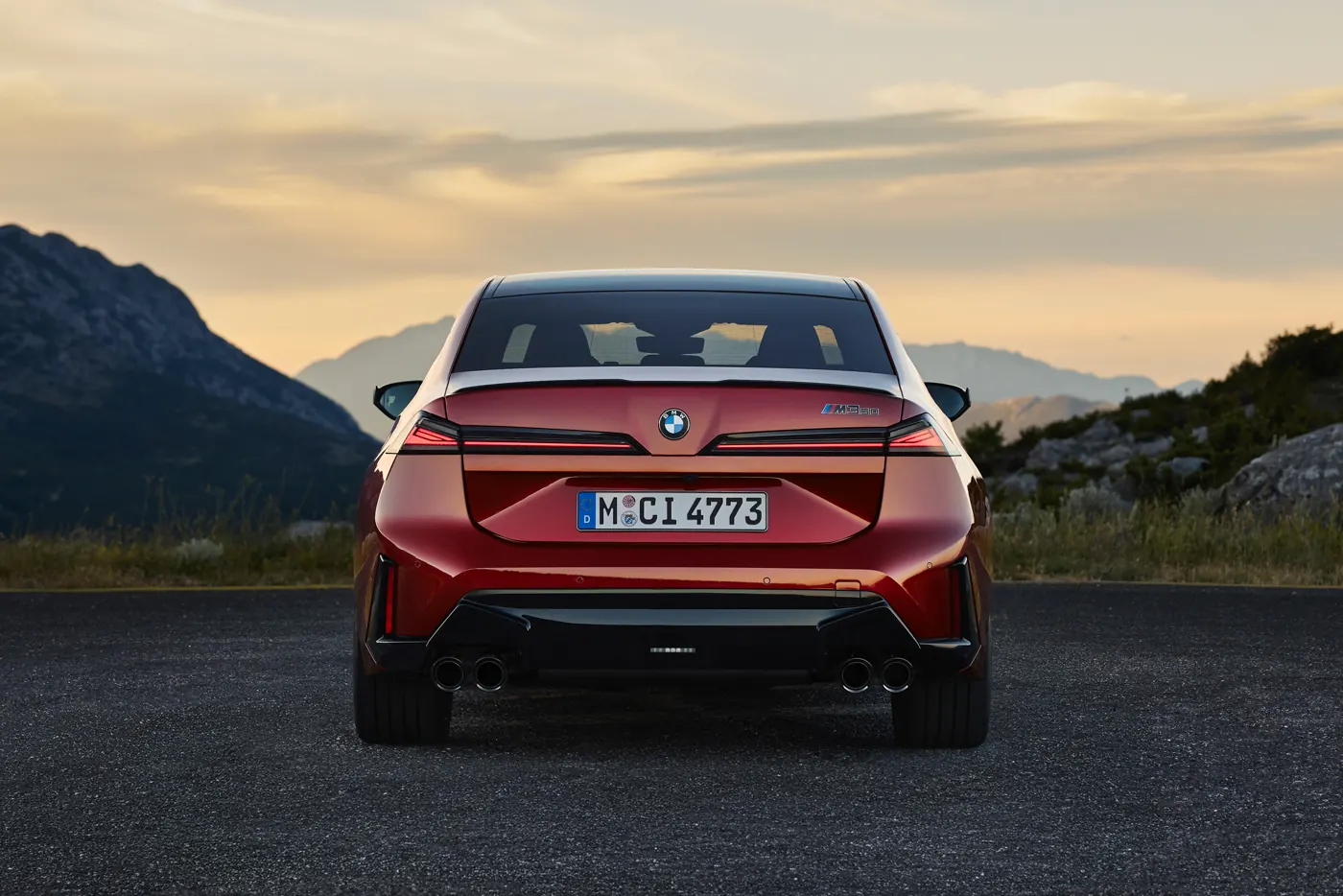
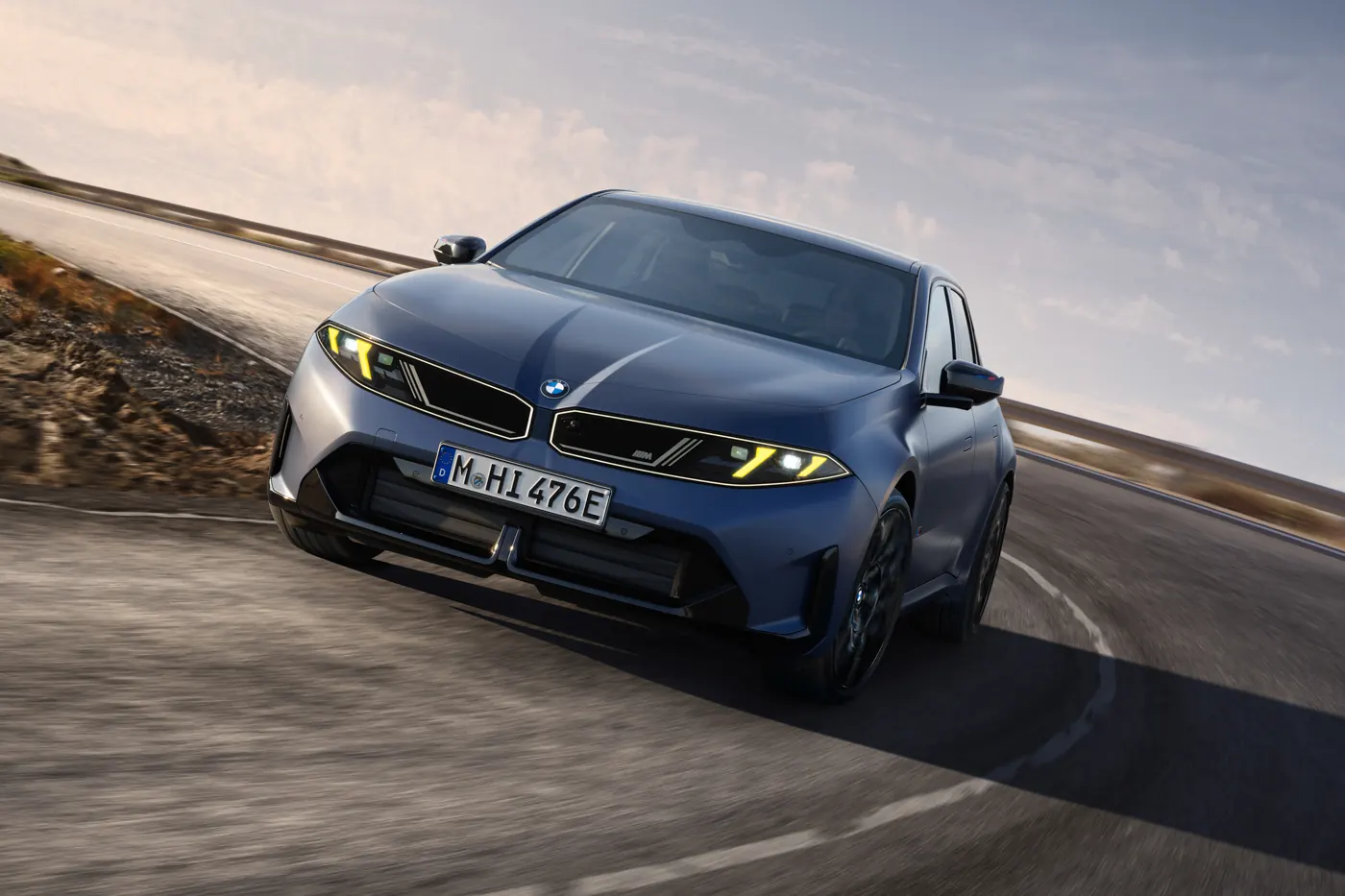
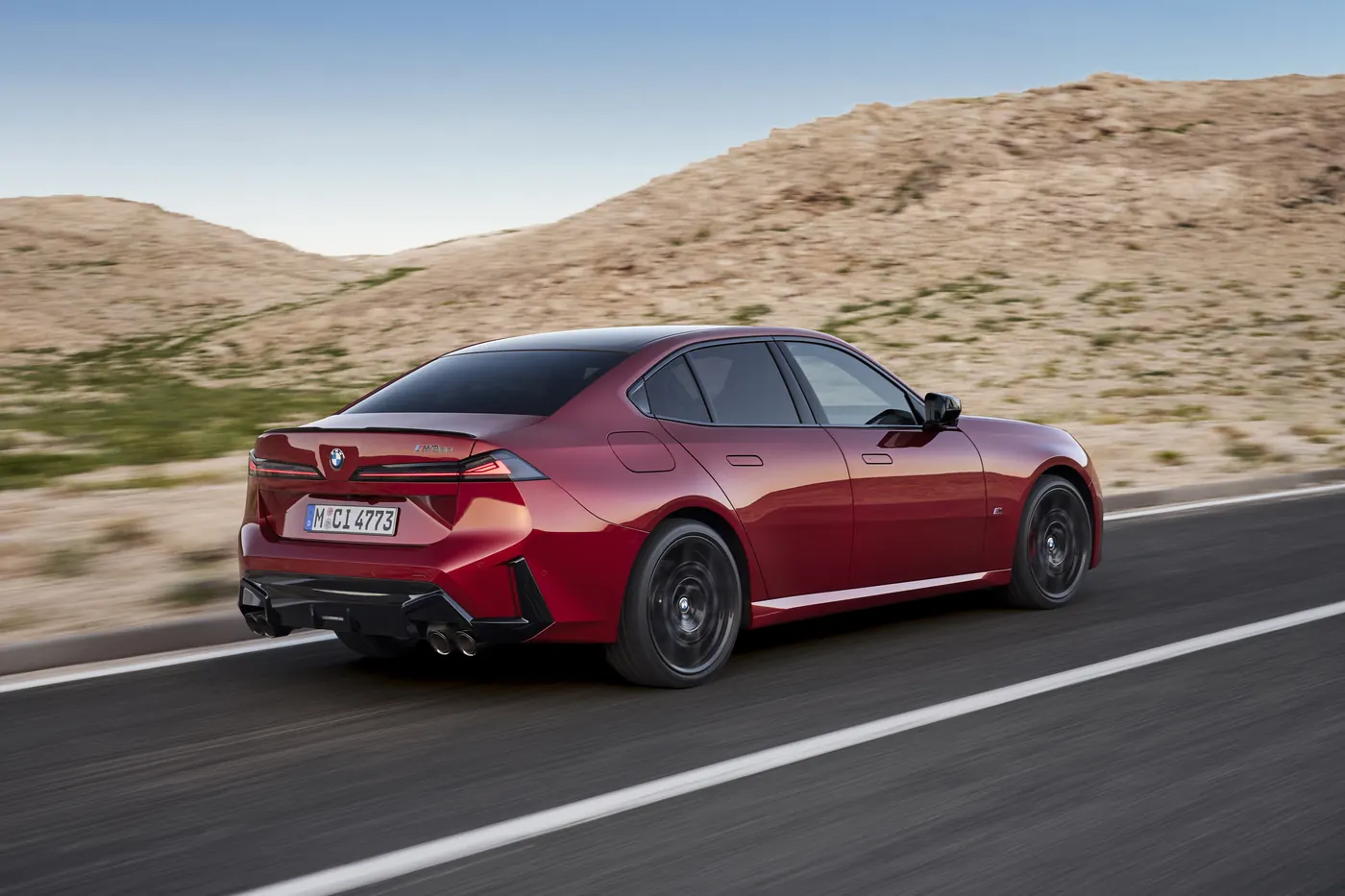
Once again, the M350 cranks things up a notch, adding yellow lighting elements, a lip spoiler on the boot and four exhaust outlets beneath it, the biggest clue to its M3-baiting performance.
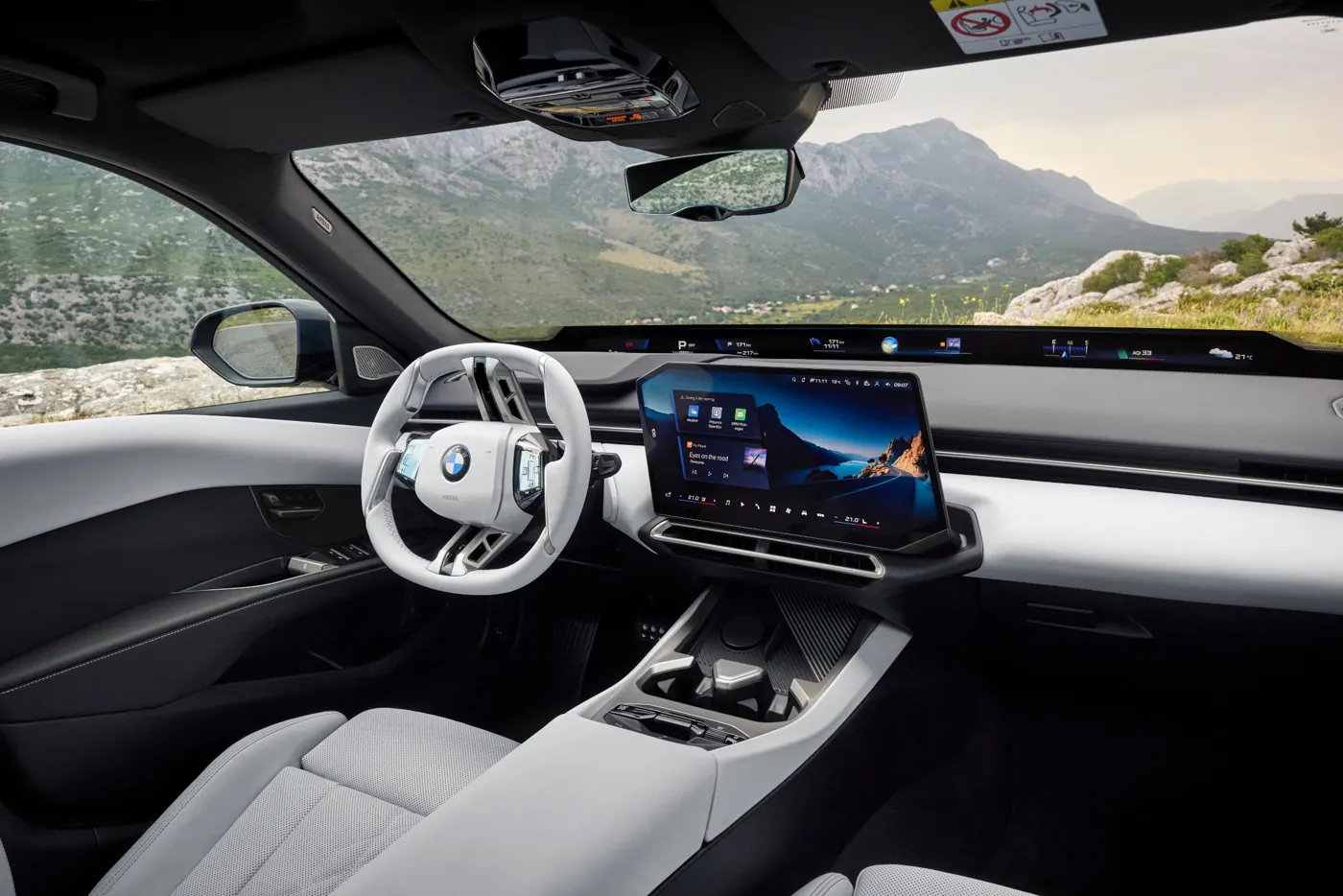
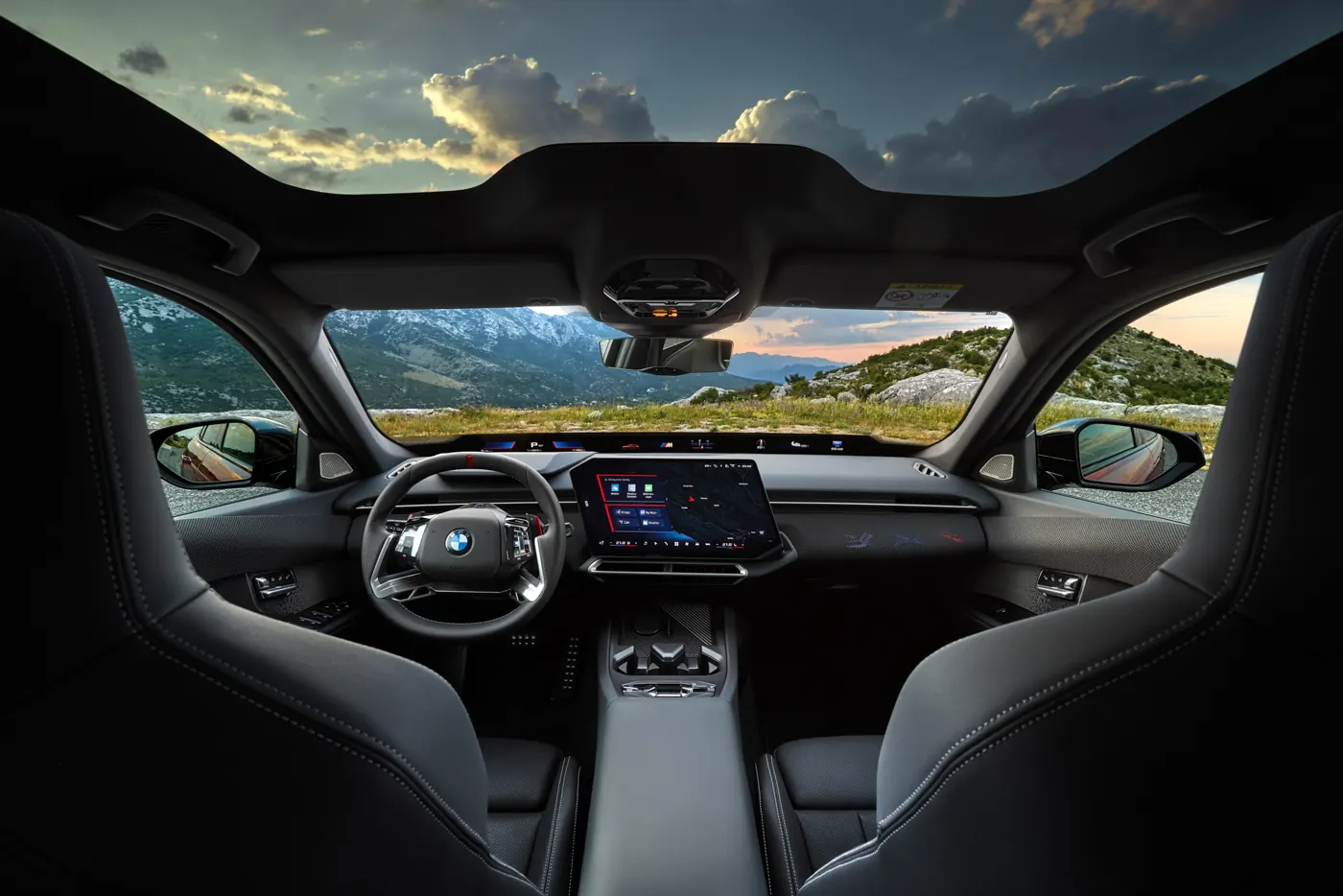
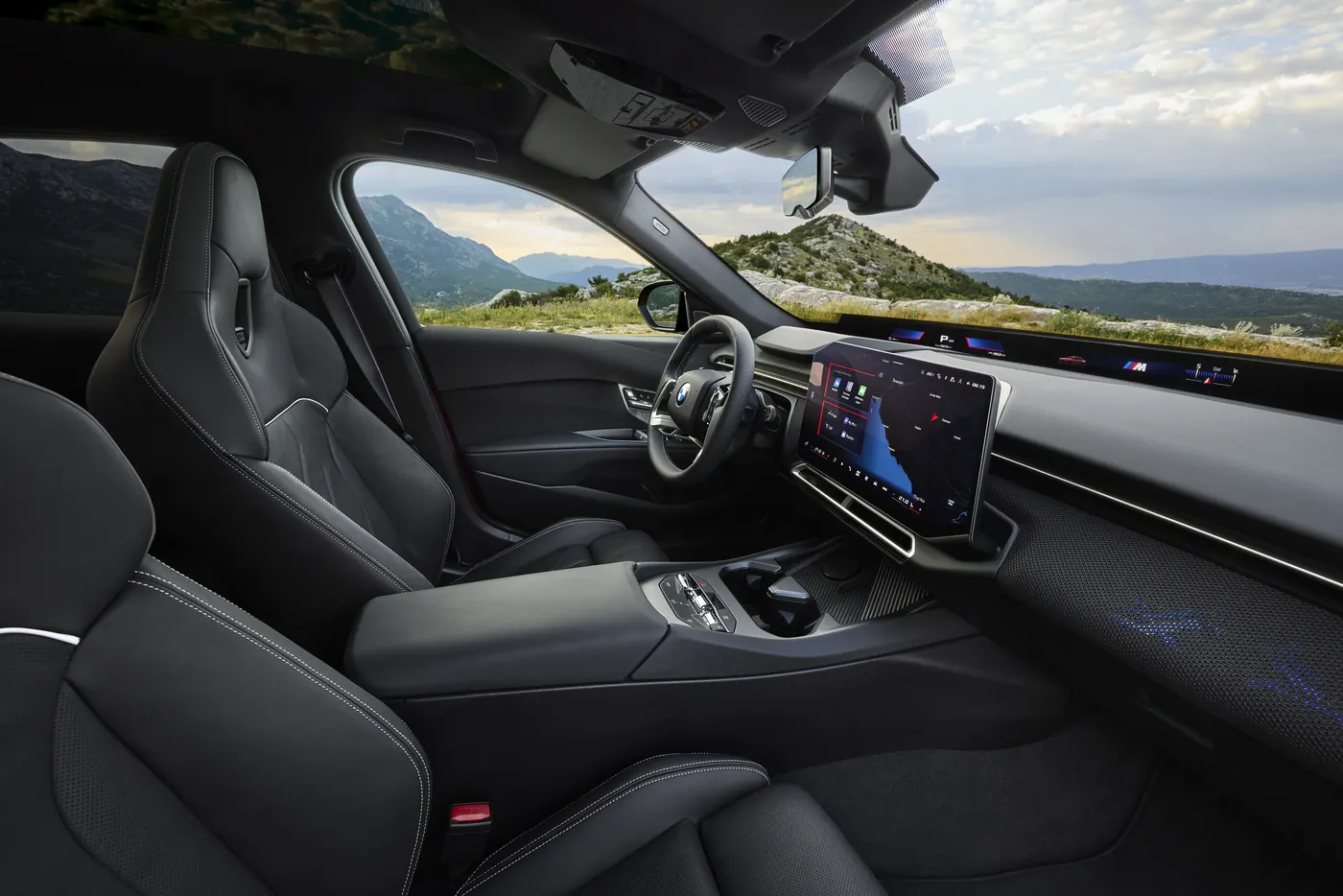
Inside, the G50 is all but indistinguishable from the i3. Dominating proceedings is a 17.9-inch central touchscreen perched above the centre console, shaped like a parallelogram and angled towards the driver in the finest of BMW traditions. The 320's steering wheel is shared with the i3, its oversized rim flattened top and bottom and split by a twin-bar vertical spoke that echoes the kidney grille. The M350 drops the vertical spoke for its own M wheel, with a rounder rim, a red centre marker and dedicated Boost and M Mode buttons – the latter another first for an M Performance 3 Series. Beyond it, the driver’s display has been killed off in favour of Panoramic Vision, which projects key information along the base of the windscreen, while a 3D head-up display is optional. Boot space stands at 450 litres, one litre shy of the i3, provided you’re counting its 31-litre frunk.
The eight-speed automatic is the only gearbox available, and BMW has yet to announce a diesel for Britain, leaving the M350 as the only six-cylinder in the G50 range now that the M340d has been dropped. BMW's technical data also lists a 318, although it is not part of the UK line-up at launch. Expect a higher-power, B48-equipped 330 to follow at some point, and in late 2027 a new M3.
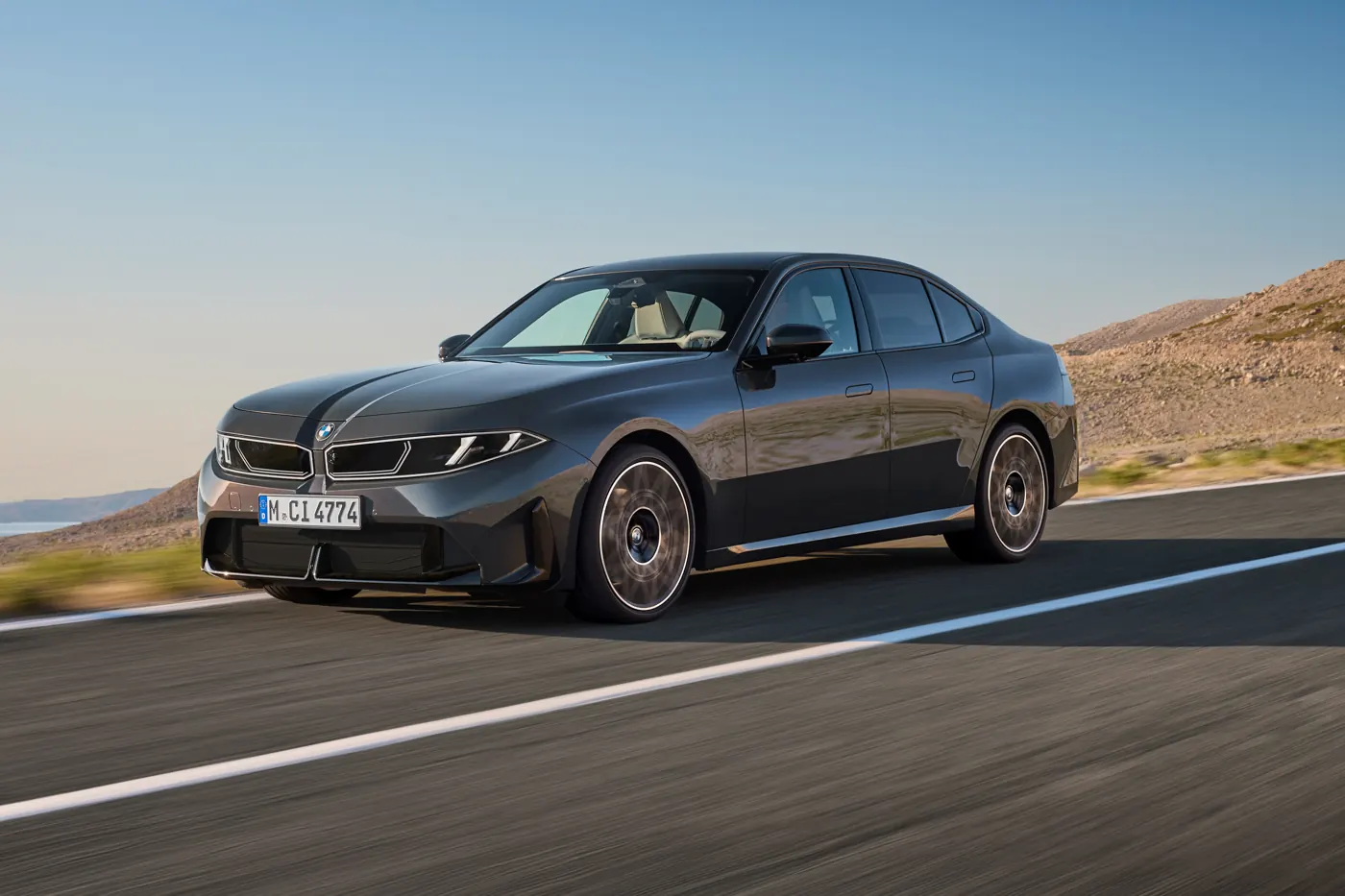
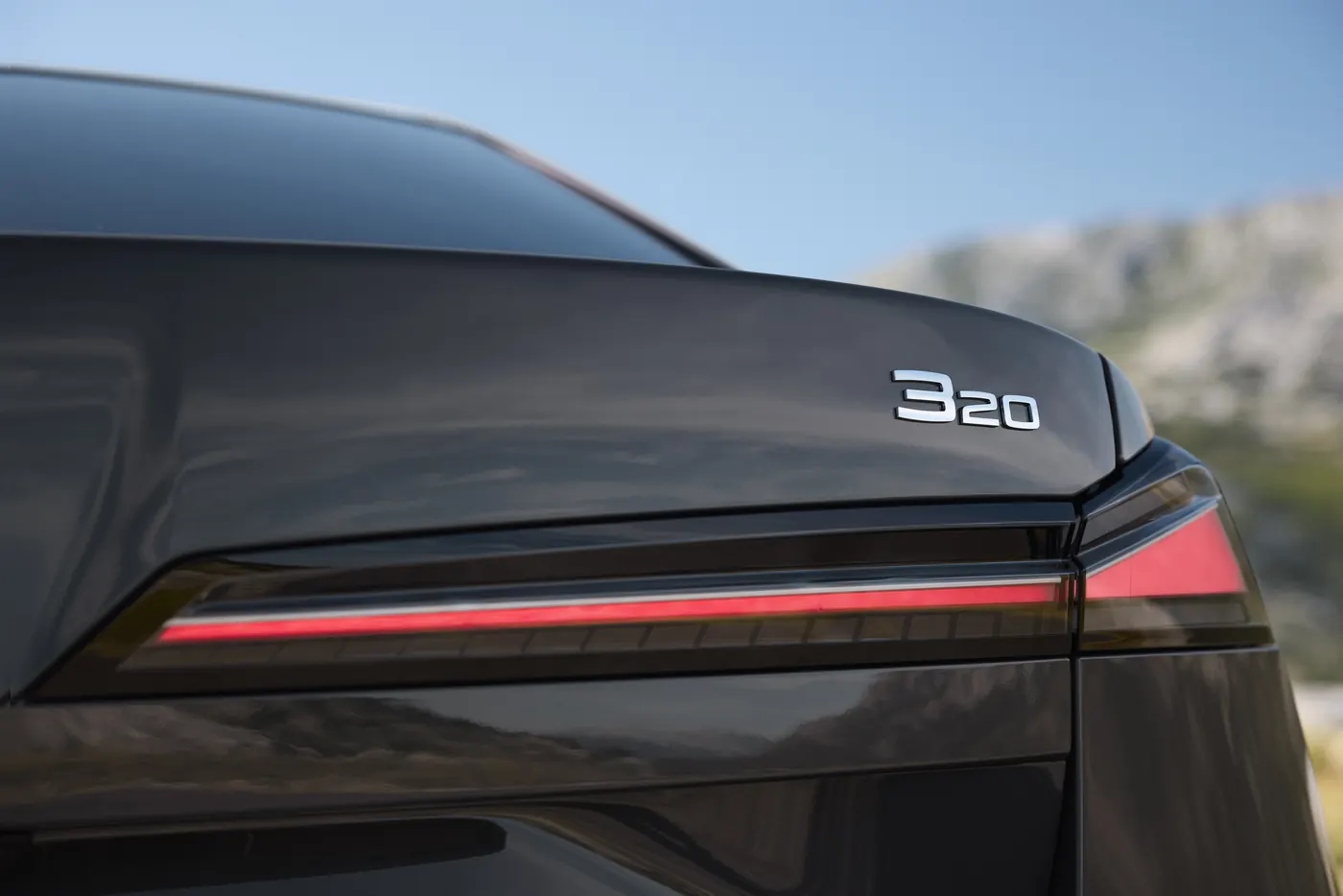
Alongside the G50, BMW has expanded the i3 line-up with the i3 40 xDrive, which pairs 369bhp with an 82.8kWh battery for a WLTP range of up to 441 miles, and confirmed an i3 M60 xDrive for 2027. The 463bhp i3 50 xDrive now carries a provisional range of 566 miles, up from the 562 miles first quoted, and BMW claims its 400kW DC charging can add 263 miles in 10 minutes.
Prices start at £44,975 for the 320 and £66,785 for the M350 xDrive, against £47,925 for the i3 40 xDrive and £53,425 for the i3 50 xDrive. Production of the petrol cars begins at Dingolfing in November, with UK deliveries commencing in January.


.webp)

.svg)

