NEWS
Bugatti F.K.P. Hommage is a One-Off Veyron Tribute
Ken Pearson
By
Images by
Bugatti
Published
22 Jan 2026
Bugatti F.K.P. Hommage is a One-Off Veyron Tribute

Taking its name from the father of the Veyron, the F.K.P. Hommage pays tribute to the man who shaped the modern Bugatti brand, and the genesis of the modern hypercar.
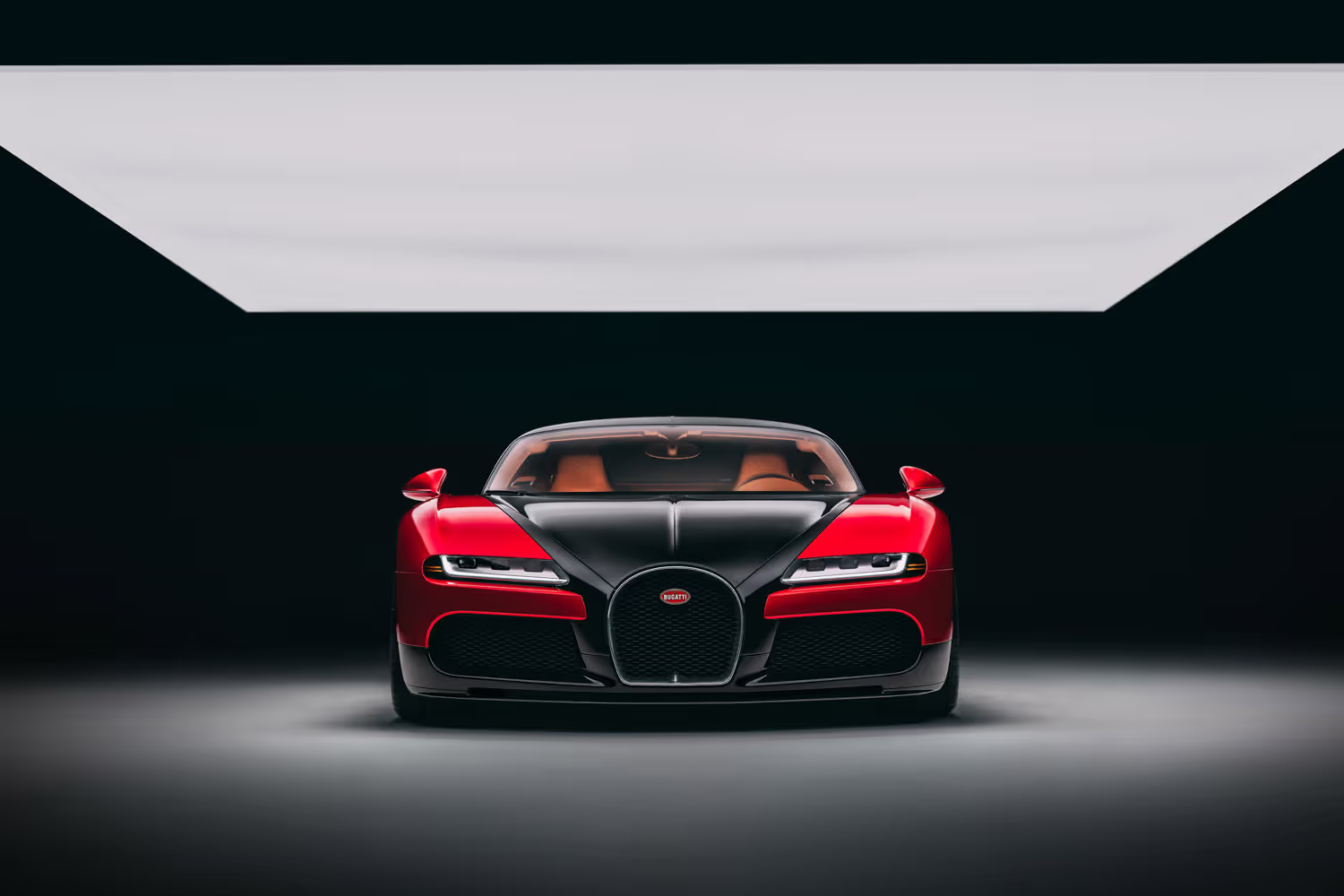
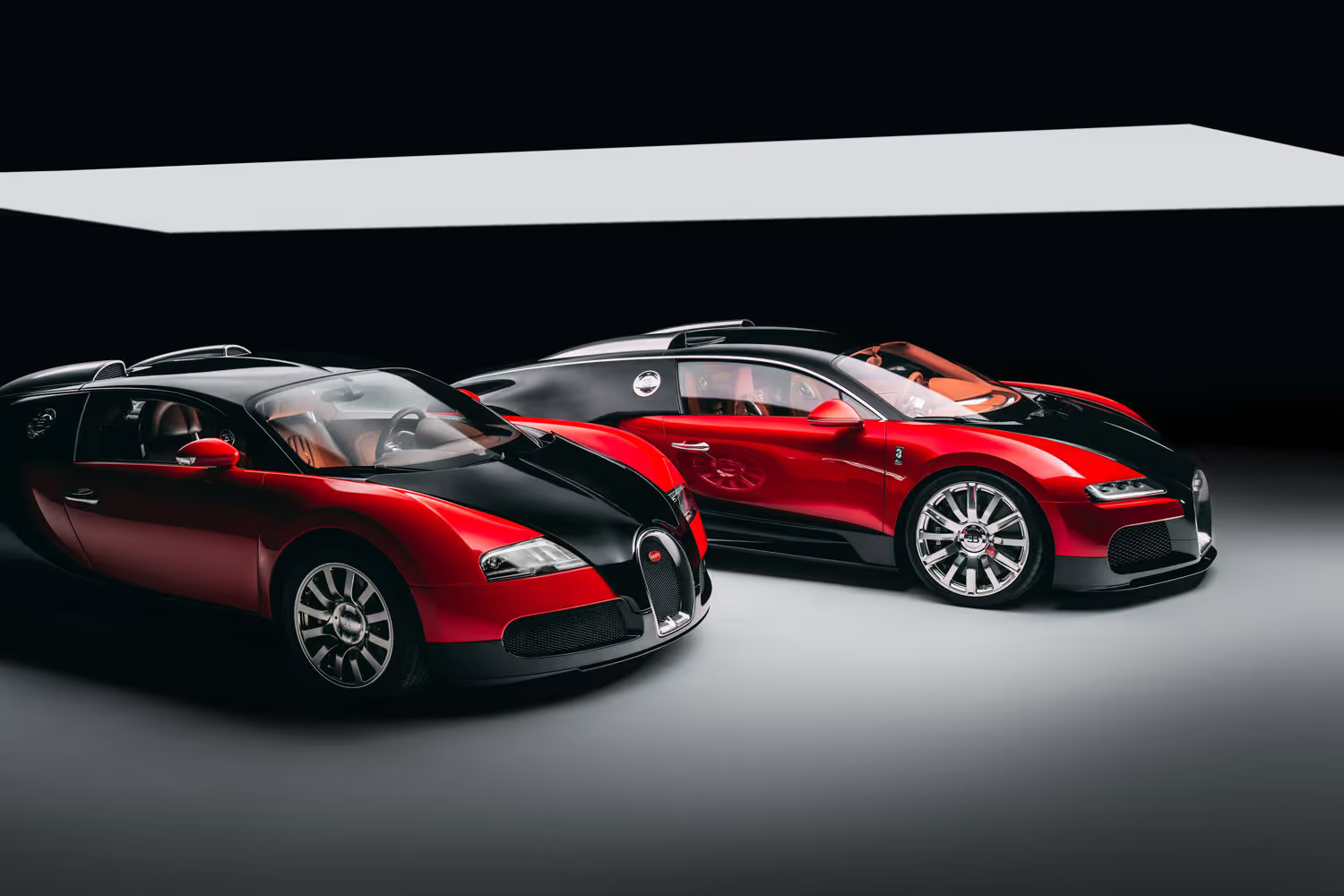
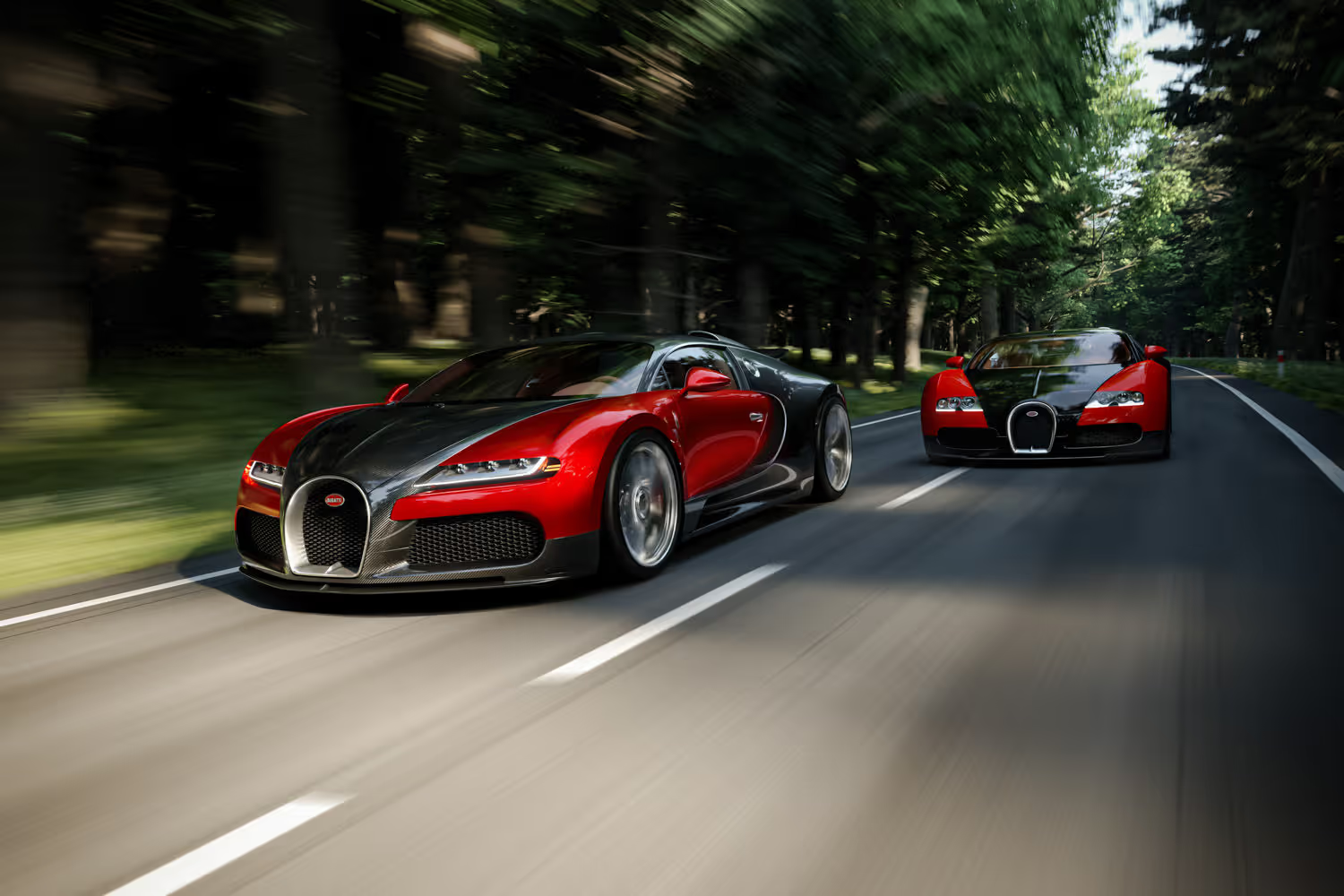
Launching as the second creation from Bugatti’s Solitaire programme, the one-off F.K.P. Hommage is not a restomod, but a brand-new Chiron-based tribute to the Veyron. The car refines the shape and detailing of its predecessor, looking like a Veyron Mk2 if such a thing were ever to exist. The horseshoe grille is deeper, and milled from a single piece of aluminium. The lower grille extends further outwards, with the headlight clusters following suit, emphasising the car’s width.
Compared to the Chiron, every body panel is new, and nowhere is that more evident than at the side of the F.K.P. Hommage. The full-height C-shaped intake is gone, replaced with a half-height inlet that appears to swallow the door as the colour changes from red to black-tinted exposed carbon fibre. The doors themselves feature a new design, with a windowline that falls down towards the intakes.
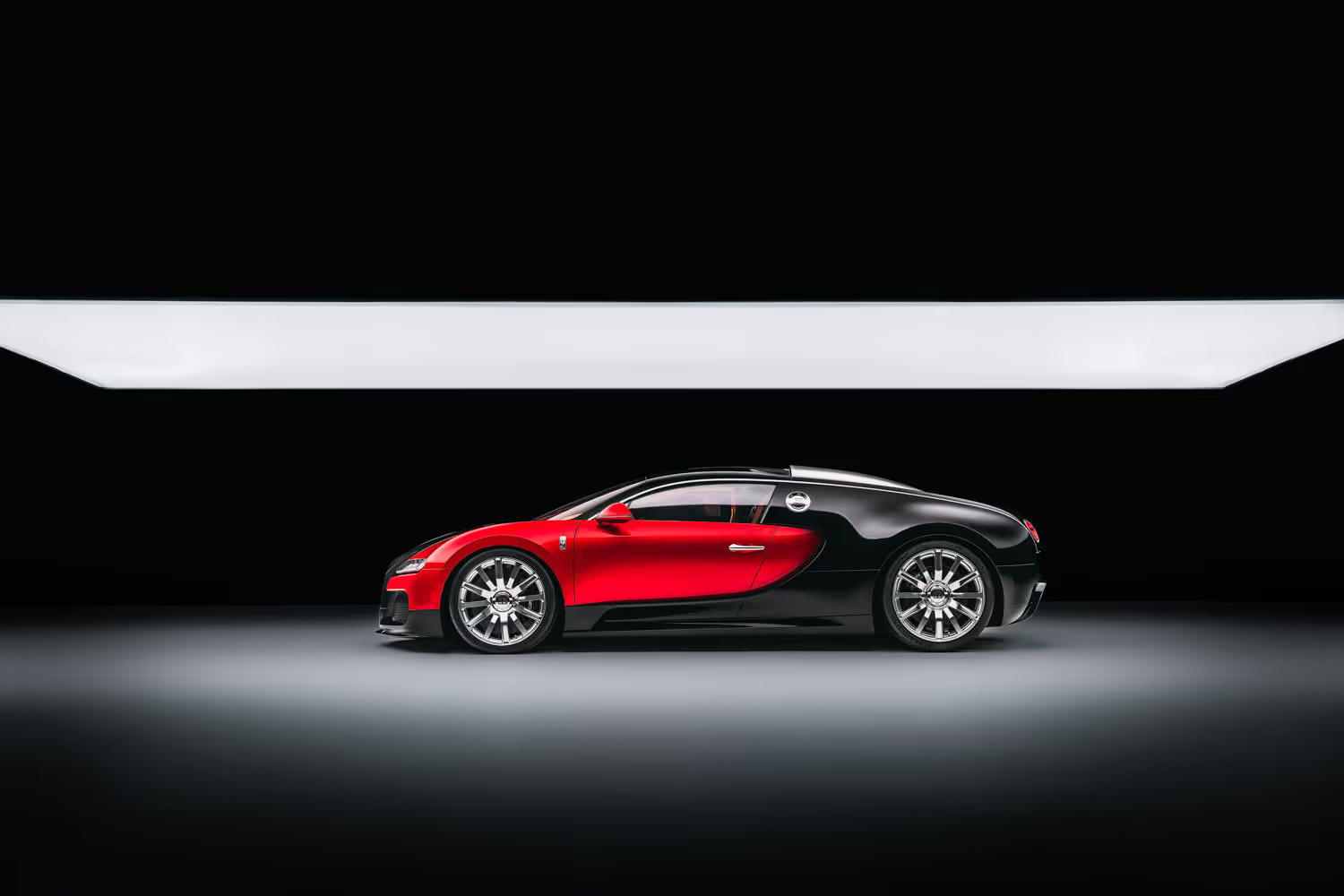
Framing the glass is a chrome strip that runs from the base of the windscreen to the rear bumper, itself a nod to the feature seen on few-off Veyrons such as the Centennaire, and Villa d’Este. The strip complements the brightwork seen on the handles, fuel fillers, and roof-mounted air intakes.
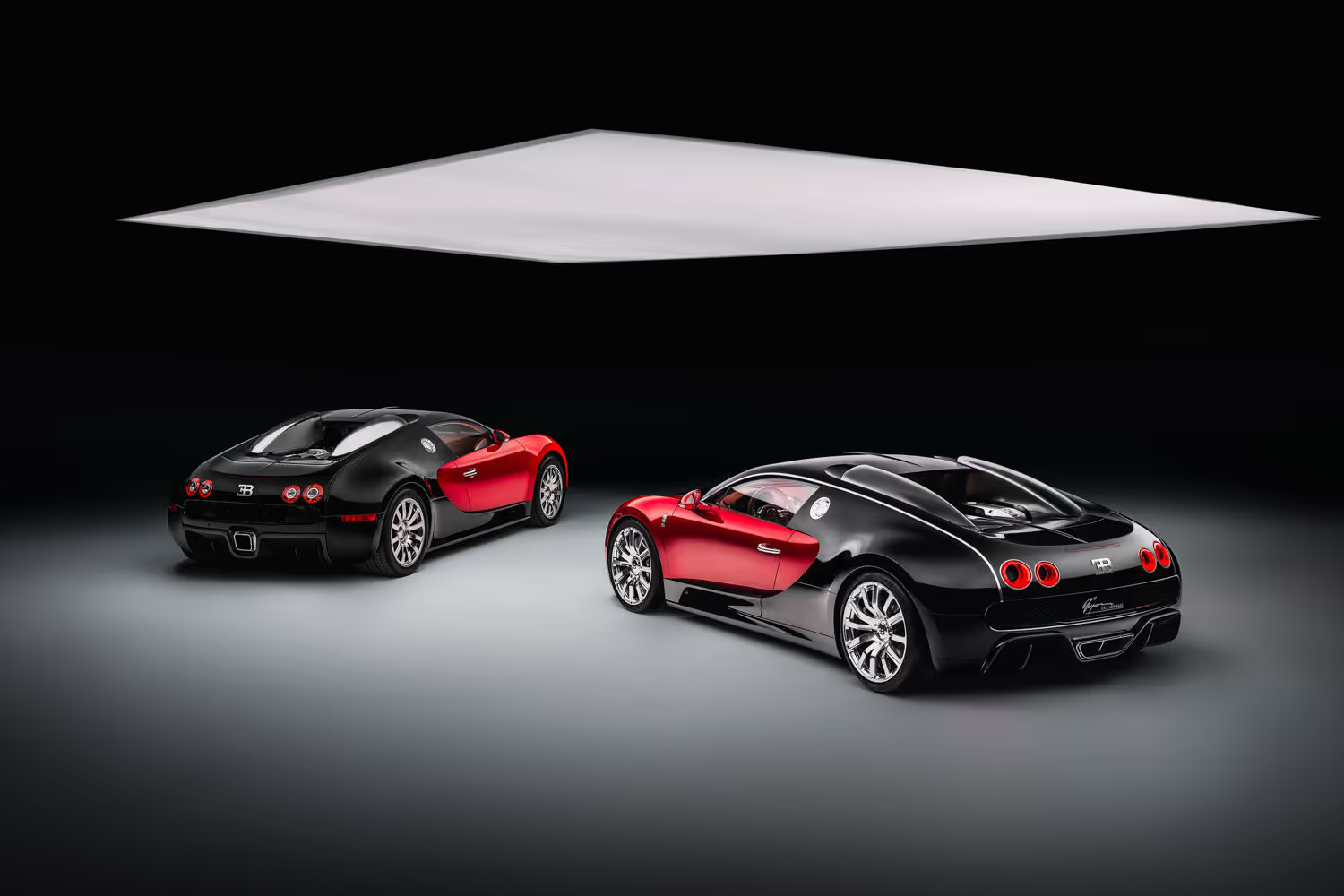
The brightest chrome is saved for the new double-six-spoke alloy wheels. Inspired by the Veyron’s original rim style, the new wheels are staggered in size measuring 20” at the front and 21” at the rear, and wear Michelin Pilot Sport Cup 2 tyres. The stylistic evolution concludes at the rear, with the Chiron’s light bar and open-ended design being replaced by a single ovular air outlet, and a quartet of hollow lights with illuminated rifling.
Powering the F.K.P. Hommage is the most powerful road-going iteration of the 8.0-litre W16 engine. The quad-turbocharged unit delivers 1,578bhp and 1,180lb-ft (1,600Nm) of torque, just as it does in the Chiron Super Sport 300+, and the one-off Brouillard that was unveiled in 2025. The 64-valve engine delivers its performance to all four wheels via a reinforced 7-speed dual-clutch transmission, but no detailed performance figures are disclosed. However, we expect a 0-62mph time of under 2.5 seconds and a top speed in excess of 270mph.
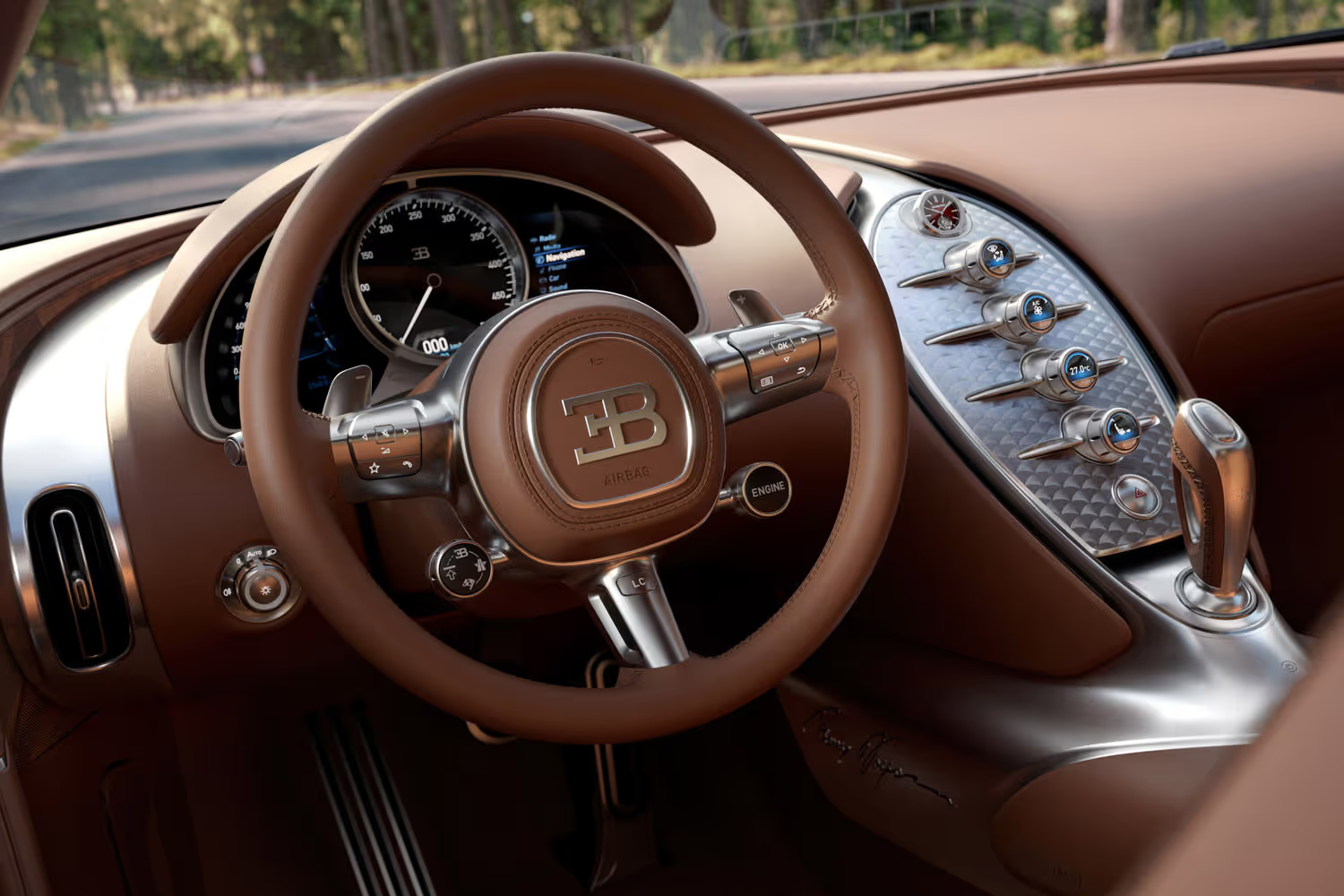
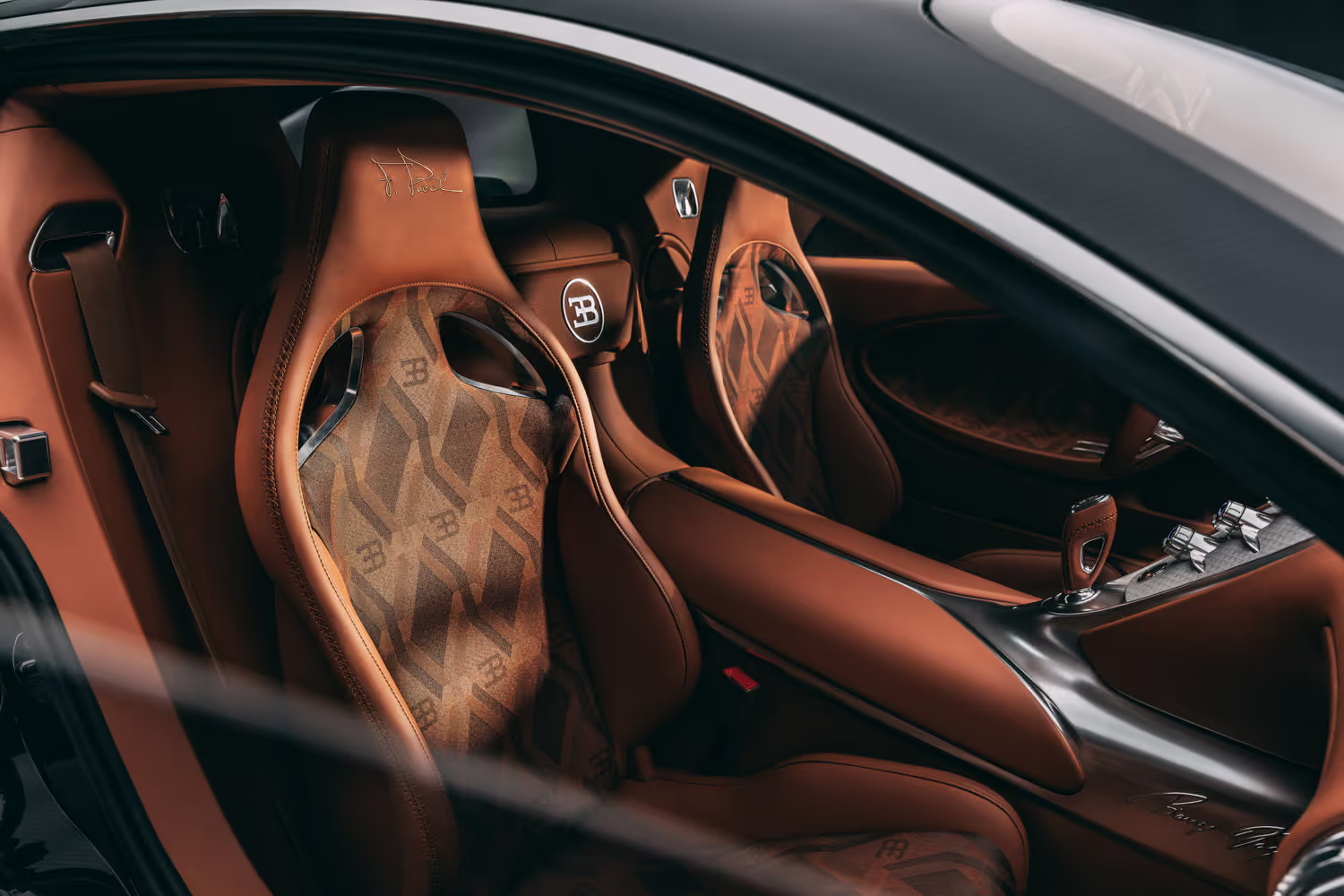
Inside, the model gains a brand-new steering wheel, and a unique take on the Chiron’s stacked dashboard detailing. Positioned above the quartet of air conditioning dials is an octagonal timepiece measuring 41mm in diameter. Tan leather covers the majority of the cabin, but hand-crafted fabric with geometric patterns and Ettore Bugatti’s initials are found on the seats, door cards and roof. The transmission tunnel hosts the signature of Pierre Veyron, while the headrests feature the most important signature in the modern Bugatti story: that of Ferdinand Karl Piëch.
The F.K.P. Hommage is a two-fold tribute, simultaneously honouring the Bugatti Veyron, and the mastermind behind the project. Grandson of Ferdinand Porsche, Piëch was an engineer who rose through the ranks of the Volkswagen group to become its chairman in 1993. Under his watch, the company took a renewed focus on engineering, and expansion into new markets - including the supercar realm.
Piëch is credited with the development of the VR engine range - a series of narrow-angle V engines that placed two cylinder banks under a common head. This allowed for six-cylinder blocks to take up significantly less space than before, and from this design, the modern W layout was born by connecting a pair of VR blocks to a shared crankcase. The W12 was offered by Audi, Bentley, and Volkswagen, but the W16 has only ever been used by Bugatti.
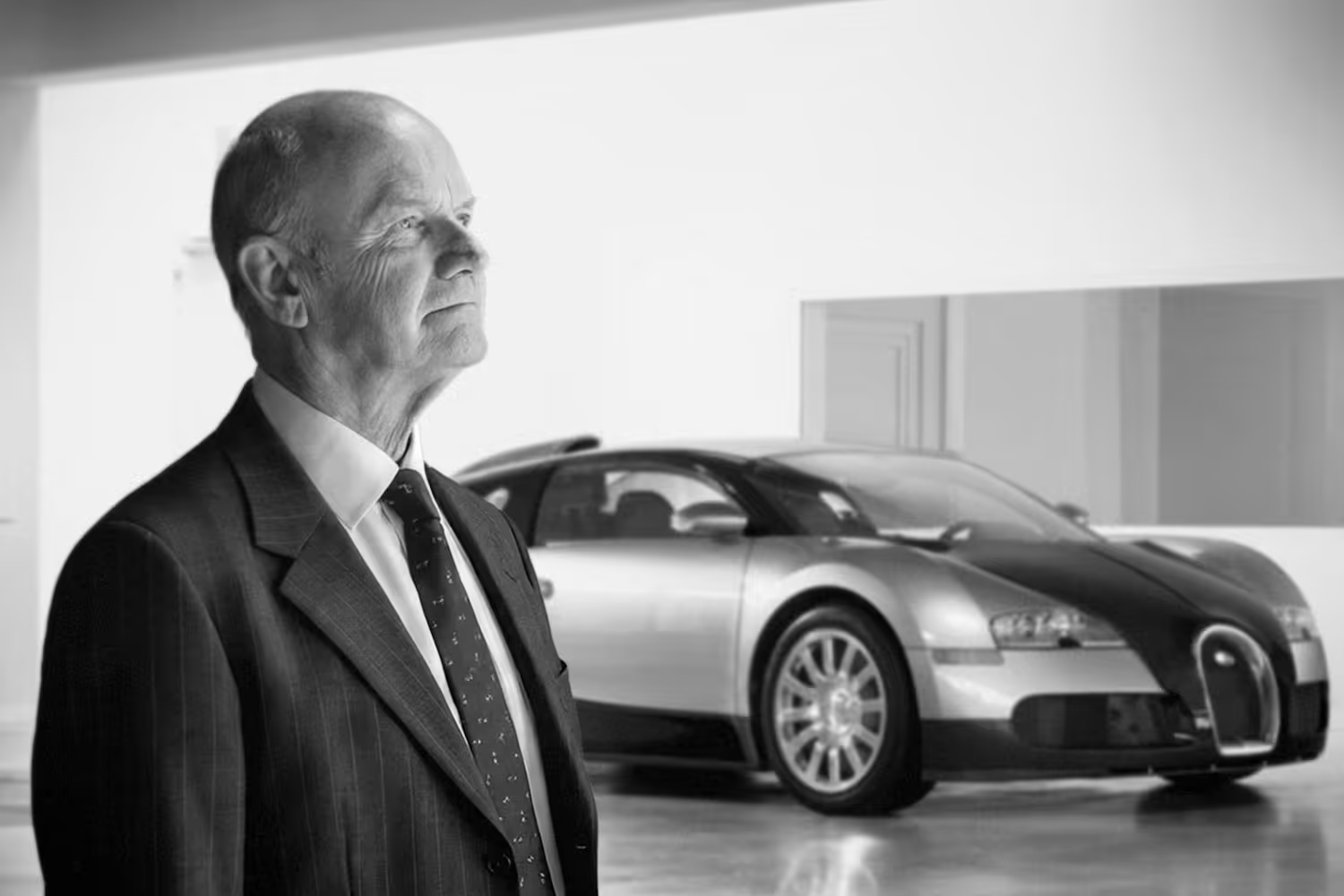
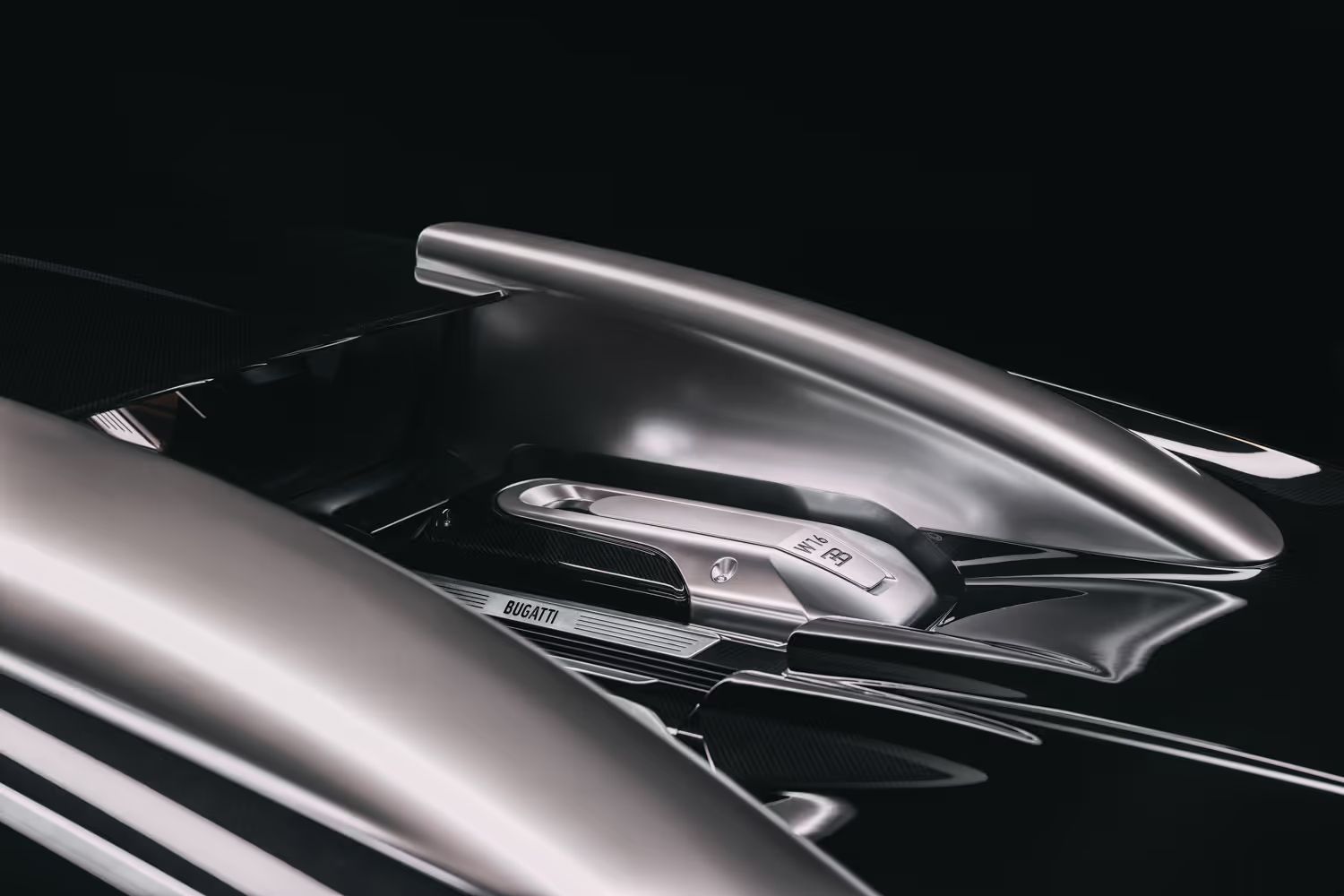
It was a core part of achieving the Veyron’s targets dictated by Piëch himself: an output of 1,000hp, a top speed of 248mph (400km/h), and being refined enough to drive to the opera in a tuxedo or a ball gown. The goals were non-negotiable, and while we take extreme power outputs and refinement for granted today, when the project started it was unheard of for a car to be luxurious, usable, and faster than a McLaren F1. The engineers nailed the brief - even exceeding the power output requirement by one horsepower - and the Veyron set the template that many modern hypercars continue to follow to this day.
Design Director Frank Heyl's first sketches after joining the brand were evolutions of the Veyron's design that never saw the light of day. 'It feels as though Prof. Piëch could see we would have a need for them one day,' he said. Heyl describes the F.K.P. Hommage as 'the ideal, definitive Veyron', and we wholeheartedly agree.
Author
Photography by:
Bugatti
Published on:
22 January 2026
Our Print Magazine
LATEST ARTICLES
About the Author

Ken Pearson
Deputy Editor
Resident Mercedes expert, affordable drivers' car champion and EV sympathiser. Can often be found on the other end of an argument with Craig with regards to powertrains and styling, bringing balance to the force.
Related Articles
NEVER MISS AN ARTICLE

Taking its name from the father of the Veyron, the F.K.P. Hommage pays tribute to the man who shaped the modern Bugatti brand, and the genesis of the modern hypercar.
Bugatti
22 January 2026
Taking its name from the father of the Veyron, the F.K.P. Hommage pays tribute to the man who shaped the modern Bugatti brand, and the genesis of the modern hypercar.
First published
22 January 2026
Last updated
23 January 2026
Photography
Bugatti
W
Launching as the second creation from Bugatti’s Solitaire programme, the one-off F.K.P. Hommage is not a restomod, but a brand-new Chiron-based tribute to the Veyron. The car refines the shape and detailing of its predecessor, looking like a Veyron Mk2 if such a thing were ever to exist. The horseshoe grille is deeper, and milled from a single piece of aluminium. The lower grille extends further outwards, with the headlight clusters following suit, emphasising the car’s width.
Compared to the Chiron, every body panel is new, and nowhere is that more evident than at the side of the F.K.P. Hommage. The full-height C-shaped intake is gone, replaced with a half-height inlet that appears to swallow the door as the colour changes from red to black-tinted exposed carbon fibre. The doors themselves feature a new design, with a windowline that falls down towards the intakes.


Framing the glass is a chrome strip that runs from the base of the windscreen to the rear bumper, itself a nod to the feature seen on few-off Veyrons such as the Centennaire, and Villa d’Este. The strip complements the brightwork seen on the handles, fuel fillers, and roof-mounted air intakes.
The brightest chrome is saved for the new double-six-spoke alloy wheels. Inspired by the Veyron’s original rim style, the new wheels are staggered in size measuring 20” at the front and 21” at the rear, and wear Michelin Pilot Sport Cup 2 tyres. The stylistic evolution concludes at the rear, with the Chiron’s light bar and open-ended design being replaced by a single ovular air outlet, and a quartet of hollow lights with illuminated rifling.


Powering the F.K.P. Hommage is the most powerful road-going iteration of the 8.0-litre W16 engine. The quad-turbocharged unit delivers 1,578bhp and 1,180lb-ft (1,600Nm) of torque, just as it does in the Chiron Super Sport 300+, and the one-off Brouillard that was unveiled in 2025. The 64-valve engine delivers its performance to all four wheels via a reinforced 7-speed dual-clutch transmission, but no detailed performance figures are disclosed. However, we expect a 0-62mph time of under 2.5 seconds and a top speed in excess of 270mph.
Inside, the model gains a brand-new steering wheel, and a unique take on the Chiron’s stacked dashboard detailing. Positioned above the quartet of air conditioning dials is an octagonal timepiece measuring 41mm in diameter. Tan leather covers the majority of the cabin, but hand-crafted fabric with geometric patterns and Ettore Bugatti’s initials are found on the seats, door cards and roof. The transmission tunnel hosts the signature of Pierre Veyron, while the headrests feature the most important signature in the modern Bugatti story: that of Ferdinand Karl Piëch.


The F.K.P. Hommage is a two-fold tribute, simultaneously honouring the Bugatti Veyron, and the mastermind behind the project. Grandson of Ferdinand Porsche, Piëch was an engineer who rose through the ranks of the Volkswagen group to become its chairman in 1993. Under his watch, the company took a renewed focus on engineering, and expansion into new markets - including the supercar realm.
Piëch is credited with the development of the VR engine range - a series of narrow-angle V engines that placed two cylinder banks under a common head. This allowed for six-cylinder blocks to take up significantly less space than before, and from this design, the modern W layout was born by connecting a pair of VR blocks to a shared crankcase. The W12 was offered by Audi, Bentley, and Volkswagen, but the W16 has only ever been used by Bugatti.


It was a core part of achieving the Veyron’s targets dictated by Piëch himself: an output of 1,000hp, a top speed of 248mph (400km/h), and being refined enough to drive to the opera in a tuxedo or a ball gown. The goals were non-negotiable, and while we take extreme power outputs and refinement for granted today, when the project started it was unheard of for a car to be luxurious, usable, and faster than a McLaren F1. The engineers nailed the brief - even exceeding the power output requirement by one horsepower - and the Veyron set the template that many modern hypercars continue to follow to this day.
Design Director Frank Heyl's first sketches after joining the brand were evolutions of the Veyron's design that never saw the light of day. 'It feels as though Prof. Piëch could see we would have a need for them one day,' he said. Heyl describes the F.K.P. Hommage as 'the ideal, definitive Veyron', and we wholeheartedly agree.


Taking its name from the father of the Veyron, the F.K.P. Hommage pays tribute to the man who shaped the modern Bugatti brand, and the genesis of the modern hypercar.