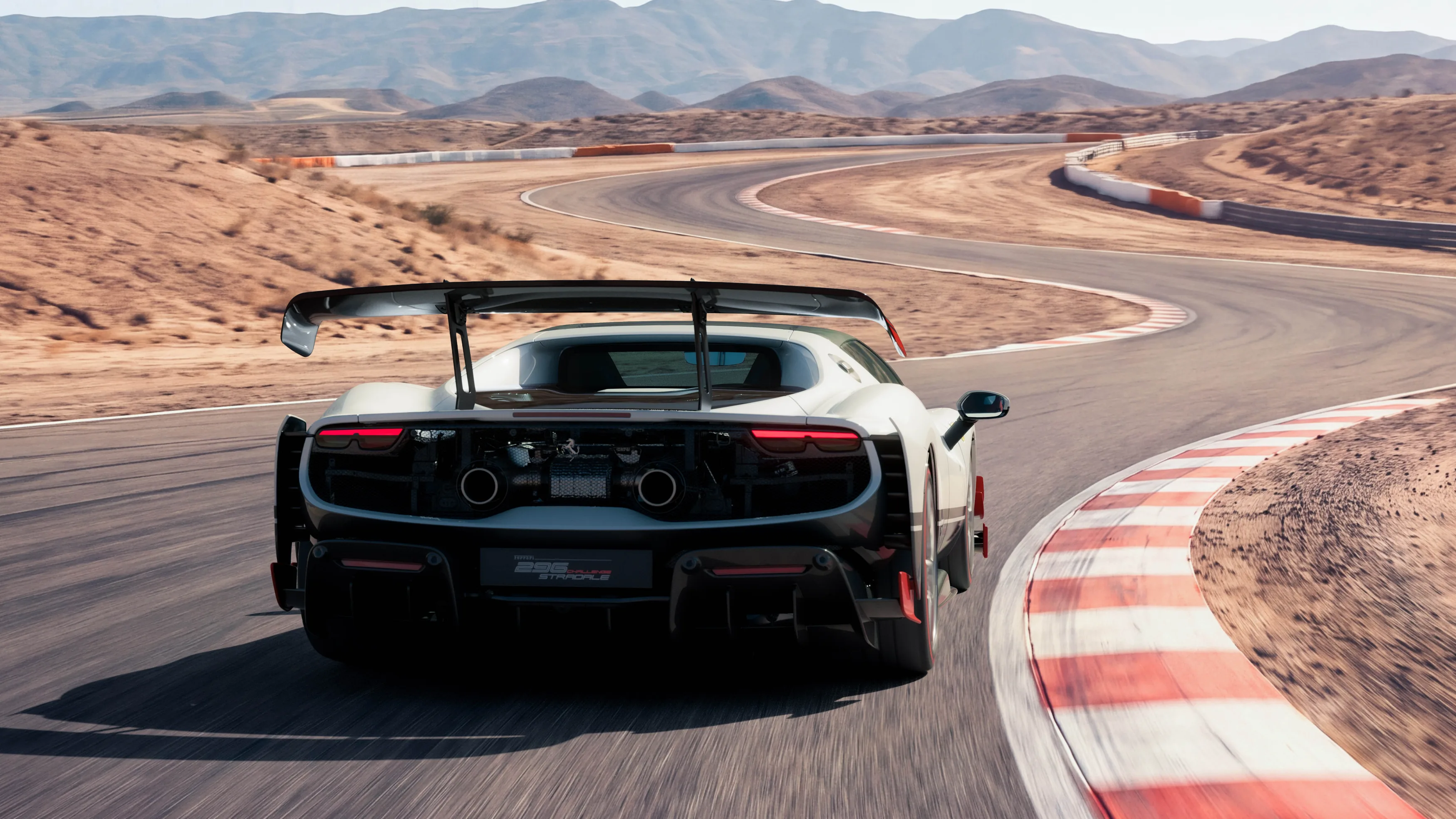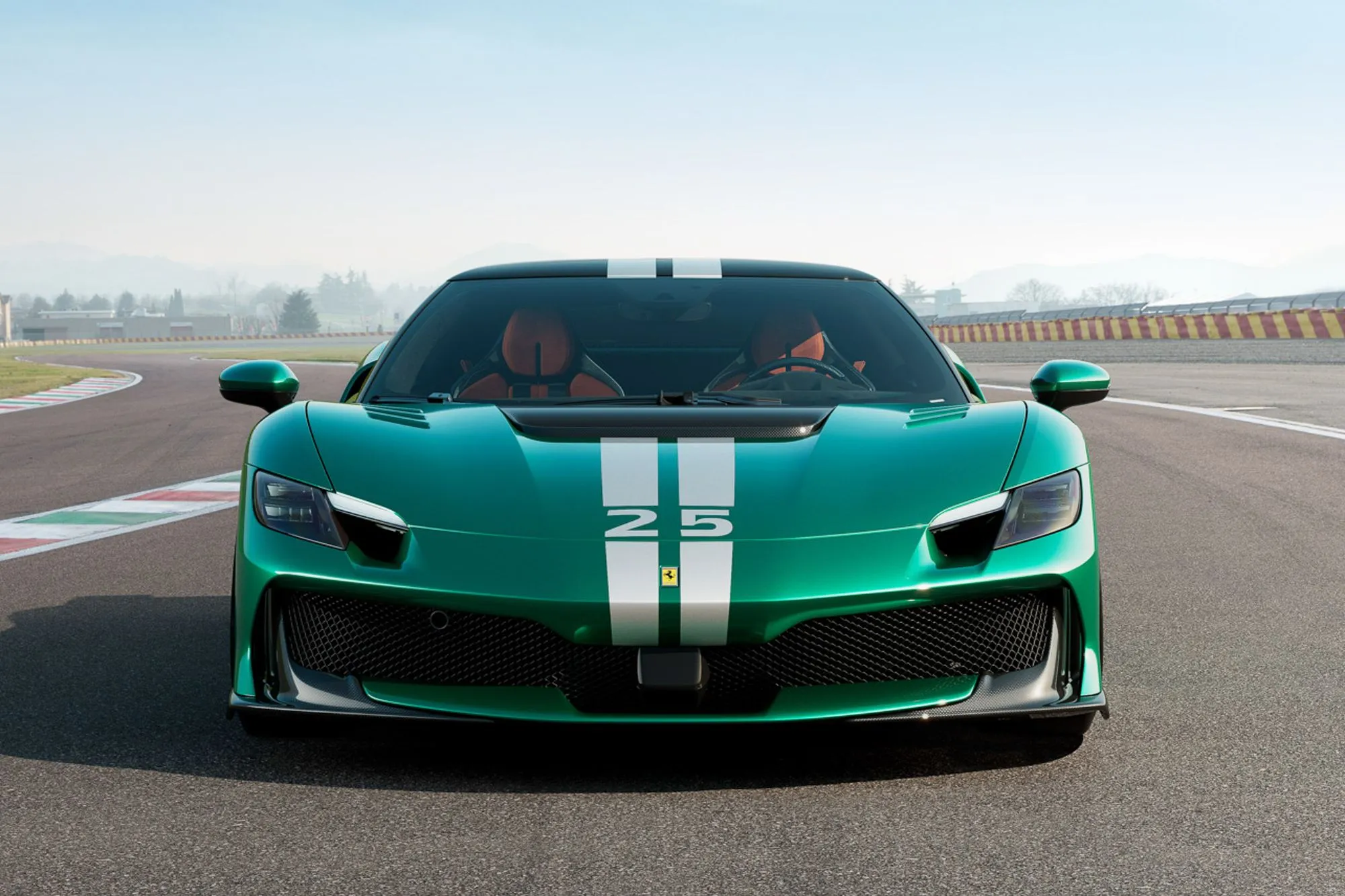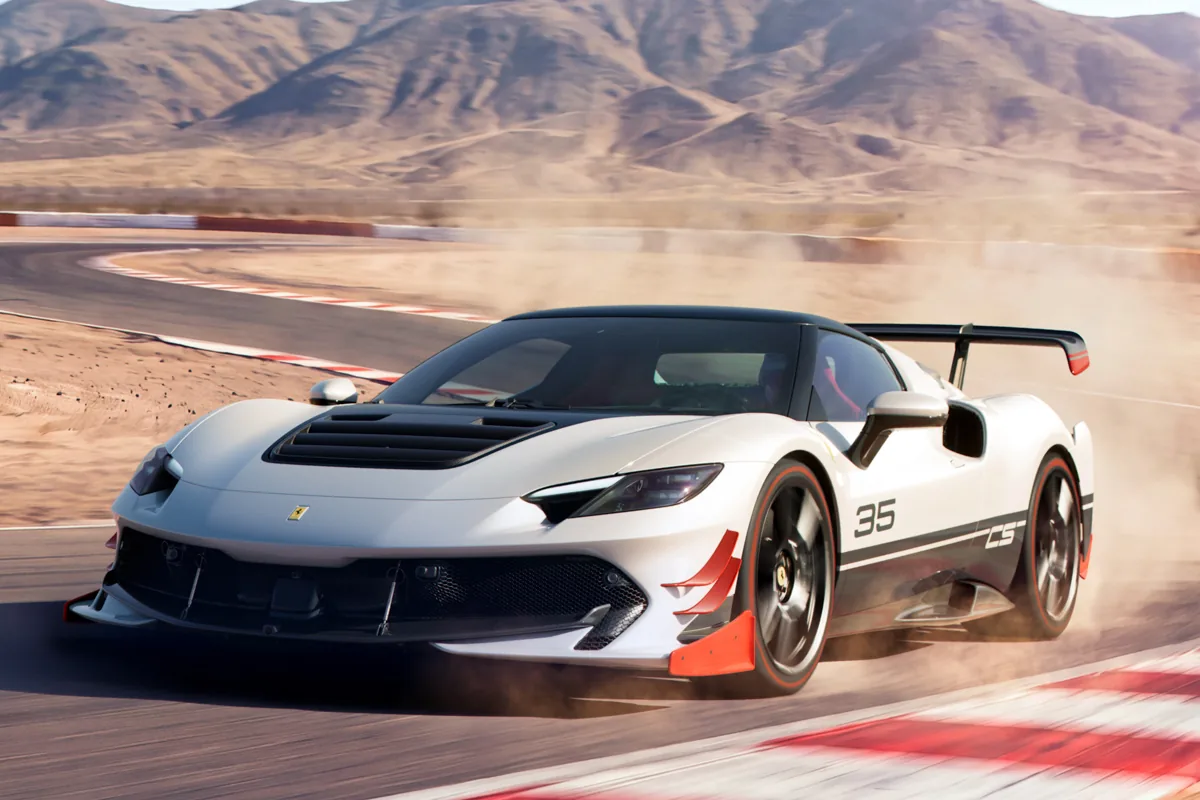
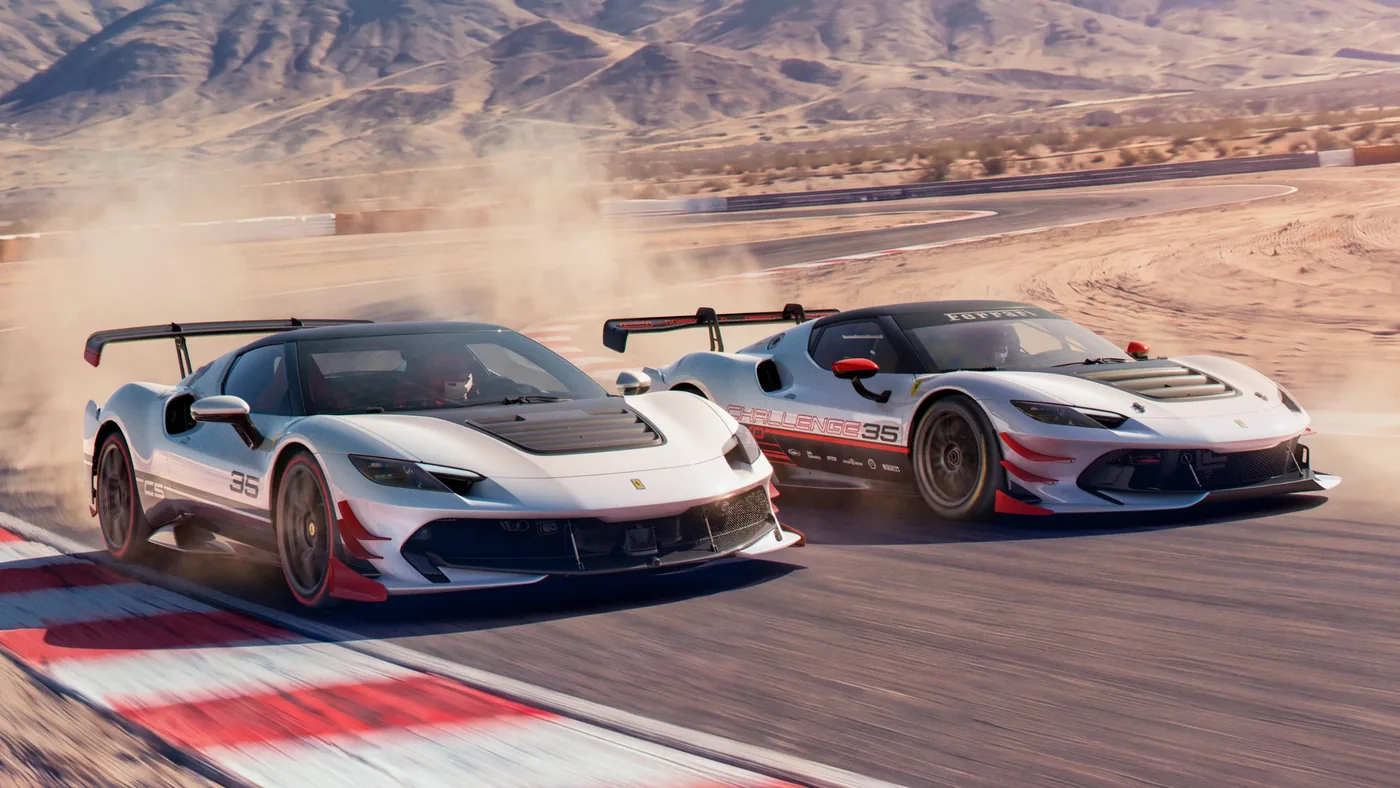
Where the Speciale follows the established formula of turning up the wick on the regular berlinetta, the CS is the road-going spin-off of the new 296 Challenge Evo, set to contest the marque’s one-make series from 2027. With lightweight options fitted, it even matches the racer’s claimed 1330kg dry weight – 80kg less than the Speciale.
Weight isn’t the only thing that’s fallen. Output drops to 661bhp, 207bhp down on the Speciale, yet Ferrari says the CS gets round Fiorano in 1min 18.5sec, half a second quicker. But there’s more to that lap time than downforce and diet. Removing a hybrid system the entire car was designed around has required changes throughout the 296, from its turbochargers to its gearbox and brakes.
Engine and transmission
In the GTB and Speciale, the electric motor does more than contribute to headline numbers. It reacts the instant you touch the throttle, filling in while the turbos spool. The CS’s V6 has to cover for itself.
Based on the Speciale’s iteration of the 3.0-litre, 120-degree unit, the engine has been recalibrated with exactly that problem in mind. Revised boost management and cam phasing sharpen low-end response. Ferrari claims more than 32% more ‘dynamic torque’ than the GTB during the same manoeuvre, although it hasn’t specified the conditions behind that comparison. Peak power arrives at 8000rpm, with 546lb ft at 6250rpm and an 8500rpm limit.
The turbochargers and their heat shields, however, come straight from the 296 Challenge. Insulating the turbines keeps more energy in the exhaust gas, where it can spin them up, which helps transient response and lets Ferrari strip out engine-bay shielding that was no longer needed. The Speciale’s statistical knock-control strategy carries over, drawing on Ferrari’s Formula 1 experience to monitor abnormal combustion and keep the engine close to its safe operating limits.
The hybrid system also took care of several ancillaries. A belt starter-generator now handles engine starting and electrical generation – a first for a Ferrari road car – and the air conditioning gets a mechanical compressor. A new forged flexplate and connecting shaft take the place of the hybrid drive arrangement, with an inertia mass to control torsional vibration.

One clear difference between road car and racer is the gearbox. The CS uses an eight-speed dual-clutch unit where the Challenge Evo has seven, and it shifts differently depending on how hard it’s being worked. Under high load and at high revs, upshifts use logic from the current 296 Challenge, taking around 170ms with torque continuity the priority. At low and medium revs, a dedicated road calibration smooths shifts to around 250ms. Downshifts get faster engine pick-up, and whatever the Manettino says, the gearbox stays in its sports setup.
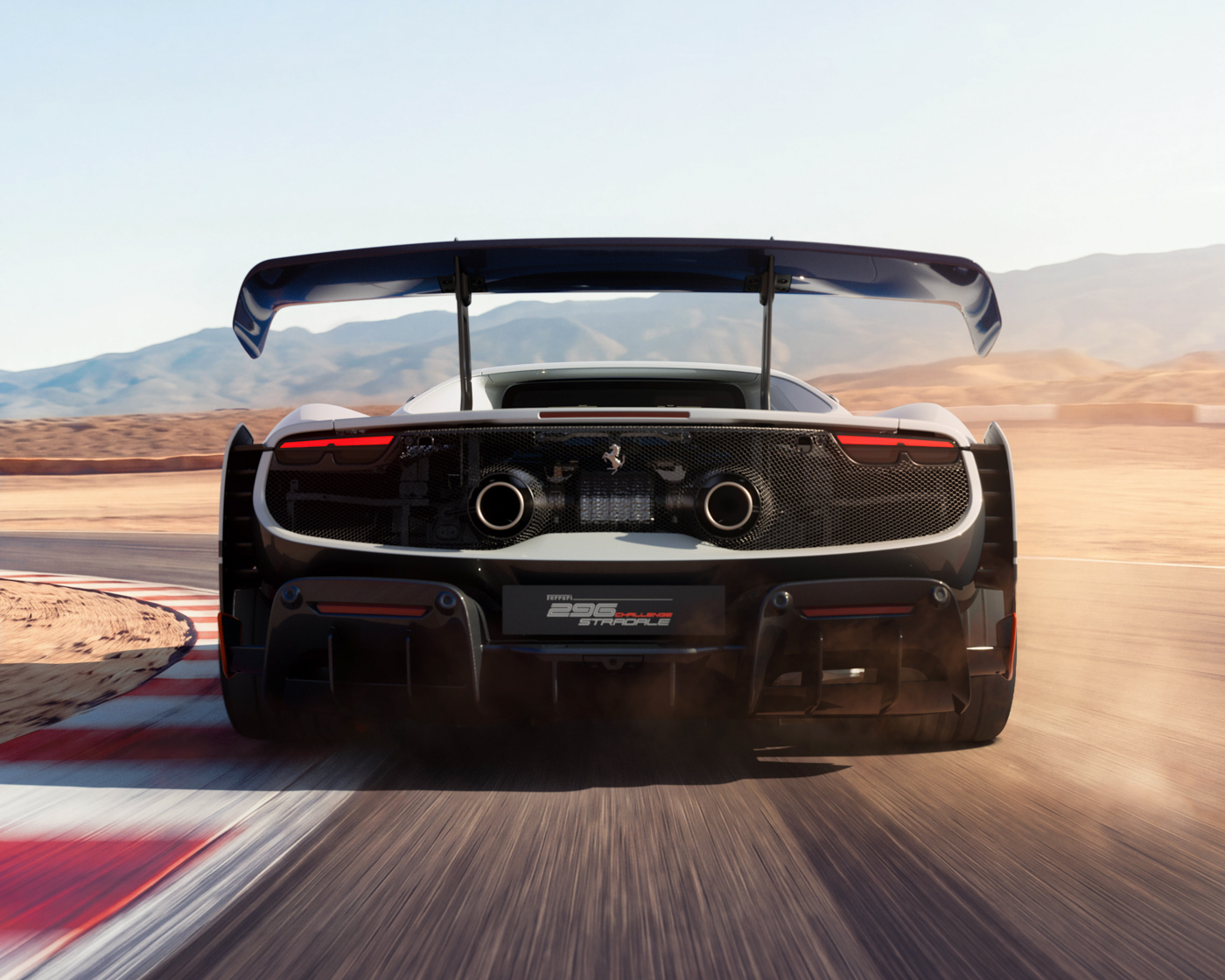
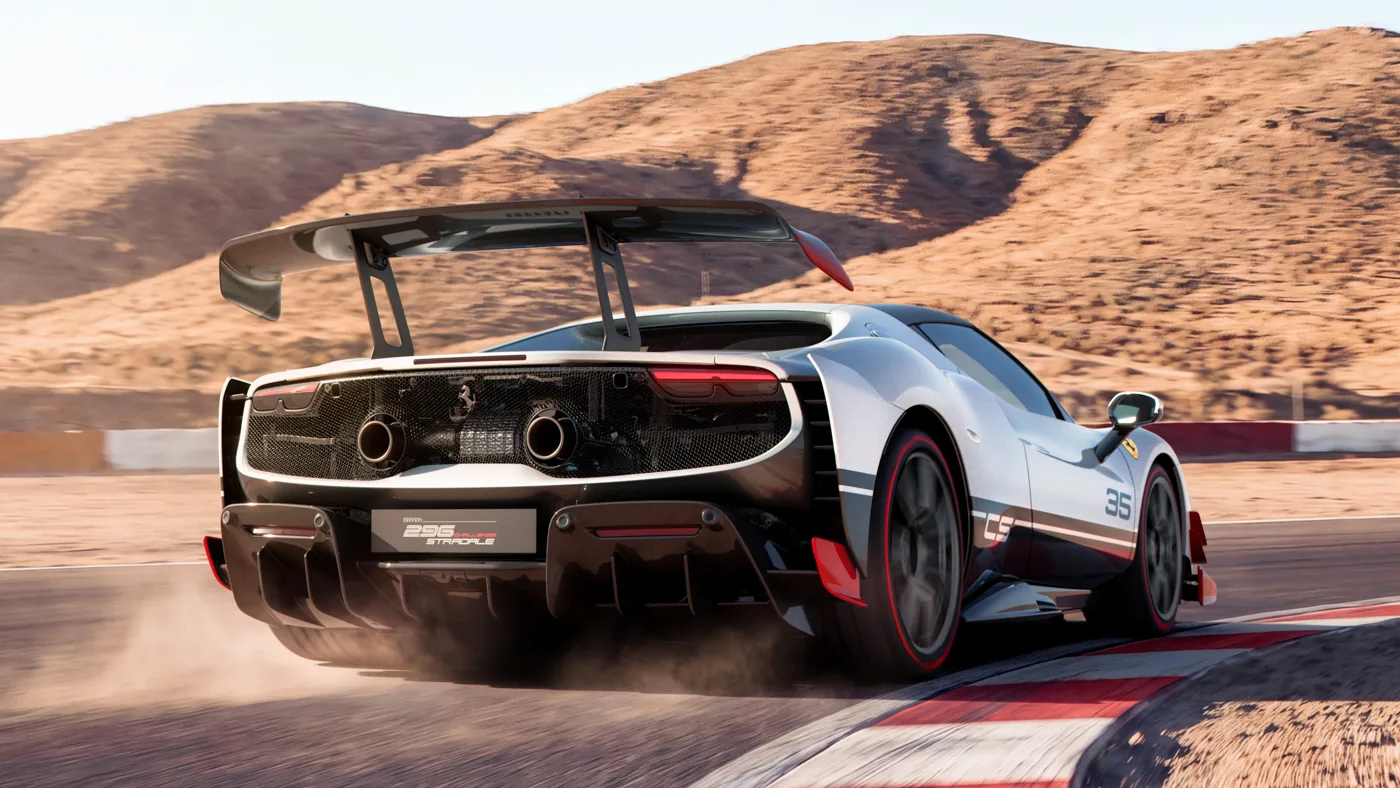
The exhaust now ends in two enlarged tailpipes rather than the familiar single outlet, reducing back pressure and giving the CS another visual connection with the 296 Challenge. The 120-degree layout and equal-length manifolds preserve the sound shared with the GTB and Speciale, with the hot tube still carrying pressure waves into the cabin. The acoustic connection to the intake plenum now lets more sound through, altering the balance of intake and exhaust noise. Ferrari says the result gains a raspier edge towards the 8500rpm limit. For owners who want more, Ferrari dealers can fit a track-only exhaust free of type-approval limits – though anyone booked into one of the UK’s more noise-sensitive circuits may want to keep the standard system handy.
Off the line, the CS matches the Speciale’s 2.8sec to 62mph, which suggests traction rather than power is what limits both cars. Beyond that, the missing horsepower starts to tell, and by 124mph the CS trails by nearly a second – 7.9sec against 7.0sec – before topping out at more than 186mph.
Aerodynamics
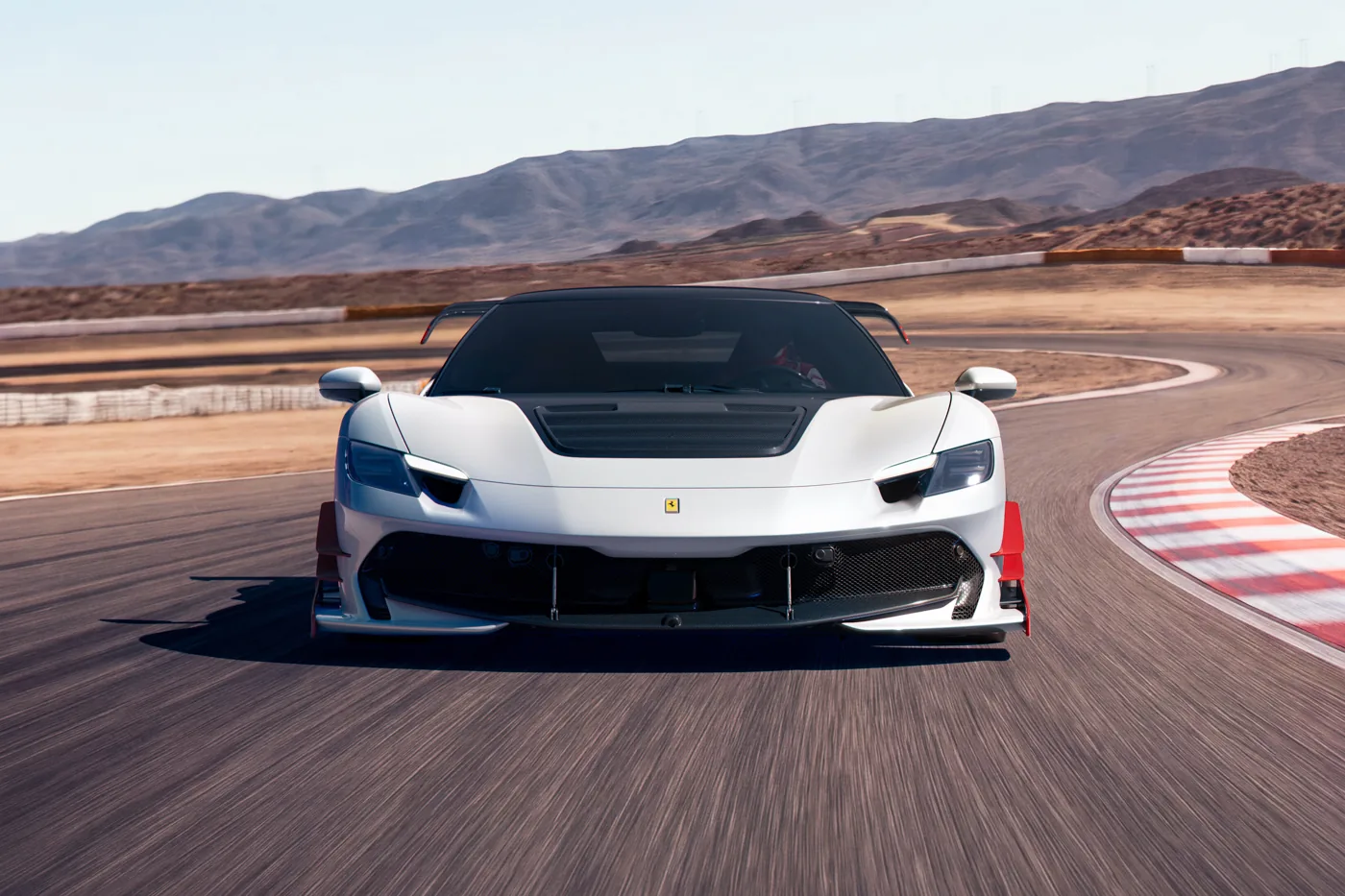
The CS generates 617kg of downforce at 155mph, 72% more than the GTB and around 42% more than the Speciale. Ferrari also emphasises how consistently that load is maintained, with a smooth, progressive build that keeps the balance stable through every phase of a corner, even over a long track session.
The fixed rear wing comes directly from the Challenge Evo, yet it accounts for only 270kg, less than half the total. Its broad span and elevated position maximise downforce while limiting interference with the bodywork, and aeronautically inspired endplates manage the vortices that form at its tips. Below it, strakes in the diffuser control the airflow and the wake coming off the rear wheels.
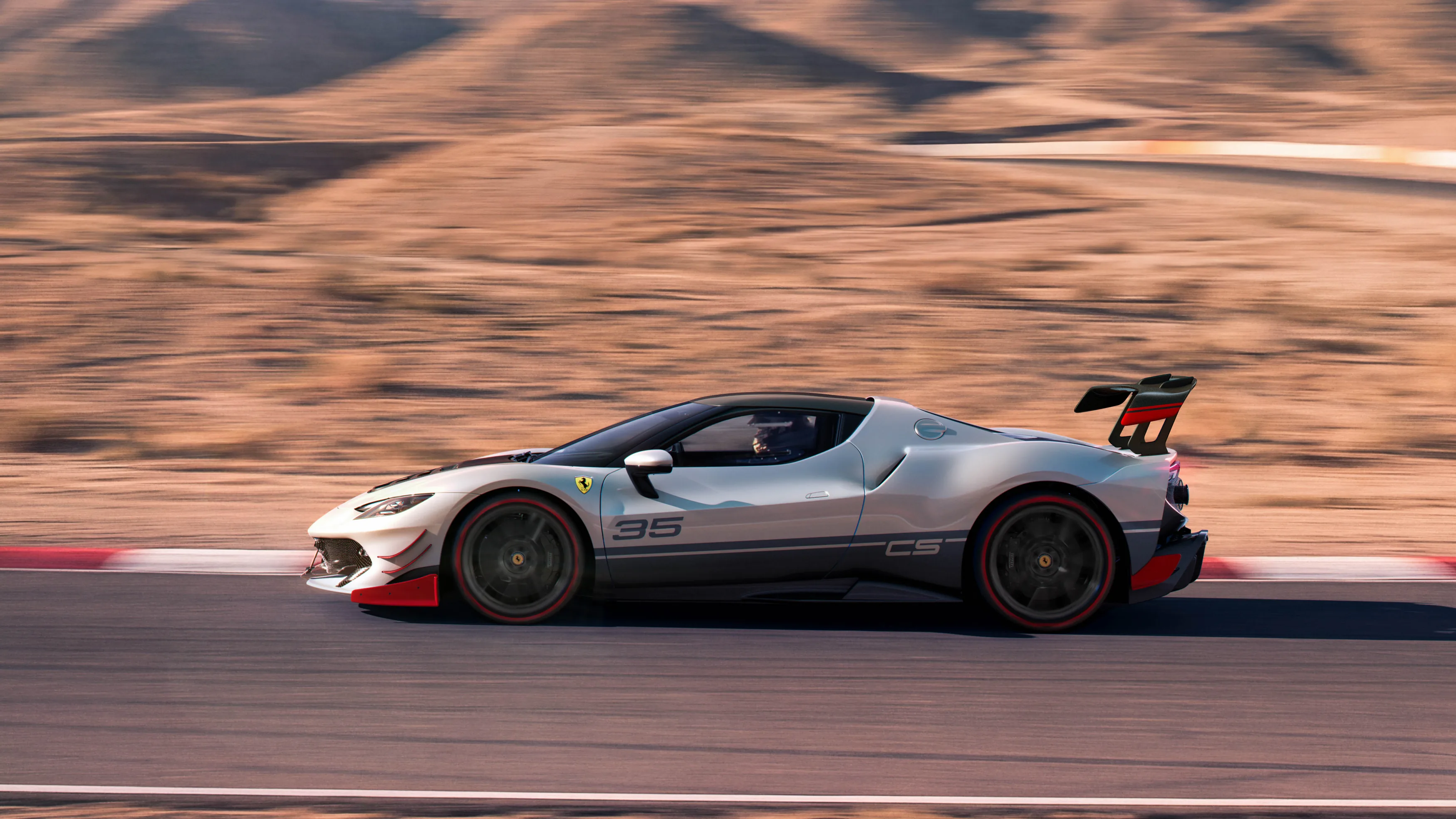
Much of the balance – quite literally – comes from the front of the car and the floor. The prominent splitter is designed to maximise its surface area, extending across the nose and well ahead of it, while a redesigned transition into the fully enclosed underbody increases suction, feeding diffusers and vortex generators at both ends. Curved flicks on the bumper cheeks push air out around the wheel arches, helping draw hot air away from the brakes and sending cleaner air to the floor.
The aero damper, already seen on the Speciale, does a less obvious job. Two ducts either side of the front luggage compartment connect the floor to the upper body, reducing how sensitive the downforce is to changes in pitch. Under braking and acceleration, when the nose dips and rises, the load stays more consistent and the car’s responses more linear.
The radiators sit ahead of the front wheels, and their hot air is collected and discharged through a louvre in the bonnet. From there, fins and deflectors guide it towards the windscreen and roof, and the aero dampers help keep it on the centreline, clear of the climate-control intakes and the aerodynamic surfaces.
Suspension and brakes
Supporting all that downforce takes serious spring rates – roughly double those of previous applications, according to Ferrari. Stiff enough, in fact, to need a helper spring from the Challenge Evo to keep the main spring seated at full droop.
The semi-active dampers follow suit, and against the GTB, roll gradient is down by a claimed 68%. But Ferrari’s development goal went beyond ultimate grip and immediate response to how the car behaves over a long, intensive track session, so the calibration also holds ride height and balance steadier and optimises the contact patch to limit tyre degradation.
The tyres in question are bespoke Pirelli P Zero R and P Zero Trofeo RS semi-slicks, 245/35 R20 at the front and 305/35 R20 at the rear. They sit on seven-twin-spoke wheels, with an optional forged version cutting unsprung mass by almost 12kg, and the GTB’s carbon-fibre wheels remain available.
In terms of stability systems, the big news is the introduction of a dedicated track-optimised calibration for predictive slip control – a first for the marque’s road cars – which Ferrari says keeps interventions barely perceptible. It builds on the Side Slip Control 9.0 and Ferrari Dynamic Enhancer 2.0 systems already seen on the Speciale, while the F80 hypercar lends its FIVE vehicle estimator, helping the car hold its stability targets more precisely. The Manettino offers Wet, Sport, Race, CT-Off and ESC Off, and from Sport upwards the dampers switch to a performance-oriented setting. Beyond that, the eDiff, F1-Trac, ESC and FDE back off progressively before leaving the driver entirely to their own devices.
Without regenerative braking to share the work, the CS gets a dedicated brake-cooling system, with higher-flow ducts feeding Aero-design calipers and 398mm carbon-ceramic discs at the front. At the rear, 380mm discs and pads with a larger friction surface add braking torque, cooling capacity and strength.
ABS Evo works in every grip condition, switching to high-performance logic from Race upwards, and the pedal has been calibrated to feel like the Challenge Evo’s, with shorter travel under heavy braking, without giving up the manners of a road car. From 124mph, the CS stops in 101m.
Interior and price
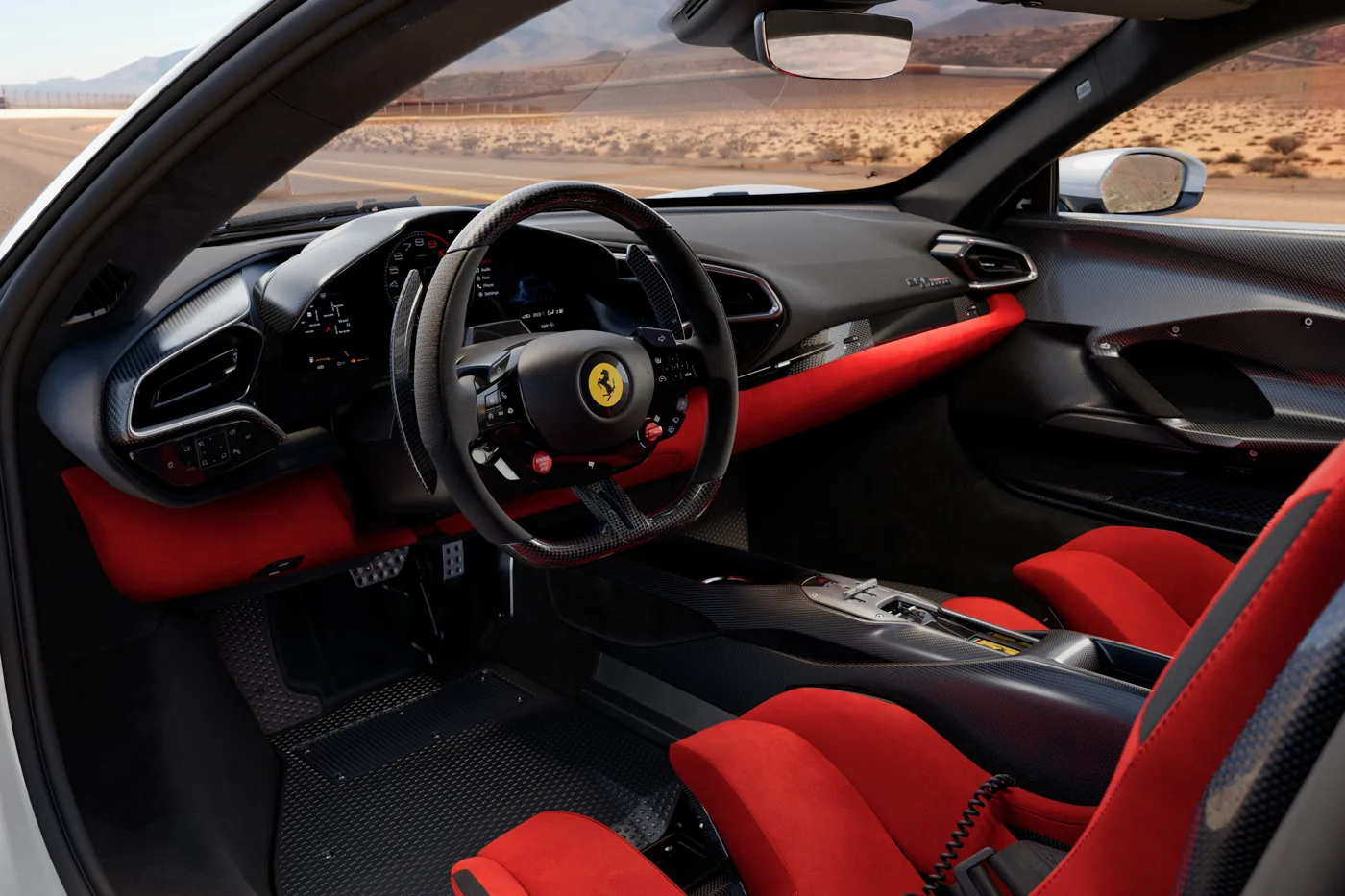
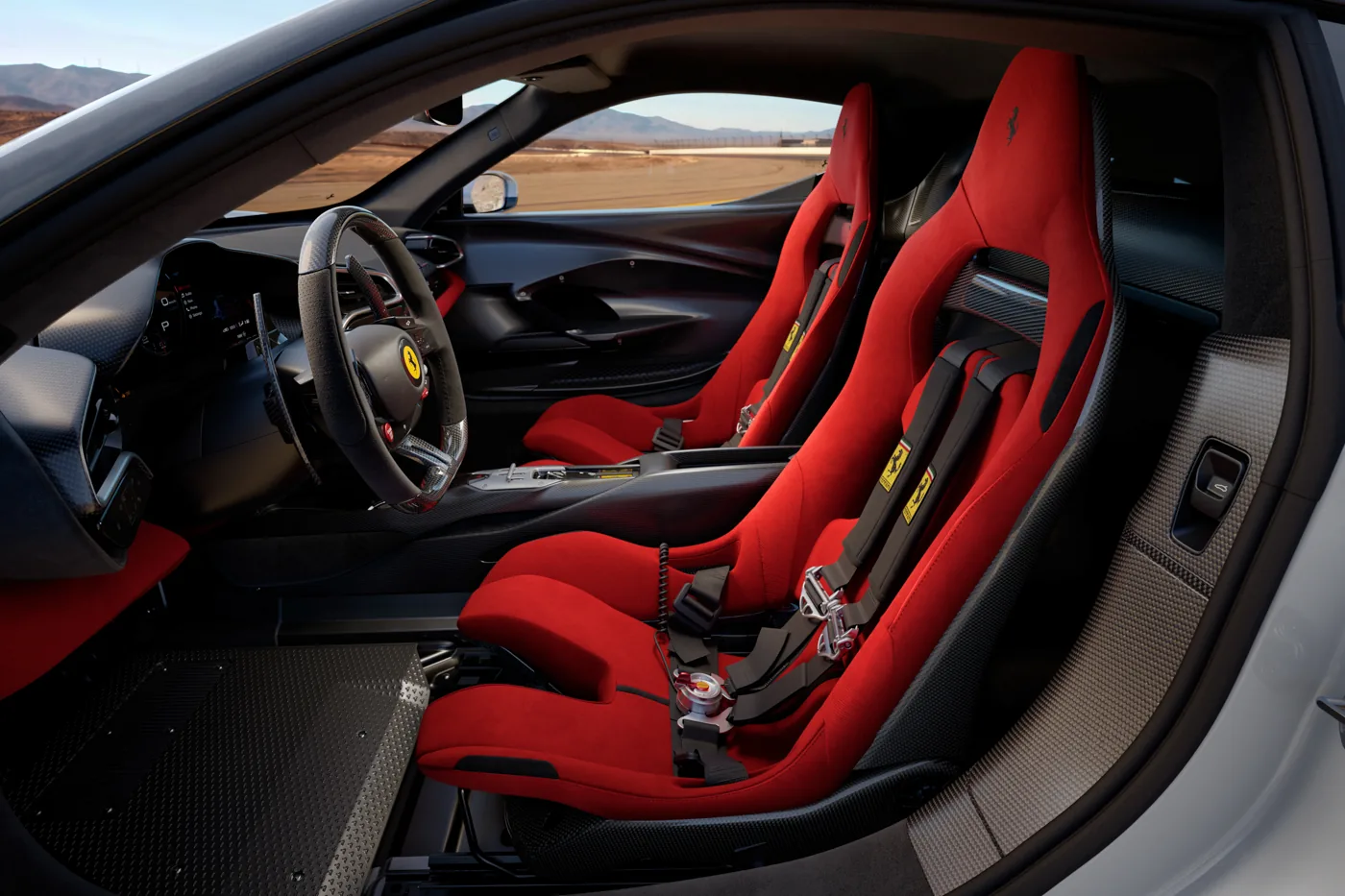
Hardcore Ferraris have form for bare interiors, often leaving welds and bonding glue on show in the name of saving weight. The Challenge Stradale doubles down on that philosophy, offering a specification that strips the trim from beneath the seats, the lower carpets and the centre console, leaving more of the chassis exposed than ever before.
Elsewhere, the door panels are single carbon-fibre mouldings with no armrest or storage pocket, the centre tunnel is carbon fibre, and the optional tubular carbon seats from the SF90 XX Stradale are 25% lighter than conventional racing seats. Not everything goes: the CS keeps adaptive cruise control, automatic emergency braking, matrix LED headlights and the rest of the 296’s driver-assistance kit.
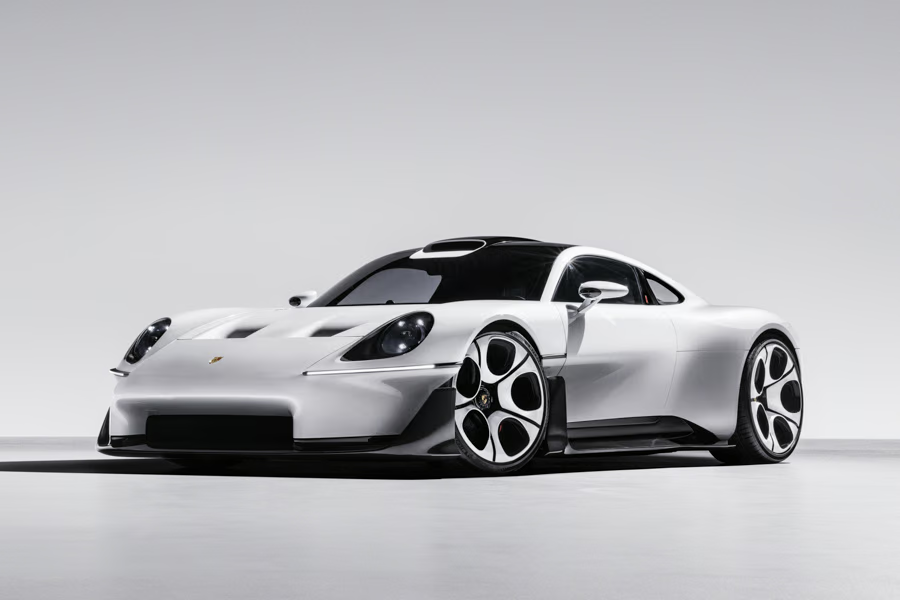
The CS reflects a growing appetite for purity at the top of the market. Bentley’s new Supersports drops the Continental GT’s hybrid system and all-wheel drive for a rear-driven, 657bhp V8, while Porsche’s Mission S concept wasn’t shy about playing the analogue angle, with no central screen and an ‘On your own’ driving mode.
Unlike the Speciale, the 296 Challenge Stradale isn’t a limited-production car, and at around £260,000 it costs roughly the same as a GTB and about £100,000 less than the Speciale. Unlimited production and dealer allocations, however, are two different things.
Enthusiasts have long hankered for, and speculated about, a ‘pure’ 296 sans hybrid system. Now that Ferrari has delivered, expect the speculators to capitalise.