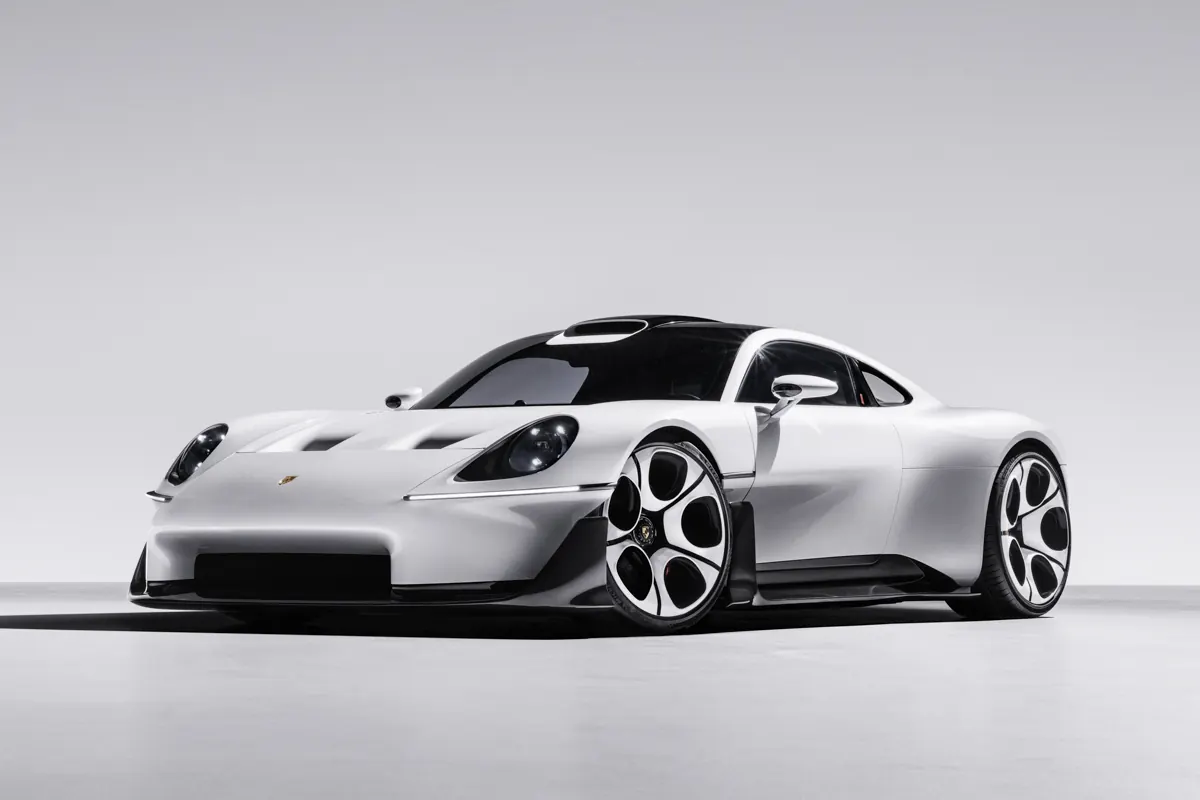
Officially, the Mission S is a design study, but to all intents and purposes this is the mid-engined ‘super sports car’ of Porsche's Sportwagenschmiede ’35 strategy. Announced earlier this month, it lays out the brand’s plans to push further upmarket in a bid to arrest an alarming slide in profitability.
Set to become a permanent addition to the line-up, the eventual production car will sit ‘way above’ the 911, Porsche CEO Dr Michael Leiters told Bloomberg. The engine – heavily rumoured to be a flat-eight – remains unconfirmed, although Leiters said the platform can handle both pure combustion and hybrid powertrains, and that the finished article would be the result of customer consultation.
The choice of launch venue was also deliberate. Porsche unveiled the Mission S on a pier in Queens, New York, looking out over the Manhattan skyline – the same spot where the first photographs of the 550 Spyder were taken in 1953.
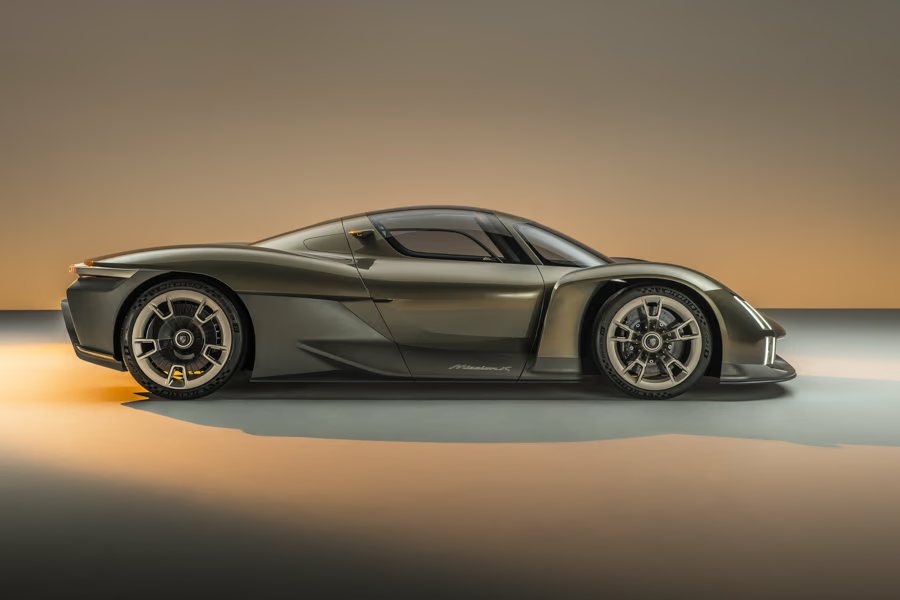
Porsche's chief designer, Tobias Sühlmann, describes authenticity, consistency and timelessness as the guiding principles behind the Mission S. Beyond the obvious links to the 911 in the round headlights and swollen front wings, the Mission S is something of a greatest-hits package. Those wings sit higher than the bonnet, so the driver can see where the front wheels are placed, while the nose takes its cue from the 919 Hybrid, with a rectangular intake, deep splitter and twin S-ducts.
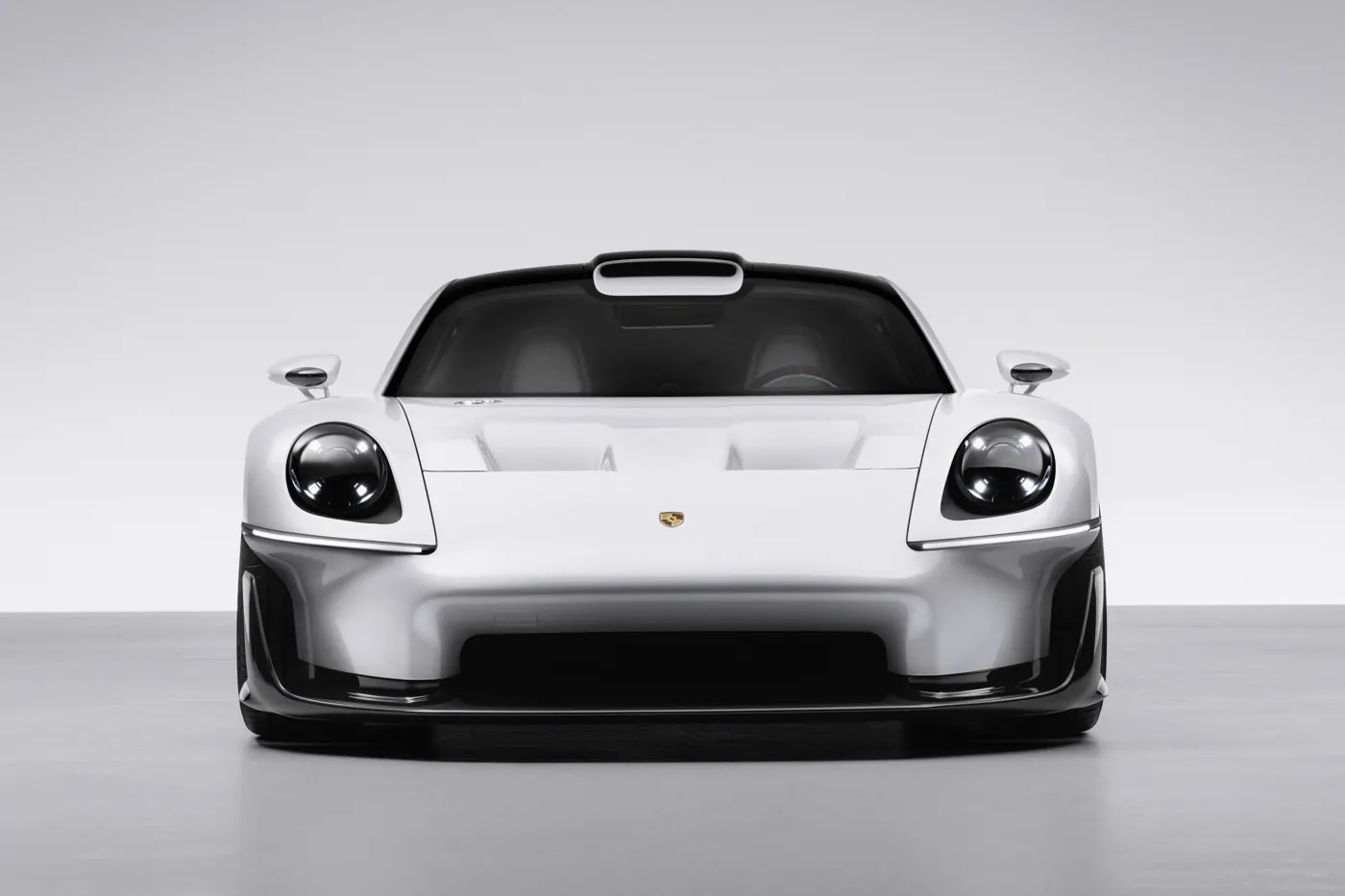
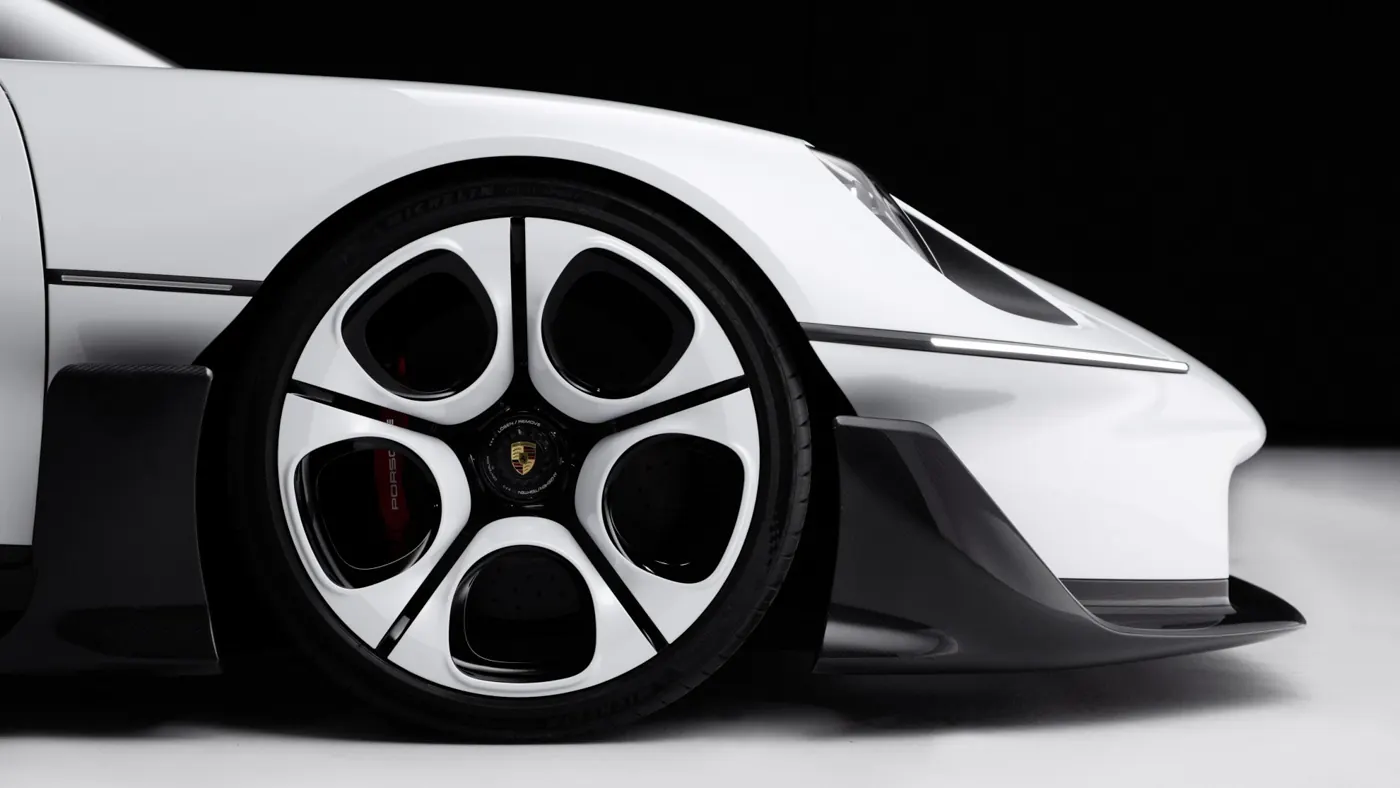
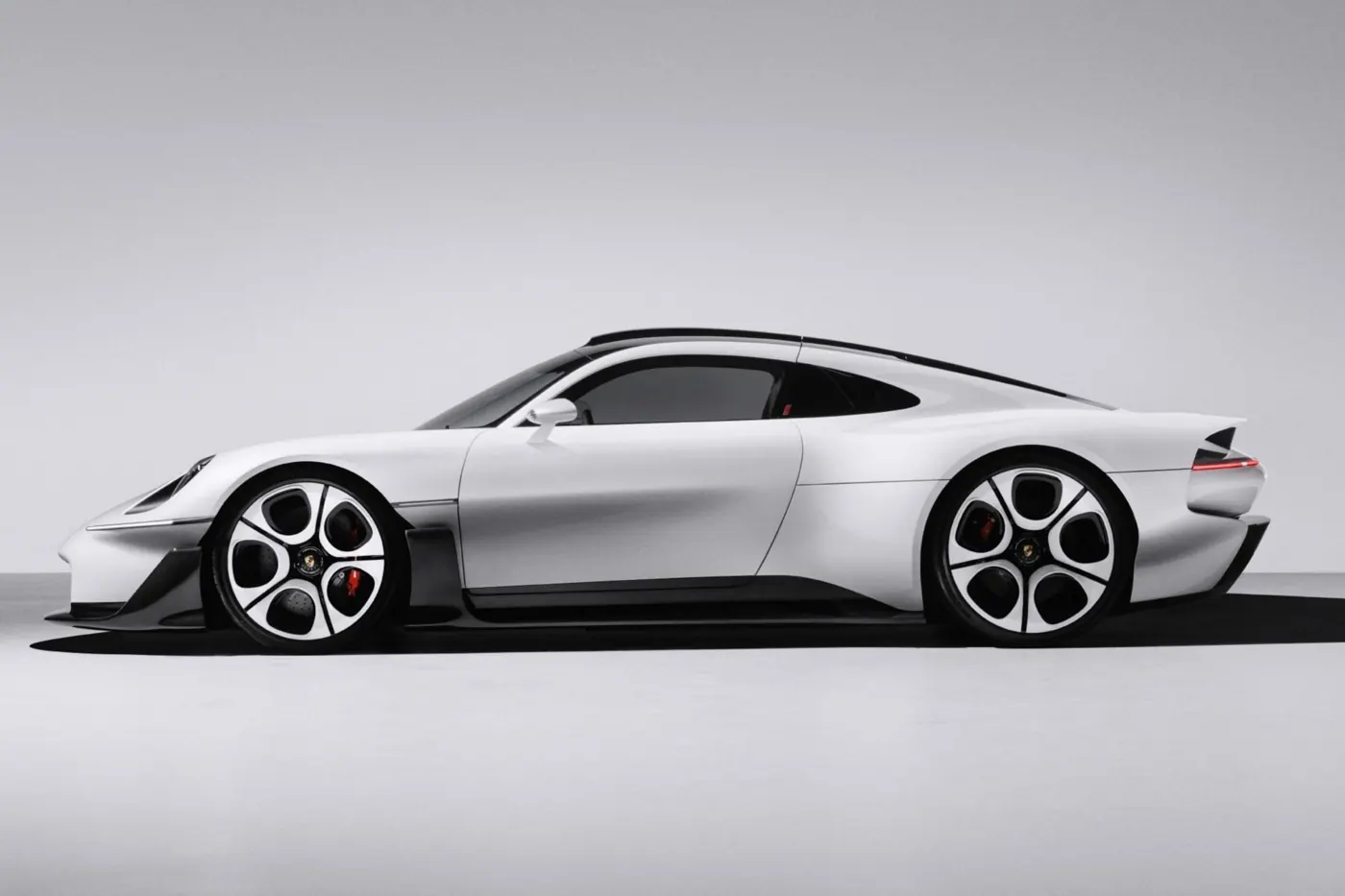
Side-on is where the Mission S gets interesting. A single line wraps around the car, linking the lights front and rear. Above it, the surfacing is clean and elegant, with no visible intakes or interruptions. Below it, the carbon sill makes itself known, the bodywork more overtly sculpted to channel air around the car, while the wheels take their inspiration from the early 928's ‘telephone dial’ design. Up top, the roofline is clearly influenced by the 959, and there's sleight of hand too – what looks like a rear side window is nothing but air, framed by flying buttresses that feed the rear wing. And while we're keeping score, the roof intake is pure 911 GT1. Only from above do the teardrop body and swollen rear arches fully reveal themselves.
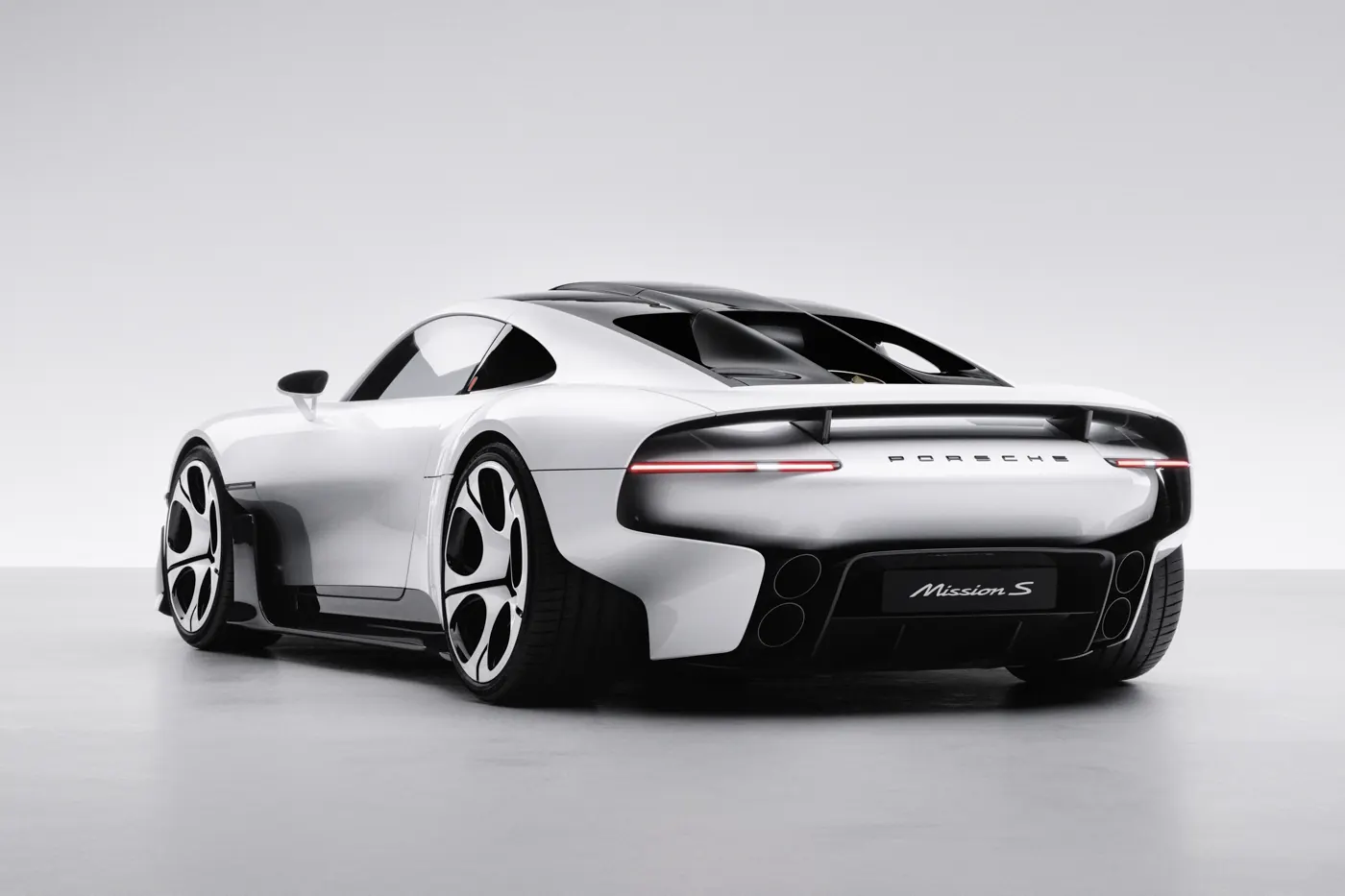
The rear is reminiscent of the 918 Spyder, with twin openings either side of a central spine leading to a mesh engine cover and active rear wing. Set into the cover is a large, exposed cooling fan, a nod to the legendary 917, the car that gave Porsche its first overall win at Le Mans. Lower down, the GT1's long-tail, ‘car-in-car’ concept shapes the lighting and bumper, above an oversized diffuser flanked by stacked twin exhausts. The finishing touch is the exposed garden-roller rear tyres, as on the Lamborghini Temerario.
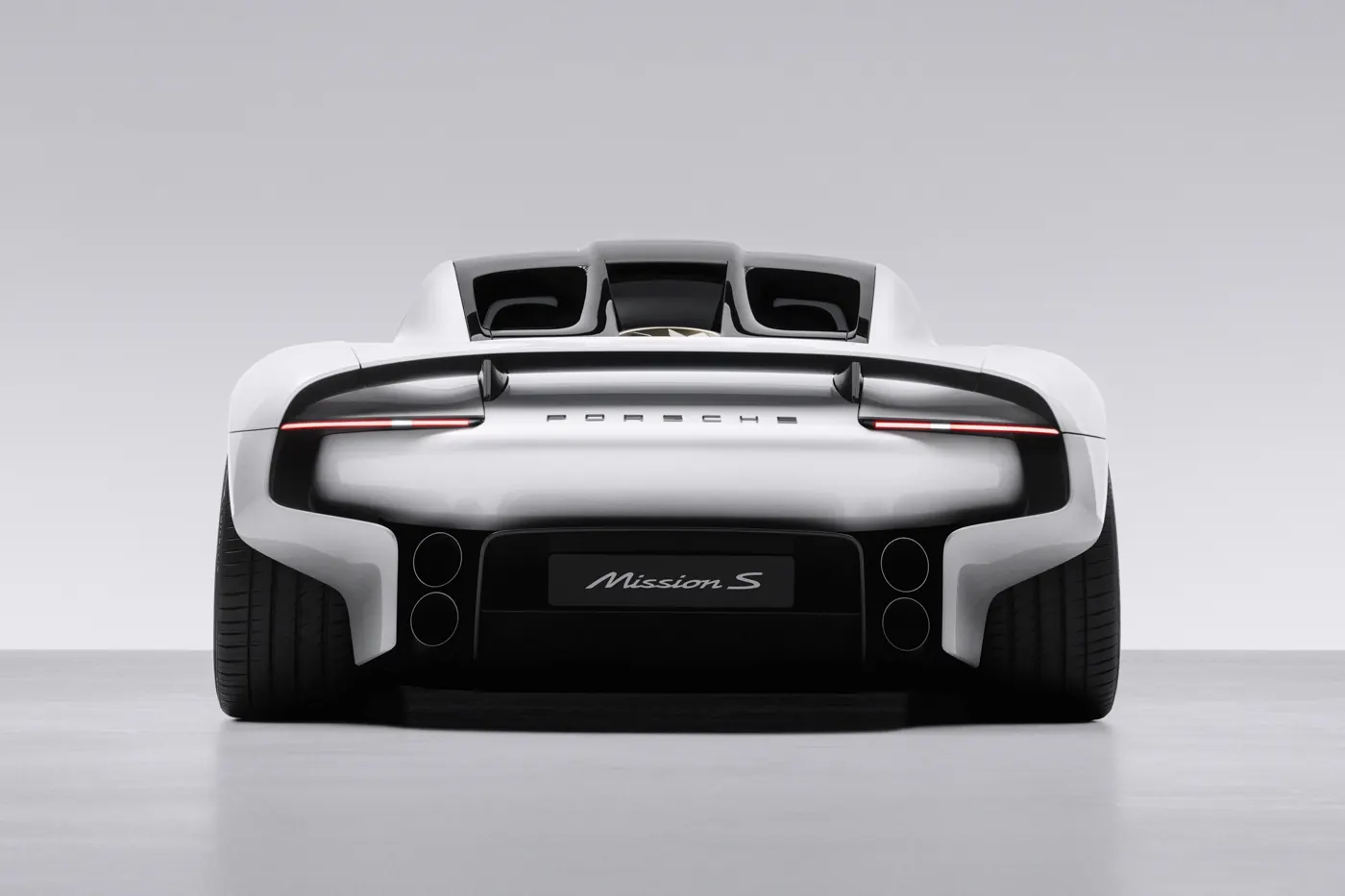

Leiters' brief was that a Porsche must be recognisable as one at first glance, and few will argue the design team hasn't delivered. The result is a beautiful car, but not a brave one.
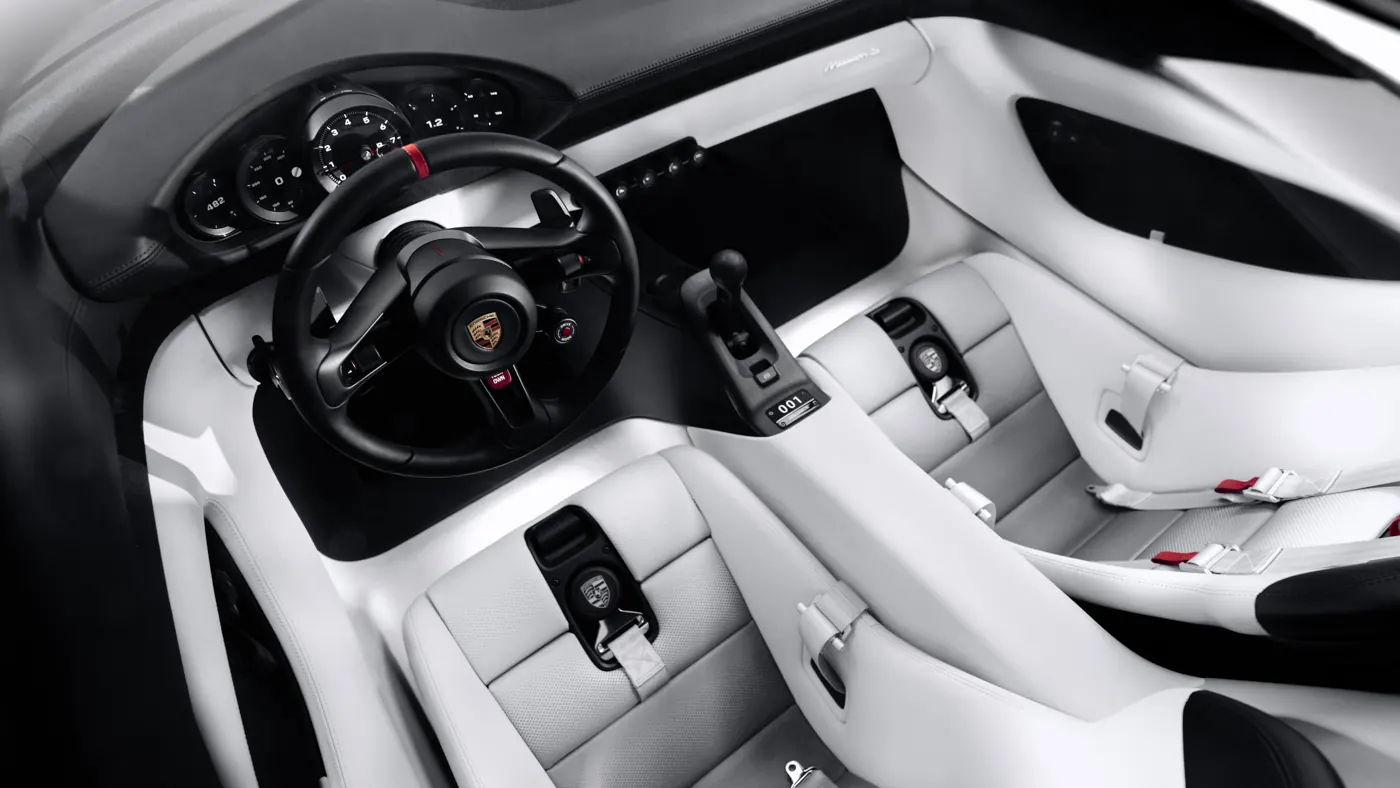
The interior carries a clear sports-prototype theme, with a narrow transmission tunnel and deep, wide sills placing the occupants as close to the car's centreline as possible. The seats are in on the act too – slim, one-piece shells with tall bolsters and multipoint harnesses. Two horizontal lines sweep across the dashboard and into the doors, with six organ-stop switches handling climate control and infotainment. The stubby gearlever is said to be height-adjustable, although despite appearances, this isn't a manual – paddles lurk behind the slim three-spoke steering wheel. On the wheel itself there's a drive-mode selector and a pleasingly blunt ‘on your own’ switch that disables the driver assistance systems. As per Porsche tradition, the key sits to the left of the wheel.
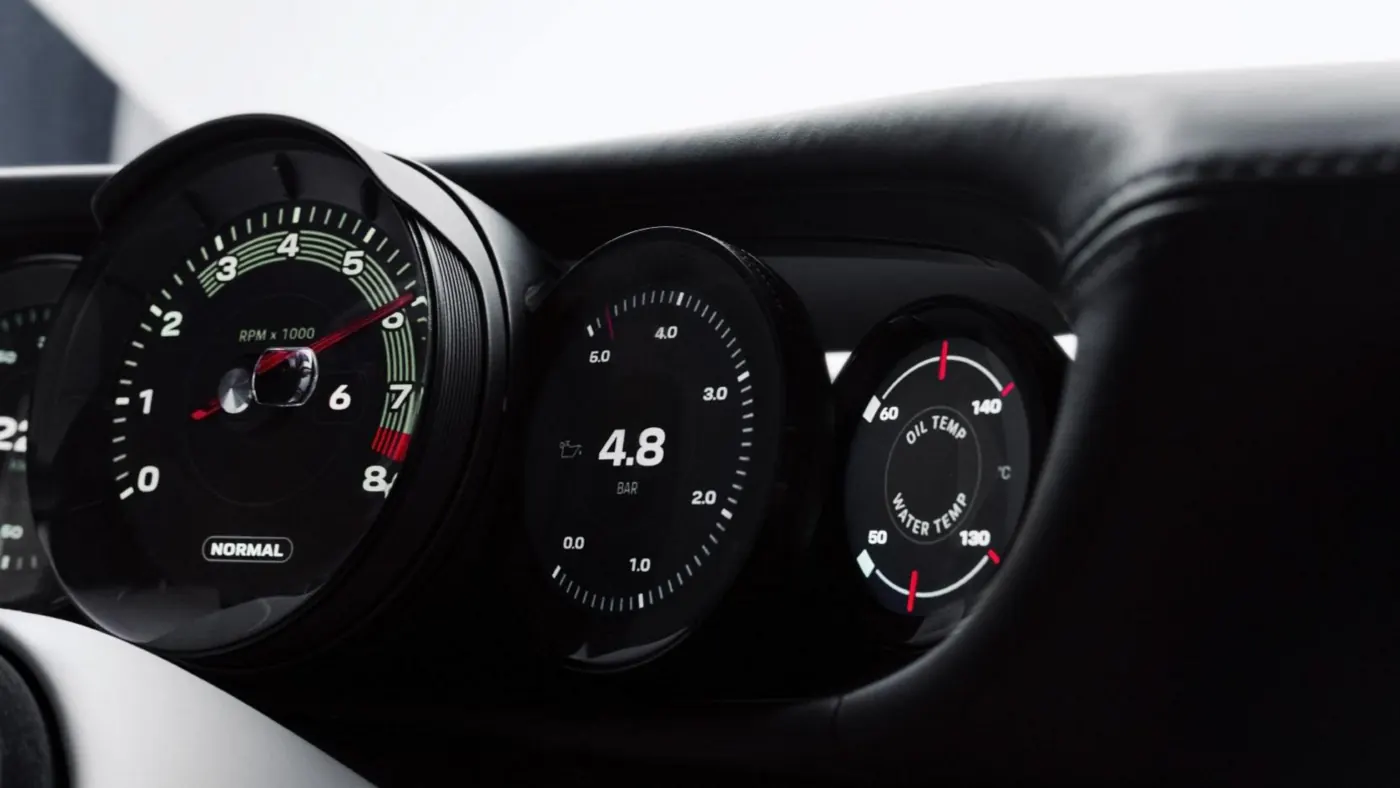
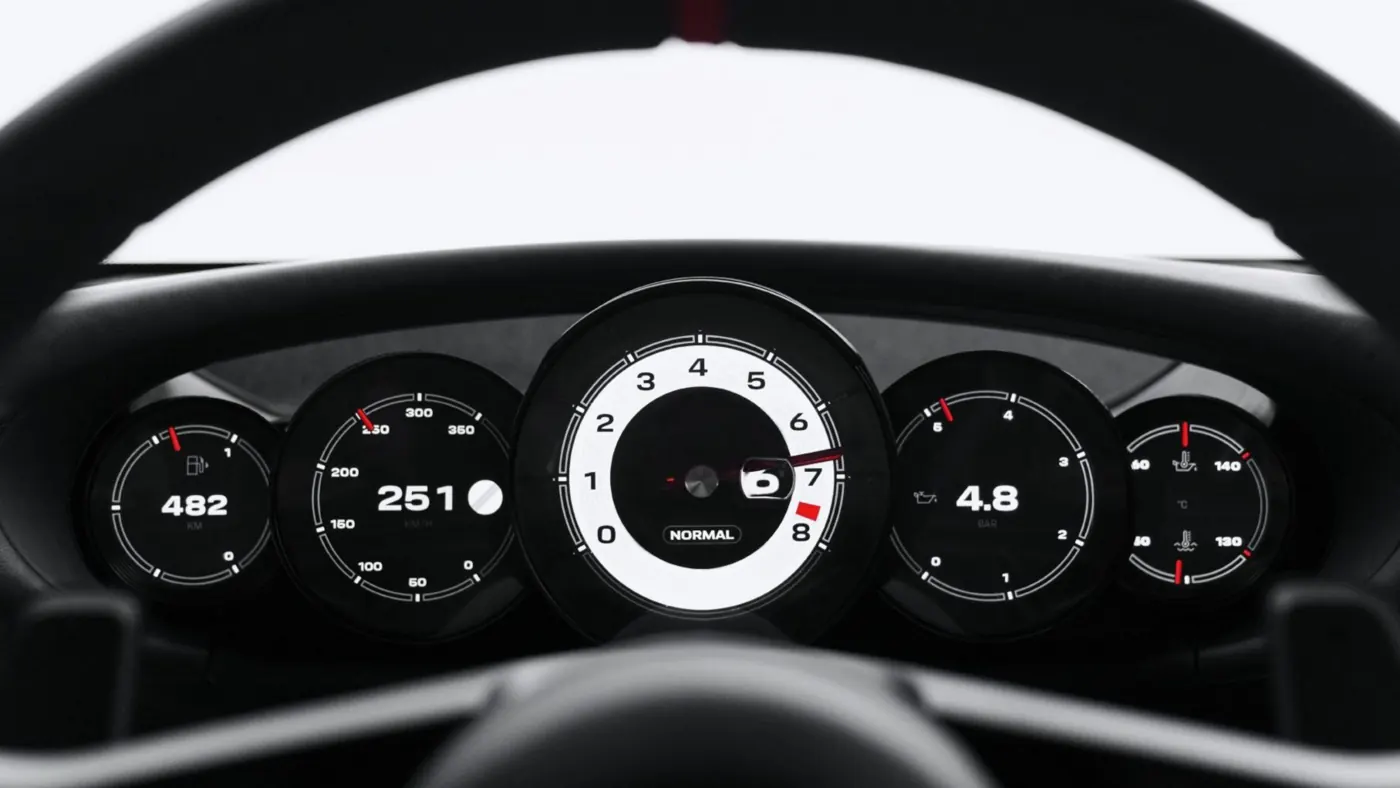
Whether the retractable phone holder and dedicated app survive customer consultation, or give way to a pop out screen, remains to be seen. Regardless, Porsche deserves credit for resisting the current supercar obsession with optional passenger displays. The only concession to showmanship comes from the five dials, with the outer four retreating into their tubes as the central rev counter telescopes towards the driver, depending on the selected drive mode.

Porsche's vision models tend to reach production largely intact – the Mission E became the Taycan, and the 918 Spyder changed little from concept to road – so expect the production car to look much like this.
The low rear deck will do little to quieten the flat-eight rumours. No production Porsche road car has ever used one, but Weissach has explored the idea. Porsche engineer Marcos Marques told The Intercooler in 2023 that a twin-turbo flat-eight was developed and tested in a Cayman mule before the project was shelved.
Perhaps more pertinent than the styling or even the powertrain is Porsche's talk of the Mission S becoming a model line rather than a single car. A Spyder is inevitable. No doubt the GT department already has ideas of its own.