-01.svg)

The engine sits on recalibrated mounts, breathing through a new titanium exhaust promising an enhanced soundtrack at high revs. Given its dry weight of 1,265kg, 788HS boasts a power-to-weight ratio of 614bhp per tonne. Acceleration is predictably swift, with the car reaching 62mph from rest in 2.8 seconds, and 124mph in just 7 seconds. Its top speed stands at 205mph.


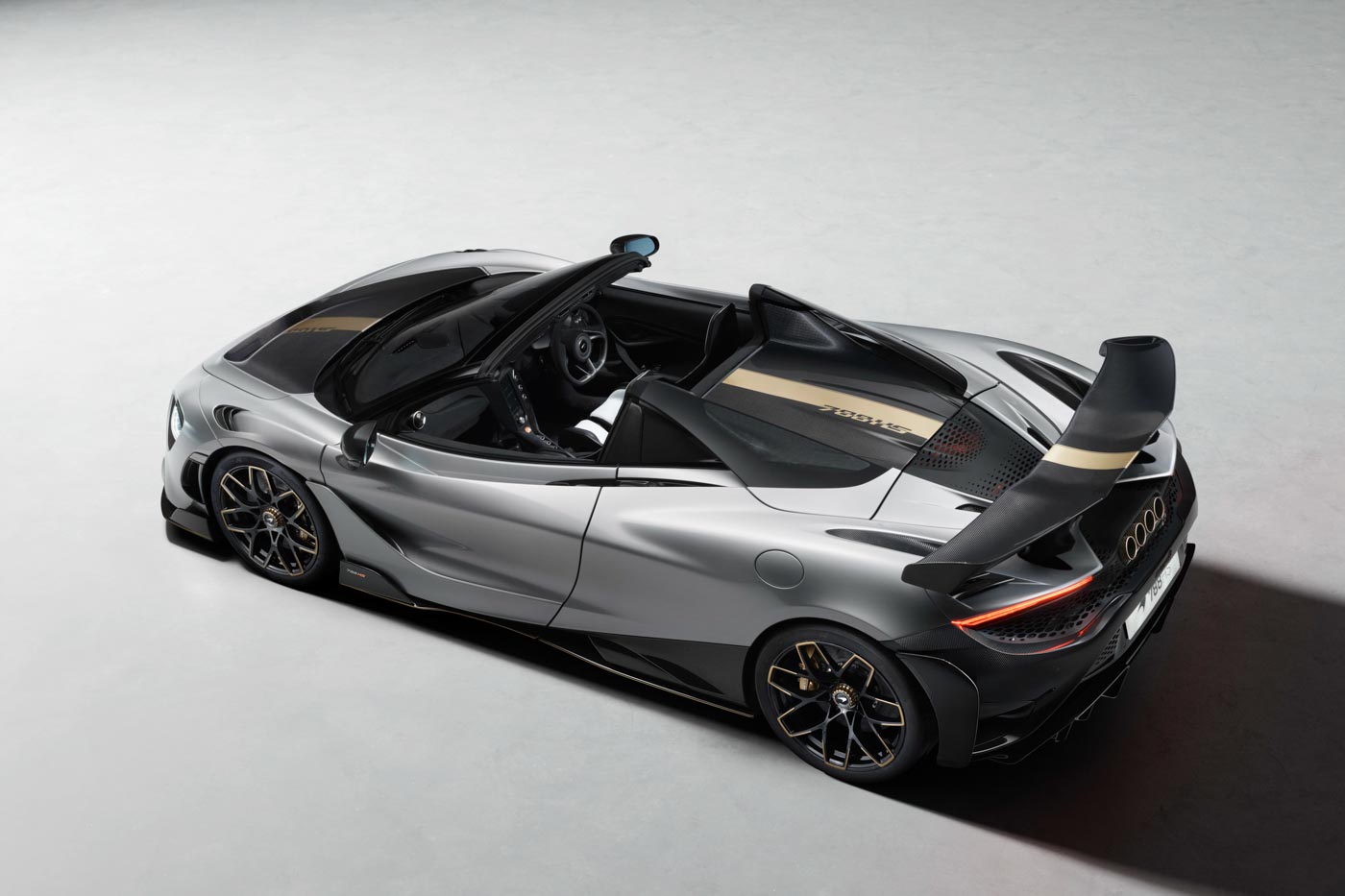
An extreme aerodynamics package sees the addition of a multi-piece front splitter, S-duct bonnet, enlarged rear diffuser and a raised active rear wing. New side skirts feature between the axles, and the louvres seen on the 750S Le Mans Edition are found ahead of the front wheel arches. The 788HS will be available as a coupé and a spider, with the former gaining an additional air intake on the engine cover.
The new bodykit isn’t just for show, as McLaren claims a 10 per cent increase in downforce compared to the 765LT. Beneath the carbon fibre skin, the hydraulically interlinked suspension system gets a bespoke tune for its adaptive dampers, and a 5mm ride height reduction on the front axle. New 14-spoke forged centre-locking wheels feature at each corner, all wrapped in Pirelli P Zero Trofeo R rubber.

Behind the wheels, an uprated braking system derived from the McLaren Senna is employed to improve stopping power. Six-piston aluminium calipers grip carbon ceramic discs on the front axle, delivering enhanced stopping performance, consistency and pedal feel.
The interior has plenty of carbon fibre on show, with the lightweight composite found on the centre console, windscreen surround and single-piece bucket seats. The model name is stitched into the headrests, and the padding features a new perforation pattern designed specifically for the car.

A wide range of customisation options are available, with McLaren offering visual carbon fibre bodywork in a gloss or matte finish. Only 200 examples will be made, with an even split between the 788HS Coupé and 788HS Spider.
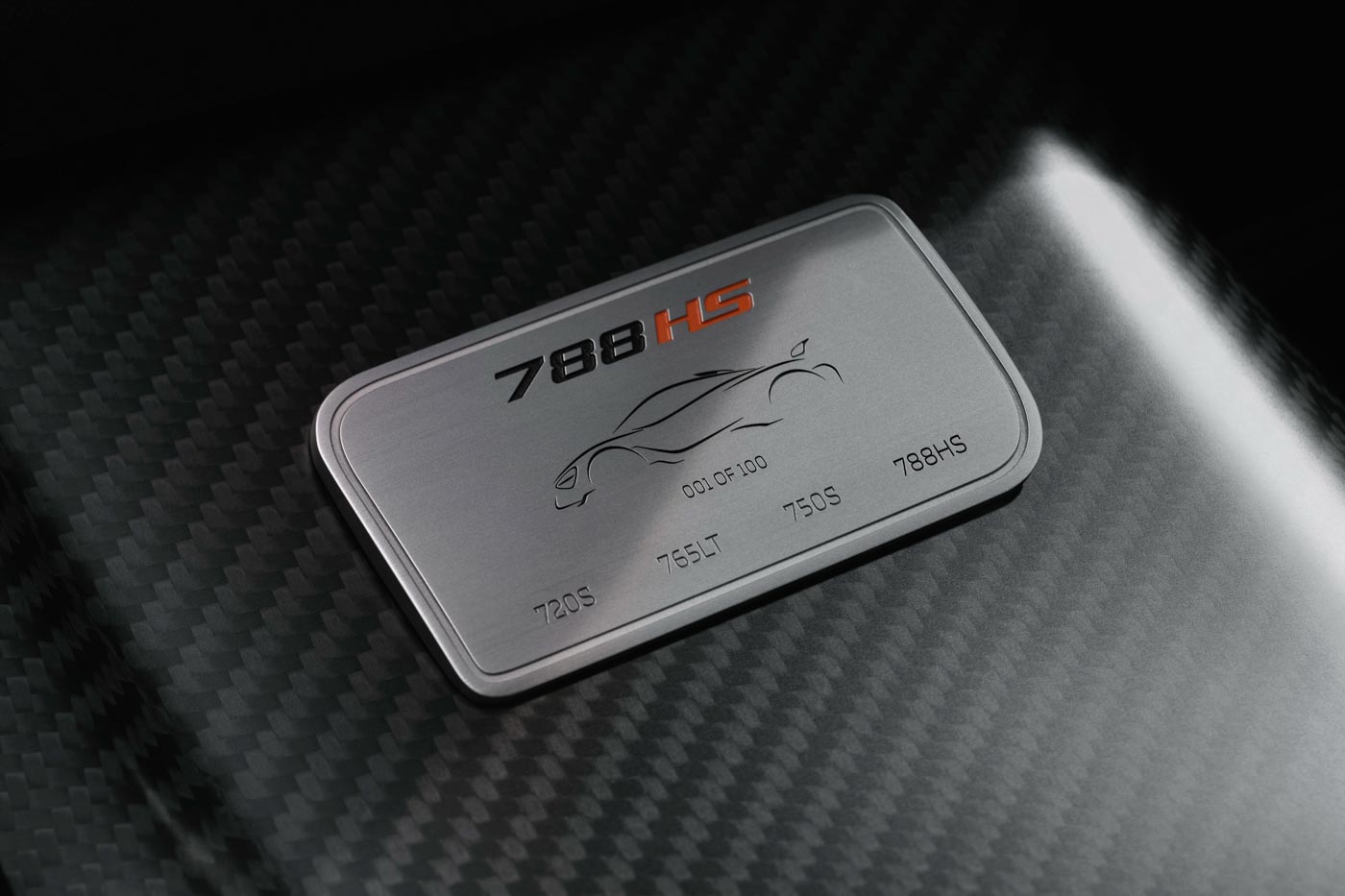
Each one will have a sequentially numbered commemorative plaque within the cabin, complete with a nod to the preceding models. When the 200th 788HS leaves the factory, it’ll mark the end of a nine-year production run which began with the 720S, and clear the path for a successor to arrive in 2027 – one that’s widely tipped to feature a hybrid drivetrain.


.avif)

.svg)

