-01.svg)
-2.avif)
The company puts the lengthy gestation down to wanting to get the car right. Not only is the Electric the first such model in the brand’s history, it’s also the first developed primarily in the virtual world. The process rendered an entire physical prototype phase redundant, with roughly 80 miles of proving ground and public road mapped into the simulator at Gaydon – around 80 per cent of the car’s character was signed off before a complete car even existed.
Rather than chasing its electric rivals, Range Rover looked internally for the benchmark – namely the V8 – targeting the same composure and torque delivery. As Senior Powertrain Manager Craig Hargreaves put it: ‘The powertrain system is a means of propelling the car, but it was really important to us that it didn’t become the car itself.’
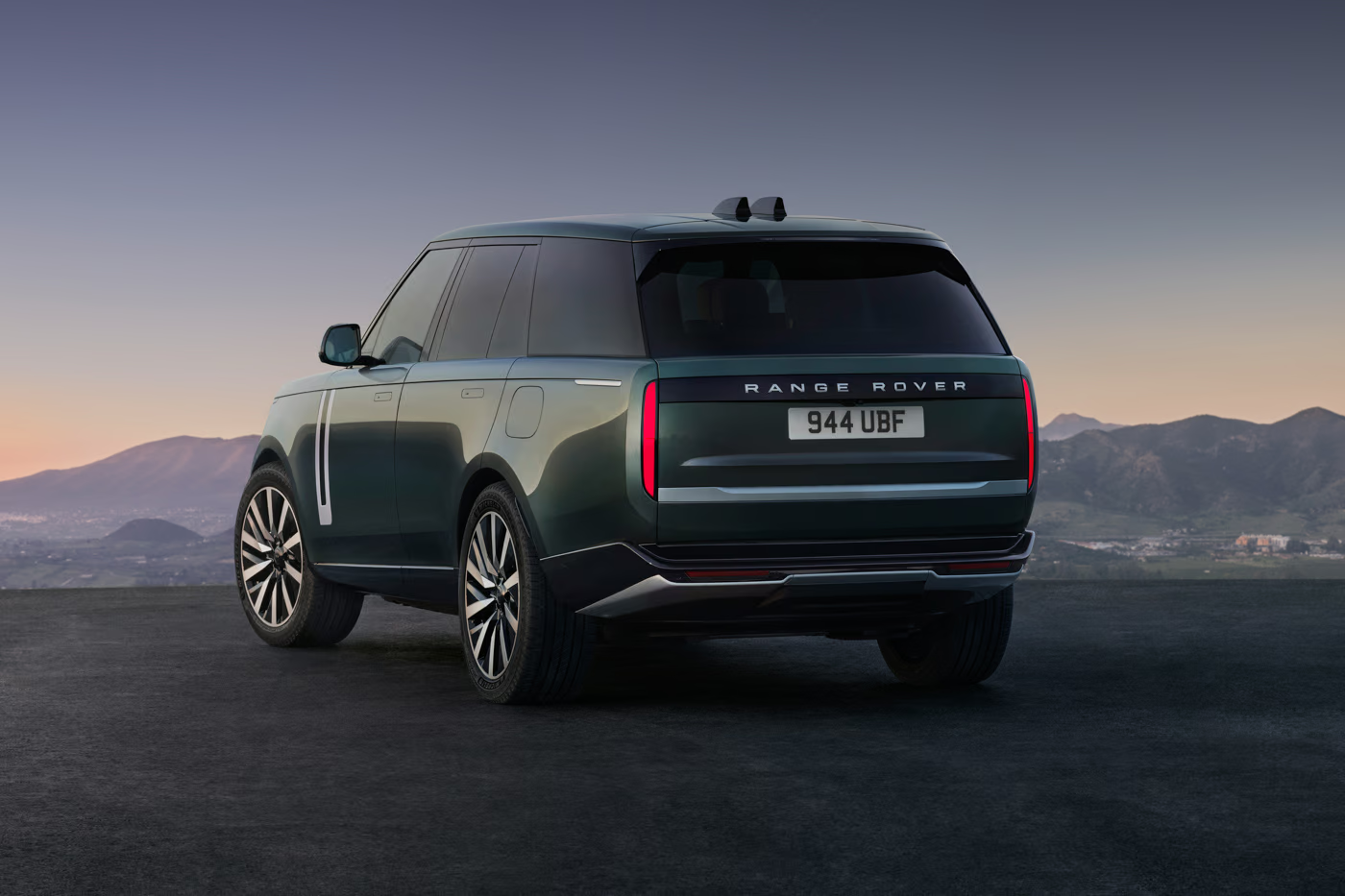
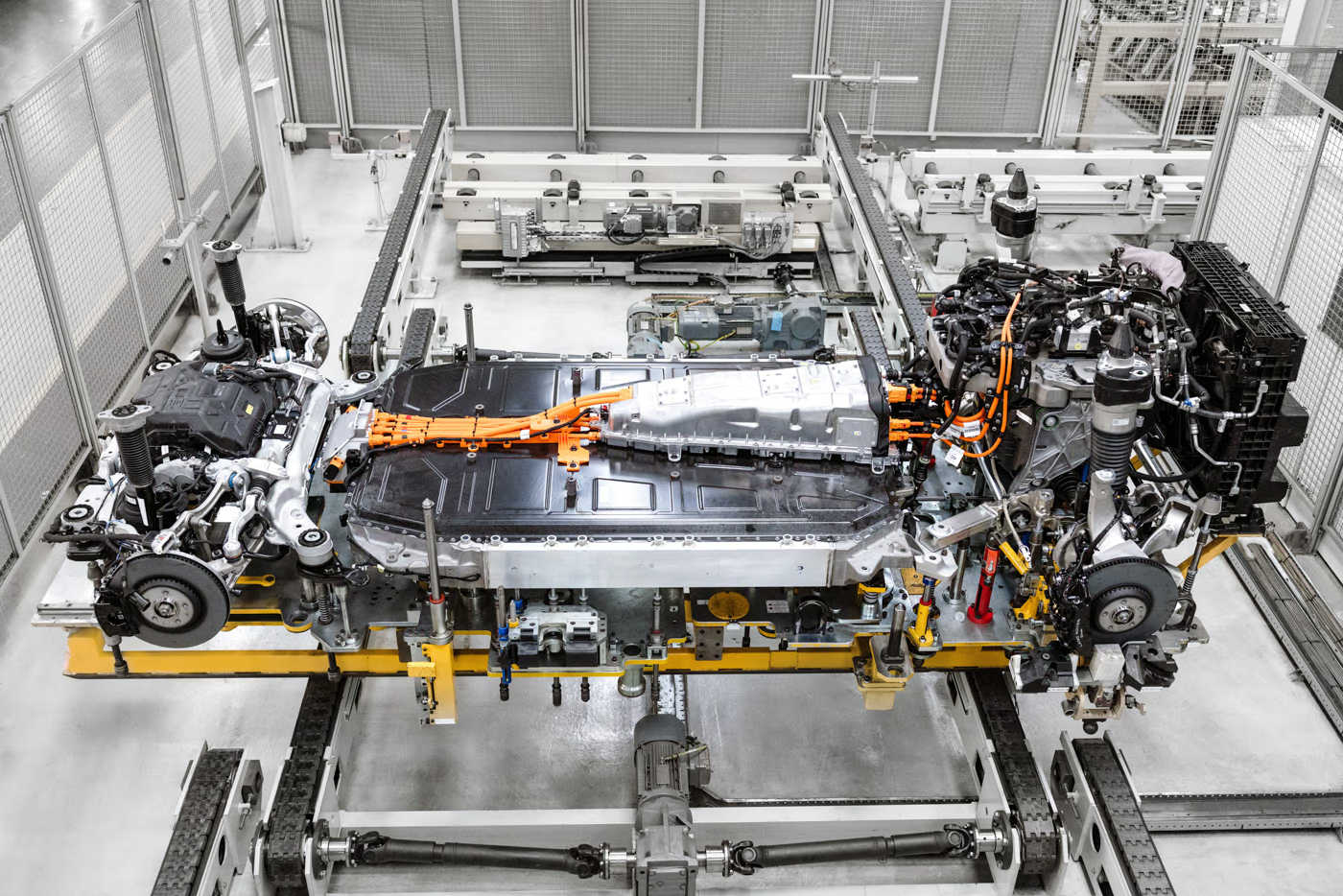
Given Range Rover’s four-wheel-drive ethos and the obvious benefits four individual motors would bring, especially in disguising a near-2.8-tonne kerb weight, it is perhaps surprising to see a dual-motor setup. Launching as the EV550, two permanent-magnet electric motors combine to produce up to 542bhp and 627lb ft (850Nm) of torque, the latter more than any previous Range Rover. Both the motors and battery were developed in-house, and the drivetrain can effectively shut down one motor when it isn’t required to improve efficiency.
Performance is a match for its combustion counterpart, with Range Rover quoting 0–60mph in 4.3 seconds and 50–75mph in 2.7 seconds. Top speed is limited to 124mph.
The usable capacity of the double-stacked lithium-ion battery is 118.5kWh. Range Rover claims up to 372 miles on the WLTP cycle, just 5 miles shy of the Mercedes-Benz EQS SUV. An 800-volt electrical architecture supports charging at up to 350kW – under ideal conditions, 10–80 per cent takes around 22 minutes, while a ten-minute top-up can theoretically add 137 miles of WLTP range. The newly developed ThermAssist heat management can also reduce heating energy consumption by up to 40 per cent, with a claimed range benefit of up to 25 miles in certain conditions.
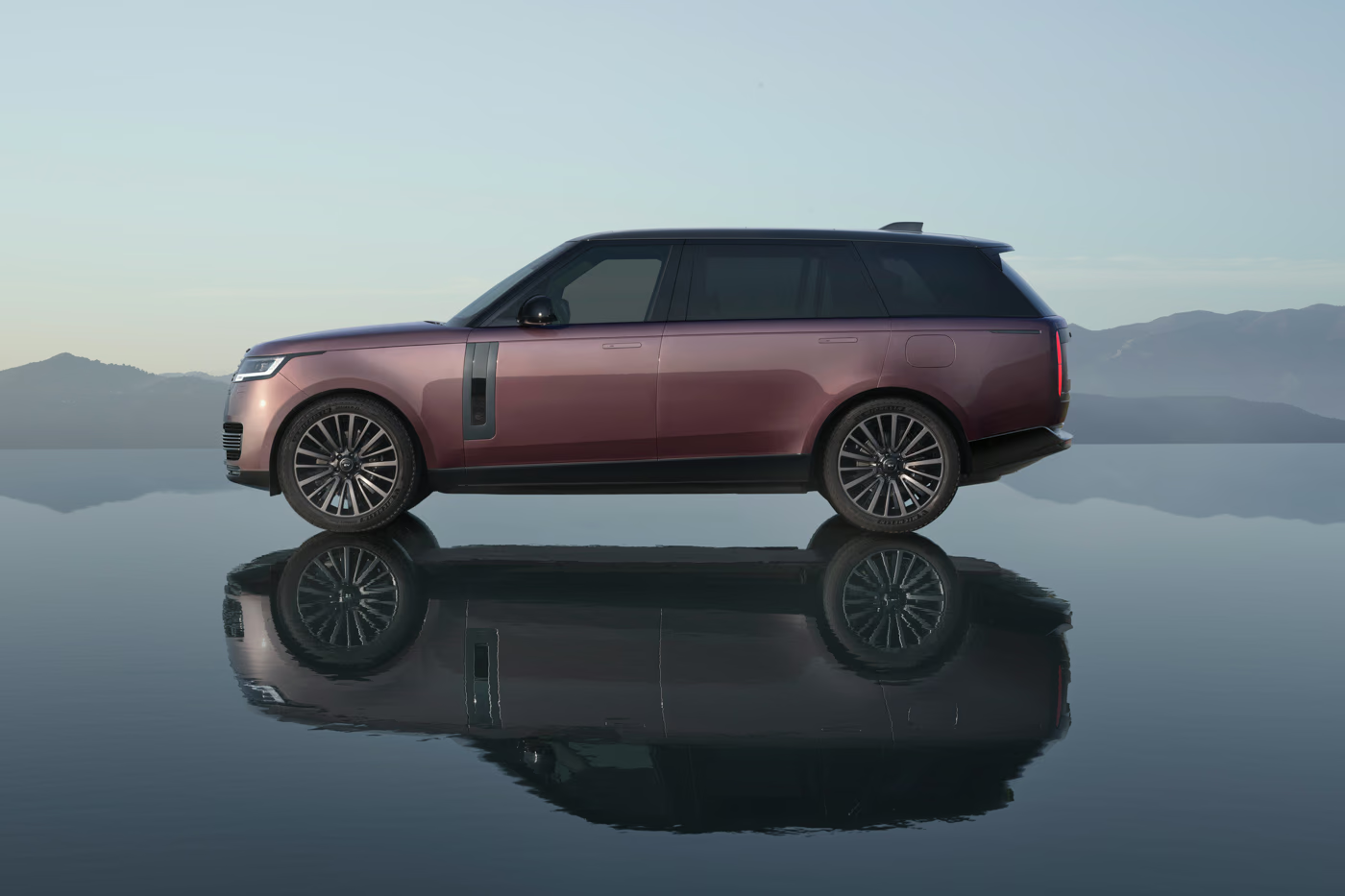
Although the Electric shares its MLA-Flex architecture with the combustion-engined Range Rover, the platform was designed from the outset to accommodate electric propulsion. Even so, bespoke aluminium front and rear subframes have been developed, while the battery pack contributes to overall body stiffness without becoming an integral structural member.
Notably, Range Rover has deliberately tempered torque delivery, curbing response to preserve traction and give acceleration a linear feel, in keeping with its luxury remit. The Integrated Traction Management takes the idea off-road, regulating motor speed directly rather than waiting for wheelspin before intervening through the brakes.
Engineers at Gaydon say the system can respond in as little as 50 milliseconds – up to 100 times faster than an equivalent combustion-powered drivetrain. Single Pedal mode has also been adapted for off-road use, allowing the Electric to pull away smoothly on gradients of up to 33 degrees and tackle rolling climbs of up to 45 degrees without the driver juggling accelerator and brake. Impressively, maximum wading depth remains 900mm.
Back on the road, Intelligent Driveline Dynamics can vary the proportion of torque delivered through the rear axle from 100 per cent to zero, depending on demand. Twin-chamber air suspension is paired with twin-valve dampers derived from the Range Rover Sport SV, while the battery’s low position drops the centre of gravity 88mm below that of the V8, helping to counter the additional weight.
Not every measure of capability survives the transition intact: the Electric is rated to tow 2500kg, a significant drop from the V8’s 3500kg rating. The intelligent range assistant at least factors the extra burden into its remaining-range calculations.
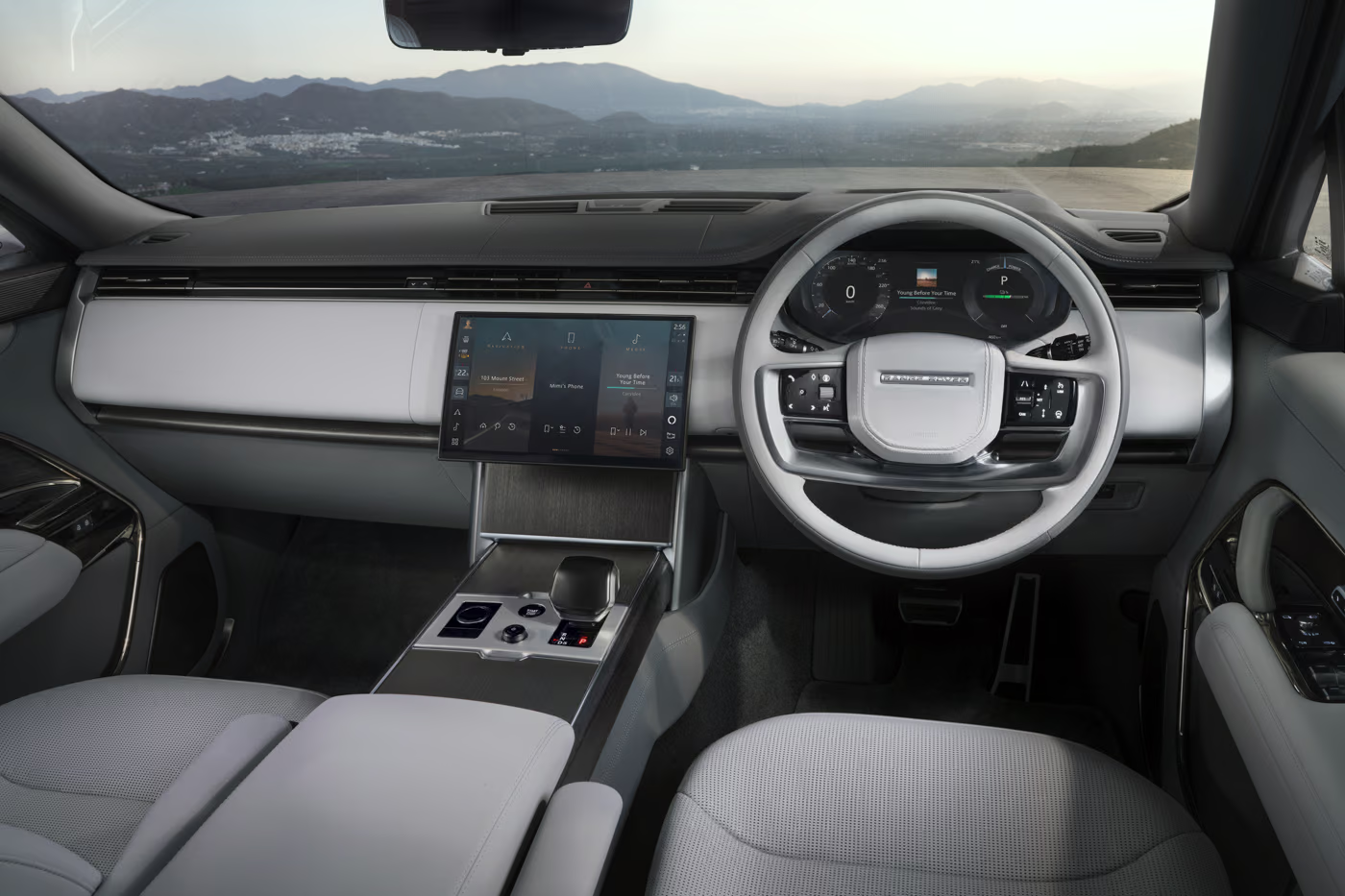
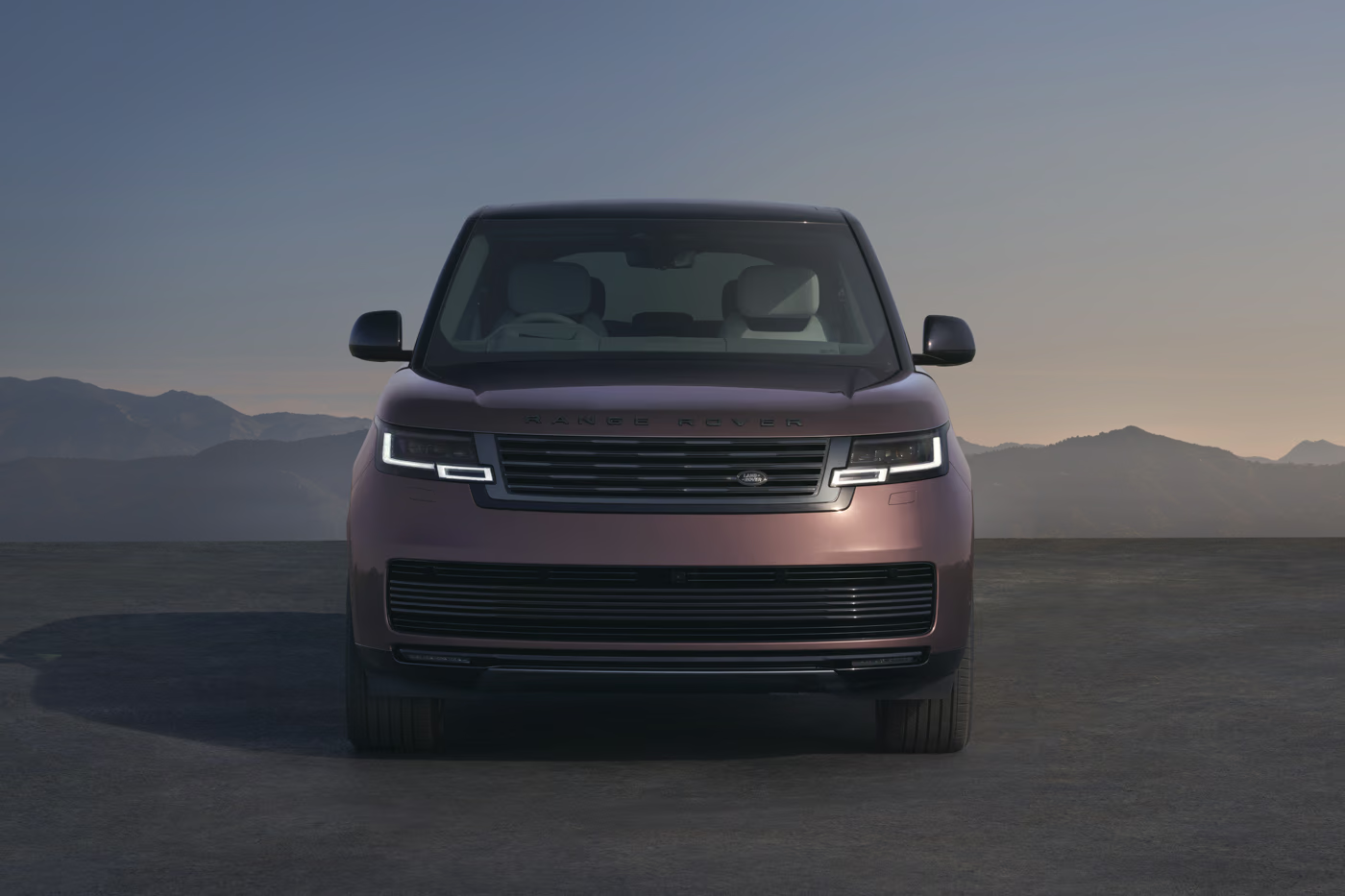
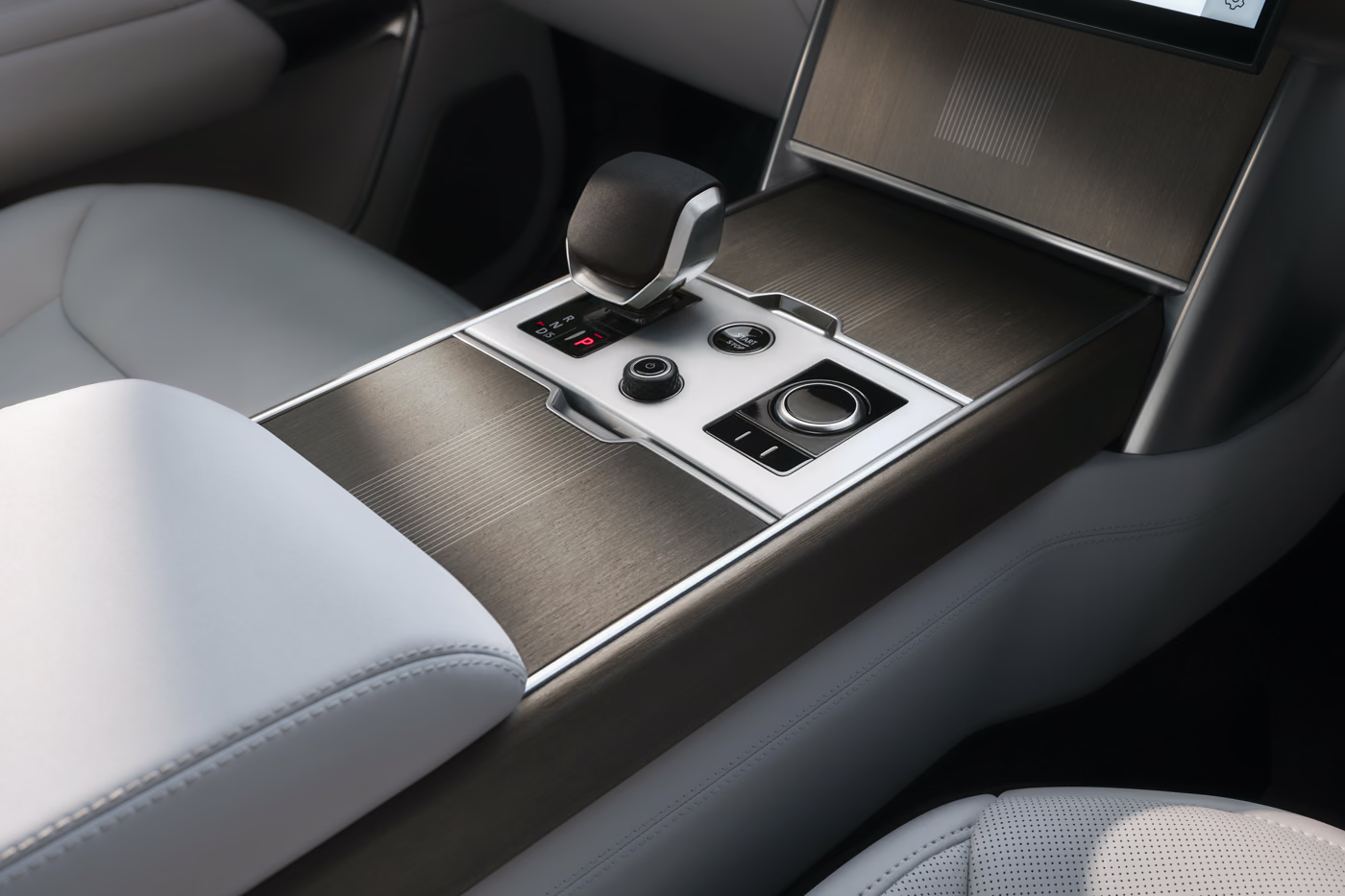
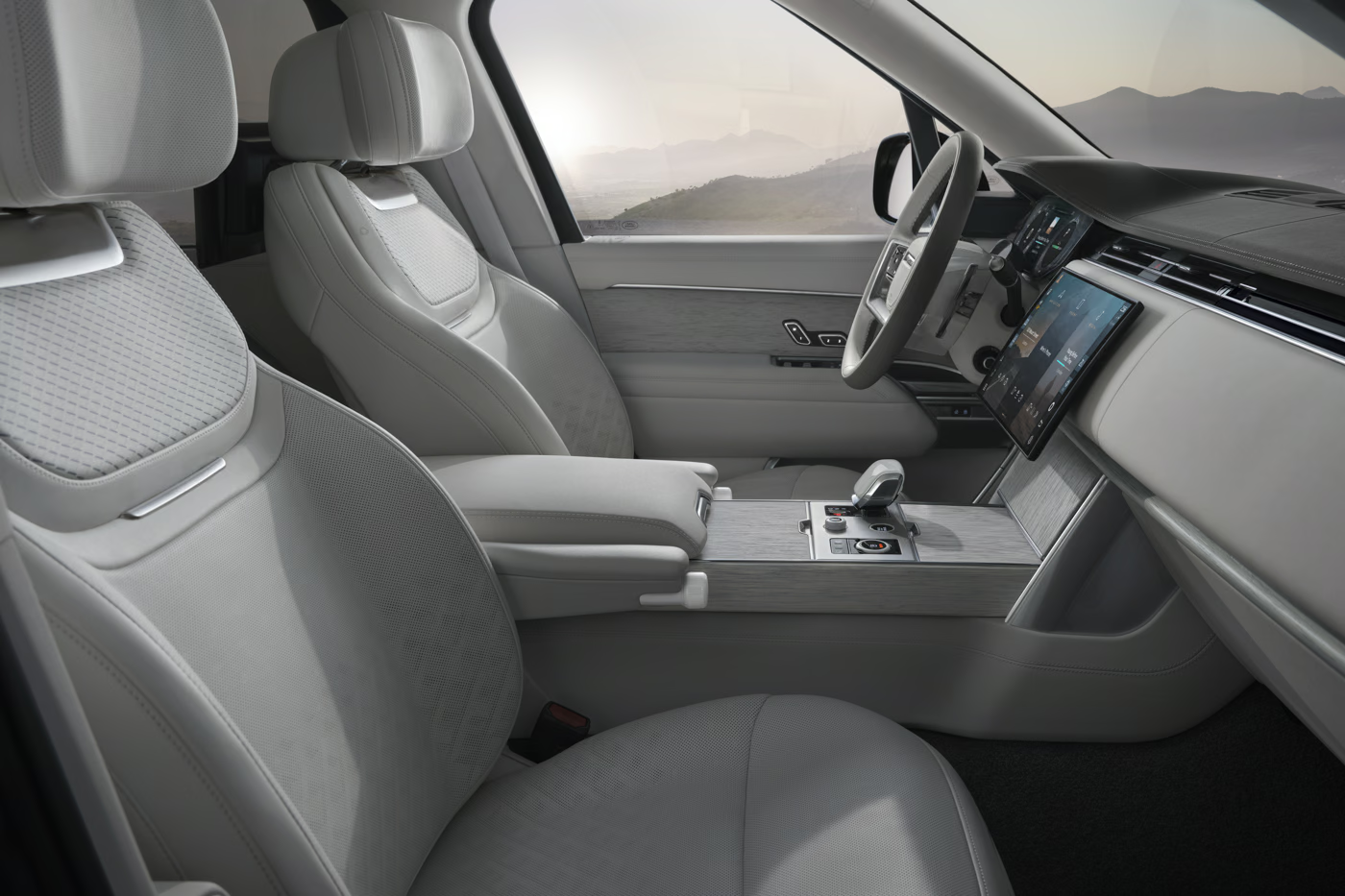
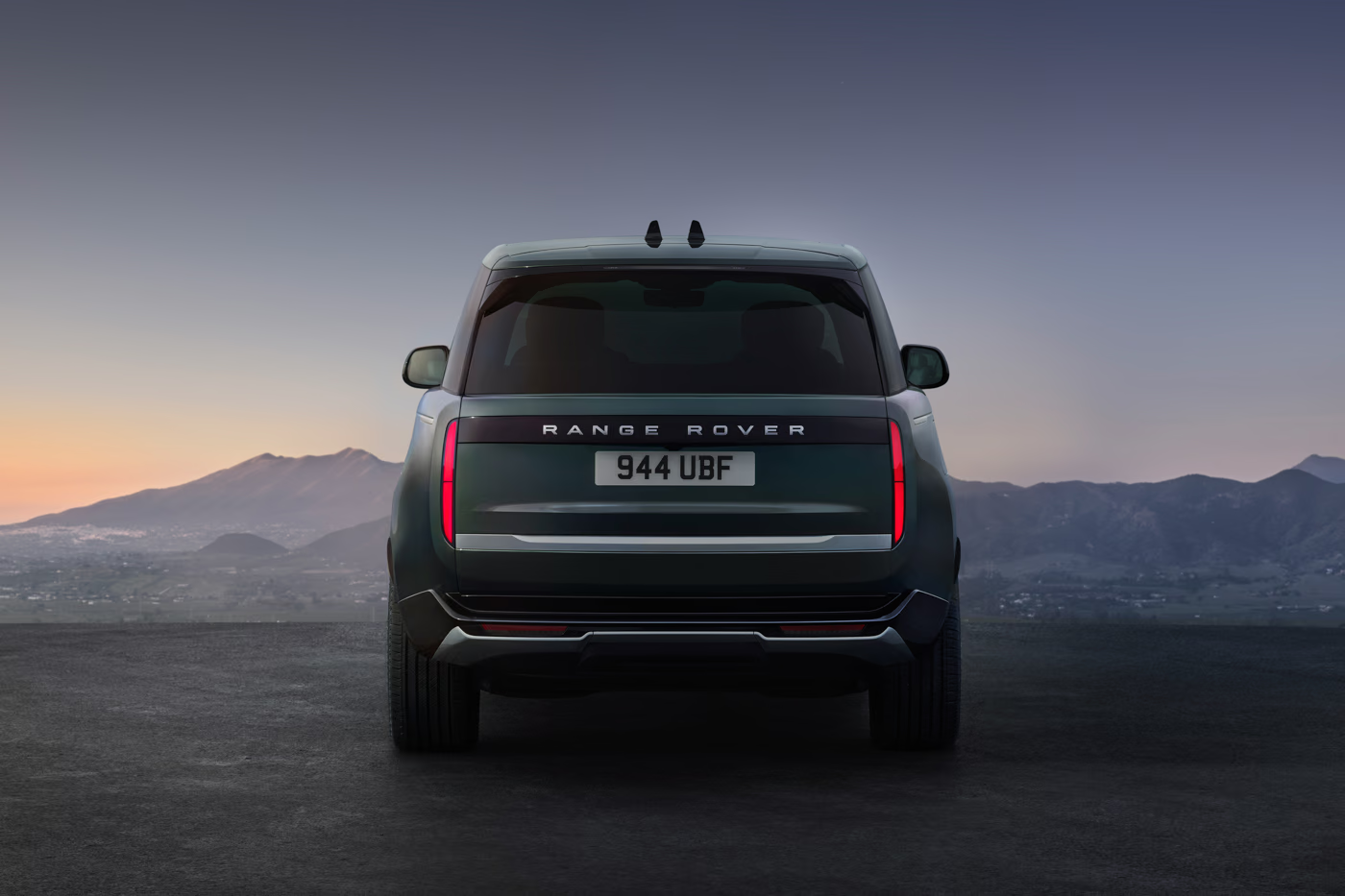
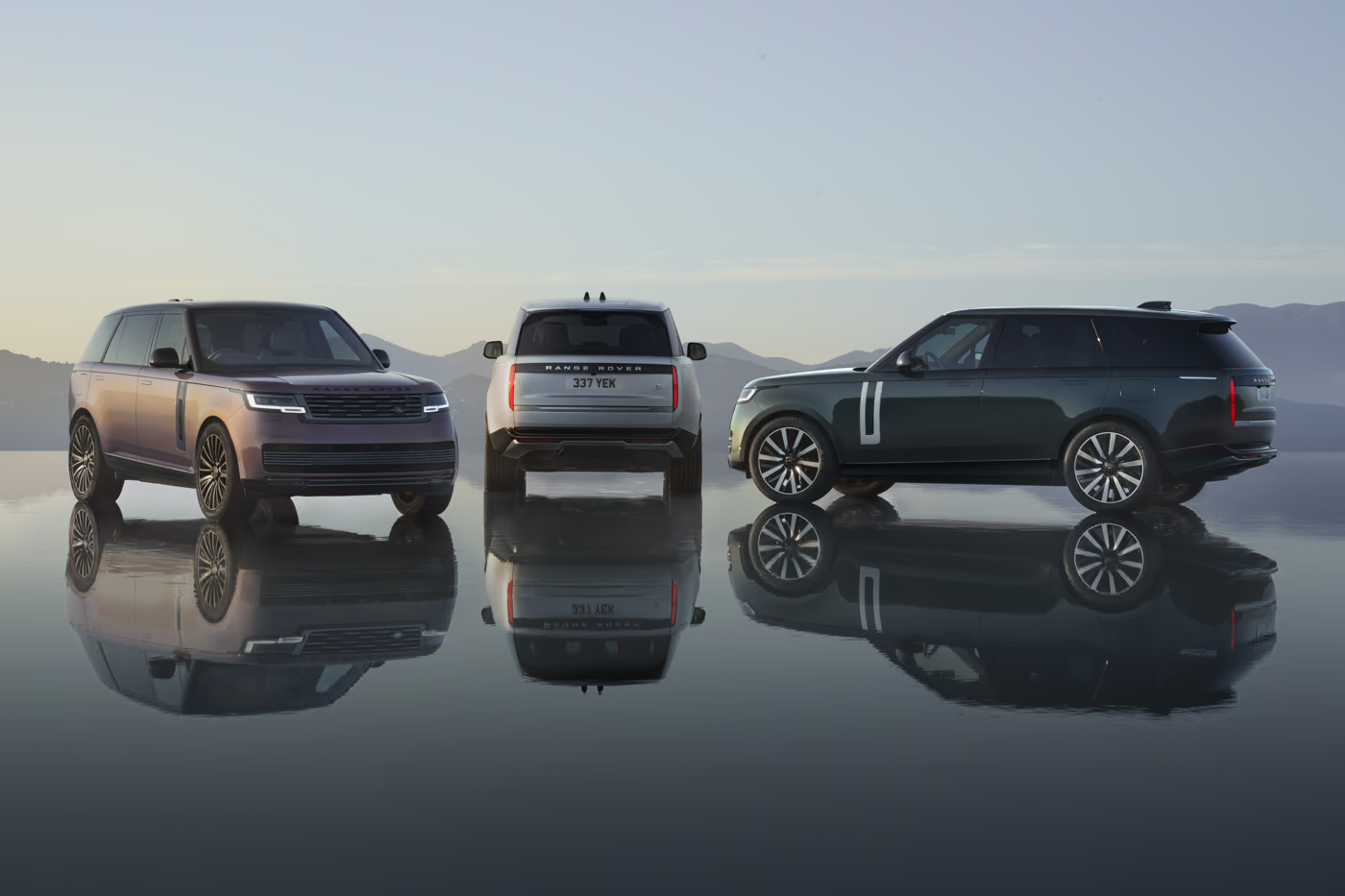
Despite being a first for the marque, the Electric is doing its best Clark Kent impression. Exterior changes are deliberately subtle, limited to a reworked grille, aerodynamically optimised alloy wheels and an optional second charging port on the nearside rear quarter. The interior is business as usual too, indistinguishable from the rest of the range.
What is distinguishable is the soundscape. Range Rovers are already known for their refinement, but removing the V8 has placed even greater emphasis on NVH, with the cabin measuring 7dB quieter than the V8 under full acceleration. Extra sound-deadening has been placed around the front drive unit, while the high-voltage cabling has been isolated to prevent unwanted vibrations entering the cabin. The Electric also gets its own engineered sound signature, based around an F-major chord with added seventh and ninth notes.
More than 300 patent applications have been filed for the new Electric. Production remains at Solihull, home to every Range Rover since 1970. Lynfel Owen, Chief Engineer of Vehicle Engineering at JLR, said: ‘It wasn’t about deviating from the formula that we had for the Range Rover and making it into a bespoke electric car. This was about a fully integrated propulsion choice that customers could make.’
Order books are open now across SE, HSE, Autobiography, SV, SV Ultra and SV Black derivatives, with UK pricing beginning at £154,070 OTR for the EV550 Autobiography SWB. A special First Edition launch car asks £157,610, offering a choice of Belgravia Green, Santorini Black or Varesine Blue exterior finishes, paired with a Light Cloud Ultrafabrics/Kvadrat textile and synthetic leather interior. For buyers who wish for a more tailored specification, the Bespoke service offers near-limitless colour and finish options for the bodywork, interior trim and upholstery.
Aligning with the rest of the lineup, the Range Rover Electric will be offered in long-wheelbase format, with the range-topping LWB SV Black commanding a list price of £225,240. There appears to be no shortage of prospective takers, either – Range Rover says the waiting list has since grown to 80,000. Deliveries are expected to begin in the final quarter of 2026.



.svg)

