-01.svg)
_edited.avif)
Its barnacle-like grip, sharp brakes, low mass and an engine with slightly too much power for the scrabbling front tyres make the Clio feel alert, adjustable and endlessly game.
A word of caution, however: it wasn’t so long ago 172s and 182s were available for less than £1,500, and were treated as such. Many cars will have passed through the hands of corner-cutting owners or grazed countless track day paddocks. Natural selection is pruning the marketplace, but it still pays to know which quirks are simply part of the Renaultsport experience, and which are warning signs to walk away from.
Evolution of the Species
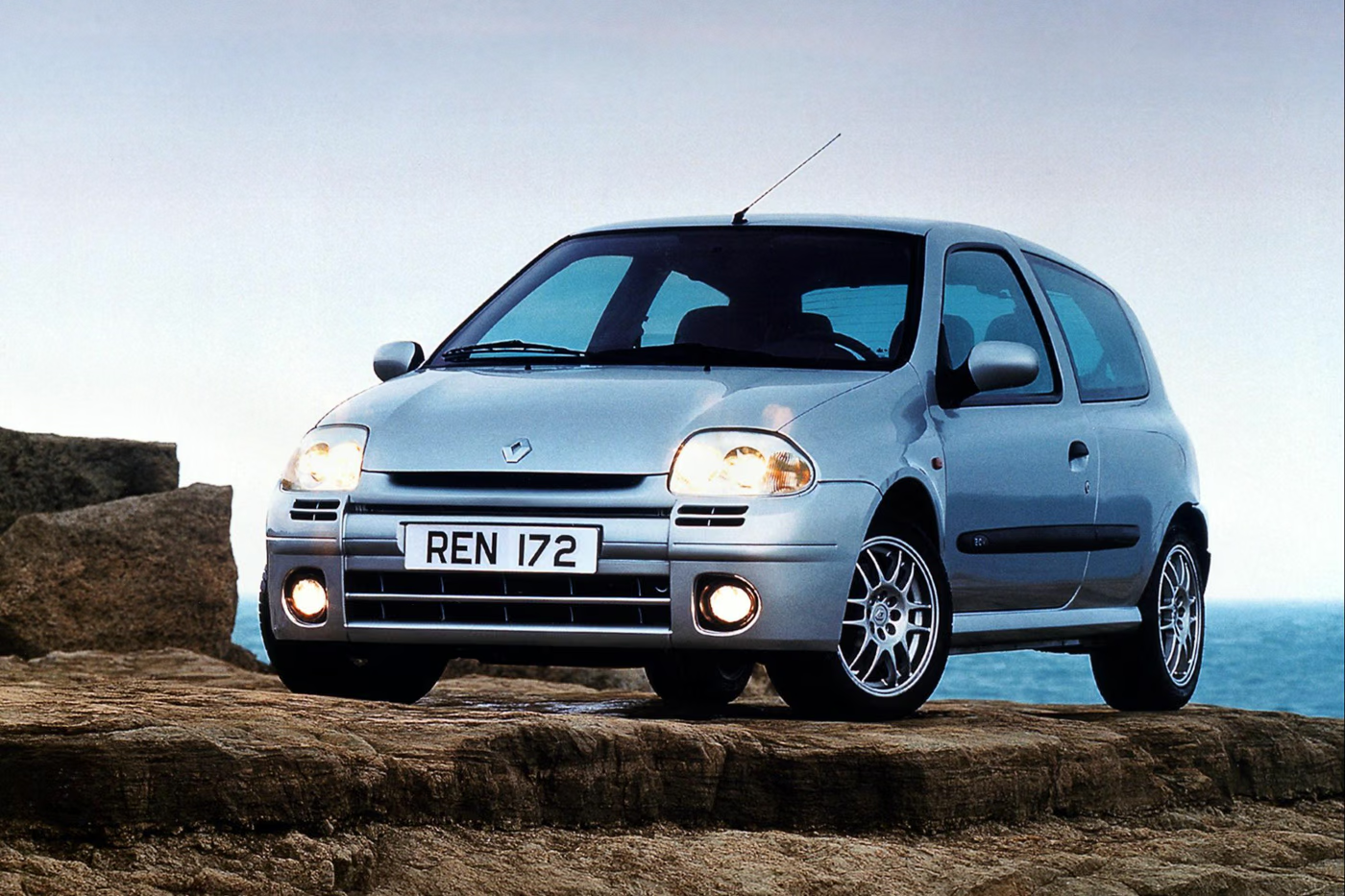
The Mk2 Clio made its debut in 1998, and the hot version reached our shores in June 2000. Dubbed the 172 after the headline engine output in PS, the new RS Clio had titanic shoes to fill. The previous Clio Williams was a revered hot hatch, and big things were expected.
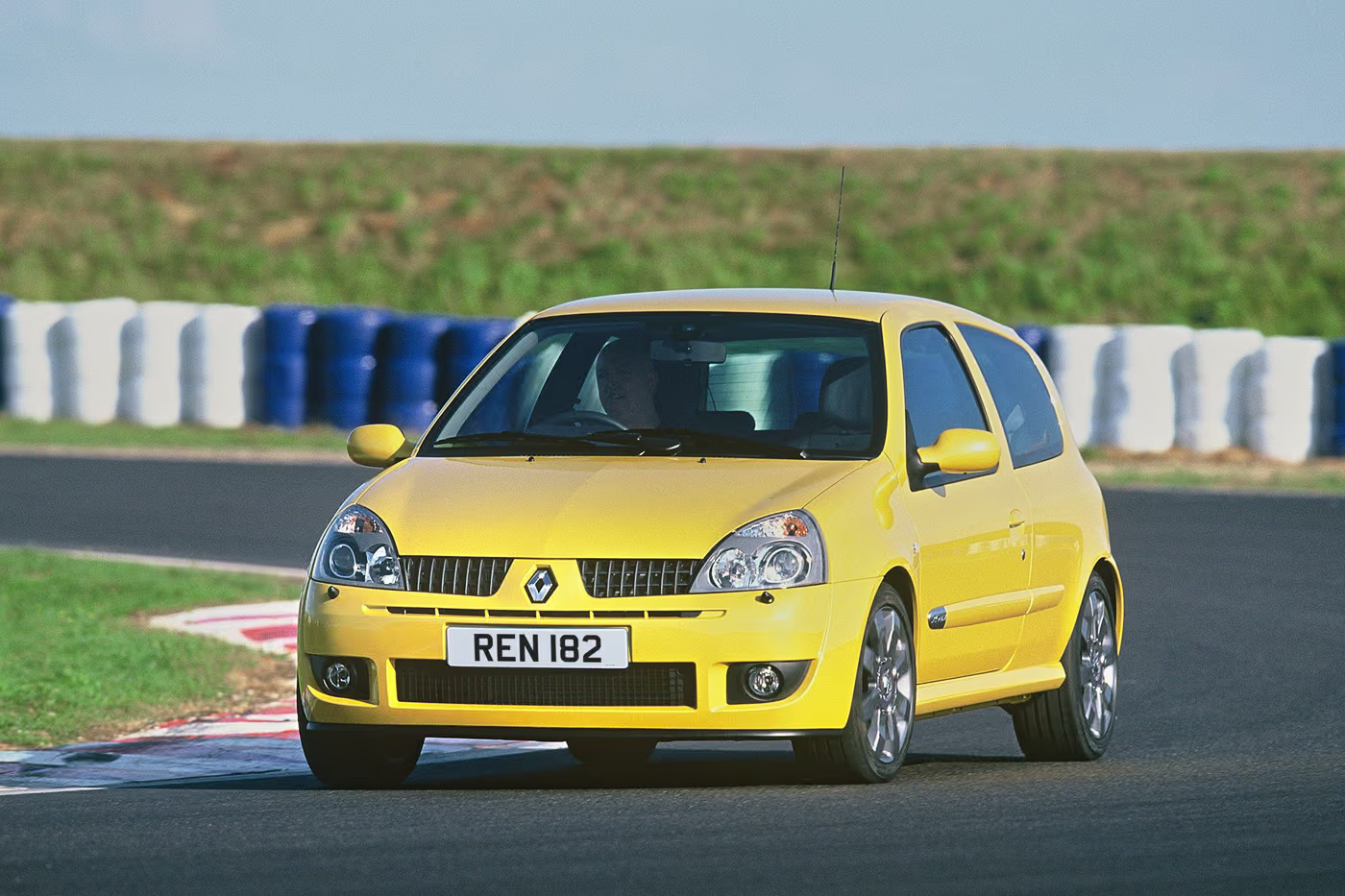
It certainly had the numbers: 169bhp was a new line in the sand, one that ignited a power war among manufacturers and breathed new life into a stagnant marketplace. With just 1,035kg to hustle courtesy of an aluminium bonnet and lightweight 15” OZ Racing alloys, the ‘Phase One’ 172 scorched to 60mph in 6.7 seconds, while flared arches and an aggressive front end distinguished it from the standard Clio. Sure, a 106 GTi or Saxo VTS might change direction a fraction sweeter, but armed with so much game-changing performance, it's little wonder Renault scored a bullseye.
For many, the facelift model of June 2001 was a backwards step. The aggression was toned down, and the OZ made way for 16-inch in-house alloys that merely scaled-up the design of the base 1.2. The ‘Phase Two’ had matured, adding the likes of climate control, automatic wipers and Xenon headlights to its list of standard equipment, alongside safety tech such as ESP, which meant the deletion of the cable throttle.
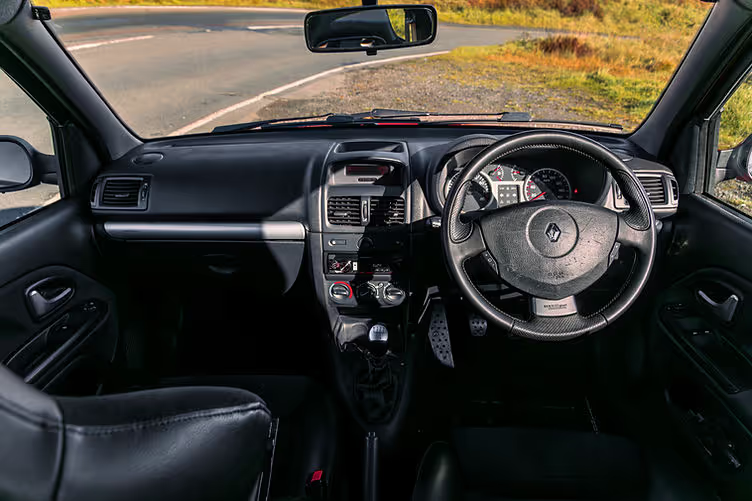
Consequently, the weight went up, and Renault was forced to shorten the gearing in order to keep the performance up to par. Adding insult to injury, the competition had caught up. Honda arrived with the 197bhp EP3 Civic Type R, followed by the Mini John Cooper Works, boasting over 200bhp.
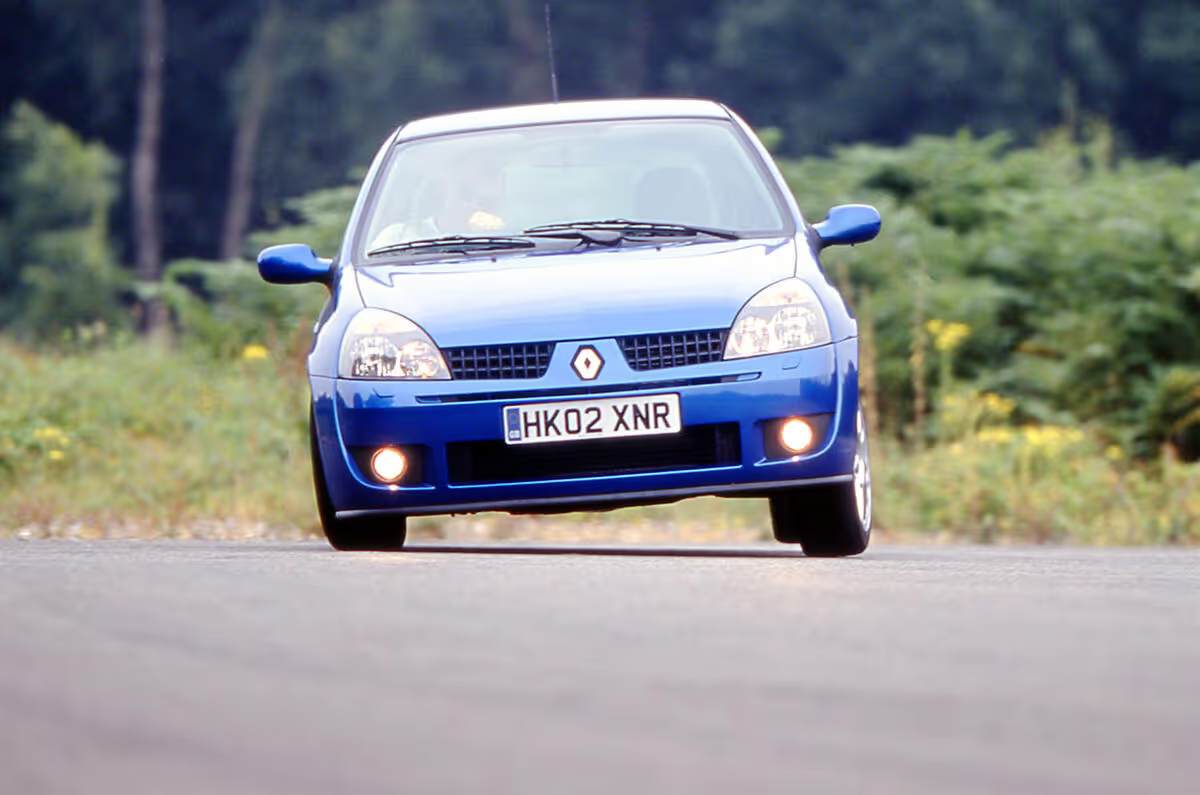
Renaultsport needed a riposte, and the 172 Cup of August 2002 was it. A homologation special to satisfy the requirements of Group N rallying, it lopped 89kg off the kerb weight and offered an equally lightweight price tag of just £12,995. The Cup was an instant sensation: Autocar recorded a 0-60mph time of 6.3s in their Road Test, while Evo timed one besting a Subaru Impreza WRX to 100mph during a group test.
But it wasn’t just the performance that impressed. Dieppe changed the castor angle from 1.5 degrees to 3.0 degrees, sharpening handling response. The ride height was reduced by 3mm, but more significantly, the front dampers were 20 per cent firmer, and the rears 10 per cent. The Cup also benefited from a front track widened by 25mm, with the rear track broadened by 18mm, and bolted to the axles were lightweight Speedline Turini alloys with a custom offset – a look quickly adopted by owners of the regular car. Somewhat controversially, Renaultsport deleted the ABS system and electronic stability control as part of the strict diet. Yet the payoff was immediate: the 172 had rediscovered its mojo, and the Cup became a legend in its own lifetime.
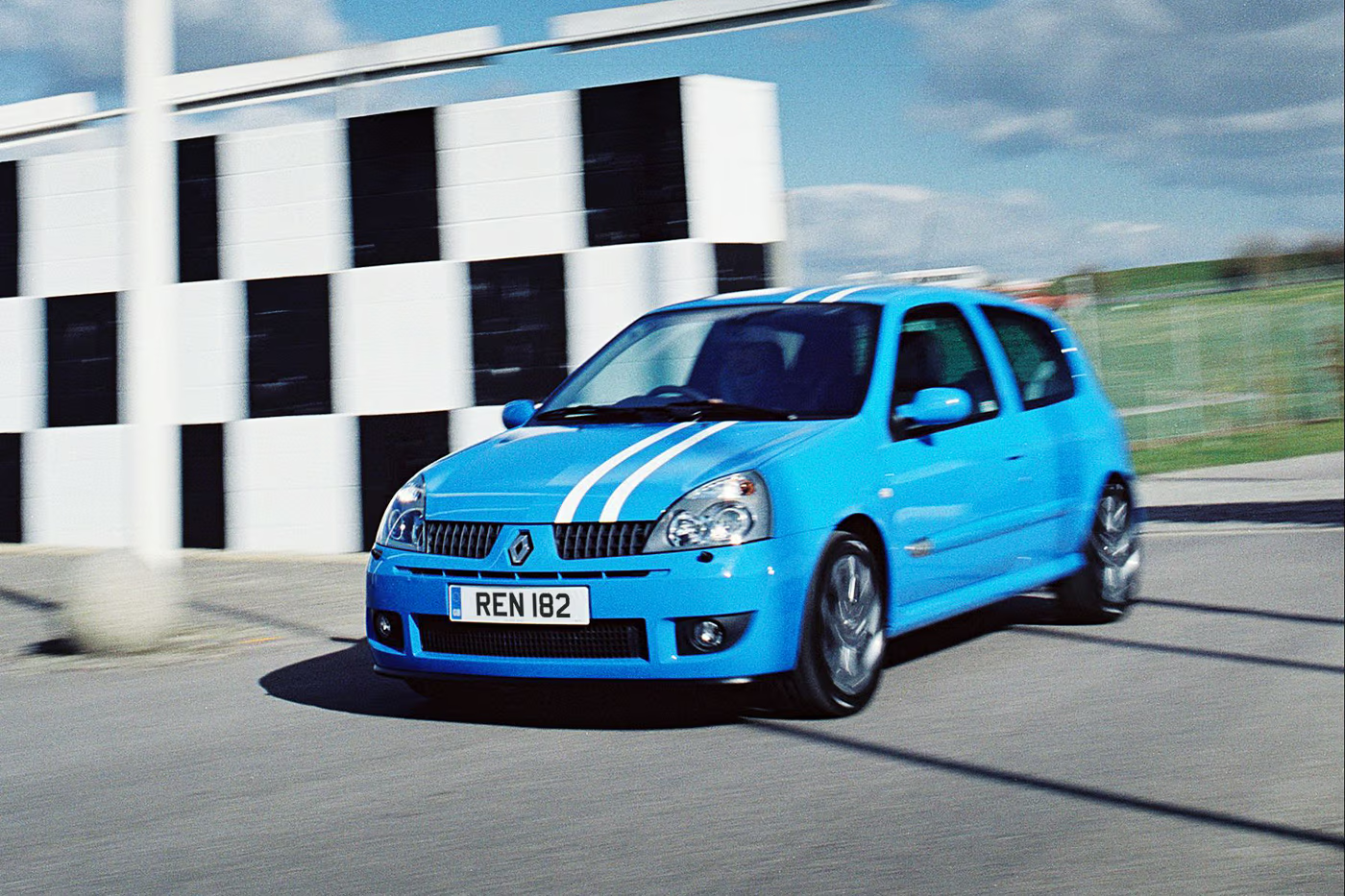
The 182 followed soon after in 2004 and built on the foundation of the 172 Cup. The power bump came courtesy of a new 4-2-1 manifold and a tweak to the ECU, while a new 16-inch alloy wheel design and the introduction of the now signature twin-exit exhaust meant some aggression was restored – a move that necessitated the deletion of the spare wheel well. Thankfully Renaultsport decided against fitting run-flat tyres, instead insisting on a bespoke version of the high-performance Michelin Exalto tyre for the car, up a fraction in width to a 205 section.
Renaultsport did offer another 182 Cup from the factory, but it wasn’t as hardcore as its predecessor, weighing in 30kg lighter due to base-model upholstery and spec – nor did it carry the cachet of being a homologation special. Renault did, however, make the smart decision to offer two Cup packs on the regular 182; one including the handling upgrades, and the other the aero kit and cosmetic flourishes. This allowed customers to create a car that offered the best of both worlds – the sharpness of the Cup combined with the creature comforts of the regular 182. In the Renaultsport lexicon, such cars are referred to as a ‘full fat’ Cup.
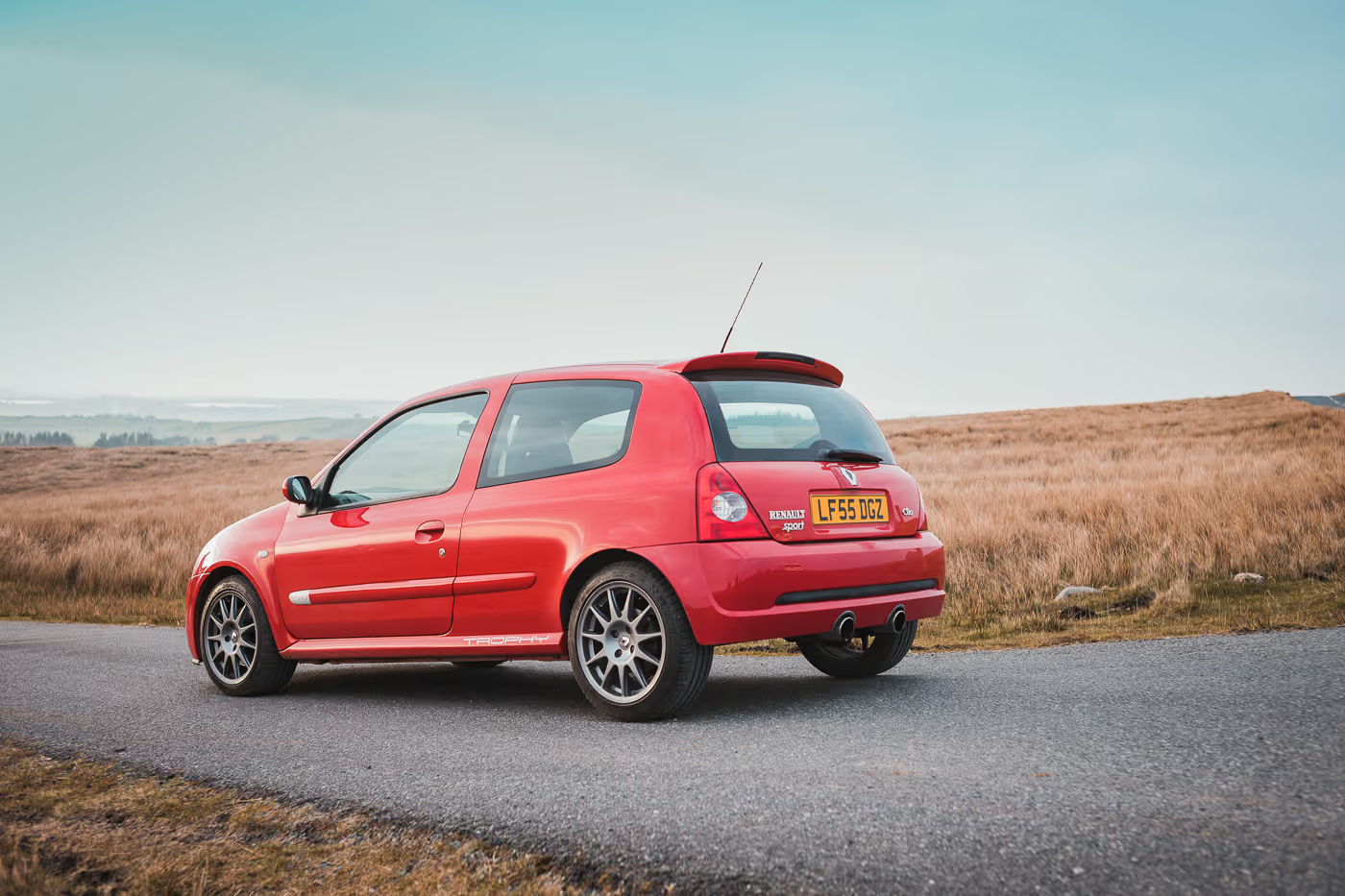
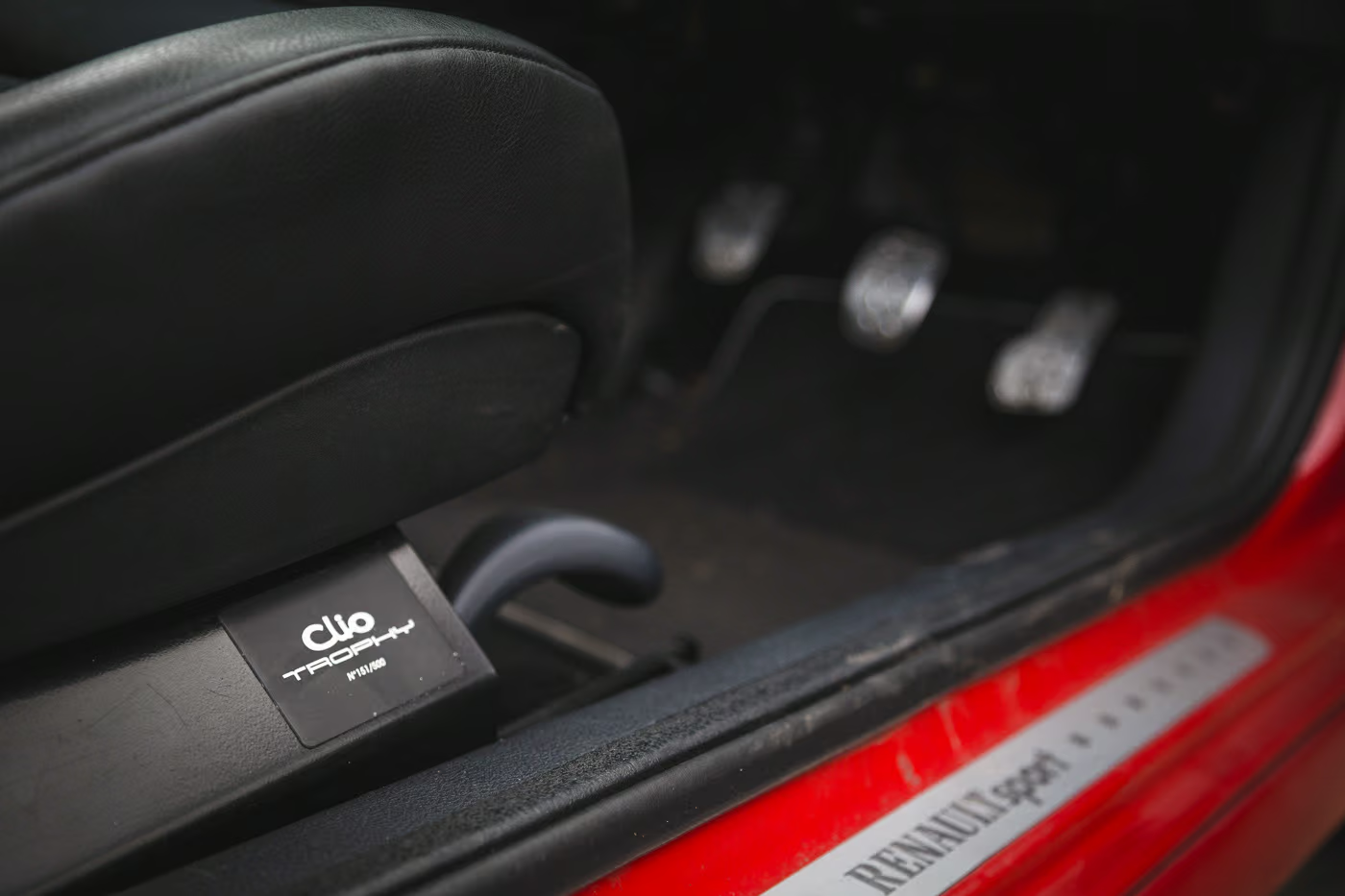
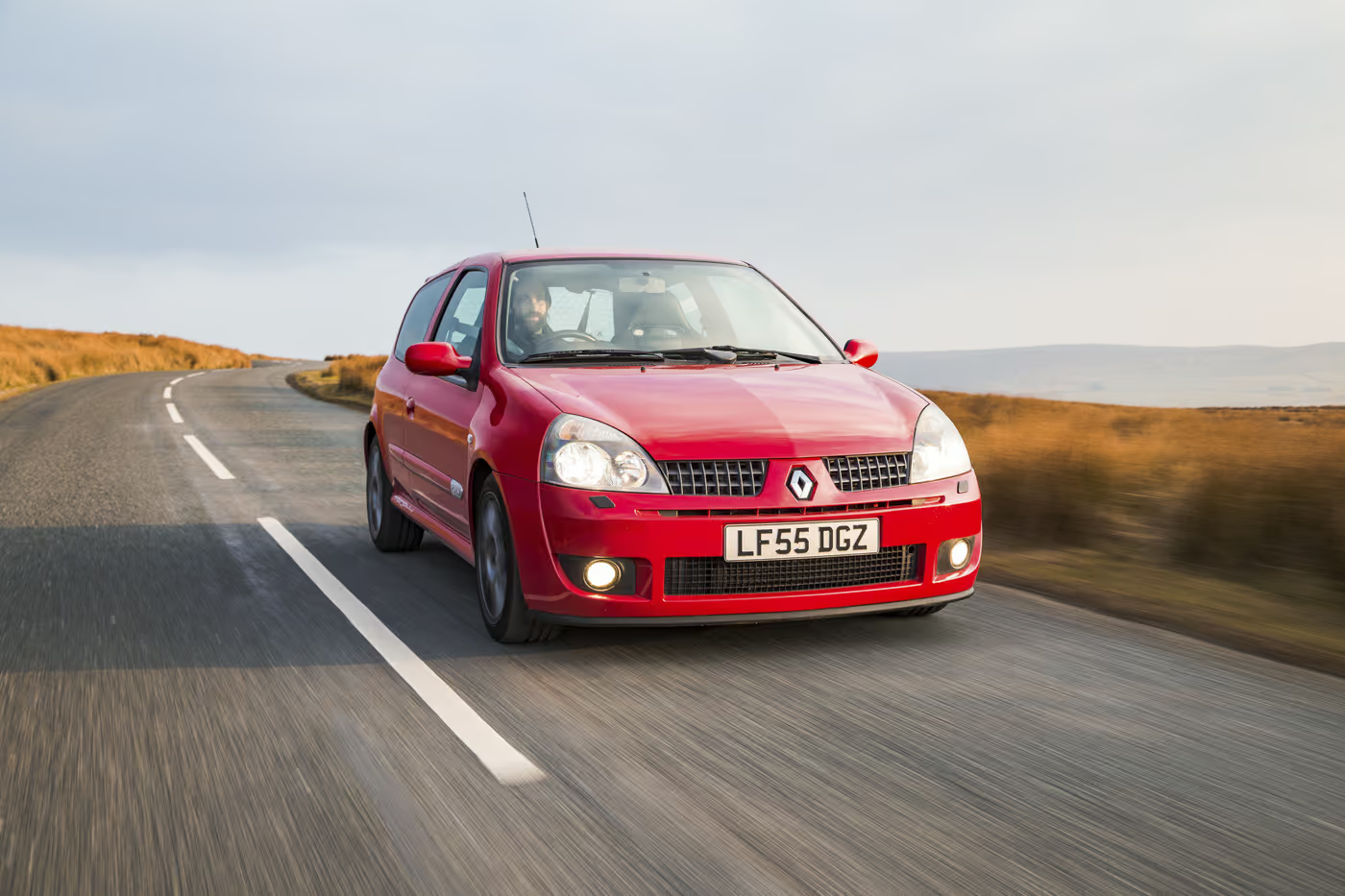
If such a car is the sweet spot of the range, the final run-out Trophy model is the holy grail. Limited to just 500 UK units (plus 50 LHD examples for the Swiss market), Renaultsport equipped the Trophy with trick remote reservoir dampers supplied by Sachs Motorsport. Said to cost ten times that of the standard units, the Sachs truly elevated the 182, endowing the humble Clio with sublime wheel control, and few who drove it argued with the results.
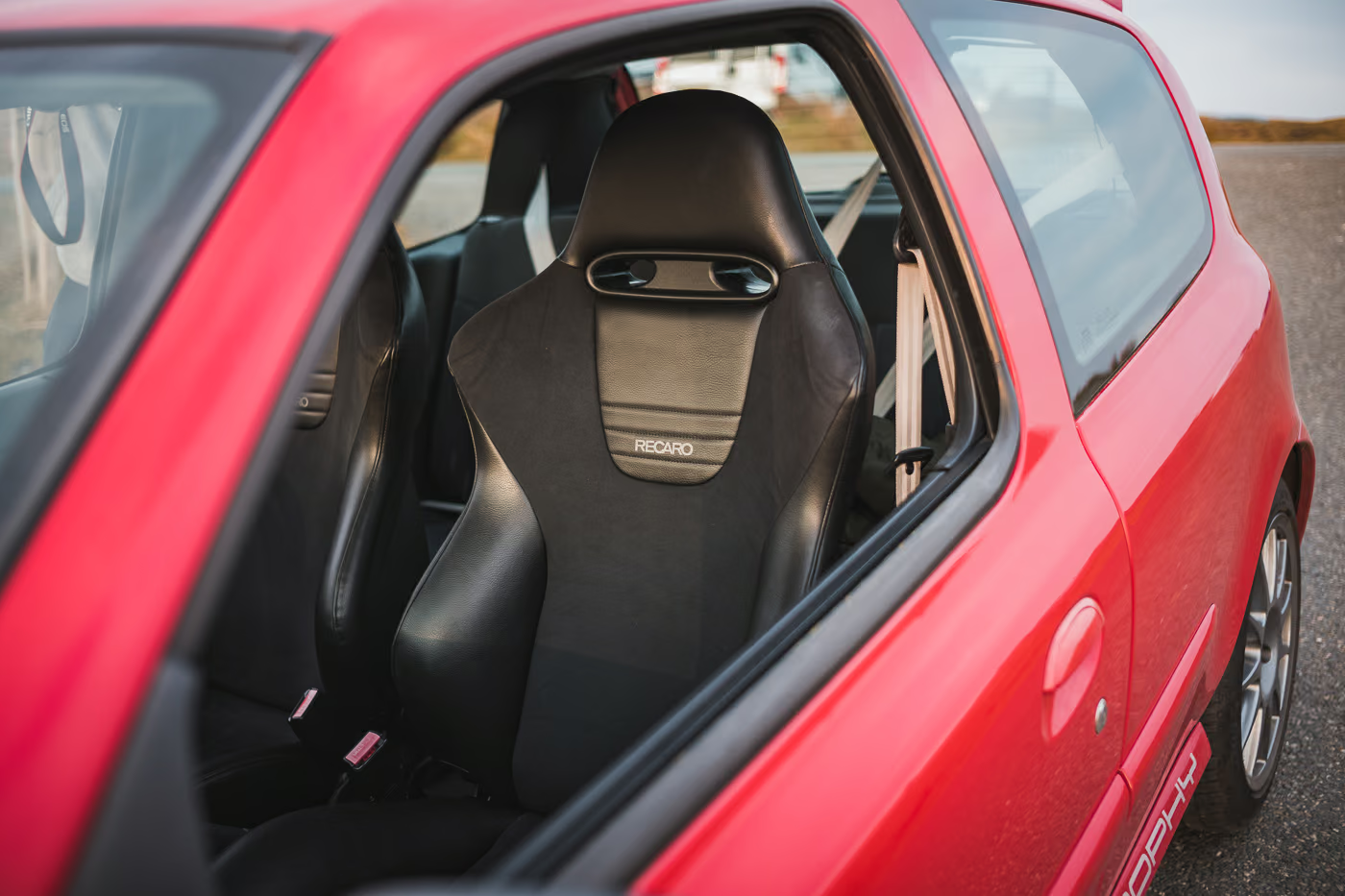
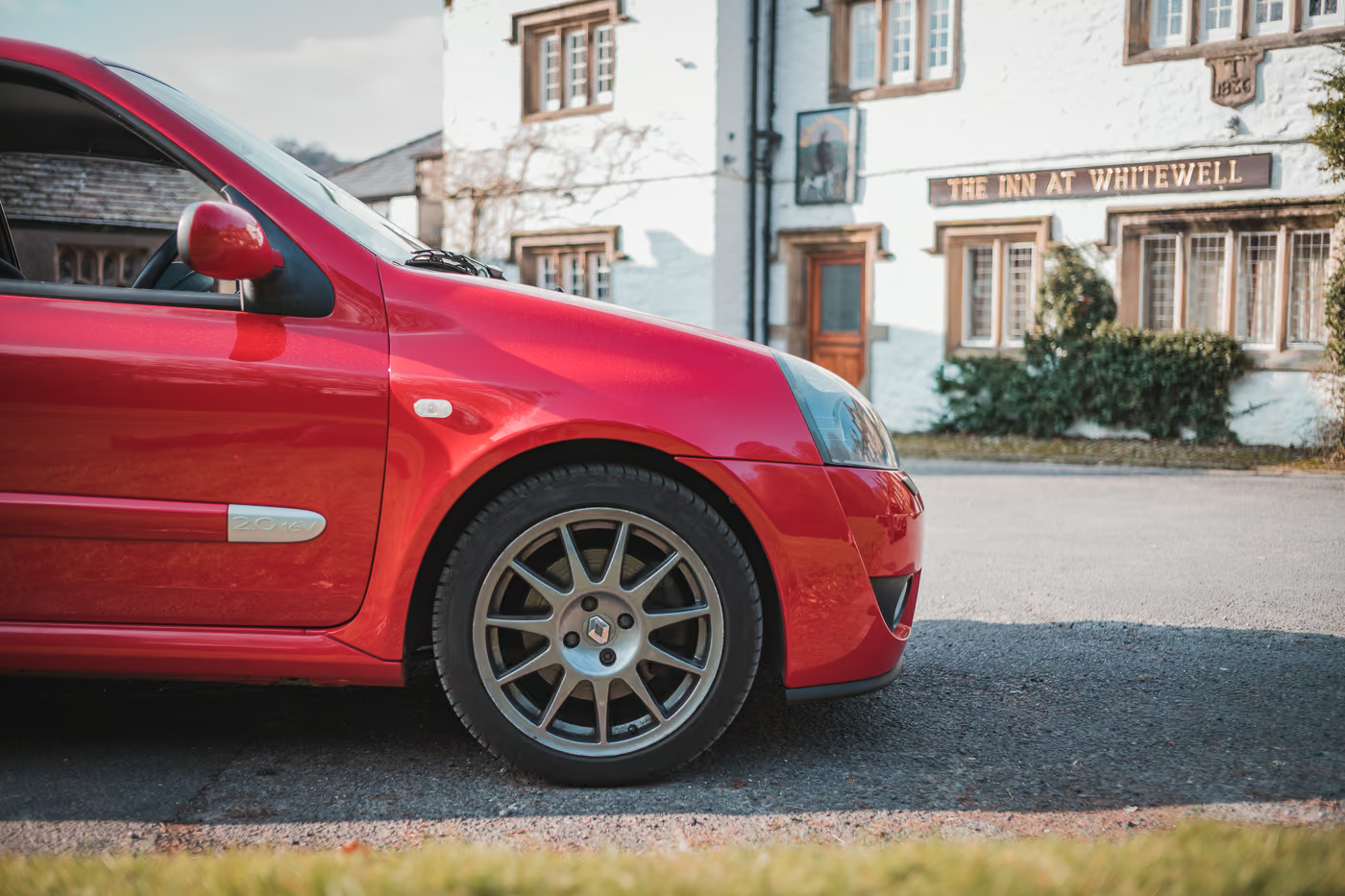
Starting with a 182 Cup, the Trophy added Recaro Trendline bucket seats (mounted 10mm lower), the rear spoiler from the V6, and reinstated the Turini alloy wheels, this time finished in anthracite. All Trophy’s were painted exclusively in Capsicum Red. Expect to pay a hefty premium for one.
What to Look For: Engine
Despite frequent close proximity of the words Renault and unreliability, the 2.0-litre, F4R730 16-valve four is a tough cookie if properly maintained. The biggest cost to look out for is the cambelt change, which is due every 72,000 miles or five years, depending upon which comes first. By now, most 182s will be due their fourth cambelt change so consider it a potential negotiating point.
That’s because a cambelt swap on the 182 is not a straightforward endeavour – shoehorning so much engine into so little space means practically the entire front end of the car needs to be pulled apart in order to remove the air conditioning. Once that’s done, you’ll finally have access to the cambelt, only to realise the job requires a special (read expensive) locking tool from Renault. If you fancy tackling the task yourself, it can be more financially viable to hire the locking tool. One can usually be sourced on forums such as Cliosport.net.
Thus equipped, timing the F4R correctly remains extremely tricky, and as you’ve probably guessed this is a job best left to the professionals. Even Renault technicians were known to get the timing wrong if they weren’t paying attention. Factor in a bill of £600 to have this done at a reputable specialist. Owning a Cup does have its perks when it comes to the cambelt as its lack of air con saves a significant amount of time and thus labour off the bill, with the job dropping to circa £450.
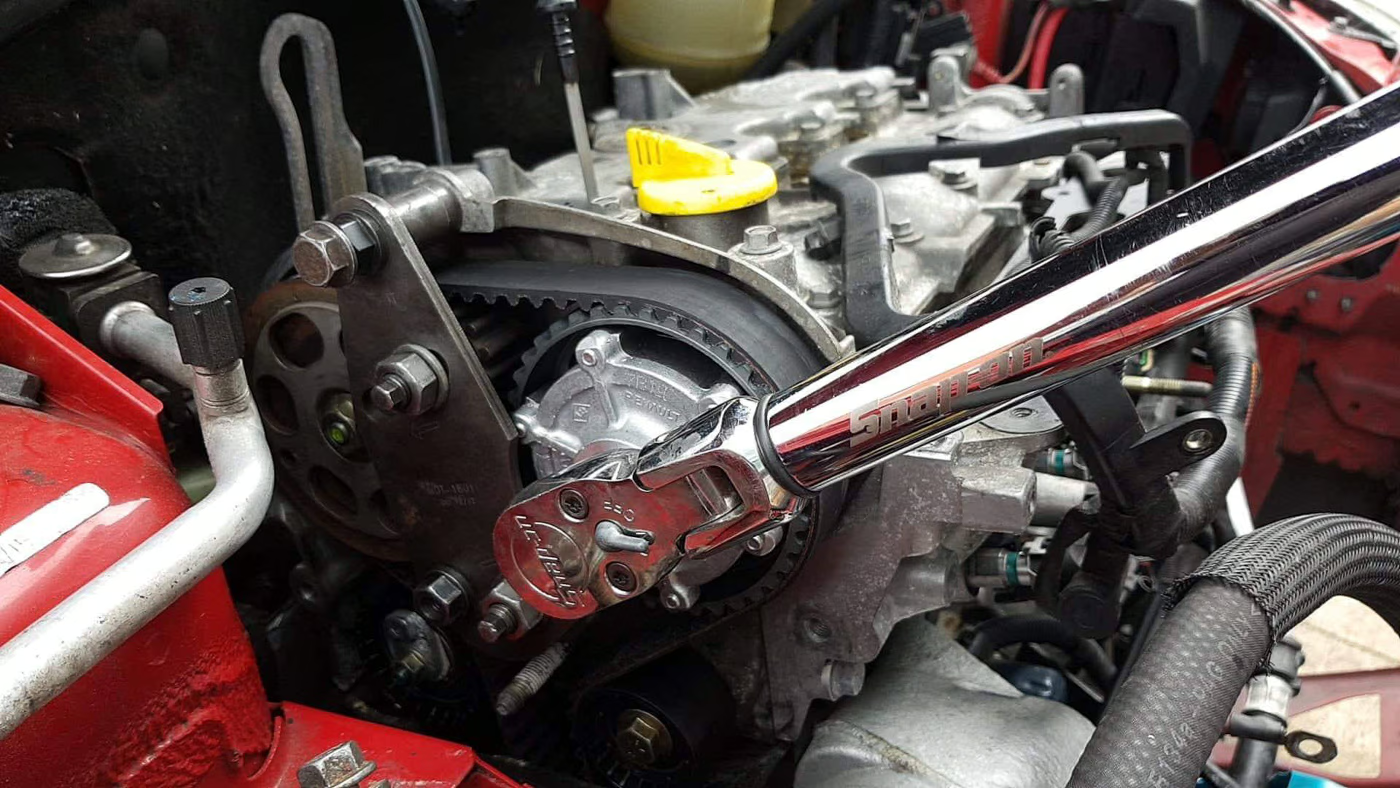
It’s wise to replace the dephaser pulley at the same time too, which controls the variable valve timing. The dephaser does have a longer expected lifespan than the cambelt, however replacing this £287 part involves a new cambelt so it makes sense to switch whilst in there. Diagnosing the dephaser pulley is a tricky task in the initial stages, with a faint ticking sound that disappears when the engine is warm or above 3,000rpm being one giveaway. A completely failed pulley, however, will be unmissable – the F4R will clatter like a diesel.
When Clio values were in the doldrums, neglectful owners reported tolerating an ailing dephaser for months on end with no negative consequences on performance or driveability. Some even attended track days. That said, this is not a gauntlet we’d advise you to run.
And while we’re on the subject of belts, the auxiliary belt is another one which requires a regular swap every three years or 36,000 miles. Thankfully it’s a far more straightforward job, but not one that should be neglected as a snapped one can wrap itself around the cambelt.
If you desire ultimate peace of mind, performing a compression test will expose any past cambelt failure and provide evidence the engine is in rude health. Occasional misfires can usually be attributed to spark plugs or leads, but otherwise the F4R is robust, with lightning responses, a fat spread of torque in the mid-range and an exciting climax as the VVT kicks in at 5,500rpm. Despite this, and only having five forward gears, the Clio is capable of returning over 40mpg on a run, with most averaging around 32–35mpg across mixed driving.

I Want More Power! Surely the Engine is Good For 200bhp?
Given the F4R develops circa 90bhp/litre, you’d be forgiven for thinking there is some headroom for tuning. However, extracting more go from the engine is not a straightforward endeavour.
A custom remap will only return single figure gains, and even teaming one with an intake, exhaust and further breathing mods such as machined inlets you’ll be lucky to see low teens for an outlay of four figures. There are gains to be had by fitting more aggressive camshafts such as those from a Clio 197 or the aftermarket CatCams, but be aware you’ll also need to factor in the cost of a new cambelt at the same time. And you still won’t be knocking on the door of 200bhp.
That’s because in reality, the F4R develops a fraction less horsepower than Renault claims. Expect a good 172 to score 165bhp on a properly calibrated dyno, with the 182 offering mid-170s. That might sound disheartening, however, once behind the wheel you’re not going to notice, because every single one of the 148lb-ft of torque is present and correct, positively flinging the featherweight hatch down the road.
Even fitting individual throttle bodies can be a frustrating pursuit, with evidence of many cars ingesting their foam intakes and leeching away power over time. You’ll have to fit an aftermarket ECU to run ITBs too and the mpg will nosedive. On the plus side, the resulting noise generated is divine and you’ll need to retrofit to a cable-operated pedal, which heightens the throttle response even further.
One modification that did produce results was the RS2 inlet, a sort of enclosed quasi-ITB direct inlet tract which enabled the car to run the standard ECU whilst feeding the engine significantly more air. But they are no longer manufactured and whilst they were, the cost was over £1,000. The production rights to the RS2 also changed hands at one point in its lifespan, with reports the second manufacturer did not maintain the quality control standards of the original. Expect to pay a similar amount for one today, should one ever come up for sale.
Gearbox and Clutch
The gearbox is another durable component. There are rare instances of a 4th gear crunch requiring a rebuild, but it's nowhere near as prevalent as the dreaded 3rd gear synchromesh failure on the succeeding six-speed Clio 200. The gear change on the 182 should be slick, if a touch loose and long in throw.
The clutch in the Clio 182 is best described as heavy-duty, both in longevity and in action. The pedal requires a surprising amount of heft to depress, and the biting point is towards the end of the travel. It takes some getting used to, but something that quickly becomes second nature.
Further along the drivetrain, the driveshafts are due for replacement, and they’re no longer available (NLA) from Renault. Handily, there are refurbished OEM options offered with a warranty from the likes of Shaftec.
Suspension and Handling
With most 182s getting on for two decades old, handling is one of the key areas to pay attention to. Think of it this way: Renaultsports are well-engineered cars, but they’re manufactured to a price. Given the Clio's eager personality, many have been driven hard on a regular basis, so expect any example you’re looking to be on, or in need of, its second suspension refresh.
The good news is OEM parts are both affordable and plentiful with strong aftermarket support if you want to sharpen up the car even further, with companies such as Ktec Racing, Kam Racing and BTT Motorsport all offering extensive mail order parts. Just be aware of what top mount bolt pattern your car requires – 182 Trophy / Cup (including those with the Cup suspension package) require you to order the 60mm sizing, whilst non-Cup cars require 54mm. All 172s (including the 172 Cup) utilise 54mm.
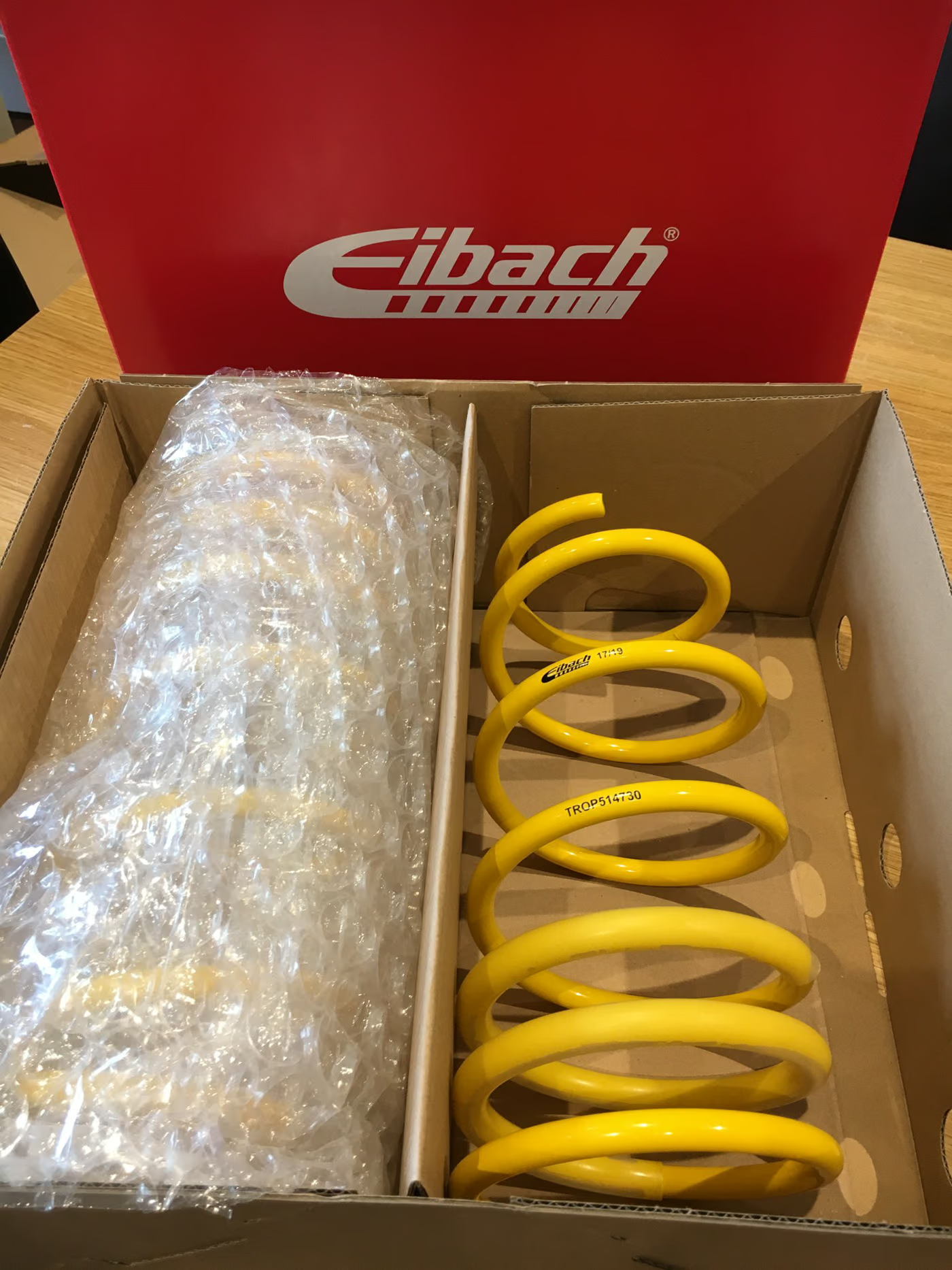
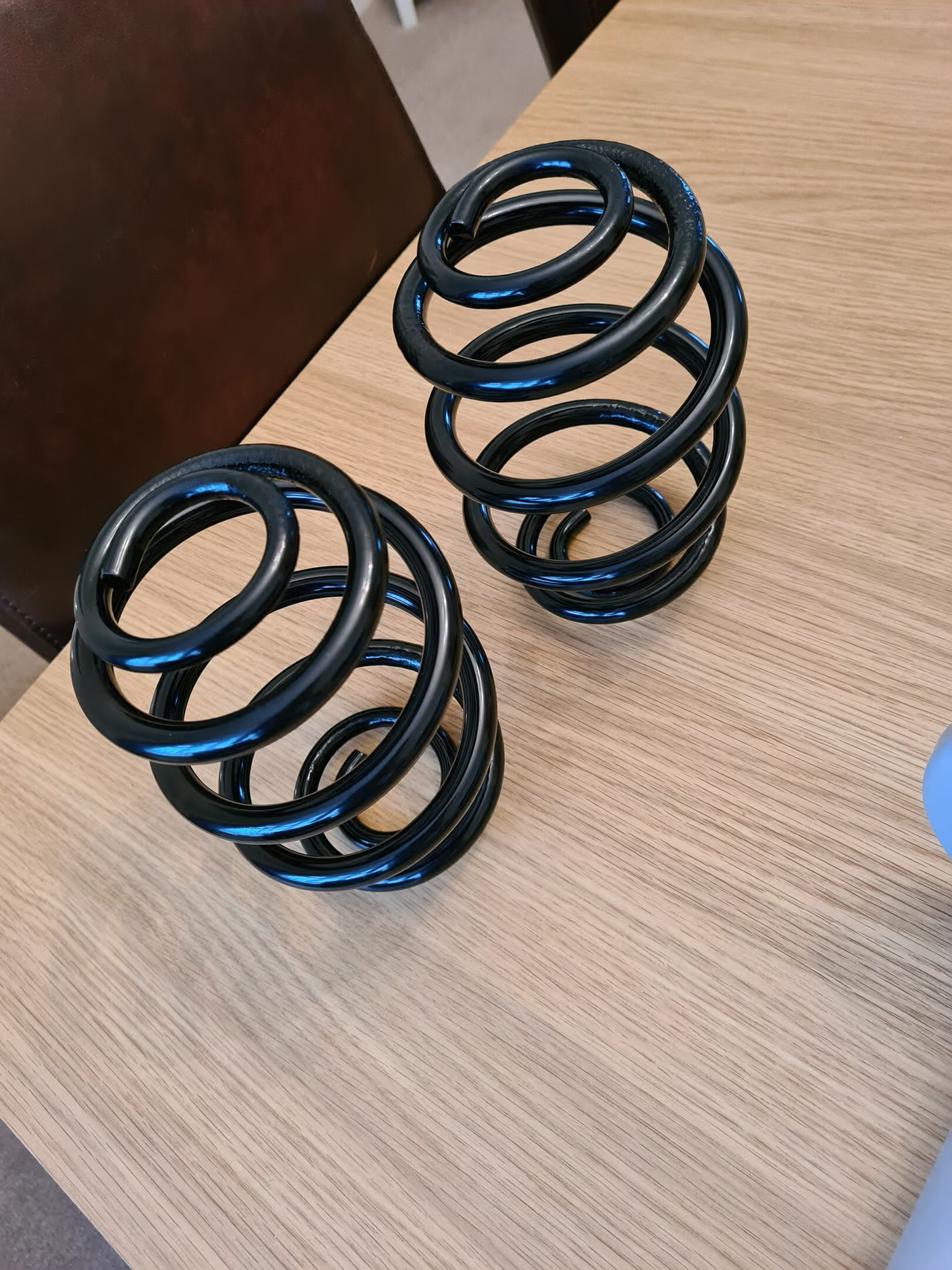
Do not be afraid of a car with suspension modifications, provided they are the right ones. Cheap coilovers are best avoided – you’ll get more from your money refreshing the factory dampers with some uprated springs such as Gramms or Eibach Pro.
By some distance the best regarded road coilovers are the Bilstein B14s at £789.30 (non-Cup) or £854.10 for the Cup sizes. Whilst perhaps a fraction too soft for regular track day attendees, the B14s will tighten up body control with some converts claiming a more polished ride quality even when lowered significantly. They’re also a quality fit and forget item that’ll last many years, just be sure to invest in a professional set-up to maximise the benefits of your new suspension.

Trophy Dampers – In Detail
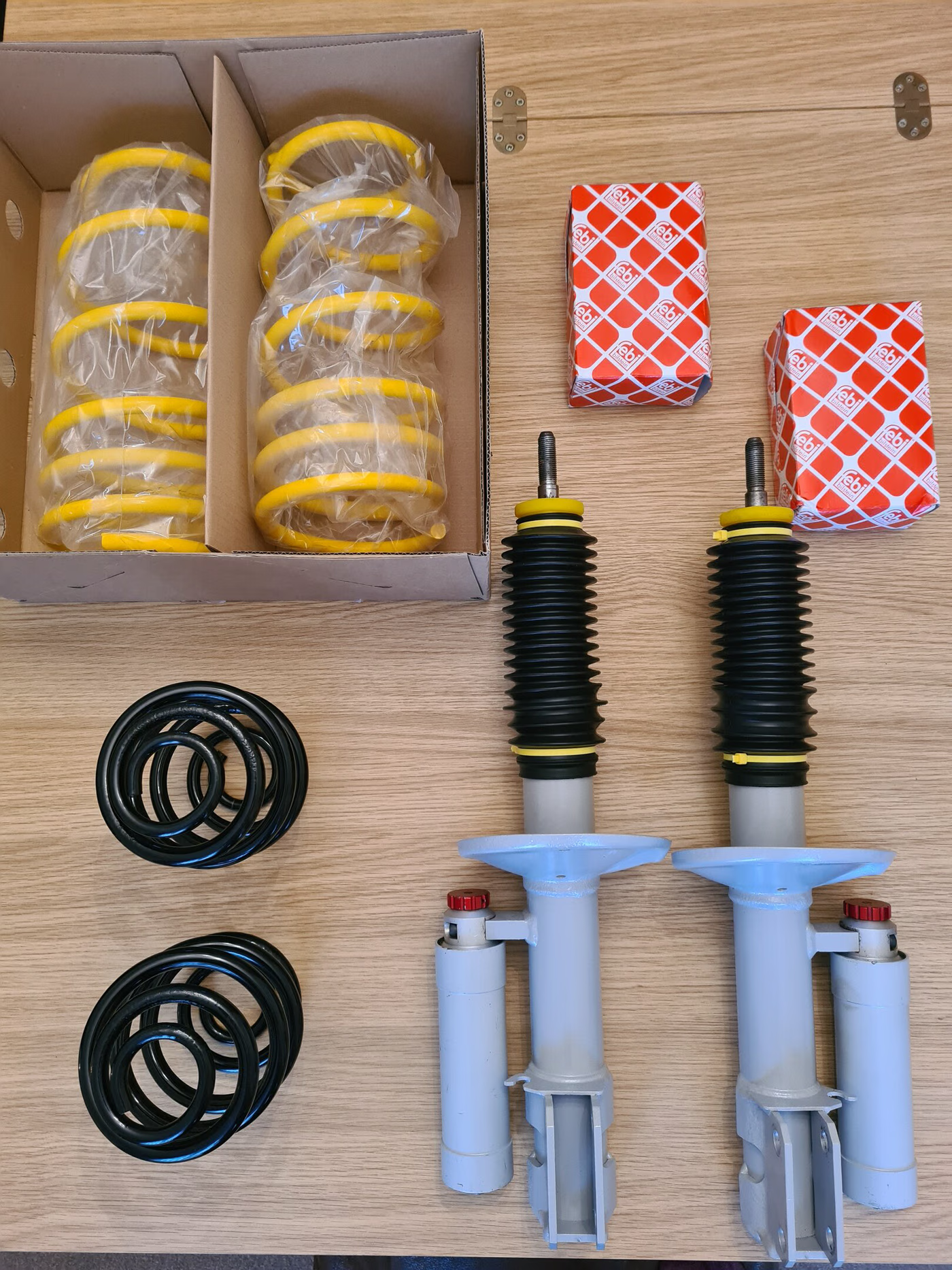
The Sachs dampers are so complex they are worthy of a buying guide all to themselves at this point. The front units are simultaneously the Trophy's defining feature and its greatest ongoing financial concern.
You need to approach maintenance with a different mindset from conventional dampers, for the Sachs are remote-reservoir, monotube units of the type used by BTCC teams, offering 40 clicks of compression adjustment via a dial on the reservoir canister. From the factory, most were set at around 22 clicks from minimum. They do not wear in the conventional sense; they fail, and when they do, they cannot be replaced, only rebuilt.
Frustratingly, the dampers have long been discontinued. Sachs produced a single batch to coincide with the Trophy run in 2004/05 and that’s it. Any you find for sale are second-hand and will need a rebuild before fitting regardless. The only question is who does that rebuild and how much it costs.
How To Tell They've Gone
There are three ways the Sachs will announce their deterioration. The first is the most dramatic: a corkscrew sensation during hard cornering, as if the front end is loading up and then releasing in an unsettling twisting motion rather than tracking cleanly.
The second is the static roof test – press down firmly on each front corner of the roof and release. A healthy Sachs will resist firmly and return with minimal oscillation. A tired one will feel soft, vague, and may need more than one damping stroke to settle.
The third is simply looking at the damper body itself; a weeping oil seal will leave a visible wet or dried residue around the shaft and body. As one owner on the ClioTrophy forum put it: when they go, they tend to piss oil out the top, and it's unmistakable once the damper is off the car.
Rebuilding
BG Motorsport at Silverstone Circuit is the official UK Sachs Race Engineering service partner and the name the Trophy community has always defaulted to. They use genuine Sachs parts, dyno-test every unit for balance, and offer powder coating, adjuster upgrades and the fitment of a secondary dust seal as part of a comprehensive service. Prices range from around £466 for a standard rebuild up to £900 or beyond depending on condition and additional work required.
The variable that catches most owners off guard is the damper shafts. These corrode over time, and a pitted or scored shaft will destroy a new seal quickly regardless of how good the rebuild is. Shaft replacement is not uncommon on cars of this age; the shafts remain available from Sachs stock, but the additional labour pushes the total into uncomfortable territory. If BG flags the shafts, don't argue about it.
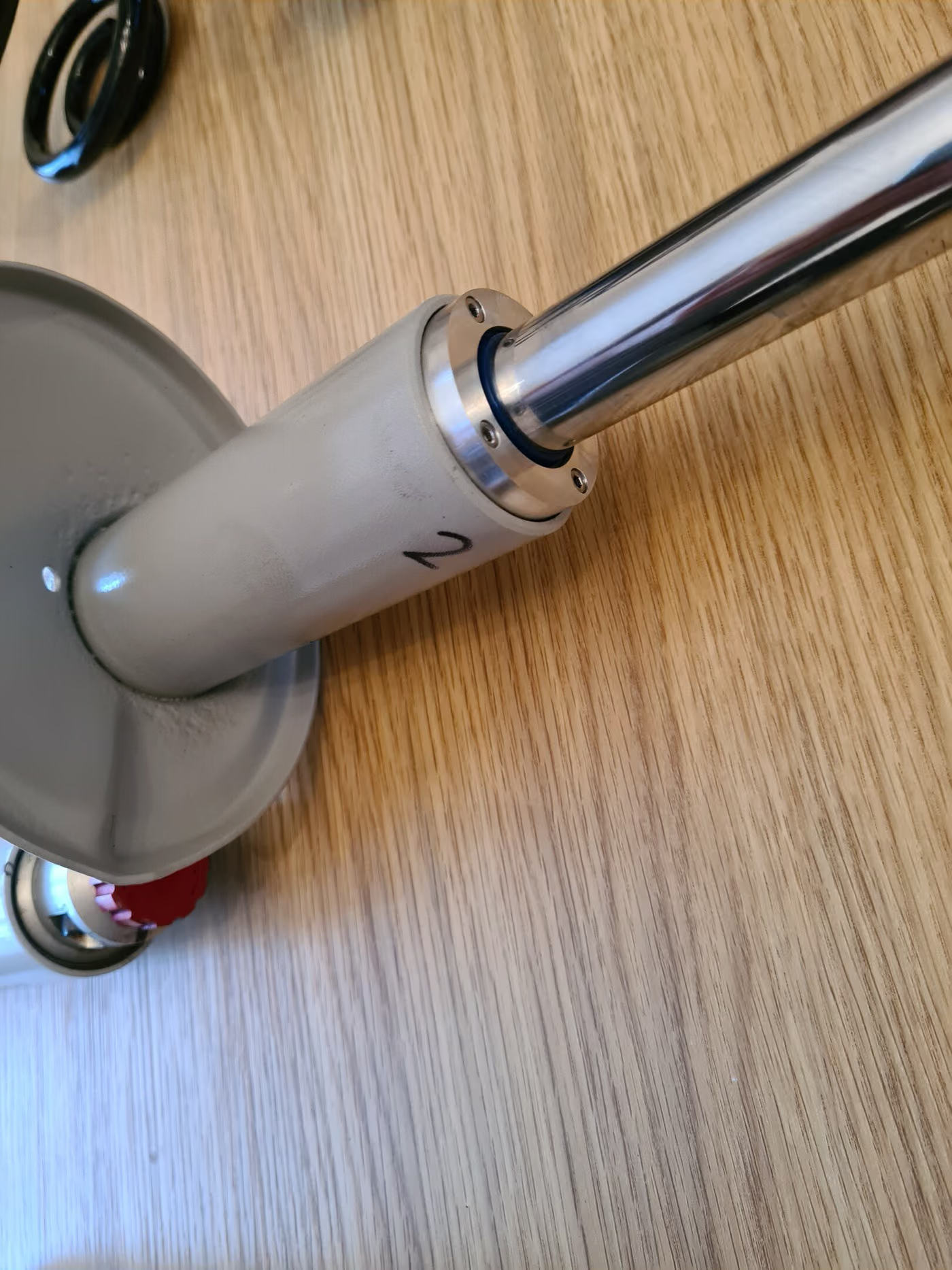
Cornering Force in North Yorkshire are the alternative at a lower entry point. Based on quotes circulating in the community in 2020, a standard strip, clean, seal replacement, fresh oil, new top sliding bush and dyno balance came in at around £354 per pair, with powder coating available for £474 all in, and an additional supplementary wiper seal for £54 per damper – a worthwhile addition given how vulnerable the main shaft seal is to contamination.
Prices have moved considerably since then, but Simon Roberts at Cornering Force has sound motorsport knowledge and the rebuild quality has generally been well-regarded. The honest caveats are turnaround times. CF is a small operation and has attracted criticism over the years for missed return dates, and some owners have reported their rebuilt dampers feeling noticeably firmer than expected post-service, though this typically responds to adjustment.
The sensible move for any Trophy owner sending the Sachs away is to fit a set of 182 Cup dampers in the meantime, ensuring the car stays on the road should any problems rear their ugly heads.
The Scraper Mod
The Trophy's front Sachs have no secondary dust scraper seal from the factory – the main shaft seal is the only thing standing between the internals and the road filth that accumulates around it. This matters because a contaminated shaft is the primary reason seals fail prematurely; grit works its way into the seal lip and the damage is done quietly and gradually until the damper starts weeping.
The Renault Twingo R1 rally car uses the same Sachs damper unit but was specified from new with a secondary scraper seal, essentially a wiper that sits above the main seal and keeps dirt off the shaft before it can cause any harm. The Trophy got no such provision, almost certainly because it was conceived as a road car and the motorsport-derived dampers were applied without the full motorsport-spec seal package.
The fix is to retrofit the R1 scraper seal to the Trophy dampers, but it is not a direct swap. The original damper body has no provision for the R1's fixture ring, so the top of the damper needs to be drilled and tapped to accept the mounting screws. It is a small job for anyone competent with the dampers on the bench, and both BG Motorsport and Cornering Force can carry it out as part of a rebuild. The parts themselves are inexpensive: the fixture ring, scraper seal and screw kit come to around £55 per damper at prices previously circulating in the community, though these will have moved.
If your dampers are coming off for a rebuild anyway, having the scraper mod done at the same time is the obvious call. It adds little to the overall cost, and the logic is straightforward – anything that keeps contamination away from a seal that is increasingly difficult and expensive to replace is worth doing.
The Longevity Question
There is no manufacturer-specified service interval for road use. Renault never communicated one, and Sachs only referenced motorsport cadences. In practice, first-time rebuilds on well-maintained dampers have lasted anywhere from 20,000 to 45,000 miles or more.
What the Trophy community has observed anecdotally, however, is that subsequent rebuilds tend not to last as long as the first. Each time a damper is stripped and reassembled, the seal faces and housing tolerances are subject to incremental wear that genuine Sachs parts can partially compensate for but not fully reverse. It is not a sudden cliff-edge failure mode, but owners on their third or fourth rebuild report notably shorter intervals between services than those on their first. Worth factoring into your long-term ownership calculus, particularly as these dampers cannot be replaced with new units.
Unpinning
As standard, the Trophy's front dampers are pinned to a fixed position, locking out the adjustment range. De-pinning – a modest additional cost typically carried out as part of a rebuild – unlocks the full 40 clicks and allows both dampers to be properly matched on the dyno before return. Most rebuilt sets come back de-pinned as a matter of course; if yours are still pinned, have it done.
The Rear Sachs
Here's something the Trophy community has quietly known for years: the rear Sachs dampers are largely unremarkable. They are better than standard 182 items, but they are not adjustable and the performance delta is smaller than you might expect. A surprising number of owners have run standard 182 Cup rears back-to-back with the Sachs and found negligible real-world difference. The rear Sachs are scarcer than unobtainium, so if yours need replacing, fitting 182 Cup rears is a perfectly reasonable solution and not the compromise it might appear on paper. Save the worry – and the budget – for the fronts.
Lastly, if a Trophy is running Cup-spec dampers all round, the originals have either failed or been sold off, and that's a significant chunk of the car's value missing.
Steering and Alignment
Power steering hoses are a known weak spot on the 172 (less so on the 182, as the hoses were upgraded), so be sure to give them a once-over or inspect the service history for evidence they’ve been replaced. The hydraulic PAS is also adjustable – in rare cases some owners will actually reduce the assistance to further increase road feel.
Be sure to investigate the condition of the inner track rods, which are more prone to deteriorating than their outer counterparts. Whilst the parts are cheap, changing the inner one is a labour-intensive job and thus attracts a hefty bill. Expect to be relieved of £400.
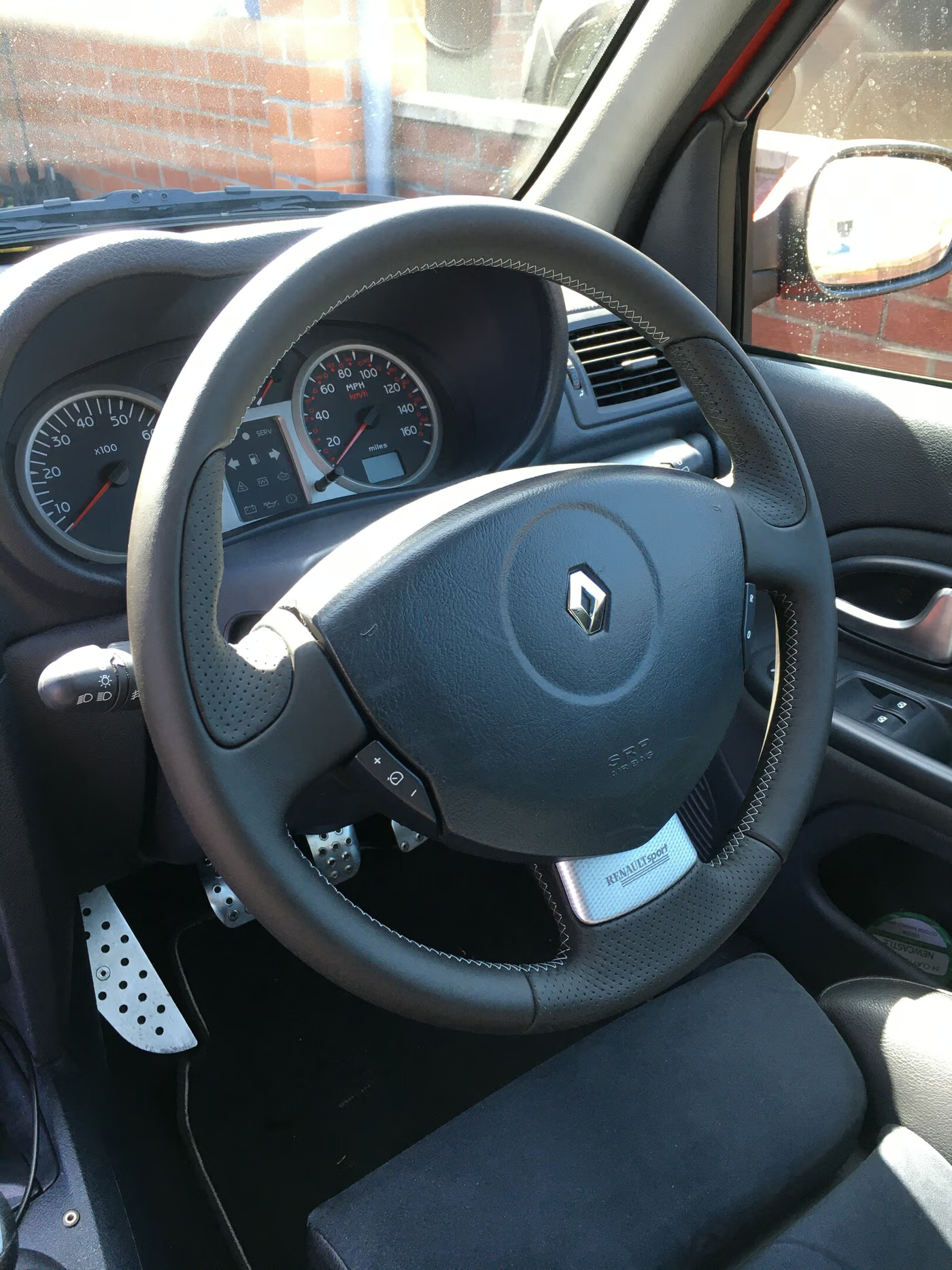
If you’re keen to correct one of the Clio’s biggest flaws, namely the bus-like diameter and awkward angle of the standard wheel, an aftermarket item makes sense. Sabelt is the go-to brand, although be aware the horn button will need to migrate to the end of the wiper stalk, and you’ll likely lose the cruise control. There is also the grey area of passing an MOT with the airbag removed. Those who do the modification, however, wax lyrical about its transformative effects.
Tyres – a Sticking Point
Until recently, tyres were a source of frustration for 182 owners given the car’s relatively small footprint of 205/45/R16 all round. Most tyre manufacturers have now moved on from these dimensions, leaving behind slim pickings for those in the market for performance-orientated rubber.
Thankfully Michelin has stepped into the void, with the Pilot Sport 5 now covering 16-inch sizes. Expect to pay £128–£150 fitted per corner.
Another premium brand option is the Continental PremiumContact 6, circa £130 per tyre before fitting. Mid-market brands come in the form of Avon ZV7 at roughly £100 fitted, Yokohama Advan Fleva around £110 fitted and Kumho Ecsta PS71 at roughly £75–£90 before fitting. Kumho’s UHP PS71 is an intriguing value choice but is known to wear relatively quickly and lacks the outright grip of pricier rubber for hard use. Similarly there’s the Uniroyal RainSport 5 at around £96–£105 per tyre.
At the extreme end of the spectrum are the road-biased track tyres such as the Yokohama Advan Neova AD08RS. UK prices vary wildly between retailers so spend some time shopping around: we’ve seen anywhere from £110–£150+ per tyre mail order to £180 fitted via high-street outlets. Nankang and Federal offer cheaper alternatives. Such rubber should only be fitted to aggressively driven weekend toys, as the Clio’s low mass means they take time to heat up, especially at the rear. They also bring penalties in terms of noise and wear.
For those who want to maintain originality, forum consensus puts the Michelin Pilot Sport 3 as the optimum tyre for balancing grip and adjustability. However, the technology dates back to 2010 and they’re only made in batches, which pushes prices up and makes a set hard to secure. Expect to pay upwards of £160 per corner fitted.
Popular Handling Upgrades
Aside from the suspension enhancements discussed above, there are multiple ways of making an RS Clio even sharper to drive. Polybushes are usually one of the first ports of call when it comes to modifying a Renaultsport Clio, with the anti-roll bar bushes, steering column bushes and engine and gearbox mounts all popular upgrades. However, it would be wise to consider how much increased noise, vibration and harshness you can tolerate being transferred into the cabin; often a refresh of the standard rubber bushes brings a significant improvement.
Two recommended and affordable upgrades to sharpen up turn-in and further enliven the back axle are front camber bolts and a stiffer rear anti-roll bar. Just mind how you go in the wet with the latter fitted.
On the more expensive side of the scale, a Quaife limited slip differential can be a transformative modification, especially for keen track day attendees. Beyond that you’re getting into chassis bracing or the likes of rear camber shims for the back axle. The Clio uses a torsion bar setup, which doesn’t offer any camber or toe adjustment, and the shims are a workaround to introduce some negative camber, keeping more of the tyre in contact with the tarmac during hard cornering, aiding both rotation and high-speed stability. One for the track day attendees or those running excessive ride-height reduction.
Talking about aftermarket seat mounts in a handling section might seem out of place, but hear me out. Given the 182 has a notoriously high driving position and a low kerb weight, fixing the front occupants 25mm closer to the road surface makes a tangible difference to both the car’s centre of gravity and your comfort.
Brakes
Most owners swear by the standard, single floating calipers as more than adequate for road use on such a light car. Expect most cars to be running the popular Brembo High Carbon discs in tandem with OEM or aftermarket fast road pads such as DS2500s. Otherwise, upgrading the braking on a 182 is a serious investment. One option is to fit the Brembo four pots from the Megane RS, however they require custom adaptor brackets and for the car to run spacers. Once you’ve ordered some appropriate discs and pads, you’ll be £750+ deep.
One thing to be aware of is the rear brake discs are a combined unit with the wheel bearings, which makes them frustratingly expensive, and only OEM will do as the aftermarket options are proven to not be as tough. Buy cheap and you’ll pay twice is the mantra here. It’ll set you back around £235 for a pair of rear discs, and you’ll also need to order the vital ABS spacer on top.
Known Issue – Sticking Front and Rear Calipers
The Clio’s dual handbrake cables often fail in time. In fact, most owners have given up on their handbrake, opting to leave the car in gear when parked. Some point to how keen the rear pads are to bind with their discs after a short stationary stint or even after a wash as a reason for failure.
At this age, expect the brake lines to be deteriorating too if they haven’t already been replaced. Braided hoses are an obvious and popular upgrade at this point.
A quick note about the 172 Cup: early on, many failed MOTs because the lack of ABS and deleted rear brake compensator caused the rear brakes to produce insufficient braking force on roller testers. Testers mistakenly flagged this as a faulty braking system, leading to VOSA issuing a special advisory for the model.
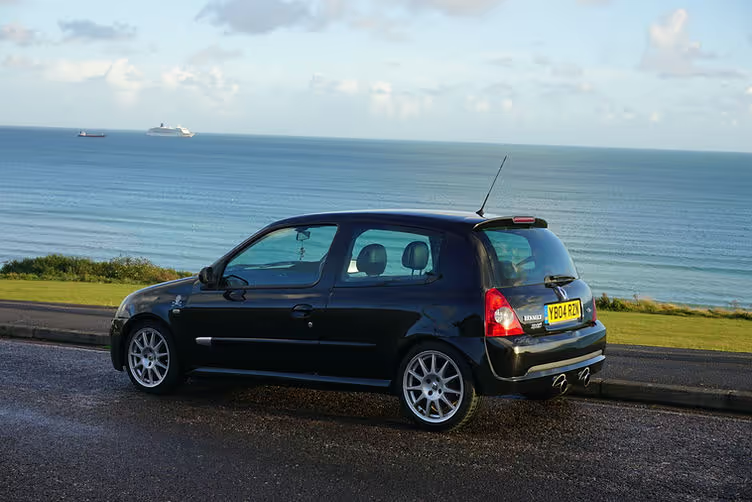
Servicing and Maintenance Intervals
- Annual oil change and service / 12,000 miles. 5W-40 fully synthetic oil. 5.1 litres required.
- Every two years / 24,000 miles: spark plugs, coolant and fuel filter change (based on condition).
- Every 36,000 miles / 36 months: replace auxiliary belt, inspect water pump and transmission fluid.
- Every five years / 72,000 miles: cambelt service.
On the Test Drive
Ask the seller not to warm the car before you arrive. The F4R has a progressive redline: 6,700rpm from cold, an intermediate 7,000rpm setting, only granting access to the full 7,250rpm as the oil comes up to temperature. If this function isn’t present, take it as a sign of an undisclosed remap.
Once running, watch the water temperature gauge. On a healthy car, the needle climbs to the midpoint and stays put, rock solid. If it wanders erratically, the coolant temperature sensor is on its way out. Although a cheap fix at around £37 from Renault, be sure to inspect the wiring loom around the connector too; corrosion and frayed wires in this area are common on higher-mileage cars and will kill a new sensor just as quickly.
With the car up to temperature, work through the gears. The shift should be slick if a touch long in throw, with a positive mechanical engagement at each gate. Listen for crunch when entering fourth – that's a worn synchromesh, a sign of abuse, and the gearbox will need a rebuild. A slight notchiness from cold is acceptable; sustained crunching when warm is not. Check reverse engages cleanly too, any reluctance to slot in usually points to a linkage adjustment, but grinding is more serious.
While you're shifting, pay attention to the lever under load. If it rocks back and forth noticeably on the overrun or under hard acceleration – particularly in the lower gears – the dogbone mount has worn through. With the car stationary, you can confirm this by having someone dip the clutch and select first while you watch the engine from the front: excessive movement settles the question. A Powerflex polybush upgrade is a two-bolt, thirty-minute fix and transforms the shift quality, so it's leverage in a negotiation rather than a reason to walk away.
Don’t worry if the clutch pedal is heavy – that's entirely normal. The biting point should sit high in the travel but not at the very ceiling of the range. If it has, the self-adjusting mechanism has run out of road and a replacement clutch is due. Budget accordingly.
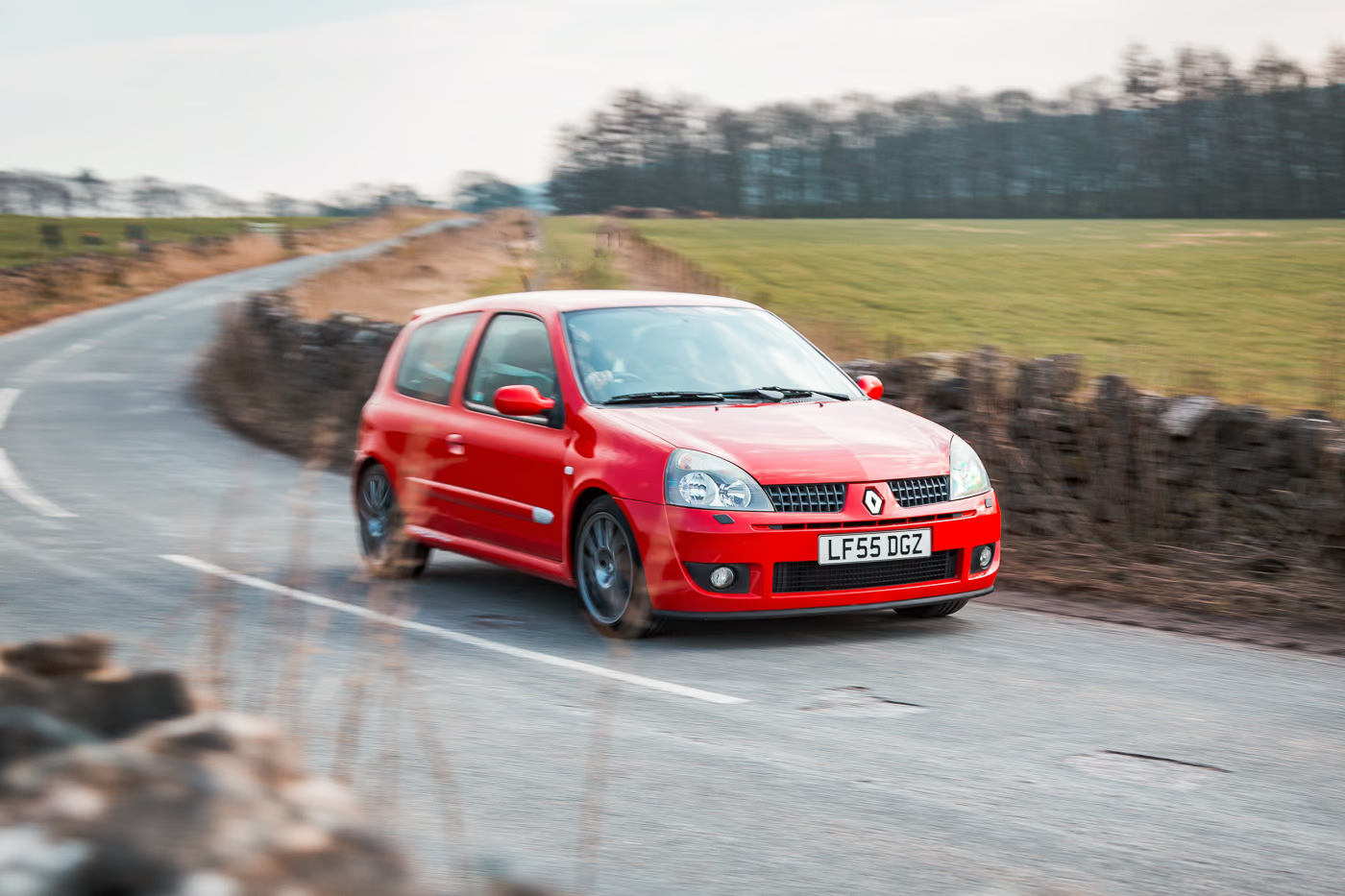
Find a decent stretch of B-road and push on. Those coming from a modern car or hot hatch may find the initial steering response to be on the slow side, but that is a by-product of shifting approaches rather than a fault of the Clio’s. Once acclimatised, the car should feel taut, alert and keen to change direction, with communicative steering that loads up progressively through a corner. If the wheel goes mute when you lean on the front end, the inner track rod ends are likely tired. If the car wanders or tramlines instead, it may simply need an alignment – the RS Clio is extraordinarily sensitive to geometry, and even a fraction out will dull the experience. Ask whether the current owner has had regular alignments done; a record of them is one of the most telling signs of a dutiful keeper.
Over rougher surfaces, listen for knocks. From the front, worn drop links are the cheapest culprit, tired wishbone bushes the next rung up. From the rear, torsion beam bushes and shock absorber mounts are the usual suspects. None of these are unusual on a car of this age that's been driven as intended, but a car that crashes and thuds rather than absorbs has suspension that needs prompt attention. On a car defined by its chassis, that goes to the top of the to-do list.
The engine should rev eagerly and have an abundance of torque. One of the car’s defining features is a noticeable kick at 5,500rpm as the variable valve timing comes on song. It’s by no means night and day like a Honda VTEC, but it's hard to miss, adding a meaningful rush to the top end. Like the cold start procedure, a remap will often ‘massage out’ this sensation as most of the gains are made in the mid-range.
Naturally, the brakes do their best work with some heat in them. Stopping performance remains adequate by modern standards, although don’t expect the same levels of over-servoed, instant bite we’ve gotten used to at the top of the pedal – a hard stop requires a good stomp on the pedal. Just be mindful of the lack of ABS if you’re testing a 172 Cup.
Lastly, French cars of this era weren’t exactly paragons of electrical reliability, so run through all the electrical components before you leave. Ensure you test the electric windows, climate control (where fitted), and central locking from both keys.
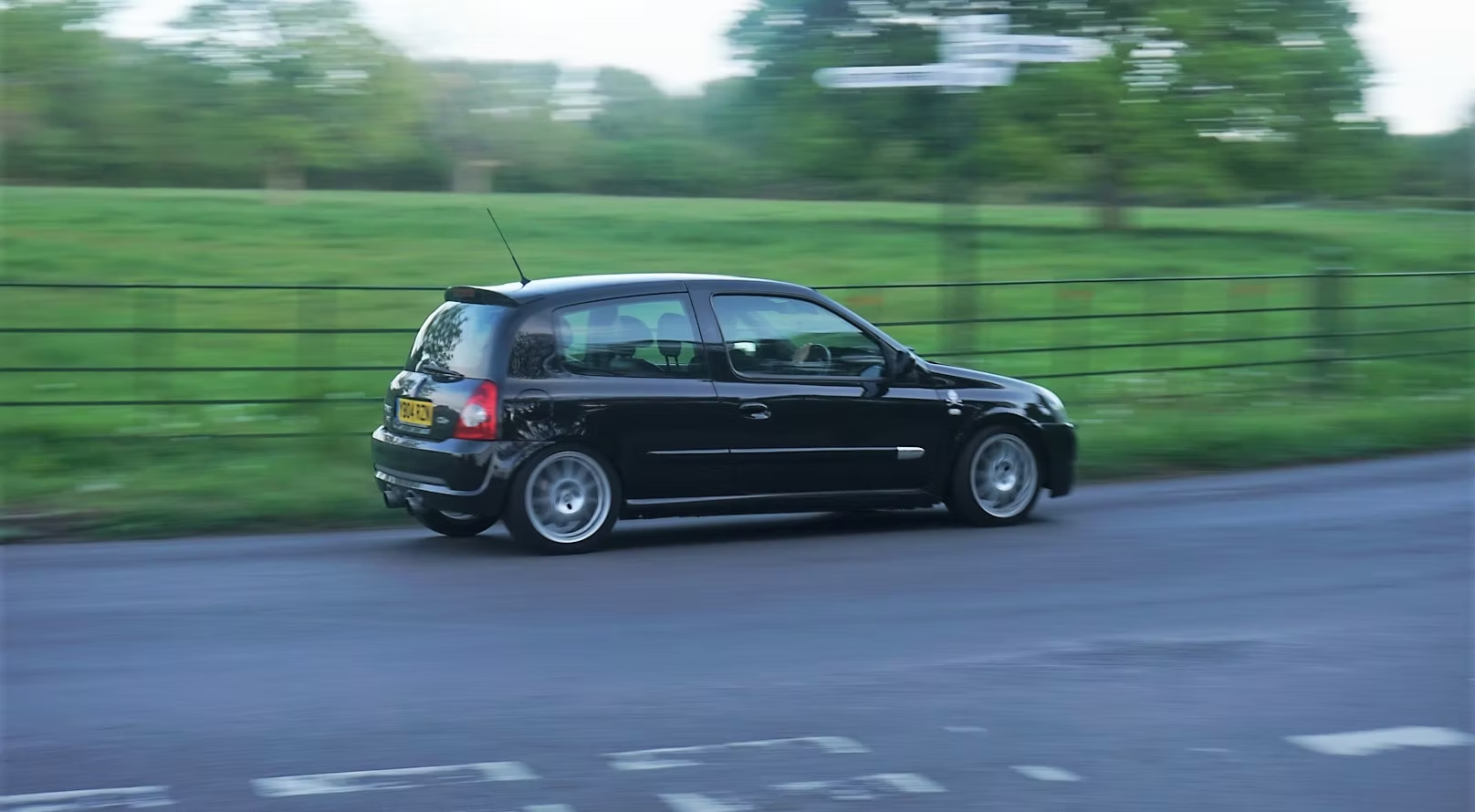
Bodywork and Cosmetics: Corrosion
The Mk2 Clio is actually better protected than most contemporary rivals, but two decades of British winters have inevitably found the weak points. The key areas to scrutinise are the rear arches, particularly where the bumper meets the bodywork – grit and road salt get trapped between the two panels, wearing through the paint from behind. By the time you see bubbling on the outside, the damage underneath will be significantly worse. Open the fuel filler flap and give the surrounding metalwork a firm press with your thumb; the filler neck area sits in a cavity that retains mud, and it's one of the first places to rot through.
The sills are another big worry, and they're largely hidden behind the side skirts. Removing the skirts on a viewing isn't always practical, but popping off the rear door cards will give you a window into the inner sill condition. If the inner sills show anything beyond light surface corrosion, walk away – it only gets worse from there, and repair costs will quickly spiral. Diligent owners will often apply protection to this area.
The jacking points are notoriously fragile too. They were fragile from the factory, and years of careless lifting have split and corroded the majority of them. Mangled jacking points are an MOT concern and a telling sign of how the car has been treated. Check behind the rear bumper at the mounting points while you're at it – another out of sight spot corrosion gnaws away at. A quick rule of thumb: buying a mechanically tired but structurally sound car and spending on the oily bits will always be cheaper than chasing rust on an otherwise solid runner.
Body and Paintwork
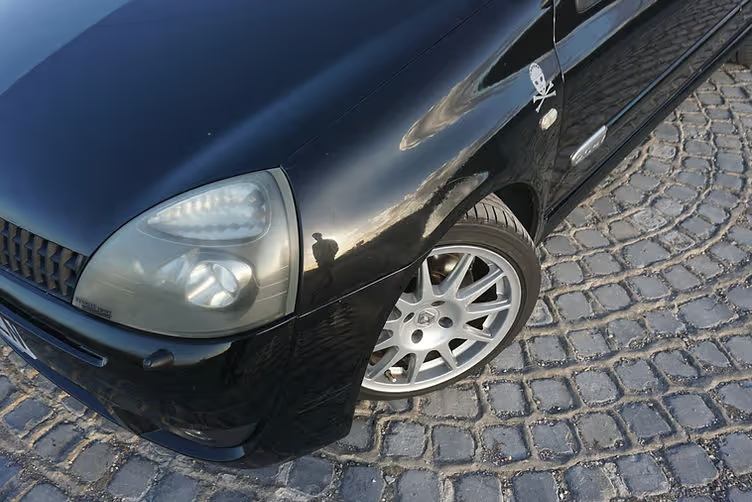
All Mk2 Clios have plastic front wings, which is one less thing to worry about – they're durable and cheap to replace. A common place to find dents is around the front bonnet latch, with the Phase 2 cars being particularly susceptible. While we’re in the vicinity, the headlights will have yellowed and hazed over time – a good polishing kit will restore clarity, but often proves to be a temporary fix.
The wheel arch liners are now no longer available from Renault, so if they're missing or damaged, you'll be hunting in breakers' yards. Their absence accelerates corrosion inside the arches, so factor this in. Exhaust alignment on the twin-exit 182 system is worth checking too – a drooping or misaligned back box is common, caused by fatigued mountings struggling with the weight. Many owners have moved to lighter aftermarket systems as much out of practicality as performance.
Front Cup splitters take a beating from speed bumps and car park kerbs, and genuine replacements are expensive. The widely adopted workaround is to fit a Skoda Fabia front splitter, which gives a spot-the-difference OEM appearance for a fraction of the cost.
.avif)
Inside, the 182's silver seat belts will almost certainly have turned a grim shade of brownish grey. The good news is a pressure washer and some APC will bring them back to near-factory condition: pull the belt fully out, trap it outside the car door and jet wash the length of it. Fifteen minutes of effort for a dramatic improvement. If it's not already been taken care of, the steering wheel rim will likely be showing its age too, with the leather wearing smooth and the rubber thumb grips deteriorating. It's a car that was designed to be grabbed, and two decades of enthusiastic use takes its toll. Expect the glovebox to be sagging on one side too – it's a Renault tradition.
Elsewhere, the gear knob will have faded and the rear-view mirror housing often discolours – both are purely cosmetic but telling of how much sun exposure the car has had. On that subject, Trophy owners should pay particular attention to the Capsicum Red paintwork on any plastic bodywork, which is known to turn pink with prolonged sun exposure. The likelihood is most cars will have had this rectified, so don’t get too precious if a Trophy has had paint.
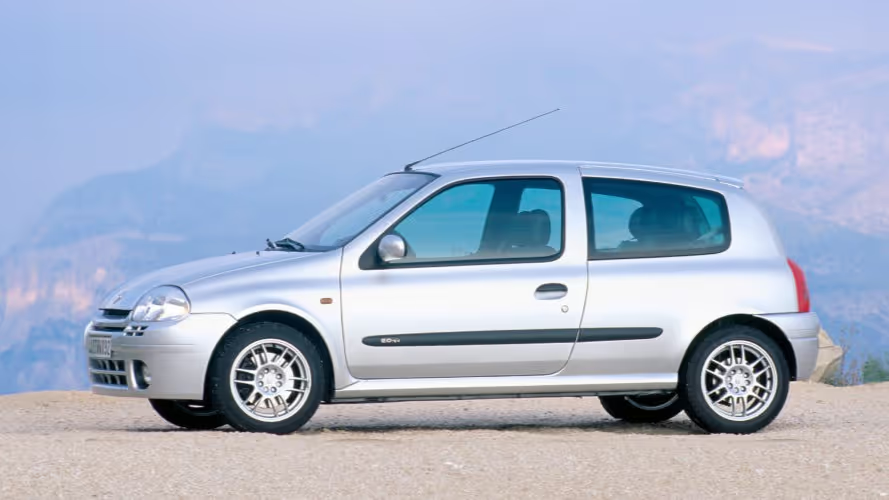
Market Assessment: Renault Clio 172 (Phase 1 / pre-facelift)
Typical Price Range: £4,500–£7,000
Good, usable Phase 1 172s now sit broadly in the mid-£4,000s to around £7,000, depending on mileage, colour, originality and how well they have avoided the usual pitfalls. Sale data is thinner than it is for 172 Cups or 182s, but current UK asking prices include a 96,000-mile 2000 car at £5,750, while The Classic Valuer's wider 172 data puts the model median at £5,140. The best pre-facelift cars – particularly original examples in rarer colours – push comfortably beyond that.
Low Mileage / Premium Condition: Exceptionally original or low-mileage Phase 1 cars occupy different territory. A 54,386-mile example recently appeared at £14,000 asking – ambitious for a standard Phase 1, but indicative of where sellers now position standout cars. Treat that as the ceiling rather than the market.
Colour / Specification Premiums: Phase 1s are scarce enough now that originality carries more weight than any single option, but rarer colours help. Flame Red is among the lesser-seen finishes, while the Scarab Green 172 Exclusive – limited to 172 cars, all with BBS wheels and full leather – remains the clear collector's choice among non-Cup 172s. The Classic Valuer records a 48,257-mile Exclusive selling for £7,075 in January 2025, and the best examples will only move further from the standard car as supply thins.
Market Assessment: Renault Clio 172 (Phase 2 / facelift)
Typical Price Range: £3,500–£6,000
The facelifted 172 remains the most affordable route into Mk2 Renaultsport ownership short of a rough car or a compromised auction buy. Recent UK sale evidence is spread widely by condition – from £1,512 and £1,550 for cheaper auction cars, up to £3,700 for a 2002 example in February 2026 and £6,034 for a stronger 2002 car sold through PistonHeads in January 2025. A current dealer asking price of £6,000 for a 79,223-mile 2002 car confirms that decent, presentable facelifted 172s now live in the high-£3,000s to £6,000 bracket.
Low Mileage / Premium Condition: Stronger facelifted cars with better provenance, cleaner bodywork and lower mileage are beginning to edge beyond that range, but not with the same conviction as the 172 Cup. This is still the part of the market where condition, maintenance history and originality matter more than rarity alone. The Classic Valuer's aggregated 172 median of £5,140 is a useful sense-check.
Special Editions / Notable Variants: The facelifted 172 did not receive a limited-edition variant equivalent to the Phase 1's Exclusive or the later 182 Trophy. That means specification differences between facelifted 172s are slim, and the usual hierarchy applies – originality, colour, mileage and maintenance history are what separate one car from another. A well-kept, unmodified example in a desirable colour will always be worth more than a tired or heavily modified car at similar mileage, but there is no single specification point that dramatically reshapes the value picture the way a Cup chassis or Trophy Sachs dampers do further up the range.
Market Assessment: Renault Clio 172 Cup
Typical Price Range: £5,000–£8,500
Prices for 172 Cup models in good condition with average mileage (70,000–110,000 miles) typically fall between £5,000 and £8,500. These cars have already begun to separate themselves from the standard 182, and the trend is firmly upwards.
Low Mileage/Premium Condition: Well-maintained examples with lower mileage (below 60,000 miles) are now comfortably commanding five figures, with the best approaching £12,000.
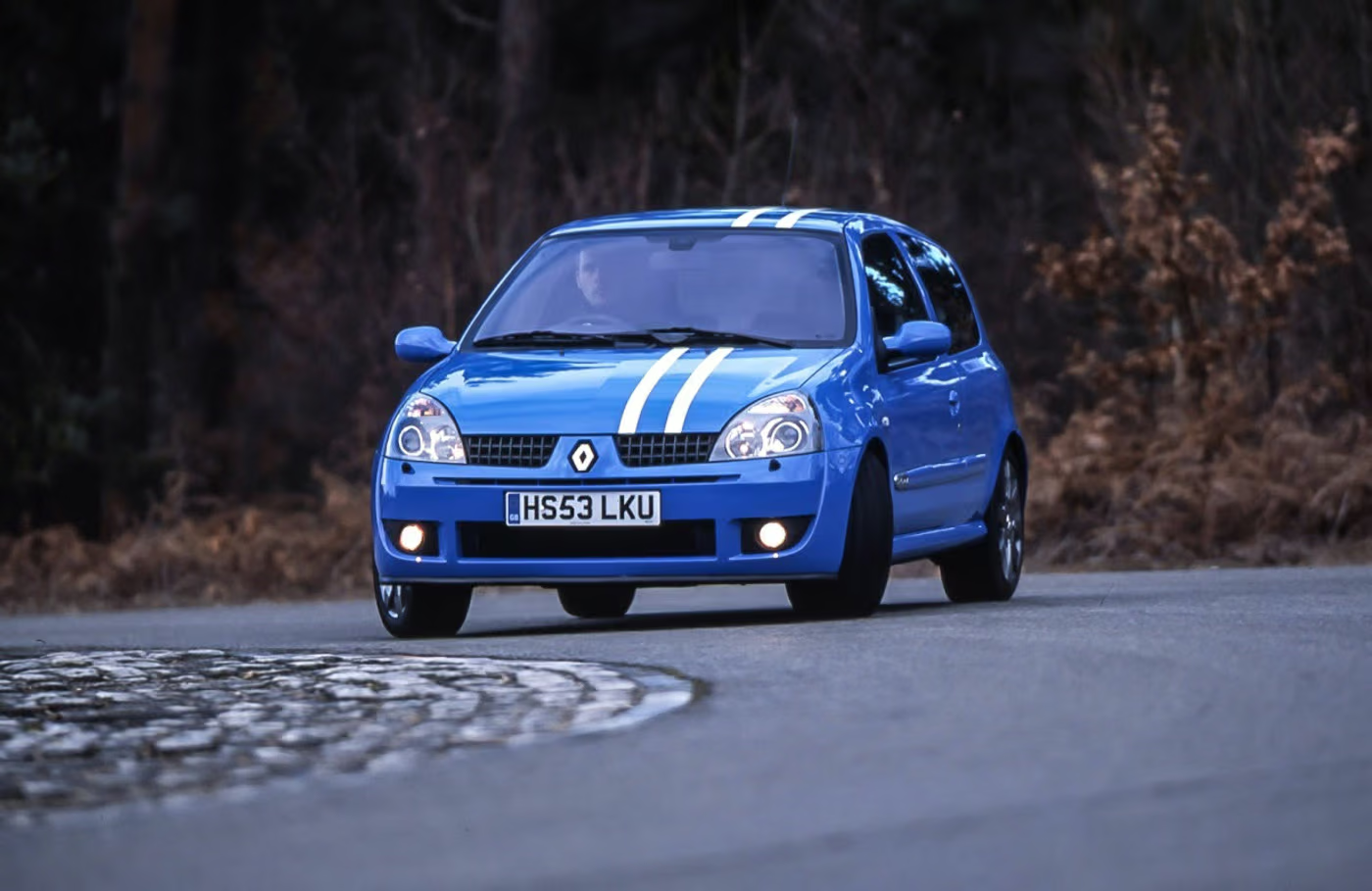
Colour Premiums: The 172 Cup was only offered in Mondial Blue and Iceberg Silver. Mondial Blue was significantly more popular, being a unique colour to the car. The much rarer Iceberg Silver – around 90 were produced – was a colour shared with the regular 172, and curiously does not attract the premium its scarcity might suggest.
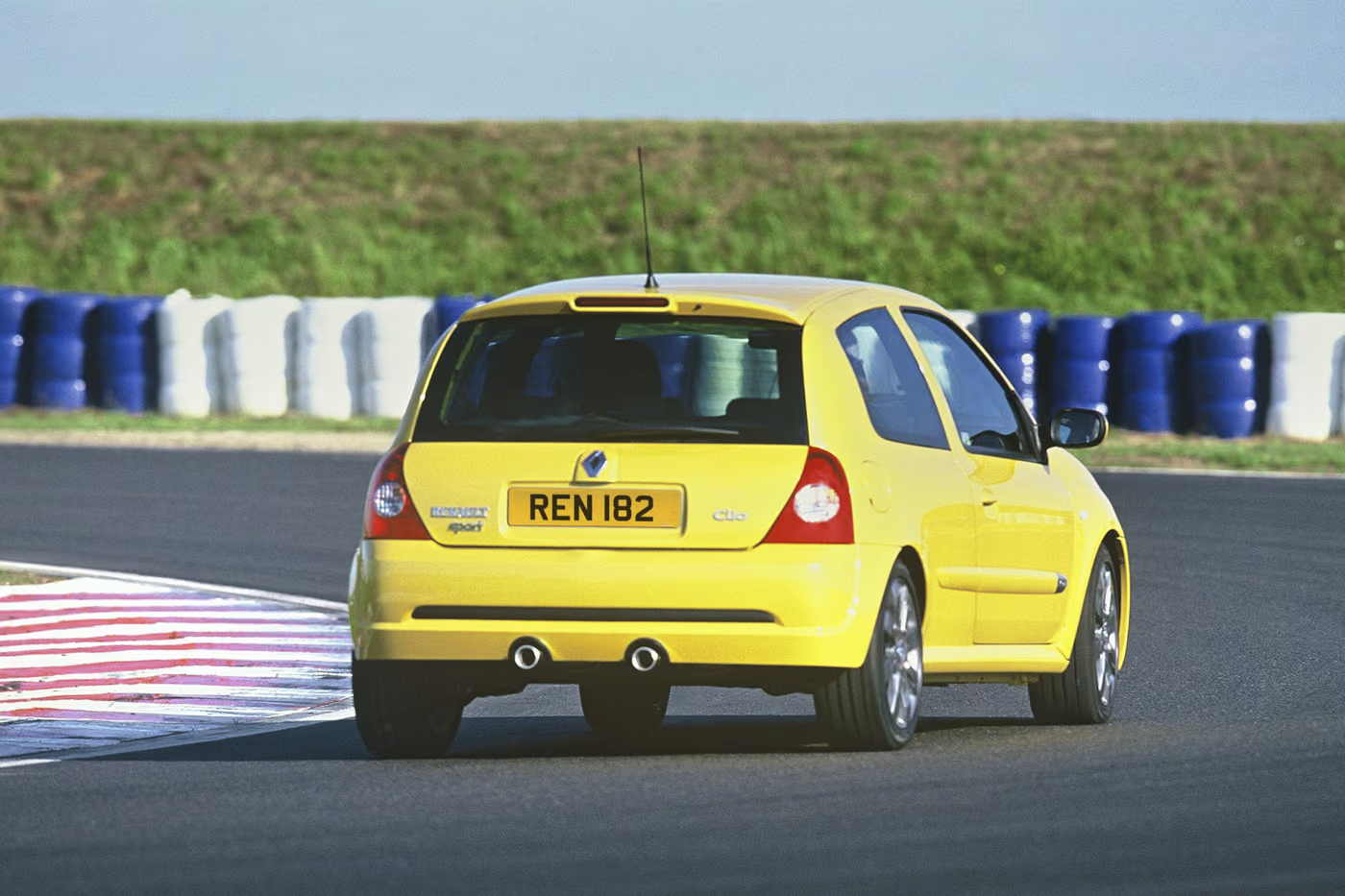
Market Assessment: Renault Clio 182
Typical Price Range: £3,000–£6,000
Prices for standard 182 models in reasonable condition with average mileage (70,000–110,000 miles) typically range between £3,000 and £5,500. Full fat Cups and unmodified examples regularly exceed this, with the best full fat cars now trading in the £7,000–£11,000 bracket at auction. Think of it this way: a standard 182 and a full fat Cup are effectively two different propositions in today's market.
Low Mileage/Premium Condition: Well-maintained examples with sub-60,000 miles can fetch £7,000 or more, with exceptional full fat examples now surpassing £10,000 at auction.
Colour Premiums: Sought-after colours such as Racing Blue can add £500–£1,000 to the asking price. The ultra-rare Liquid Yellow and Petrol Blue are in a different league, commanding premiums of £2,000 or more. Both colours are thin on the ground and increasingly chased by collectors.
Renault Clio 182 Cup: Factory Cup models command a modest premium of £500–£1,000 over an equivalent standard car on account of rarity and purist appeal.
Market Assessment: Renault Clio 182 Trophy
Price Range: Below £8,000
At this price point you're looking at a borderline project, an accident-repaired car, or a Category S write-off. Higher mileage examples (120,000+) occasionally creep into this band. Do not immediately dismiss a car here if it has been meticulously maintained, but the reality is that significant work will be required. The status of the Sachs dampers is the single biggest variable – if they need a rebuild or have been swapped for standard Cup items, the car's defining characteristic is absent and the asking price should reflect that. Cambelt history and bodywork condition are your other two non-negotiables.
Price Range: £8,000–£15,000
This is where the majority of Trophy’s change hands. Cars in this bracket will generally have a solid service history and be in good cosmetic and mechanical condition, typically with 80,000–120,000 miles covered. Minor wear and tear is expected. Rebuilt Sachs dampers are a significant plus at this price point, and a car with recently refreshed dampers, a current cambelt and presentable bodywork represents the sweet spot of the range for a driver.
Price Range: £15,000–£25,000
Low-mileage cars (sub 60,000) in excellent to immaculate condition with comprehensive service histories. These examples are likely to be in near-original specification with minimal modifications. At the upper end of this bracket you're buying a car that could credibly appear on a specialist dealer's forecourt or cross the block at a major auction house. The Renault heritage fleet's chassis 001 Trophy sold for £45,250 in 2022, but that was an extreme anomaly driven by provenance rather than a reflection of the broader market.
Our Pick
The spotlight obviously shines on the Trophy. The trouble is, you’ll already be paying a premium for one, and whilst it is a true great, we can’t help but shake the feeling that with a little help from the aftermarket, a regular 182 can deliver much of the same appeal for a fraction of the price. Fit a set of Bilstein B14s to a 182 Cup-pack car and you’ll get most of the ability for half the outlay, with no anxiety about preserving future value. A set of Speedline Turinis would round off the look nicely, and you’ll have your pick of colours.
Our ultimate choice, however, is the 172 Cup. It’s a genuine homologation special that cut a frankly astonishing 89kg from the kerb weight of an already flyweight car. It too has a unique colour, distinctive visual touches and low production numbers – just like the Trophy – and it’s utterly brilliant to drive. History shows us these are the sort of models the market cherishes, and with prices still broadly on a par with a good 182, the 172 Cup looks undervalued.


.avif)
.avif)


.svg)

