-01.svg)

Presented in near-production form, the ID.3 GTI sends 322bhp and 402lb ft to the rear axle through a single electric motor. Volkswagen claims 0–62mph in 5.6 seconds, while top speed is electronically limited to 124mph.
That makes it the most powerful series-production GTI yet, narrowly eclipsing the 321bhp Golf GTI Edition 50. Far more telling is how closely those figures mirror the outgoing ID.3 GTX Performance, which had the same outputs and headline performance.
Volkswagen says the rear-mounted APP550 electric motor has been further optimised for the GTI, but with no additional power, most of the work has gone into changing how the car behaves rather than making it faster. The same approach extends to the suspension, with modified springs, dampers and anti-roll bars, while the front-axle elastokinematics have been adapted to improve steering agility. The DCC adaptive dampers and vehicle dynamics manager also receive GTI-specific parameters, with progressive steering fitted as standard. Tyres are 225-section as standard, with wider 235s optional.
GTI mode brings the powertrain, steering and damping together under their sportiest settings and enables launch control, while also turning the cabin lighting red and introducing a synthesised combustion-engine soundtrack. Volkswagen has stopped short of the kind of simulated gearshifts used by the Hyundai Ioniq 5 N, though a newly developed exterior sound operates at speeds of up to 16mph, extending to 31mph in Sport mode.
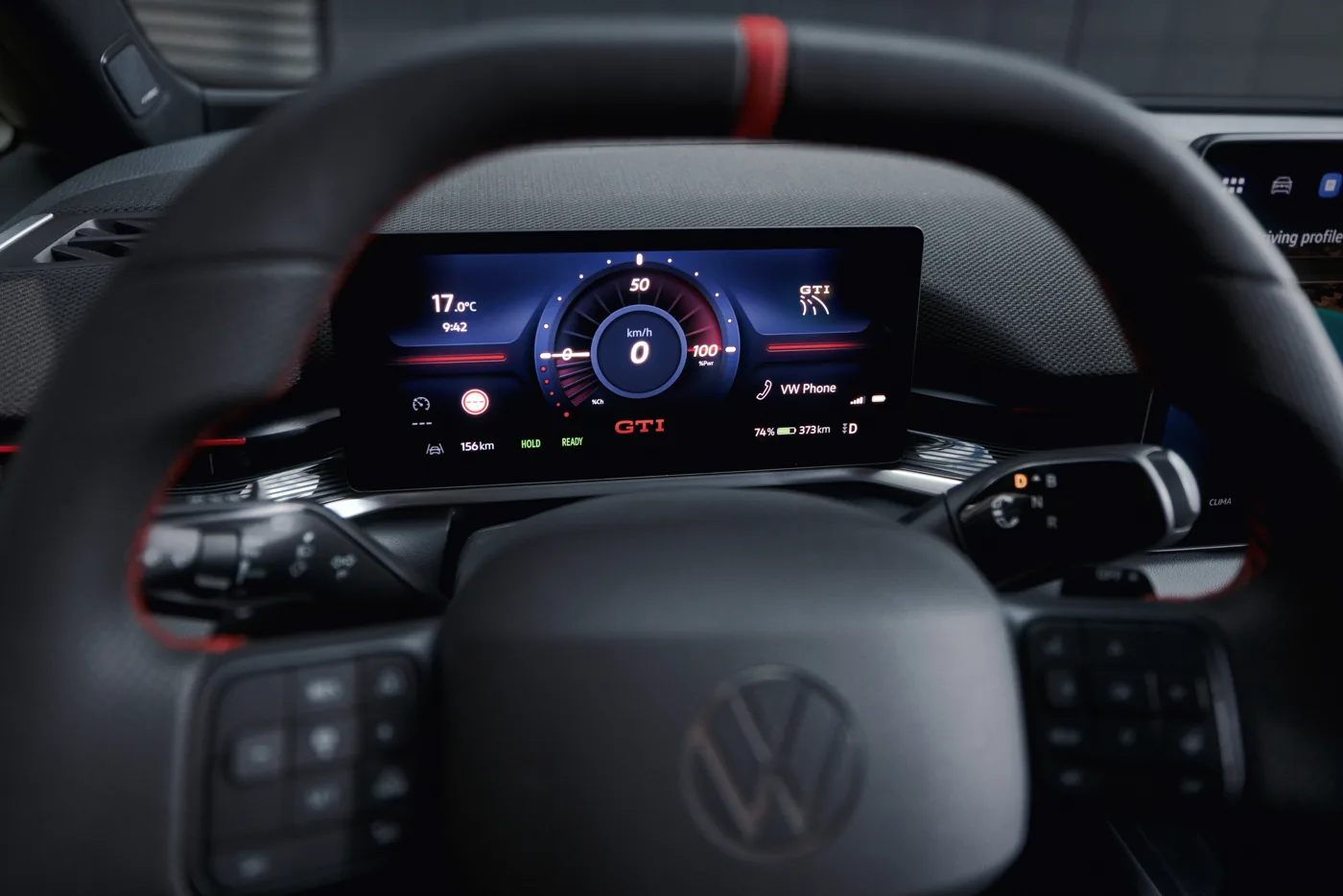
The 10.25-inch driver display gets in on the act, with a lap timer and a retro view inspired by the instruments of the Mk1 Golf GTI.
How successful that proves may depend partly on a figure Volkswagen has yet to publish: kerb weight. The GTX Performance tipped the scales at around two tonnes, so how convincingly the revised chassis deals with that mass will be worth watching.
The GTI retains the GTX Performance’s 79kWh usable battery, with Volkswagen forecasting up to 373 miles of WLTP range. Peak DC charging is rated at 183kW, with a 10–80 per cent recharge taking around 30 minutes – slightly slower than the outgoing GTX Performance, which managed the same charge in a claimed 26 minutes at up to 185kW.
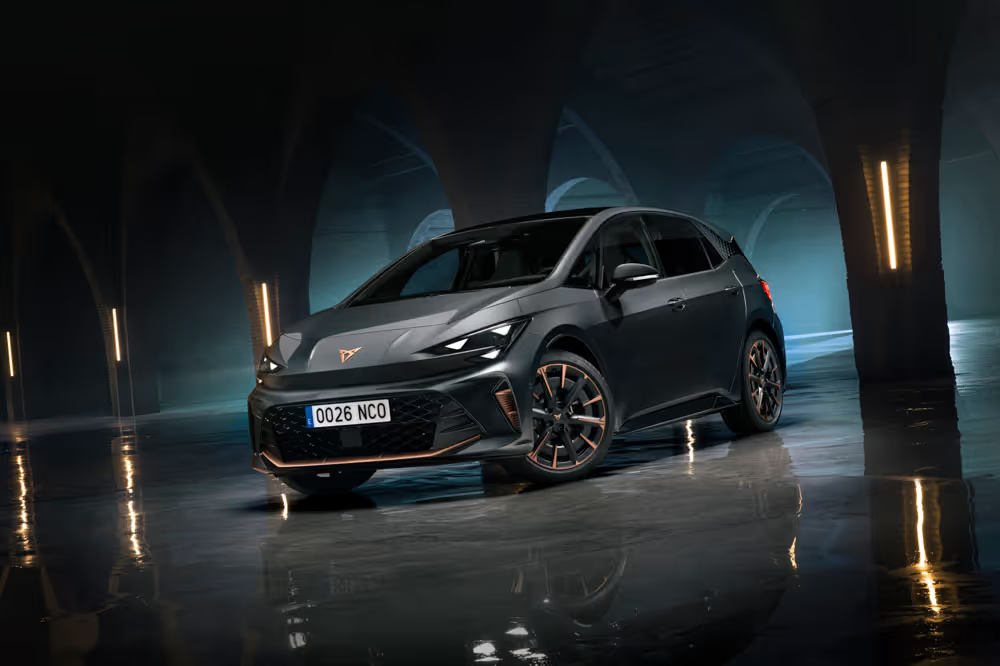
Mechanically, its closest relation remains the Cupra Born VZ, which uses the same 322bhp and 402lb ft outputs, 79kWh battery and rear-wheel-drive layout. The field is getting broader, though. The all-wheel-drive Kia EV4 GT is due with 288bhp and similar straight-line pace, at around £49,500.
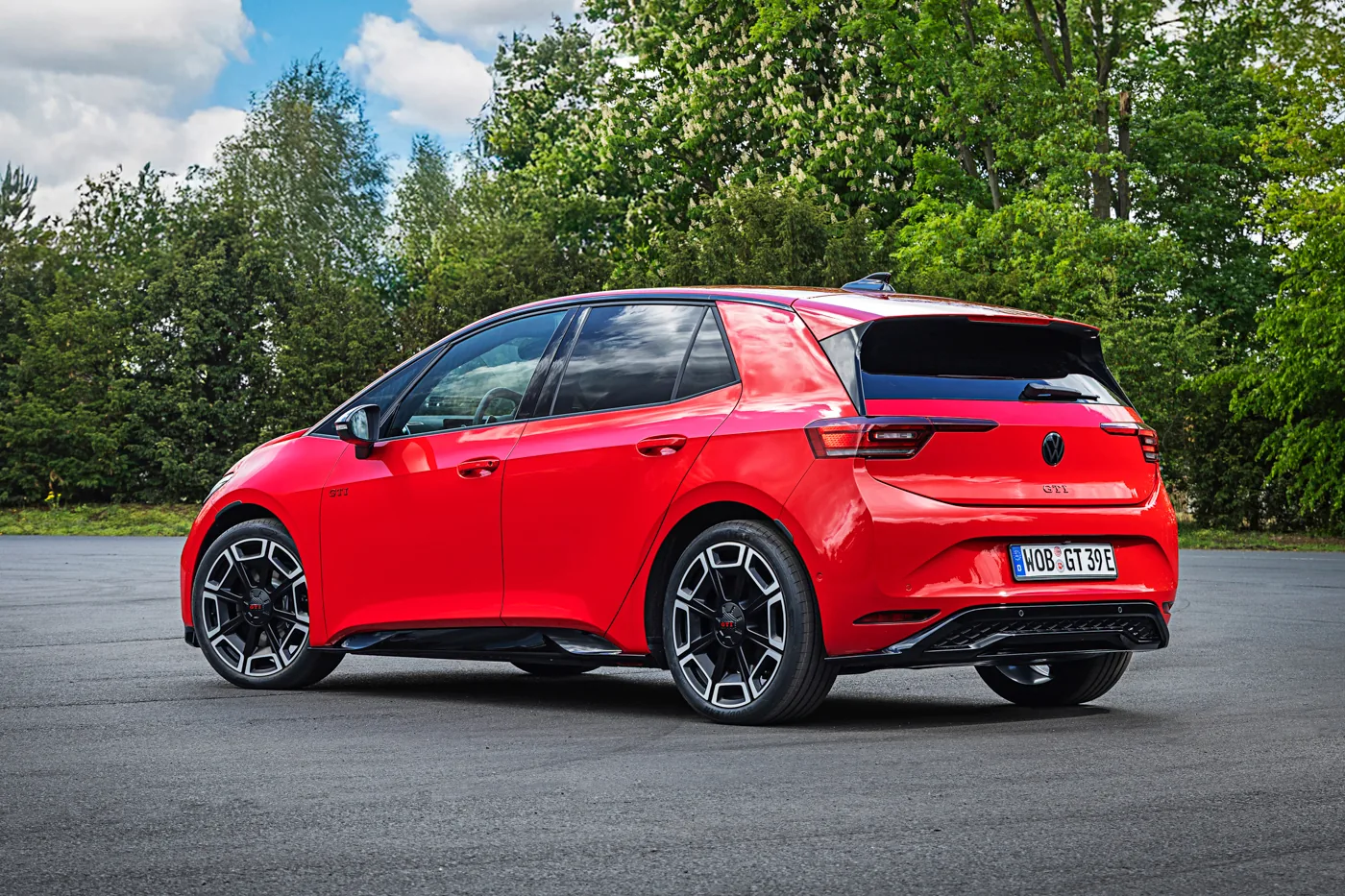
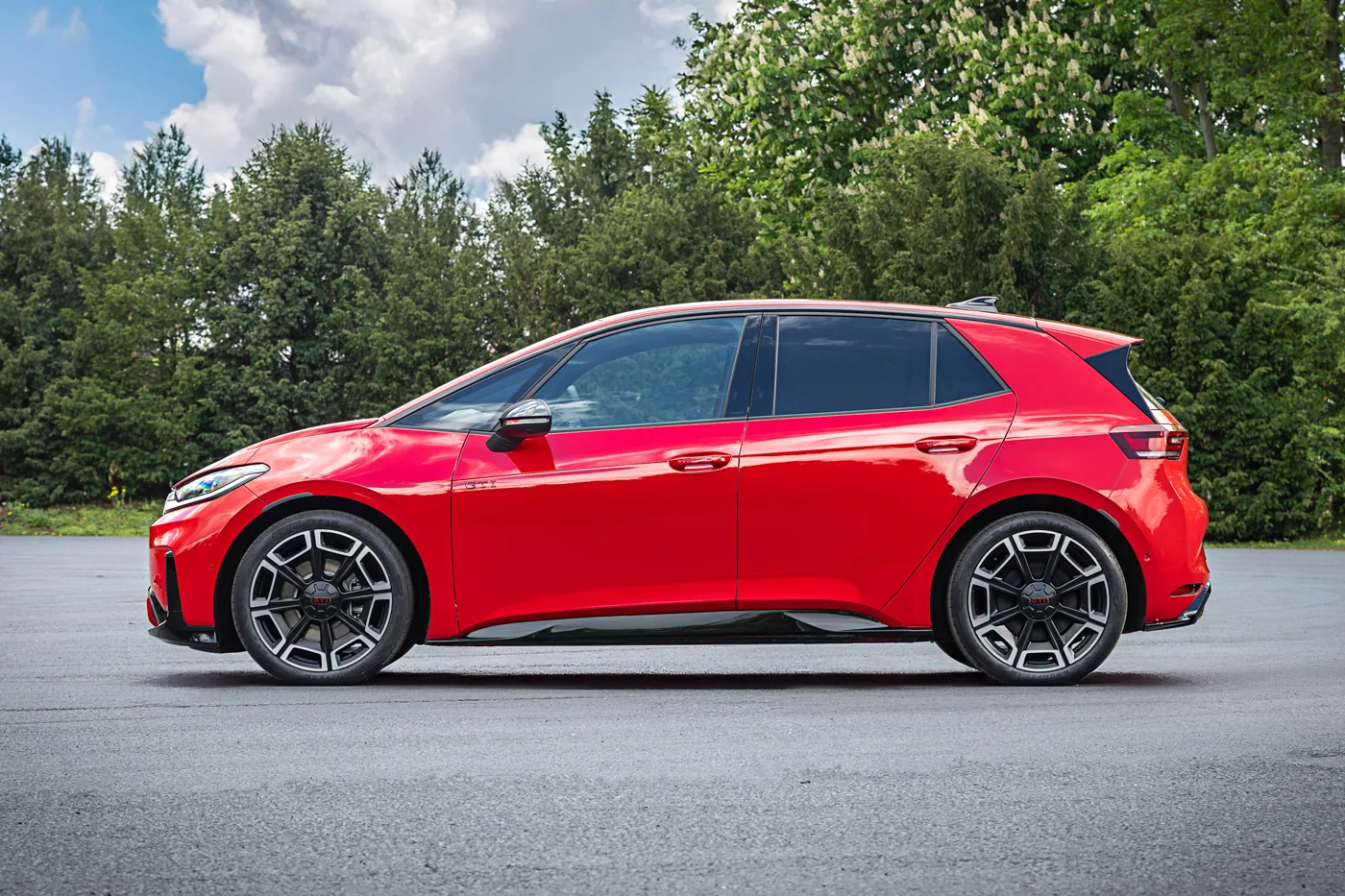
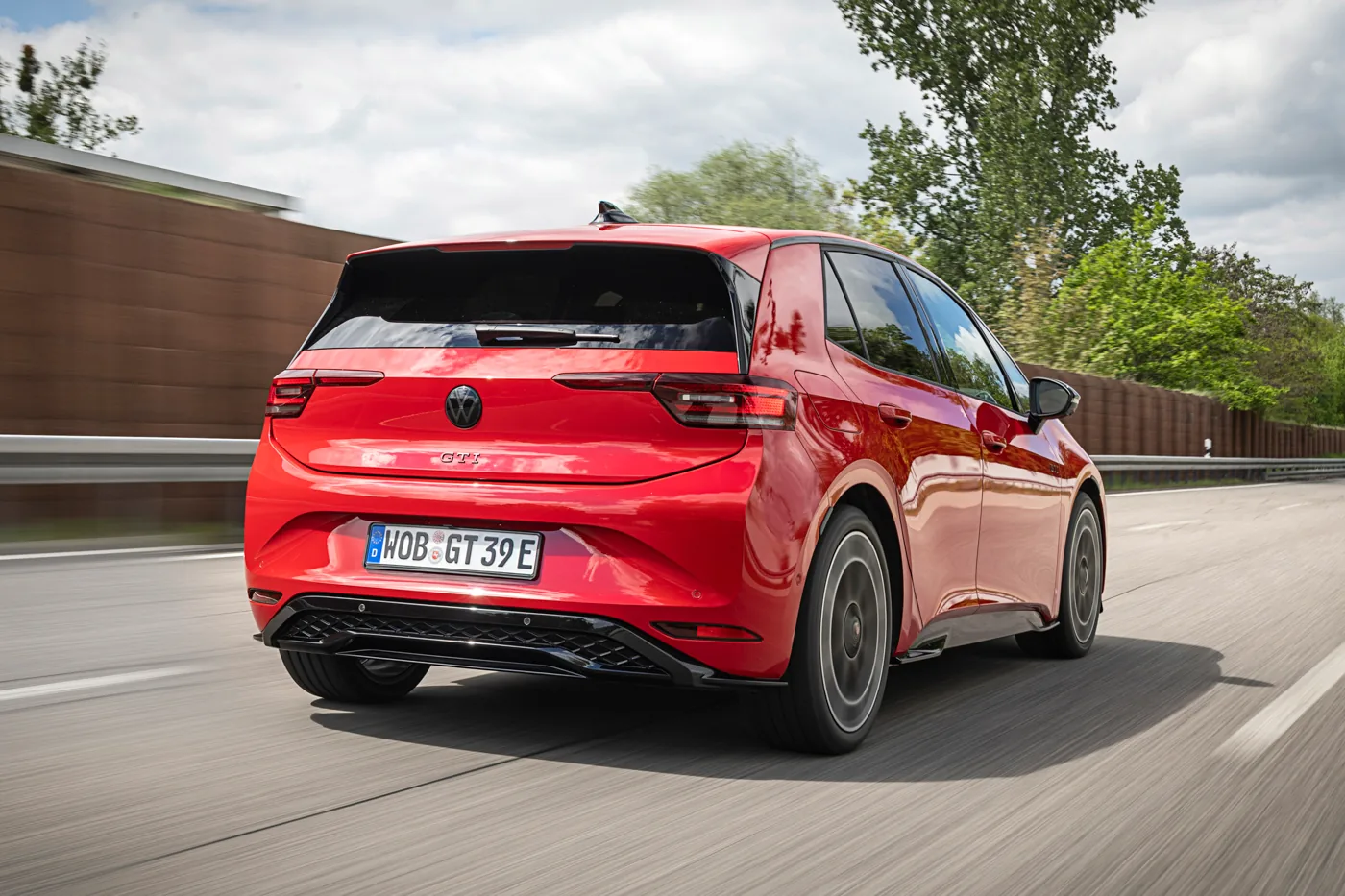
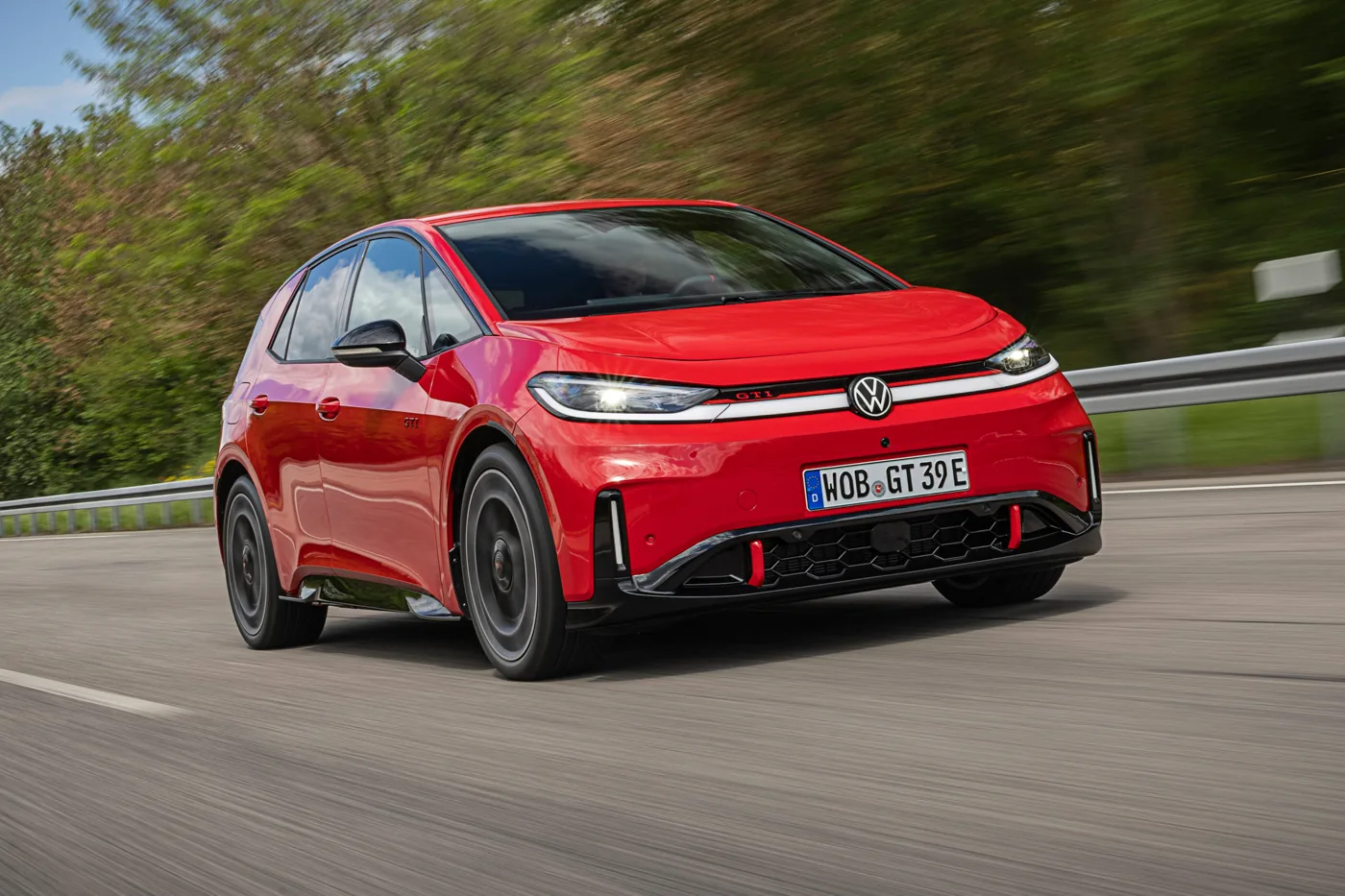
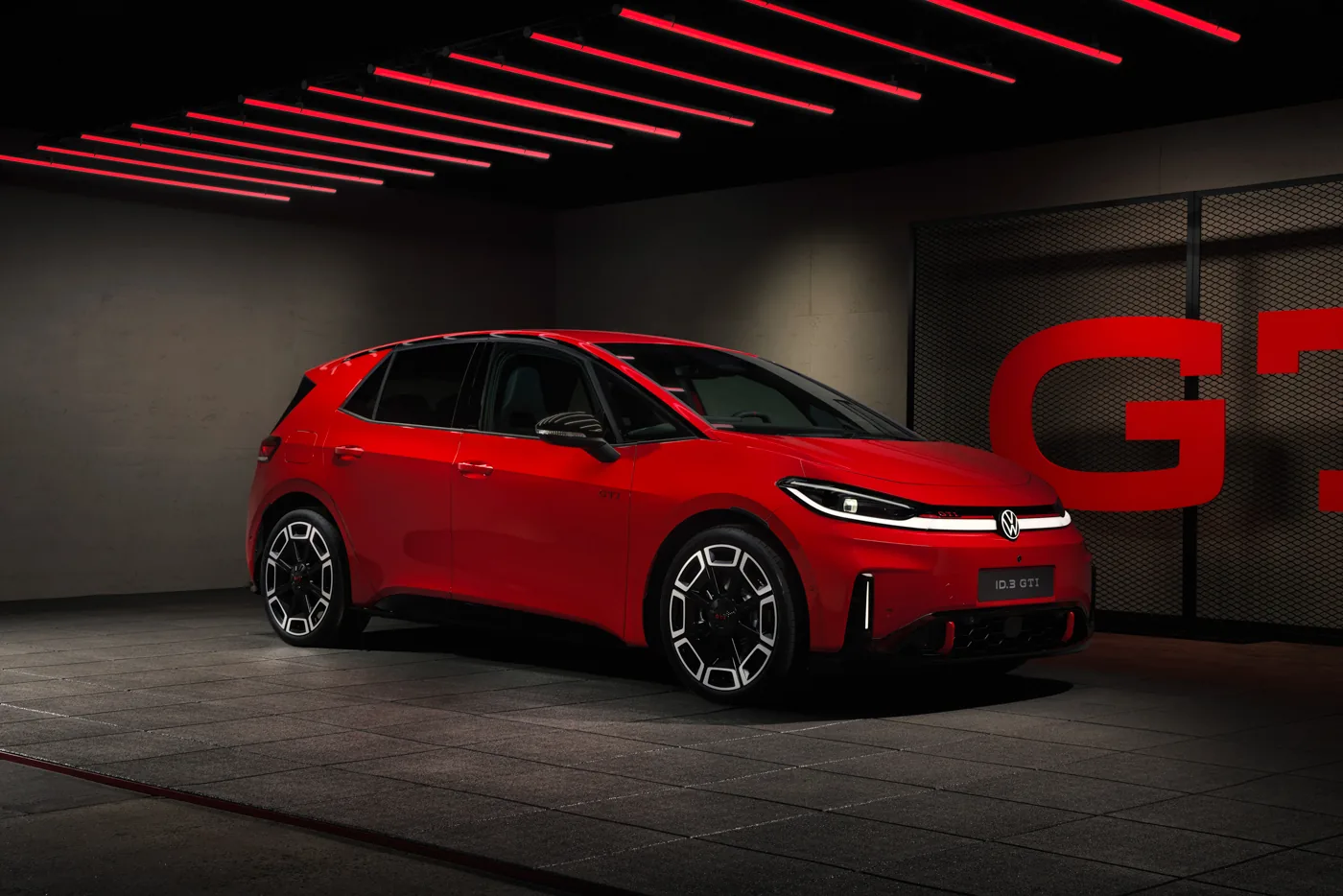
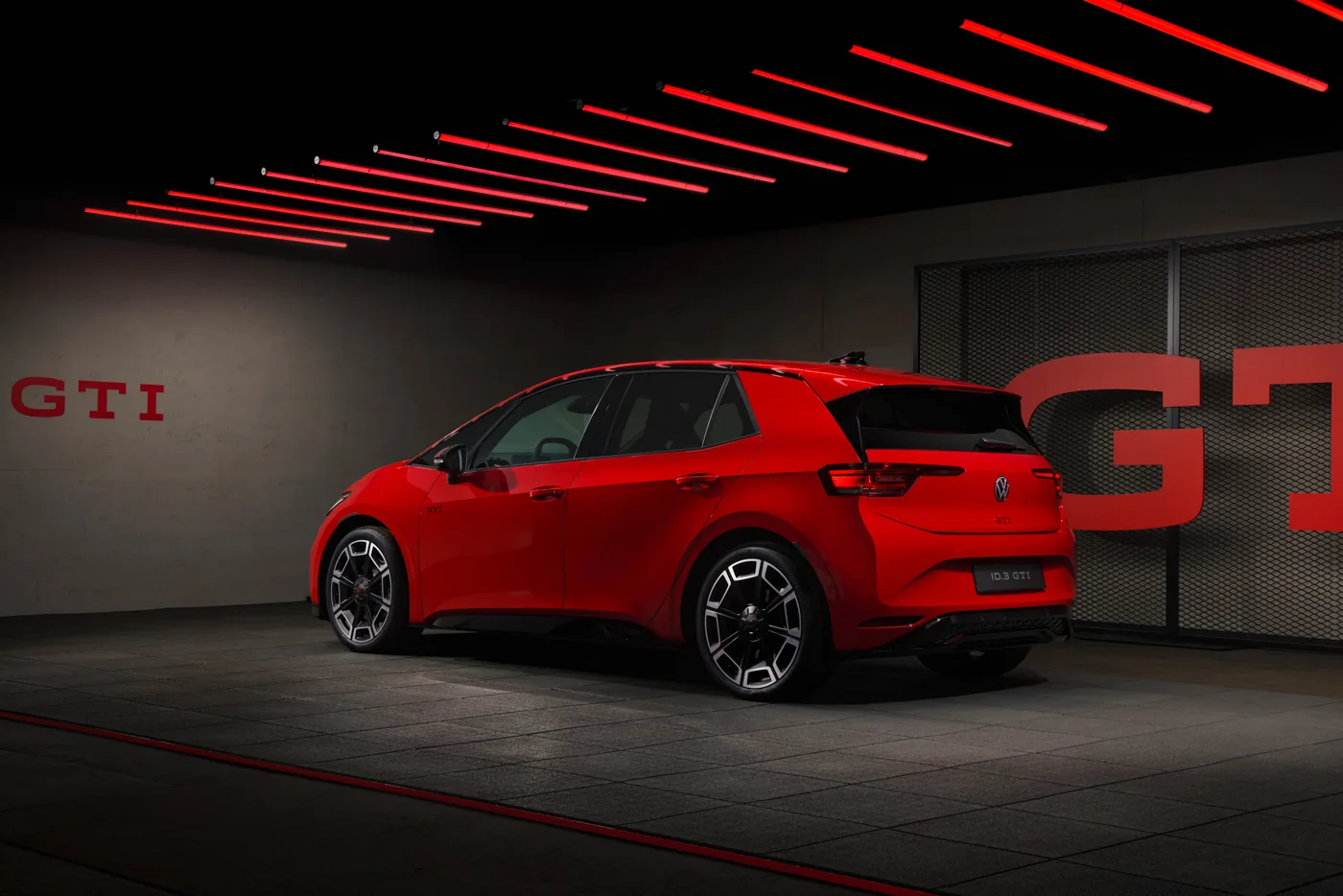
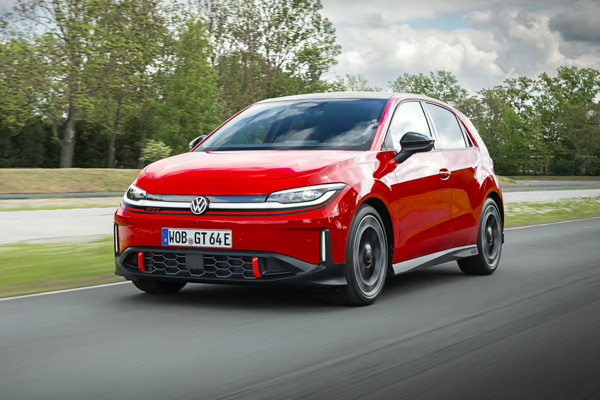
Volkswagen has leaned heavily on GTI identity elsewhere. A red strip across the nose above an illuminated VW badge recalls the original 1976 Golf GTI, while the lower bumper combines gloss-black honeycomb with vertical lighting elements and red accents. Standard 20-inch Wörthersee alloys provide another nod to GTI history, and the mirror caps and side sills are finished in gloss black.
Unlike the GTX, however, the roof, spoiler and tailgate are body-coloured, which Volkswagen says makes the car appear longer and more planted. Five exterior colours are planned, including the appropriately familiar Tornado Red.
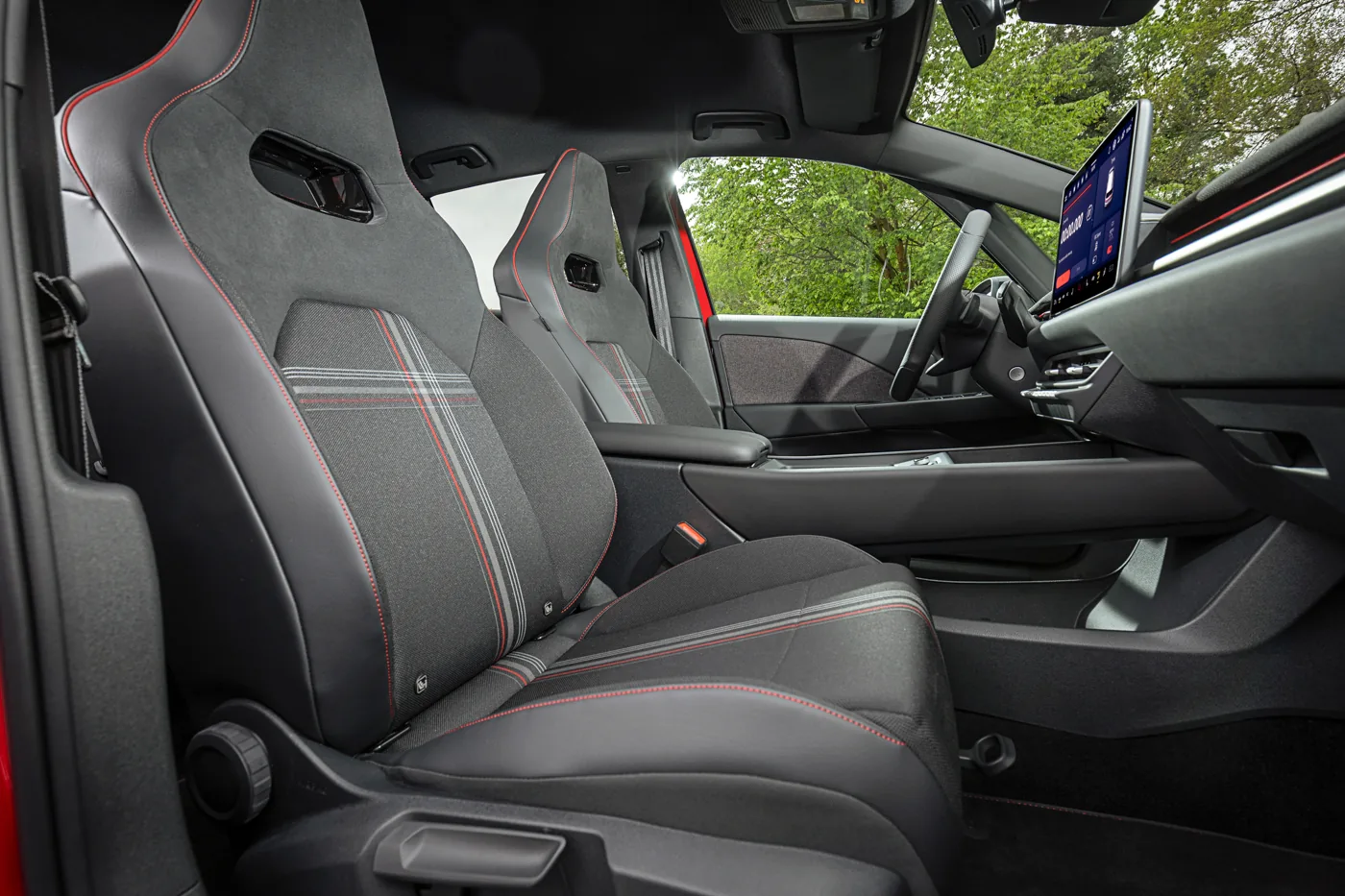
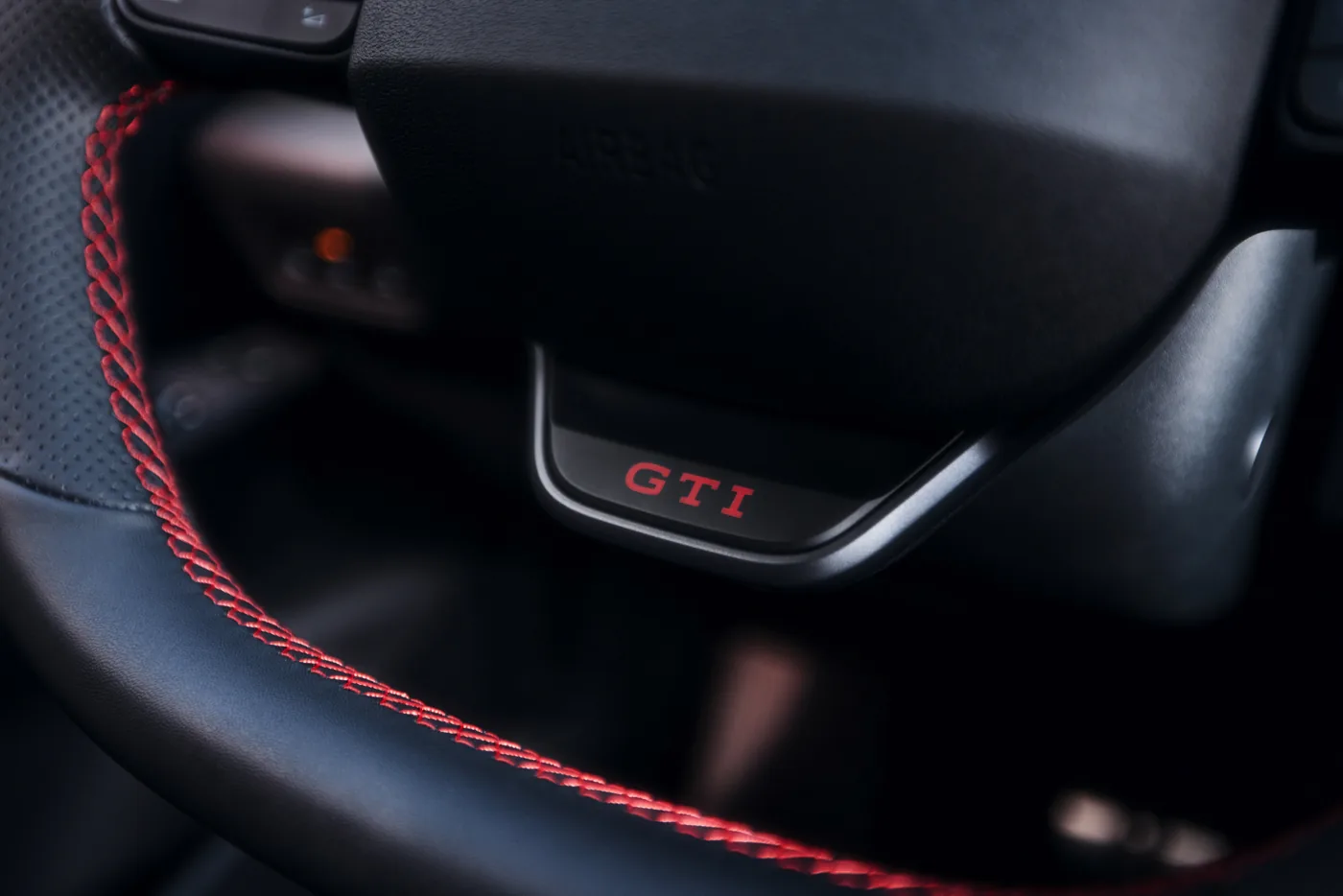
The references continue inside. Superclark tartan upholstery is joined by red stitching and a red strip across the dashboard. The steering wheel gets a red 12 o’clock marker and an illuminated GTI button, while that Mk1-inspired instrument view provides another link back to the original.
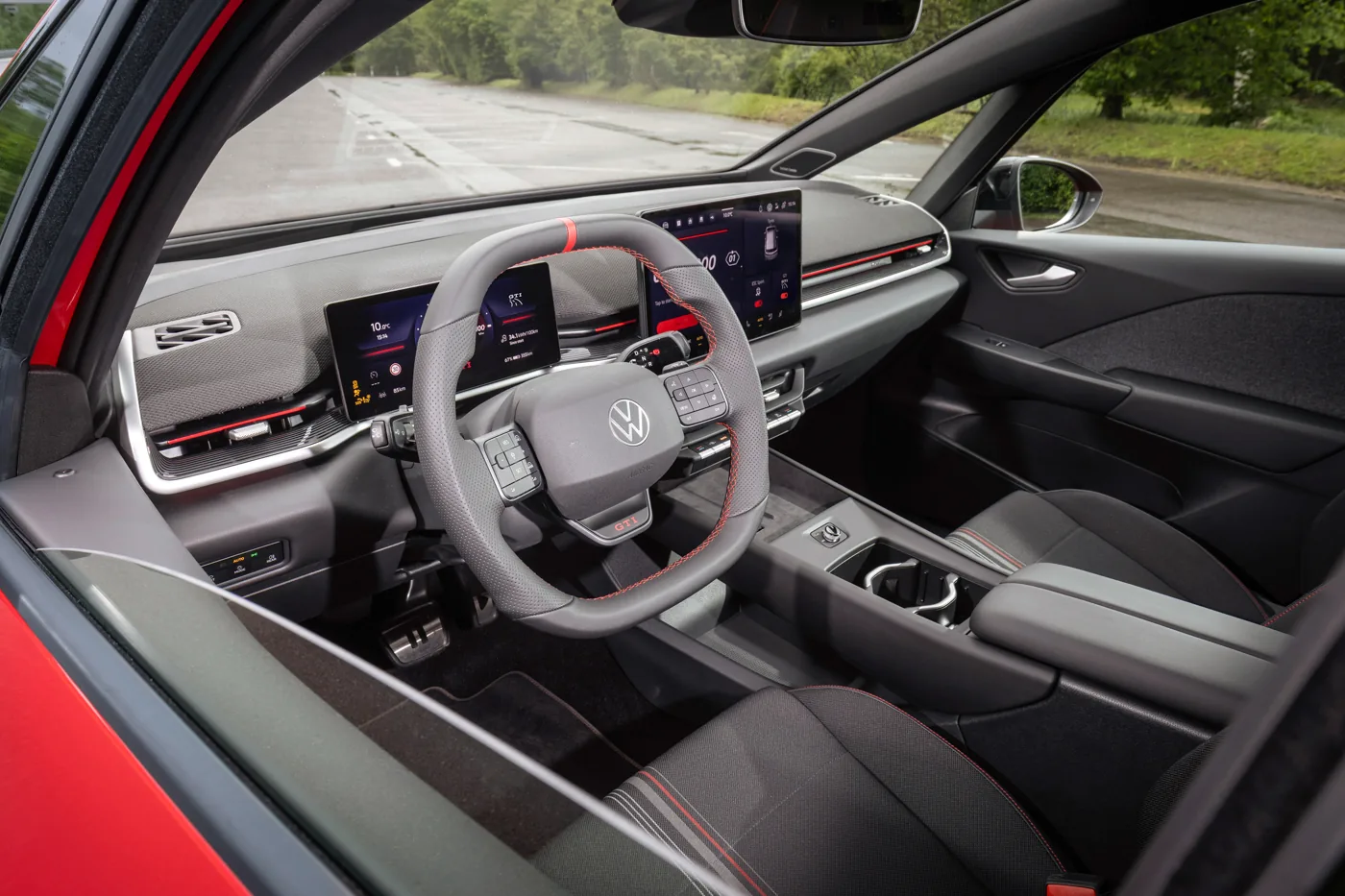
More importantly, the GTI also benefits from the redesigned cabin developed for the forthcoming ID.3 Neo. Alongside the 10.25-inch driver display is a 12.9-inch infotainment screen. Physical controls return for the climate functions, while a rotary controller on the centre console handles volume and track changes, addressing one of the persistent criticisms of earlier ID.3s.
UK pricing, timing and final specification are still to be revealed, with Volkswagen only confirming that German order books will open at the start of 2027.
The GTX always felt like Volkswagen hedging its bets – willing to explore the idea of an electric hot hatch, but stopping short of calling it a GTI. The powertrain has barely changed this time around; Volkswagen’s willingness to put those three letters on the boot has.


.avif)

.svg)

