NEWS, FEATURES
Brussels Motor Show 2026 Report: Car Enthusiasm is Alive and Well
Ken Pearson
By
Images by
Matt Haworth
Published
13 Jan 2026
Brussels Motor Show 2026 Report: Car Enthusiasm is Alive and Well

Thousands descended on the Belgian capital to see a comprehensive cross-section of the present and future of the European car market. Ken Pearson was among them.
Forget anything you’ve read about the concept of the motor show falling out of favour, as the 102nd edition of the Brussels Motor Show drew swathes of manufacturers, and visitors alike. From flagship hypercars to entry-level quadricycles, world premieres and fan-favourites, the show had it all, and then some. Taking place in the Brussels Expo centre, this year’s edition of the show saw the halls filled to the brim with 67 car and van brands, plus 28 motorcycle makers.
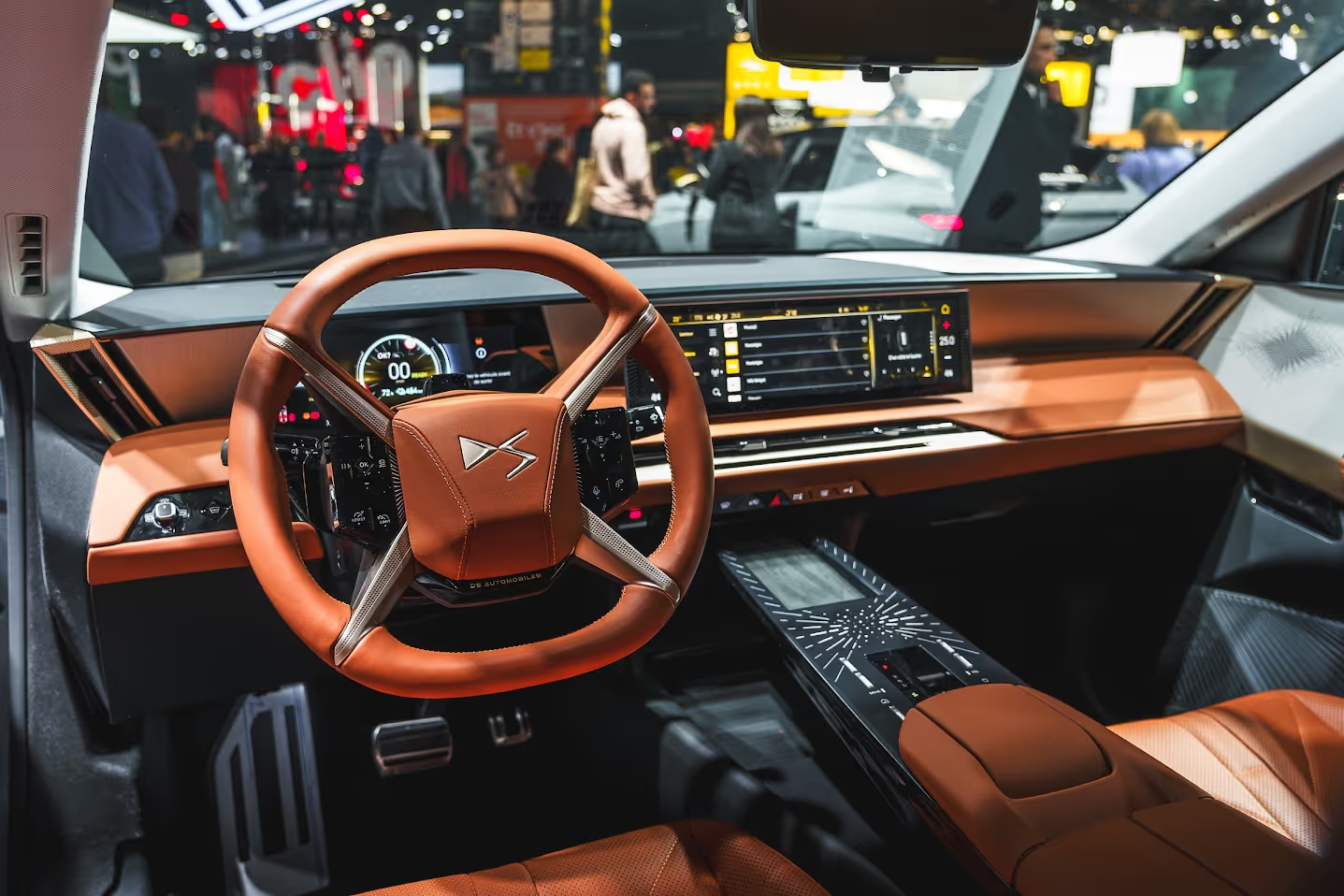
Performance models were plentiful, Citroen’s Formula E racer, and the new Peugeot e-208 GTi being the first cars to greet RUSH Photographer Matt and myself. The highly anticipated electric hatch was part of a strong product offensive from Stellantis, with representation from almost all of their European brands. DS unveiled their No4 Taylor made Concept - a striking touring car-style rendition of their mid-sized crossover, while the updated Peugeot 408 and Opel/Vauxhall Astra made their public debuts at the show.
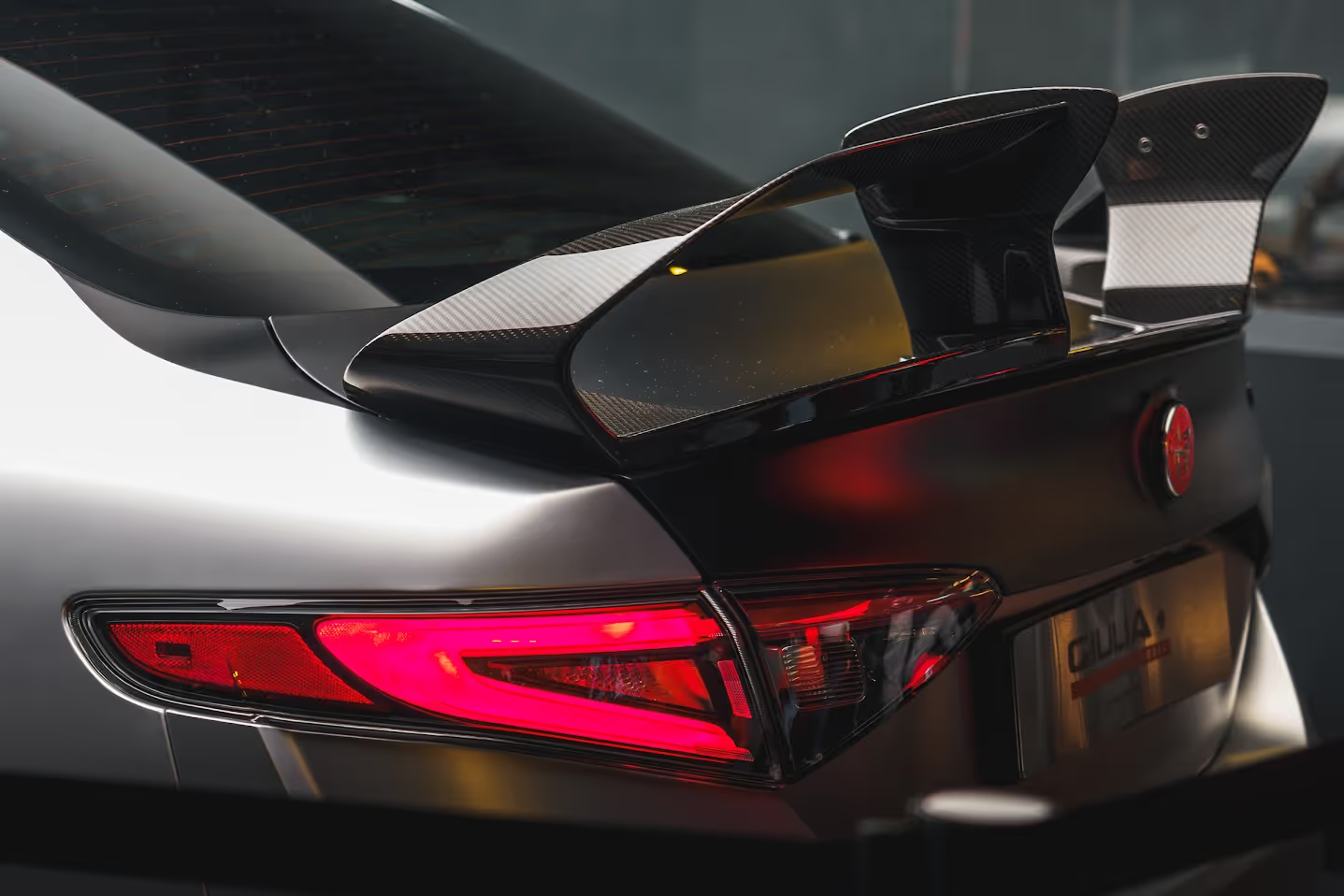
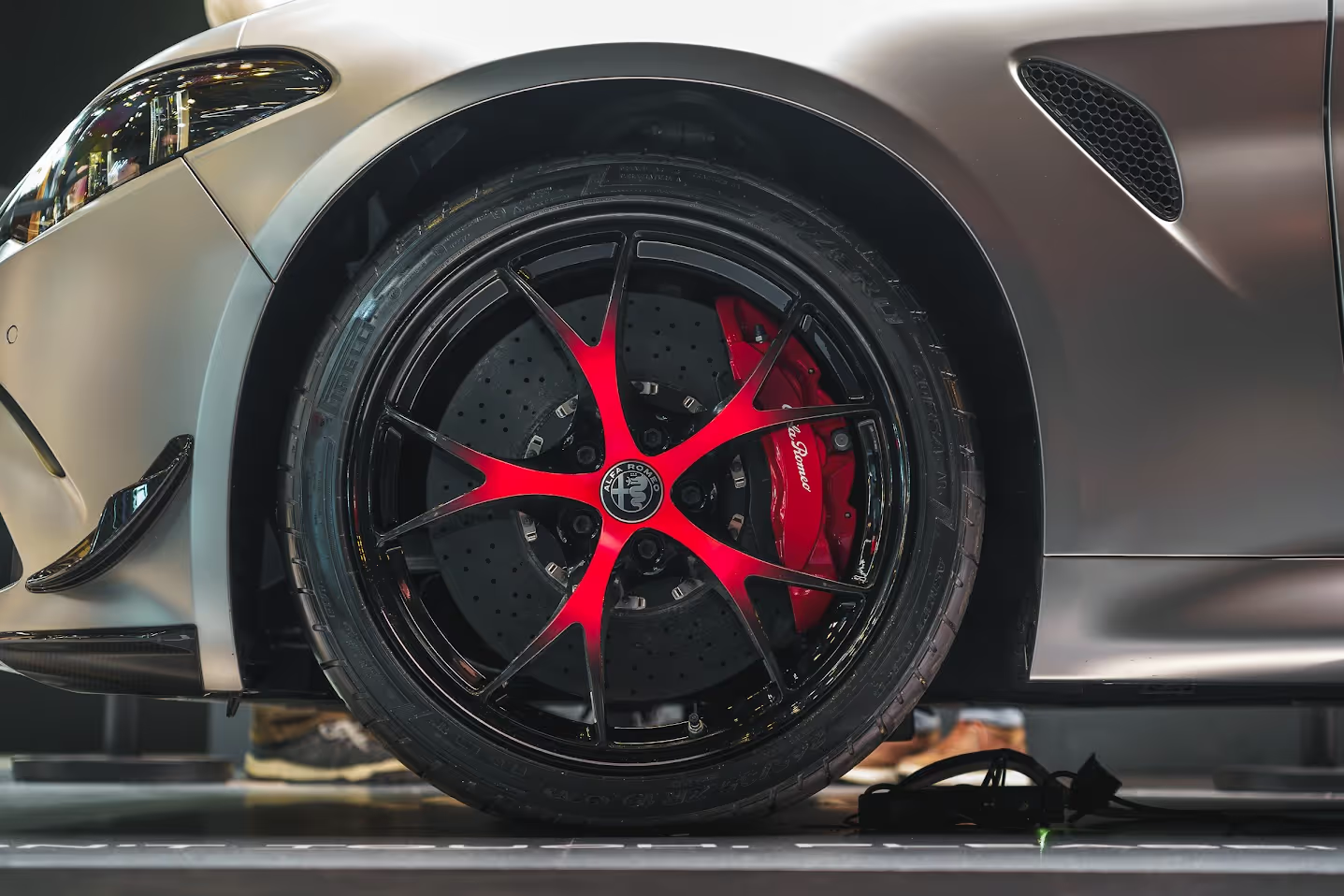

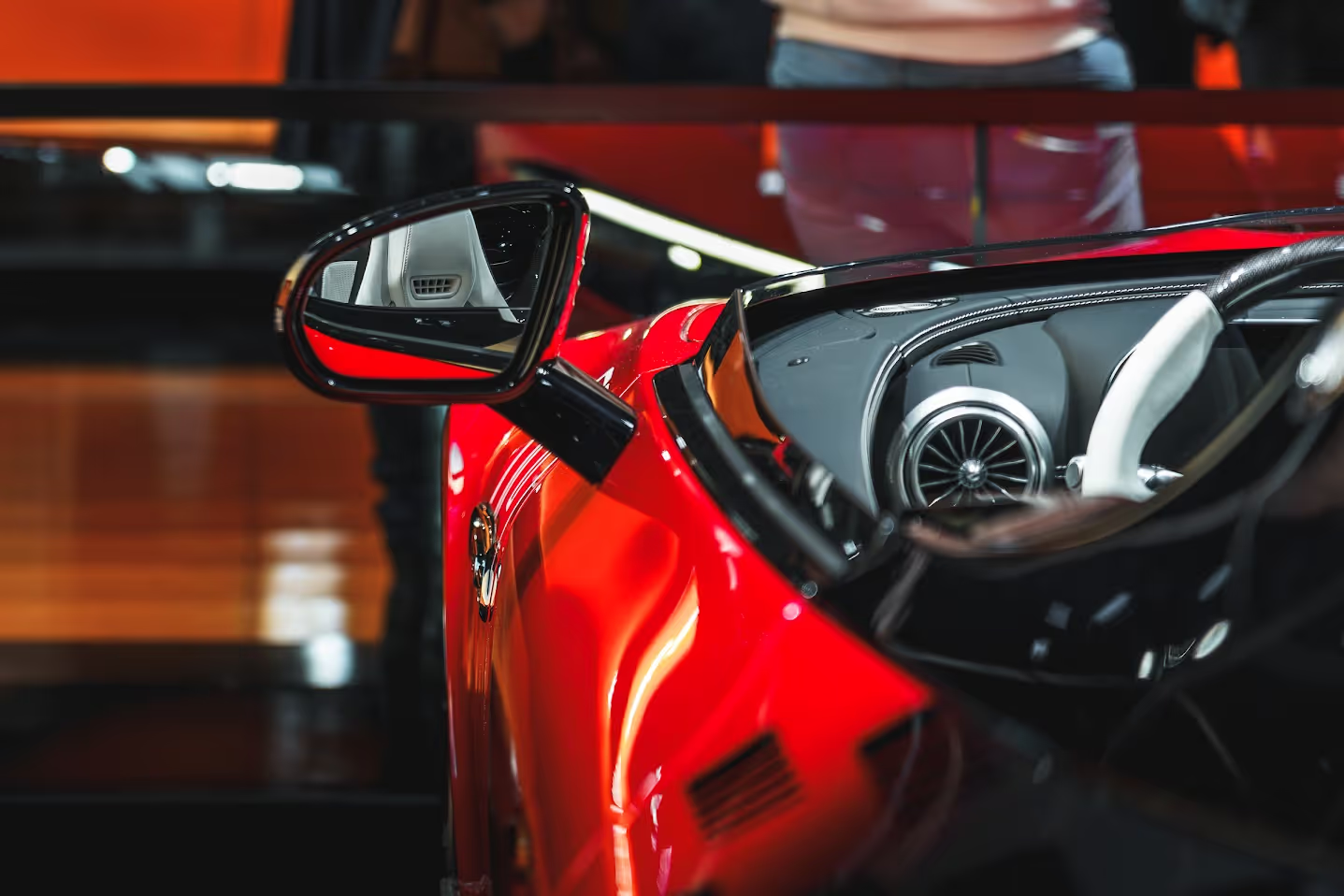
Nestled within the sea of new electric products was Alfa Romeo’s Giulia Quadrifoglio Luna Rossa - a limited edition model of which only 10 will be made. Performance from its 2.9-litre V6 is unchanged at 513bhp and 442lb-ft (600Nm), but the car gets a bespoke exterior colour scheme, and enhanced aerodynamic elements. The unique dual-element carbon fibre wing not only looks the part, but contributes to a fivefold increase of downforce at 186mph.
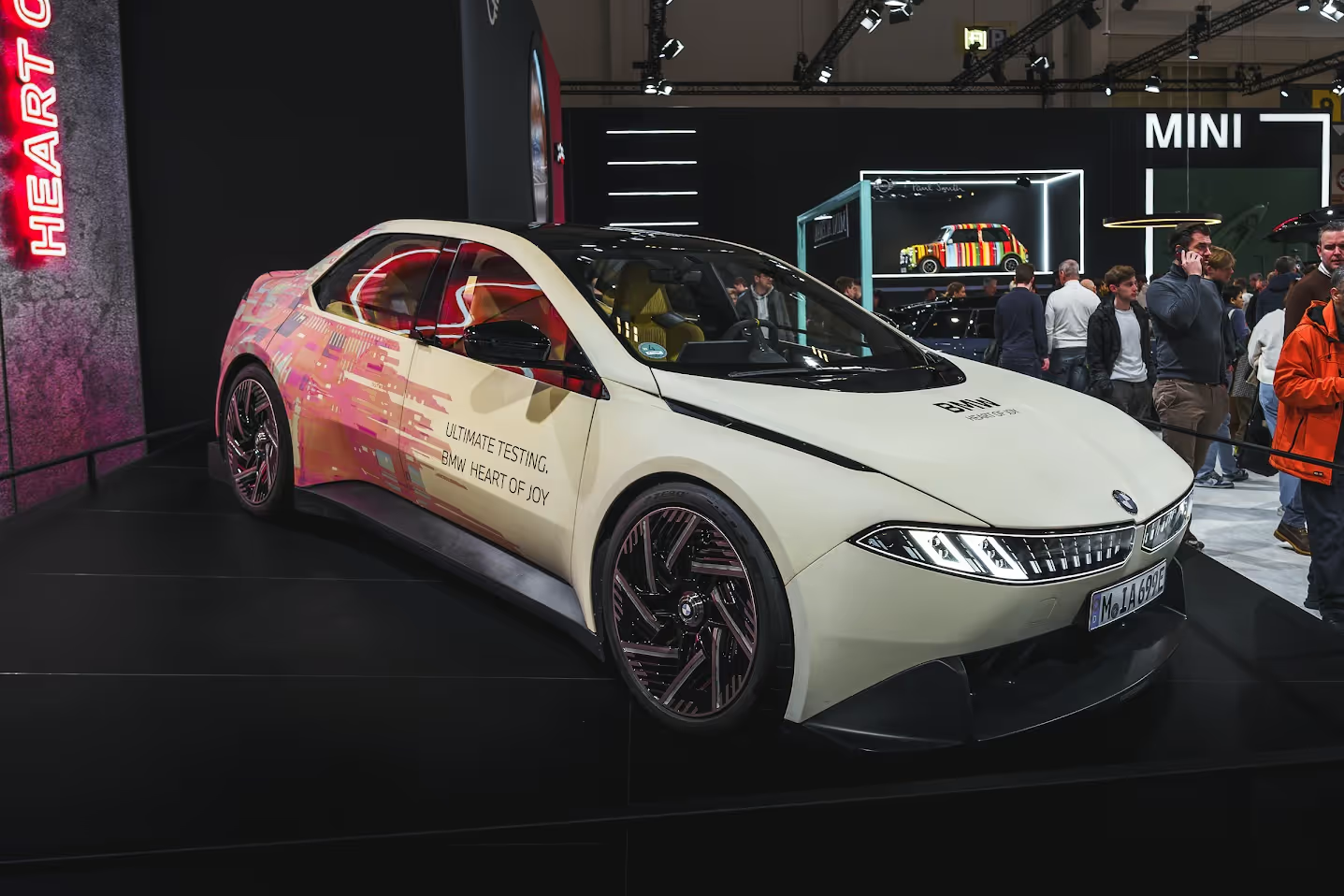
While the hot Alfa reminded us of where the super-saloon had been, BMW previewed what is yet to come. Their VDX prototype contains a quartet of electric motors within its swollen arches and upwards of 1,000bhp - all managed by the brand’s new Heart of Joy system. Having shed most of its camouflage, the VDX also provides us a near-production preview of the upcoming 3 Series and i3 saloon, and the M3 which will follow shortly thereafter.
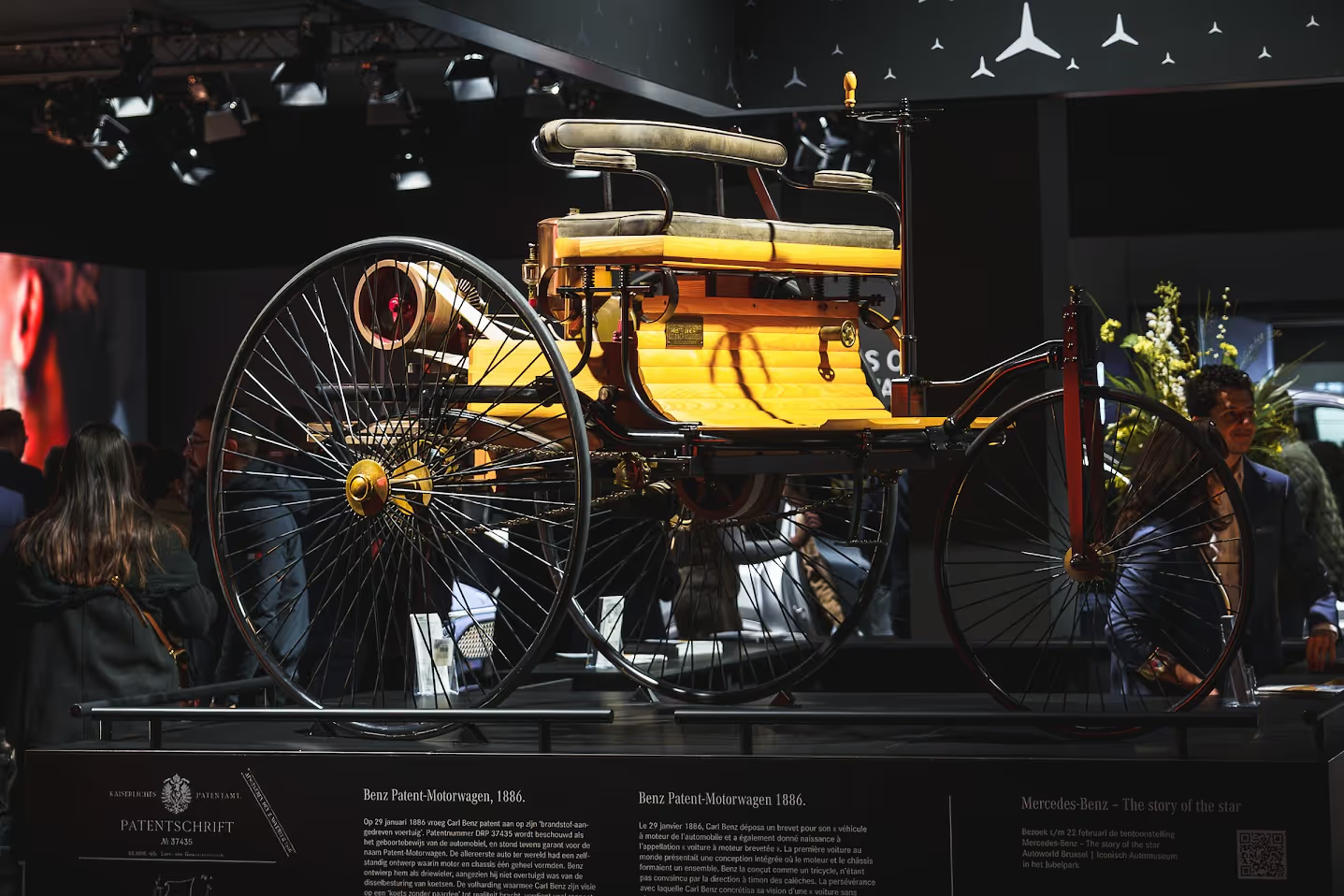
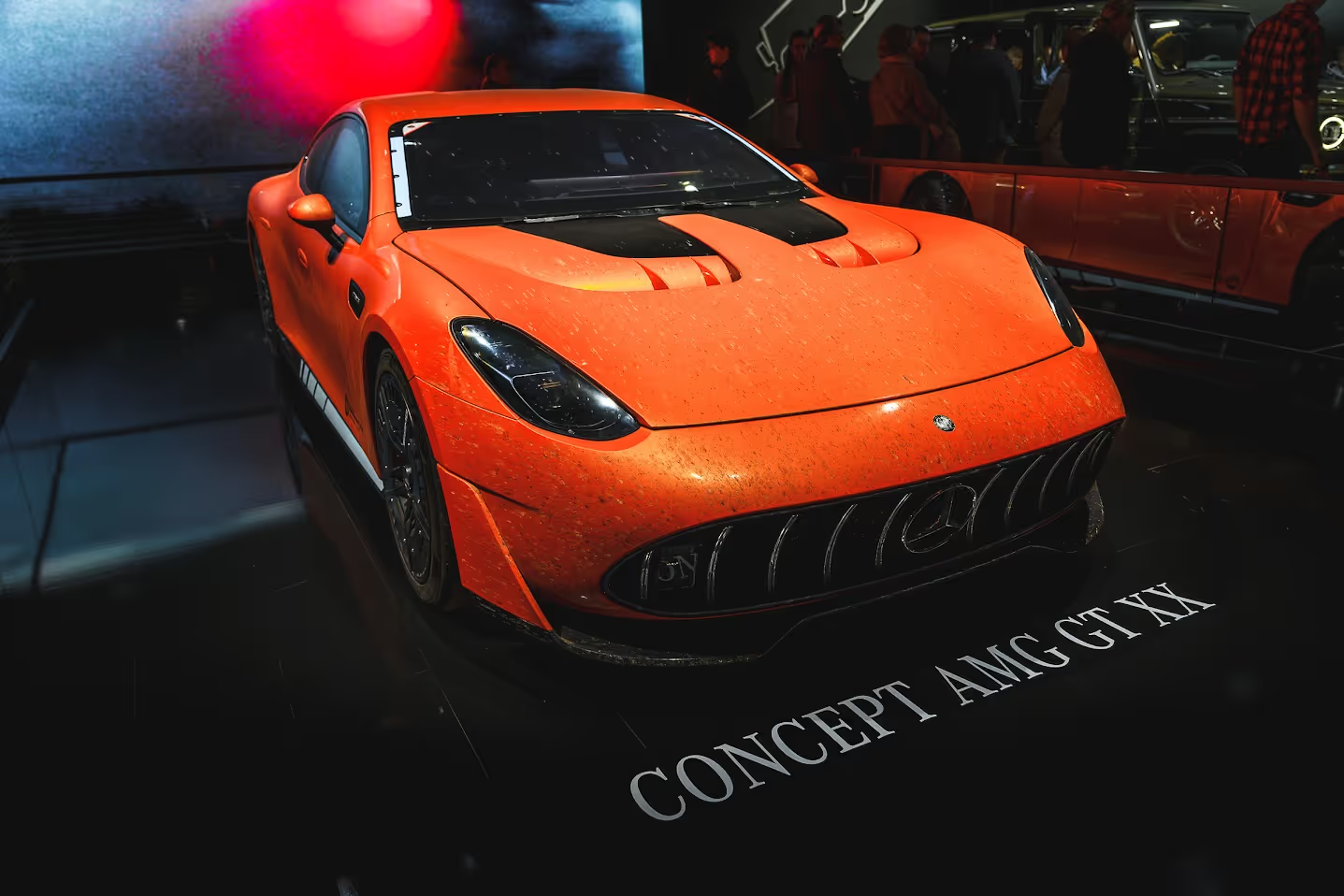
Arch-rivals Mercedes-Benz filled their own room, complete with the Benz Patent Motorwagen - the world’s first car - at the centre. Among the eclectic mix of models was their vision of the future: the Concept AMG GT XX. Proudly wearing its battle scars from its record-setting run, the 1,341bhp functioning prototype was unmissable with its bright orange bodywork, and its otherworldly shape. Having broken 25 EV distance records over eight days at the Nardo test track, the GT XX will pass its technology to the new AMG GT four-door which will arrive later this year.
Kia brought three new GT models to Brussels, with the EV3, EV4 and EV5 all making their world premieres at the show. The hot trio will bring the firm’s Virtual Gear Shift system to the crossover and hatchback segments for the first time. While a dual-motor drivetrain is nothing out of the ordinary, the power splits are decidedly front-biased. Kia is clearly aiming to emulate the handling characteristics of front-drive hot hatches, as well as their sounds and transmissions.
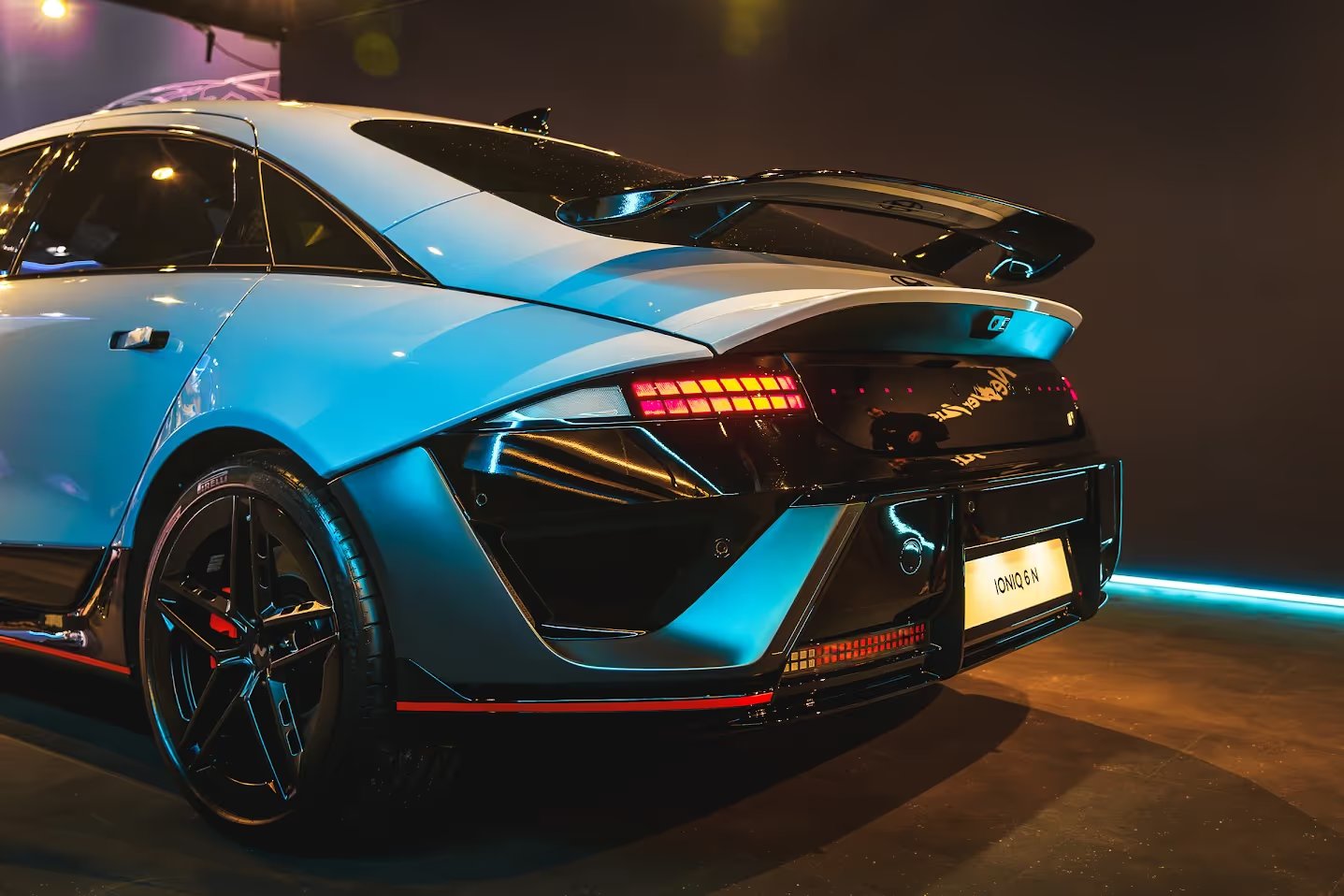
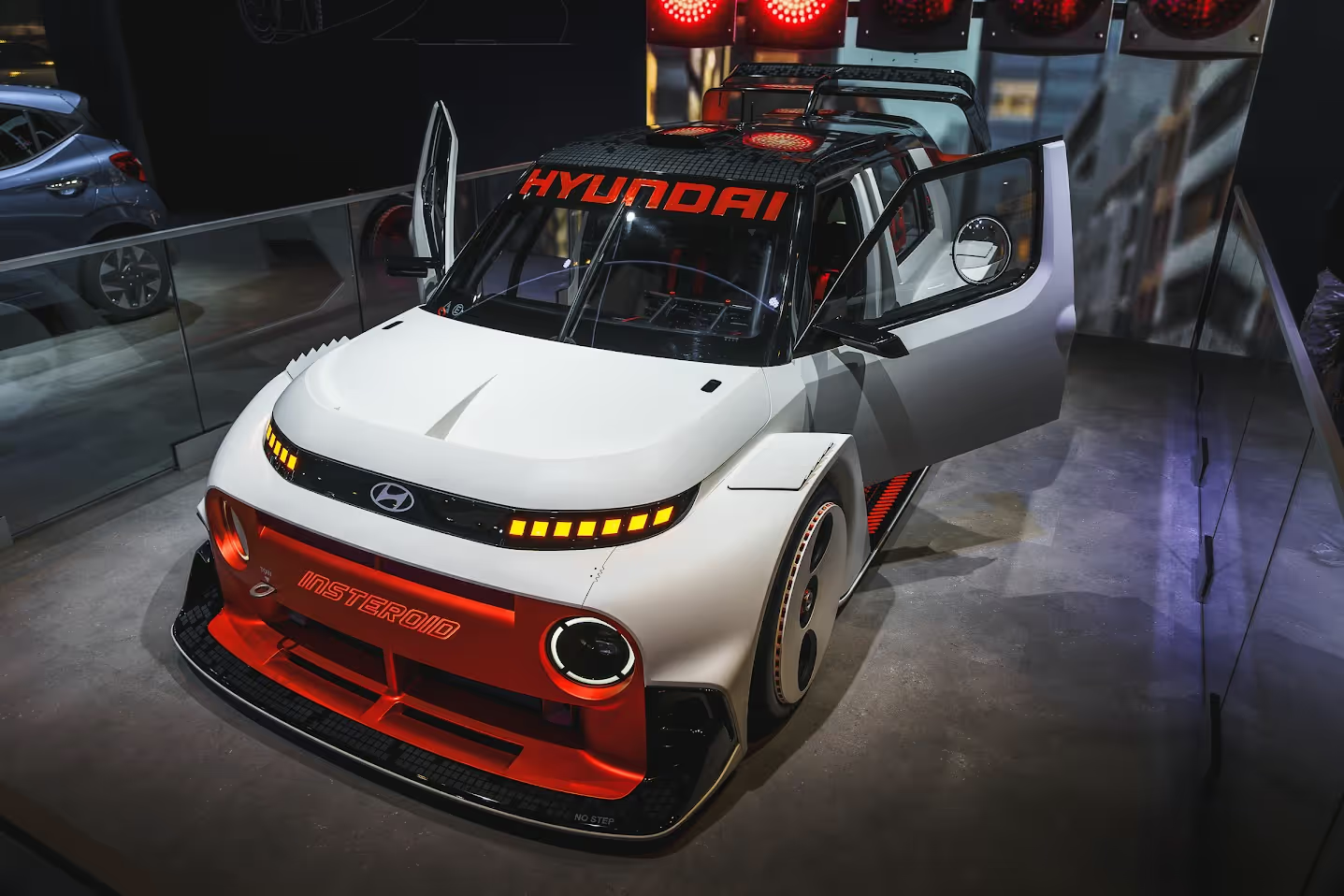
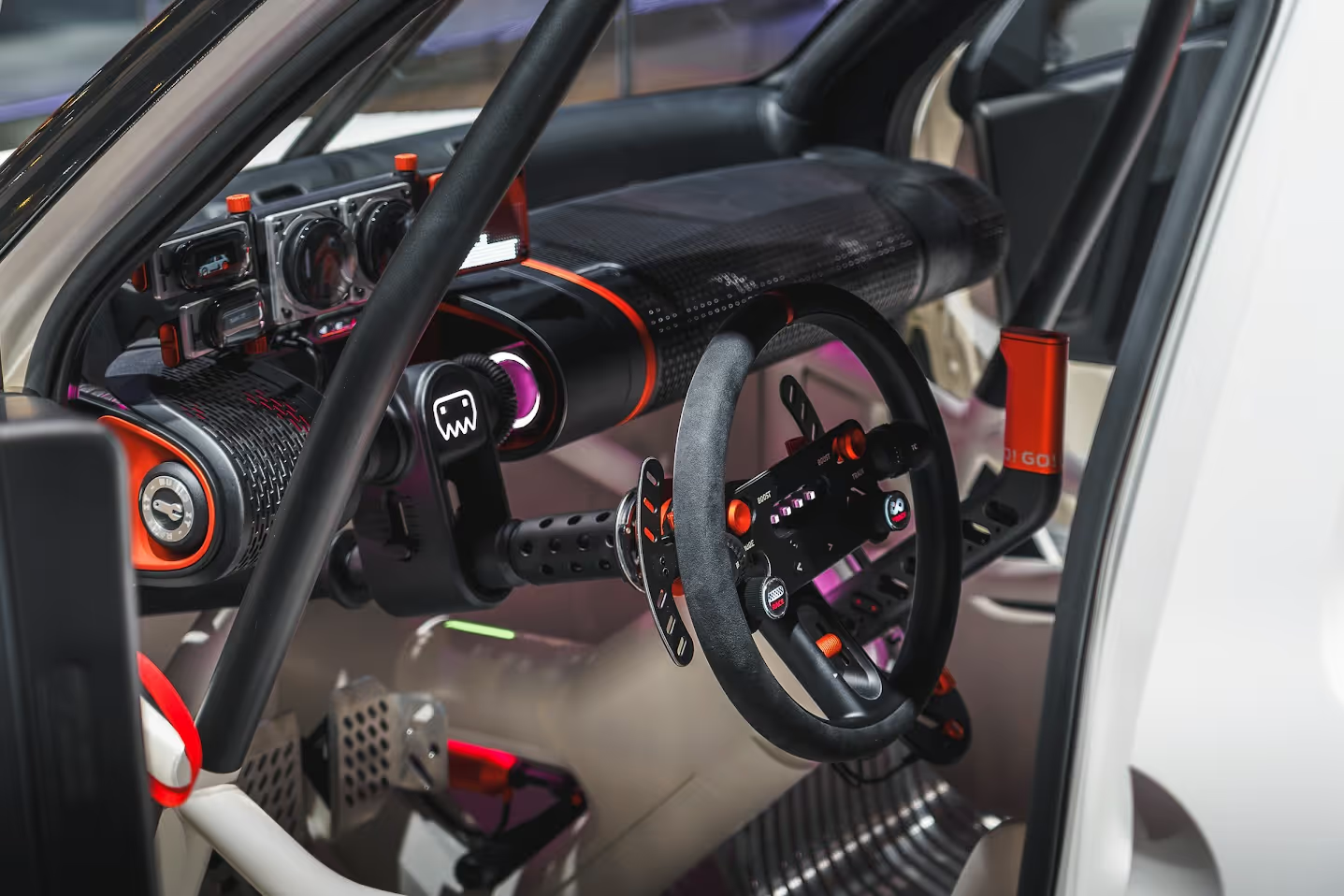
Sister-company Hyundai also brought their latest high-performance EVs, with the Ioniq 5 N and Ioniq 6 N sharing a stand. In full-fat N-guise, the streamlined 641bhp saloon wouldn’t look out of place on the starting grid of a touring car race; the two-tone blue and black paint scheme coupled with the towering rear wing shows the car means business. Having experienced the 5 N on track, we can’t wait to see how the LSD-equipped powertrain performs in a lower-slung model. We left the Hyundai section wondering if the Insteroid concept is as bonkers to drive as it is to look at.
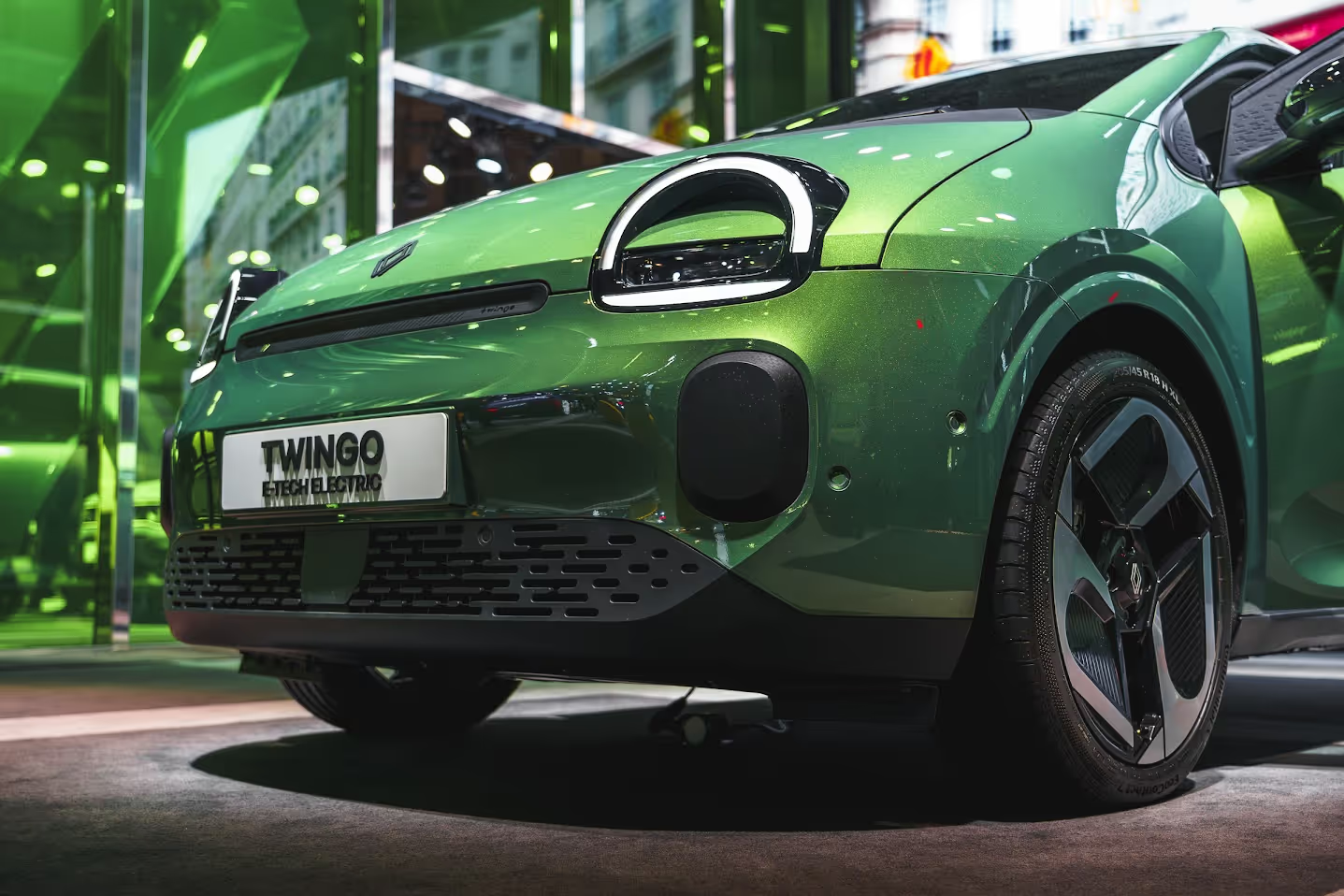
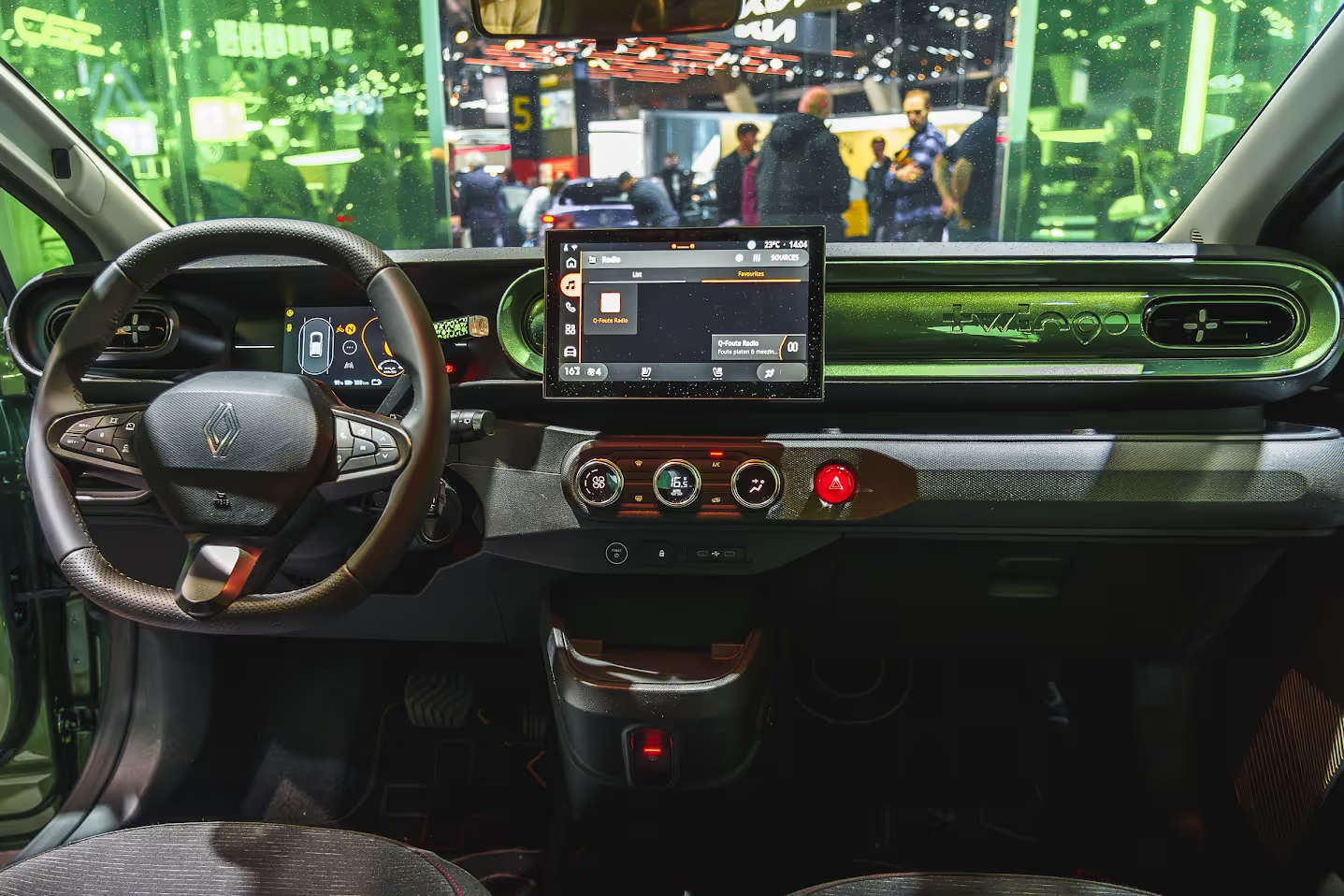
The broad variety of cars on display clearly showed the two distinct stylistic routes that manufacturers are rolling down: retroism, or futurism. The Polestar 5 falls firmly into the latter category, with not a hint of nostalgia on any of its precisely minimalist panels. It’ll still look modern one century from now. Contrasting the 872bhp four-door GT is the 82bhp five-door hatch that had as large a crowd gathered to soak in its shape: the Renault Twingo. The new supermini is unashamedly inspired by the 90s original, gently modernising aspects like the lights, bumpers, and dashboard. I’d happily have one on my driveway next to a Polestar 5.

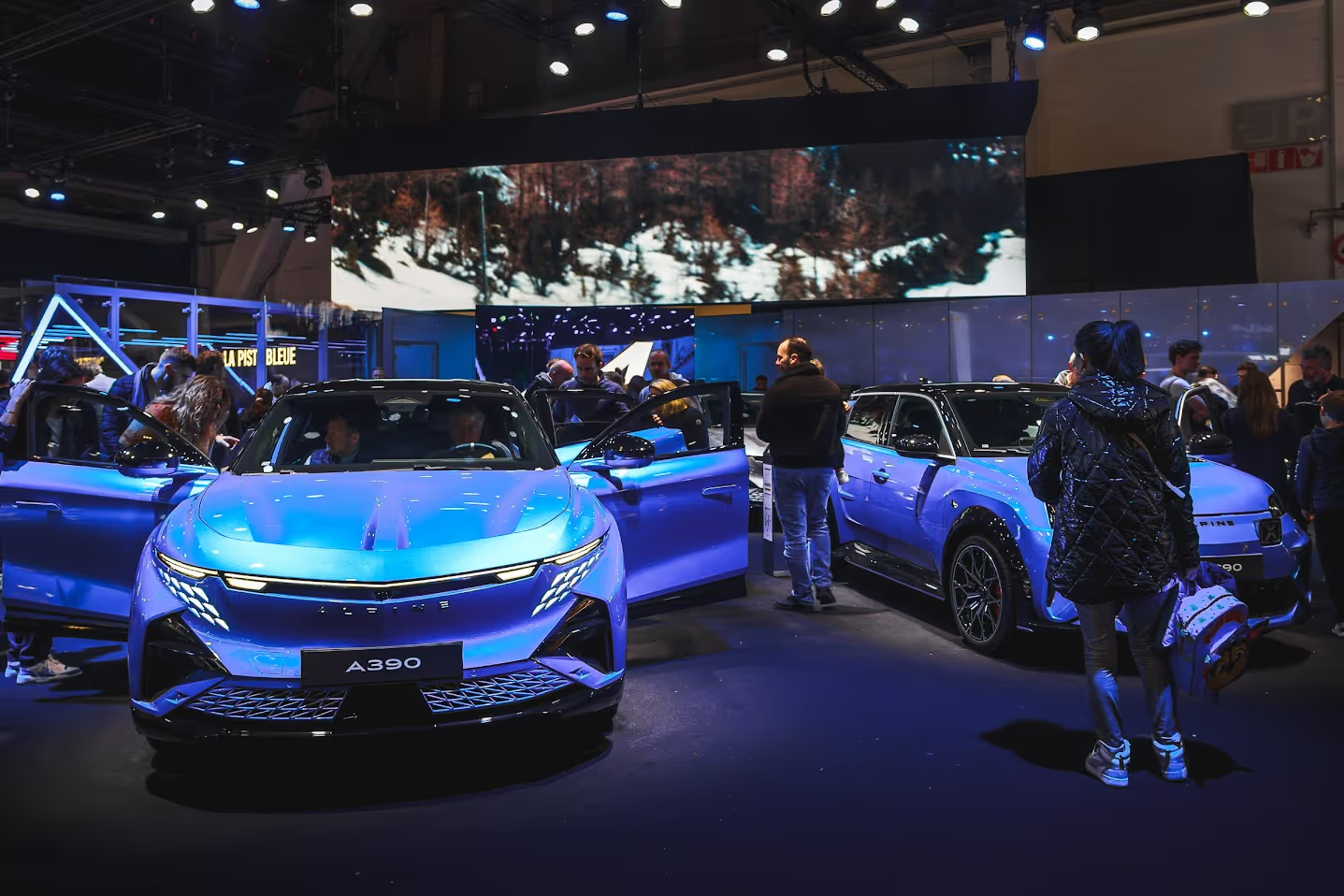
However, some manufacturers straddle the line between the two prevailing schools of style. Alpine respectfully harks back to the past with the A110, which now in its swansong year, captured countless people in an elliptical orbit around a dark blue GTS model. The same three letters were found elsewhere on the stand, with a pair of A290s and a trio of A390s - the latter of which has just gone on sale in the UK. The fastback crossover impresses inside with fantastic Sabelt two-piece seats and a driver-centric cabin, and its maker will be hoping that the fitment of two electric motors on the rear axle will give it a dynamic edge over its closest rivals.
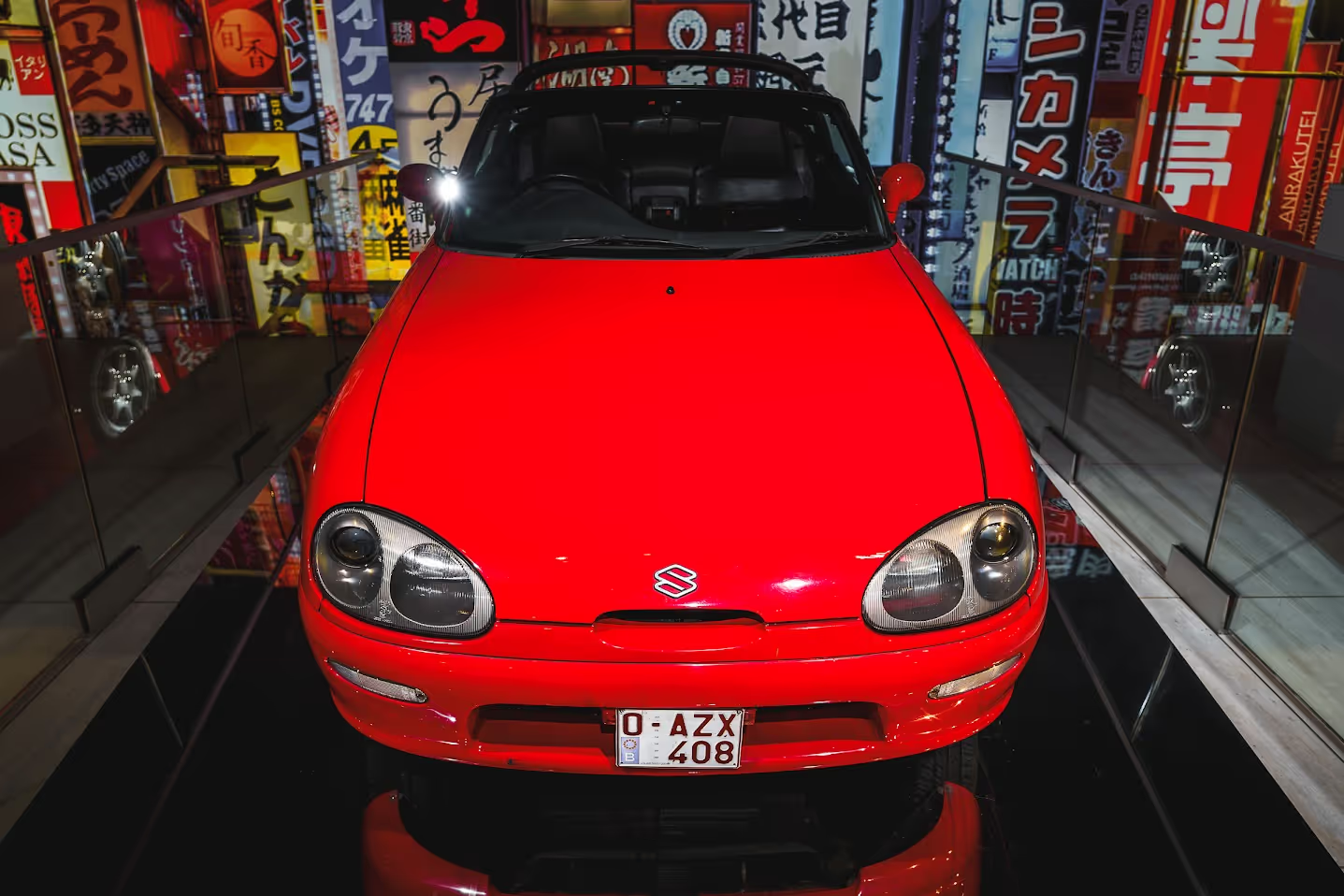
The show wasn’t short of new metal - or carbon fibre, for that matter - but we were stopped in our tracks by one of the slowest cars on display: the Suzuki Cappuccino. The Kei car was rare beyond its native shores when it was new, with time only heightening the appeal of the miniature roadster. However, products that were unveiled years ago were drawing crowds - namely the ND Mazda MX-5 - now in its eleventh year on sale.
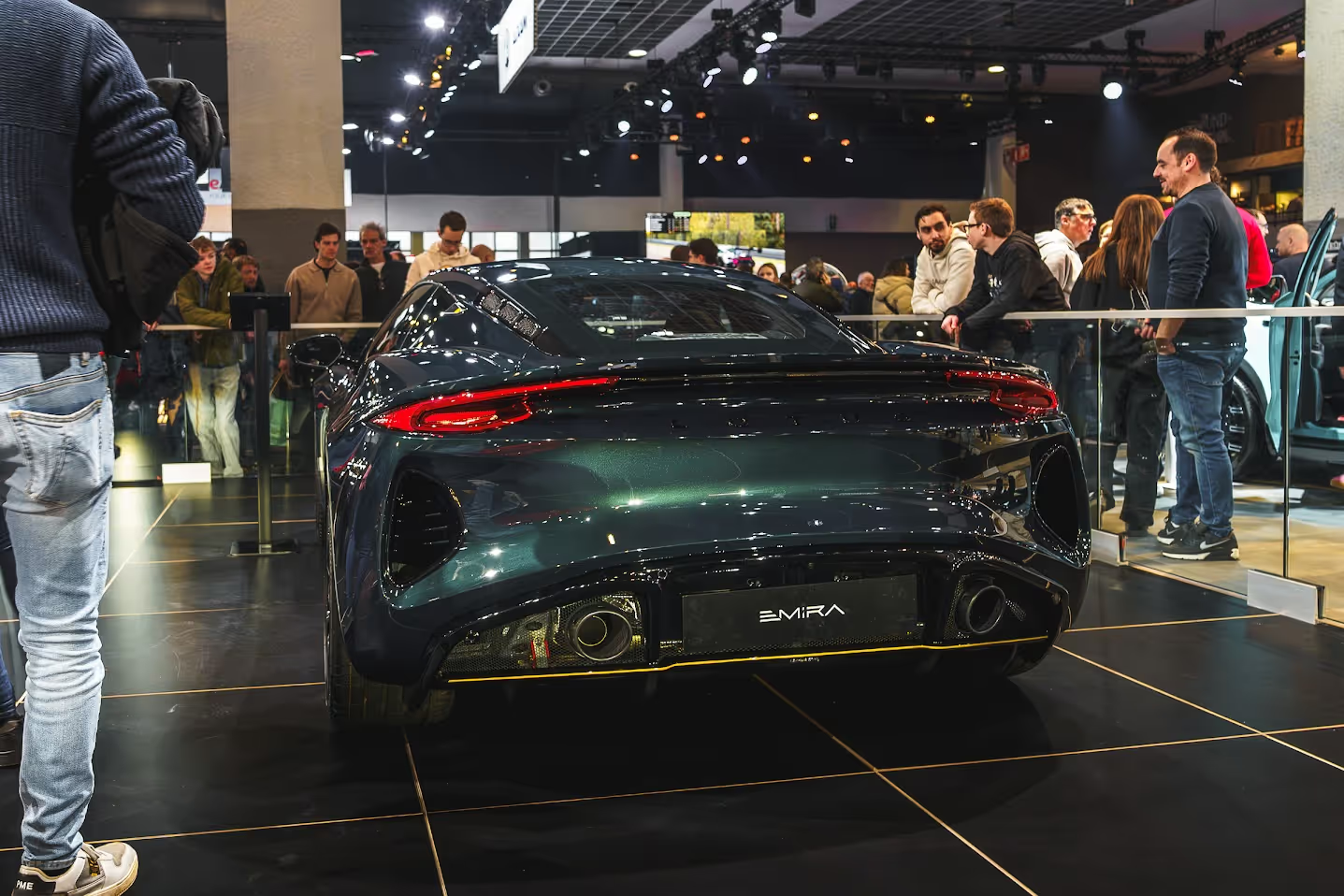
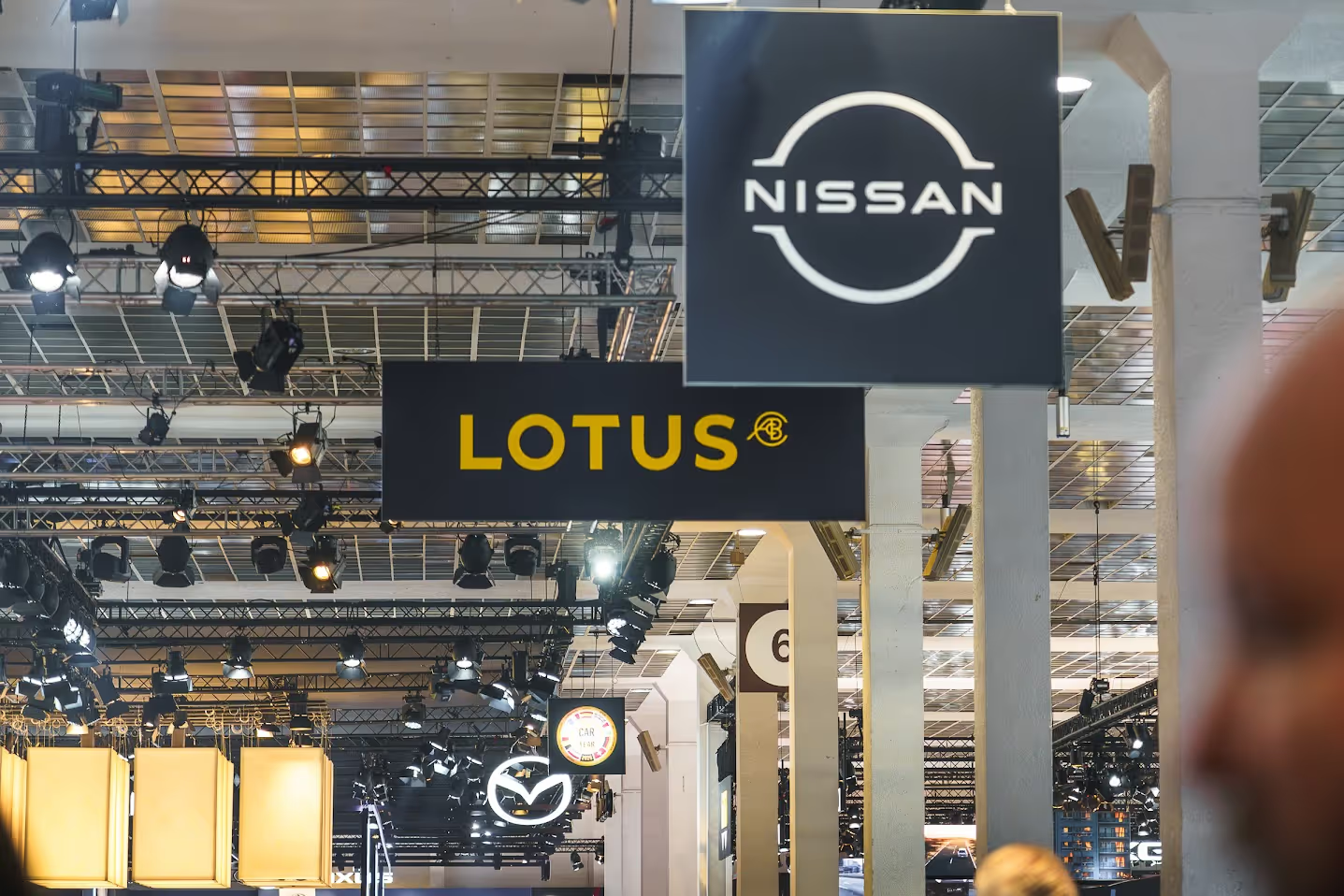
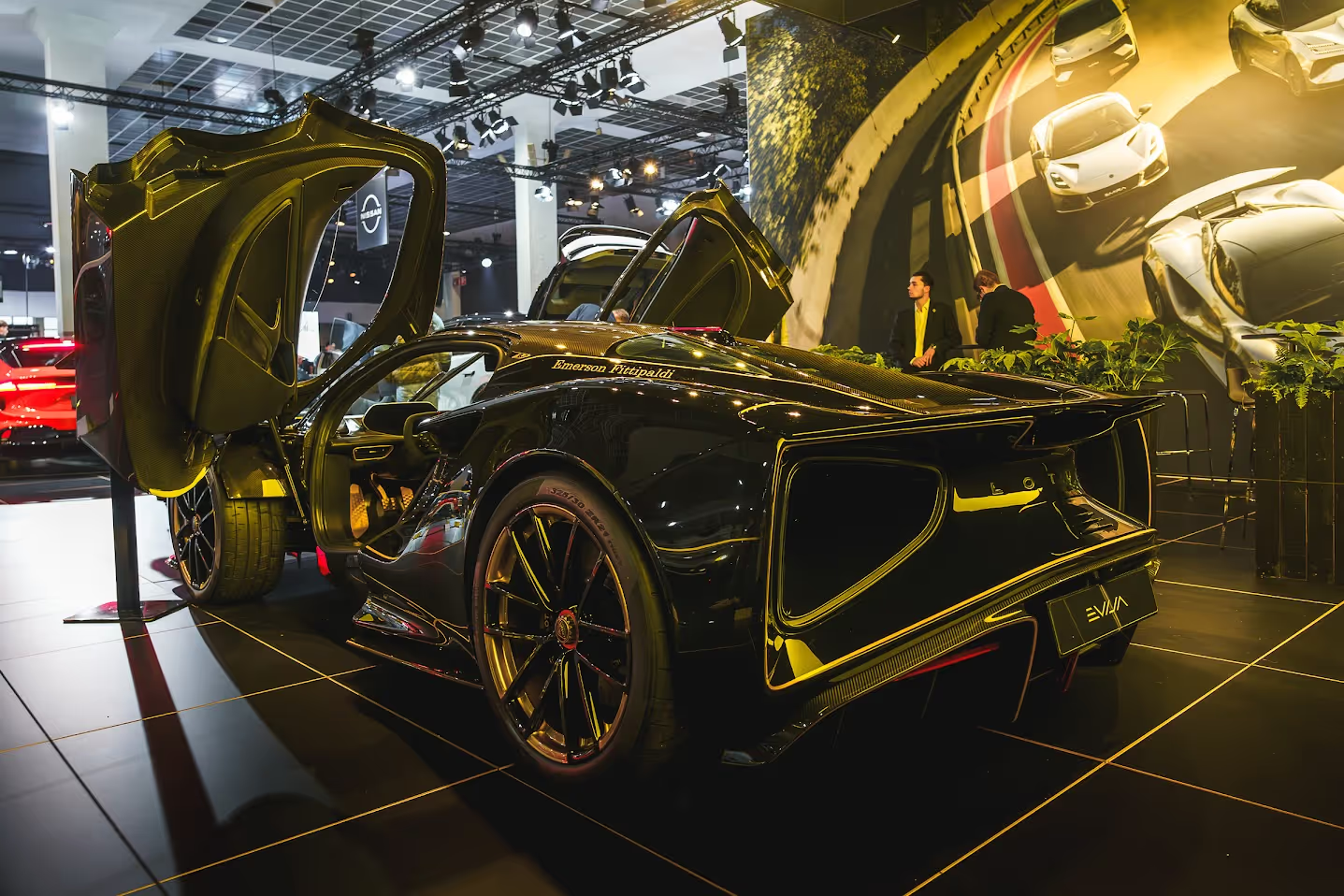
The revamped Lotus passenger car range is nothing new, but we had to queue to get onto the stand to get a closer look at the Emira Racing Line, the Emeya and Eletre, and the spellbinding Evija hypercar. First shown in 2019, the 2,011bhp machine exists outside of the constraints of time, with an elegantly evil demeanour emanating from its carbon structure. With both butterfly doors open, the cabin revealed precise colour matching for the gold contrasting elements, continuing the JPS-inspired theme of the Fittipaldi Edition’s exterior.
With my lottery-win dream car budget having gone up by a further £2,000,000, we found an even larger crowd drawn to a car that’s a spring chicken compared to the seven year old Evija: the Bugatti Tourbillon, first unveiled in 2024. Like the new Mercedes-Benz GLC, it looks better in person, and the grille looks proportionally correct. It’s imposing, yet graceful in its form, looking lower, but no less wider in person than it does in the photos.
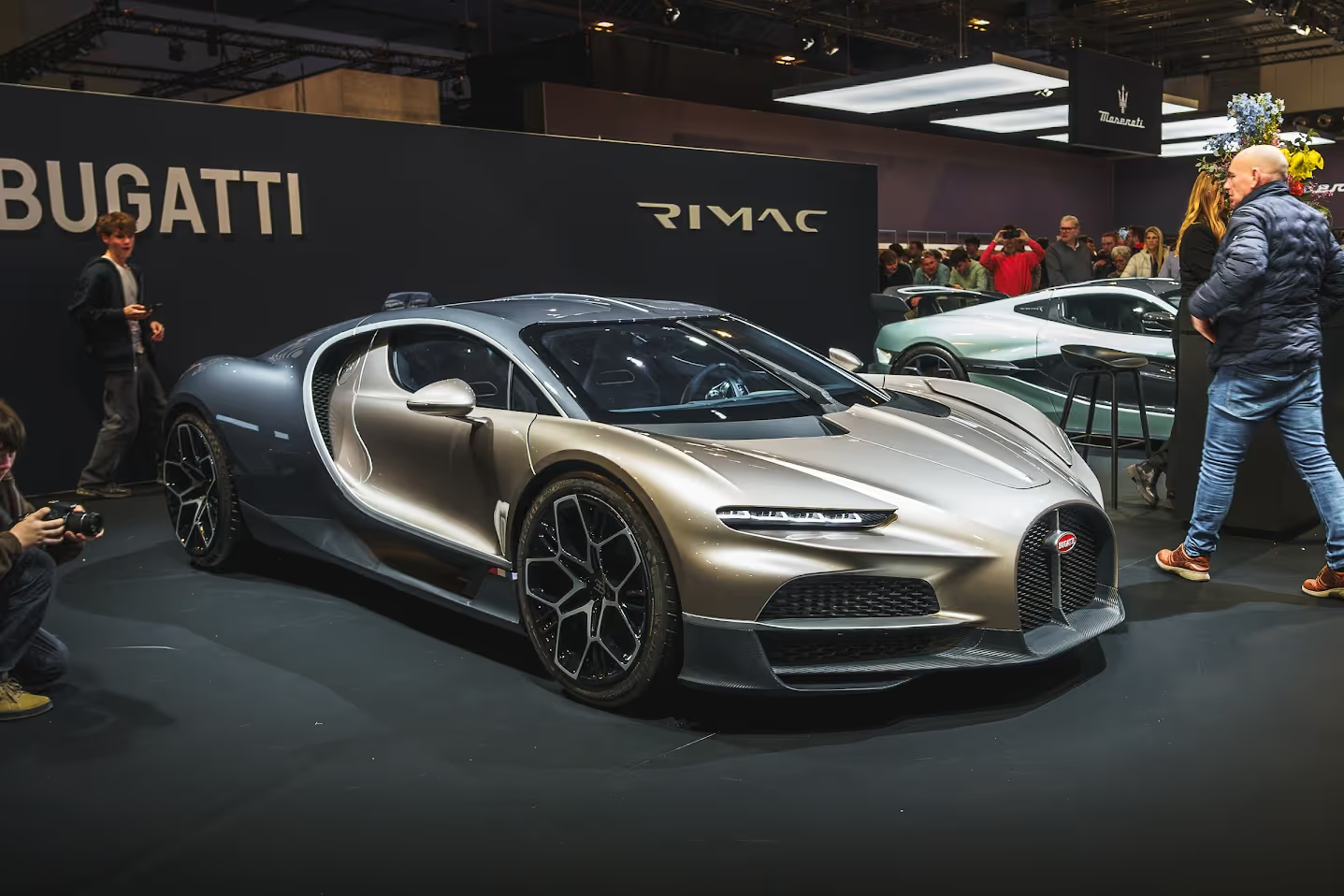
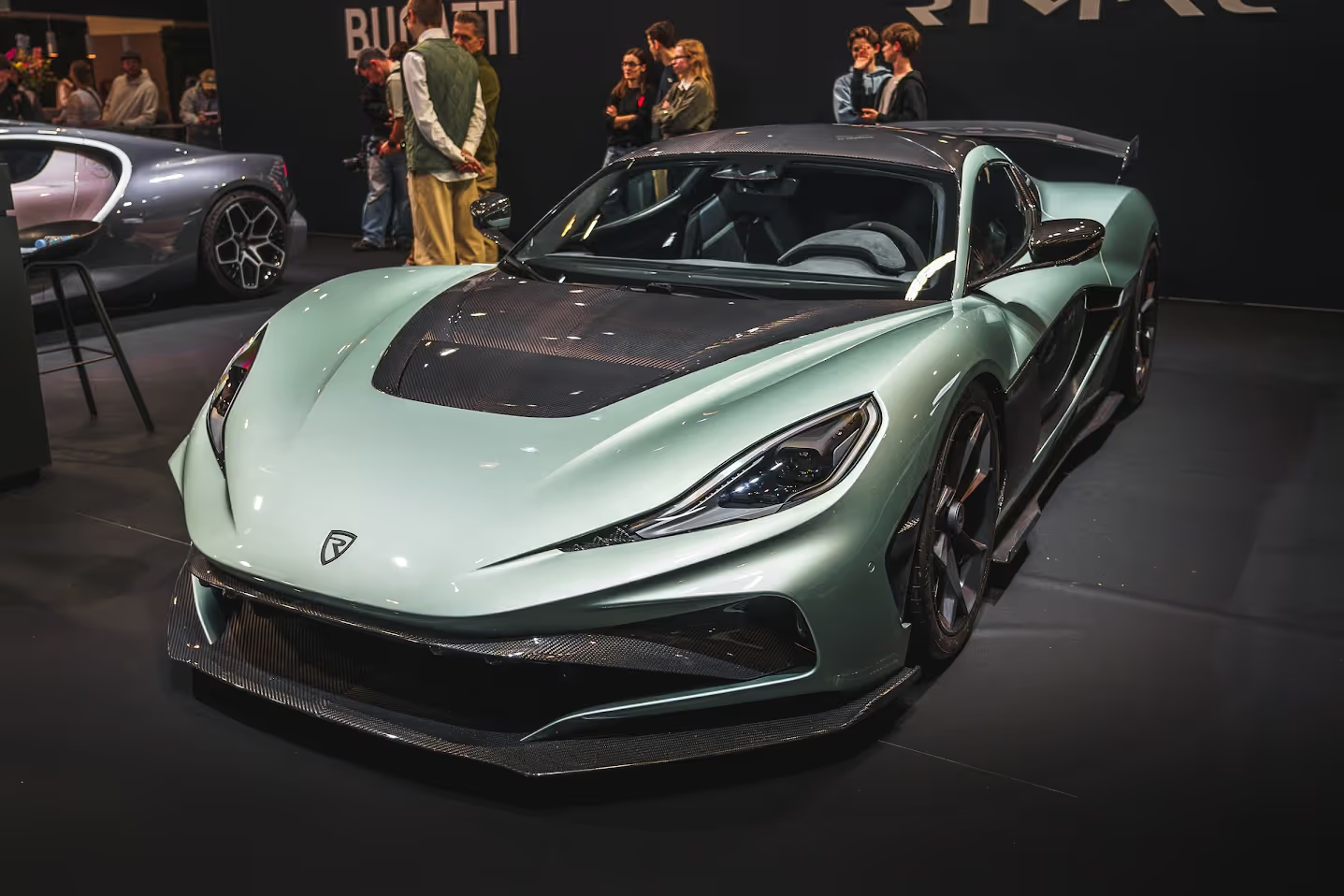
Many of us savoured the opportunity to see the V16-hybrid hypercar, knowing full well that it may be the only time we are in the presence of Bugatti’s new flagship. Sat next to it on the most expensive stand at the show - with an average value of £2.5 million per car - was the Rimac Nevera R. The latest product from Croatia is a record-setter in its own right, but it may as well have been transparent, as people looked through it to focus their gaze on the Tourbillon.
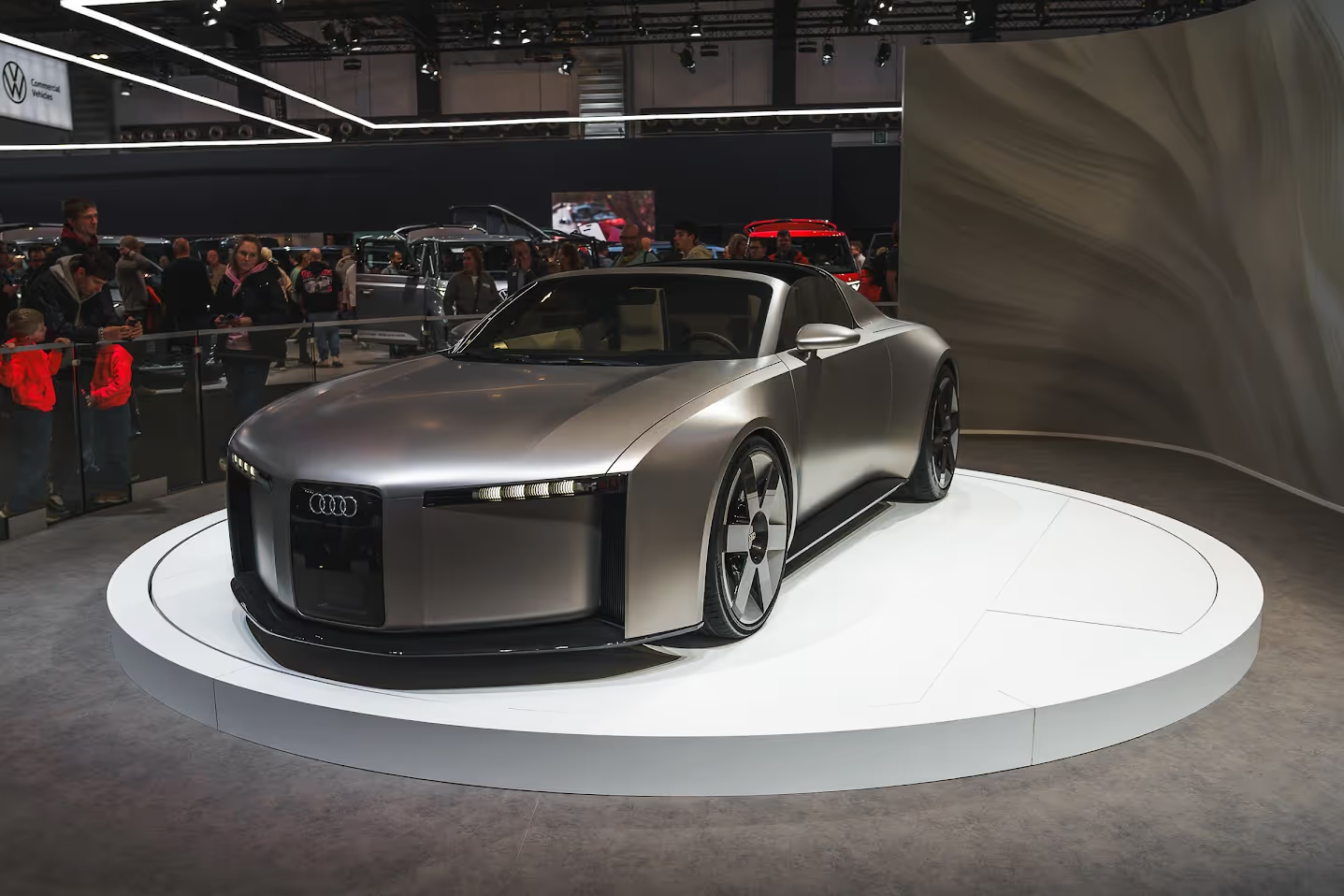
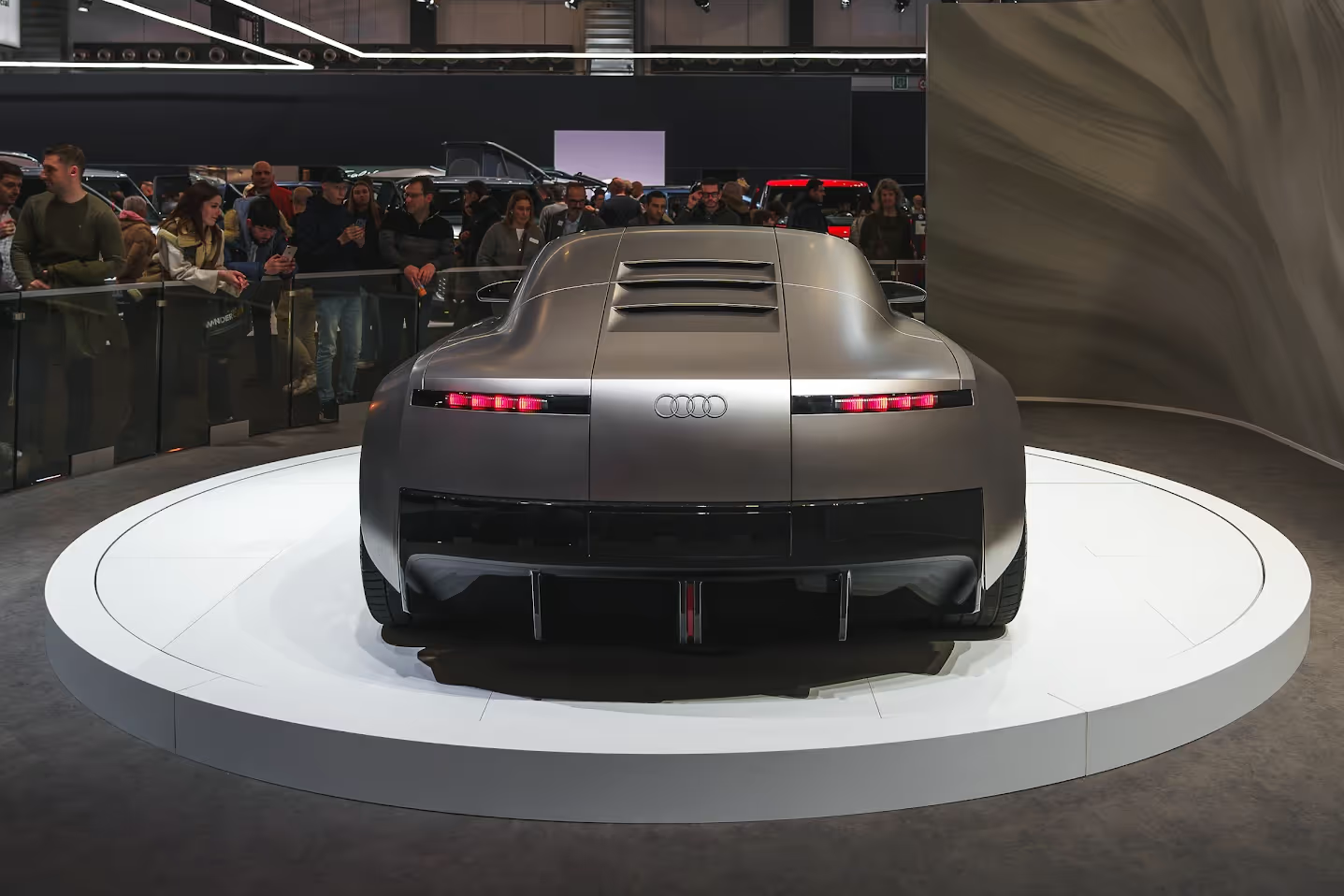
Displayed in its own light tunnel, the new Volkswagen Golf GTI Edition 50 showed off the second best red tele-dial wheels after the Luna Rossa we saw earlier, but the best singular stage was reserved for the Audi Concept C. It sat slowly rotating from left to right on a turntable, letting the soft lighting dance across its chiseled and curved bodywork. There was no information - not even any branding on the stage. It wasn’t required; the car spoke for itself. If even a tenth of the concept’s styling translates into Ingolstadt’s forthcoming electric sports car, Audi will have made one hell of a looker.

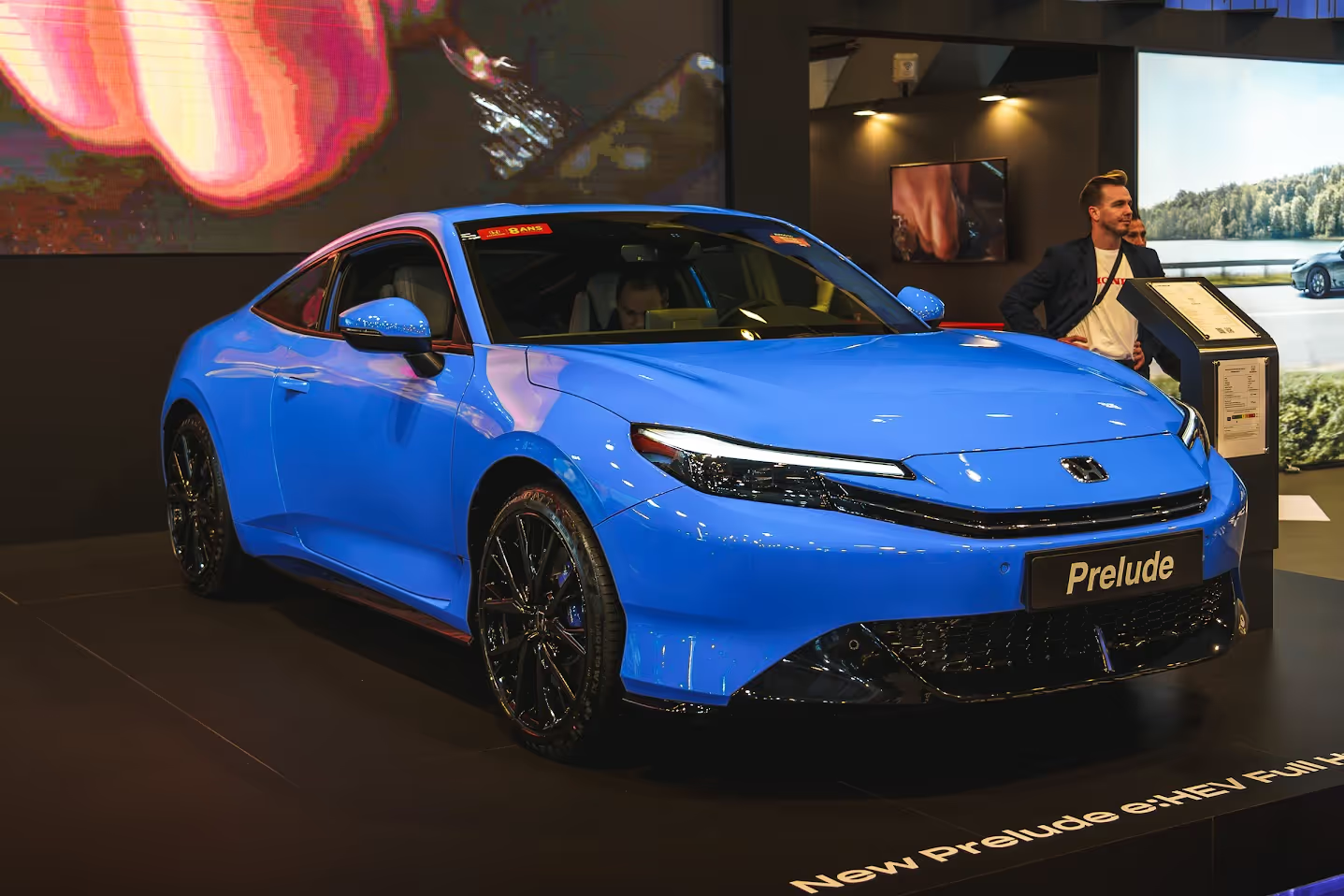
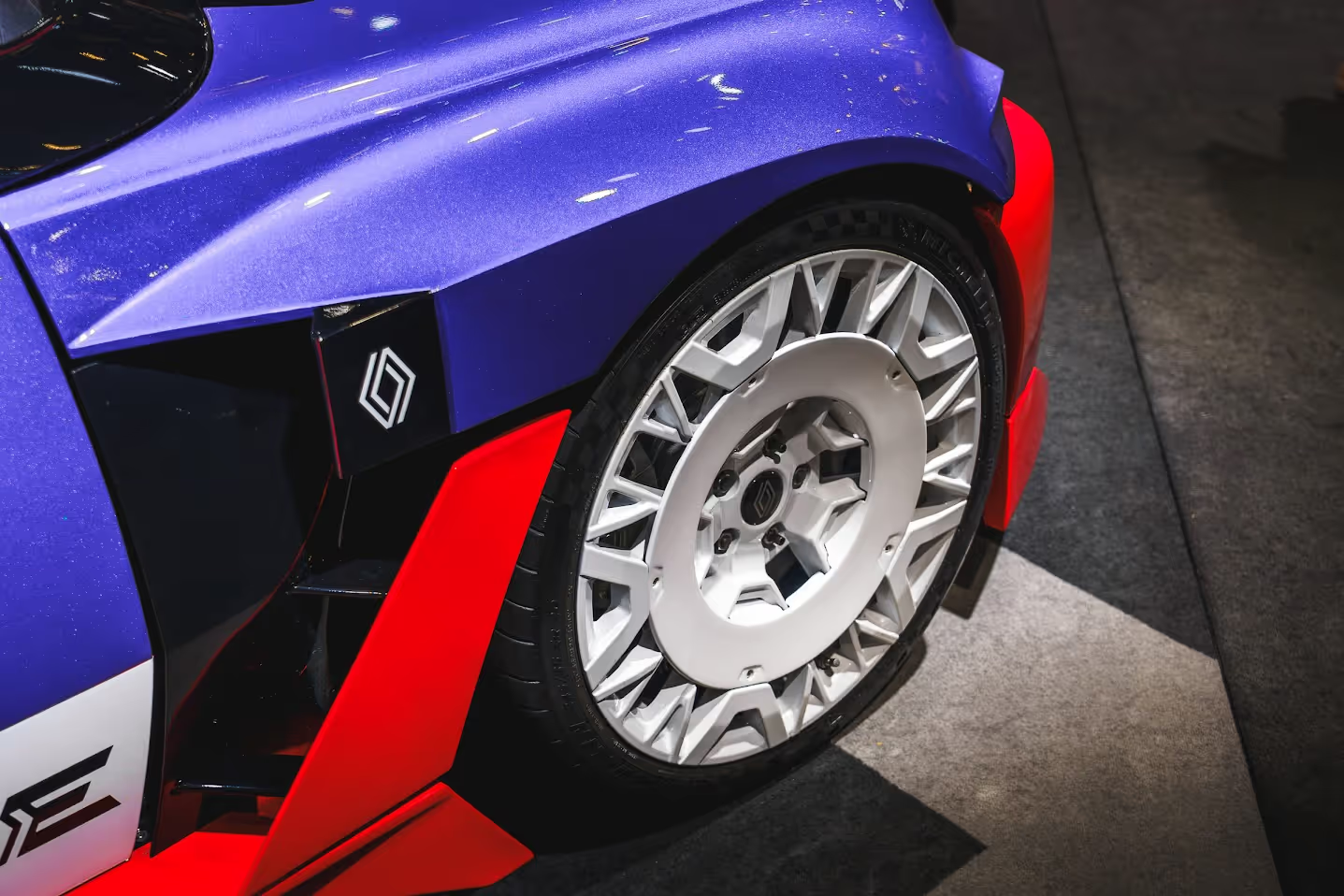
At some shows, a new Honda Prelude wouldn’t be allowed within half a mile of a Lamborghini Revuelto, but at the Brussels Motor Show the sheer volume and variety of cars is what made it quite the spectacle. A stone’s throw away from an Alpine A424 Le Mans Hypercar sat a Dacia Sandero; a Ford Transit got as much attention as the Mercedes-AMG PureSpeed; people had to wait to get a closer look at the Renault 5 Turbo 3E and pair of Twingos throughout the day.
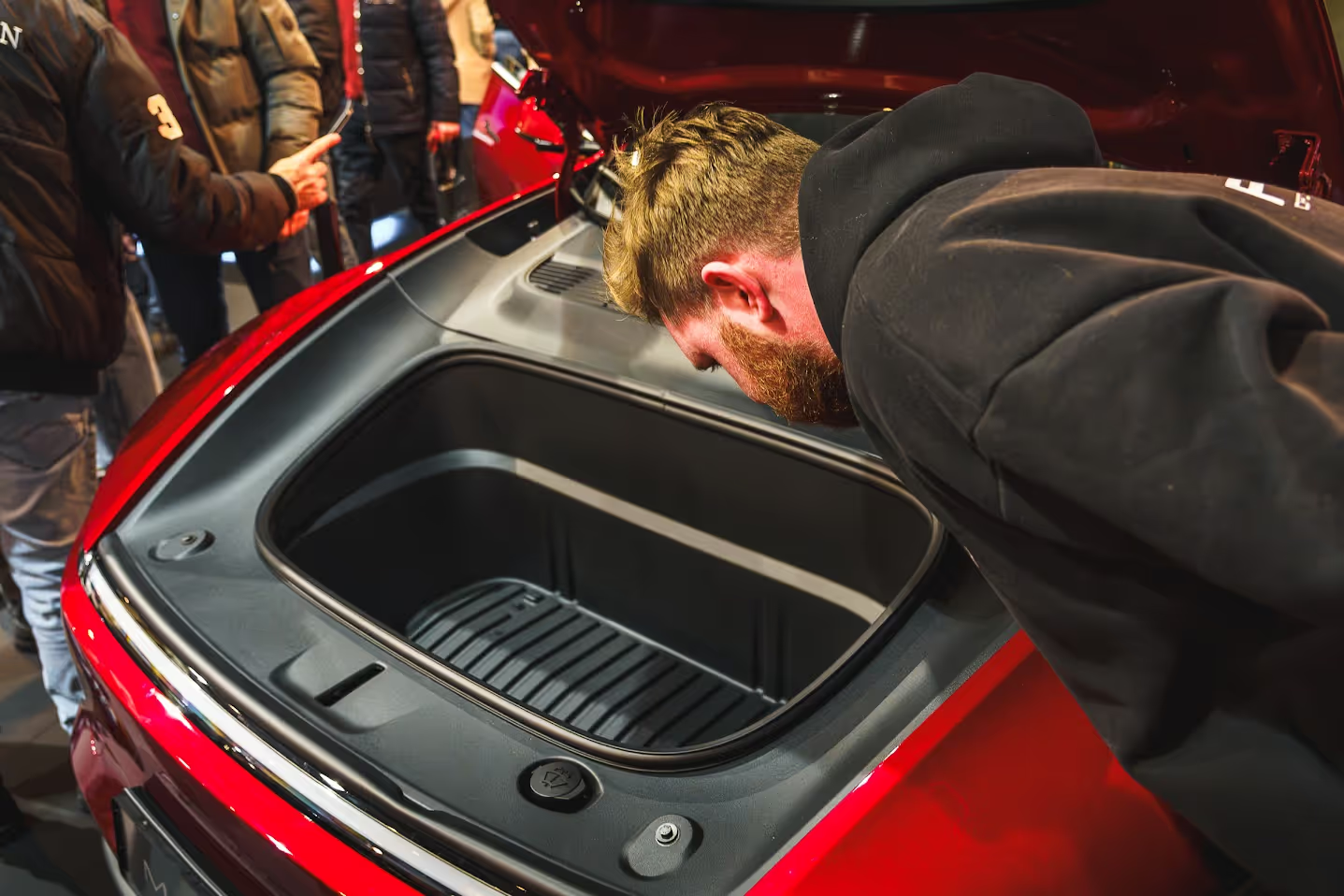
The level of enthusiasm for such an eclectic mixture of machines was fantastic to see, with people of all ages and tastes sharing the joy of laying eyes and hands on a new car for the first time. People looked beyond brands, giving time to the cars that they were drawn to for their exterior styling, the interior tech, or the storage space. We suspect that a few struts will have needed replacing after the first day, as no tailgate stayed closed for more than five seconds before someone came to check if air could be found within the boot.


One of my favourite sights at any motor show is seeing the neurons firing in people’s brains that etch an image of their new dream car into the forefront of their mind. The energy from those synaptic transmissions alone could’ve powered the Brussels Expo for three days, showing that something as fundamentally simple as a car - something considered by the uncultured to be nothing more than a functional tool - can spark such desire and excitement.
To that end, the motor show in general is not dead. I reiterate, you must disbelieve anything you’ve read about the concept of the motor show falling out of favour. Every room, corridor, stage, shop, and eatery was packed throughout the day.


The appetite to see the cross-section of the European car market exceeded my expectations, and that of the manufacturer representatives I spoke to as well. There’s no better way to showcase your wares to your target audience than to place it in a room with your target audience in it, is there?
While the final Geneva Motor Show was one that had potential to expand, there was nothing left on the table at the 102nd Brussels Motor Show. No bodystyle, drivetrain, fuel type (other than nuclear), paint finish, trim or upholstery type was left out. It had it all, and then some. It’s one to mark in your calendars for 2027, and with the 21,456bhp Eurostar providing a two-hour connection to London, a day trip is easily doable. I’ll see you there next year.

Author
Photography by:
Matt Haworth
Published on:
13 January 2026
Our Print Magazine
LATEST ARTICLES
About the Author

Ken Pearson
Deputy Editor
Resident Mercedes expert, affordable drivers' car champion and EV sympathiser. Can often be found on the other end of an argument with Craig with regards to powertrains and styling, bringing balance to the force.
Related Articles
A Day Out at the Porsche Experience Centre Silverstone
Alex Dunlop
|
4 April 2024
For the cost of the average track day, Porsche UK offer the use of one of their cars and 90 minutes of one-to-one expert track tuition at their Silverstone experience centre. As Alex Dunlop finds out, it's a great way to get to know a 911, and improve your car control.
NEVER MISS AN ARTICLE

Thousands descended on the Belgian capital to see a comprehensive cross-section of the present and future of the European car market. Ken Pearson was among them.
Matt Haworth
13 January 2026
Thousands descended on the Belgian capital to see a comprehensive cross-section of the present and future of the European car market. Ken Pearson was among them.
First published
13 January 2026
Last updated
13 January 2026
Photography
Matt Haworth
W
Forget anything you’ve read about the concept of the motor show falling out of favour, as the 102nd edition of the Brussels Motor Show drew swathes of manufacturers, and visitors alike. From flagship hypercars to entry-level quadricycles, world premieres and fan-favourites, the show had it all, and then some. Taking place in the Brussels Expo centre, this year’s edition of the show saw the halls filled to the brim with 67 car and van brands, plus 28 motorcycle makers.
Performance models were plentiful, Citroen’s Formula E racer, and the new Peugeot e-208 GTi being the first cars to greet RUSH Photographer Matt and myself. The highly anticipated electric hatch was part of a strong product offensive from Stellantis, with representation from almost all of their European brands. DS unveiled their No4 Taylor made Concept - a striking touring car-style rendition of their mid-sized crossover, while the updated Peugeot 408 and Opel/Vauxhall Astra made their public debuts at the show.


Nestled within the sea of new electric products was Alfa Romeo’s Giulia Quadrifoglio Luna Rossa - a limited edition model of which only 10 will be made. Performance from its 2.9-litre V6 is unchanged at 513bhp and 442lb-ft (600Nm), but the car gets a bespoke exterior colour scheme, and enhanced aerodynamic elements. The unique dual-element carbon fibre wing not only looks the part, but contributes to a fivefold increase of downforce at 186mph.
While the hot Alfa reminded us of where the super-saloon had been, BMW previewed what is yet to come. Their VDX prototype contains a quartet of electric motors within its swollen arches and upwards of 1,000bhp - all managed by the brand’s new Heart of Joy system. Having shed most of its camouflage, the VDX also provides us a near-production preview of the upcoming 3 Series and i3 saloon, and the M3 which will follow shortly thereafter.


Arch-rivals Mercedes-Benz filled their own room, complete with the Benz Patent Motorwagen - the world’s first car - at the centre. Among the eclectic mix of models was their vision of the future: the Concept AMG GT XX. Proudly wearing its battle scars from its record-setting run, the 1,341bhp functioning prototype was unmissable with its bright orange bodywork, and its otherworldly shape. Having broken 25 EV distance records over eight days at the Nardo test track, the GT XX will pass its technology to the new AMG GT four-door which will arrive later this year.
Kia brought three new GT models to Brussels, with the EV3, EV4 and EV5 all making their world premieres at the show. The hot trio will bring the firm’s Virtual Gear Shift system to the crossover and hatchback segments for the first time. While a dual-motor drivetrain is nothing out of the ordinary, the power splits are decidedly front-biased. Kia is clearly aiming to emulate the handling characteristics of front-drive hot hatches, as well as their sounds and transmissions.


Sister-company Hyundai also brought their latest high-performance EVs, with the Ioniq 5 N and Ioniq 6 N sharing a stand. In full-fat N-guise, the streamlined 641bhp saloon wouldn’t look out of place on the starting grid of a touring car race; the two-tone blue and black paint scheme coupled with the towering rear wing shows the car means business. Having experienced the 5 N on track, we can’t wait to see how the LSD-equipped powertrain performs in a lower-slung model. We left the Hyundai section wondering if the Insteroid concept is as bonkers to drive as it is to look at.
The broad variety of cars on display clearly showed the two distinct stylistic routes that manufacturers are rolling down: retroism, or futurism. The Polestar 5 falls firmly into the latter category, with not a hint of nostalgia on any of its precisely minimalist panels. It’ll still look modern one century from now. Contrasting the 872bhp four-door GT is the 82bhp five-door hatch that had as large a crowd gathered to soak in its shape: the Renault Twingo. The new supermini is unashamedly inspired by the 90s original, gently modernising aspects like the lights, bumpers, and dashboard. I’d happily have one on my driveway next to a Polestar 5.


However, some manufacturers straddle the line between the two prevailing schools of style. Alpine respectfully harks back to the past with the A110, which now in its swansong year, captured countless people in an elliptical orbit around a dark blue GTS model. The same three letters were found elsewhere on the stand, with a pair of A290s and a trio of A390s - the latter of which has just gone on sale in the UK. The fastback crossover impresses inside with fantastic Sabelt two-piece seats and a driver-centric cabin, and its maker will be hoping that the fitment of two electric motors on the rear axle will give it a dynamic edge over its closest rivals.
The show wasn’t short of new metal - or carbon fibre, for that matter - but we were stopped in our tracks by one of the slowest cars on display: the Suzuki Cappuccino. The Kei car was rare beyond its native shores when it was new, with time only heightening the appeal of the miniature roadster. However, products that were unveiled years ago were drawing crowds - namely the ND Mazda MX-5 - now in its eleventh year on sale.


The revamped Lotus passenger car range is nothing new, but we had to queue to get onto the stand to get a closer look at the Emira Racing Line, the Emeya and Eletre, and the spellbinding Evija hypercar. First shown in 2019, the 2,011bhp machine exists outside of the constraints of time, with an elegantly evil demeanour emanating from its carbon structure. With both butterfly doors open, the cabin revealed precise colour matching for the gold contrasting elements, continuing the JPS-inspired theme of the Fittipaldi Edition’s exterior.
With my lottery-win dream car budget having gone up by a further £2,000,000, we found an even larger crowd drawn to a car that’s a spring chicken compared to the seven year old Evija: the Bugatti Tourbillon, first unveiled in 2024. Like the new Mercedes-Benz GLC, it looks better in person, and the grille looks proportionally correct. It’s imposing, yet graceful in its form, looking lower, but no less wider in person than it does in the photos.


Many of us savoured the opportunity to see the V16-hybrid hypercar, knowing full well that it may be the only time we are in the presence of Bugatti’s new flagship. Sat next to it on the most expensive stand at the show - with an average value of £2.5 million per car - was the Rimac Nevera R. The latest product from Croatia is a record-setter in its own right, but it may as well have been transparent, as people looked through it to focus their gaze on the Tourbillon.
Displayed in its own light tunnel, the new Volkswagen Golf GTI Edition 50 showed off the second best red tele-dial wheels after the Luna Rossa we saw earlier, but the best singular stage was reserved for the Audi Concept C. It sat slowly rotating from left to right on a turntable, letting the soft lighting dance across its chiseled and curved bodywork. There was no information - not even any branding on the stage. It wasn’t required; the car spoke for itself. If even a tenth of the concept’s styling translates into Ingolstadt’s forthcoming electric sports car, Audi will have made one hell of a looker.

At some shows, a new Honda Prelude wouldn’t be allowed within half a mile of a Lamborghini Revuelto, but at the Brussels Motor Show the sheer volume and variety of cars is what made it quite the spectacle. A stone’s throw away from an Alpine A424 Le Mans Hypercar sat a Dacia Sandero; a Ford Transit got as much attention as the Mercedes-AMG PureSpeed; people had to wait to get a closer look at the Renault 5 Turbo 3E and pair of Twingos throughout the day.
The level of enthusiasm for such an eclectic mixture of machines was fantastic to see, with people of all ages and tastes sharing the joy of laying eyes and hands on a new car for the first time. People looked beyond brands, giving time to the cars that they were drawn to for their exterior styling, the interior tech, or the storage space. We suspect that a few struts will have needed replacing after the first day, as no tailgate stayed closed for more than five seconds before someone came to check if air could be found within the boot.
One of my favourite sights at any motor show is seeing the neurons firing in people’s brains that etch an image of their new dream car into the forefront of their mind. The energy from those synaptic transmissions alone could’ve powered the Brussels Expo for three days, showing that something as fundamentally simple as a car - something considered by the uncultured to be nothing more than a functional tool - can spark such desire and excitement.
To that end, the motor show in general is not dead. I reiterate, you must disbelieve anything you’ve read about the concept of the motor show falling out of favour. Every room, corridor, stage, shop, and eatery was packed throughout the day.
The appetite to see the cross-section of the European car market exceeded my expectations, and that of the manufacturer representatives I spoke to as well. There’s no better way to showcase your wares to your target audience than to place it in a room with your target audience in it, is there?
While the final Geneva Motor Show was one that had potential to expand, there was nothing left on the table at the 102nd Brussels Motor Show. No bodystyle, drivetrain, fuel type (other than nuclear), paint finish, trim or upholstery type was left out. It had it all, and then some. It’s one to mark in your calendars for 2027, and with the 21,456bhp Eurostar providing a two-hour connection to London, a day trip is easily doable. I’ll see you there next year.
Thousands descended on the Belgian capital to see a comprehensive cross-section of the present and future of the European car market. Ken Pearson was among them.