-01.svg)

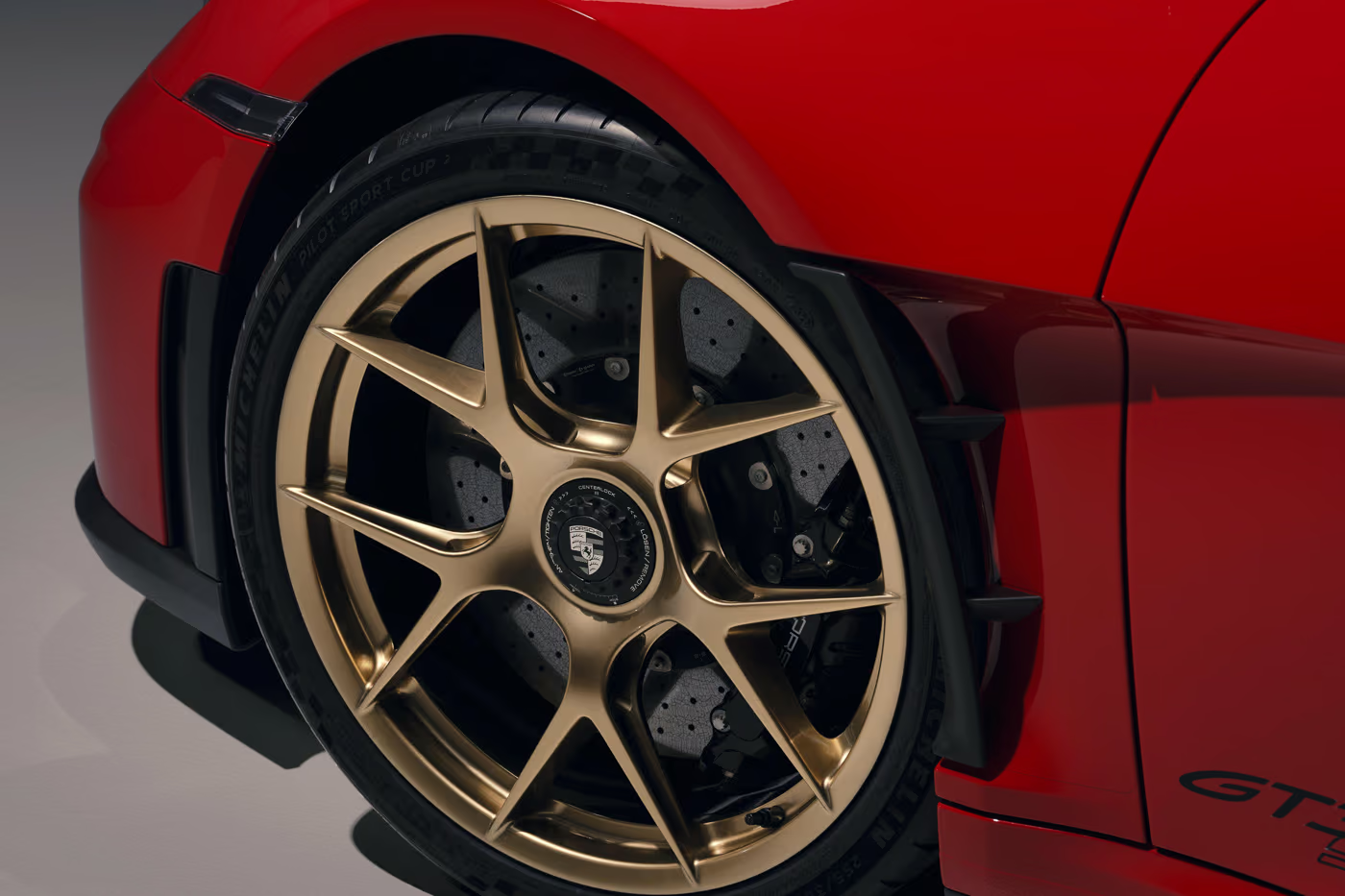
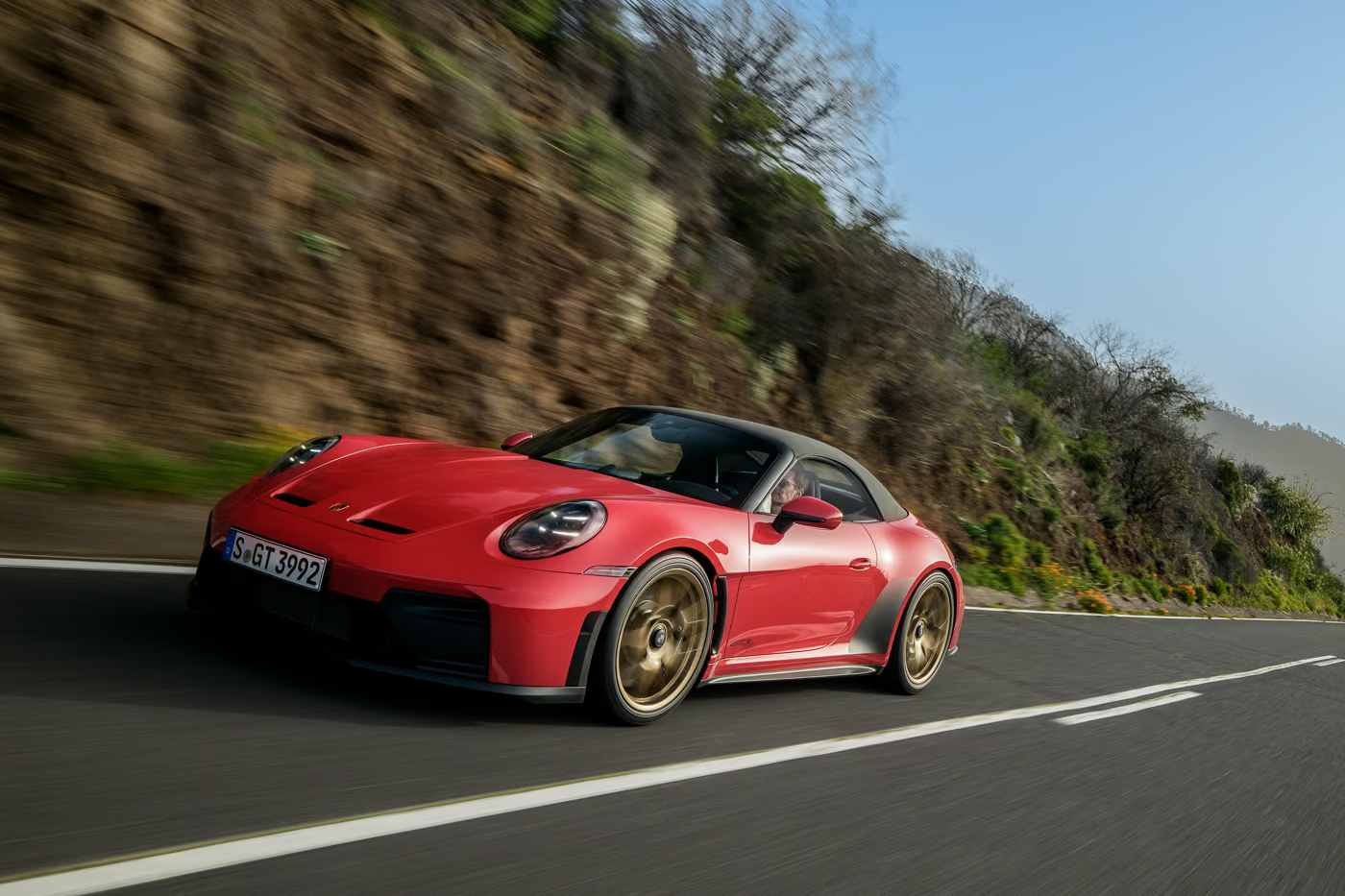
The 911 GT3 S/C (for Sport Cabriolet) tips the scales at just 1,497kg - and that includes 890 grams of air conditioning refrigerant. That's only 17kg more than the GT3 coupé, and a full 128kg lighter than a 911 Carrera S Cabriolet. To achieve that, Porsche has raided the S/T and GT3 Touring parts bins extensively. The carbon fibre bonnet, front wings and doors are all carried over from the S/T, along with its carbon fibre anti-roll bars and shear plate. Carbon ceramic brakes and forged magnesium centre-lock wheels are fitted as standard, as are a 40 Ah lithium-ion battery and lightweight carpets. Notably, most of these parts are expensive optional extras on the fixed-roof car.
Beyond the dynamic benefit, there is a second motivation in keeping the S/C close to the GT3’s existing weight threshold: avoiding the need for expensive European re-homologation. Even the roof mechanism uses a magnesium frame, with a thin magnesium sheet giving the folded top a clean profile without the need for bracing hoops. The electrically folding soft-top opens or closes in 12 seconds, and can be operated on the move at up to 31mph. A wind deflector deploys in two seconds at speeds up to 75mph. No fiddly manual tonneau cover – this is a proper automated roof, and a direct answer to the biggest criticism levelled at the 991 Speedster.
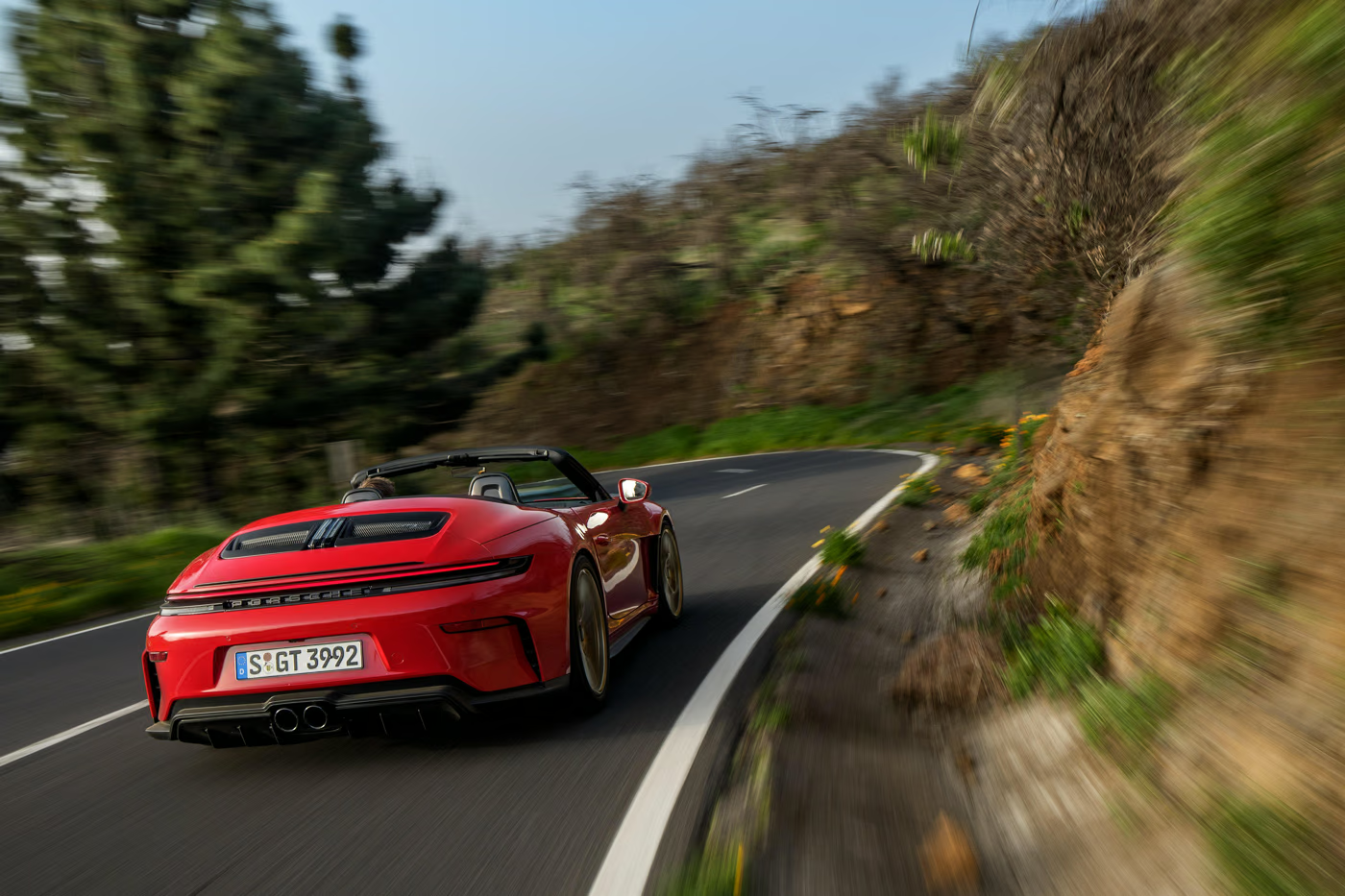
The 4.0-litre naturally aspirated flat-six is the 992.2 GT3 unit, developing 503bhp and 332lb-ft (450Nm) of torque with a 9,000rpm redline. It now carries a pair of petrol particulate filters and four catalytic converters to meet current emissions regulations, but new cylinder heads and camshafts shared with the GT3 RS compensate with improved power delivery higher in the rev range.
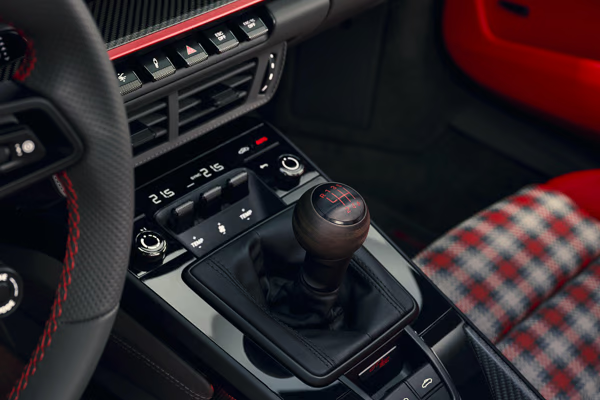
Power is sent exclusively to the rear wheels through a six-speed manual, and that's the only transmission available. The manual is lighter than the PDK - a critical factor in keeping the S/C's kerb weight in check. It uses the same short-throw lever and short final drive ratio as the S/T, though unlike its donor car, the S/C retains a conventional dual-mass flywheel and clutch. The performance figures match the manual GT3 coupé exactly: 3.9 seconds to 62mph, 194mph flat out.
Andreas Preuninger says that, although the S/C uses the same shell as a Carrera Cabriolet, its lower mass reduces the loads acting on the structure, improving what he describes as the car’s felt rigidity. On that basis, Porsche has carried over the GT3 Touring’s chassis setup unchanged, including its spring rates and geometry, while bringing double-wishbone front suspension to a 911 Cabriolet for the first time. The car sits 20mm lower than a Carrera, with a maximum ground clearance of 100mm. Rear-axle steering and a mechanical limited-slip differential are standard, while toe, camber and anti-roll bar settings remain adjustable for track use.
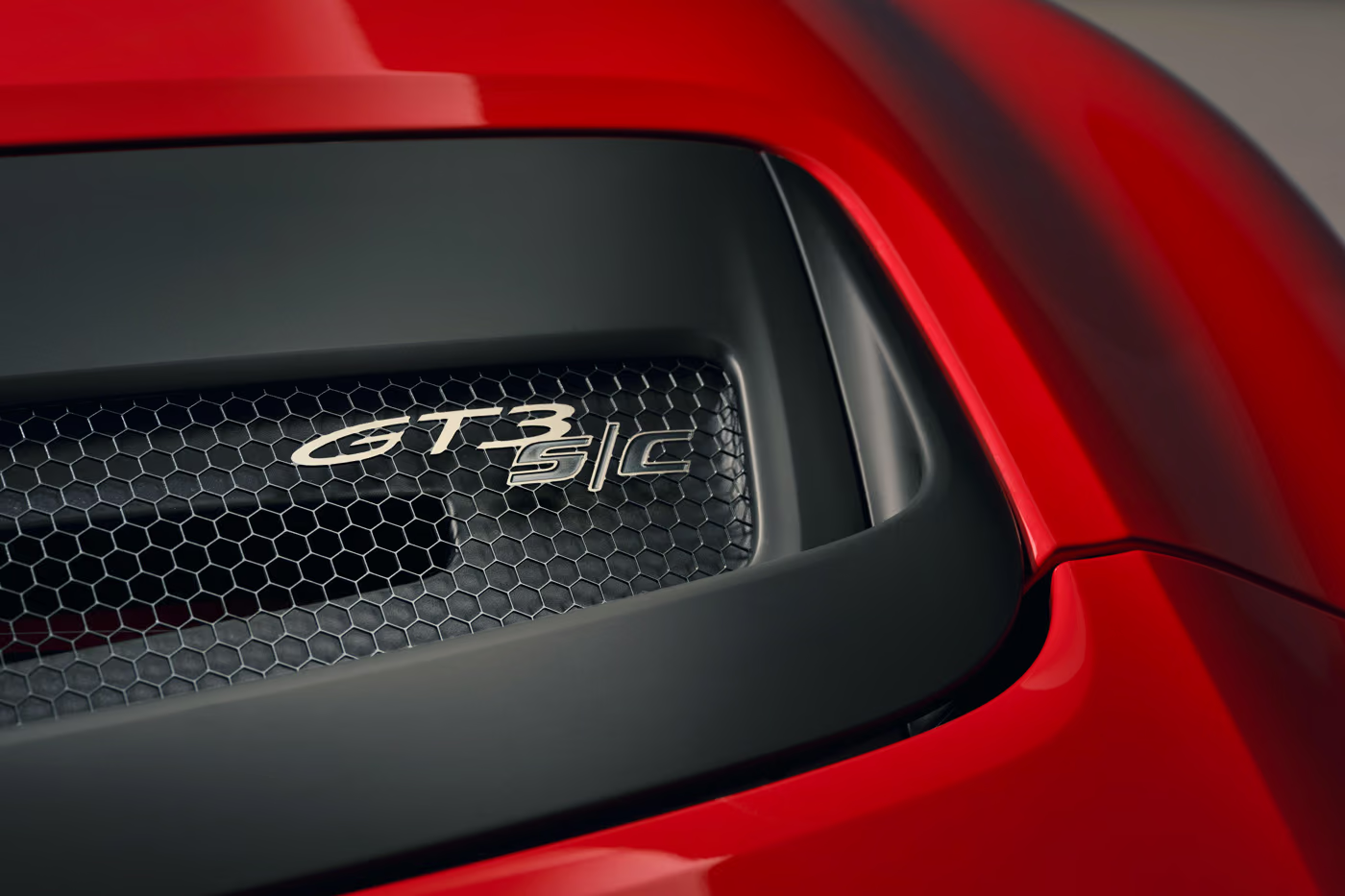
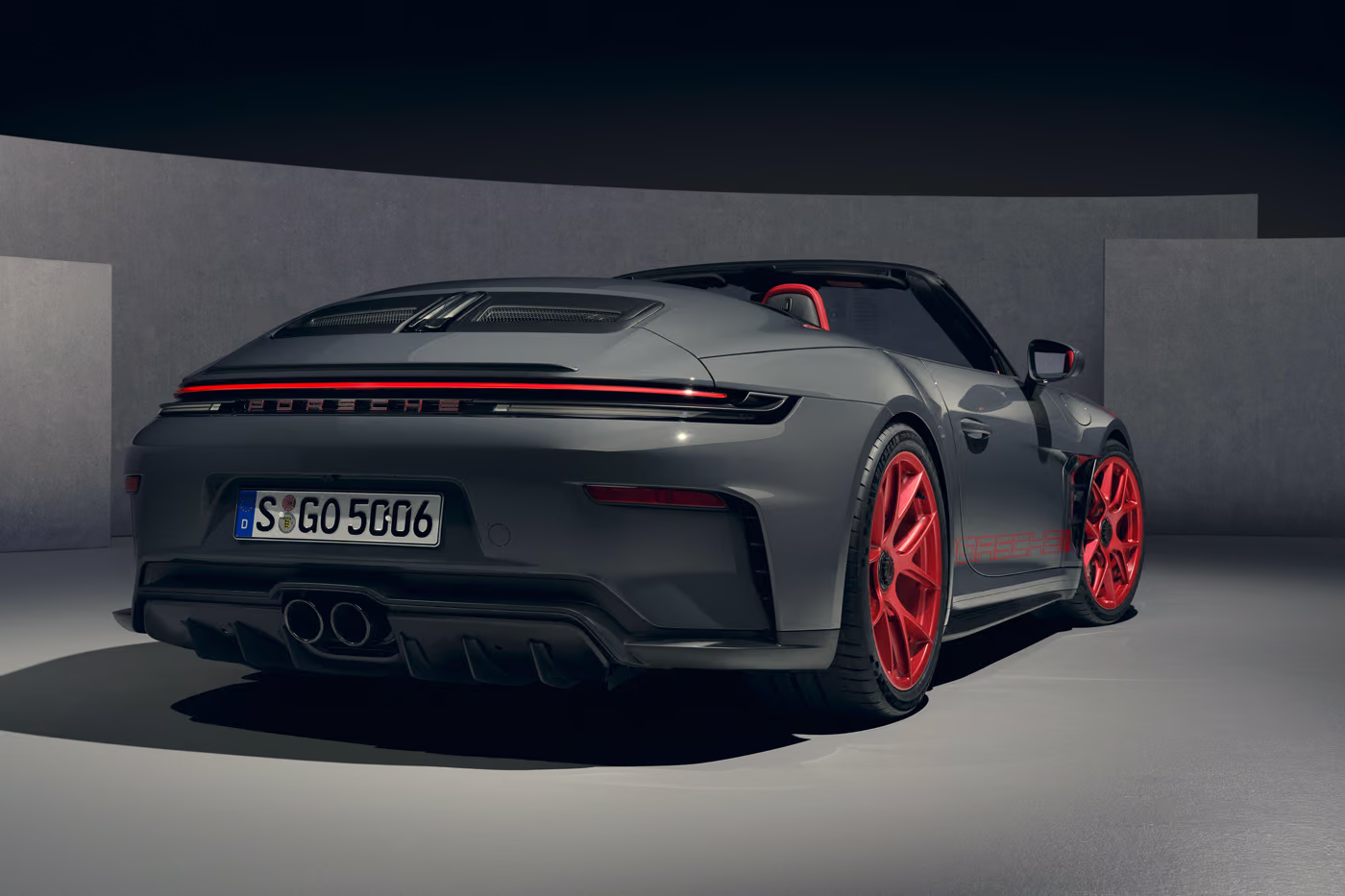
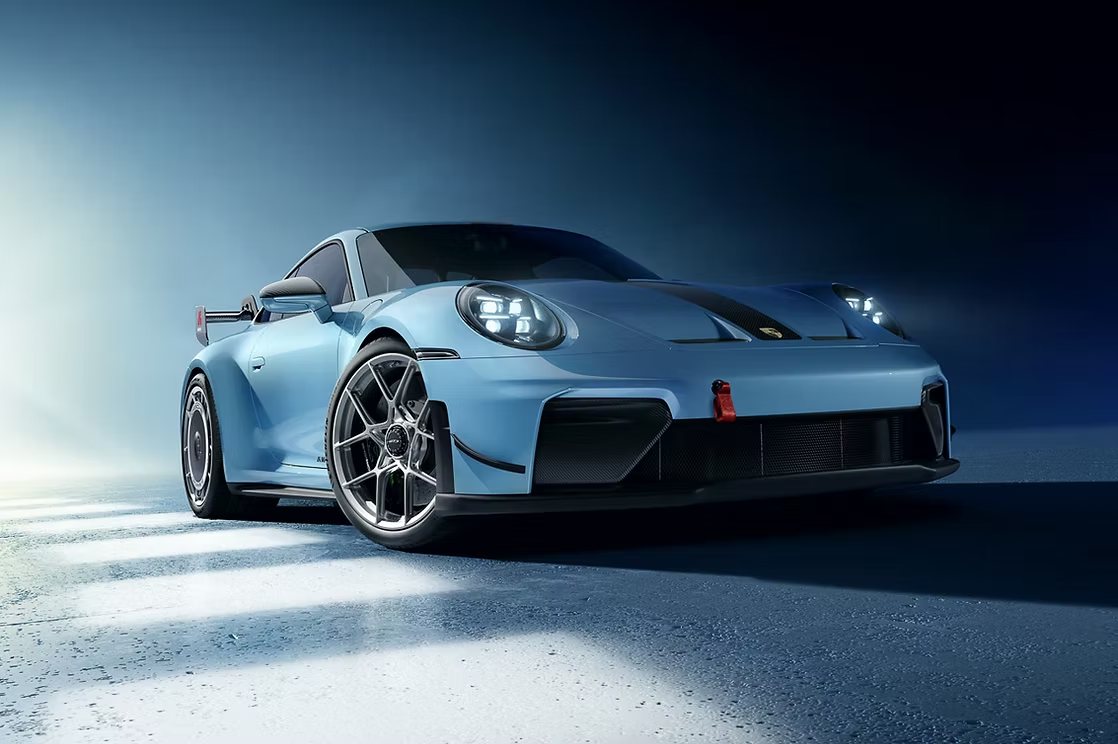
Understandably, the S/C borrows heavily from the 911 GT3 Touring in the styling department, sharing the same front splitter, rear diffuser and retractable rear spoiler. The adoption of the Touring's Gurney flap is also a first for any 911 Cabriolet. The S/C does, however, have its own set of details to set it apart: a black windscreen surround and matt-black stone chip protection film at the base of the rear arches distinguish the cabriolet from its fixed-roof siblings, as do the aforementioned S/T doors with their aerodynamic cutouts.
Porsche has carried over the GT3 Touring’s chassis setup unchanged, including its spring rates, geometry, and double-wishbone front suspension
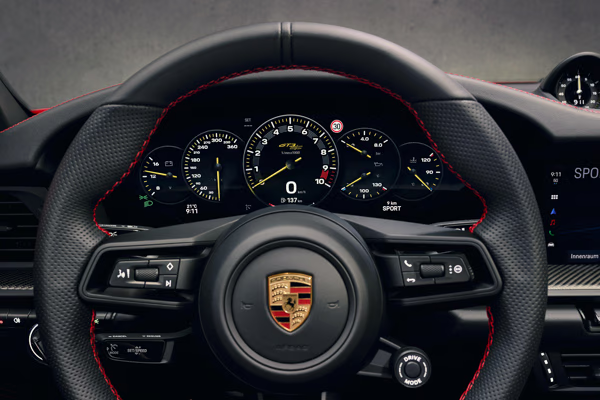
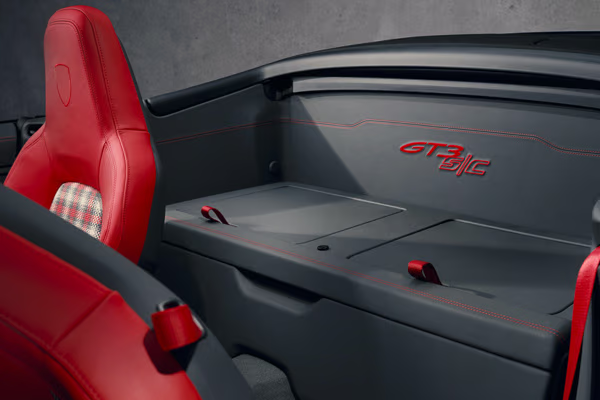
Unlike the Touring, the S/C is strictly a two-seater, with no choice to fit the rear bench. In its place, an optional 80-litre locking storage compartment sits on the rear shelf, complementing the 135-litre front boot. The standard seats are four-way adjustable Sport Seats Plus, with reengineered carbon fibre bucket seats available as an option. These are fitted with larger side airbags to compensate for the absent B-pillars, and three-stage seat heating can be added to either seat type. The cabin retains the GT3's key-style starter and five-dial curved digital display, with the rev counter offering the option to rotate the 9,000rpm redline to the twelve o'clock position.
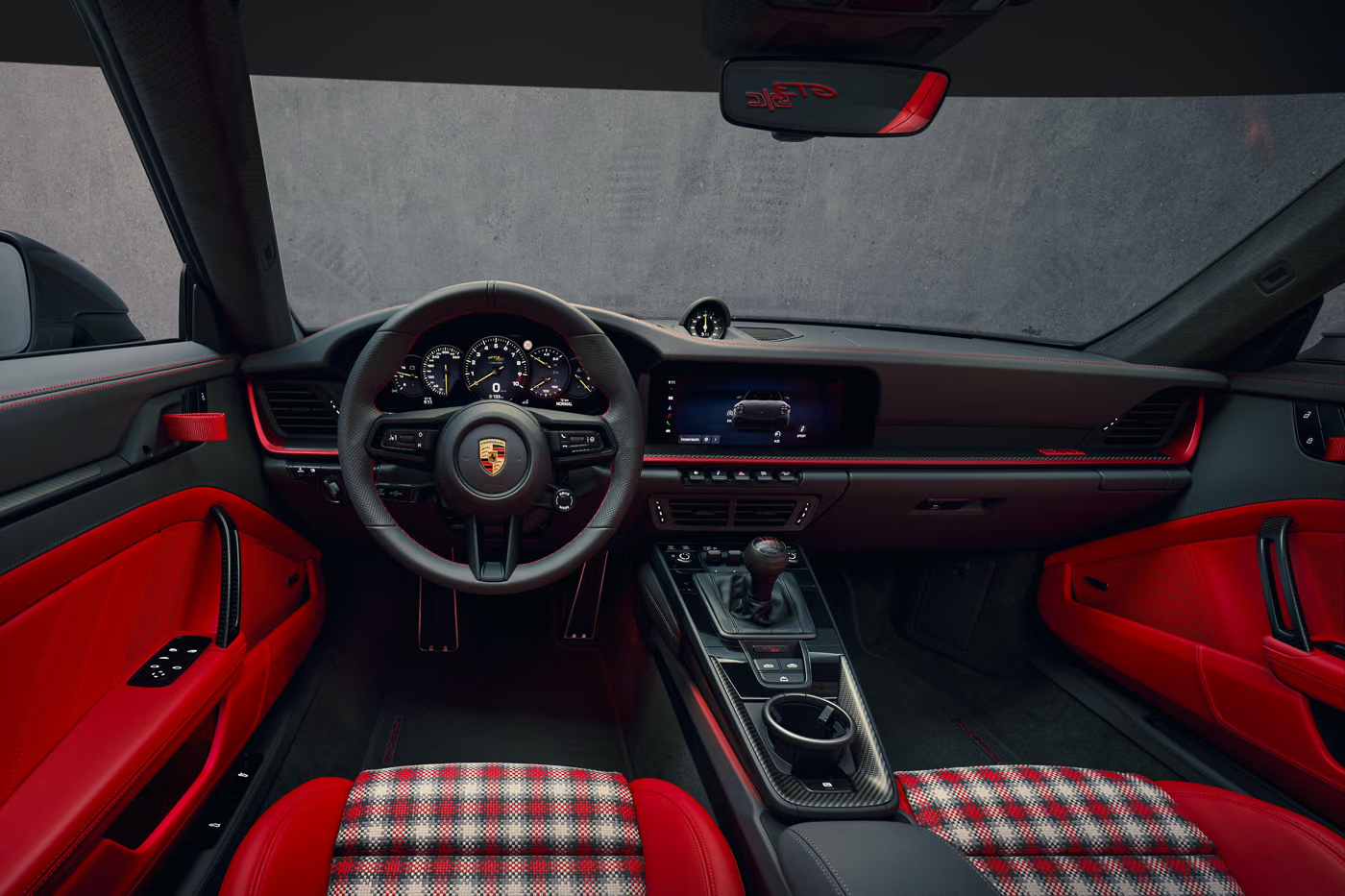
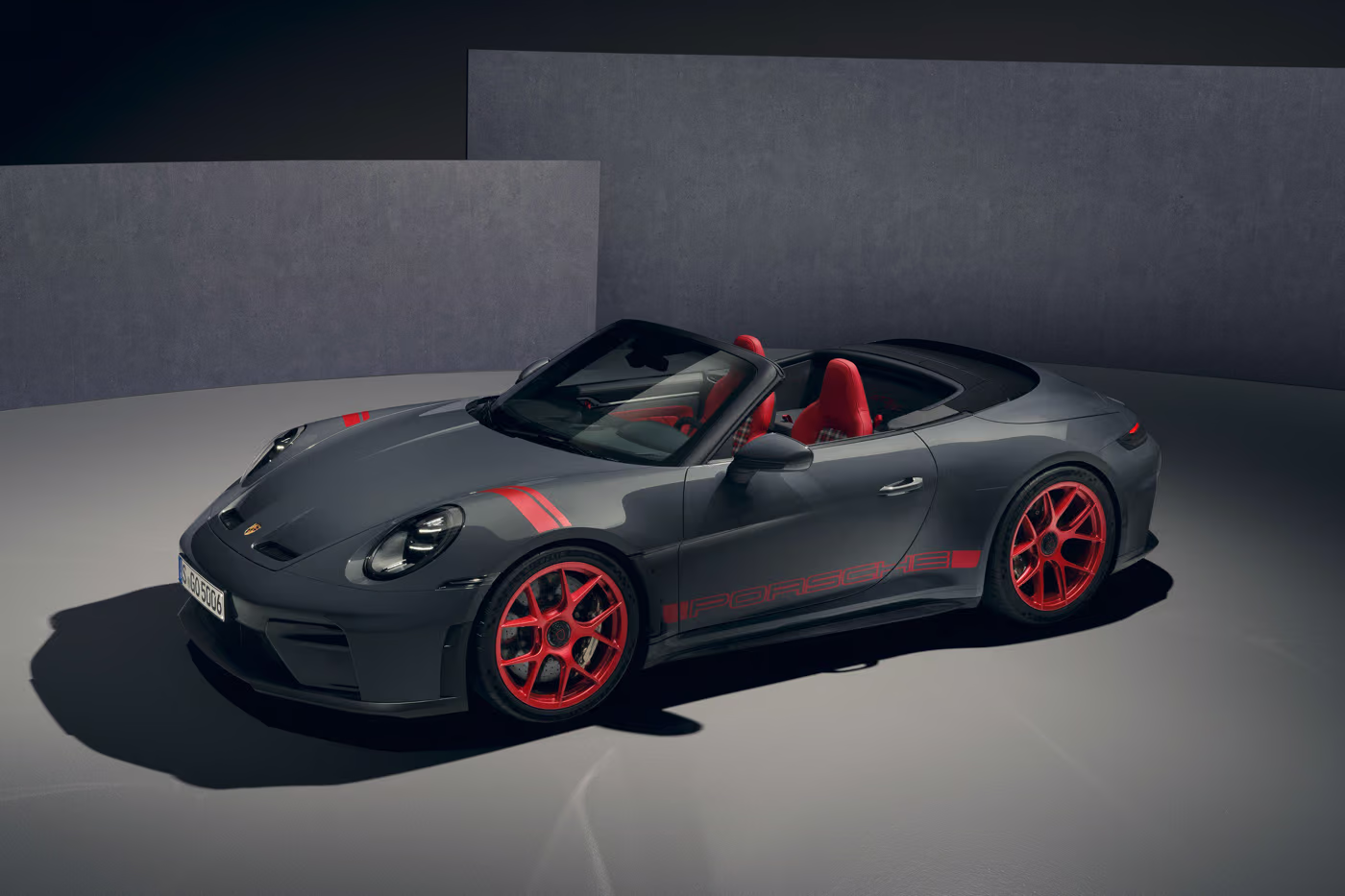
With the lightweight and mechanical hardware fitted as standard, the remaining options are largely cosmetic. The Street Style Package, at £24,110, adds Pyro Red graphics to the front wings and doors, a red-outlined Porsche wordmark and GT3 S/C badge, and a Heritage-style checked red, black, and grey pattern across the seat centres and glovebox interior. An open-pore laminated wood gear knob is part of the package, along with a carbon fibre and Pyro Red dashboard trim strip.
Perhaps one of the most controversial elements of the 911 GT3 Cabriolet isn't that it now exists, but the fact the S/C is not a limited-production model. It becomes a permanent part of the range, with UK pricing starting at £200,500 - a £42,300 uplift over the GT3 and GT3 Touring, though much of that gap is owing to the fitment of lightweight hardware that’s optional on the coupé. UK deliveries are expected to commence in the second half of 2026.
-3.avif)

.svg)

