-01.svg)
.avif)
Putting those claims to the test is the Cairngorms National Park. It's a valid proving ground for any grand tourer, and we'll be seeking out the famous Old Military Road to not only assess the credentials of the facelift, but ask a broader question: whether an electric SUV can be a willing accomplice on a road like this, or whether we'll spend the day wishing Kia had given us the keys to a Stinger GT instead.
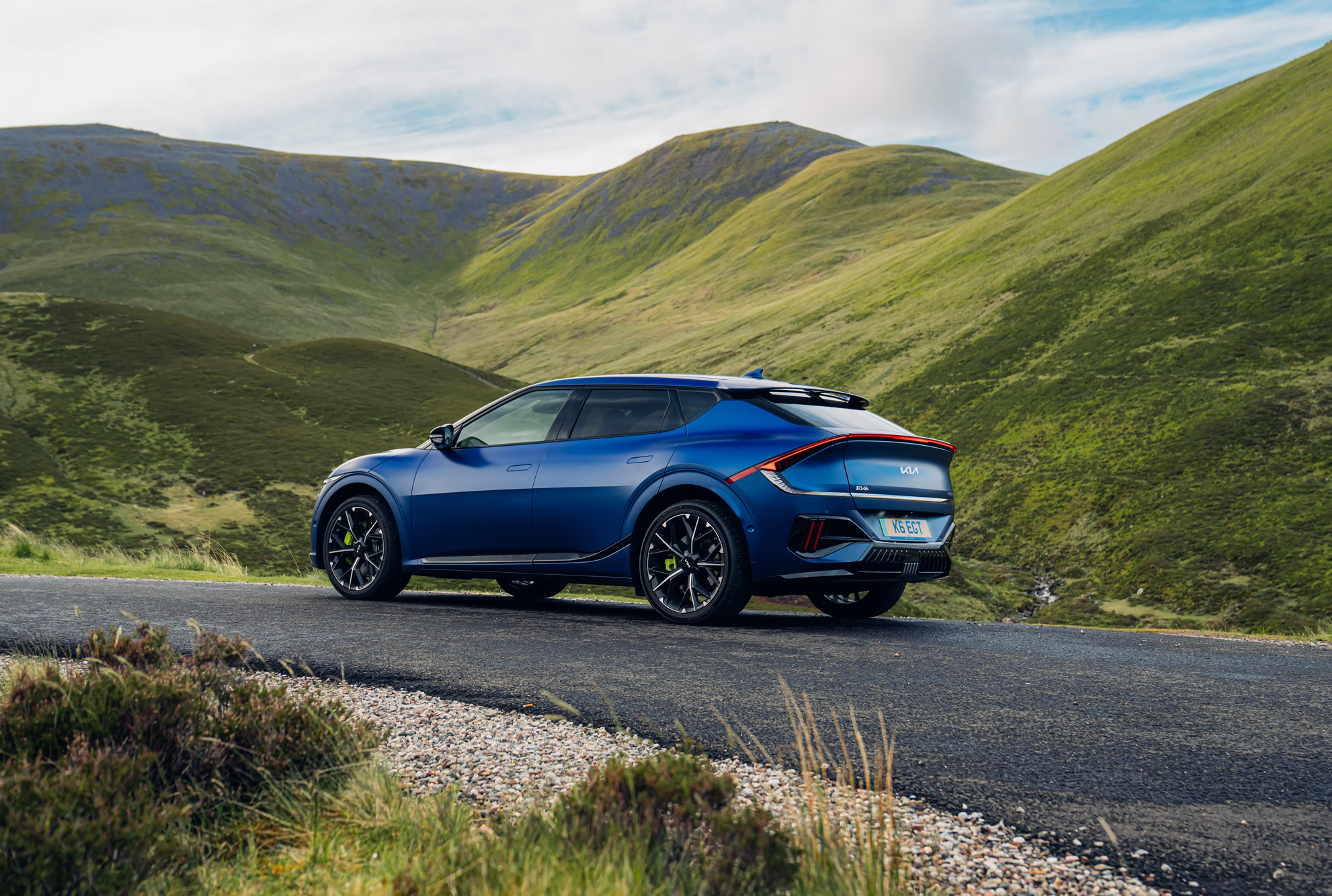
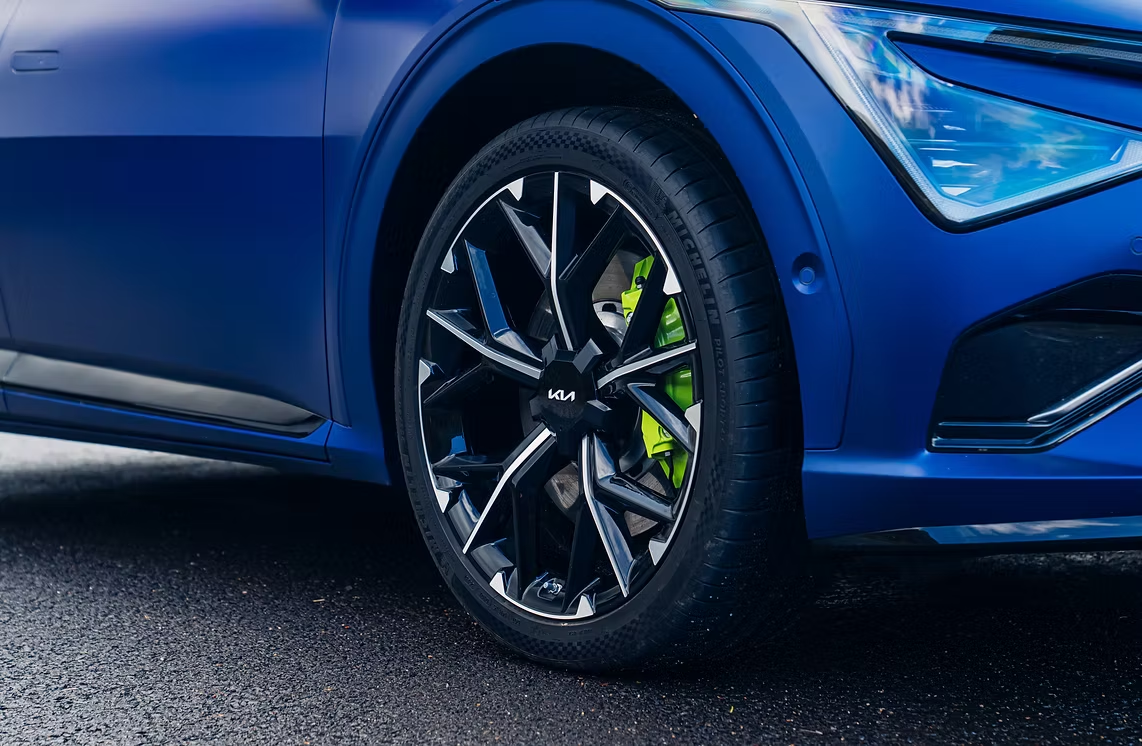
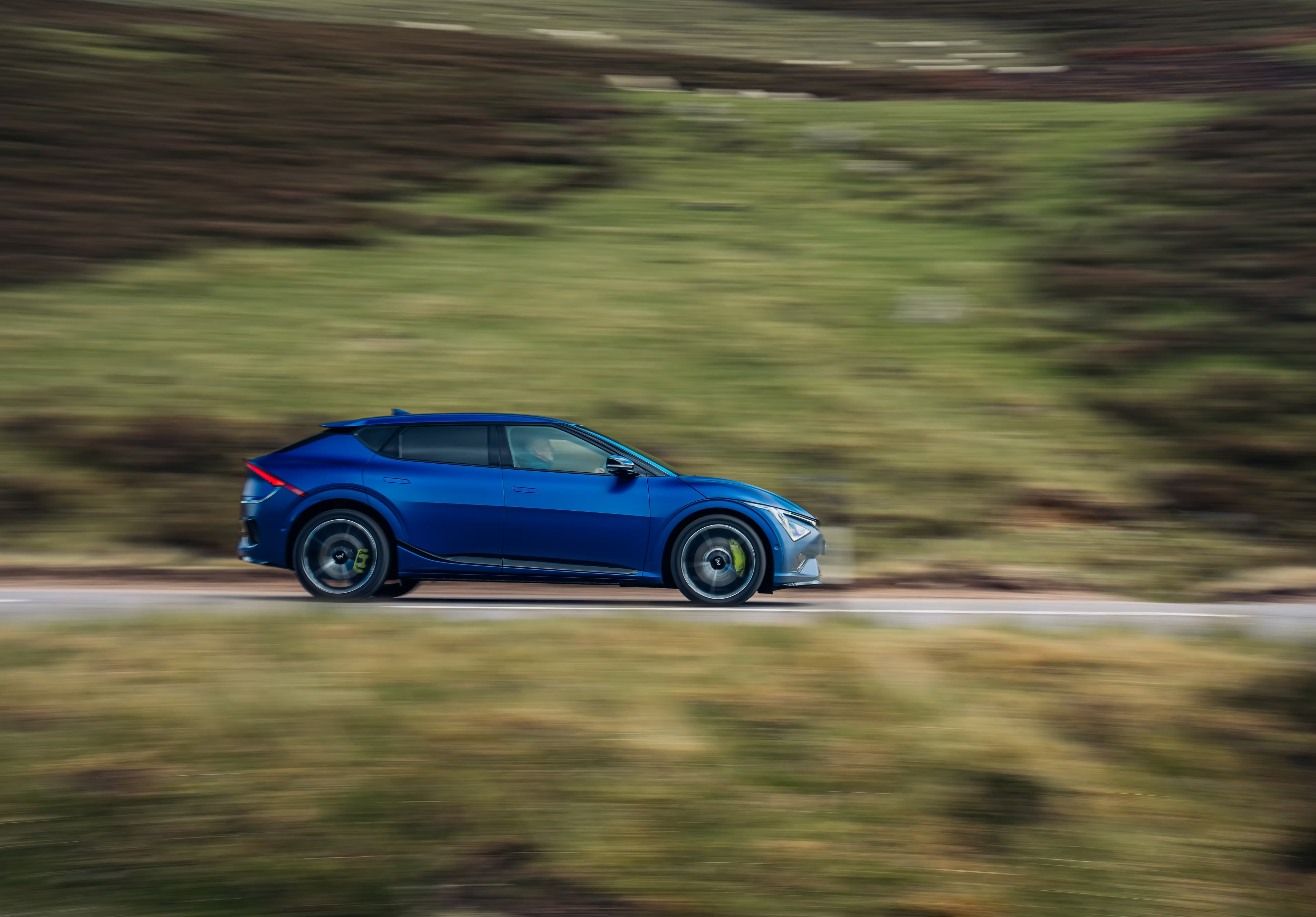
Before we get to The Red Hills, let's go over some of the key changes. Like the GT itself, the facelift is subtle: a new headlight array, more sculpted bonnet, deeper front spoiler and redesigned 21-inch alloys. It's a handsome car for its size, especially in the optional £1,500 Yacht Matt Blue of our test car.
Hardware improvements include a new, larger 84kWh battery pack, extending range to 279 miles. That's 16 more than before – despite the pack itself weighing 1kg less – and thanks to 800V technology, it can also charge from 10–80% in just 18 minutes on a 350kW charger. Kia puts that down to an 8% increase in peak charging power over the outgoing model.
Maximum power is now up to an Ioniq 5 N-matching 641bhp, and the steering and geometry have both been tweaked, whilst the spring rates have been relaxed – a response, Kia says, to owner feedback.
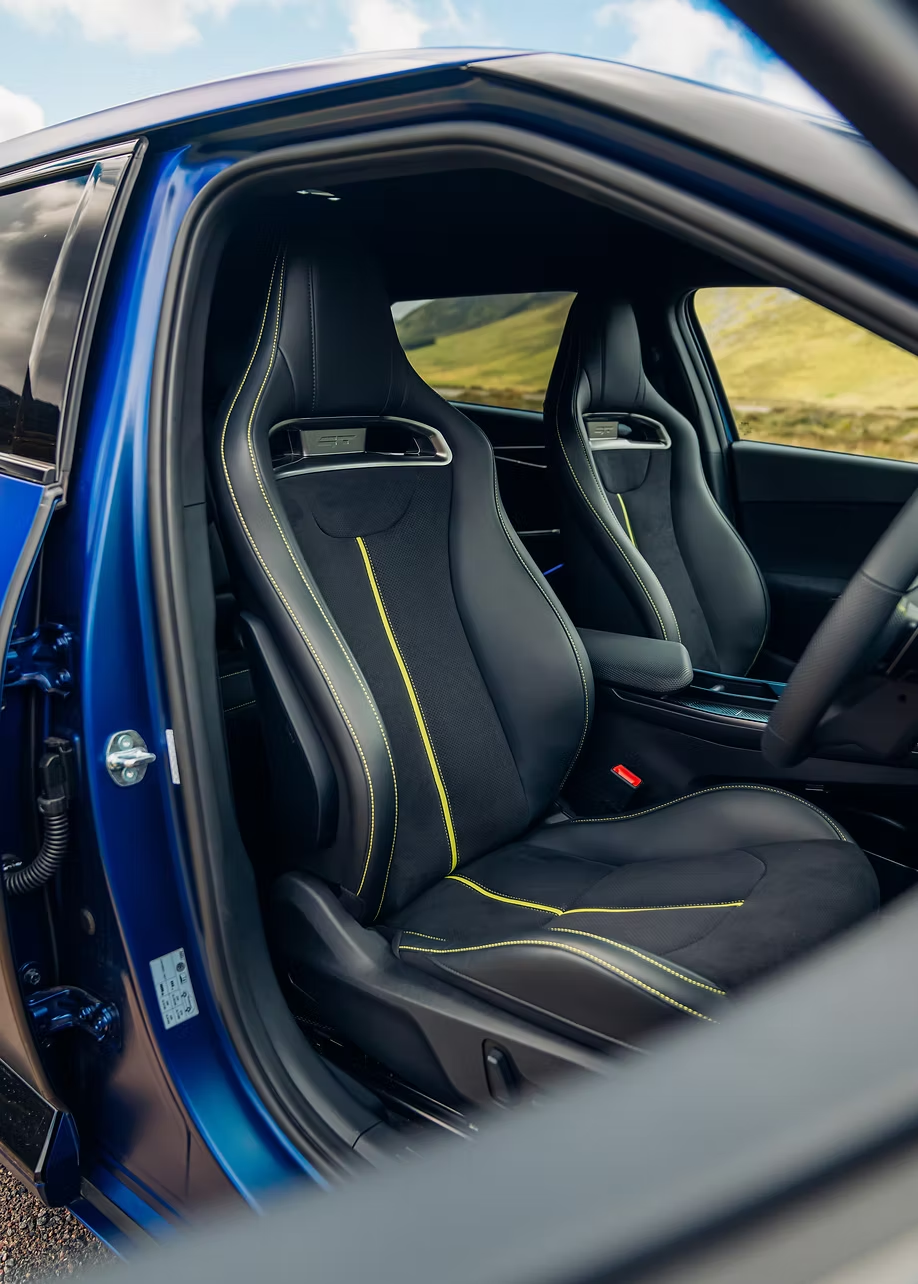
Kia has also knocked a rather generous £2,690 off the list price, without cutting corners elsewhere. Inside, the brand has again taken feedback on board: material quality has improved, the fingerprint-magnet and scratch-prone gloss black trim has been replaced by a brushed metal-effect finish, and the front seats are now electrically adjustable with memory as opposed to manually operated – a curious omission on the previous version. Finally, the infotainment system has been updated with Kia's latest software.
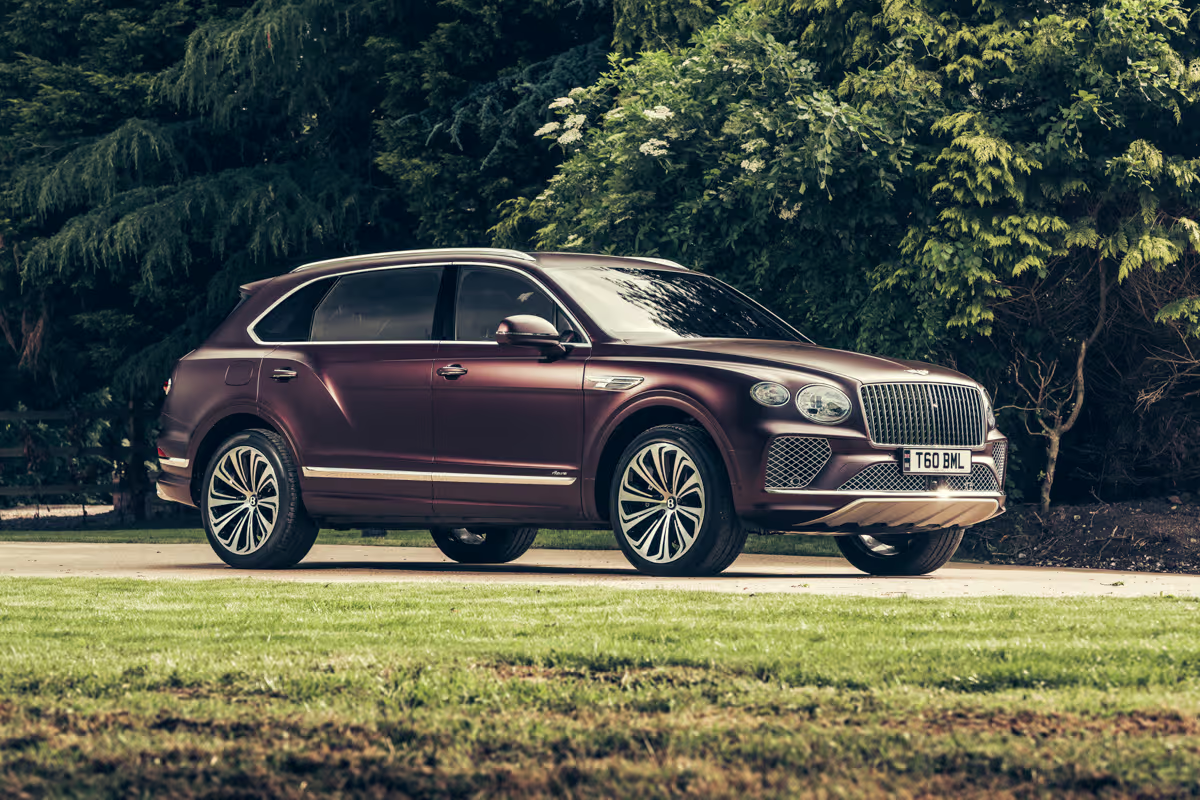
"The Bentley Bentayga rides with more edge... Although existing owners will discover a ride that’s improved rather than transformed."
The GT immediately covers the bases of humdrum driving exiting Aberdeen. Refinement is exemplary, the throttle response is well judged and one-pedal driving is intuitive. Irritating mandated driving aids can be quickly dismissed with the prod of two buttons on the steering wheel. We glide along in near-silence, just the white noise of the tyres for company and the beckoning mountains to our east.
Once off the motorway, it quickly becomes clear going full GT mode makes the ride quality too busy for anything but the smoothest of UK tarmac. Before getting into the Cairngorms proper, there's a testing B-road running parallel to the A93 which will find fault in any set-up. On the B9077, forget the switchbacks – the real challenge comes from below. This is an objective road, not a driver's destination.
We're not talking deep-cut potholes, just the sort of weathered, cambered surface that never lets the dampers catch their breath. To its credit, the GT puts up a valiant fight, its mass and low CoG helping the primary ride maintain its composure. But even when the dampers are fully slackened off, there's still a bite to sudden inputs. It never becomes uncomfortable and to be fair, the Bentley Bentayga rides with more edge, especially when specified with 22-inch wheels. Existing owners will discover a ride that's improved rather than transformed.
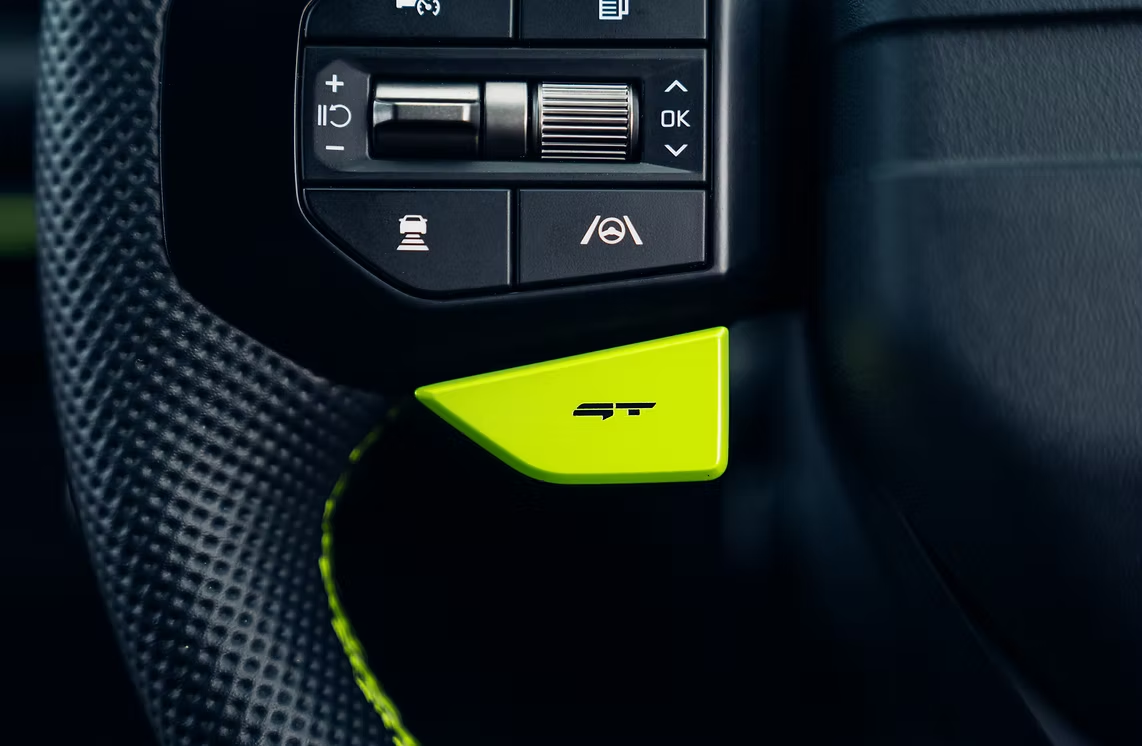
A custom GT mode is promptly tailored with soft damping, intermediate throttle and the more aggressive e-diff setting, accessed by a second prod of the acid-green ‘GT’ button, now relocated to the left of the new (and much improved) three-spoke steering wheel. The wheel also introduces a toggle for cycling between Eco, Normal, Sport and a new setting called Snow.
The B9077 soon feeds into the A957 – better known, somewhat unflatteringly, as Slug Road. It's a name rooted not in slowness, but in the Gaelic “sloc”, meaning hollow, a reference to the high pass once used by drovers and toll-keepers as one of the historic Mounth crossings between Angus and Deeside. Today, the road carves through a broad valley before climbing into Durris Forest via a string of rhythmical sweepers. It's a fine place to stretch the GT's legs.
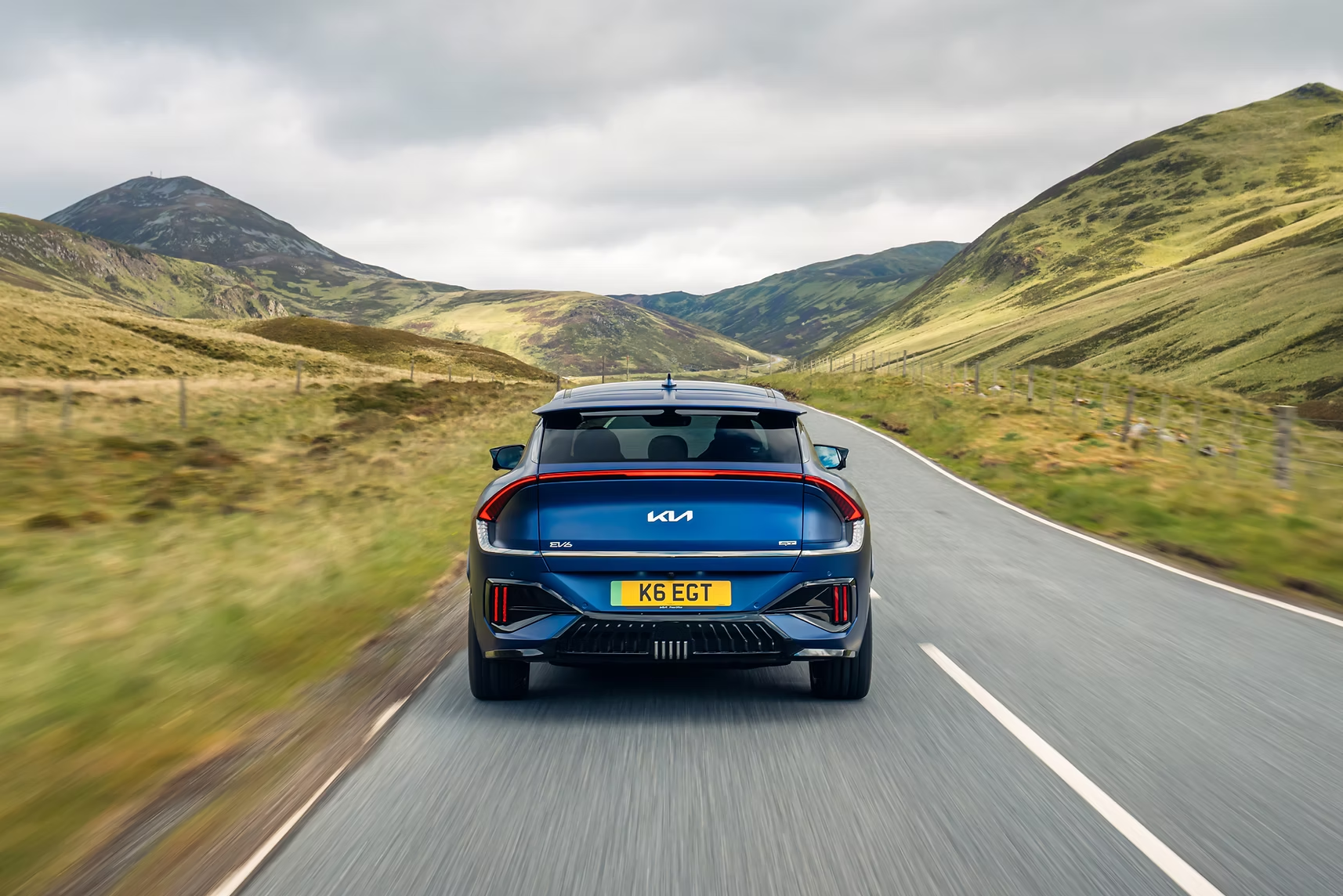
The damping settles with the increased pace and less agitated surface, and despite the large dimensions and not inconsiderable mass, the GT puts its torque vectoring and rearward bias to good use, displaying impressive agility in the tighter turns of the valley. In this initial foray, there is never any danger of exceeding the purchase of the Michelin Pilot Sport 4S, but you're aware of the GT's willingness to rotate with enthusiasm.
The brakes also establish their proficiency early. Stopping power comes from substantial 20-inch monoblock callipers fitted to the front wheels, while the rear benefits from 19-inch items. Combined with paddle-adjustable regen, they rein in over 2.2 tonnes with minimal fuss or protest. Crank up the harvesting and time things right, and all you'll need is a measured dab of the pedal to scrub excess speed before turning in. Keeping some regen dialled in also helps soften the sense of runaway inertia this much mass and performance might otherwise serve up.
Ah yes, the performance. Initially, overtakes are dispatched at maximum warp before settling into a more restrained pace, gliding past other traffic with a brush of throttle in a very GT-like manner. Despite the additional 64bhp of the facelift, Kia isn't claiming any improvement in acceleration – at least not from 0–62mph, which still takes 3.5 seconds. Beyond that, there's little doubt the facelifted car is stronger. The top speed is unchanged too, at 161mph.
.avif)
Nevertheless, we're quickly past the three B's of Ballater, Balmoral and Braemar as the A93 finds its teeth and morphs into the OMR proper. On the fast, open sweepers beside Clunie Water, the EV6 GT really starts to find its stride.
The full 641bhp is only available in GT mode, but when hastily activated, the throttle response turns hair-trigger, so it's best any passengers are forewarned. It also sets the steering and damping to battle stations and slackens off the stability control.
"As we begin the final leg of the journey along tighter B-roads, the GT starts to find its limitations, although it's mainly a question of dimensions rather than agility..."
Configuring the aforementioned custom GT mode is therefore a high priority, though the menus take a bit of negotiating, meaning on-the-fly adjustments are out of the question. Thankfully the UX is responsive, so hopefully the stream of traffic you've overtaken won't have time to come back past. You do, however, rue the lost sense of nuance in-motion tweaks bring.
One feature you can toggle on the move is the much-heralded Virtual Gear Shift, or VGS. It's activated via the star button on the steering wheel, commandeering the regen paddles. You might expect the technology to be lifted straight from the Ioniq 5 N, but Kia has made one crucial tweak: instead of eight simulated ratios, the EV6 GT gets six.
.avif)
.avif)
It's a brilliant call. In the 5 N, the number of gears can feel excessive, and the Kia's wider spacing suits the power delivery better. Short-shifting becomes a worthy pursuit – it gives a sense of perspective to, and influence over, the performance. Each shift lands with a snappy, dual-clutch-style jolt. It's not ZF-smooth, but it's all the more characterful for it. There's even an automatic ‘Drive’ mode that does a spookily convincing impression of said torque converter.
While the VGS is clearly a triumph in driver engagement worth celebrating, it isn't entirely flawless. The specific fly in the ointment is the mock rev counter – instead of a dial, you get a sort of reverse ‘L’ graphic tucked into the right-hand corner of the display, scaling up in acid green. It's not especially intuitive, and in direct sunlight becomes difficult to read. You'd hope the otherwise excellent head-up display might echo the revs and gear position, but no such luck, and it's not available as a configurable option either. That's a job for the next software update.
Despite the revisions and faster rack, the steering is still a fraction too light, even in its heaviest setting. It's leagues ahead of the regular EV6, and once again an improvement over before, but push harder and the feedback doesn't deepen much. Combined with the strong resistance to roll, pitch and dive, your first real warning signs to the limits of adhesion are audible rather than tactile, be it the protest of the tyres or a flicker of the traction control light.
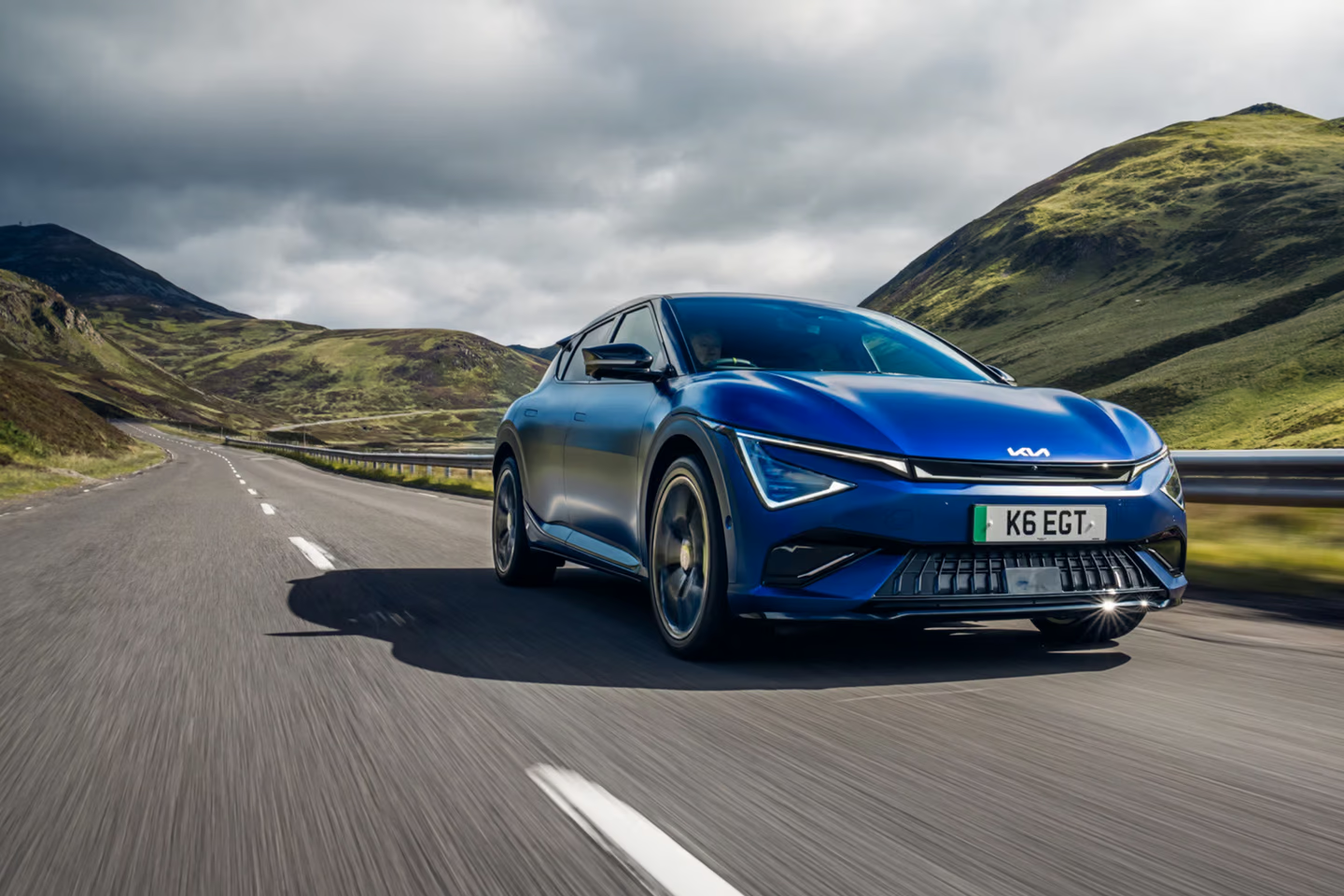
That said, the car never loses its composure. There's a genuine sense of hustle that puts a smile on your face, but it stops short of being truly involving. Strike up a rhythm at eight tenths and it's just as rewarding, arguably more, than trying to extract everything it's got. And if you really want the GT to lose its inhibitions, there's always Drift mode... providing you can find it.
The body control only runs out of ideas on the Waltzer-like twisting undulations at the bottom of Glenshee. To be fair, that's an extreme stretch capable of tying the best chassis in the business in knots.
"Praise must also go to Scottish drivers, who know how to make progress in a timely and safe manner..."
The final leg of the journey takes place on tighter B-roads, where the GT's dimensions temper pace as opposed to any concerns surrounding mass or agility. It's important to remember where the EV6 GT is being pitched, as the successor to the Stinger GT. In that sense, by focusing its priorities on making rapid, discreet and unruffled progress, the EV6 is exactly what it should be – a broadsword not a katana. It does know how to enjoy itself, but Kia doesn't always make it easy to find that side of it.
Take the launch control system as an example: unleashing it introduces a controlled drama to a rapid getaway with a little shimmy from the back axle, and makes the quoted 0–62mph time look conservative. Once again, though, it's a feature only accessed via the menu maze. There should be a cheat code: GT on, pull back on both paddles, foot hard down on both pedals, then release to go. If you're curious, the car will even let you record your own performance figures – not that I'd have the faintest clue how to get it to do so.
.avif)
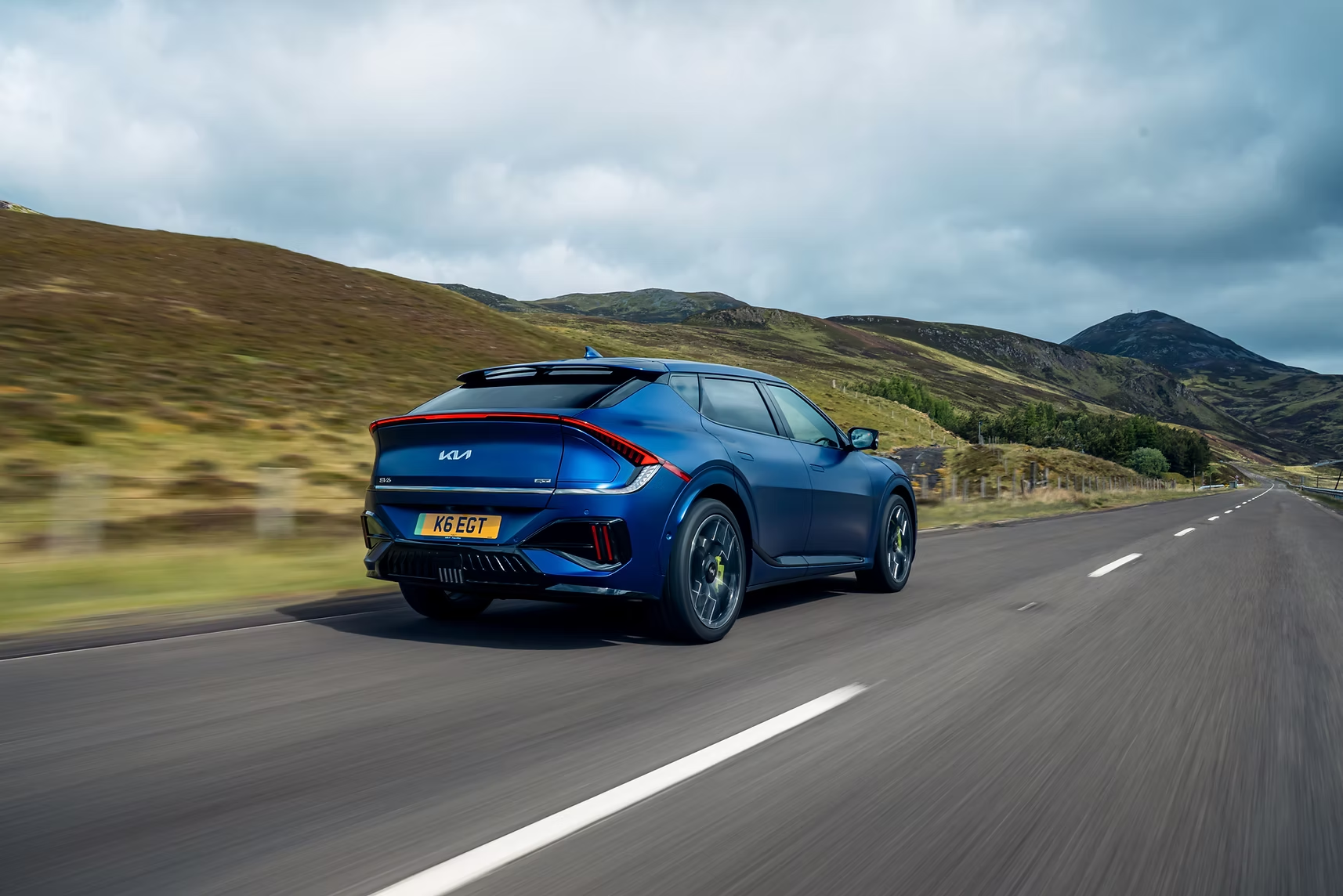
We reach Pitlochry on the opposite end of the national park relaxed, entertained and impressed, proving you can combine grand touring on mixed roads, constant elevation changes and spirited driving without range anxiety interrupting the flow. After three hours at such a pace, by which point you'd want a break anyway, the battery still had plenty in reserve. However, it would be remiss not to mention how much the game has moved on in this arena since our test – BMW's Neue Klasse iX3 and the Volvo EX60 are both capable of up to 500 miles WLTP. Not exactly direct rivals per se, but close enough to raise a flag.
More importantly, what about the car? The EV6 GT played a central role, making the journey more engaging, not less. Even the Virtual Sound Generator has merit, especially in its more futuristic settings. There's a hint of Tron Legacy to the digital tones, adding cyberpunk character without dominating proceedings.
Another song of praise must go to Scottish drivers, who know how to make progress in a timely and safe manner, yet still, provided you're respectful, display great etiquette by pulling over at the first opportunity.
As a sole ownership proposition, the RUSH reader is better off with the more flamboyant 5 N. Yet in a two-car garage, with something more focused for weekends, the Kia's broader talents and greater discretion could well tip the balance. There is a quiet satisfaction to the EV6 GT. Think of it as the Alpina to the Ioniq 5 N's M car.



.avif)
.avif)

.svg)

