-01.svg)

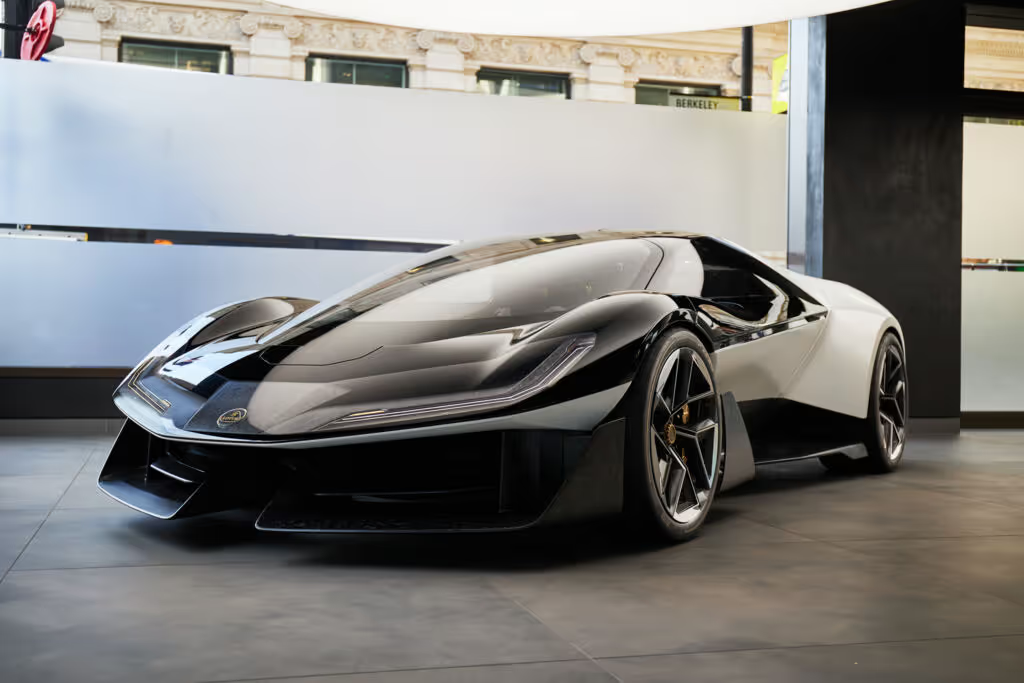
Showcased in dramatic fashion, the Theory 1 is more than just a concept car – it embodies the design and engineering philosophies that will shape future Lotus production models. The fully electric two-door makes use of recycled and organic materials to form its sleek shape, which is inspired by the original Esprit.
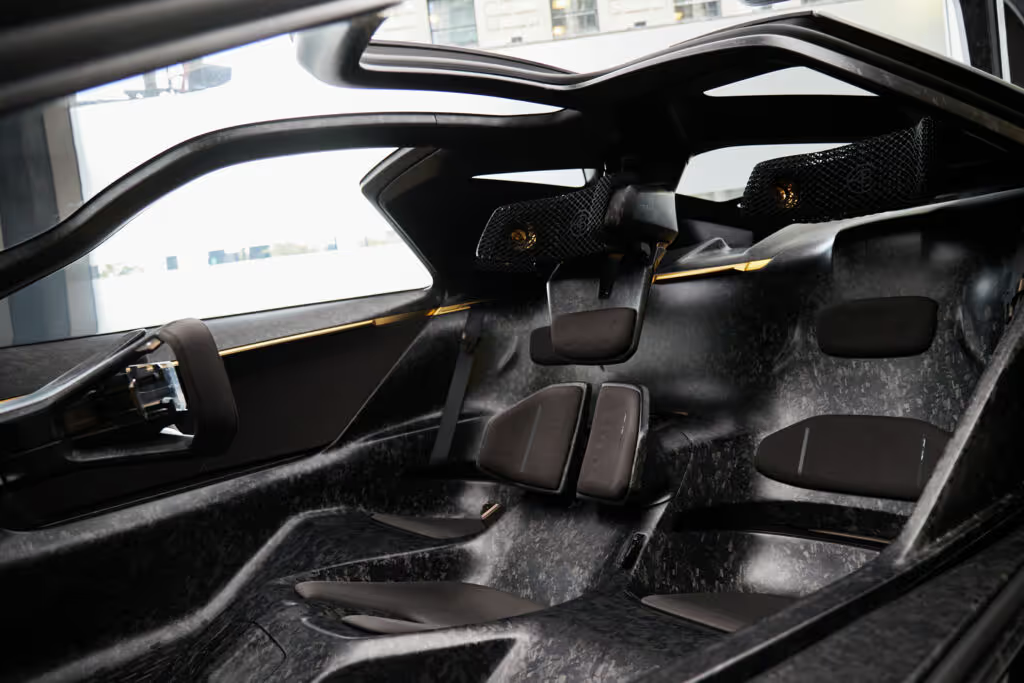
The general proportions of the Theory 1 are where the stylistic similarities end, making a welcome change from the recent influx of retro-modern concepts and production models. The car introduces several firsts for Lotus, notably the three-seat cabin. Inspired by the McLaren F1 and Speedtail, the driver sits front and centre while the two passenger seats are set slightly further back.
In this concept, each seat is little more than padding on the chopped carbon fibre tub, so the driving position is adjusted by moving the pedals and steering wheel. A new audio system from KEF places speakers in the headrests and positions a subwoofer behind the driver’s seat. Active noise cancelling further enhances the driving experience, making for a quieter, more refined cabin.
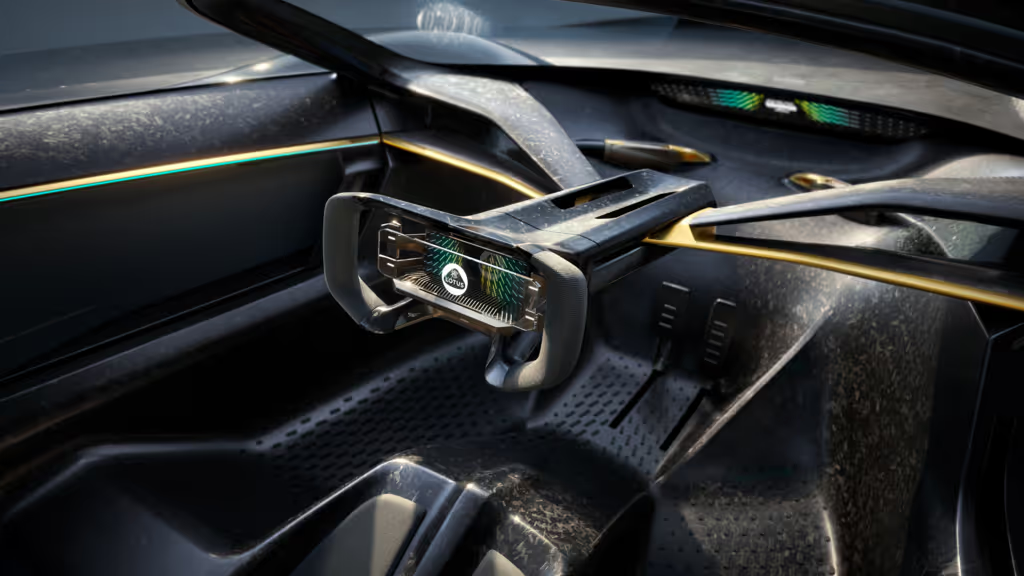
A thin-framed steering wheel emerges from the dashboard, and in another departure from the status quo of concept cars, there are three small digital screens for rear-view cameras – two mounted on the dashboard, and one within the steering wheel. A small display sits at the base of the windscreen, in place of a full-width screen.
It looks like a bona fide supercar from the cabin alone, but surprisingly, access comes via a pair of sliding doors. Unlike the Ford Focus B-Max, where the doors simply slide backwards, the Theory 1 uses a support arm to raise and rotate the door as it moves out of the way. Lotus says access is convenient even in tighter parking spaces.
Behind the cabin sits the 70kWh battery, with a rear motor directly attached. This setup gives a rearward weight distribution akin to mid-engined supercars, and both major components act as stressed members of the chassis, eliminating the need for a rear subframe and reducing weight.
The rear motor alone produces 690bhp, while a smaller front-mounted motor adds an additional 296bhp. Together, they deliver a combined output of 986bhp, enabling the Theory 1 to sprint from 0 to 62mph in under 2.5 seconds, with a top speed of 199mph. Asymmetric AP Racing brakes, featuring 390mm carbon ceramic discs, keep this immense power in check.
These brakes sit behind 20-inch front and 21-inch rear wheels, wrapped in specially developed Pirelli P Zero tyres (265/35 front, 325/30 rear). These tyres can handle the high loads and grip demands of supercars while also being durable and efficient when cruising.
Lotus claims a maximum WLTP driving range of 250 miles, which is respectable given the power on offer and the relatively small battery. The 70kWh battery is notably smaller than the 98.9kWh unit found in the Emeya super saloon, but Lotus’s hallmark of reducing weight comes into play here.

The Theory 1 weighs less than 1,600kg – lighter than a new electric Mini. The use of carbon fibre, cellulose and titanium has also contributed to the low weight, but one thing stands out above all else: the use of empty space.
With the exception of gases like hydrogen or helium, nothing is lighter than air – making empty space weigh far less than any body panel. This fact is used to great effect in the Theory 1’s design, with its sharp nose sitting above an open two-part front splitter that has no central connection.
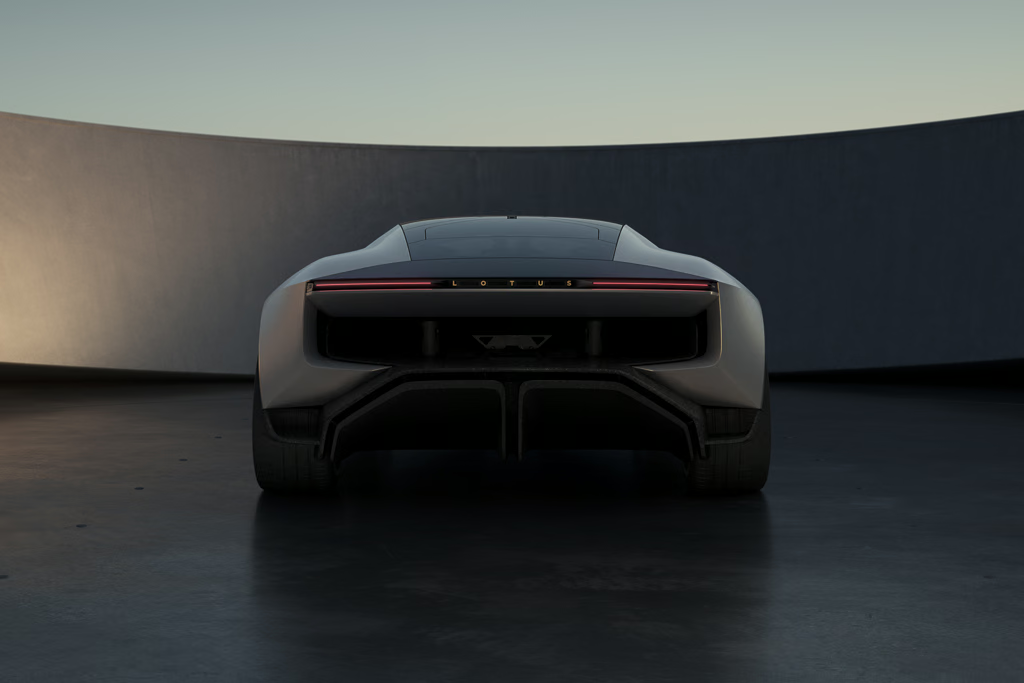
Airflow is controlled via internal wings, routed to the side or rear of the car through the floor. Some of this air is used for cooling, while the rest is directed towards the large rear diffuser. An active rear wing extends above the minimalist, open rear bodywork, and some of the active suspension components can be seen through gaps in the bodywork.
While the Theory 1 will remain a concept, its influence on future Lotus models seems inevitable. The car signals the brand’s new DNA design philosophy – which stands for Digital, Natural and Analogue – three seemingly incompatible concepts in the context of an electric car. Yet somehow, it makes sense.
The technology is present, the form is familiar rather than alien, and the choices for the seating and drivetrain positioning are deliberately meant to evoke some of the greatest supercars of the past. It borrows the ethos, rather than the style, of previous Lotus models and offers a glimpse of the future design language expected to appear on the hotly anticipated “Type 135” electric sports car, and possibly a halo model once the Evija hypercar finishes production.
Interestingly, Lotus refers to the Theory 1 as a supercar, not a hypercar, despite it being only 1bhp shy of the Bugatti Veyron’s launch figure – the car that arguably defined the modern hypercar. Perhaps the Theory 1 also signals a shifting of the goalposts or a blurring of lines between supercar and hypercar performance levels.
After all, the most potent Eletre and Emeya variants come with 905bhp – only 81 less than this concept. Elsewhere, BYD is preparing to bring its YangWang U9 to Europe, a car they classify as a supercar, with 1,287bhp – more powerful than a Veyron SuperSport. But that’s a story for another article.
The Theory 1 concept illustrates a desire for Lotus to return to form, placing renewed emphasis on making cars as light as possible, regardless of power source. The car is compact at just 4.49 metres long and 1.14 metres tall, lightweight at under 1,600kg, and powerful with 986bhp.
And, crucially for a supercar, it has doors that would look utterly ridiculous on anything else. Many of the construction techniques, materials, powertrain, suspension elements and design features seen here are expected to make their way into production. If the first model to adopt the DNA design ethos looks even half as good as the Theory 1, Lotus could be onto a winner – at least in theory.
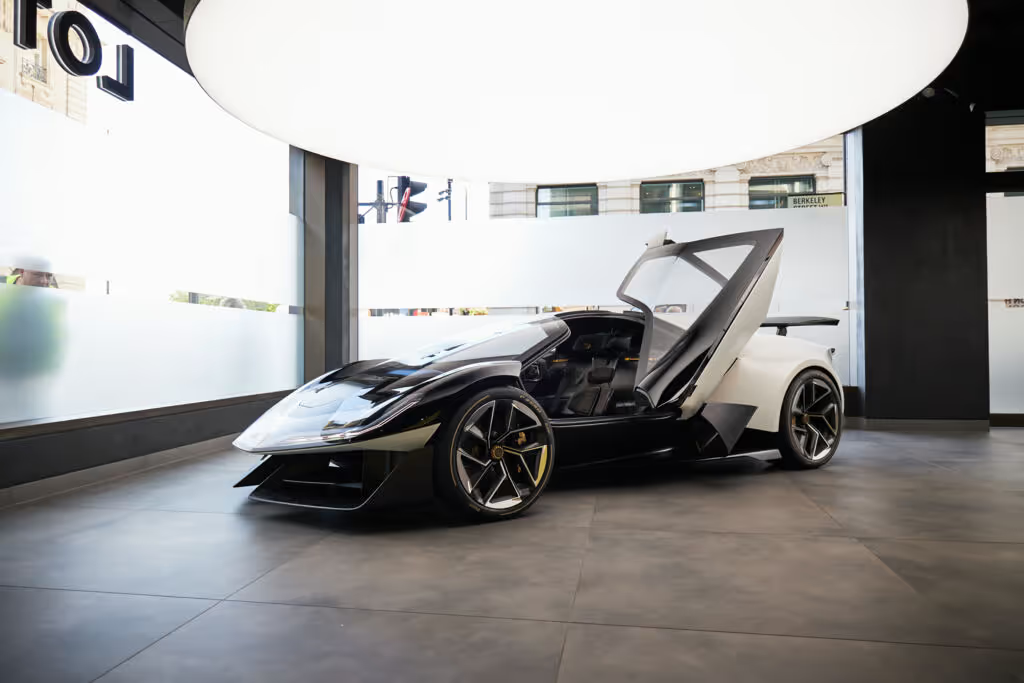
Specifications: Lotus Theory 1 Concept
Drivetrain: Twin-motor, all-wheel drive
Max power: 986bhp
0–62mph: Under 2.5 seconds
Top speed: 199mph
Weight: Under 1,600kg
Battery: 70kWh
Max range: Up to 250 miles WLTP
Tyres: Pirelli P Zero, 265/35 R20 front, 325/30 R21 rear
Brakes: AP Racing 6-piston callipers, 390mm carbon discs
Suspension: Double wishbone with active dampers
Tub construction: Recycled chopped carbon fibre
Body construction: Cellulose composite and polycarbonate
Greenhouse construction: Recycled glass
Length: 4,490mm
Width: 2,000mm
Height: 1,140mm
Wheelbase: 2,650mm


.avif)


.svg)

