-01.svg)

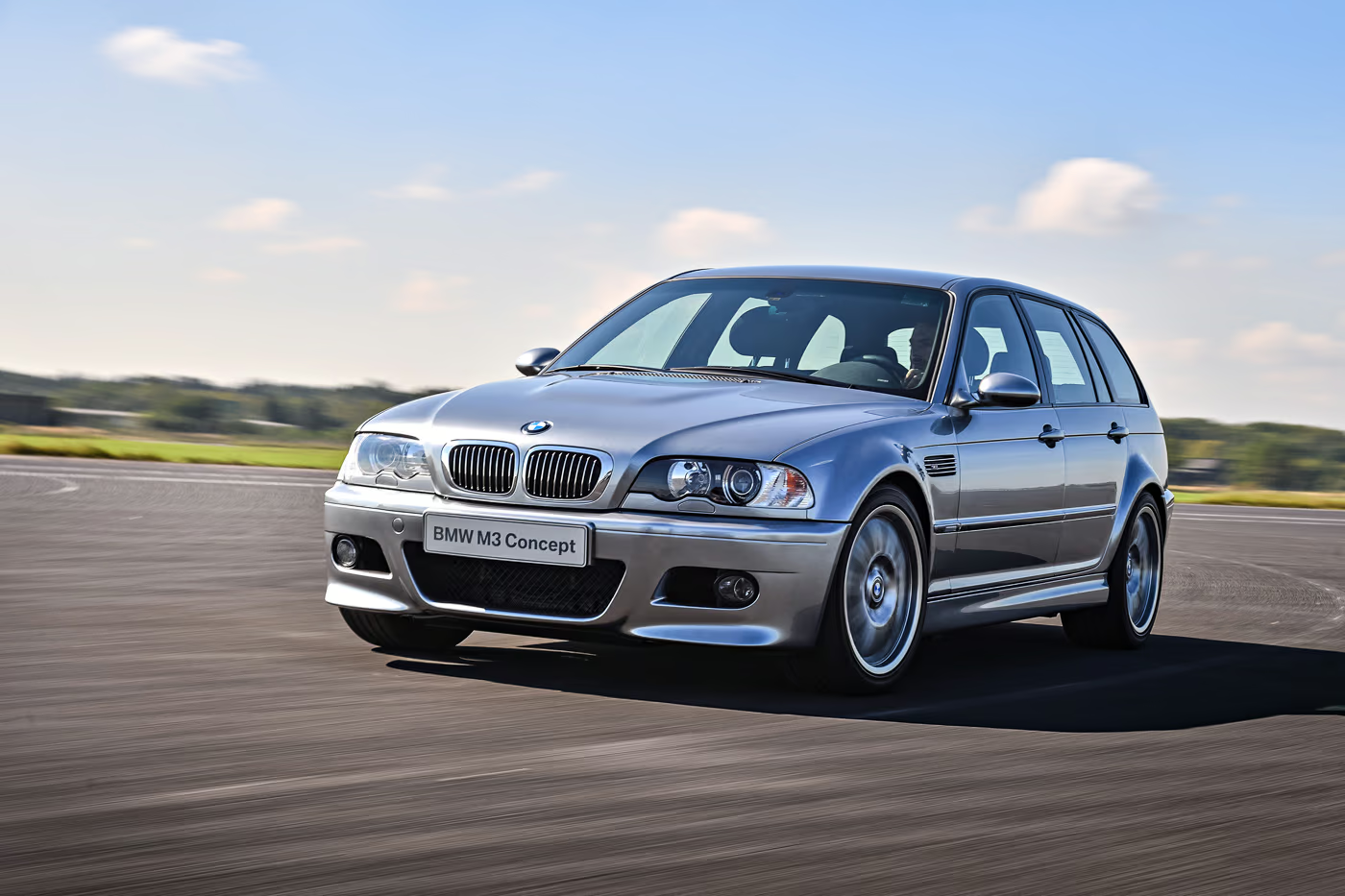
We know the Touring was the real deal because of the Chrome Shadow paint – a fearsomely expensive finish that required the car to first be sprayed in high-gloss black before being overlaid with silver. M GmbH strictly reserved it for cars destined for the motor show stand; the M3 Coupé, M3 GTR, M3 CSL and later E60 M5 were all unveiled in Chrome Shadow, and every single one went into production.
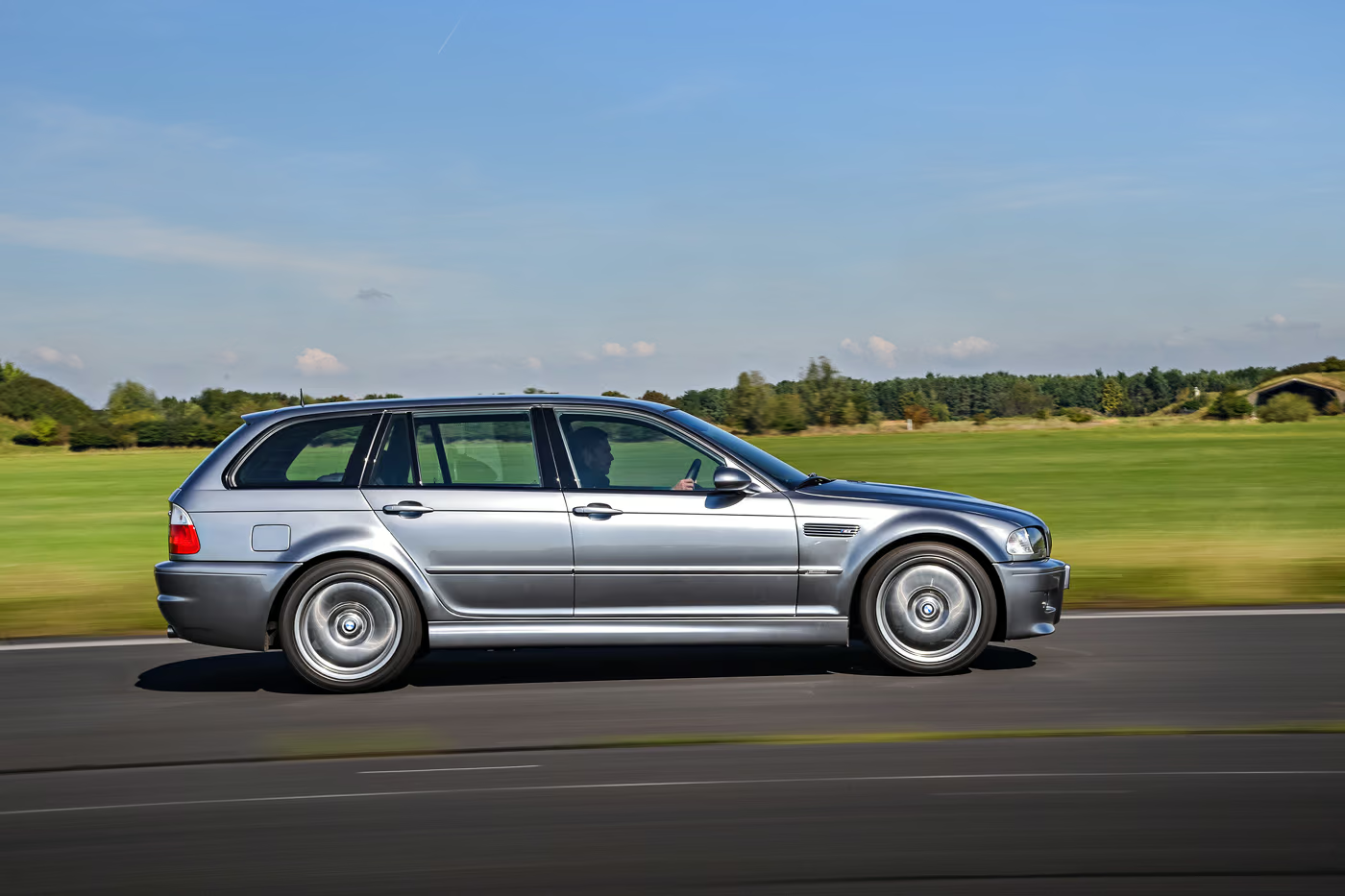
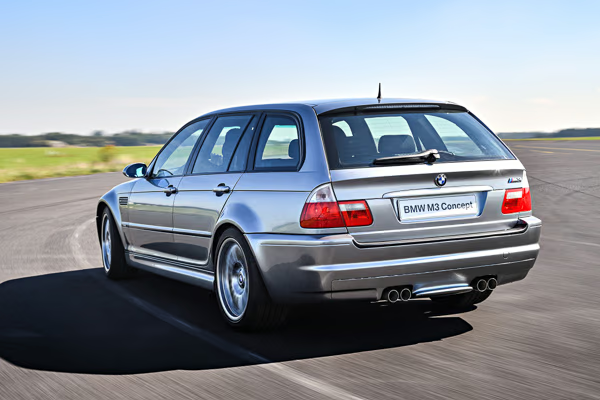
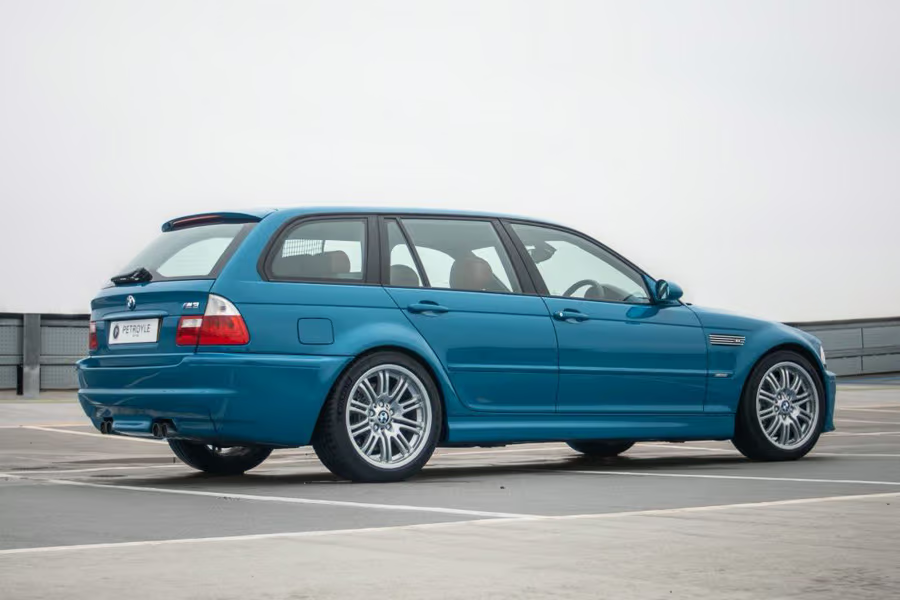
It certainly looks the part. All the E46 M3 hallmarks are there – from the powerdome bonnet, to the gills aft of the front arches, the widened track, and the signature quad exhaust pipes. Transferring the front-end components from the coupé was relatively straightforward, but the rear presented a far greater challenge. The M3's flared arches are a single pressing on the two-door car. On the Touring, they have to accommodate a rear door – and achieving that integration without commissioning new tooling was the most complex element of the entire project. Add to that the additional body strengthening required to manage the increased lateral loads the M3 generated, plus the packaging of its differential, unique suspension and full width exhaust back box – all without compromising the Touring's load capacity.
Audi had already beaten BMW to the market with the B5 RS4 Avant in 1999, complete with beautifully integrated rear doors. And there was no way M GmbH was going to let Ingolstadt steal their pride.
As you’d expect, the M division figured it out. The project had remained a secret guarded by omertà until 2016, when BMW decided to finally reveal the car to the world as a part of the M3’s 30th anniversary celebrations. Jakob Polschak, then head of vehicle prototype building and workshops at BMW M, confirmed just how close the project came: “This prototype allowed us to show that, from a purely technical standpoint at least, it was possible to integrate an M3 Touring into the ongoing production of the standard BMW 3 Series Touring”. Once the car had passed through the assembly line, only minimal manual follow-up work was required to fit the M-specific components. M even commissioned a model-specific interior trim, complete with Alcantara bolsters and a distinctive "F1" patterned fabric insert.


Which again raises the question: why go through all the trouble and not see it through? BMW pioneered the high-performance estate with the E34 M5 Touring, yet walked away when sales stumbled. Consequently, the E36 M3 had been offered as a saloon, but no Touring was ever considered. For the E46 generation, BMW reversed course entirely – the saloon was off the table, yet a Touring was actively being evaluated. The landscape had changed. Audi had stepped into the E34's void with the RS2, cornering the market, then followed it with the RS4. Mercedes-Benz was offering the C32 AMG Estate. Only Alpina was defending Munich's honour.
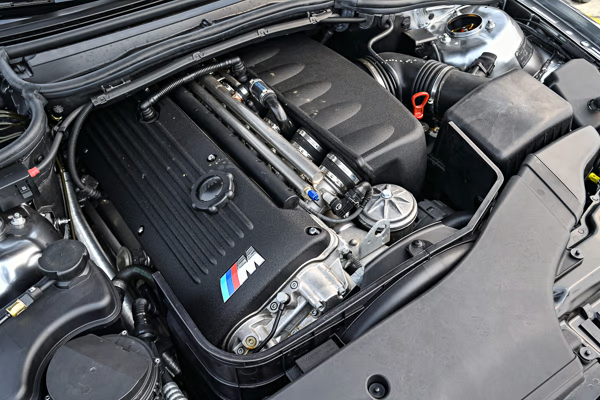
Perhaps it was a matter of straight-line performance. The S54's 3.2-litre straight-six was one of the great naturally aspirated engines, producing 343bhp at a scintillating 7,900rpm, complete with a specific output of 106bhp per litre. But its 262lb-ft of torque arrives at 4,900rpm.
In the coupé, that high-revving character was an advantage. In a heavier Touring, more likely to be loaded and driven at sustained motorway speeds, the lack of low-down grunt would have been harder to disguise. The RS4 and C32 AMG both have forced induction on their side: the former produces 375bhp and 325lb-ft from its twin-turbocharged 2.7-litre V6, while the latter offers 349bhp and 332lb-ft from a supercharged 3.2. Both deliver their torque early and in abundance. BMW were clearly sensitive to the issue: Autocar reported that during the E46's development, the M division had faced headaches ensuring the new model could outsprint its predecessor. A weight penalty is forgivable in a cabriolet with no direct rivals. A Touring would have been exposed.
Then there's the matter of the E46 M3's rear subframe – a weakness that has earned its own notoriety. Given the coupé's mounting points were prone to cracking under sustained load, one can only speculate how a heavily laden Touring would have fared. Or maybe BMW bosses were concerned the Touring (and the inevitable clamour for a saloon to follow) might cannibalise sales from the M5 – even if history has proven otherwise.
Whatever the ultimate reason, the E46 M3 Touring never had its moment under the motor show lights. It was placed into dry storage alongside the likes of the E36 M3 Compact, E34 M5 Cabriolet and E30 M3 Pick-up. Grainy photos surfaced online in 2011, but they never went viral, and the secret held. While there have been many more exciting, fully functioning M prototypes since – including the E60 M5 CSL and F87 M2 CSL – none have captured the imagination like the E46 M3 Touring. Now, with the G81, BMW has finally made the M3 Touring a production reality. But you still can’t get it in Chrome Shadow.



_edited.avif)
-3.webp)

.svg)

