-01.svg)

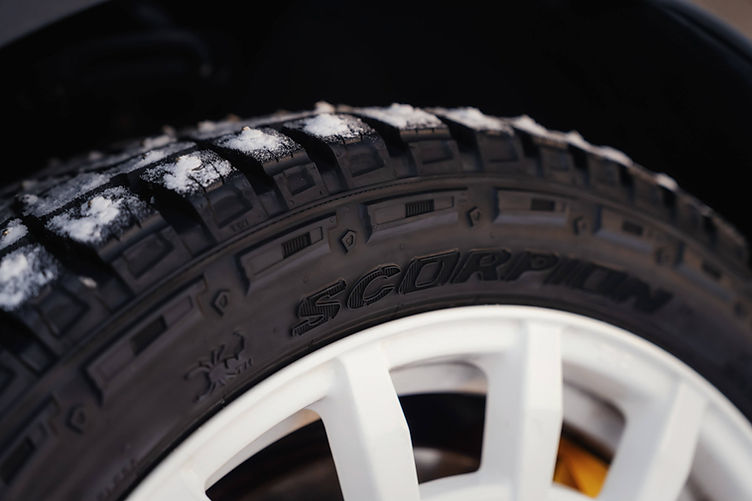
Based on the most powerful Performance variants of each model, they all use twin-motor electric drivetrains, bespoke Öhlins 3-way adjustable dampers, and custom spring, anti-roll bar, bushing, and wheel angle modifications. Specially developed Pirelli Scorpion studded snow tyres envelop OZ Racing Rally Legend wheels; the Polestar 2 Arctic Circle uses 19" rims, while 20" variants make their debut on the 3 and 4.
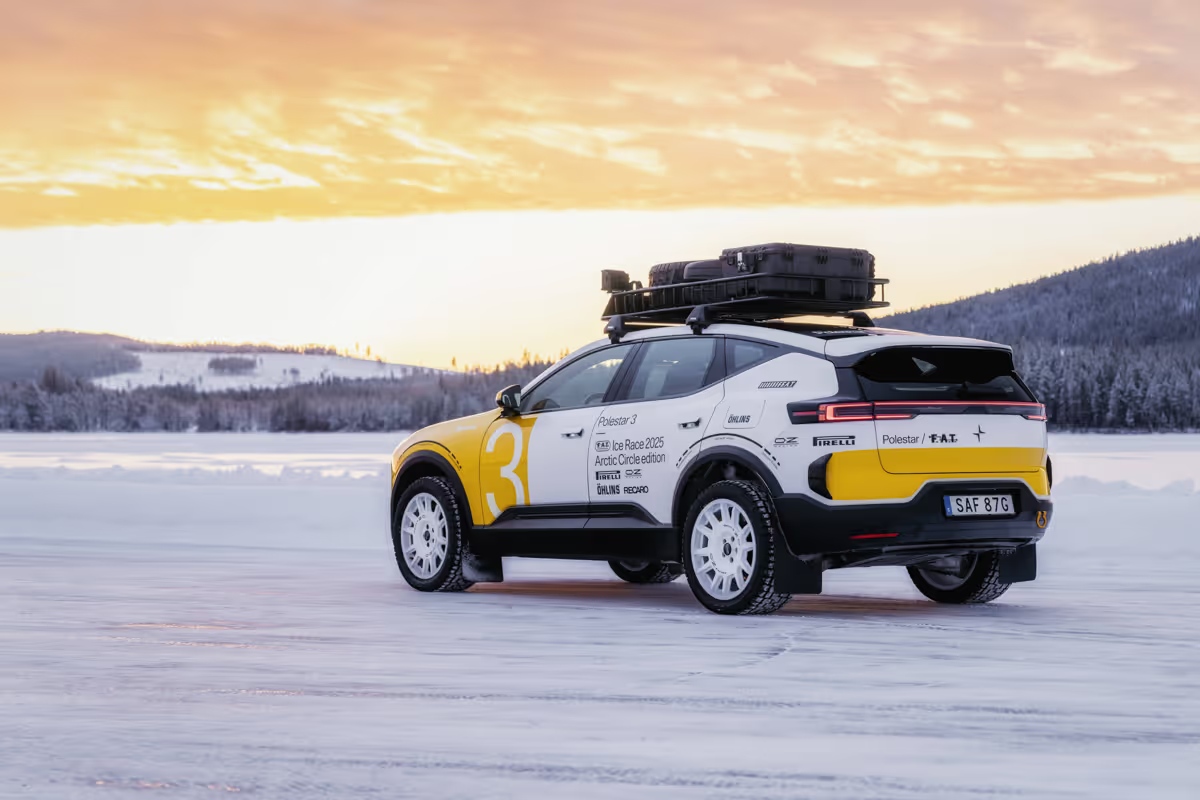
Rally-inspired mud flaps feature at the base of the arches, and all three cars use tow hooks finished in gold - a nod to the Swedish flag. Inside, the slimline leather front seats have been replaced with Recaro Pole Position bucket seats. The Arctic Circle trio share a lot - including the two-tone yellow and white liveries, but there are some key differences between the models.
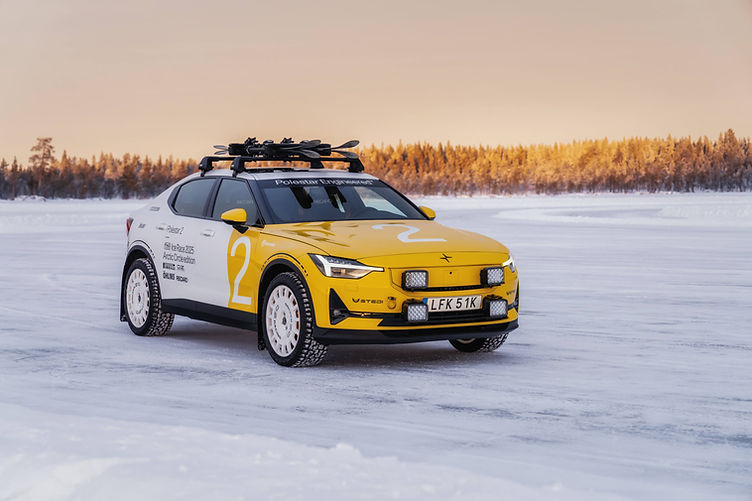
The Polestar 2 Arctic Circle generates 469bhp and 502lb-ft (680Nm) from its powertrain, which on the road sends it from 0-62mph in 4.0 seconds. While no acceleration times are quoted on a frozen surface, the paddle-operated launch control and 1,000 studs across the four tyres should help it get up to speed briskly. The suspension has been raised by 30mm, strut braces are fitted front and rear, and the car carries four spot lights on its nose.
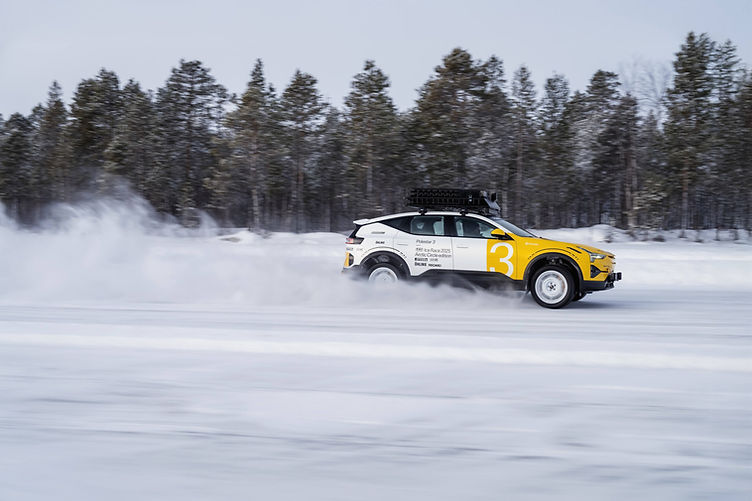
The 3 offers 510bhp and 671lb-ft (910), and features electronically controlled torque vectoring on its rear motor, carried out by a twin-clutch system. This can vary the torque distribution under acceleration, and adjust the energy recuperation when slowing down to enhance agility.
The biggest model in the range gains the most ride height, with the 3 being raised by 40mm, and it too has a front strut brace. The roof is home to a light bar, a custom roof basket containing a spare wheel, shovel, and ladders, and two of the four spot lights; the other pair flank the front number plate.
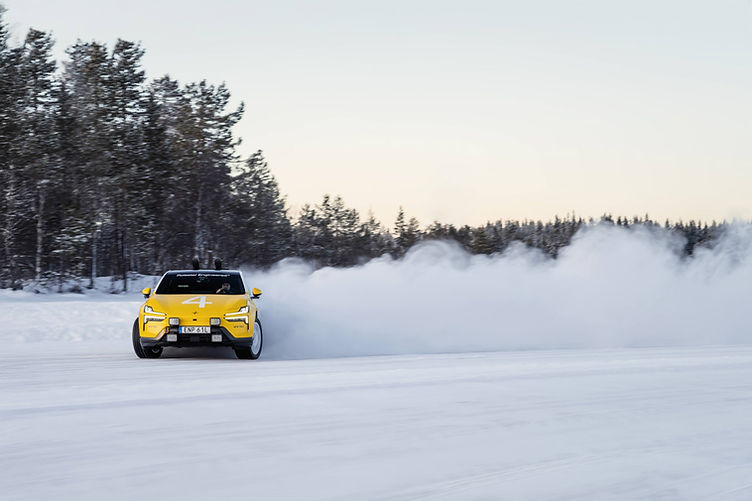
The 4 is the most powerful of the trio, with 536bhp from its pair of e-motors; torque stands at 506lb-ft (686Nm). The Öhlins dampers have been raised by 20mm on the crossover, and a front strut brace is fitted. Just like the Polestar 2 Arctic Circle, the 4 wears quad LED spot lights on the front bumper, and has a ski rack complete with all-terrain skis. However, inside it gains a large hydraulic handbrake lever that protrudes from the centre console.
The original Polestar 2 Arctic Circle was the brainchild of Joachim Rydholm, the brand's Head of Driving Dynamics. Speaking about the first ice-going special model, Rydholm said "Tuning a chassis on snow and ice allows us to develop our cars in what feels like slow motion and with better accuracy. With such low levels of grip, we can feel and analyse the dynamics at a much slower pace than on tarmac, which means we can really fine-tune the way our cars behave, down to the smallest details."
The trio of rally-inspired models will make their public debut at the upcoming F.A.T. Ice Race in the Austrian Alps. With the ever-increasing number of rally-inspired performance models like the Ariel Nomad, Porsche 911 Dakar, Morgan Plus Four CX-T, we can't help but wonder if there's room for the niche to expand to include relatively sensible family cars with rather serious all-terrain modifications.


.svg)

