-01.svg)
-2.avif)
Last week, Dario Franchitti drove the T.50s through its final Production Approval Test at Bahrain, recording a lap time of 1:53.03, beating the GT3 benchmark by more than seven seconds. That's within touching distance of modern LMDh prototypes, comfortably exceeding one of the engineering targets GMA set when the car was first announced in 2021.
GMA didn't choose Bahrain because it considered the long-standing GT3 record easy pickings, but because of what the circuit does to a car. Heavy braking zones, sustained high-speed corners and ambient temperatures that punish every cooling system make it a brutal validation environment. Franchitti recorded 3G under braking, 2.7G in lateral load through high-speed corners, and exceeded 184mph.
To achieve this, the T.50s had to become far more than a track-focused T.50 with bigger wings, larger brakes, stiffer suspension and wider tyres. Rather than being derived from the road car after the fact, it was developed in parallel from the outset.
.avif)
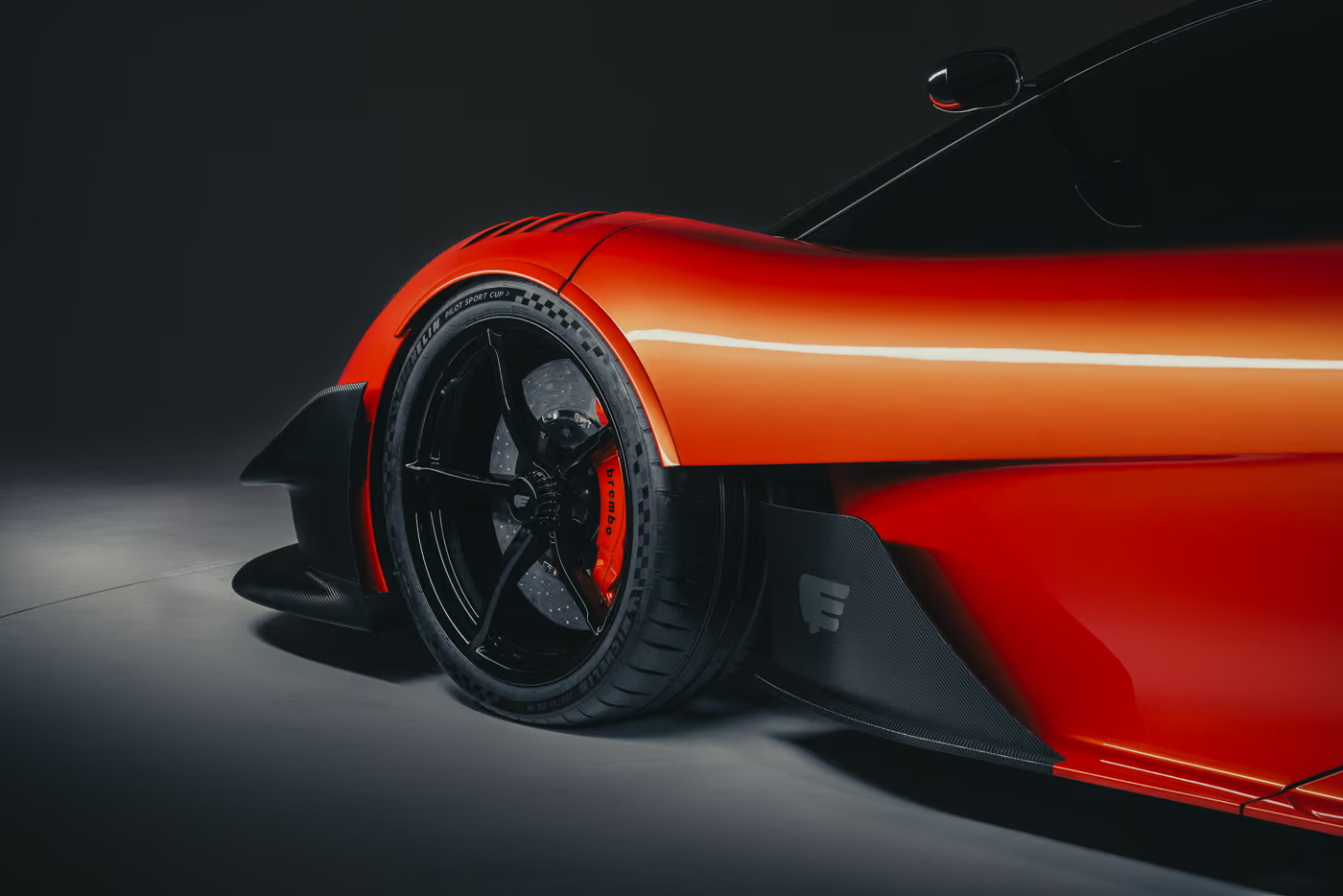
Freed from the constraints of type approval, hundreds of components were changed or redesigned specifically for the track application – for instance, not a single body panel is shared between the two cars. The carbon fibre monocoque has been optimised for reduced weight and increased rigidity, and while the suspension carries over its forged aluminium double-wishbone geometry, the springs, dampers and anti-roll bars are entirely respecified, with ride height lowered to 87mm at the front and 116mm at the rear.
Typically, this also allows Murray’s obsession with cutting weight to go even further. The Cosworth GMA V12 weighs 162kg – some 16kg lighter than the road car’s unit, which was already the lightest road-going V12 in production. The variable valve timing system has been removed entirely because the geartrain and electronic control hardware that support it add weight Murray considers unjustifiable in a track car. The induction system has been simplified in a similar manner: twelve individual throttle bodies are fed directly by a roof-mounted RAM airbox. On the other side of the combustion chamber, the exhaust system uses thinner-walled Inconel, with no catalytic converters and minimal silencing.
Elsewhere, the Xtrac six-speed paddle-shift gearbox shaves 5kg by adopting lighter gear internals. New forged magnesium wheels weigh less than 6kg each, and the window glazing has been reduced in thickness. Simplify, then add lightness. Where have we heard that before?
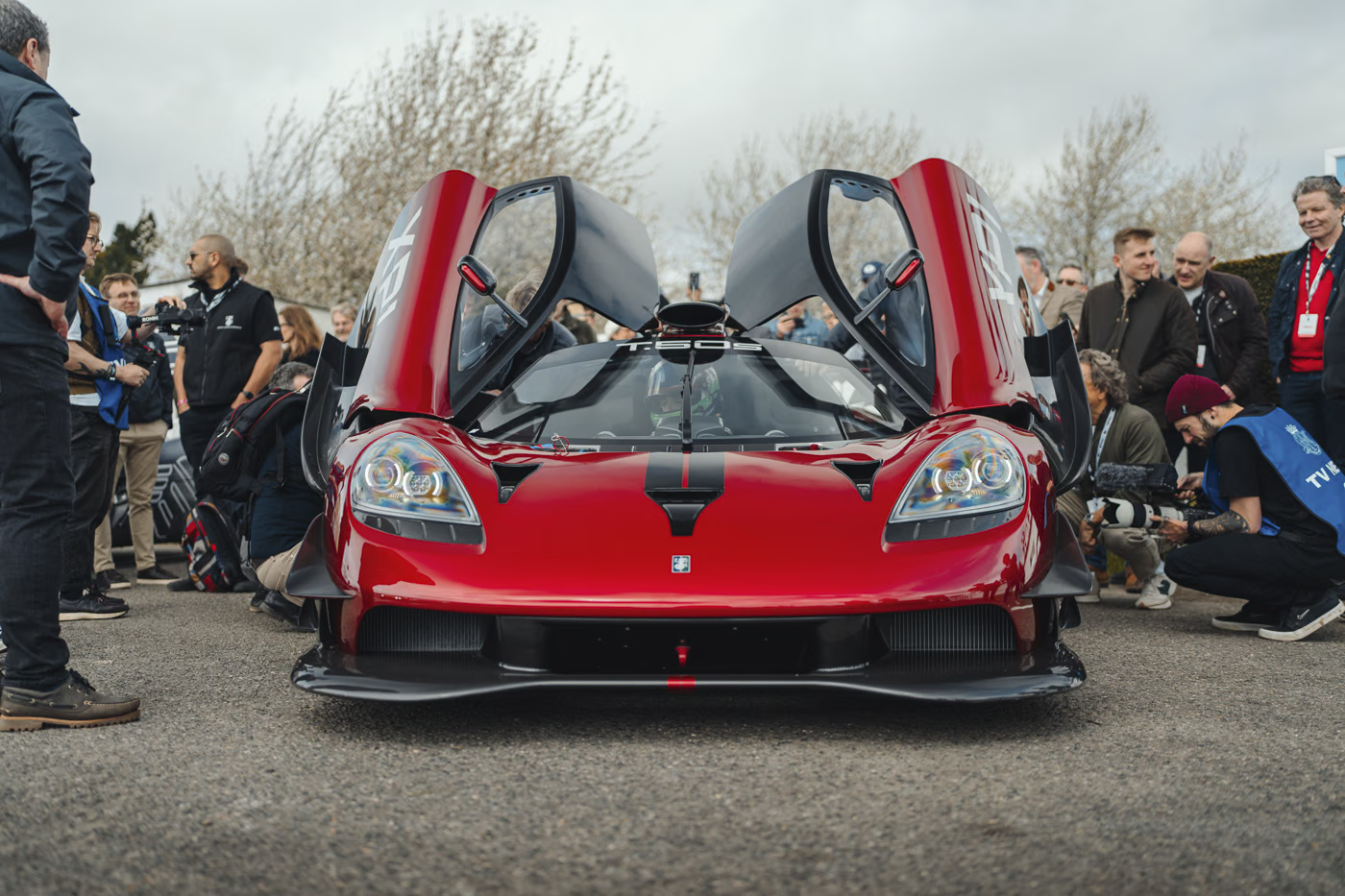
The V12 has also been modified beyond the weight-saving measures. When GMA announced the T.50s in 2021, the engine was quoted at 701bhp, with the RAM airbox lifting peak output to around 725bhp. The finished article now produces 761bhp at 11,500rpm, on its way to a 12,100rpm redline. Revised cylinder heads and camshafts, titanium valves throughout and a compression ratio of 15:1 account for much of the gain. No doubt the changes enhance the T.50’s already legendary throttle response and soundtrack – Franchitti described the T.50s as ‘the most engaging car I’ve ever driven’.
The fan is another T.50 centrepiece that evolves in the track version. Where the road-going car uses it across multiple aerodynamic modes, the T.50s runs the system permanently in a high-downforce configuration at 7,000rpm, feeding a redesigned rear diffuser through an open duct. Appropriately, Niki Lauda drove the Brabham BT46B fan car to victory in the 1978 Swedish Grand Prix, its only outing before the car was withdrawn due to pitlane politics.
Unlike the engine, one target the project has not exceeded is downforce. Originally set at 1,500kg, GMA made a conscious decision to dial this back to 1,200kg because Murray wanted the car to remain accessible to owners not blessed with professional-level fitness and reflexes. The aerodynamic package itself is fully adjustable: the front diffusers, slotted flap on the rear delta wing and adjustable ride height allow fine-tuning to suit any given circuit.
Murray’s quote in the press release is typically direct: ‘This car was never about setting lap times. We simply designed the lightest, optimally-powered, most driver-centric track car possible – with the right formula, speed comes naturally.’
Murray added: ‘Naming the car after Niki was deeply personal. He was a great friend and a remarkable racing driver, and I believe he would have appreciated the purity, focus, and engineering integrity that define the car we named in his honour.’
Production is already underway at GMA’s Surrey HQ, with four cars nearing completion. All 25 T.50s models will be complete by mid-2026 with customer allocations across North America, Europe, and the rest of the world. Each one will carry one of Murray’s F1 victories on its chassis, starting with Kyalami 1974. Naturally, they’re all sold.



_edited_edited.avif)


.svg)

